

Steps To Develop Employee Journey Map





Try Before you Buy Download Free Sample Product
 Impress Your
Audience
 100%
Editable
 Save Hours
of Time


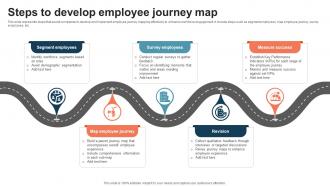
This slide represents steps that assist companies to develop and implement employee journey mapping effectively to enhance workforce engagement. It include steps such as segment employees, map employee journey, survey employees, etc.
People who downloaded this PowerPoint presentation also viewed the following :
Steps To Develop Employee Journey Map with all 9 slides:
Use our Steps To Develop Employee Journey Map to effectively help you save your valuable time. They are readymade to fit into any presentation structure.








FAQs for Steps To Develop
So there's five main stages you'll want to map out. Pre-boarding starts right after they accept your offer until day one. Then onboarding gets them actually settled in and productive - this part's honestly make-or-break for most people. Development focuses on training and helping them grow in their role over time. Retention is all about keeping them happy and engaged so they don't bail. Finally, offboarding handles when they leave. The real trick isn't just knowing these stages though - you need to figure out where things go wrong at each step so you can fix the actual problems instead of just making pretty diagrams.
Mix surveys with real conversations - that's where you'll get honest answers. Hit the obvious moments like onboarding and exit interviews, but also dig into your HR data for patterns. Retention rates don't lie. One-on-ones are clutch though, way better than surveys where people just say what sounds good. Try shadowing new hires their first week too. I'd actually sit in on random team meetings if you can swing it - you'll pick up on weird dynamics that never make it into formal feedback. The magic question is always "how did that make you feel?" instead of just asking what happened.
Honestly, the hardest part is getting real data instead of what leadership thinks is happening. Departments hate sharing info with each other, and employees won't be straight with you unless it's anonymous. I'd start with anonymous surveys first - way easier. Then maybe grab a few people who actually want to talk for interviews. But here's the thing everyone misses: mapping is the easy part! Actually fixing what you find? That's where it gets messy. Oh, and don't let anyone rush you through the research phase. Companies always think they know their employee experience but they're usually completely wrong.
Honestly, employee feedback is everything when you're mapping out journeys. Surveys, interviews, casual chats - whatever gets people talking about their actual experiences. Leadership usually has no clue what's really broken (learned this the hard way). Your team's frustrations during onboarding or promotions? That's gold. Those conversations show you which touchpoints actually matter and what emotions people feel at each step. Without real feedback, you're basically throwing darts blindfolded. The gaps between what employees expect vs. what they get - that's where you'll find your biggest wins.
Honestly, tech makes this so much easier than the old days of endless PowerPoint slides. Your HR systems already collect tons of data - engagement scores, retention patterns, feedback from surveys. Pull that stuff automatically instead of chasing people down manually. Digital mapping tools let you build interactive visuals that actually update without wanting to throw your laptop out the window. AI can spot trends and flag potential issues before they blow up. Short answer? Start digging through whatever HR tech you've already got - there's probably way more useful data buried in there than you think.
Look, those first few weeks make or break everything. Get onboarding right and new people feel confident, connected, ready to jump in. Screw it up? You're chasing your tail for months trying to fix it - or they just bounce. It's wild how much those early days matter for setting expectations about culture and building relationships. My cousin's company does this really well actually. Good onboarding = people who actually want to stay long-term. I'd map out what you're doing now and ask your recent hires what sucked and what didn't.
Track your people's whole experience from day one through when they bail. You'll spot exactly where things go sideways - like if everyone's jumping ship at 18 months, there's probably something sketch happening right before that. Maybe your promotion process is totally unclear or remote folks feel ignored their second year. I've seen this work way better than those blanket retention programs that miss the actual issues. Focus your fixes on those specific breaking points instead of spraying solutions everywhere and hoping something sticks.
So you want to track engagement and retention stuff to see if your journey map actually works. Employee satisfaction scores are obvious. Also turnover rates by stage and how fast new people get productive. Internal mobility is honestly the biggest tell - are folks moving through the path you mapped out or what? Manager feedback quality matters too, plus milestone timing. Here's the thing though - you need baselines before changing anything or you're just throwing darts in the dark. Pick maybe 3-4 metrics that hit your worst problem areas and check them monthly. Don't go crazy with too many at once.
Honestly, start with personas first - that's the game changer. Pick 3-4 main ones like new grads, experienced hires, managers, maybe remote folks. Base it on role and experience level mostly. Then map each persona's journey separately because their experiences are wildly different. Walk through attraction to exit for each one, noting pain points and motivations. Generic maps? Total waste of time - I learned that the hard way. After you've got individual journeys, look for common themes across personas. That's where you'll spot the universal issues worth fixing first. But don't lose sight of the unique stuff each group needs.
Timeline format works best - map out onboarding, growth, transitions, and exit phases. Color-code the different touchpoints like HR stuff, manager check-ins, training sessions. Don't forget to show both the good and crappy emotions at each stage. Honestly? Most journey maps are way too busy and end up gathering dust. Zero in on the pain points where people actually quit or check out mentally. Throw in real quotes from employees - makes it feel authentic instead of just corporate boxes. Oh, and make sure you can actually fix what you find, otherwise you're just making wall art.
Think of journey maps as a way to catch all the annoying stuff employees deal with. Map out everything from when someone gets hired to when they leave, and you'll start seeing where things get messy - weird onboarding processes, communication gaps, approvals that take forever. Honestly, most companies are terrible at spotting this stuff on their own. Get real employees involved in making the map, not just HR people guessing. You'll notice patterns where everyone hits the same roadblocks. Then figure out which problems to tackle first based on what'll actually make a difference.
You definitely need people from different departments involved - trust me on this one. Employees don't just deal with one team, right? They're constantly bouncing between HR, their manager, IT, whoever. Each group sees totally different parts of the employee experience. Without getting everyone together, you'll miss huge blind spots. Some departments are probably creating problems without even knowing it (happens all the time). When you actually bring representatives from each major department into the room, suddenly those annoying gaps between handoffs become super obvious. Then you can fix stuff that'll work company-wide.
Honestly, you've got to bake in regular check-ins - I'd say quarterly or twice a year depending on your team size. Get feedback from people at different points in their journey, maybe throw out some quick pulse surveys. Track the usual stuff like retention and engagement. Here's the thing though - most companies suck at actually doing something with the data they collect! You need a solid cross-functional team that can move fast when you spot patterns. Oh, and designate someone to keep an eye on what's happening in the industry. Your journey map isn't a set-it-and-forget-it thing. It's gotta evolve.
Focus on the biggest problems first - those are gonna give you the most bang for your buck. Make sure each issue has someone actually owning it with real deadlines. Honestly, this is where most people drop the ball and everything falls apart. Get the affected teams on board early, otherwise you'll be fighting uphill battles later. Check in regularly to see if your fixes are actually moving the needle. Oh, and definitely circle back with employees once changes go live - they'll tell you straight up if you're headed in the right direction or totally missing the mark.
Yeah, this stuff is way trickier than most people realize. Different cultures interpret the same employee touchpoints totally differently - like what feels supportive to one group comes across as micromanaging to another. Communication styles are all over the place too. Some want super direct feedback, others prefer hints and subtlety. I've watched so many companies roll out these "one-size-fits-all" programs that just crash and burn. You really need to dig into your actual employee demographics first. Focus groups with people from different backgrounds are clutch - they'll tell you if your assumptions are completely off before you waste time implementing changes that backfire.
-
“I've always gotten excellent slides from them and the customer service is up to the mark.”
-
Qualitative and comprehensive slides.