


Strategic focus areas powerpoint presentation




Try Before you Buy Download Free Sample Product
 Impress Your
 Audience
 100%
100% Editable
 Save Hours
 of Time


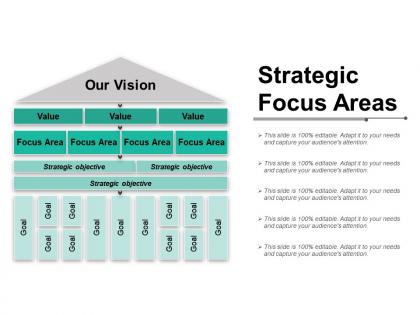
When you want to showcase how to create the perfect vision statement, along with a set of great organizational values, you can go for the business vision statement PowerPoint template. You can use the business strategic plan presentation slides to show the viewer how to start creating the actual strategic plan and you can start with creating strategic focus areas. The strategic focus area PPT slide is useful to encourage the audience to stay focused on delivering the vision statement. A user can use the business strategic focus areas slide for PowerPoint for describing that focus area are the foundation stones of the strategy. They expand on the vision statement and start to develop some structure around how to actually get an organization to achieve its goals. A presenter can discuss that one of the hardest things about creating strategic focus areas for an organization is to decide what to leave out by using organizations focus area template. You can use our business focus area slide to illustrate that when an activity does not fit into one of the focus areas that means it does not need to happen. Be assured of great architecture with our Strategic Focus Areas Powerpoint Presentation. They are good for building your edifice.
People who downloaded this PowerPoint presentation also viewed the following :
Strategic focus areas powerpoint presentation with all 5 slides:
Elaborate on the benefits of higher education with our Strategic Focus Areas Powerpoint Presentation. Encourage folks to join college.


FAQs for Strategic focus
Look, the focus areas boil down to three things: growing revenue faster, cutting out operational waste, and beating competitors. Each one ties to real metrics you can actually track - quarterly numbers, process improvements, competitive advantages. Honestly, I've seen too many companies chase shiny projects that don't move the needle. This framework keeps you honest about what actually matters. If you can't connect a major initiative back to one of these goals, you're probably wasting time. Simple but it works.
Honestly, start by taking a hard look at what you're actually good at - not what you think you're good at. Figure out where you can add real value for customers while still making money. Here's the thing though - don't try to do everything. I'd stick to maybe 3 or 4 focus areas tops, because otherwise you'll just end up doing a mediocre job at everything. SWOT analysis helps if you want to be methodical about it. The hardest part? You'll have to say no to some decent opportunities that just don't fit your strengths. It sucks but it's necessary.
Think of data analytics like having a really good GPS for your business decisions. It'll show you what's actually happening with customers and market trends, not just what you assume is going on. Honestly, gut feelings are nice but numbers don't lie about what's working and what's a waste of money. You want to track metrics that connect to real results though - like revenue or customer retention, not vanity stuff. Then use those insights to decide where to spend your time and budget. Way better than just guessing and hoping for the best.
Honestly, when your strategy actually fits your company culture, it's like night and day. People stop rolling their eyes in meetings because the priorities feel real, not just some exec's wishlist. Decision-making gets faster since everyone's on the same page about what matters. I've seen teams completely turn around once they stopped fighting their own values – weird how that works, right? The execution becomes so much smoother when you're not constantly swimming upstream. First thing I'd do? Take a hard look at whether your current priorities match how your team actually operates day-to-day.
Honestly, match your message to who's listening - execs care about big picture stuff while your team needs the nitty-gritty details. Always lead with WHY you're doing something, not just what. I can't tell you how many strategy presentations I've sat through that were just boring bullet point marathons. Tell stories instead, give real examples that people actually remember. Make it visual too - simple charts or roadmaps they can look back at later. But here's the thing: don't just talk AT them. Ask what they think, what worries them. Then follow up in a few days because people always have questions once it sinks in.
Yeah, you basically have no choice but to adapt when outside stuff changes. COVID was the perfect example - companies that never cared about digital suddenly had to make it priority
-
Innovative and attractive designs.
-
Appreciate the research and its presentable format.