Strategic Facility Planning Powerpoint Presentation Slides
Try Before you Buy Download Free Sample Product
Audience
Editable
of Time
Identify the necessary facilities of your organization by using our content ready Strategic Facility Planning PowerPoint Presentation Slides. You can explain how to sustain the organization and achieve long-term objectives with the help of this visually appealing business planning PPT theme. With the aid of the strategic management PowerPoint graphic, you can mention the factors that translate the goals of the business plan into an appropriate facility response. Use the facility management plan presentation templates and determine the action plan for capacity management. Take the assistance of the resource planning PowerPoint layout and highlight the key performance indicators of your organization. Employ this professionally designed facilities management strategic plan PPT visuals and define the core business priorities to ease the business processes. Hence, download our ready-to-use strategic management PPT slides and showcase the steps that help to enhance the overall efficiency of your company.
People who downloaded this PowerPoint presentation also viewed the following :
Content of this Powerpoint Presentation
Slide 1: This slide introduces Strategic Facility Planning. State Your Company Name and begin.
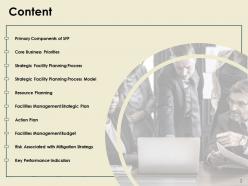
Slide 2: This slide shows Content of the presentation.
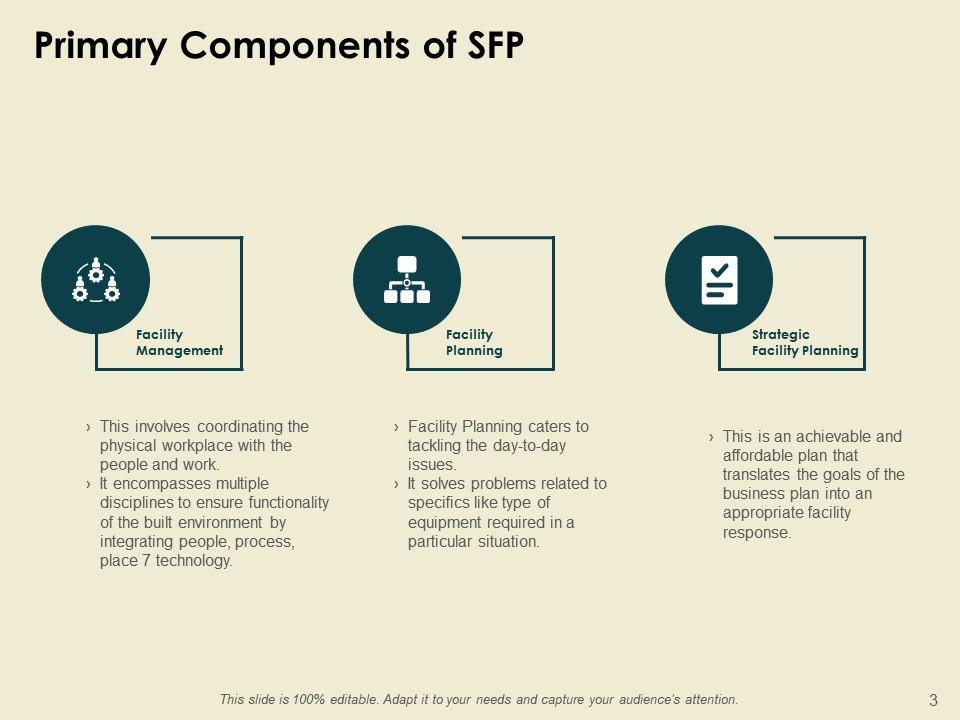
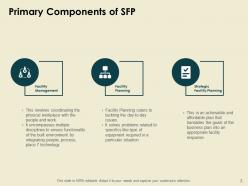
Slide 3: This slide presents Primary Components of SFP describing- Facility Management, Facility Planning, Strategic Facility Planning.
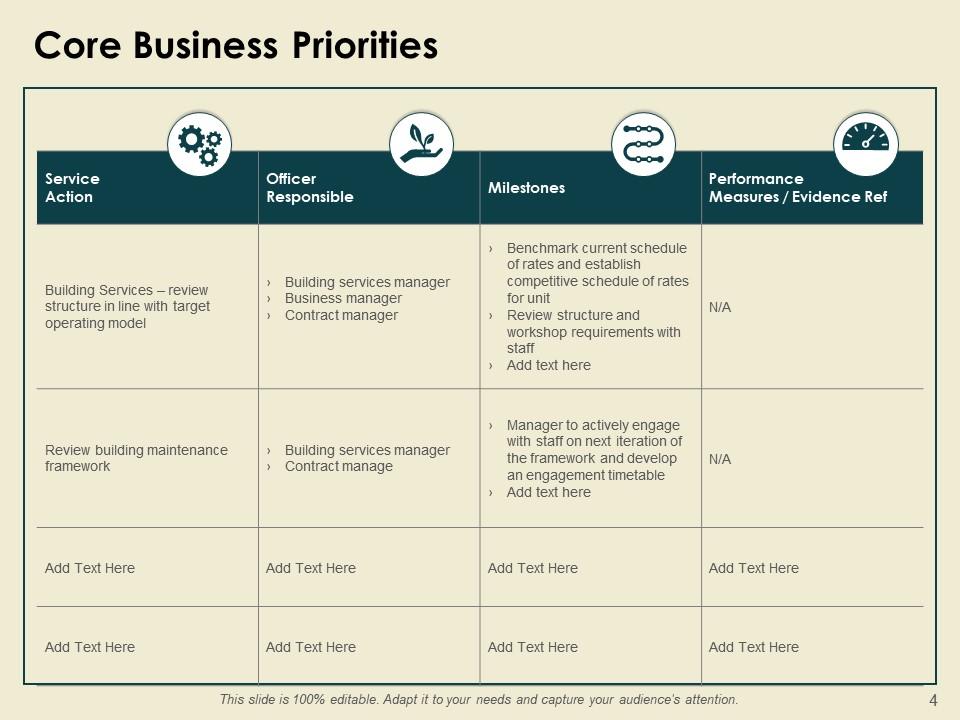
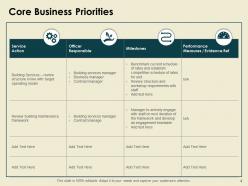
Slide 4: This slide displays Core Business Priorities in tabular form.
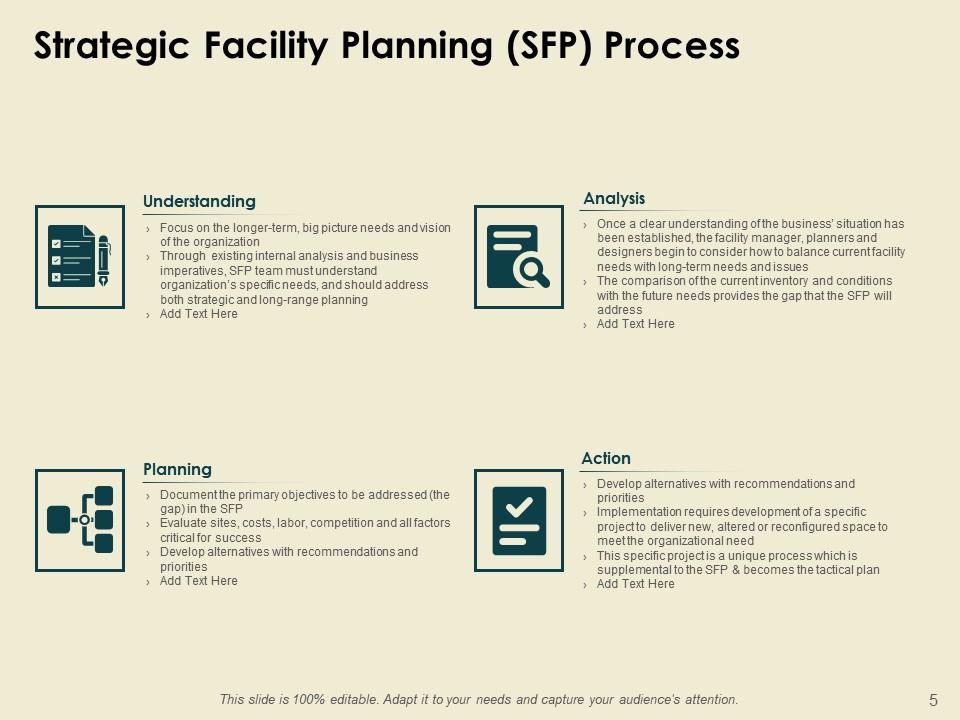
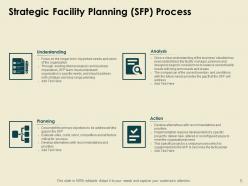
Slide 5: This slide represents Strategic Facility Planning (SFP) Process describing- Analysis, Understanding, Action, Planning.
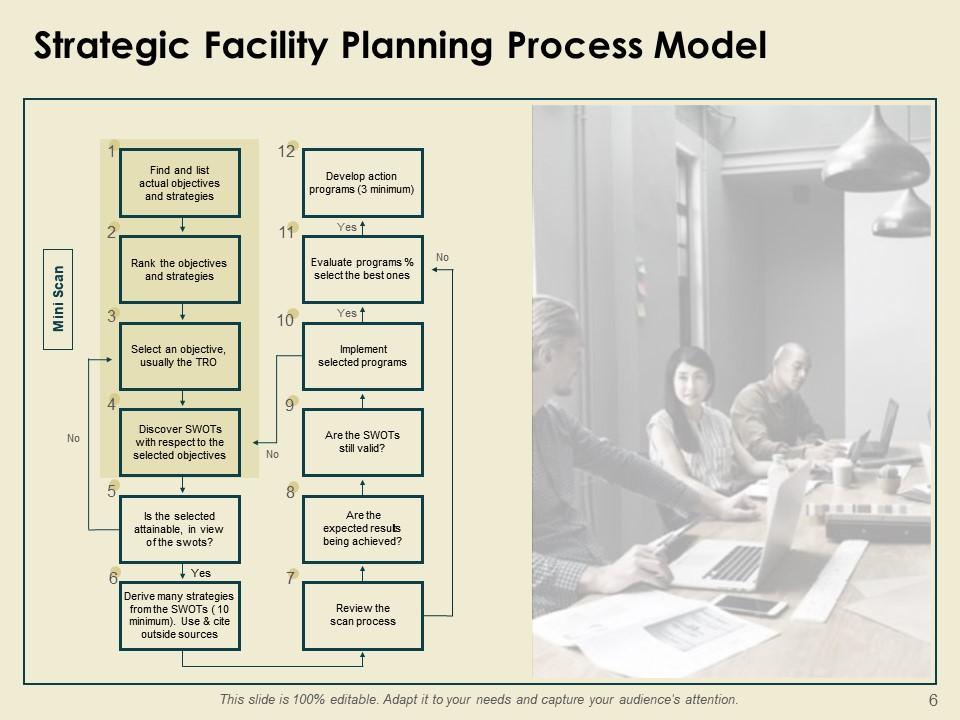
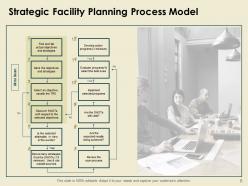
Slide 6: This slide showcases Strategic Facility Planning Process Model.
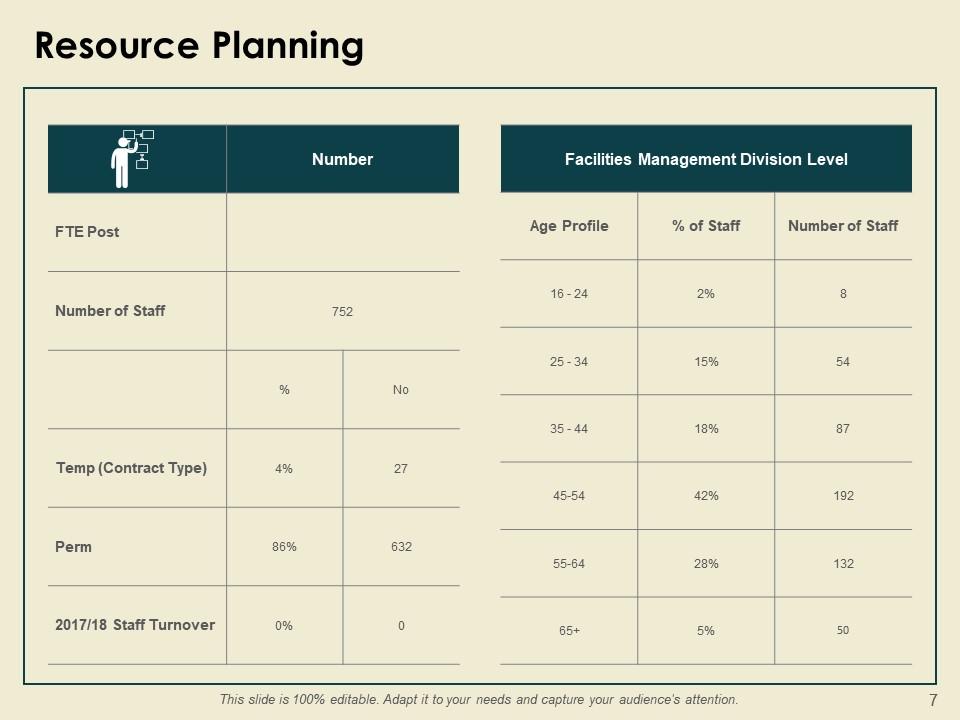
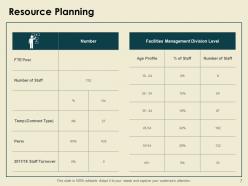
Slide 7: This slide shows Resource Planning in tabular form.
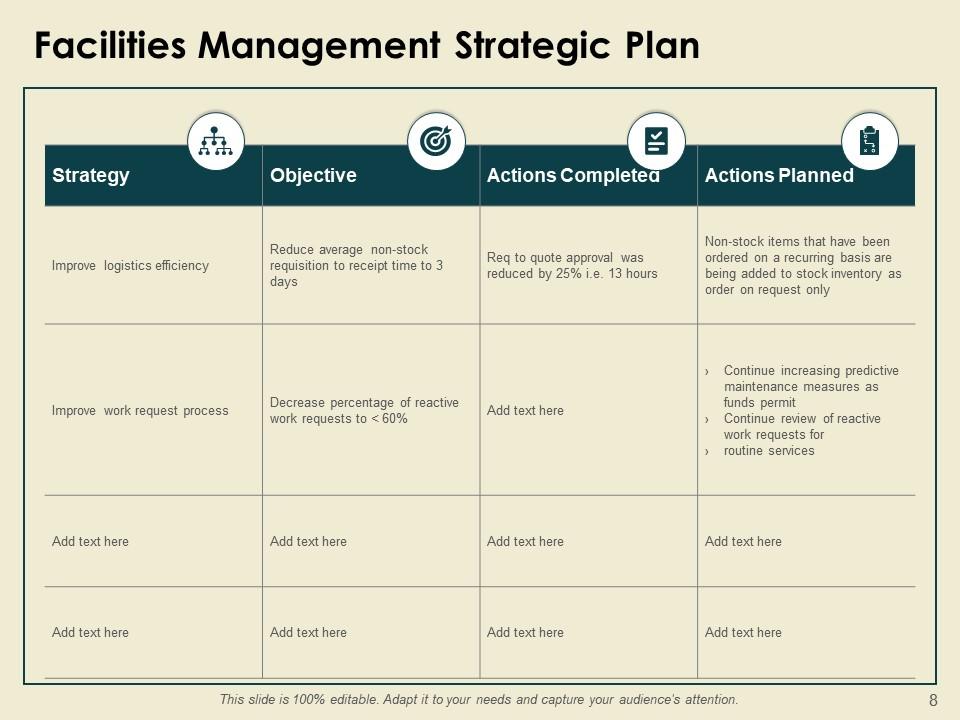
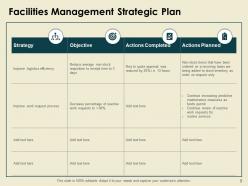
Slide 8: This slide presents Facilities Management Strategic Plan.
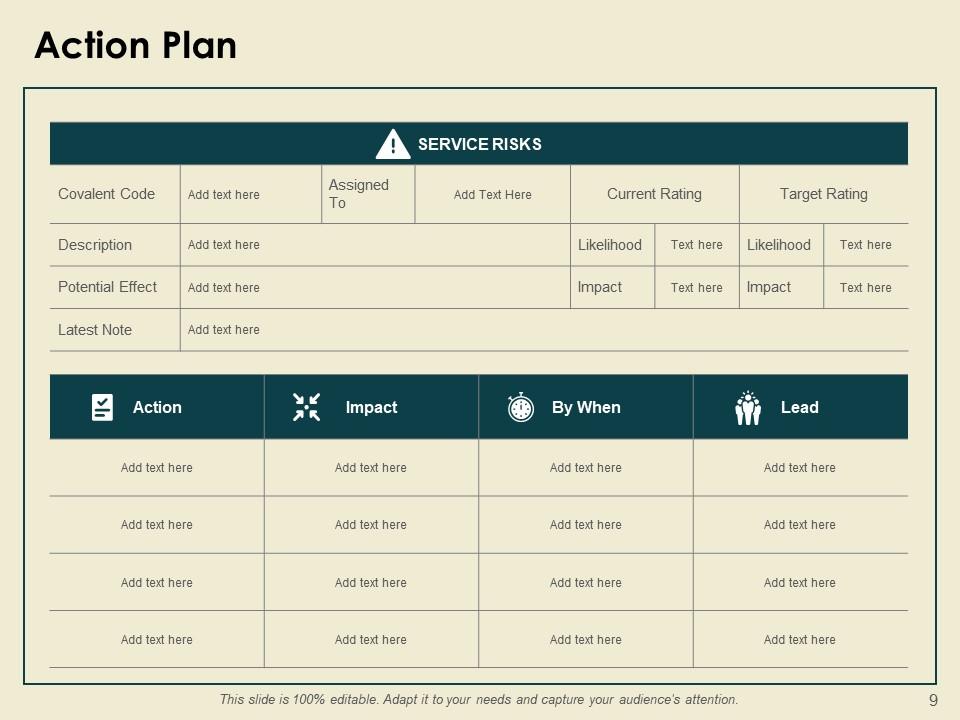
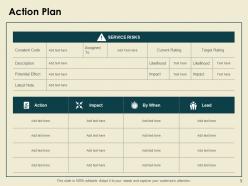
Slide 9: This slide displays Action Plan with impacts and risks.
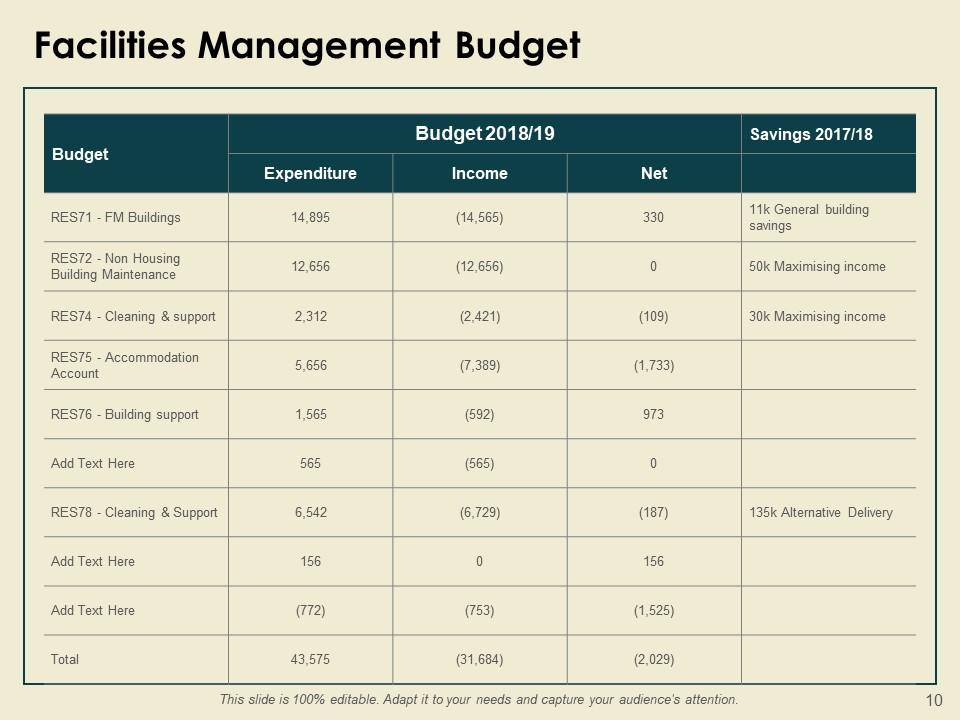
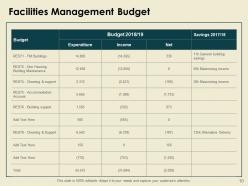
Slide 10: This slide represents Facilities Management Budget with expenditure and income.
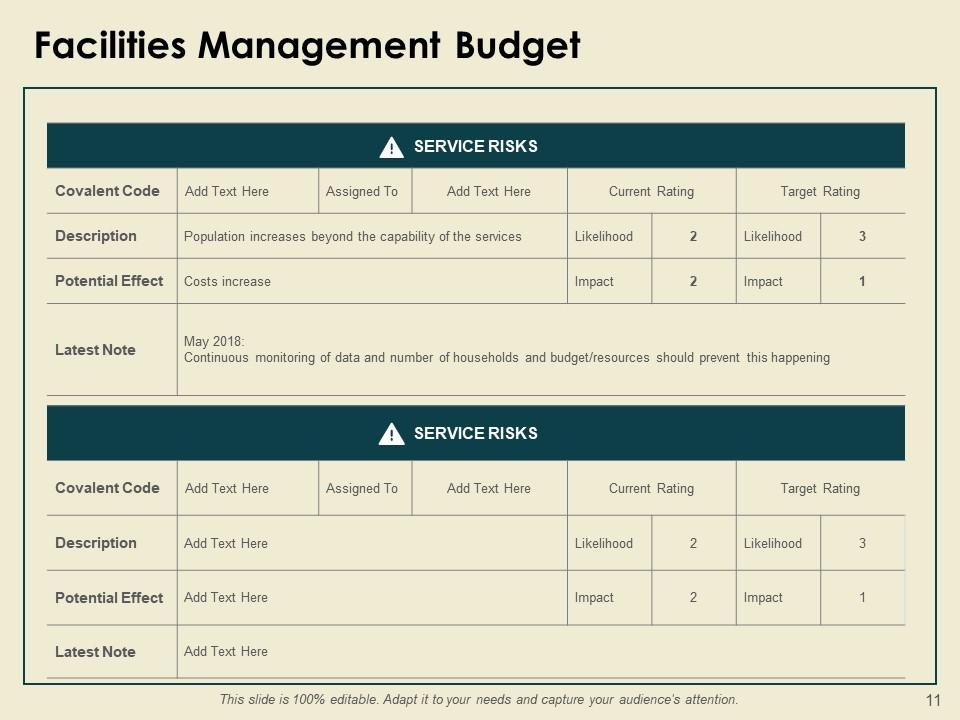
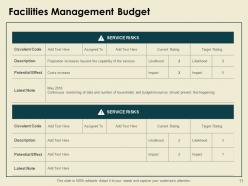
Slide 11: This slide showcases Facilities Management Budget with service risks.
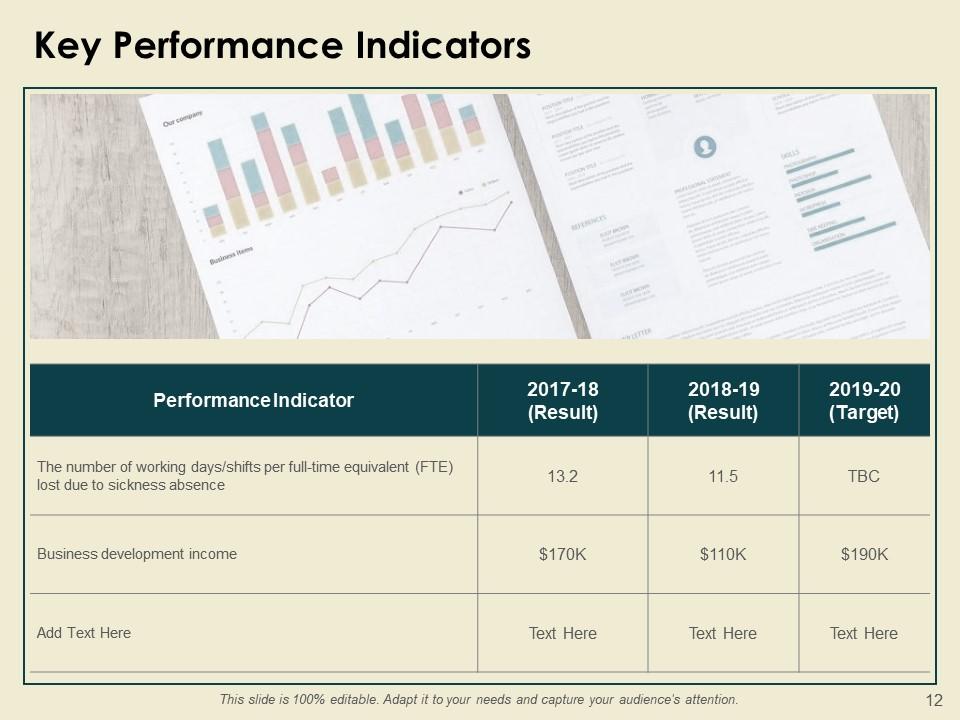
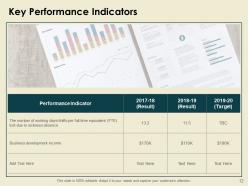
Slide 12: This slide shows Key Performance Indicators with related imagery.
Slide 13: This slide displays Strategic Facility Planning Icons.
Slide 14: This slide is titled as Additional Slides for moving forward.
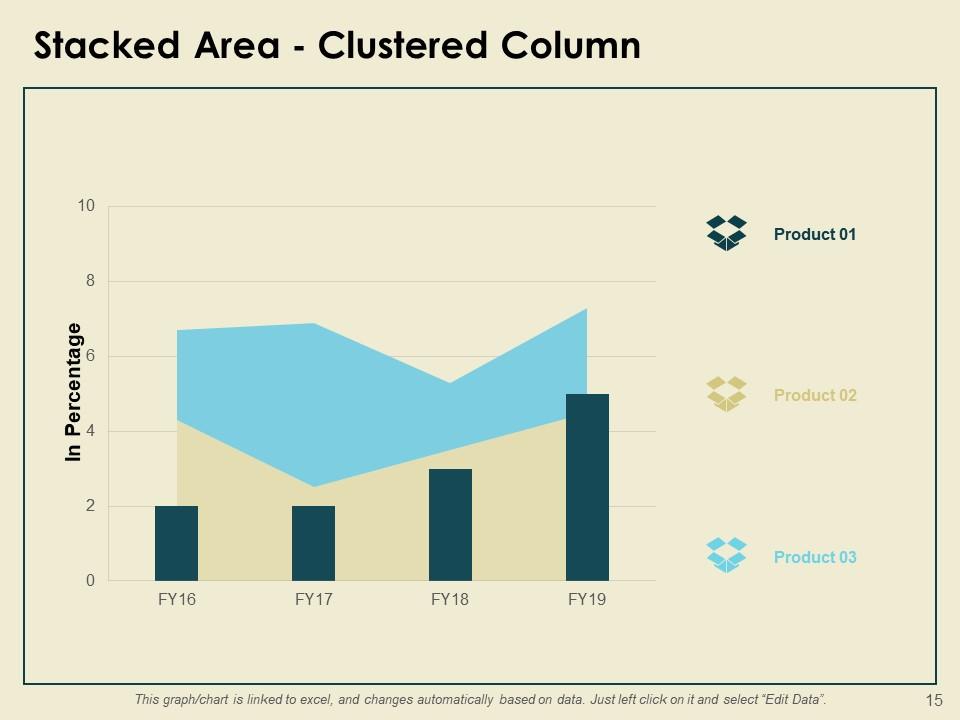
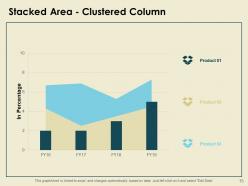
Slide 15: This slide shows Stacked Area - Clustered Column chart with three products comparison.
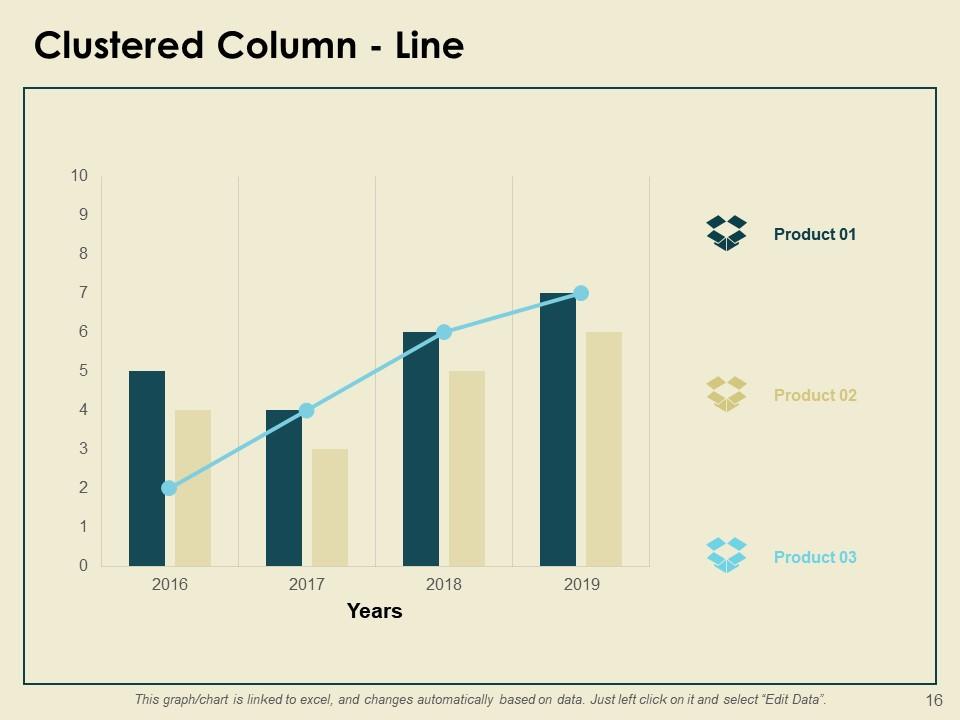
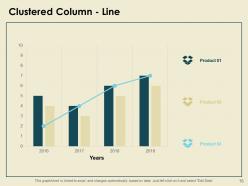
Slide 16: This slide presents Clustered Column - Line chart with three products comparison.
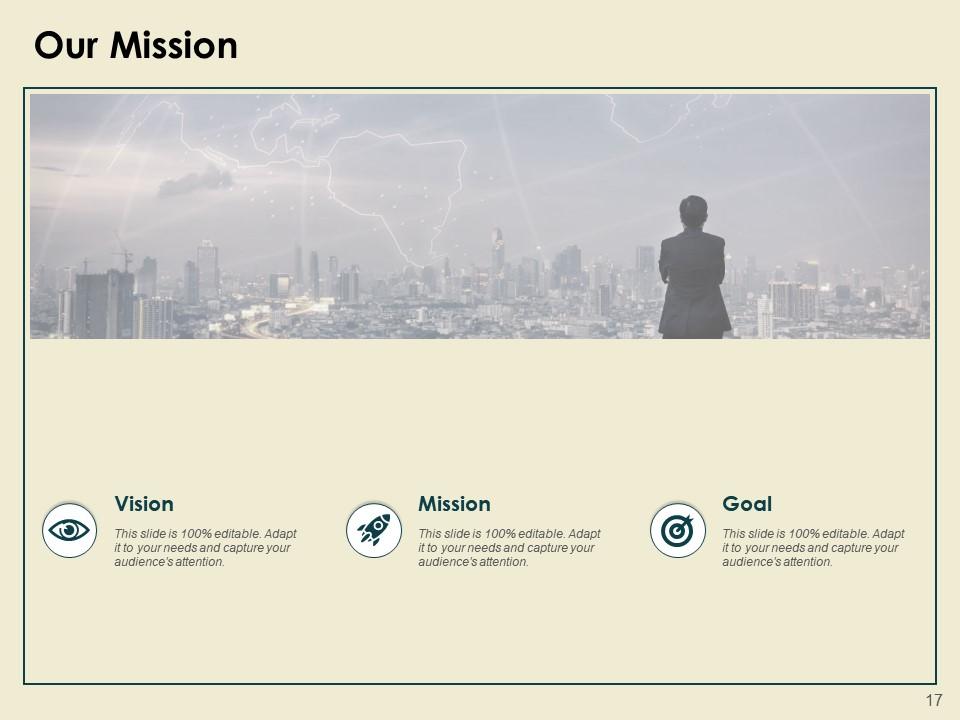
Slide 17: This is Our Mission slide with related imagery and text.
Slide 18: This is Our Team slide with names and designation.
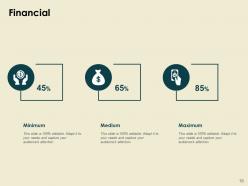
Slide 19: This is a Financial slide. Show your finance related stuff here.
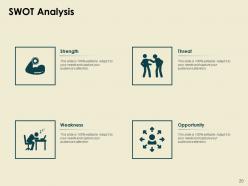
Slide 20: This is a SWOT Analysis slide. Show your firm's Strength, Weakness, Opportunity, and Threat.
Slide 21: This is a Thank You slide with address, contact numbers and email address.
Strategic Facility Planning Powerpoint Presentation Slides with all 21 slides:
Use our Strategic Facility Planning Powerpoint Presentation Slides to effectively help you save your valuable time. They are readymade to fit into any presentation structure.
FAQs for Strategic Facility Planning
Okay so four things you can't mess up: get everyone aligned on goals first (boring but crucial), do a real assessment of your current space and what people actually need, then build out different scenarios - like what if you grow fast vs slow vs stay the same. Most people skip that scenario stuff and get burned later. After that, map out your implementation in phases with actual budgets and deadlines. Oh and treat this thing like a living doc - check it every few months because things change. I've seen too many companies create these elaborate plans then shove them in a drawer somewhere. Don't be that guy.
Honestly, your org goals are like the blueprint for everything facility-wise. Growing your team by 30%? You'll need way different space than if you're shrinking or going remote. Operational stuff matters too - want more collaboration? Open floor plans work. Need people doing deep focus work? Private offices are better. I learned this the hard way at my last job - we planned space without looking at our actual strategy first. Total mess. Always dig out that strategic plan before you even think about square footage. Otherwise you're just throwing darts at a board and hoping something sticks.
Honestly, you can't really do facility planning well anymore without tech. IoT sensors track how spaces get used and monitor energy. AI helps predict future space needs - that stuff's actually pretty useful now. BIM software lets you see changes before spending money, which saves headaches later. Smart building systems handle optimization automatically. The data from all this becomes your game plan for big decisions. My advice? Figure out what's bugging you most first - wasted space, high energy bills, whatever. Then find the specific tools that fix those problems instead of buying everything at once.
Start with an environmental audit of what you've got now - that'll show you the biggest wins. Smart HVAC and LED lighting are total game-changers for energy costs. Choose locations near public transit if possible; your employees' commutes actually create way more emissions than most people think about. Water conservation systems and solar panels are worth the upfront investment. Oh, and don't forget basic stuff like proper insulation and sustainable building materials. Space optimization helps too since you're not heating/cooling areas you don't really need. It's honestly not as overwhelming as it sounds once you break it down.
Start with space utilization studies - see how people actually use your spaces vs. the capacity. Get employee feedback and do occupancy surveys to find the pain points. Also check your operational stuff like energy costs, maintenance, workflow efficiency. Walking around and just watching is honestly underrated - you'd be surprised what you notice. Compare your numbers to industry benchmarks and similar facilities. The trick is mixing hard data with what users actually experience day-to-day. Then rank improvements by impact and cost to build your action plan.
So you're basically looking at two big things - who your customers are and where they can actually reach you. Population density, age groups, income - that stuff tells you where people are now and where they're moving. But honestly, demographics mean nothing if the location sucks logistically. Can trucks get there easily? Is there decent labor nearby? Sometimes climate matters too depending on what you're doing. I'd start by throwing census data on top of your customer info to spot the obvious winners. Don't overthink it though - you want somewhere people can actually find you without wanting to give up halfway there.
Business needs shift crazy fast but your office space? Yeah, that's stuck moving at snail speed. You're always scrambling to catch up since facilities need long-term money while everyone pivots quarterly. Lease constraints make it worse, plus budget cycles never match when you actually need the space. Stakeholders want instant fixes for complicated problems - good luck with that. My advice? Build in flexibility from the start. Go modular if you can, negotiate shorter leases, keep backup space options handy. It's like... honestly just assume everything will change and plan accordingly.
Get your stakeholders involved from day one - don't wait until you've already made all the decisions. Map out everyone who actually uses the space: employees, customers, vendors, whoever. Then hit them up with surveys, focus groups, regular check-ins about what's bugging them now and what they'll need later. Honestly, I've watched so many projects crash because facilities teams assumed they knew what people wanted (they never do). Test your ideas with users first, then tweak based on their feedback. Oh, and always circle back to show them how their input actually changed things - people appreciate knowing they were heard.
Honestly, start with space utilization - that's the big one. Most companies are paying for way more space than they actually use and don't even realize it. Also track cost per square foot so you can show finance the numbers make sense. Employee satisfaction scores matter too because what's the point of an efficient layout if everyone hates working there? Oh, and if you're doing any moves or reconfigs, definitely measure time-to-occupancy. That one always takes longer than you think it will. Energy consumption's worth tracking if your company cares about the green stuff. But seriously, utilization first - it's easiest to measure and you'll probably find some shocking waste.
Look, budgets basically control everything in facility planning - they're the reality check between what you want and what's actually possible. You'll have to pick and choose which projects get money first. That dream renovation? Might have to wait while you fix the broken HVAC instead (ugh). Create different budget scenarios - best case, worst case, and what'll probably happen. Build in some wiggle room too. Here's the trick though: connect facility improvements to real business results when you pitch for funding. Show them numbers they care about. Otherwise your beautiful plans just sit there collecting dust while nothing gets done.
Start by figuring out what assets you actually have and their condition - sounds obvious but most places skip this. Then set up preventive maintenance schedules based on manufacturer specs, not just fixing stuff when it breaks. Budget for regular upkeep AND major replacements using lifecycle costs. Honestly, facilities almost always wait way too long on big things like HVAC or roofing - learned that the hard way at my last job. Build in room for tech upgrades and changing needs. Treat maintenance as investment, not expense. Do quarterly check-ins to adjust based on real performance data.
Honestly, you've gotta flip your whole approach here. Ditch the idea that everyone needs their own desk - hot-desking is the way to go now. Set up collaboration spaces, those little phone booth things for calls, and areas people can actually book when they show up. The occupancy tracking thing is crucial though - give it like 6 months to see real patterns emerge. Oh, and don't cheap out on the tech setup. Nothing's more annoying than spending 15 minutes trying to get the conference room screen to work. Really think about what people can't do from their couch at home - that's your sweet spot.
Dude, compliance stuff will totally control your whole facility design. Everything has to meet specific codes - exit routes, sprinklers, electrical, ventilation, all of it. Can't just build whatever looks good or saves cash. It's honestly annoying but keeps people safe and you out of legal trouble. Your space layout, equipment picks, and construction costs all get affected, so plan for this early. Oh and definitely get compliance people involved before you lock in any designs - learned that one the hard way!
Dude, CAD and BIM are game-changers for facility planning. You can mess around with different layouts and actually see how spaces will work before you build anything. BIM's especially cool because it's like a 3D model with all the building info built right in - you can spot problems between systems, figure out the best workflows, even watch how people might move around. My old boss used to say catching design screw-ups early saves you tons of headaches (and money) later. I'd honestly just start with basic CAD software if you haven't already. Trust me, once you try visualizing everything first, you won't go back to the old way.
So here's what I wish I'd known earlier - start with modular stuff right away. Moveable walls, raised floors for cables, that kind of thing. We got totally screwed when our team doubled faster than we planned for lol. Your HVAC and electrical should handle like 30% more than you need right now. Sounds overkill but trust me on this one. Multi-purpose rooms are clutch too since you'll want different setups later. Even sketch out some expansion ideas now - feels weird but you'll thank yourself later when you're not scrambling to find new space.
-
Awesome use of colors and designs in product templates.
-
Nice and innovative design.
-
The Designed Graphic are very professional and classic.