

Infrastructure planning and facilities management powerpoint presentation slides




Try Before you Buy Download Free Sample Product
 Impress Your
 Audience
 100%
100% Editable
 Save Hours
 of Time


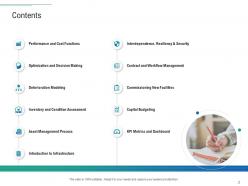
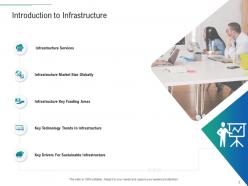
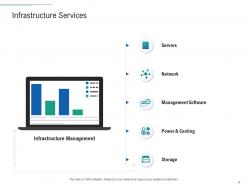
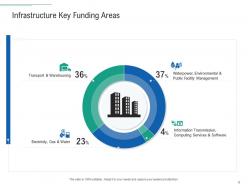
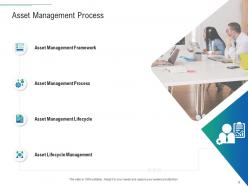
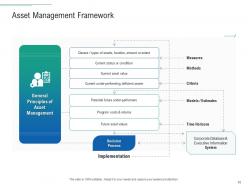
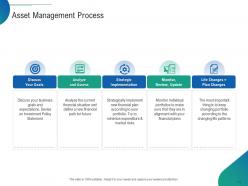
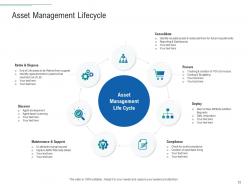
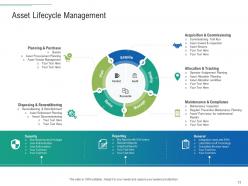
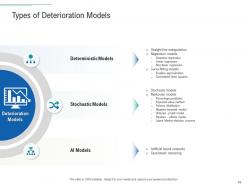
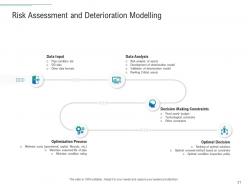
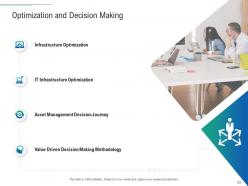
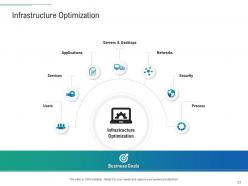
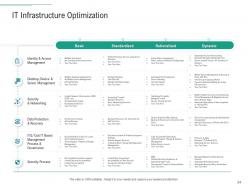
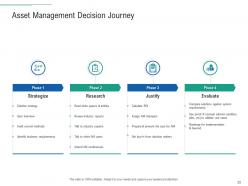
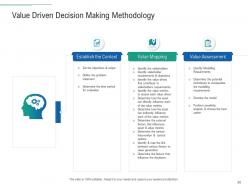
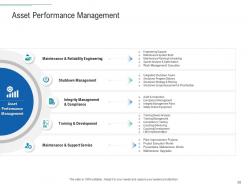
Introducing our Infrastructure Planning And Facilities Management PowerPoint Presentation Slides. Present the table of contents for your audience by taking the aid of these facilities management PPT templates. Select our integrated facilities management services PPT deck for providing a crisp and engaging introduction to your audience. Mention the list of infrastructure services that your company provides like servers, network, management software, storage, power, etc. by employing these infrastructure management PPT designs. With these infrastructure planning PPT visuals, you can showcase the logistics and statistics of the infrastructure market globally in a well-organized, properly color-coded, and structured manner. Highlight the key funding areas of infrastructure like information technology, transmission, computing services, and software through our infrastructure strategy PPT graphics. Create a framework for asset management and display the entire process by utilizing these infrastructure upgrade PPT themes. Display the wide range of deterioration models like deterministic, stochastic, and AI models by taking advantage of this facility planning PPT presentation. You can use this facilities optimization business plan PowerPoint slideshow to develop an IT infrastructure optimization business model clearly and concisely. Without any further ado, click the download button!
People who downloaded this PowerPoint presentation also viewed the following :
Infrastructure planning and facilities management powerpoint presentation slides with all 69 slides:
Use our Infrastructure Planning And Facilities Management Powerpoint Presentation Slides to effectively help you save your valuable time. They are readymade to fit into any presentation structure.





FAQs for Infrastructure planning and facilities management
Five things you absolutely can't mess up: needs assessment, getting everyone on board, money planning, risk stuff, and breaking it into phases. Honestly, the capacity mapping part is where I see people fail constantly - they rush past figuring out current vs future demands because it's tedious. Get input from actual users, not just the executives who think they know everything. Your budget needs to cover the whole lifecycle, plus add extra for when things inevitably go sideways. Break everything into chunks so you can actually show progress and pivot when needed. Oh, and use real timelines, not wishful thinking ones.
Honestly, you've gotta loop people in from day one - don't wait until everything's already decided. Community meetings, surveys, focus groups during the planning stage work well. I've watched so many projects totally bomb because residents got blindsided by stuff they never heard about. Social media, local papers, direct mail - hit multiple channels since everyone gets their news differently. Actually listen to what people say and show how their feedback changed things. Otherwise you're just going through the motions. The whole point is making it feel like real conversation where their voices actually count, you know?
Dude, tech has completely changed infrastructure planning. GIS mapping lets you model traffic flows and figure out where utilities need work. Digital twins are actually pretty sick - basically virtual copies of real infrastructure where you can test different scenarios. Data analytics help predict community impacts before you even start building. Short version: way better forecasting and you catch problems early. Honestly, the key is starting with whatever data you're already collecting and adding some basic modeling tools on top. Makes decision-making so much cleaner.
Dude, environmental stuff controls basically everything in infrastructure now. Before you even think about building, you're doing impact assessments - wetlands, air quality, where animals migrate, flood risks. All of that decides where you can actually build and how. Honestly, the timelines are brutal because of this. Plus now everyone's obsessed with climate resilience, so you're planning for weather that doesn't even exist yet. My advice? Get those environmental studies started super early. Trust me, it'll save you from redesigning the whole project later when something gets flagged.
Ugh, it's such a mess because cities grow crazy fast but building stuff takes forever. Like when a big tech company moves in? Population explodes but you're still stuck with the same old roads and schools that can't handle everyone. Money's always the issue too - nobody wants to pay for upgrades until everything's already falling apart. NIMBYs make it worse obviously. Honestly, cities need to get better at predicting where growth will happen by watching economic trends. Having flexible zoning ready helps. Don't wait until you're drowning to start planning - scenario planning beats crisis management every time.
PPPs let you bring in private money upfront instead of draining your budget. The private side handles construction and usually runs operations too, while you keep ownership and oversight. Risk gets split between whoever can manage it better - which honestly makes way more sense than government trying to do everything. They're perfect for big stuff like toll roads, water plants, transit systems where you need serious cash but can't lose public control. Oh, and the private sector brings expertise you probably don't have sitting around. Figure out which risks you actually want to share based on what your project needs.
Honestly, data analytics is like having a crystal ball for infrastructure stuff. Traffic patterns become predictable. Water mains? You'll know which ones are gonna burst before they actually do. Real-time sensors and cameras beat the hell out of those old surveys nobody trusted anyway. My advice - don't try to solve everything at once though. Pick something specific like predicting where pipes might fail next using historical data. It's way more satisfying than playing guessing games with million-dollar projects. Plus your boss will think you're psychic.
Three things to nail down first: think lifecycle, get stakeholders involved early, and design for flexibility. Don't just budget for building costs - factor in maintenance, upgrades, even tearing it down eventually. I've watched so many projects get wrecked by this oversight! Communities usually know their needs better than anyone, so talk to them before you dive into technical specs. Oh, and green infrastructure rocks - it often beats traditional methods anyway. Build systems that can adapt as demands change. Start with mapping out all your stakeholders first. Trust me on this one.
Look at your 20-30 year population projections first - that's what really matters since infrastructure takes forever to build. Aging population? You'll need way more accessible transit and senior housing. Lots of young families moving in means schools and parks become priority. Here's the tricky part though - if your population's shrinking, you actually have to scale back services, which is somehow way harder than just building new stuff. I'd map out where people are moving to vs. leaving, then figure out your current capacity gaps. Don't just look at today's numbers or you'll be playing catch-up for decades.
Honestly, PPPs are where it's at - you get public oversight but private efficiency handles the heavy lifting. Blended financing is solid too since it mixes public funds with private investment. Design-build-finance-operate contracts? Those are money for stuff like toll roads where revenue's predictable. Municipal bonds still work fine, just kinda vanilla compared to what's happening now. Oh, and don't try forcing your financing to fit the wrong project type - match your structure to the actual risk profile and cash flows. Makes everything way smoother.
Okay so first thing - you've gotta work climate projections into your design right from the start. Look at your local data: temp increases, rainfall changes, how often you'll get crazy storms. Then build for those future conditions, not what's happening now. Higher flood barriers, materials that won't melt in heat waves, backup systems for essential stuff. I swear, so many engineers are still using old weather patterns like the climate isn't completely changing. Model out different scenarios and build in flexibility so you can adjust later. Makes way more sense than rebuilding everything in ten years, you know?
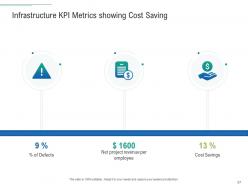
Track both tech stuff and business impact - you need the full picture. Performance metrics like latency and uptime matter because that's what users actually feel. Business-wise, look at cost savings and whether you're hitting those original goals. Adoption rates are huge too (seriously, I've seen amazing infrastructure just sit there unused). Monthly reviews work well - maybe grab 3-4 key metrics from each bucket and put them on a dashboard. Oh, and make sure stakeholders actually show up to those reviews or it's pointless.
So basically urban planning is like playing Tetris with existing buildings and infrastructure - you're cramming everything into tight spaces with tons of stakeholders breathing down your neck. Rural planning? Totally different beast. You're dealing with huge distances but way fewer people. Like, how do you justify running fiber to serve maybe 200 people across 50 miles? Urban projects cost more per mile but hit thousands of residents. Rural ones are cheaper per mile but only reach dozens. Population density drives literally everything else, so that's where I'd start. Oh and rural zoning is usually way less of a headache than city stuff.
Dude, infrastructure planning is basically deciding who gets screwed over and who doesn't. Highway through a poor neighborhood? Those families lose out for decades. Transit stops only in rich areas? Good luck getting to work if you're broke. Planners have crazy amounts of power - like, they can literally trap entire communities or give them opportunities. The smart move is getting those affected neighborhoods involved from day one, not after you've already drawn up plans. Oh and actually track if your decisions help everyone, not just make the budget look good.
Dude, skip all the technical stuff - people's eyes just glaze over. Use maps and simple before/after pics instead of those boring engineering diagrams. I made that mistake so many times lol. Show them what actually changes in their lives: faster commutes, better water, whatever applies. Meet them where they are - community centers, not some sterile office. Actually listen instead of just talking at them. Oh, and don't rely on just one meeting. Hit social media, local news, those bulletin boards at coffee shops. People engage differently and you gotta catch them however works.
-
Awesome presentation, really professional and easy to edit.
-
Awesomely designed templates, Easy to understand.
-
Top Quality presentations that are easily editable.
-
Easily Editable.
-
Awesome presentation, really professional and easy to edit.
-
Informative presentations that are easily editable.
-
Awesome presentation, really professional and easy to edit.
-
Excellent template with unique design.
-
Innovative and Colorful designs.
-
Content of slide is easy to understand and edit.
-
Page:
- You're currently reading page 1
- Page 2
-
