Integrated Planning Powerpoint Presentation Slides
Try Before you Buy Download Free Sample Product
Audience
Editable
of Time
Introducing, integrated planning PowerPoint presentation slides to showcase your company's financial value. SlideTeam has designed these PPT slides in order to integrate multiple functions of business for the best outcome. Keeping in mind, Enterprise Model, Integrated Planning and Enterprise Optimization as the major components of integrated planning in business we have designed these PPT slides. Fueled with topics like Strategic Plan including mission, goals, aspirations, strategies, and financial forecast. Operational Plan includes interpretations, key result areas, operational objectives, performance indicators, action plans, and budget. Moreover, operational objectives slide include cost & volume, quality, environmental, efficiency & flexibility are included here with bar graphs and charts sheets for a thorough representation of your plans. Further studies can be done through, integrated Business planning broad framework PPT slides which include, supply chain planning, sales forecasting & budgeting, strategic & commercial planning. Proceed with a reliable source for durability and create an impact with this PPT set for your integrating planning related presentations.
People who downloaded this PowerPoint presentation also viewed the following :
Content of this Powerpoint Presentation
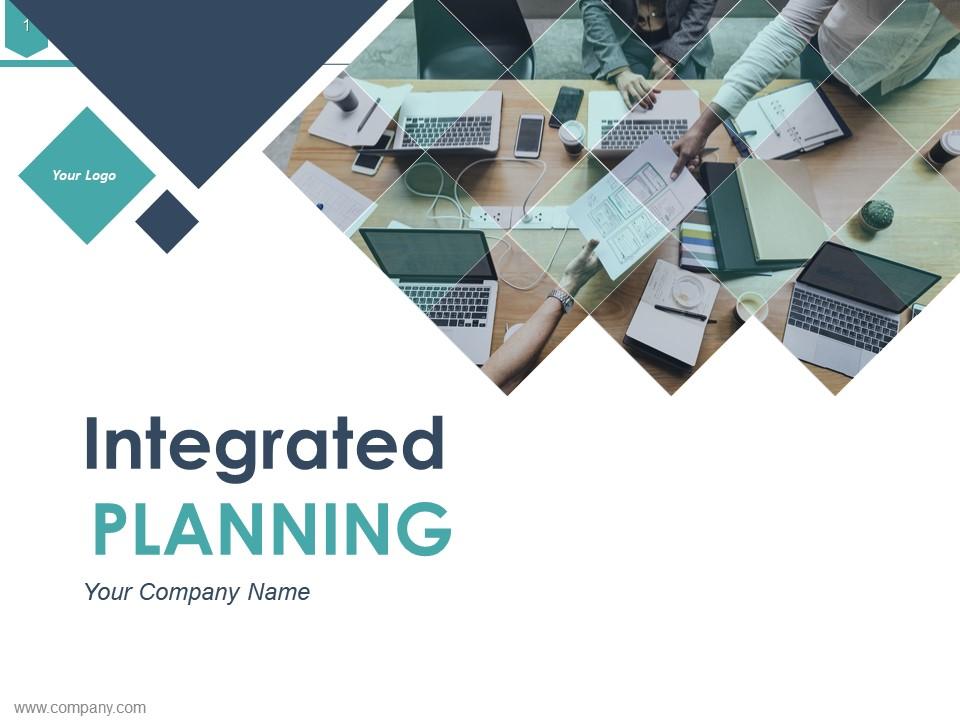
Slide 1: This slide introduces Integrated Business Process Outline with creative imagery. State your company name and get started.
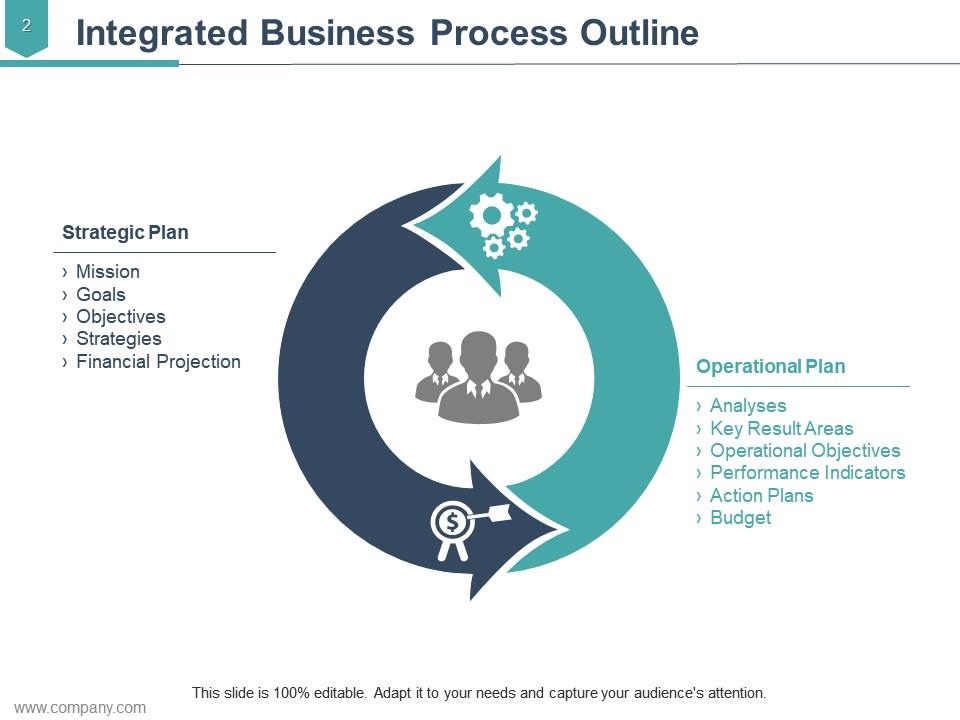
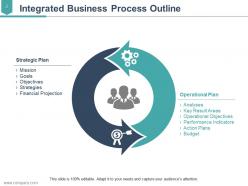
Slide 2: This is another Integrated Business Process Outline slide stating the following- Strategic Plan including mission, goals, objectives, strategies, financial projection. Operational Plan which includes analyses, key result areas, operational objectives, performance indicators, action plans, budget.
Slide 3: This is a slide titled Strategic Planning.
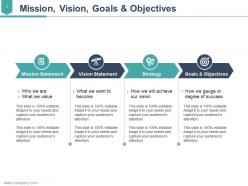
Slide 4: This slide presents Mission, Vision, Goals & Objectives. You can add goals, aspirations, strategy etc. here.
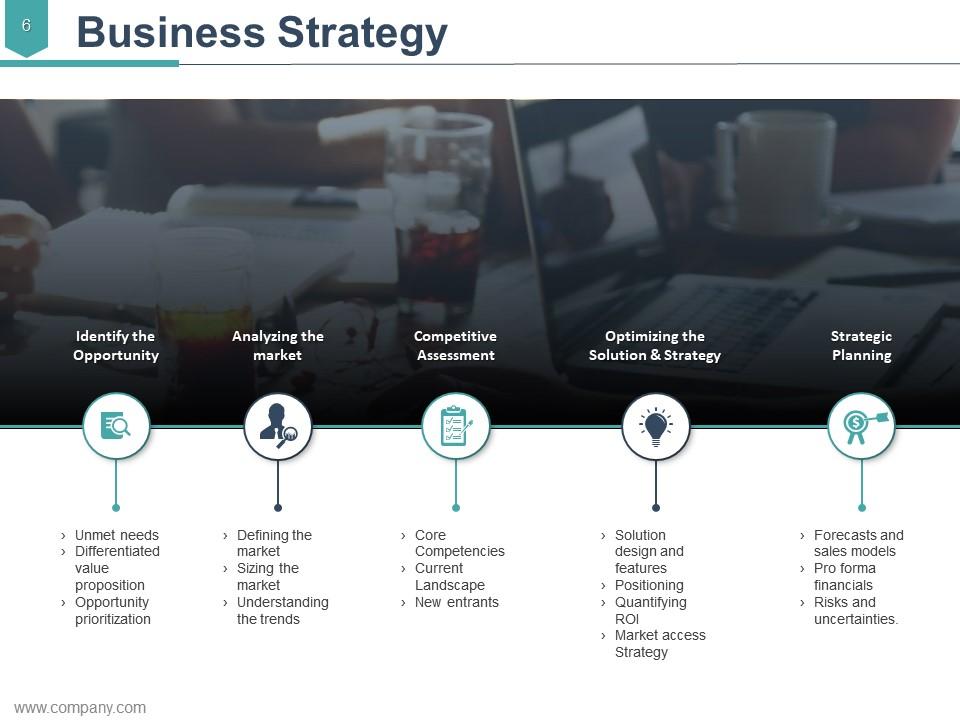
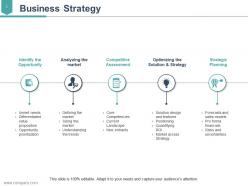
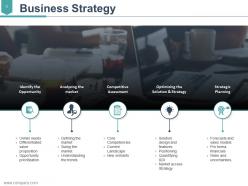
Slide 5: This slide presents the Business Strategy involving the following- Identify The Opportunity, Analyzing The Market, Competitive Assessment, Optimizing The Solution & Strategy, Strategic Planning.
Slide 6: This is another Business Strategy slide.
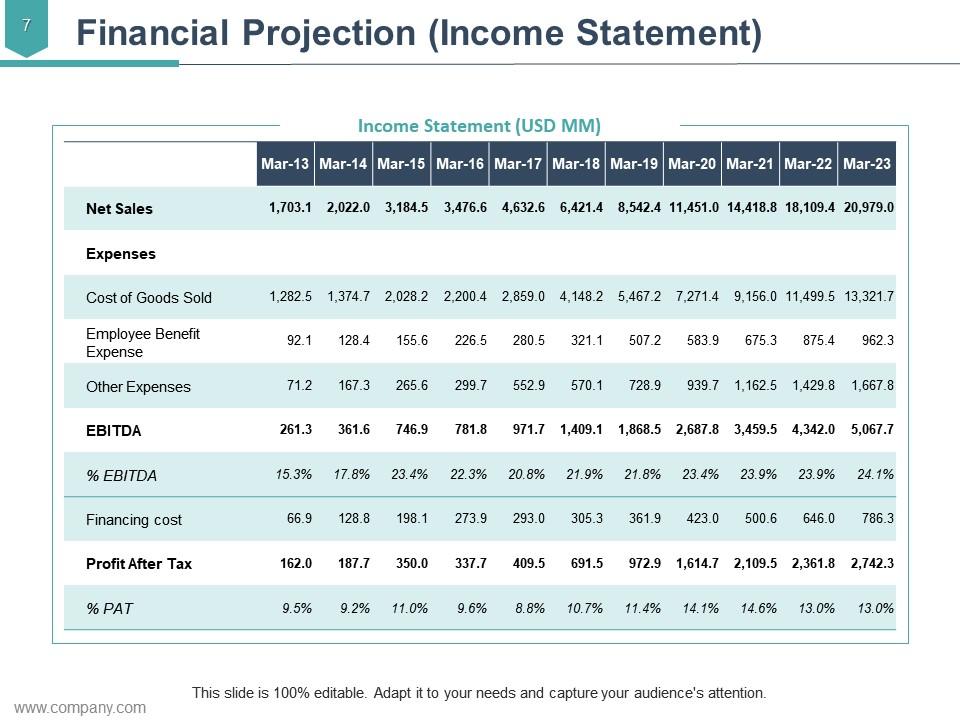
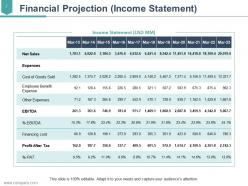
Slide 7: This is Financial Projection slide showing income statement (USD MM).
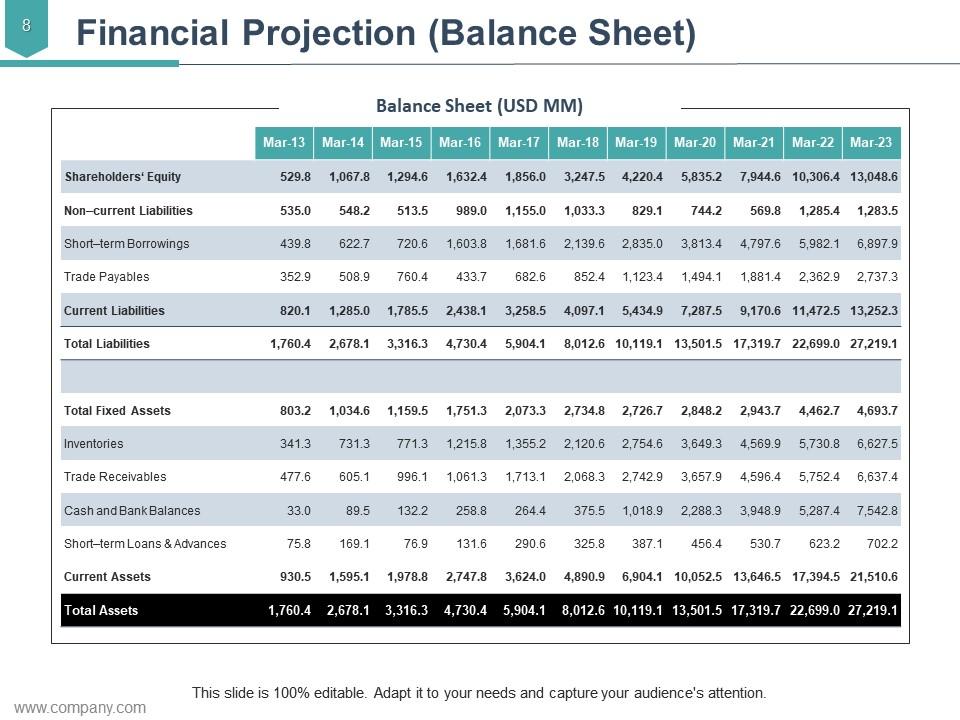
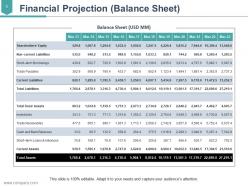
Slide 8: This is another Financial Projection slide showing balance sheet.
Slide 9: This slide is titled Operational Plan.
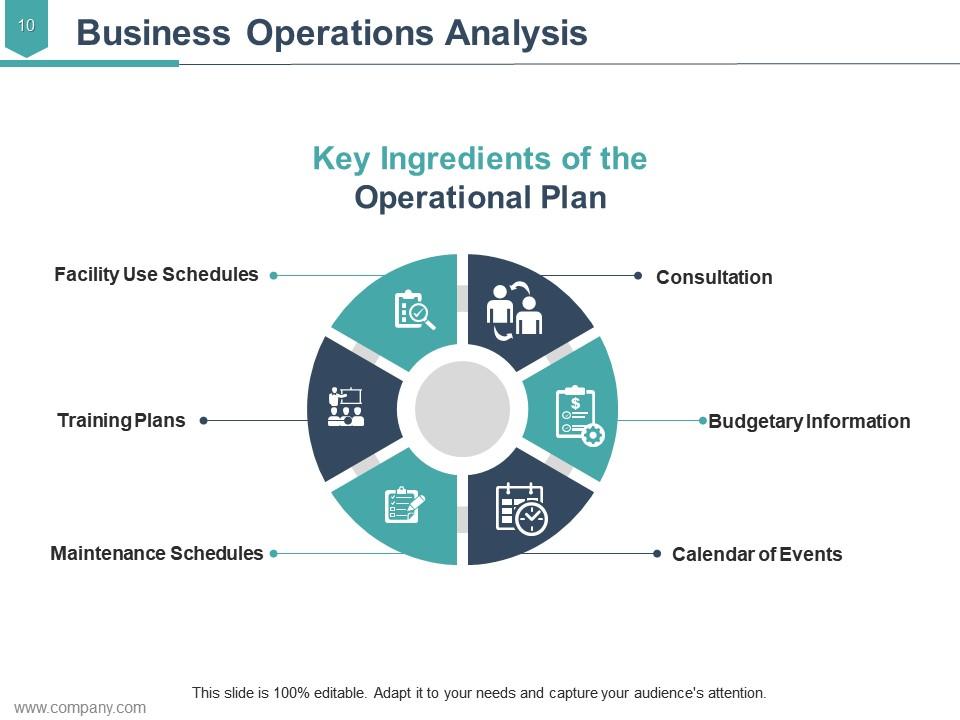
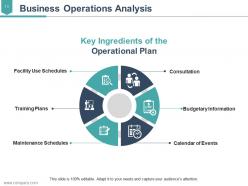
Slide 10: This slide shows Business Operations Analysis with Consultation, Budgetary Information, Calendar of Events, Facility Use Schedules, Maintenance Schedules, Training Plans.
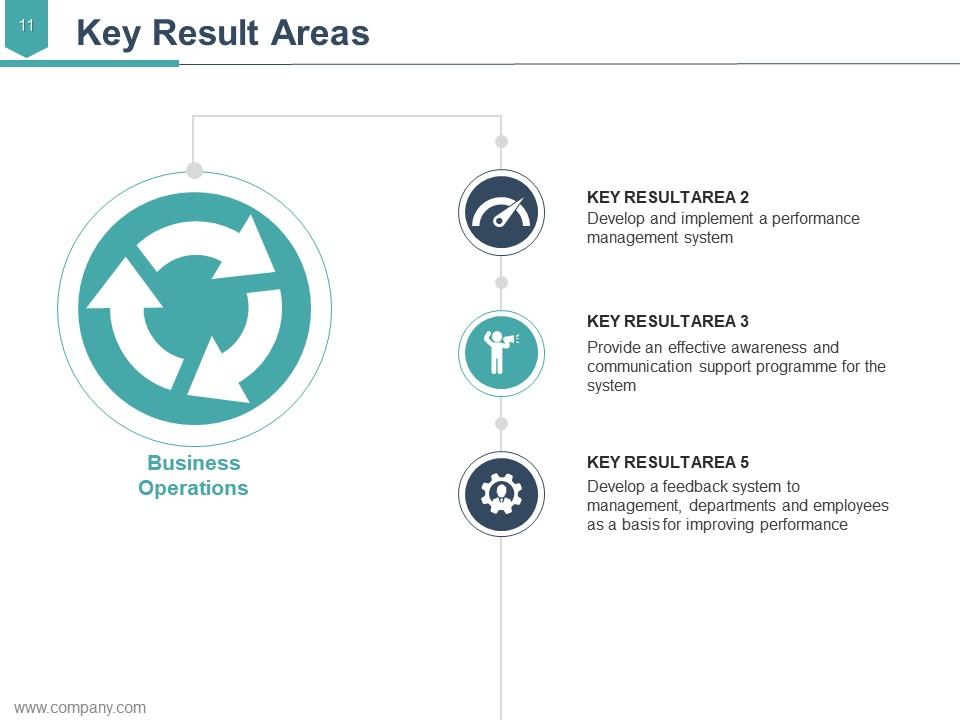
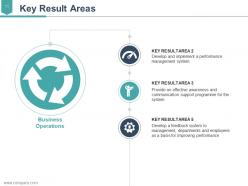
Slide 11: This slide presents Key Result Areas with arrow image.
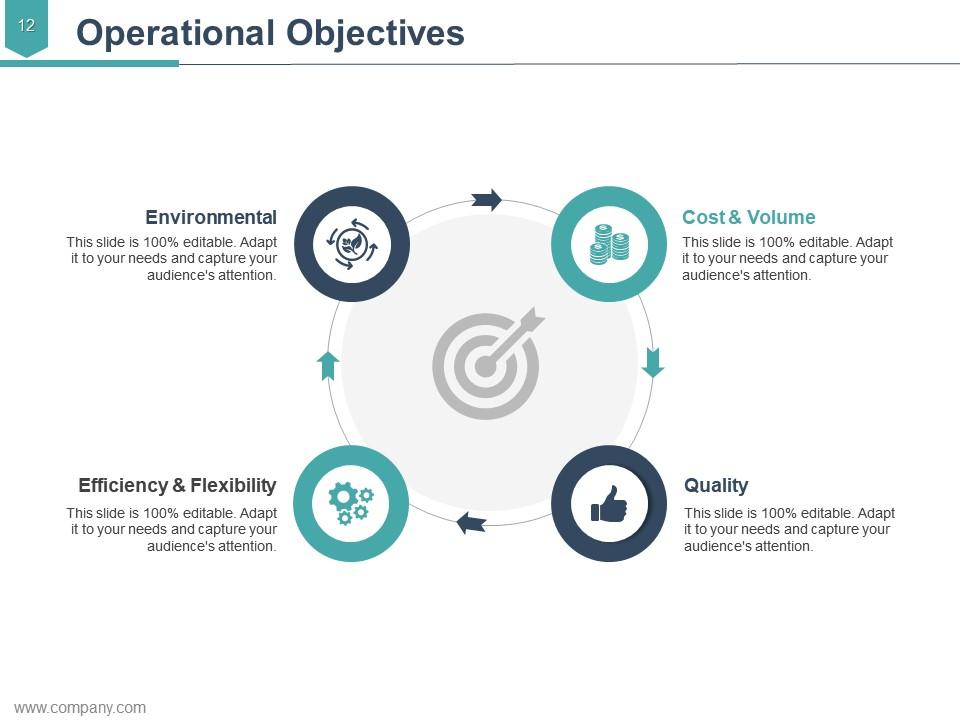
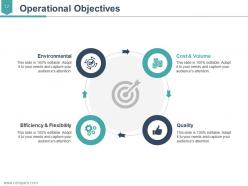
Slide 12: This is an Operational Objectives slide which include- Cost & Volume, Quality, Environmental, Efficiency & Flexibility.
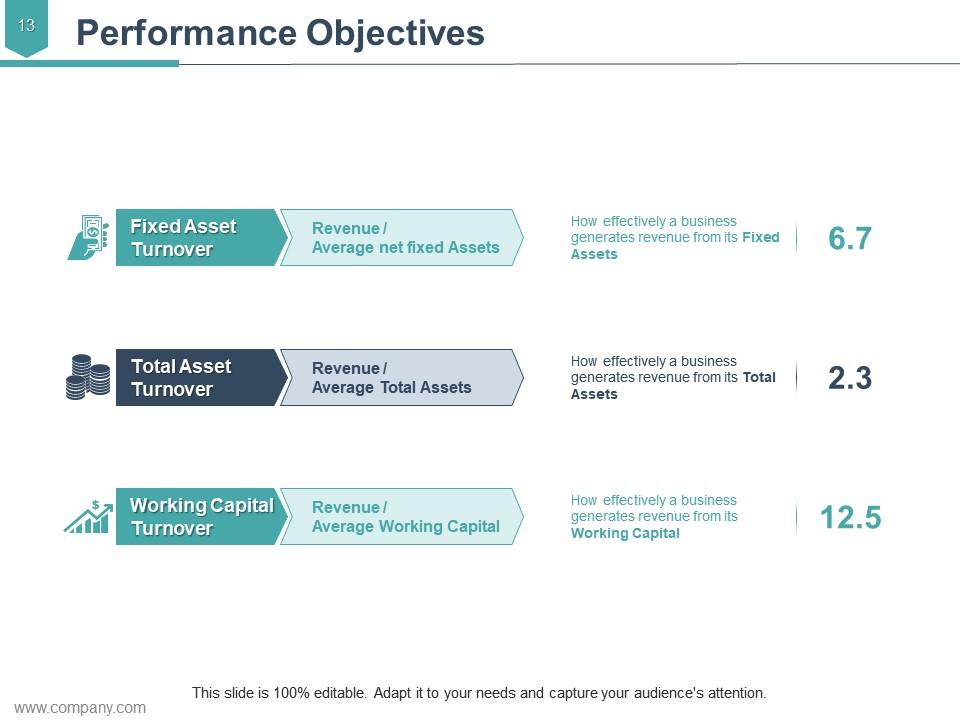
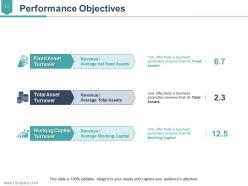
Slide 13: This slide shows Performance Objectives with fixed asset turnover, total asset turnover and working capital turnover.
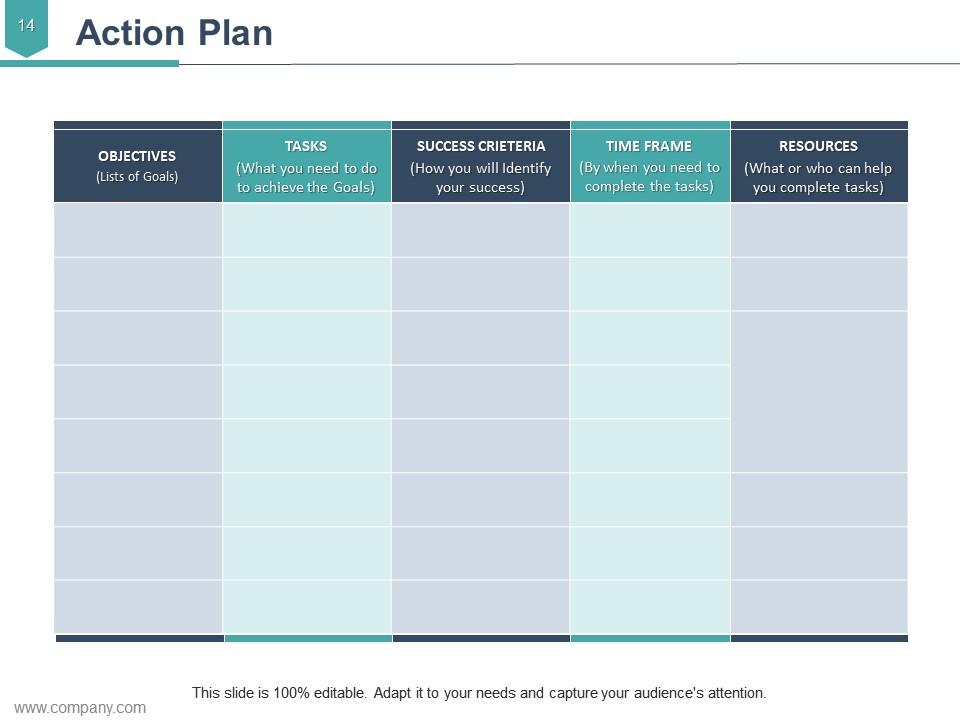
Slide 14: This is an Action Plan slide. You can list your obectives, tasks, resources, success criteria, time frame here.
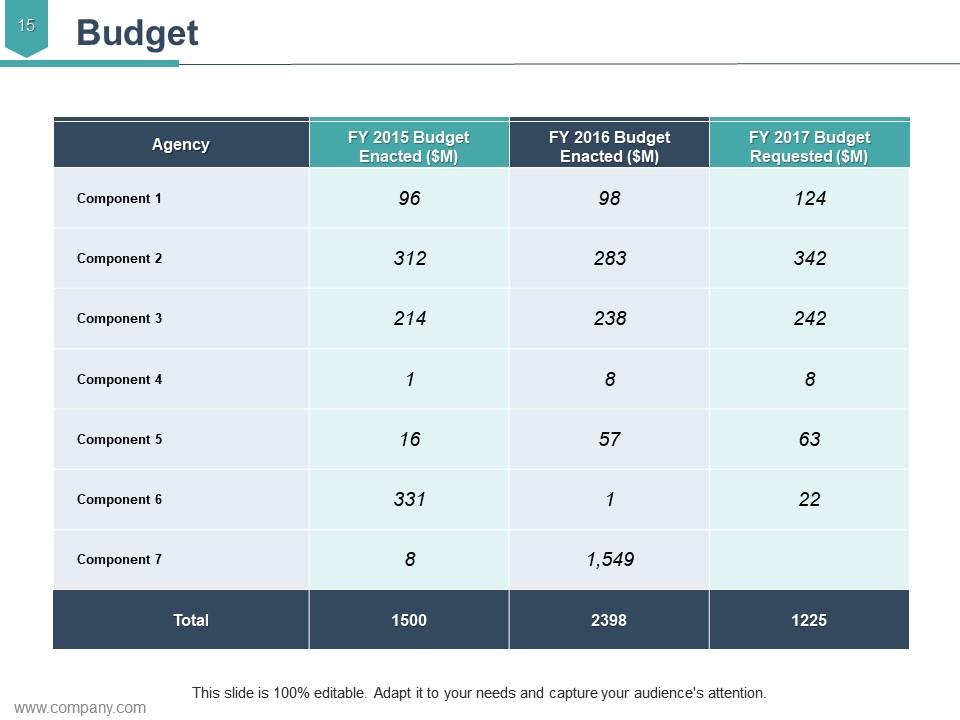
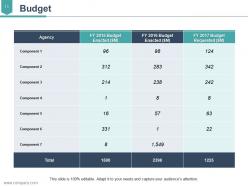
Slide 15: This is a Budget slide represented in years.
Slide 16: This is a Coffee Break slide. You can change as per need.
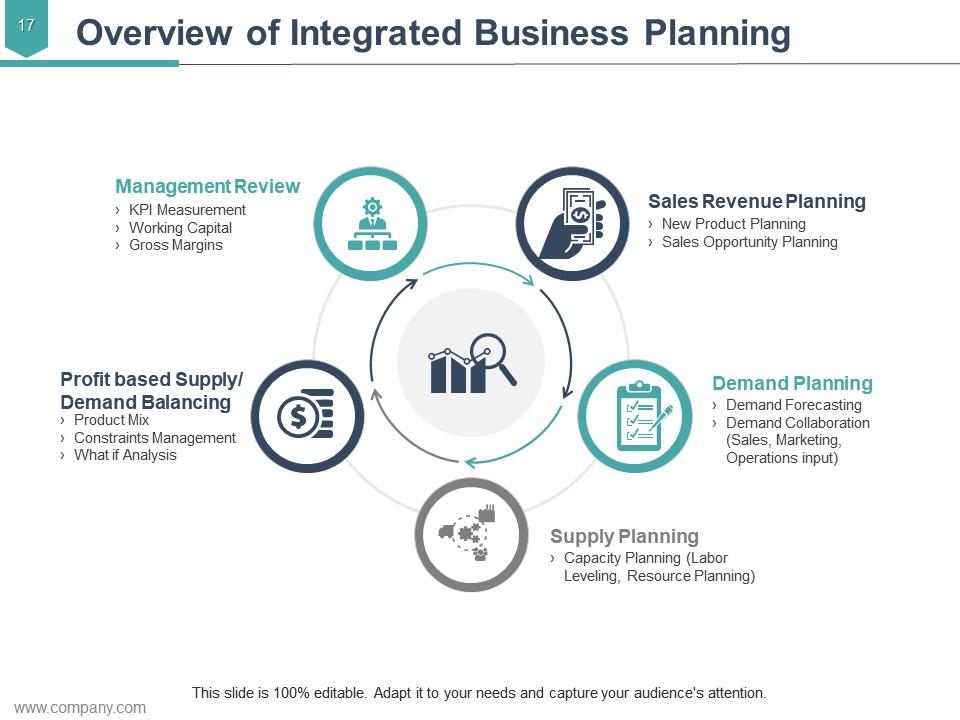
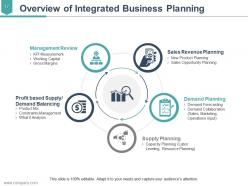
Slide 17: This slide presents an Overview of Integrated Business Planning which include the following- Sales Revenue Planning, Demand Planning, Supply Planning, Management Review Profit based Supply/ Demand Balancing.
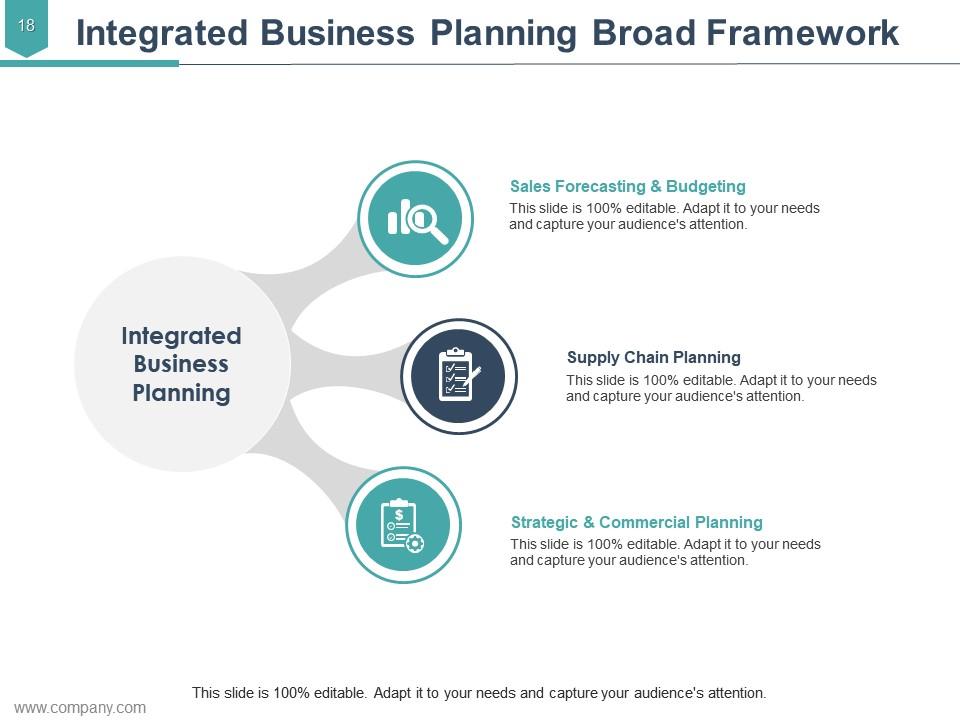
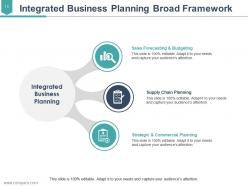
Slide 18: This slide presents an Integrated Business Planning Broad Framework which include the following- Supply Chain Planning, Sales Forecasting & Budgeting, Strategic & Commercial Planning.
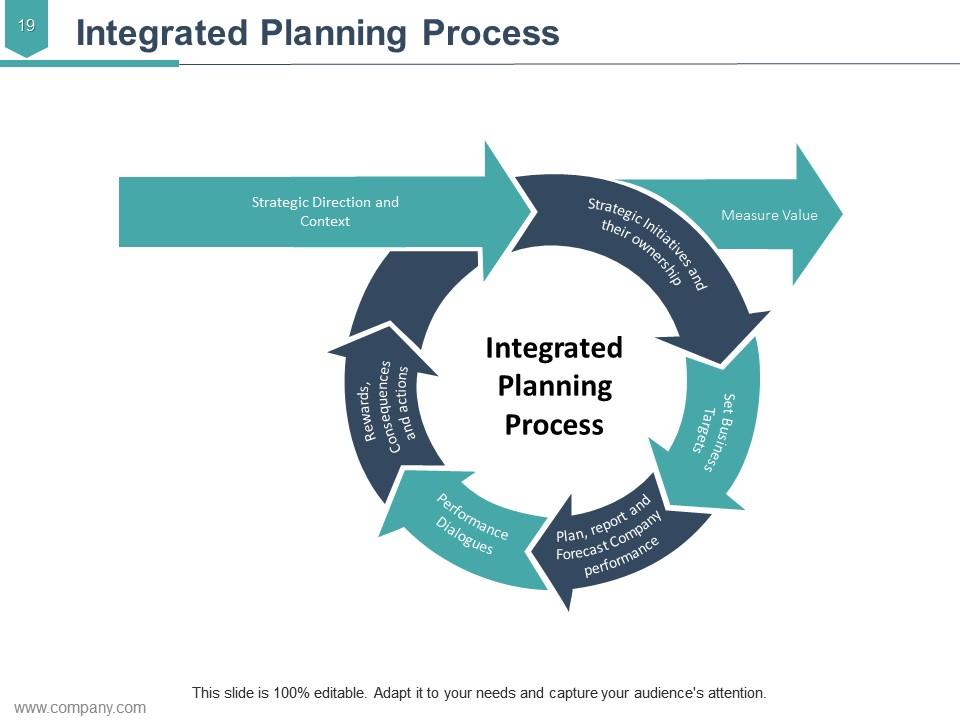
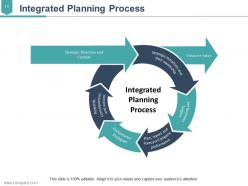
Slide 19: This slide shows Integrated Planning Process with the following points- Integrated Planning Process, Strategic Direction and Context, Strategic Initiatives and their ownership, Set Business Targets, Plan, report and Forecast Company performance Performance Dialogues, Rewards, Consequences and actions.
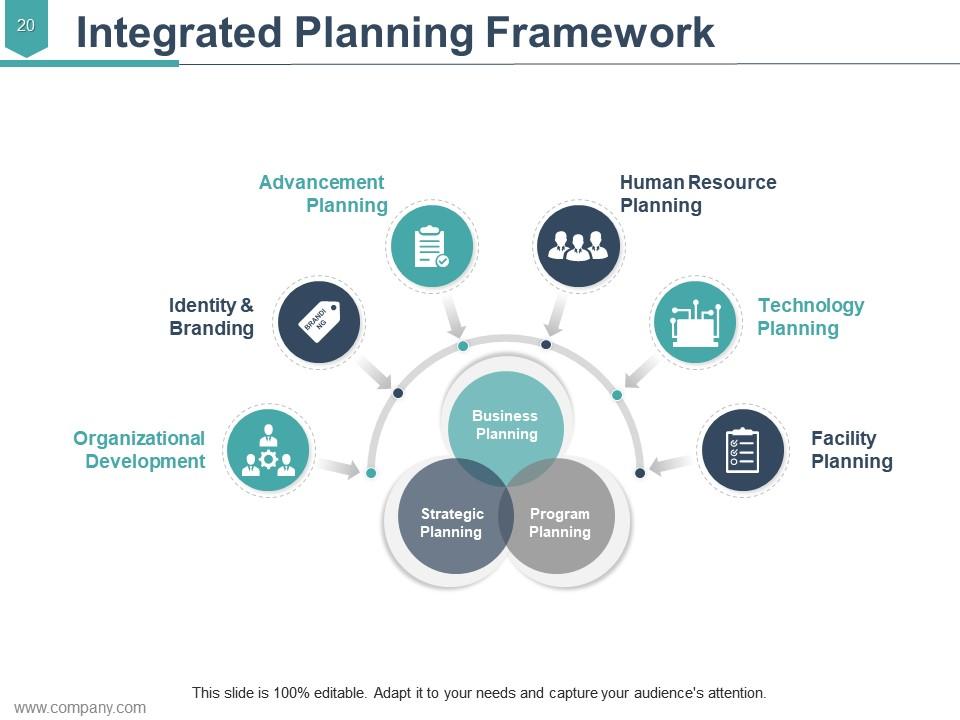
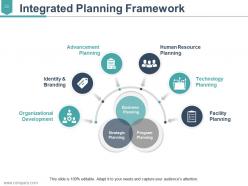
Slide 20: This slide shows Integrated Planning Framework through strategic planning, program planning and business planning.
Slide 21: This slide is titled Graphs And Charts. You may change the slide content as per need.
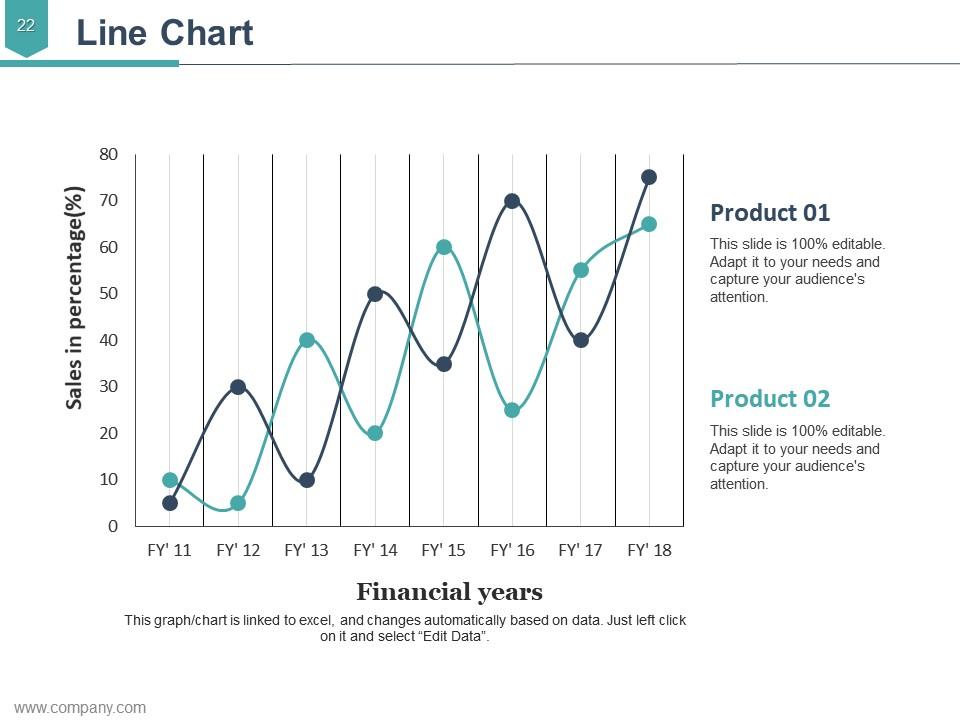
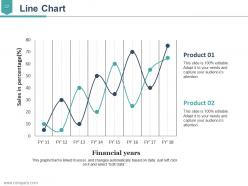
Slide 22: This is a Line Chart image slide for two product comparison.
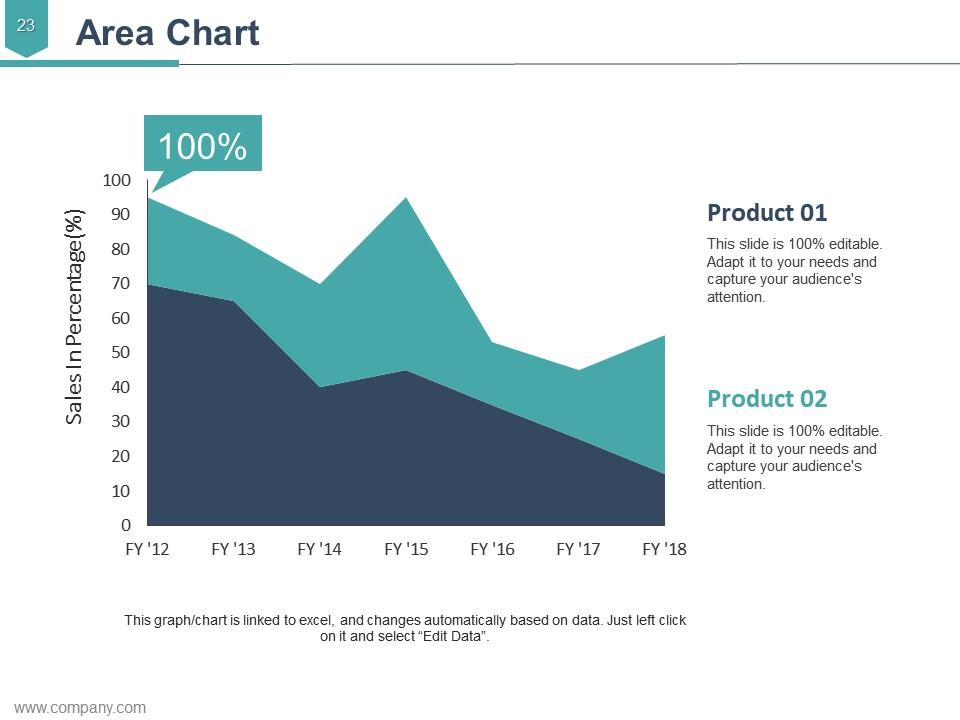
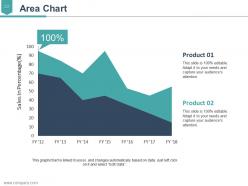
Slide 23: This is an Area chart slide to present product/entity, information etc.
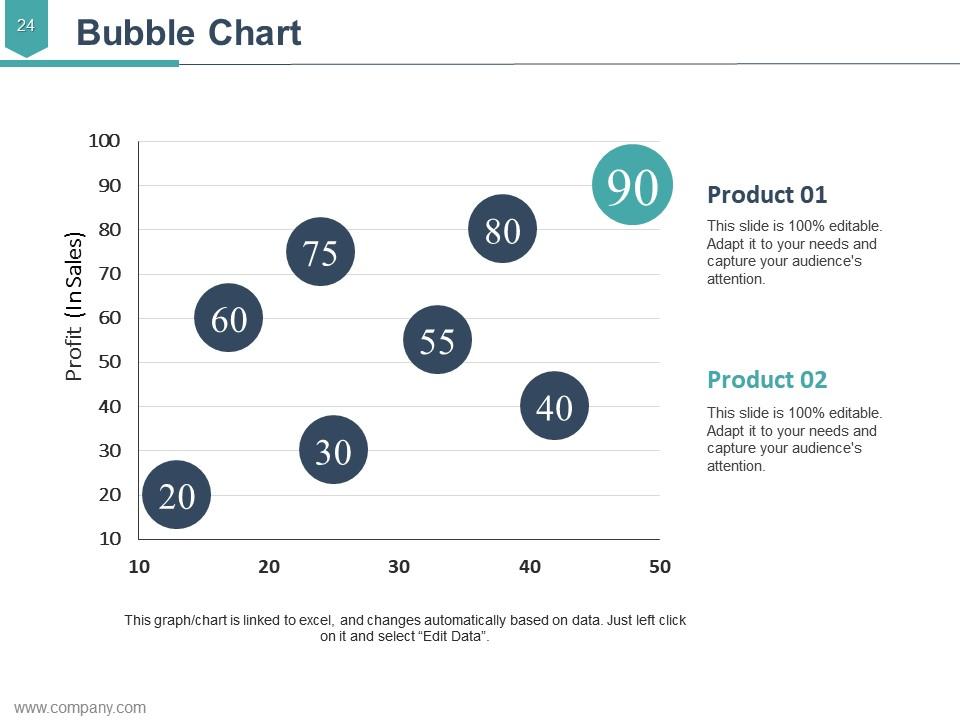
Slide 24: This is a Combo Chart slide to present product comarison in years.
Slide 25: This slide is titled Additional Slides to move forward. You may change the slide content as per need.
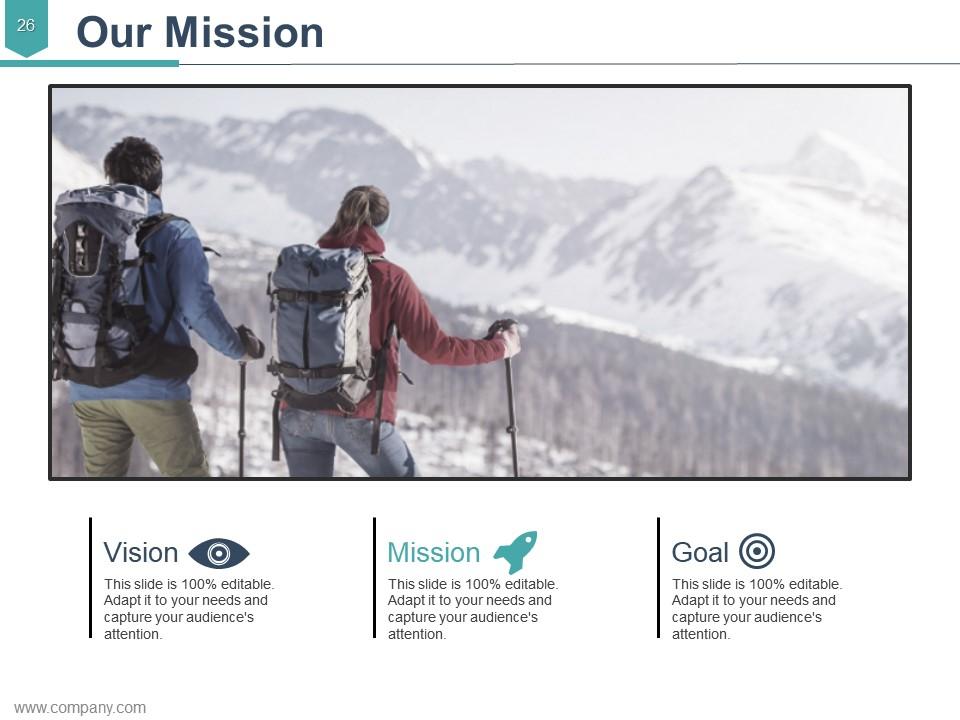
Slide 26: This slide presents Vision & Mission. State your goals, vision, aspirations etc. here.
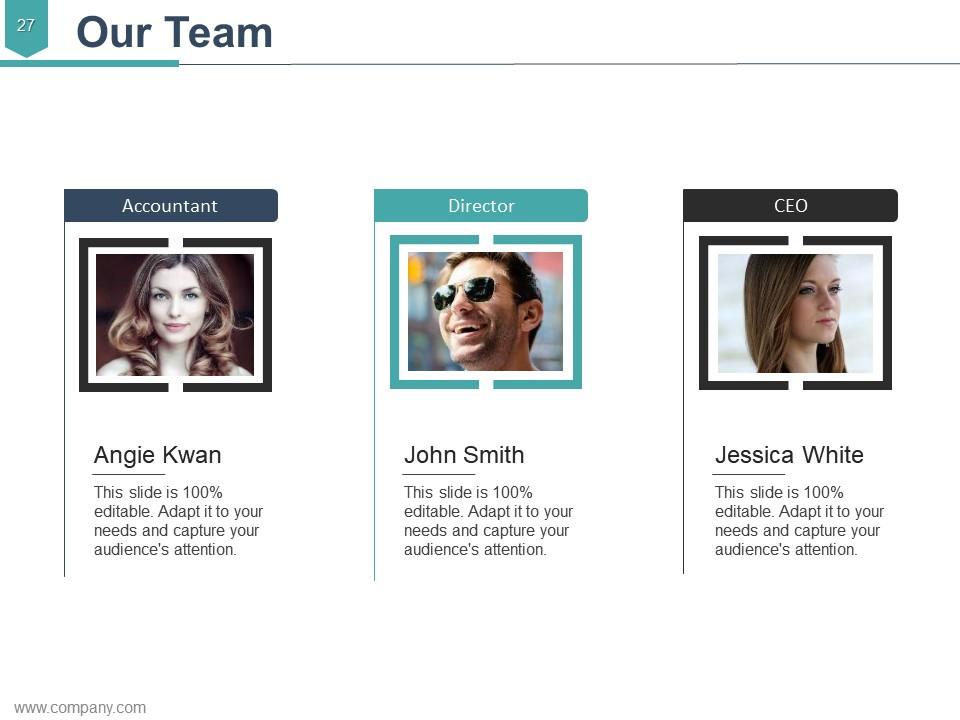
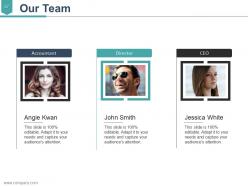
Slide 27: This is Our Team slide with name, designation and text boxes to fill information.
Slide 28: This is an About Us slide. State team/company specifications here.
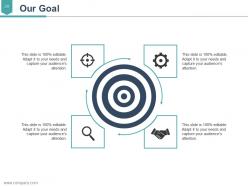
Slide 29: This is Our Goals slide. State your goals, aspirations etc. here.
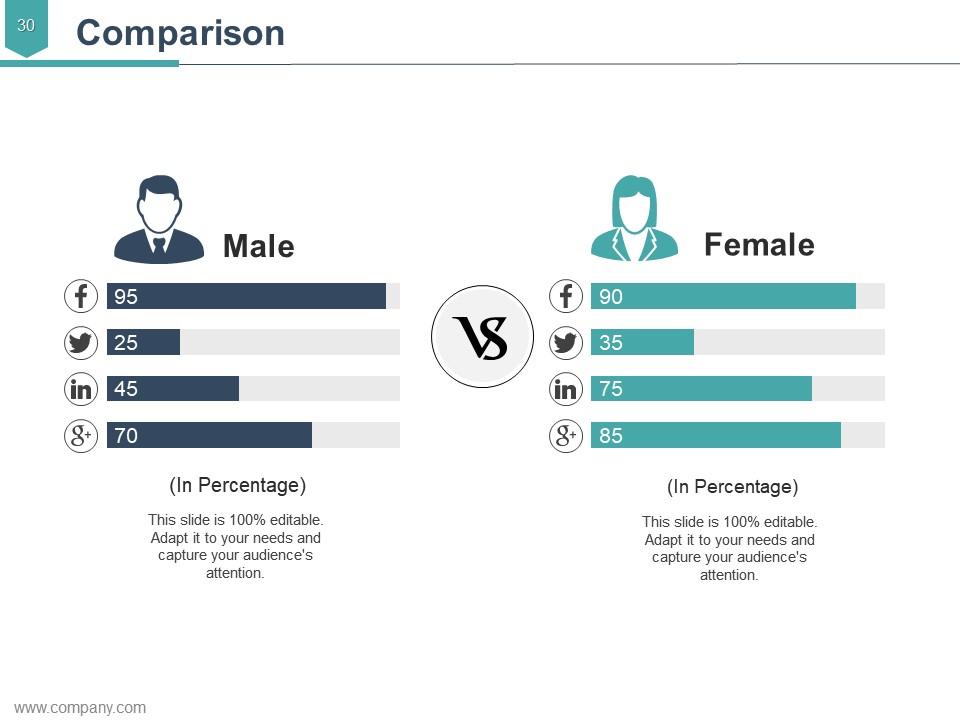
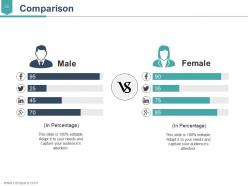
Slide 30: This is a Comparison slide between males and females. State comparison aspects here.
Slide 31: This is a Thank You slide with address, street number, city, state, contact numbers, email address.
Integrated Planning Powerpoint Presentation Slides with all 31 slides:
Gain endorsement with our Integrated Planning Powerpoint Presentation Slides. The audience will echo your belief.
FAQs for Integrated Planning
Honestly, most companies screw this up because departments just don't talk to each other. Finance does their thing, operations does theirs, and nobody's on the same page. Strategic alignment is huge - but the real trick is getting people to actually collaborate regularly, not just in quarterly meetings. Cross-functional teams help a ton. You also need shared data systems so everyone's working from the same numbers, which sounds obvious but... yeah. Resource coordination matters too. Map out where your planning processes currently overlap or conflict - that's your starting point. Oh, and connect short-term stuff to long-term goals with clear timelines. Continuous monitoring keeps everything on track.
So with integrated planning, you're getting all departments on the same page from the start instead of having everyone work separately and then try to merge everything later - which honestly never goes well. Finance, ops, everyone can see how their choices affect other teams right away. Traditional planning is more like a relay race where one team finishes, passes it off, repeat. Way more collaborative upfront, which saves you from those nightmare revision rounds later. My old company tried the traditional way and we'd be redoing budgets like three times because nobody talked to each other initially.
So data analytics is what actually makes integrated planning work instead of it just being some fancy corporate term. You'll get visibility across sales, ops, finance, supply chain - all that stuff - and suddenly you can see connections you missed before. Honestly, the scenario modeling piece is probably the most useful part. It helps predict bottlenecks and keeps everyone using the same numbers instead of their own random spreadsheets (we've all been there). Start by figuring out which data sources aren't talking to each other yet - that's usually where the biggest gaps are hiding.
Honestly, integrated planning is a game-changer for getting rid of those stupid departmental turf wars. You'll finally see how everything connects instead of having each team beg for budget separately. Like, sales obviously needs marketing backing them up, and IT can't function without ops - it's all linked. Planning together lets you catch where you're doubling up on stuff and actually put money where it'll move the needle. Plus you stop wasting time on politics and focus on what works. Oh, and definitely start by figuring out which departments depend on each other first - that's your roadmap right there.
Honestly, the worst part is getting departments to stop hoarding their data. Everyone's got their own systems - finance uses one thing, sales another, and good luck getting them in the same room. People get weirdly attached to their Excel sheets too, which... I kinda get it but still. Technology integration is a pain, especially with old legacy stuff that barely talks to anything. Different teams measure success totally differently, so you're constantly battling conflicting priorities. My take? Don't go big right away. Pick one small cross-functional project first and show it actually works before you try overhauling everything.
So basically, you want tech that connects all your teams and data in one place. Cloud dashboards are honestly a lifesaver - everyone sees the same info at the same time instead of playing telephone with outdated spreadsheets. Analytics tools will catch patterns you'd totally miss otherwise. AI can even flag when different departments are about to clash on something before it becomes a mess. But here's the thing - don't just grab random tools that don't play nice together. Map out where your planning breaks down first. Then find stuff that actually bridges those gaps instead of creating new headaches.
Honestly, I'd track both the process stuff and actual results. Baseline everything first - that part's crucial. For process metrics, look at how often teams collaborate, planning cycle times, stakeholder engagement. Results-wise: forecast accuracy, resource utilization, hitting your strategic goals. Revenue and customer satisfaction matter too, though a ton of other factors mess with those numbers. Don't go crazy with metrics though - pick maybe 4 max? I've seen people drown in data that doesn't actually help them make better decisions. The whole point is seeing if integration actually works, not creating a spreadsheet monster.

Don't just slap stakeholder engagement on at the end - that's lazy planning. Map out who really matters first: your internal teams, customers, community folks, regulators. Build touchpoints throughout the whole process. Workshops when you're defining problems, feedback loops during design, validation before you finalize anything. I've watched so many companies do this fake "engagement theater" where they pretend to listen but ignore everything. Make it actually two-way - you're incorporating their input, not just checking a box. Regular check-ins help. Be honest about what feedback you can act on and what you can't.
First thing - literally draw lines connecting your big goals to actual planning tasks. Sounds silly but it works. Check quarterly that your resources aren't just chasing whatever fire's burning that week (guilty as charged). Your strategy folks and ops planners need to actually talk to each other - shocking concept, right? Set up those alignment reviews so you can pivot when things inevitably drift. The real trick is picking KPIs that actually connect to your strategic wins. Otherwise you're just measuring busy work while your real objectives collect dust.
So integrated planning lets you see your whole organization at once, which makes risk management way less of a headache. All your departments plan together, so you can actually spot how problems spread - like when supply chain issues mess with both operations and your budget. It's honestly pretty smart. You get these early warning systems baked right in, plus you can run different scenarios to test if your strategies hold up. The best part? Everyone knows what threats you're facing, so responses aren't all over the place. Oh, and start by figuring out how your current risks connect between departments.
Honestly, breaking down those departmental silos is your biggest hurdle. I'd start with cross-functional teams for major projects - and make sure leadership actually shows up, not just dumps it on someone else. Regular "planning sync" meetings help too, where departments share roadmaps and spot overlaps. It's kinda crazy how much people's attitudes shift once they see how their work connects to everyone else's. Definitely celebrate collaborative wins so people get why it matters. Oh, and tie integrated planning to performance reviews - otherwise it'll just fade away after a few months.
So for enterprise stuff, Anaplan, Oracle EPM, and SAP IBP are solid choices - they're built for connecting different departments. But honestly? Size matters here. If you're at a smaller company, don't overthink it. Advanced Excel or something like Adaptive Insights might do the trick without breaking the bank. The whole point is getting your finance, ops, and strategy teams working from the same data instead of everyone having their own random spreadsheets. I'd map out which departments actually need to talk to each other first, then demo maybe 2-3 platforms that play nice with whatever systems you already have.
Look, integrated planning stops that annoying thing where departments work against each other without realizing it. Your finance team, operations, and strategy people actually communicate - wild concept, right? You'll catch resource fights before they happen and make sure your budget matches what you're actually trying to accomplish. Think of it like everyone using the same map instead of wandering around lost. The whole sustainability thing works because your systems support each other rather than competing. Honestly, most companies are terrible at this. Just start by figuring out where your planning processes are stepping on each other's toes.
Oh dude, integrated planning shows up everywhere - cities, transportation, supply chains, healthcare, energy stuff. Basically any field where you've got a bunch of systems that need to play nice together. Cities are probably the best example though. Like you can't just build housing without thinking about roads, water, power, all that jazz. It's messy when things don't connect properly. Supply chains are another big one - so many moving pieces there. Honestly, if your work involves multiple departments or stakeholders who usually don't talk to each other, integrated planning could totally help your projects run smoother.
So integrated planning basically gets rid of those stupid silos where every department does their own thing. Sales, marketing, ops - they're all working off the same data now instead of hoarding their own spreadsheets. Game changer, honestly. You get real-time updates on how your choices affect everyone else, which cuts down on those "oh shit, nobody told us" moments. Short sentences work too. The trick is getting people to actually use the shared platform instead of going back to their old habits - and yeah, that's always the hardest part with any new system.
-
Innovative and Colorful designs.
-
The content is very helpful from business point of view.