


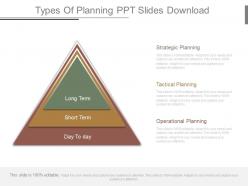
Types of planning ppt slides download





Try Before you Buy Download Free Sample Product
 Impress Your
 Audience
 100%
100% Editable
 Save Hours
 of Time


Generate geniality with our Types Of Planning Ppt Slides Download. Create the climate for advancement.
People who downloaded this PowerPoint presentation also viewed the following :
Types of planning ppt slides download with all 7 slides:
Do it yourself with our Types Of Planning Ppt Slides Download. They will get your act going.
FAQs for Types of planning
Ok so strategic planning is like your big 3-5 year vision - where do you want the company to actually go? Operational planning is more the nitty-gritty daily stuff that makes it happen. One's about setting major goals and figuring out competitive positioning. The other handles specific tasks, budgets, who's doing what this month. Honestly, most people skip the strategic part and just jump into operations, which is why so many businesses feel scattered. It's kinda like deciding you want to climb Everest versus planning what hiking boots you need for Saturday. You really can't do one without the other.
Honestly, project templates are such a lifesaver. Your team won't be constantly asking "wait, what's the next step?" because everyone's working from the same playbook. Updates become way cleaner too - people actually know what info to share and when. I used to think templates were just extra work, but they're more like... I dunno, GPS for projects? You still drive, but you're not getting lost every five minutes. Try one on your next project. I bet your meetings will feel less chaotic and actually productive for once.
SWOT analysis is your reality check before making any big moves. You map out Strengths, Weaknesses, Opportunities, and Threats - basically figure out what you're working with. Use your strong points to chase opportunities, fix weak spots before they hurt you, and get ready for whatever might go wrong. Honestly? I've watched so many plans crash because people skipped this part. They missed stuff that was right in front of them. The trick is being harsh with yourself - don't make your weaknesses sound better than they are or pretend threats aren't real. Worth doing before your next planning session, trust me.
Look, financial planning is basically your roadmap for managing cash and expenses - it's what determines if your business actually survives or crashes. You'll spot funding needs way ahead of time and avoid those awful cash crunches that kill companies. I've seen too many good businesses fail just because they didn't see problems coming. Monthly cash flow forecasts are where you should start - even rough ones give you tons more control. Investors love seeing clear projections too, so it makes raising money way easier. Honestly, even basic planning beats winging it every single time.
Think of it like having backup plans for when stuff goes sideways. You basically map out different "what if" scenarios - market crashes, supply issues, new competition jumping in. Then you figure out how you'd respond to each one ahead of time. The real benefit? You're not panicking when something actually happens because you've already gamed it out. Plus you know what warning signs to watch for. Honestly, most companies do this exercise then never look at it again, which is pretty pointless. But if you actually use these scenarios when making decisions, you'll be way ahead of everyone else who's just winging it.
So basically, you wanna track stuff that actually matches what you're trying to do - conversion rates, ROI, how many leads you're getting, that kind of thing. Set clear targets from the start so you're not just guessing if things are working. I always look at both the early signals (website traffic, email opens) and the bigger picture stuff like actual sales. Honestly, don't get crazy with tracking everything under the sun. Pick maybe 3-5 metrics that really matter for your business and check them monthly. Otherwise you'll just drown in spreadsheets and still not know if you're winning.
Dude, Gantt charts are seriously a game changer. You get this bird's-eye view of your whole project timeline that just clicks. Dependencies become super obvious, plus you can catch bottlenecks before they wreck everything. When I show them to clients, they actually get it right away - no confusing spreadsheets to decode. The coolest part? You'll spot when one delayed task is about to mess up five others, so you can pivot fast. I'd start with something basic like Monday.com or honestly even Excel works fine. Way better than keeping everything in your head, trust me.
First thing - figure out your critical path and spot where things will probably get messy. Make a list of everything you've got: people, money, equipment, time. Then see how it all matches up with what actually matters most. Honestly, always pad your timeline because stuff goes sideways. Resource histograms are great if you're into that, but even a basic spreadsheet works to see where you're stretched thin or have too much sitting around. Be real about what people can actually handle and flag problems early. Oh, and do a quick resource check before your next planning meeting - saves so much headache later.
Honestly, you really need to get stakeholders involved early or you'll regret it later. They know stuff you don't - like office politics and what actually works in practice. Plus people hate when decisions just get dropped on them out of nowhere. Getting them engaged from the start means you catch problems before they blow up, and everyone feels like they had a say. I'd start by figuring out who your key people are first (that part's kind of tedious but worth it). Then just stay consistent with updates. Trust me, the extra effort upfront saves you so much headache down the line.
Honestly, tech tools are a lifesaver for planning stuff. I'd start with something like Asana or Trello - they keep all your tasks and deadlines in one spot so you're not scrambling through random notes. The cloud thing is huge too because everyone can actually see updates instead of working off some ancient spreadsheet (we've all been there). AI can spit out decent project outlines, though you'll definitely need to tweak them. My advice? Pick whatever fixes your biggest planning nightmare first. Don't try to overhaul everything at once or you'll just stress yourself out more.
Honestly, just start with the basics - make a list of what could go wrong and rank them by how likely they are and how much damage they'd do. Risk registers sound corporate-y but they're actually pretty helpful for keeping track of everything. If you need actual numbers for budget stuff, you can get into the quantitative analysis later. Build backup plans for the big scary risks and make sure someone owns each one. Oh, and don't get too fancy right away. A simple risk matrix works great to begin with - you can always make it more complicated as you go.
So annual planning is like your 12-month game plan - budgets, specific projects, stuff you're actually gonna tackle this year. Strategic planning? That's your 3-5 year dream board basically. Where you want the company to be long-term, big market moves, that kind of thing. Here's how I think about it: strategic asks "where are we headed?" and annual asks "what's our next step?" Honestly, if your annual plans don't connect to the bigger strategy, you're just spinning your wheels. Always start with the strategic stuff first, then chop it up into yearly pieces that actually make sense.
First thing - map out your timeline and goals or you'll be scrambling at the end (trust me on this one). Budget early and don't budge on it. Think through what could go wrong beforehand so you can have backup plans ready, especially for your venue and key vendors. Keep everyone updated regularly - communication breakdowns are the worst. Oh, and delegate based on what people are actually good at, not just what needs doing. Do a walkthrough the day before to catch anything you missed. Honestly, that last step has saved me more times than I can count.
Start by looking at your current programs - do they actually match your mission statement? Most nonprofits I've seen have weird gaps there. Work backwards from your goals to figure out what you need: programs, fundraising targets, volunteers, all that stuff. Show donors specific outcomes instead of vague feel-good stories - makes fundraising so much easier later. You'll want backup plans too since funding can disappear overnight (learned that one the hard way). Seriously though, stop winging it. Strategic planning isn't just corporate buzzword nonsense - it keeps you from constantly scrambling for donations.
Oh man, the classic mistakes? People go way too ambitious with goals that'll never happen. Leadership gets pumped about some grand 5-year thing but forgets to actually check how it's going every few months - I've watched this trainwreck so many times. Here's what actually works: get the people doing the work involved from day one. Break those massive goals down into stuff you can actually measure monthly. Don't let your plan become another dead document gathering dust. Reality's gonna punch you in the face anyway, so build in time to pivot when things go sideways.
-
Nice and innovative design.
-
Best Representation of topics, really appreciable.