


Joint Planning Powerpoint Presentation Slides




Try Before you Buy Download Free Sample Product
 Impress Your
 Audience
 100%
100% Editable
 Save Hours
 of Time


Use content-ready Joint Planning PowerPoint Presentation Slides for better alignment of goals and strategies between two collaborative partners. Understand the structure of a joint business plan and development process with joint planning PPT presentation slides. Engage with retailers, outline specific joint business plan for specific customers, and more. Joint planning PowerPoint deck will help you align joint objectives and resources, alignment between manufacturers and retailers, track scorecards to measure performance, etc. This ready-to-use joint planning PPT presentation covers topics like integrated business process outline, mission vision goals and objectives, business strategy, financial projection, income statement, balance sheet, business operation analysis, key result areas, operational objectives, performance objectives, action plan, budget, integrated planning process, and more. Maximise potential value for a longer term with joint engagement plan. It is a multilevel process that involves new product development, co-marketing activities, cost saving projects, service levels, vendor inventory, promotions and merchandising, in store sampling activities and more. Get access to the joint business planning PowerPoint deck for sharing resources, ideas, and capabilities to enhance the benefit for both parties. Our Joint Planning Powerpoint Presentation Slides are an excellent aid for growth. You will acquire expertise and experience.
People who downloaded this PowerPoint presentation also viewed the following :
Content of this Powerpoint Presentation
Slide 1: This slide introduces Joint Planning. State Your Company Name and get started.
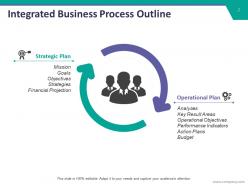
Slide 2: This slide presents an Integrated Business Process Outline with two sub headings: 1- Operational Plan (Analyses, Key Result Areas, Operational Objectives, Performance Indicators, Action Plans, Budget). 2-Strategic Plan (Mission, Goals, Objectives, Strategies, Financial Projection).
Slide 3: This slide shows Strategic Planning heading with respective image to go with.
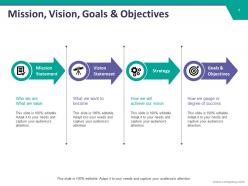
Slide 4: This is a Mission, Vision, Goals & Objectives slide with points to state for.
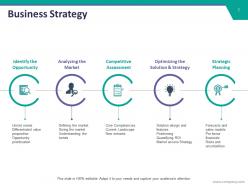
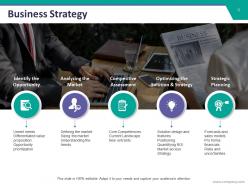
Slide 5: This slide shows Business Strategy with the following sub points- Identify the Opportunity (Uunmet needs, Differentiated value proposition, Opportunity prioritization). Strategic Planning (Forecasts and sales models, Pro forma financials, Risks and uncertainties). Analyzing the Market (Defining the market, Sizing the market, Understanding the trends). Competitive Assessment (Core Competencies, Current Landscape, New entrants). Optimizing the Solution & Strategy (Solution design and features, Positioning, Quantifying ROI, Market access Strategy)
Slide 6: This slide is another variation of Business Strategy and its contents.
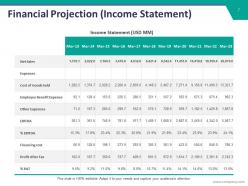
Slide 7: This slide states Financial Projection (Income Statement) for a particular time duration.
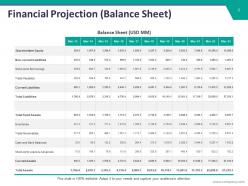
Slide 8: This slide shows Financial Projection (Balance Sheet).
Slide 9: This slide is titled Operational Plan with respective imagery to go with.
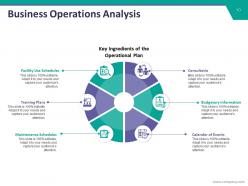
Slide 10: This slide showcases Business Operations Analysis with Key Ingredients of the Operational Plan. The sub headings are- Consultation, Budgetary Information, Calendar of Events, Facility Use Schedules, Training Plans, Maintenance Schedules.
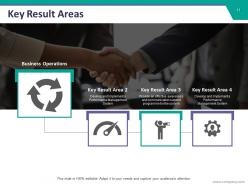
Slide 11: This slide presents Key Result Areas under the heading Business Operations, Key Result Area 2 (Develop and Implement a Performance Management System) Key Result Area 3 (Provide an effective awareness and communication support programme for the system) Key Result Area 4 (Develop and Implement a Performance Management System)
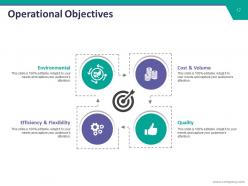
Slide 12: This slide showcases Operational Objectives categorized into- Environmental, Cost & Volume, Quality, Efficiency & Flexibility.
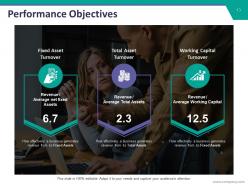
Slide 13: This slide presents Performance Objectives for Fixed Asset Turnover, Total Asset Turnover and Working Capital Turnover
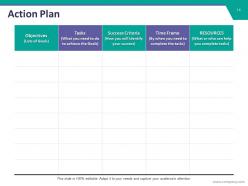
Slide 14: This slide shows an Action Plan with Objectives, Tasks, Success criteria, Time frame and Resources.
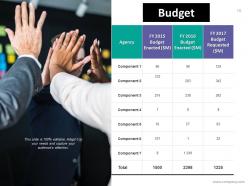
Slide 15: This slide showcases Budget planned, allocated.
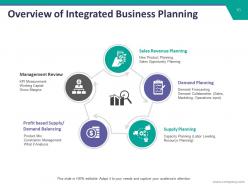
Slide 16: This slide shows Overview of Integrated Business Planning with the following sub headings- Sales Revenue Planning (New Product Planning Sales Opportunity Planning) Demand Planning (Demand Forecasting Demand Collaboration (Sales, Marketing, Operations input) Supply Planning (Capacity Planning (Labor Leveling, Resource Planning) Profit based Supply/ Demand Balancing (Product Mix Constraints Management What if Analysis) Management Review (KPI Measurement Working Capital Gross Margins).
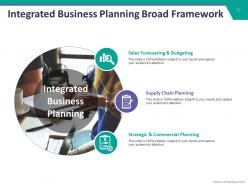
Slide 17: This slide showcases Integrated Business Planning Broad Framework with the following sub heading divided into: Integrated Business Planning- (Sales Forecasting & Budgeting Strategic & Commercial Planning Supply Chain Planning)
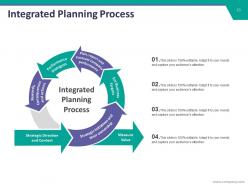
Slide 18: This slide shows Integrated Planning Process with the following sub headings- Strategic Direction and Context, Strategic Initiatives and their ownership, Set Business, Targets, Performance, Dialogues, Plan, report and Forecast Company performance Rewards, Consequences and actions Measure Value Integrated Planning Process
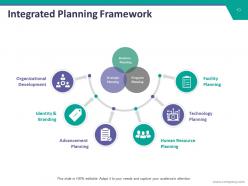
Slide 19: This slide shows Integrated Planning Framework with the following headings: Strategic Planning, Program Planning, Business Planning. The sub headings include- Organizational Development, Identity & Branding, Advancement Planning, Human Resource Planning, Technology Planning, Facility Planning.
Slide 20: This slide is titled Graphs and Charts to proceed forward.
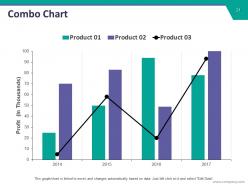
Slide 21: This is a Combo Chart slide to show profit.
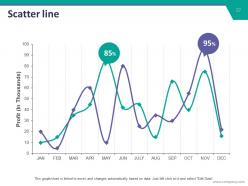
Slide 22: This is a Scatter line graph to show profit in terms of months.
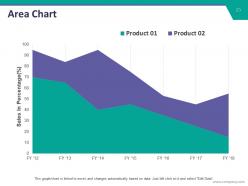
Slide 23: This is an Area Chart slide to show product comparison.
Slide 24: This slide is titled Additional Slides to move forward.
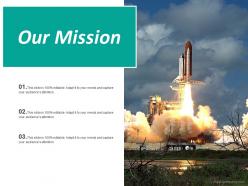
Slide 25: This is an Our Mission slide. State your mission here.
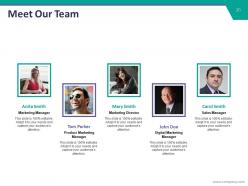
Slide 26: This is Meet Our Team slide with name and designation.
Slide 27: This is a About Us slide to state specification, company information etc.
Slide 28: This is a Coffee Break slide to halt.
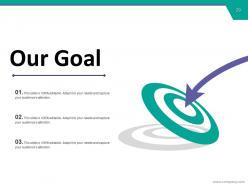
Slide 29: This slide shows Our Goal with imagery. State your goals here.
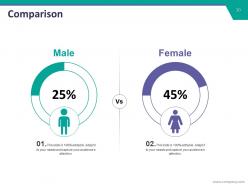
Slide 30: This slide presents Comparison between male/female entities. You can compare anything specific here.
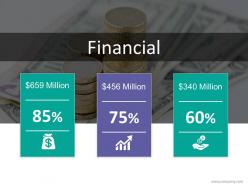
Slide 31: This slide shows Financial score to display.
Slide 32: This is a Quotes slide. The following quote has been shown as an example. Imagination Is More Important Than Knowledge.
Slide 33: This slide presents a Venn diagram to show information etc.
Slide 34: This is a Thank You slide with Address #street number, city, state, Email Address, Contact Numbers.
Joint Planning Powerpoint Presentation Slides with all 34 slides:
Deliver your ideas across continents with our Joint Planning Powerpoint Presentation Slides. Export them to anywhere on earth.





FAQs for Joint Planning
Dude, seriously - get everyone involved in the planning from the start. When people help build the plan instead of just getting told what to do, they actually care about making it work. Multiple brains catch problems you'd totally miss on your own. The whole team understands why you're doing things a certain way, which cuts down on those annoying "but why are we..." conversations later. Oh, and timelines? Way more realistic when the people actually doing the work help set them. I learned this the hard way on my last project. Block out a few hours for group planning sessions - trust me, it's worth it.
Honestly, joint planning is a game changer. Everyone contributes ideas upfront instead of getting stuck with decisions made in some boardroom they weren't invited to. Your team spots issues early, understands the "why" behind choices, and actually owns the plan they helped create. No more silos killing your momentum. When stuff inevitably goes sideways later, people pivot together instead of playing blame games - they already know the context. I'd definitely try making your next planning session actually collaborative (not just "collaborative" on paper). The difference is pretty immediate once everyone realizes their input matters.
Honestly, Miro and Mural are lifesavers for remote brainstorming - way better than trying to do everything over Zoom. Sticky notes still rock for in-person stuff though. Set up a Google Doc to track decisions as you go, otherwise half the good ideas just vanish. Timeboxing keeps people from going down rabbit holes (trust me on this one). RACI charts sound boring but they're clutch for figuring out who does what later. Don't overthink the tech stack - pick maybe 2-3 tools tops or you'll spend more time switching between apps than actually planning.
Honestly, cultural differences can totally derail your planning timelines. Some cultures want everything mapped out upfront, others wing it as they go. In hierarchical cultures, junior people won't speak up even when they see problems coming - which is frustrating but just how it is. Direct cultures will call out issues right away, but indirect ones just drop hints you might miss. Time perspectives clash too. Some teams obsess over long-term goals while others chase quick wins. My advice? Talk openly about planning styles with your international teammates from day one.
Honestly, tech is what makes joint planning actually possible these days. Real-time collaboration platforms keep everyone on the same page, even when your team's scattered across time zones. Video calls obviously help (though I still miss some of those work trips, not gonna lie), but the real game-changers are integrated dashboards and cloud project management. Dependencies become way easier to track. You can share resources instantly and pivot when plans inevitably change. My advice? Pick one tool that isn't overly complicated and make sure everyone commits to using it consistently.
Honestly, joint planning works because people actually get to help build the solution instead of just having it dumped on them. There's a massive difference between "here's what we decided" and "help us figure this out together." When stakeholders shape the plan themselves, they're way more invested in making it work. Plus you'll spot problems early - different people see issues you'd totally miss flying solo. My advice? Give your key stakeholders real input on the planning, not just a chance to review after everything's already decided. Makes all the difference.
Honestly, the worst part is when teams have totally different priorities and nobody knows who's actually responsible for what. Timeline expectations? Always completely unrealistic. Communication falls apart fast - good luck getting stakeholders to make decisions when you actually need them. Everyone fights over the same people and budget constantly, which gets old real quick. Scope creep starts the second you have your first planning meeting, I swear. You've gotta nail down roles and timelines upfront. Find one person from each team who can actually commit stuff and make real decisions - not someone who has to "check with their manager" every five minutes.
So joint planning basically gets everyone in the same room (or video call, whatever) to actually map out how your project connects to the big company goals. You're literally connecting those dots between daily work and where the executives want to head. When project teams and decision-makers plan together, nobody's confused about the "why" behind what you're building. Honestly, it's one of the few meetings that's actually worth having. You'll catch those expensive misalignments before they blow up later. Start your next project this way - trust me, it saves so much headache down the road.
You need both the hard numbers and the relationship stuff. Cost savings, time-to-market, resource use - the obvious metrics everyone agreed on upfront. But honestly? I've watched partnerships with killer numbers completely implode because nobody could stand each other. Satisfaction surveys and relationship health scores aren't just fluff. Track how fast decisions get made, communication frequency, how quickly conflicts get resolved. Oh, and set all this before you start - trying to find metrics afterward to prove success is such a mess.
Basically instead of bosses making decisions alone and dumping them on everyone else, joint planning brings all the different teams together right from the beginning. It's messier for sure, but honestly way more effective. The people who actually have to do the work help create the plan - which means it'll be way more realistic and they won't hate you for it later. Think cooking together vs just getting served whatever someone else made. You'll get fewer nasty surprises during execution too. Next time you're planning something big, grab your execution teams early instead of just asking their opinion after everything's already decided.
Honestly, just pick one person from each team to be the main contact - saves so much confusion later. Weekly check-ins are bare minimum, but if you're on a tight deadline, daily standups are a lifesaver. Everyone needs to use the same project tools and templates, otherwise stuff gets messy fast. Here's the thing though - people assume way too much, so overcommunicate everything. I learned this the hard way on a project last year. Set up shared dashboards so everyone can see what's actually happening. Also, always send a quick recap after calls because memories are terrible.
Honestly, Miro and Figma are lifesavers for this stuff - way better than trying to screenshare everything. Google Docs works too if you're keeping it simple. Short check-ins beat those endless 2-hour planning marathons, trust me on that one. Recording sessions is clutch since half your team's probably in different time zones anyway. The real game-changer though? Write down what you actually decide. Can't just walk over to someone's desk anymore to ask "wait, what did we agree on again?" So document everything or you'll be having the same conversations over and over.
Oh man, the worst thing you can do is lock yourself away and plan everything solo, then expect everyone to just hop on board. Been there - it's a disaster. Get people involved early or you'll be fighting uphill battles forever. Budget way more time than seems reasonable too, because this stuff drags on. And honestly? Figure out who's actually making the final calls before you start, otherwise you'll be stuck in meeting hell with nothing getting decided. I'd test it small first - work out the messy bits before going big.
Honestly, start by making sure people won't get shut down if they share something - that fear kills participation instantly. Send stuff out beforehand so the quiet thinkers can actually prepare. Then ask questions that can't be answered with just "yes" or "no." I know the silence feels weird, but seriously just wait it out. Mix up who's in the room too, not the same five people who always talk. When someone does jump in, build on what they said so everyone sees it's worth speaking up. Oh and try having different people lead sections - it's crazy how much that changes the whole vibe.
Honestly, joint planning is a game-changer for timelines. You get everyone on the same page right away, which means you catch those nasty dependencies before they bite you later. No more discovering in month three that two teams are fighting over the same budget or resources - been there, it sucks. The real win? You can actually map out which tasks can run at the same time instead of doing everything one after another. Yeah, those upfront planning sessions feel like forever, but trust me - you'll dodge so many coordination disasters down the road. Worth every boring hour.
-
Amazing product with appealing content and design.
-
Top Quality presentations that are easily editable.