


Strategic Alliance Powerpoint Presentation Slides





Try Before you Buy Download Free Sample Product
 Impress Your
 Audience
 100%
100% Editable
 Save Hours
 of Time


Build credibility and brand awareness in the industry by incorporating our content-ready Strategic Alliance PowerPoint Presentation Slides. This presentation will help you to improve production efficiency and lower risk for production and development. Showcase the benefits that could be driven from the strategic alliance by using these corporate partnership PPT visuals. Also, showcase the key steps of strategic alliance. Discuss the company overview with the mission, vision, and goals statement. The presentation covers business, financial overview, the requirement for the inorganic opportunity, and types of strategic alliance. Determine new growth and market services by using these easy-to-use corporative collaboration PPT templates. You can also showcase the strategic alliance performance tracker by altering the slides as per your needs. It also presents a balance sheet, cash flow statement, and tabular format, which you can edit as per your needs. Further, it represents financial projections, key financial ratios, strategic alliance synergy framework, company valuation methodologies, discounted free cash flow technique.
People who downloaded this PowerPoint presentation also viewed the following :
Content of this Powerpoint Presentation
Slide 1: This title slide introduces the Strategic Alliance. Add the name of your company.
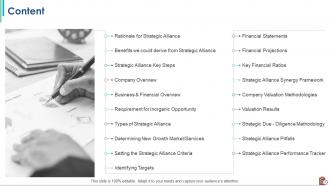
Slide 2: This slide contains the Content. It Financial Statements, Financial Projections, Key Financial Ratios, Strategic Alliance Synergy Framework, etc.
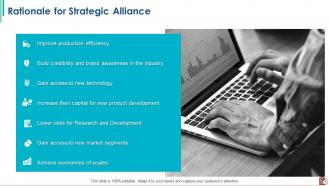
Slide 3: This slide presents the Rationale for Strategic Alliance. It includes - Improve production efficiency, Build credibility and brand awareness in the industry, Gain access to new technology, Increase their capital for new product development, etc.
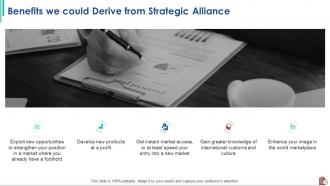
Slide 4: This slide presents the Benefits we could Derive from Strategic Alliance. It includes - Exploit new opportunities to strengthen your position in a market where you already have a foothold, Develop new products at a profit, Get instant market access, or at least speed your entry into a new market, etc.
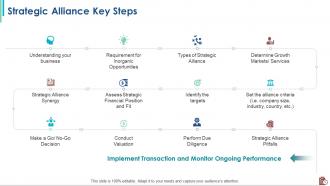
Slide 5: This slide presents the Strategic Alliance Key Steps. It includes - Understanding your business, Requirements for Inorganic Opportunities, Types of Strategic Alliance, etc.
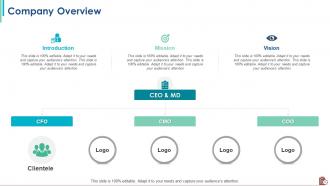
Slide 6: This slide presents the Company Overview. It includes – Introduction, Mission, and Vision.
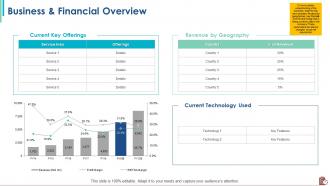
Slide 7: This slide presents the Business & Financial Overview. To have a better understanding of the business, enter the key service areas, Revenue by geographies, key financials, and the technology that is being currently used in the company.
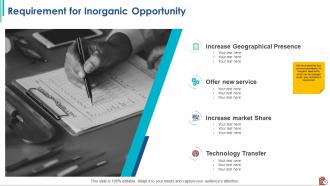
Slide 8: This slide presents the Requirement for Inorganic Opportunity. We have identified four common parameters for an inorganic opportunity that can be changed as per your company’s requirement
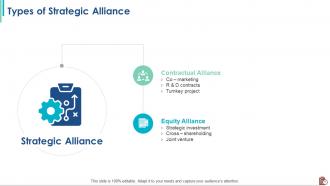
Slide 9: This slide presents the Types of Strategic Alliance. It includes - Contractual Alliance and Equity Alliance.
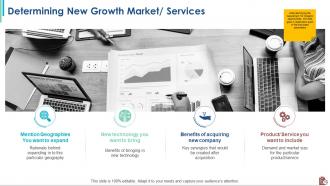
Slide 10: This slide presents the Determining New Growth Market/ Services. After identifying the requirement for inorganic opportunities, this slide goes into detail about each of the discussed parameters.
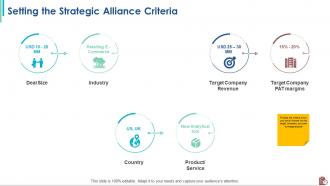
Slide 11: This slide presents the Setting the Strategic Alliance Criteria. Finalize the criteria which you would choose for the target company you want to merge/acquire.
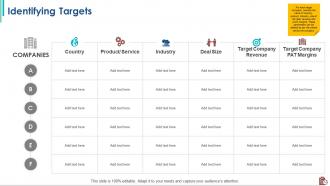
Slide 12: This slide presents the Identifying Targets. For each target company, mention the name of the country, product, Industry, size of the deal, revenue, and profit margins.
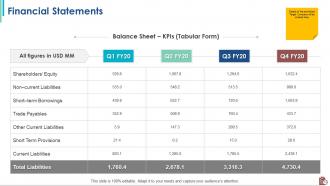
Slide 13: This slide presents the Financial Statements. Details of the shortlisted Target Company will be entered here.
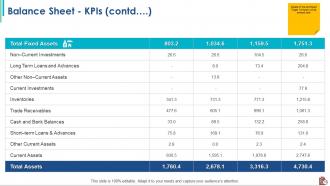
Slide 14: This slide presents the Balance Sheet - KPIs (continued).
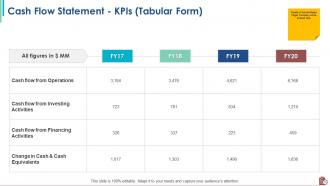
Slide 15: This slide presents the Cash Flow Statement - KPIs (Tabular Form).
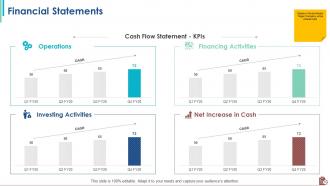
Slide 16: This slide presents the Financial Statements.
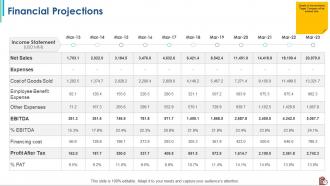
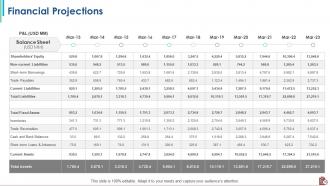
Slide 17: This slide presents the Financial Projections.
Slide 18: This slide presents the Financial Projections.
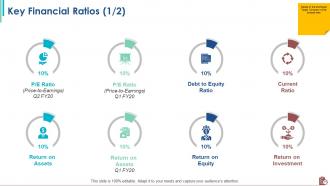
Slide 19: This slide presents the Key Financial Ratios (1/2).
Slide 20: This slide presents the Key Financial Ratios (2/2).
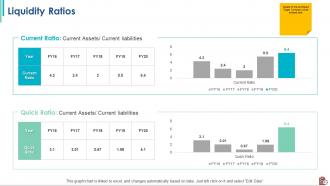
Slide 21: This slide presents the Liquidity Ratios.
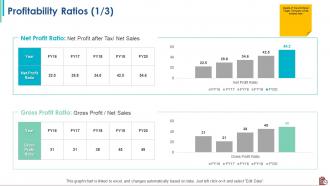
Slide 22: This slide presents the Profitability Ratios (1/3).
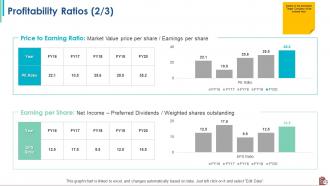
Slide 23: This slide presents the Profitability Ratios (2/3).
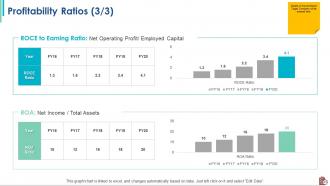
Slide 24: This slide presents the Profitability Ratios (3/3).
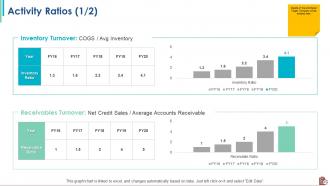
Slide 25: This slide presents the Activity Ratios (1/2).
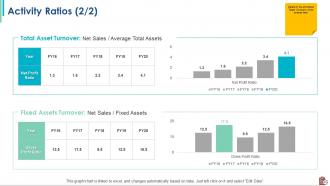
Slide 26: This slide presents the Activity Ratios (2/2).
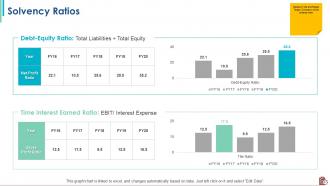
Slide 27: This slide presents the Solvency Ratios.
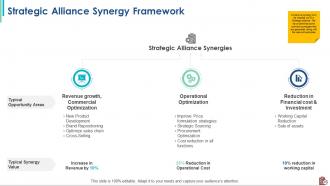
Slide 28: This slide presents the Strategic Alliance Synergy Framework.
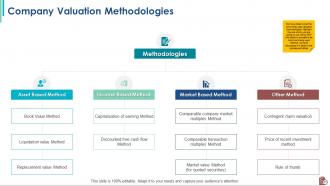
Slide 29: This slide presents the Company Valuation Methodologies. We have listed out all the commonly used valuation methodologies.
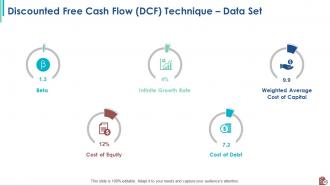
Slide 30: This slide presents the Discounted Free Cash Flow (DCF) Technique – Data Set. It includes – Beta, Infinite Growth Rate, Weighted Average Cost of Capital, Cost of Equity, and Cost of Debt.
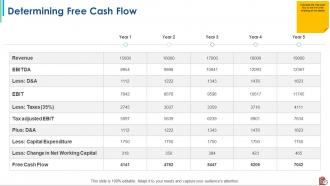
Slide 31: This slide presents the Determining Free Cash Flow. Calculate the free cash flow to the firm after entering all the details.
Slide 32: This slide presents the Valuation Results. The following methodology will help in determining the Equity value & Value per share of the company.
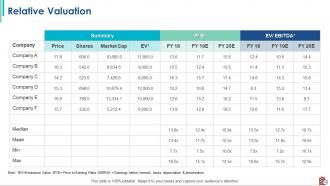
Slide 33: This slide presents the Relative Valuation.
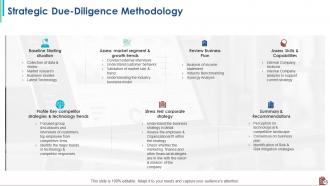
Slide 34: This slide presents the Strategic Due-Diligence Methodology. It includes - Baseline Starting situation, Assess market segment & growth trends, Review Business Plan, etc.
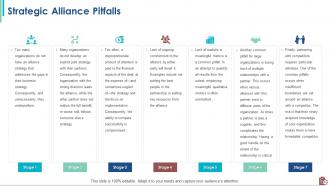
Slide 35: This slide presents the Strategic Alliance Pitfalls.
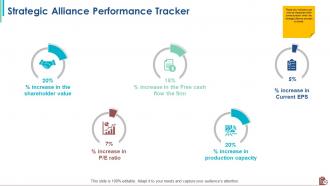
Slide 36: This slide presents the Strategic Alliance Performance Tracker. These key indicators can only be measured after some duration when the strategic alliance process is closed.
Slide 37: This is the Strategic Alliance Icons Slide.
Slide 38: This slide introduces the Additional Slides.
Slide 39: This slide provides the Mission for the entire company. This includes the vision, the mission, and the goal.
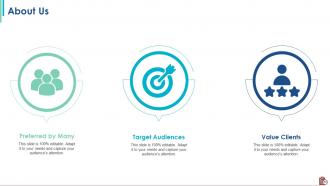
Slide 40: This slide contains the information about the company aka the ‘About Us’ section. This includes the Value Clients, the Target Audience, and Preferred by Many.
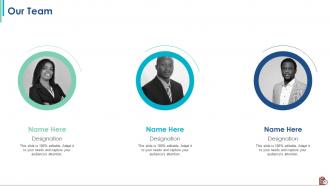
Slide 41: This slide shows the members of the company team with their name, designation, and photo.
Slide 42: This slide presents Our Goal.
Slide 43: This is a slide with a 30 60 90 Days Plan to set goals for these important intervals.
Slide 44: This slide is a Timeline template to showcase the progress of the steps of a project with time.
Slide 45: This slide presents the Financial with a data’s numbers at minimum, medium, and maximum percentage.
Slide 46: This is a slide with a 30 60 90 Days Plan to set goals for these important intervals.
Slide 47: This is a Thank You slide where details such as the address, contact number, email address are added.
Strategic Alliance Powerpoint Presentation Slides with all 47 slides:
Use our Strategic Alliance Powerpoint Presentation Slides to effectively help you save your valuable time. They are readymade to fit into any presentation structure.








FAQs for Strategic Alliance
Honestly, focus on three big things: whether your goals actually match up, if your teams can stand working together, and who's calling the shots. Don't just say "we both want growth" - get specific about what success looks like for each side. I've watched partnerships crash and burn because nobody could agree on basic decisions, even when the strategy made perfect sense. Set up clear rules about money, resources, and conflict resolution upfront. Oh, and definitely try a small test project first if you can swing it. Way better to figure out you hate each other on something small than after you're already married, you know?
Honestly, cultural stuff can totally torpedo strategic alliances - I've seen it happen way too often. Some cultures need to build personal relationships first before any business talk, while others just want to jump straight into contracts and numbers. Communication styles clash too. Decision-making processes are completely different across cultures, plus there's the whole time thing - some cultures move fast, others take forever. My advice? Do your homework on cultural differences before you even start negotiating. And definitely get someone on your team who actually understands cross-cultural dynamics, not just someone who took a workshop once.
Look, you'll want to track the obvious stuff - revenue growth, ROI, cost savings. But here's what most people miss: measure if you're actually hitting those original strategic goals you set. Market share gains and customer acquisition numbers tell the real story. Time-to-market improvements are huge too, assuming that was part of your plan. Oh, and don't skip the relationship side - do partner satisfaction surveys regularly. Trust me on this one: way too many partnerships look amazing on spreadsheets but totally bomb strategically. Set all these metrics early when everyone's still excited, not when you're desperately trying to prove it worked later.
Honestly, start with the basics - get everyone using the same project management tool and set up decent video calls. Slack or Teams work great for quick communication (way better than endless email chains). Cloud sharing is a must so people aren't working off old versions of docs. The analytics stuff can wait until later - don't go crazy with fancy dashboards right away. Real-time collaborative workspaces are pretty cool though, especially when you're brainstorming together. Pick maybe two tools that'll actually fix your biggest headaches first. Otherwise you'll just annoy everyone with another "digital transformation" rollout.
Trust is everything, honestly. Once that breaks down, you're basically watching partners start hoarding info and protecting their own backs instead of working together. I've watched so many good partnerships just implode because someone felt like the other side was hiding their real agenda or whatever. But when you actually trust each other? You can work through conflicts way easier and share resources without all the paranoia. The key is being super consistent with communication from day one - and actually doing what you say you'll do. Sounds obvious but people mess this up constantly.
Dude, get everything in writing before you hand over anything important. NDAs are your best friend here - make sure they spell out exactly what counts as confidential stuff. Joint IP agreements are super messy (learned this the hard way), so nail down who owns what upfront. Only share what partners absolutely need to know, nothing extra. Set up systems to track what goes where and mark your confidential materials clearly. Honestly? Plan like the partnership might blow up spectacularly because... it might. Better to be overly protective from day one than scrambling later.
Honestly, most partnerships crash because nobody talks about the hard stuff upfront. Cultural fit matters way more than people think - I've watched deals implode just because teams couldn't work together day-to-day. Don't skip the boring governance conversations either. Who makes what decisions? How do you measure success? Here's what I'd do: during negotiations, actually walk through scenarios where things go wrong. Sounds pessimistic, but you'll thank me later when you're not stuck in endless arguments about whose fault something was. The companies that survive these partnerships are the ones who planned for conflict, not just success.
Honestly, strategic alliances are your best bet for breaking into international markets fast. You're basically piggybacking on someone else's local know-how - their distribution networks, regulatory expertise, customer insights. Way smarter than trying to figure it all out yourself. Joint ventures, licensing deals, distribution partnerships - whatever works. The trick is finding partners who fill your gaps instead of competing with you. I'd map out what you desperately need locally first (compliance stuff, distribution, market intel), then hunt down companies who crush it in those areas. Makes the whole process less painful, trust me.
Honestly, get your IP and data usage rights sorted first - that's where partnerships usually blow up. Liability stuff is huge too, especially if there's any chance of data breaches. Include solid termination clauses because even good relationships can tank unexpectedly. Compliance requirements matter if you're in a regulated space (finance, healthcare, whatever). Also throw in dispute resolution so you're not immediately heading to court. Your legal team will probably catch things you missed anyway, so loop them in early. Way better to hash this out now than deal with expensive drama later.
Look, governance is basically who calls the shots and how you handle disagreements when they pop up. Joint committees sound nice but honestly? They can slow things down to a crawl. When one partner runs the show, decisions happen faster - but then the other side gets pissy about being left out. You've got to nail down who decides what from day one. The whole structure affects everything from boring daily stuff to big strategic moves. Here's what I'd do: write out clear decision rights upfront, then schedule regular check-ins to tweak things as you go.
Honestly, alliances are clutch when you're not ready to go all-in yet. Perfect for testing new markets - you get their local know-how without dropping serious cash on buying them out. Regulatory stuff can also kill mergers before they start, so alliances sidestep that mess. Plus some companies have this amazing culture you'd totally ruin if you absorbed them (creative shops are notorious for this). You can still grab their expertise without the integration chaos. My advice? Go the alliance route when you need something specific quickly or you're just not sure about long-term fit yet.
Look at both hard numbers and softer stuff that's harder to pin down. Revenue from the partnership is obvious. Cost savings too. But honestly, brand exposure and knowledge sharing can be just as valuable - they just take longer to show up in your bank account. I'd set up quarterly check-ins against whatever goals you started with. Don't forget to factor in all the upfront time and resources you dumped into this thing. A simple dashboard works great for tracking everything. Some of the best partnership wins are the ones you didn't even expect going in.
Tech, pharma, and automotive are the big ones. These industries burn through crazy R&D money and can't keep up with innovation alone anymore. Tech companies do it for market reach and skills they don't have. Pharma splits those ridiculous drug development costs - smart move honestly. Auto makers team up for EV tech and supply chains. Oh, and airlines with their code-sharing deals, though that just makes finding flights a nightmare. Short version: if your industry has massive upfront costs or tech moves fast, partnerships make sense.
Dude, most alliance disasters happen because people just assume everyone's on the same page instead of actually talking. You need regular check-ins and shared dashboards so nobody's flying blind. Set up clear ways to escalate problems too. Here's the thing though - don't just rely on formal meetings. Create casual channels where teams can connect naturally. Share wins AND concerns early, before they blow up into real issues. I mean, transparency should be your default mode, not something you have to think about. Multiple touchpoints = less drama later.
Honestly, the main thing you're risking is losing whatever resources you were sharing - that hurts immediately. Your reputation could take a hit too if things get messy. Legal drama is possible if the exit goes sideways. You might lose some unique knowledge or skills that only existed in the partnership. Oh, and here's something that sucks - your ex-partner could become your competitor. Customers get nervous about whether you'll still deliver the same service. Document an exit plan early (seriously, do this) and be upfront with everyone when it's time to split.
-
Commendable slides with attractive designs. Extremely pleased with the fact that they are easy to modify. Great work!
-
Easily Editable.
-
Great designs, Easily Editable.
-
Understandable and informative presentation.
-
Excellent Designs.
-
Excellent design and quick turnaround.
-
Best Representation of topics, really appreciable.
-
Great designs, Easily Editable.