

Infrastructure improvement powerpoint presentation slides




Try Before you Buy Download Free Sample Product
 Impress Your
 Audience
 100%
100% Editable
 Save Hours
 of Time


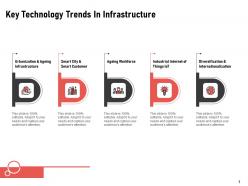
Infrastructure Improvement PowerPoint Presentation Slides are specially-created for to showcase insights to improve operational infrastructure. Use this PowerPoint slideshow to demonstrate workplace infrastructure services as per your project requirements. Our PPT presentation is a fully custom virtual tool that highlights all the elements of asset management. Consolidate vital aspects like key technology trends in work infrastructure like urbanization, and diversification through our PowerPoint templates. Gripping data visualization tools of this PPT slideshow help you to explain sophisticated concepts like key drivers for infrastructure management. Similarly, KPI metrics and dashboard diagrams add a visual layer to your presentation. Communicate deterioration modeling, and inventory and condition assessment by the means of this company infrastructure PowerPoint theme. Outline core areas like cost, performance, contract and workflow management, and commissioning new facilities through our work infrastructure PPT deck. So, download now to build a crisp PPT presentation on improving organizational structure within minutes. Our Infrastructure Improvement Powerpoint Presentation Slides are explicit and effective. They combine clarity and concise expression.
People who downloaded this PowerPoint presentation also viewed the following :
Content of this Powerpoint Presentation
Slide 1: This slide introduces Infrastructure Improvement. State your Company name and begin.
Slide 2: This slide displays Table of Content.
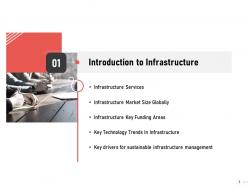
Slide 3: This slide shows Introduction to Infrastructure
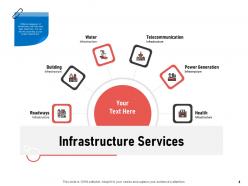
Slide 4: Different categories of Infrastructure services have been listed in this slide. You can edit this according to your project requirement.
Slide 5: This bar graph shows market size for consecutive years. You can edit this as per your requirement.
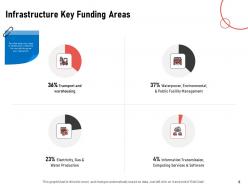
Slide 6: This slide shows key areas of infrastructure investment. You can edit this as per your requirement.
Slide 7: This slide presents Key Technology Trends in Infrastructure.
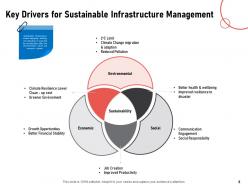
Slide 8: This slide shows Key Drivers for Sustainable Infrastructure Management Sustainable infrastructure means designing, building, and operating in ways that do not adversely effect the environmental, social, and economic system.
Slide 9: This slide depicts Asset Management Process.
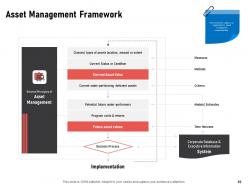
Slide 10: This framework depicts an organisation's asset management responsibilities.
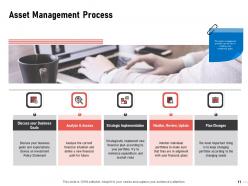
Slide 11: This slide shows Asset Management Process.
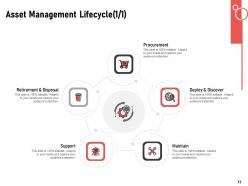
Slide 12: This slide presents Asset Management Lifecycle.
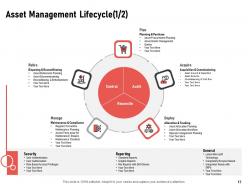
Slide 13: This slide shows Asset Management Lifecycle
Slide 14: This slide depicts Asset and Condition Assessment.
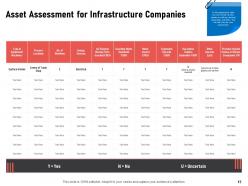
Slide 15: In this assessment table you can include all your assets as well any hazards associated with them. You can edit it as per your requirement.
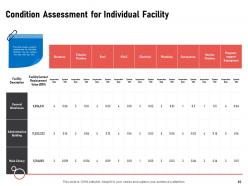
Slide 16: This slide shows condition assessment for individual facilities. You can replace the data with your own.
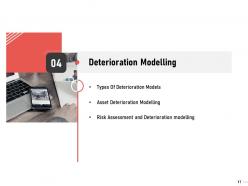
Slide 17: This slide depicts Deterioration Modelling.
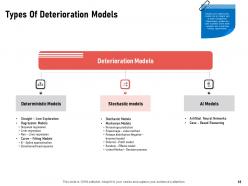
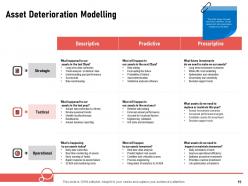
Slide 18: This slide depicts Types Of Deterioration Models ience's attention.
Slide 19: This slide shows the past and future condition of your assets and also prescriptive measures to be taken.
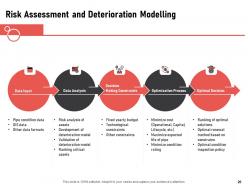
Slide 20: This slide showcases Risk Assessment and Deterioration Modelling
Slide 21: This slide depicts Optimization and Decision Making.
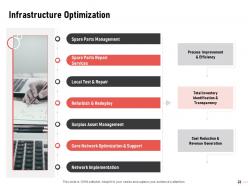
Slide 22: This slide shows Infrastructure Optimization.
Slide 23: This slide shows Risk Assessment and Deterioration modelling.
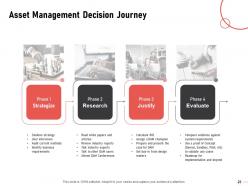
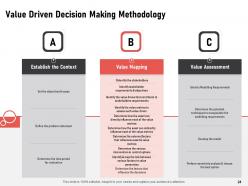
Slide 24: This slide presents Value Driven Decision Making Methodology.
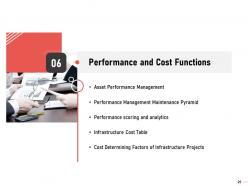
Slide 25: This slide shows Performance and Cost Functions
Slide 26: This slide displays Asset Performance Management.
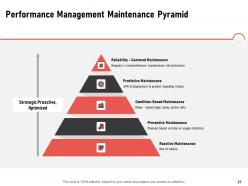
Slide 27: This slide shows Performance Management Maintenance Pyramid.
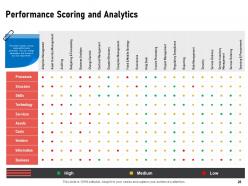
Slide 28: This slide includes various asset performance parameter. You can change parameters and scores to suit your requirement.
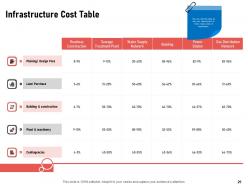
Slide 29: This slide presents Infrastructure Cost Table. You can edit this slide as per your requirement to show major areas of expenditure.
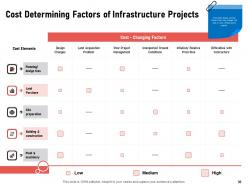
Slide 30: This slide shows various factors that may change the cost of your infrastructure project.
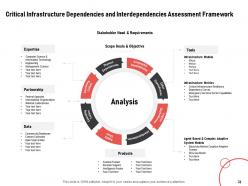
Slide 31: This slide shows Critical Infrastructure Dependencies & Interdependencies Assessment Framework
Slide 32: This slide depicts Critical Infrastructure Dependencies & Interdependencies Assessment Framework
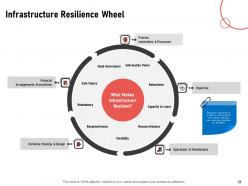
Slide 33: This slide showcases Infrastructure Resilience Wheel.
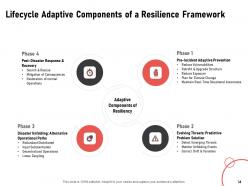
Slide 34: This slide shows Lifecycle Adaptive Components of A Resilience Framework.
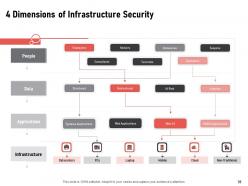
Slide 35: This slide presents 4 Dimensions of Infrastructure Security.
Slide 36: This slide displays Contract and Workflow Management.
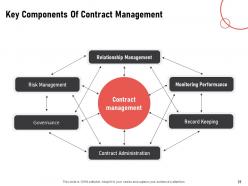
Slide 37: This slide shows Key Components of Contract Management
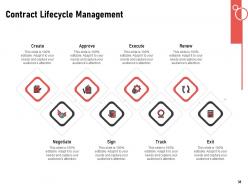
Slide 38: This slide shows Contract Lifecycle Management
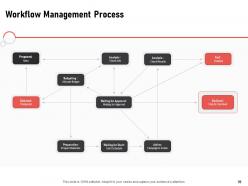
Slide 39: This slide depicts Workflow Management Process.
Slide 40: This slide presents Commissioning New Facilities.
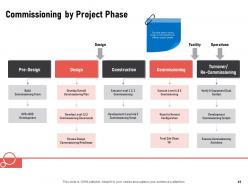
Slide 41: This slide shows various levels of commissioning at different project phases
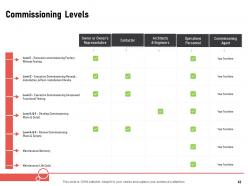
Slide 42: This slide depicts Commissioning Levels
Slide 43: This slide shows Capital Budgeting.
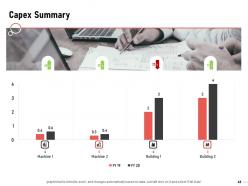
Slide 44: This slide presents Capex Summary.
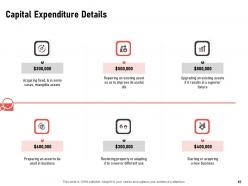
Slide 45: This slide presents Capital Expenditure Details.
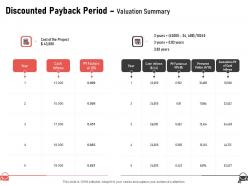
Slide 46: This slide showcases Discounted Payback Period – Valuation Summary
Slide 47: This slide presents Net Present Value - Valuation Summary
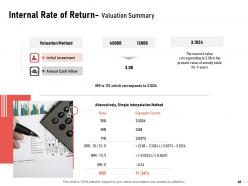
Slide 48: This slide showcases Internal Rate of Return - Valuation Summary
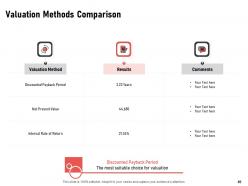
Slide 49: This slide depicts Valuation Methods Comparison
Slide 50: This slide displays KPI Metrics and Dashboard.
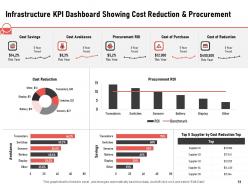
Slide 51: This slide displays Infrastructure KPI Dashboard Showing Cost Reduction & Procurement
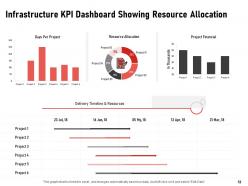
Slide 52: This slide shows Infrastructure KPI Dashboard Showing Resource Allocation.
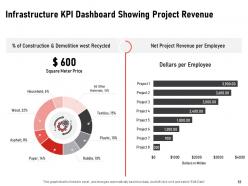
Slide 53: This slide showcases Infrastructure KPI Dashboard Showing Project Revenue.
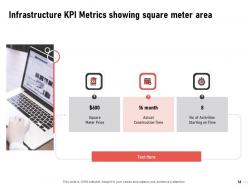
Slide 54: This slide depicts Infrastructure KPI Metrics showing square meter area
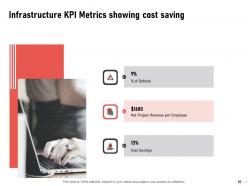
Slide 55: This slide shows Infrastructure KPI Metrics showing cost saving.
Slide 56: This is Infrastructure Improvement Icons Slide.
Slide 57: This slide is titled as Additional Slides for moving forward.
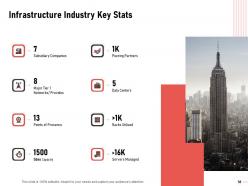
Slide 58: This slide shows Infrastructure Industry Key Stats
Slide 59: This is Our Mission slide with Vision, Goal and Mission.
Slide 60: This is About Us slide to showcase Company specifications.
Slide 61: This is Meet Our Team slide.
Slide 62: This slide shows Roadmap process.
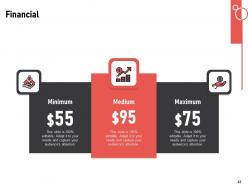
Slide 63: This is Financial slide. Showcase finance related stuff here.
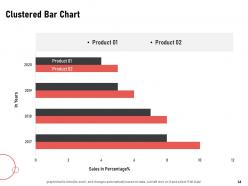
Slide 64: This slide shows Clustered Bar Chart
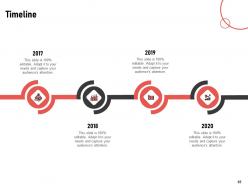
Slide 65: This slide shows Timeline process.
Slide 66: This is 30 60 90 Days Plan slide.
Slide 67: This is Thank You slide with Contact details.
Infrastructure improvement powerpoint presentation slides with all 67 slides:
Use our Infrastructure Improvement Powerpoint Presentation Slides to effectively help you save your valuable time. They are readymade to fit into any presentation structure.










FAQs for Infrastructure improvement
Honestly, start with figuring out what you've actually got to work with - catalog the disasters and the stuff that's somehow still functioning. Quick wins first though, trust me on this. Gets people on board before you pitch the expensive renovations. Safety issues obviously come first, then whatever gives you the biggest bang for your buck. Don't forget to map out realistic timelines and get key people bought in early. Nothing kills a project faster than "wait, nobody told me about this." Oh, and build maintenance into your planning from the start - can't just install and disappear.
Dude, start with IoT sensors - they'll give you real-time monitoring data that's actually useful. AI for predictive maintenance is solid too, plus digital twins let you test scenarios before breaking ground. Smart traffic systems and drones for site surveys are honestly pretty cool to work with. Don't go crazy though - pick tech that solves actual problems you're having, not just shiny new stuff. I'd say start small with maybe one or two solutions on your next project. Focus first on anything that automates boring repetitive tasks or gets you better data. You can always scale up once you figure out what actually works.
So basically governments partner with private companies on big infrastructure stuff - roads, airports, water plants, whatever. The government brings regulatory power and permits, private sector brings money and know-how. Makes sense since neither could pull it off solo. Honestly works pretty well when they nail the contracts upfront. But here's the thing - if those contracts suck or incentives don't align? Total nightmare. I've seen some messy examples. The private side gets long-term deals, government gets projects built without blowing their budget.
Honestly, just bake it into your planning from day one. Solar panels are obvious - slap them on everything new. LED lighting's a total no-brainer for long-term savings. I'm obsessed with permeable pavement lately, it's amazing for stormwater. Recycled materials wherever you can swing it. The trick is thinking beyond just what it costs upfront - look at the whole lifecycle. Do a quick audit of what you're already doing to spot easy wins, then make those your new standard process. Way easier than retrofitting later.
Track the obvious stuff first - budget, timeline, safety incidents, quality issues. But honestly, usage data tells the real story: how much traffic, capacity getting hit, that kind of thing. Community impact matters too - jobs created, economic effects, environmental stuff. Customer satisfaction surveys are weirdly useful even though they feel fluffy. Oh, and set up your tracking system early! I learned that the hard way on another project where we scrambled for baseline data later. Mix hard numbers with softer feedback - you need both to actually know if it worked.
Money talks, and that's basically how infrastructure gets decided. Rich neighborhoods have more pull with politicians plus they pay higher taxes, so guess where the funding goes? Meanwhile, poor areas deal with crumbling roads and outdated systems that never get fixed. Areas with colleges or educated populations are way better at organizing and demanding stuff like better internet and public transit. Honestly, it's pretty messed up but totally predictable. Learning how your local funding formulas actually work is clutch though - makes it easier to fight for communities that always get overlooked.
Dude, crumbling infrastructure is such a headache for communities. Roads and bridges falling apart means more accidents and outages. Plus emergency fixes cost like 3x what regular maintenance would've been - which is just stupid planning if you ask me. Businesses hate unreliable infrastructure too. They deal with delayed shipments, employees showing up late, higher costs. Companies won't even invest in areas where they can't count on basic services working. The trick is getting local leaders to do assessments before everything breaks down completely and fighting for funding early.
Look, getting locals involved from day one saves you so much headache later. They'll straight up tell you that flooded intersection matters way more than whatever bike path city hall dreamed up. Makes total sense when you think about it - residents know where the actual problems are, not just what looks good on paper. People won't fight projects they helped create either. I swear, half the "improvements" I see around town just sit there unused because nobody bothered asking what people wanted. My advice? Do public meetings *before* you finalize designs. Don't be that planner who shows up after everything's decided asking for feedback.
Safety stuff first, obviously - can't have people getting hurt. After that, I'd rank everything by how many people it affects and the money side of things. Like, don't waste time on pet projects when actual infrastructure is falling apart, you know? Sometimes just maintaining what's already there makes way more sense than starting from scratch. Honestly, create some kind of simple chart - urgency on one side, impact on the other. Then check what funding you've actually got coming in and when. Pick your top three winners and go with those.
So basically regulations control everything about your project - permitting, environmental stuff, safety codes, funding rules. You've got zoning laws, impact assessments, highway standards... it's honestly a nightmare to navigate sometimes. Some policies actually help by cutting through red tape, but others? They'll drag your timeline out for years with endless reviews. My advice is figure out which ones hit your project right away. That way you can bake those compliance costs and delays into your budget from the start instead of getting blindsided later.
Dude, the sensor stuff is insane right now - cities can literally watch bridges flex and catch water leaks as they happen. Predictive AI tells you exactly when things'll break before they do, which saves tons of cash. 3D printing is making custom infrastructure parts (honestly didn't see that coming), and digital twins let engineers mess around with scenarios without blowing budgets. Self-healing concrete is actually becoming a real thing too, not just sci-fi anymore. Start with sensors though - that's your quickest win if you're working on infrastructure projects.
Dude, you're sitting on a goldmine of project data that could save your ass from cost overruns and delays. Instead of waiting for those useless monthly reports, set up real-time dashboards tracking the stuff that actually matters. Weather patterns, soil conditions, traffic data - it's all there. Honestly, I think most PMs are just too lazy to dig into it. Start with whatever's giving you the biggest headache right now. Maybe resource allocation? Track that for a few weeks and you'll see patterns you never noticed. Once you get the hang of it, you can expand to predicting other problems before they blow up your timeline.
Look, you've gotta plan for disasters right from the start - flood zones need elevated foundations, earthquake areas need seismic designs, that sort of thing. Way cheaper than rebuilding later, trust me. Figure out what disasters actually hit your area first though. Then build in backups for everything - power, roads, utilities. My neighbor learned this the hard way during the last storm. Don't just meet building codes either, they're honestly pretty bare minimum. Think worst-case scenario and design for that instead.
Dude, budget overruns and timeline delays will absolutely destroy you if you're not careful. Weather screws everything up - learned that the hard way on my last project. Permits take forever, community meetings drag on, and don't get me started on environmental clearances. Honestly, coordinating contractors with government agencies is pure chaos most days. You'll think your cost estimates are realistic but they never are. Add 20-30% buffer to everything from the start, and text/call stakeholders way more than feels normal. Trust me on this one.
So here's the thing - infrastructure and urban planning are totally connected. You can't just throw money at road projects without thinking about where people actually live and work. Otherwise you get those weird bridges that literally lead to nothing (seriously, what were they thinking?). Map out your area's growth plans first, maybe 10-20 years out. Consider zoning changes, how traffic moves, population shifts. That way your infrastructure actually helps instead of creating new headaches. It's way smarter than doing everything backwards and hoping it works out.
-
Very well designed and informative templates.
-
Nice and innovative design.
-
Great experience, I would definitely use your services further.