


Strategic Planning For Industrial Marketing Powerpoint Presentation Slides




Try Before you Buy Download Free Sample Product
 Impress Your
 Audience
 100%
100% Editable
 Save Hours
 of Time


Industrial marketing is a business plan to sell industrial products and services to another company. This deck aims to establish a strong brand name by automating the industrial marketing process. Check out our professionally designed Strategic Planning for Industrial Marketing template that covers the current issues faced by industrial marketers, classification of industrial products, etc. Also, it captures the decision-making process of the industrial buyer, their preferences, and factors that influence their behavior. Further, this presentation shows the steps to build a market segmentation strategy and a new product development plan. This PowerPoint also covers the optimization of distribution channels. Moreover, these slides focus on pricing strategies and price monitoring software comparative assessment. Also, it represents the promotional strategies and initiatives to expand social media presence with the selection of the best social media platforms. This PowerPoint presentation showcases the role of customer service in industrial marketing, which includes industrial buyer persona and parameters to measure customer service success. At last, it captures industrial marketing analysis, manufacturing analytics, and reporting dashboard. Download it now.
People who downloaded this PowerPoint presentation also viewed the following :
Content of this Powerpoint Presentation
Slide 1: This slide introduces Strategic Planning for Industrial Marketing. State Your Company Name and begin.
Slide 2: This slide states Agenda of the presentation.
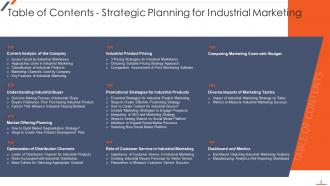
Slide 3: This slide presents Table of Content for the presentation.
Slide 4: This slide highlights title for topics that are to be covered next in the template.
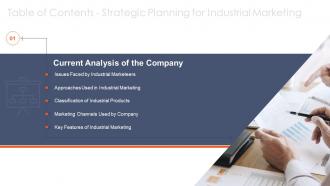
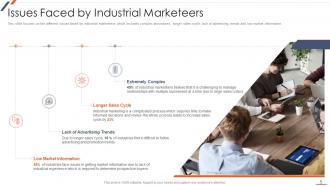
Slide 5: This slide displays Issues Faced by Industrial Marketeers.
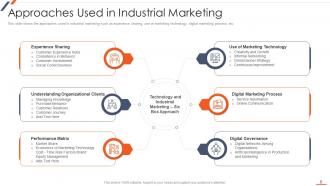
Slide 6: This slide represents Approaches Used in Industrial Marketing.
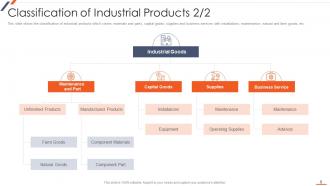
Slide 7: This slide focuses on the classification of industrial products.
Slide 8: This is another slide continuing Classification of Industrial Products.
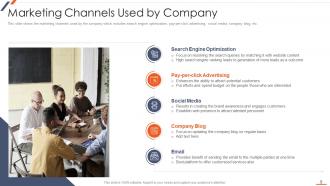
Slide 9: This slide shows the marketing channels used by the company.
Slide 10: This slide showcases Key Features of Industrial Marketing.
Slide 11: This slide highlights title for topics that are to be covered next in the template.
Slide 12: This slide presents Decision Making Process of Industrial Buyer.
Slide 13: This slide displays Buyers Preference Prior Purchasing Industrial Product.
Slide 14: This slide represents Factors that Influence Industrial Buying Behavior.
Slide 15: This slide highlights title for topics that are to be covered next in the template.
Slide 16: This slide showcases the steps to build market segmentation strategy.
Slide 17: This slide shows Steps to Create New Product Development Plan.
Slide 18: This slide highlights title for topics that are to be covered next in the template.
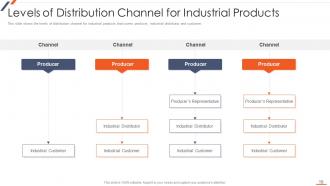
Slide 19: This slide presents Levels of Distribution Channel for Industrial Products.
Slide 20: This slide displays Risks Associated with Industrial Distribution.
Slide 21: This slide represents Base Criteria for Selecting Appropriate Channel.
Slide 22: This slide highlights title for topics that are to be covered next in the template.
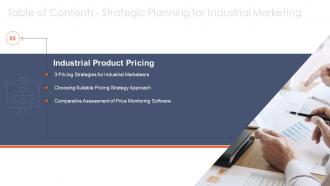
Slide 23: This slide covers the pricing strategies for industrial marketeers.
Slide 24: This slide showcases Choosing Suitable Pricing Strategy Approach.
Slide 25: This slide shows Comparative Assessment of Price Monitoring Software.
Slide 26: This slide highlights title for topics that are to be covered next in the template.
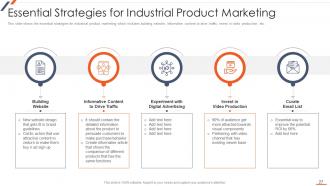
Slide 27: This slide presents Essential Strategies for Industrial Product Marketing.
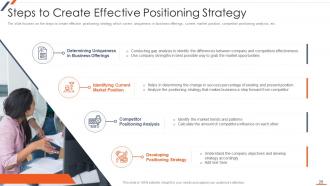
Slide 28: This slide displays Steps to Create Effective Positioning Strategy.
Slide 29: The slide shows the strategy to create content for different industrial buyers.
Slide 30: This slide represents Content Marketing Strategies to Engage Prospects.
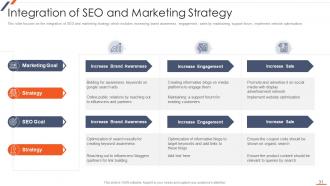
Slide 31: This slide focuses on the integration of SEO and marketing strategy.
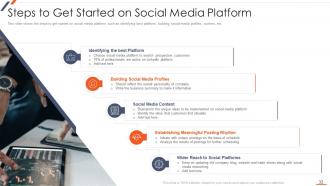
Slide 32: This slide showcases Choose social media platform to search prospective customers.
Slide 33: This slide shows Initiatives to Expand Social Media Presence.
Slide 34: This slide presents the comparison of social media platforms for industrial marketing.
Slide 35: This slide highlights title for topics that are to be covered next in the template.
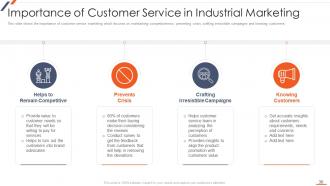
Slide 36: This slide displays Importance of Customer Service in Industrial Marketing.
Slide 37: This slide represents Creating Industrial Buyers Personas for Better Service.
Slide 38: This slide showcases Parameters to Measure Customer Service Success.
Slide 39: This slide highlights title for topics that are to be covered next in the template.
Slide 40: This slide shows Comparing Marketing Costs with Budget.
Slide 41: This slide highlights title for topics that are to be covered next in the template.
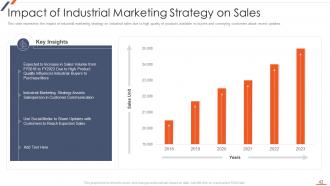
Slide 42: This slide presents Impact of Industrial Marketing Strategy on Sales.
Slide 43: This slide displays Metrics to Measure Industrial Marketing Success.
Slide 44: This slide highlights title for topics that are to be covered next in the template.
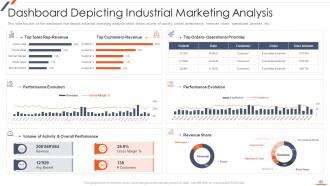
Slide 45: This slide represents Dashboard Depicting Industrial Marketing Analysis.
Slide 46: This slide showcases Manufacturing Analytics and Reporting Dashboard.
Slide 47: This slide displays Icons for Strategic Planning for Industrial Marketing.
Slide 48: This slide is titled as Additional Slides for moving forward.
Slide 49: This slide represents the objectives to be achieved by the firm which includes diversify and widen customer base.
Slide 50: This slide showcases Digital Trends that Drives Discrete Manufacturing.
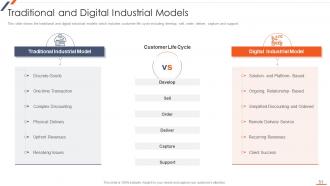
Slide 51: This slide shows the traditional and digital industrial models.
Slide 52: This slide presents Statistics Related to Email Marketing Automation.
Slide 53: This slide displays Technological Investment Priorities to Achieve Marketing Goals.
Slide 54: This slide covers the industrial buyer persona for better customer service.
Slide 55: This is Our Mission slide with related imagery and text.
Slide 56: This is About Us slide to show company specifications etc.
Slide 57: This slide presents Bar chart with two products comparison.
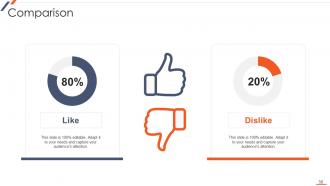
Slide 58: This is a Comparison slide to state comparison between commodities, entities etc.
Slide 59: This slide shows Post It Notes. Post your important notes here.
Slide 60: This is Our Goal slide. State your firm's goals here.
Slide 61: This slide provides 30 60 90 Days Plan with text boxes.
Slide 62: This is a Thank You slide with address, contact numbers and email address.
Strategic Planning For Industrial Marketing Powerpoint Presentation Slides with all 67 slides:
Use our Strategic Planning For Industrial Marketing Powerpoint Presentation Slides to effectively help you save your valuable time. They are readymade to fit into any presentation structure.





























FAQs for Strategic Planning For Industrial Marketing
Honestly, it's night and day compared to consumer stuff. With industrial marketing you've got committees making decisions, not just one person clicking "buy now." The sales cycles drag on forever - like months of demos and proposals before anyone signs anything. These buyers aren't impulse shopping either, they're crunching ROI numbers on equipment that costs more than most people's houses. Way more technical too. You can't just run some flashy ad campaign and expect results. Build relationships instead. Show your expertise through case studies and prove you actually know what you're talking about. Trust me, that boring technical content works better than any creative campaign ever will.
Look at your current customer data first - find patterns in company size, industry, buying habits. Segment by revenue, employee count, location, or what tech they're using. But honestly? The purchase history and behavior data is way more valuable than job titles. I'd use LinkedIn Sales Navigator or your CRM to build buyer personas for each segment. Map out who actually makes decisions at these companies too. Don't go crazy though - stick to 3-4 segments max, then test different messaging with each group. More segments just gets messy.
Look, relationships are everything in industrial marketing. Trust me on this one. These buyers are making massive decisions that'll affect their operations for years - they're not gonna risk it on someone random. Build real partnerships instead of just pitching products. Industrial sales cycles are crazy complex and high-value, so you need that credibility from day one. Honestly, half the battle is just showing you actually get their business problems. Once you're seen as the trusted advisor who understands their world, deals start closing themselves. It's way more effective than the old spray-and-pray approach.
Honestly, data analytics is a game changer for understanding your industrial customers. You'll see buying patterns and pain points you'd miss completely otherwise. Track what content actually works during those endless B2B sales cycles. I've watched teams burn months on hunches that good analytics would've killed in a week - such a waste. Look beyond basic metrics though. Focus on engagement quality and how fast accounts move through your pipeline. Your CRM and website data are solid starting points, then add intent data so you know who's actually ready to buy instead of just browsing around.
Honestly, you gotta focus on where your buyers actually hang out online. LinkedIn and Google Ads will crush it for B2B stuff. Email campaigns work great too, but don't just blast everyone - be smart about targeting. Your website content and webinars? Pure gold for building trust with the people making decisions. I mean, trade pubs aren't dead yet, but let's be real - everyone starts Googling first now. Direct sales still matters for the big deals though. Oh, and here's what I'd do first: figure out how your current customers found you, then put more money there.
Dude, the tech stuff is totally changing B2B marketing right now. AI predictive analytics actually shows you who's ready to buy vs. just window shopping. Real-time IoT data lets you see exactly how customers use your products - way better than those old shotgun-approach campaigns. For complex equipment, AR/VR demos are a lifesaver when you can't drag clients to your facility (honestly, sometimes that's a blessing). My advice? Pick one tech that fixes your biggest headache first. Don't try to do everything at once or you'll just stress yourself out. Scale up later.
Ditch the feature talk and go straight for measurable results. Industrial buyers want hard numbers they can take to their boss - stuff like "cuts downtime 30%" or "saves $50K yearly." These people live in Excel, honestly. You've got to nail their specific pain points and prove you actually get their industry. Customer testimonials from similar companies work crazy well in B2B - way better than you'd think. Oh, and definitely test your value prop with real prospects first. Don't just blast it out there and hope it sticks.
Focus on metrics that actually connect to revenue, not just flashy numbers. Lead quality matters way more than volume - track how many marketing qualified leads become real deals. Content engagement is solid too, especially when people download technical stuff or request demos. Sales cycle length will probably stress you out since B2B buying takes forever, but it's crucial data. Oh, and definitely measure customer acquisition cost against lifetime value so you know if you're actually making money. The tricky part? Setting up attribution correctly. Otherwise you won't know which channels drive real business versus just website traffic.
Yeah, it's rough out there for industrial brands. Your buyers aren't making emotional decisions - they're sitting in committees crunching numbers and comparing specs. Long procurement cycles don't help either. Most of these products feel like commodities anyway (steel, components, whatever), so brand loyalty takes a backseat to cost and delivery times. The relationships you build? They walk out the door when people change jobs. Honestly, traditional brand-building tactics won't cut it here. Focus on nailing your service every time, solid technical support, and actually proving ROI. That's what moves the needle.
Oh man, content marketing is HUGE for industrial stuff - way bigger than B2C honestly. These buyers research everything to death before purchasing anything. They'll read like 5-10 pieces of content during their super long buying process, so you better be there with good stuff. White papers work great, plus case studies and technical guides. Webinars too if you can swing it. The key is showing you actually know what you're talking about - solve their real problems, don't just pitch. Map your content to where they are in the buying journey first, then focus on making fewer pieces that are actually worth reading.
Yeah, global stuff totally hits your local marketing whether you want it to or not. Supply chain mess, sustainability requirements, digital changes - they all force you to switch up your messaging and where you're reaching people. I watched one company completely redo their local campaign because of new ESG rules (honestly kind of a pain but necessary). Your buyers get influenced by this macro stuff even if they don't realize it. What I do is track maybe 3-4 big industry trends each quarter and ask myself "okay, how's this changing what people actually care about locally?" Then you adjust instead of just running last year's playbook again.
Dude, customer feedback is literally your sanity check for industrial marketing. Industrial buyers don't mess around - they'll tell you straight up if your messaging sucks or if you're missing their actual problems. Use their input to fix your value props and targeting. Honestly, B2B folks are way more honest than consumer markets where people lie about everything. Set up surveys, pick your sales team's brain after calls, do some customer interviews. The feedback often reveals opportunities you'd never think of. Just don't collect it and then ignore it like most companies do.
Honestly, partnerships are a game changer if you do them right. Find companies that complement what you do - not compete with you directly. Joint webinars work great, or you could split booth costs at trade shows (those things are expensive). Cross-promoting through their channels gets you in front of people who already trust your partner. That's huge. Case studies featuring both companies are solid too. I'd start small though - maybe reach out to three companies in related industries who target the same buyers you do. Propose something simple first and see how it goes.
Look, be brutally honest with your B2B clients - no sugarcoating what your product can actually do. These are long-term relationships, so don't mess around with unrealistic timelines or sketchy pricing just because you know more about the tech than they do. Keep confidentiality agreements sacred (seriously, this stuff spreads like wildfire in industrial circles). Fair pricing matters. Also watch out for conflicts of interest - they'll bite you later. I'd honestly ask myself: would I be cool seeing this decision posted on industry forums? Maybe start by going through your current sales stuff and cutting any BS claims.
Dude, trade shows are honestly where the magic happens. You'll meet prospects who actually want to be there - none of that awkward cold calling stuff. Just showing up puts you in the same room as the big players, which automatically makes you look legit. What I love about them is how fast you can build trust. Like, one good booth conversation beats months of back-and-forth emails. Sometimes I think we overthink networking, but these events make it simple. Just have a clear plan going in and - this is crucial - follow up within a week while they still remember your face.
-
A fantastic collection of templates. I'll likely use this as my go-to resource for future templates and support.
-
Incredibly beautiful designs that will help you get noticed! These eye-catching templates are perfect for corporate presentations that can be altered to fit any occasion or taste.