


Complete Introduction to Business Marketing Powerpoint Presentation Slides MKT CD V
Business marketing is the process of selling products or services to other brands or businesses. Grab our Complete Introduction to Business Marketing template. It can help companies scale their businesses, improve brand awareness, and convert potential leads into sales. Our B2B Marketing deck presents a thorough competitive analysis section to find out the most powerful competitor in their industry. Additionally, it caters to a budget section through which marketing professionals can project the expected cost of running marketing campaigns. Our Marketing Strategy PPT also includes online Influencer marketing, video marketing, email marketing, and search engine optimization SEO and offline marketing channels Guerilla marketing campaign to increase organizational sales and profit. Further, it showcases the different software tools which are required by marketers to streamline their operations. Lastly, our Lead Generation module helps managers to evaluate the performance of B2B marketing strategies through key performance indicator KPI dashboards. Get access to this 100 percent editable template now.
Business marketing is the process of selling products or services to other brands or businesses. Grab our Complete Introduc..

















-

- Google Slides is a new FREE Presentation software from Google.
- All our content is 100% compatible with Google Slides.
- Just download our designs, and upload them to Google Slides and they will work automatically.
- Amaze your audience with SlideTeam and Google Slides.
-

Want Changes to This PPT Slide? Check out our Presentation Design Services
-

- WideScreen Aspect ratio is becoming a very popular format. When you download this product, the downloaded ZIP will contain this product in both standard and widescreen format.
-

- Some older products that we have may only be in standard format, but they can easily be converted to widescreen.
- To do this, please open the SlideTeam product in Powerpoint, and go to
- Design ( On the top bar) -> Page Setup -> and select "On-screen Show (16:9)” in the drop down for "Slides Sized for".
- The slide or theme will change to widescreen, and all graphics will adjust automatically. You can similarly convert our content to any other desired screen aspect ratio.
Compatible With Google Slides

Get This In WideScreen
You must be logged in to download this presentation.


Do you want to remove this product from your favourites?
PowerPoint presentation slides
Deliver this complete deck to your team members and other collaborators. Encompassed with stylized slides presenting various concepts, this Complete Introduction to Business Marketing Powerpoint Presentation Slides MKT CD V is the best tool you can utilize. Personalize its content and graphics to make it unique and thought-provoking. All the seventy eight slides are editable and modifiable, so feel free to adjust them to your business setting. The font, color, and other components also come in an editable format making this PPT design the best choice for your next presentation. So, download now.

People who downloaded this PowerPoint presentation also viewed the following :
Content of this Powerpoint Presentation
Slide 1: This slide introduces Complete Guide to Develop Business Marketing Strategies. Commence by stating Your Company Name.
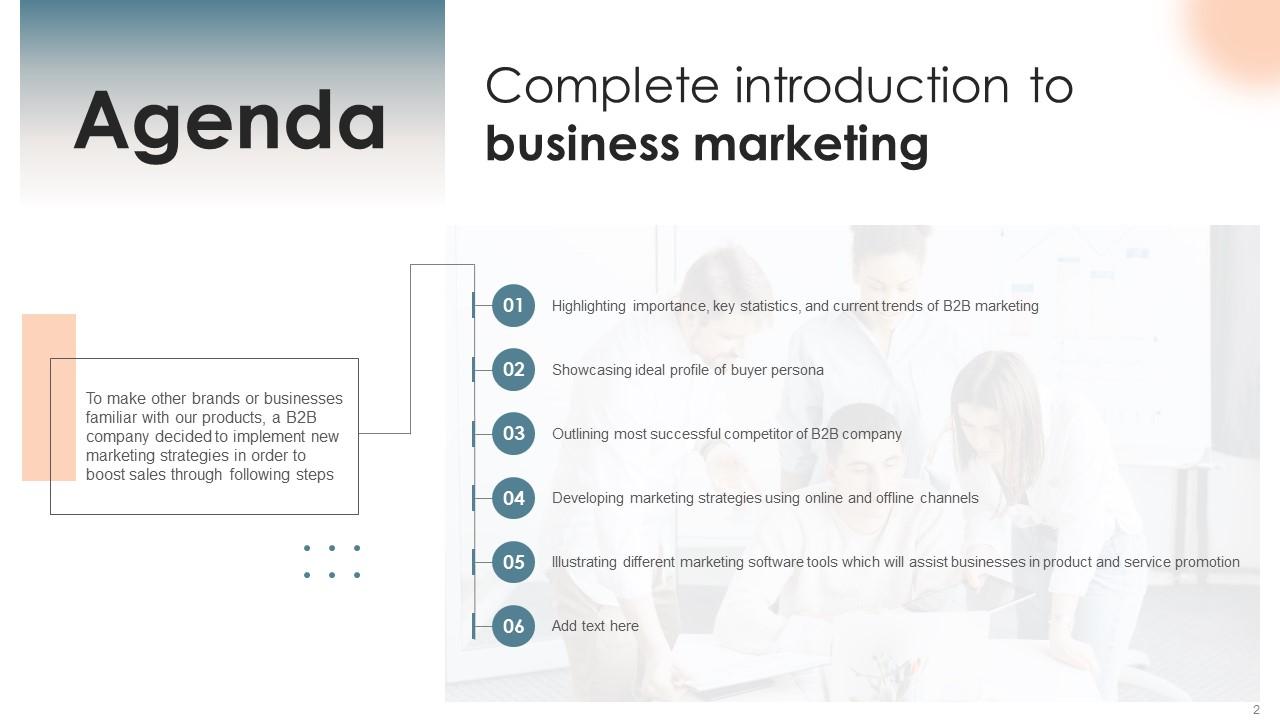
Slide 2: This slide depicts the Agenda of the presentation.
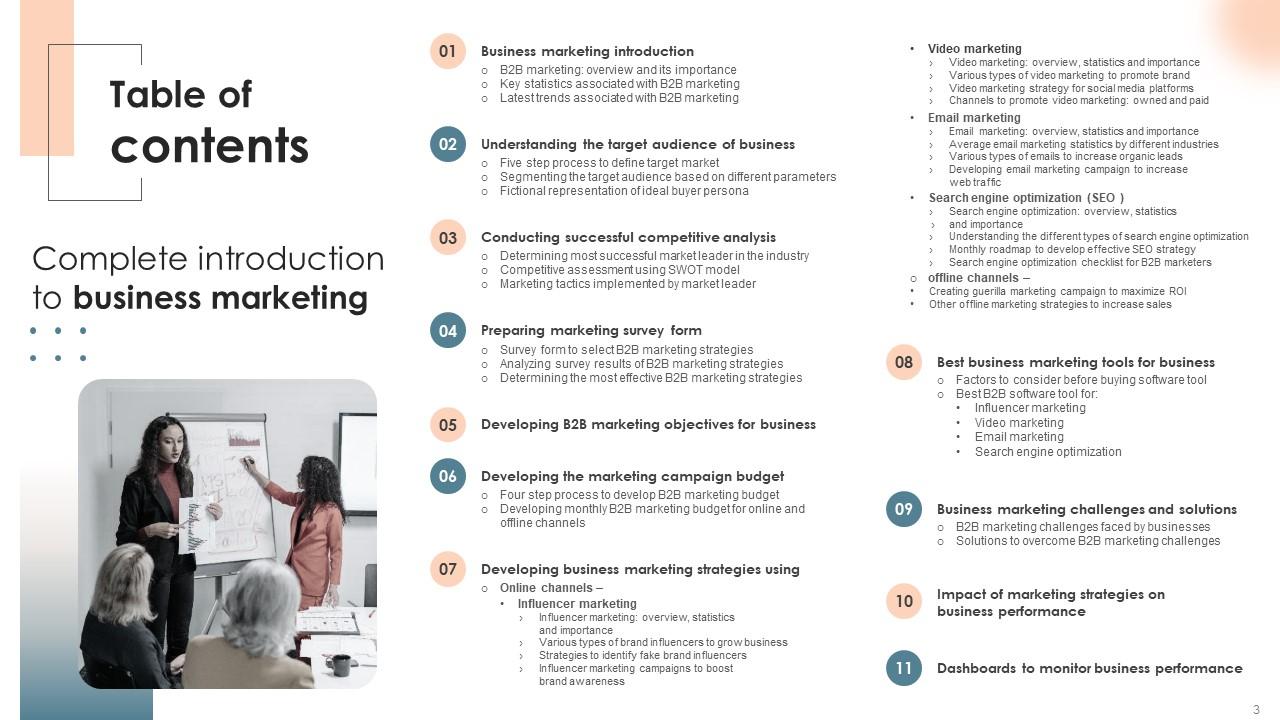
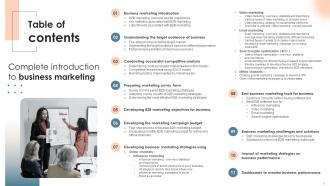
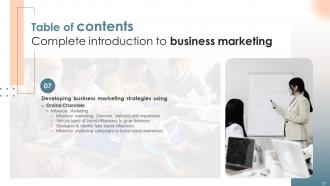
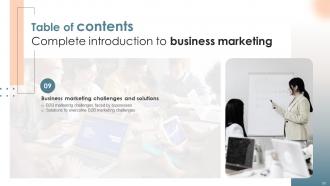
Slide 3: This slide incorporates the Table of contents.
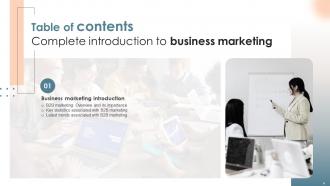
Slide 4: This slide highlights the Title for the Topics to be covered further.
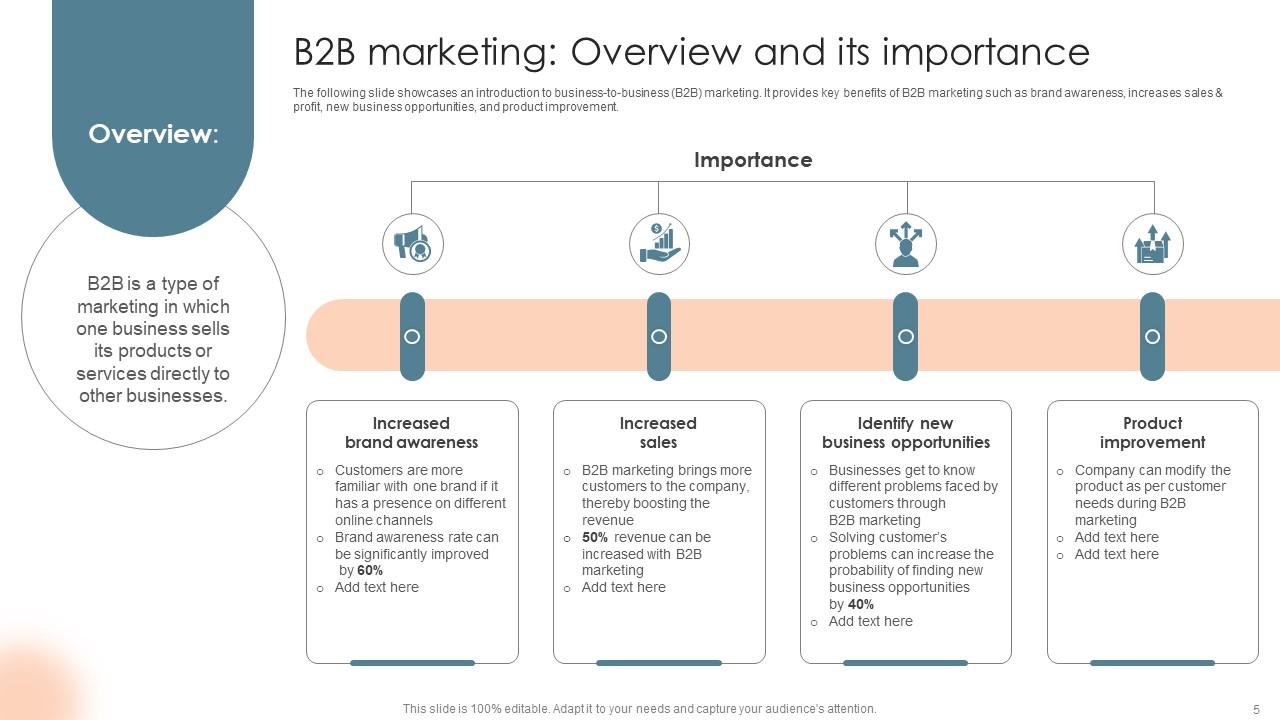
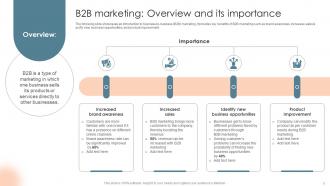
Slide 5: The following slide showcases an introduction to business-to-business (B2B) marketing.
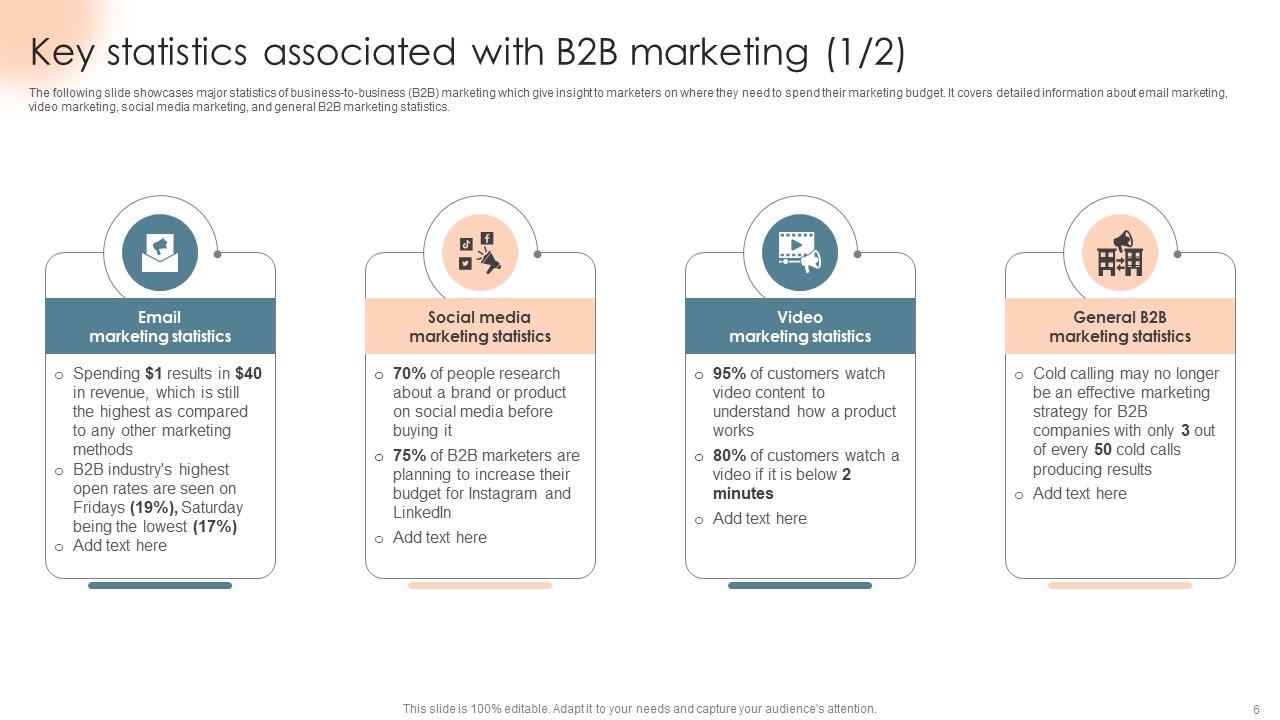
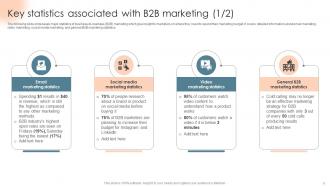
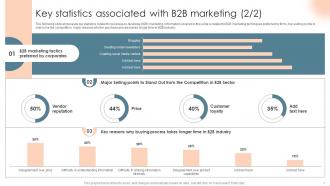
Slide 6: This slide states the Key statistics associated with B2B marketing.
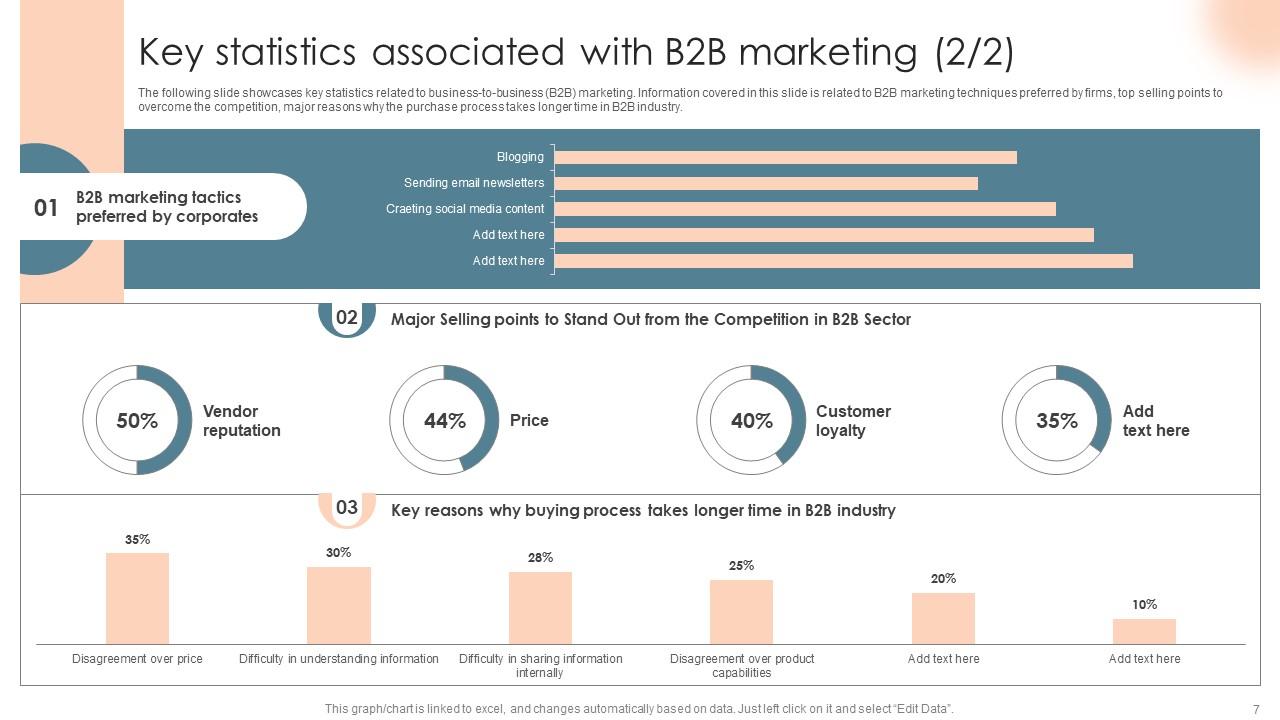
Slide 7: This slide continues the Key statistics associated with B2B marketing.
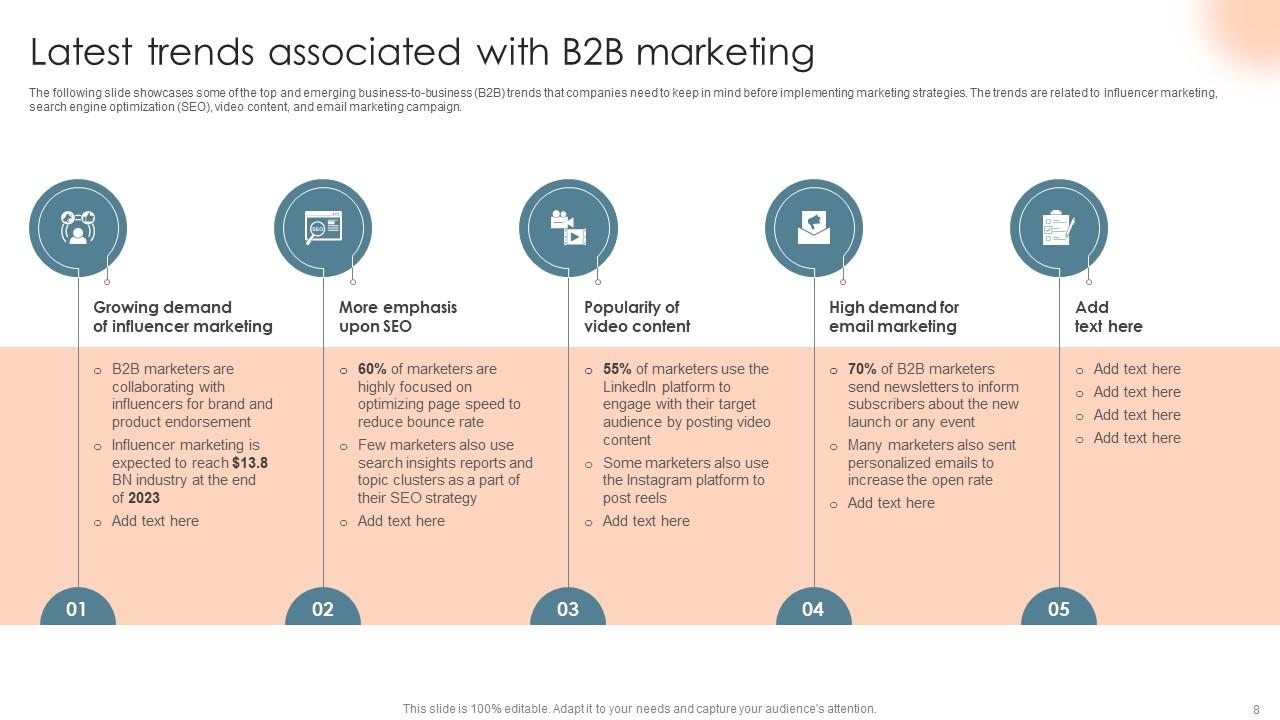
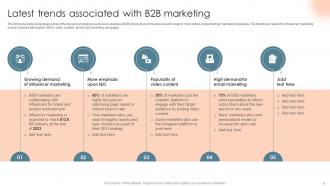
Slide 8: This slide reveals the Latest trends associated with B2B marketing.
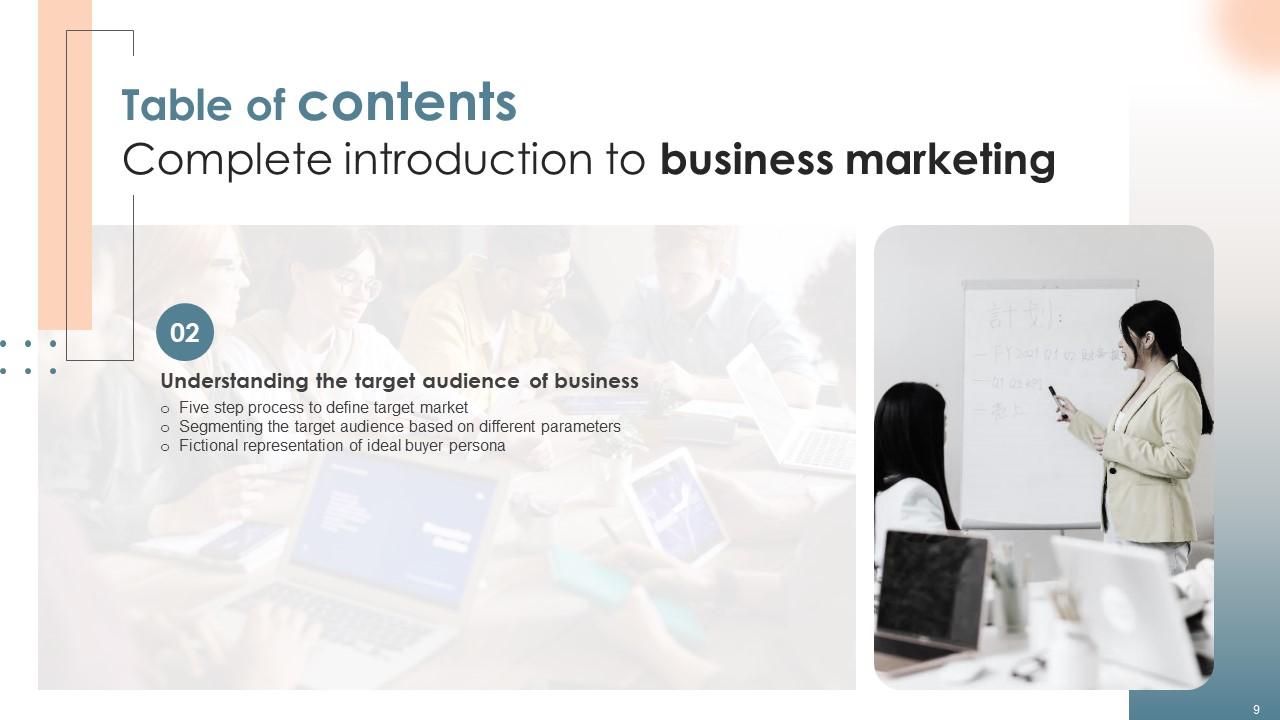
Slide 9: This slide indicates the Heading for the Components to be discussed in the following template.
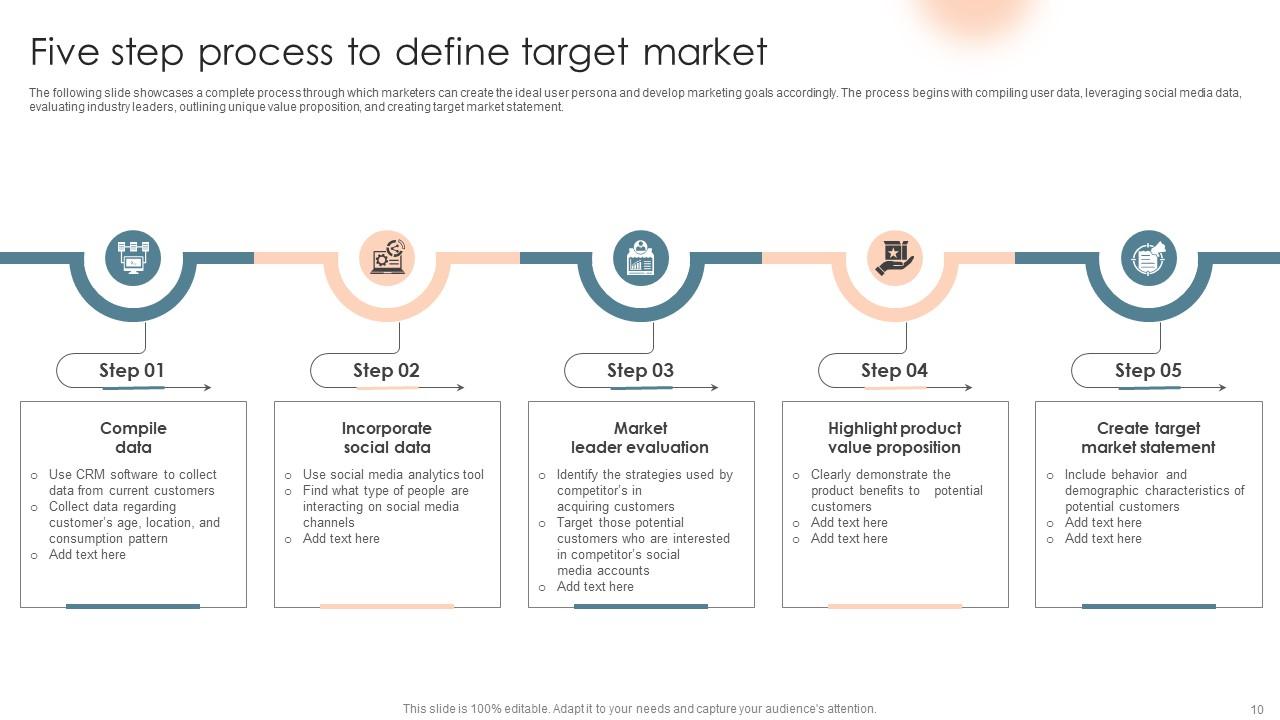
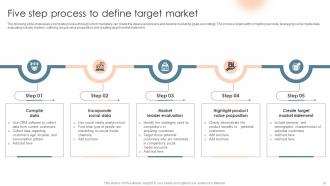
Slide 10: This slide states the Five step process to define target market.
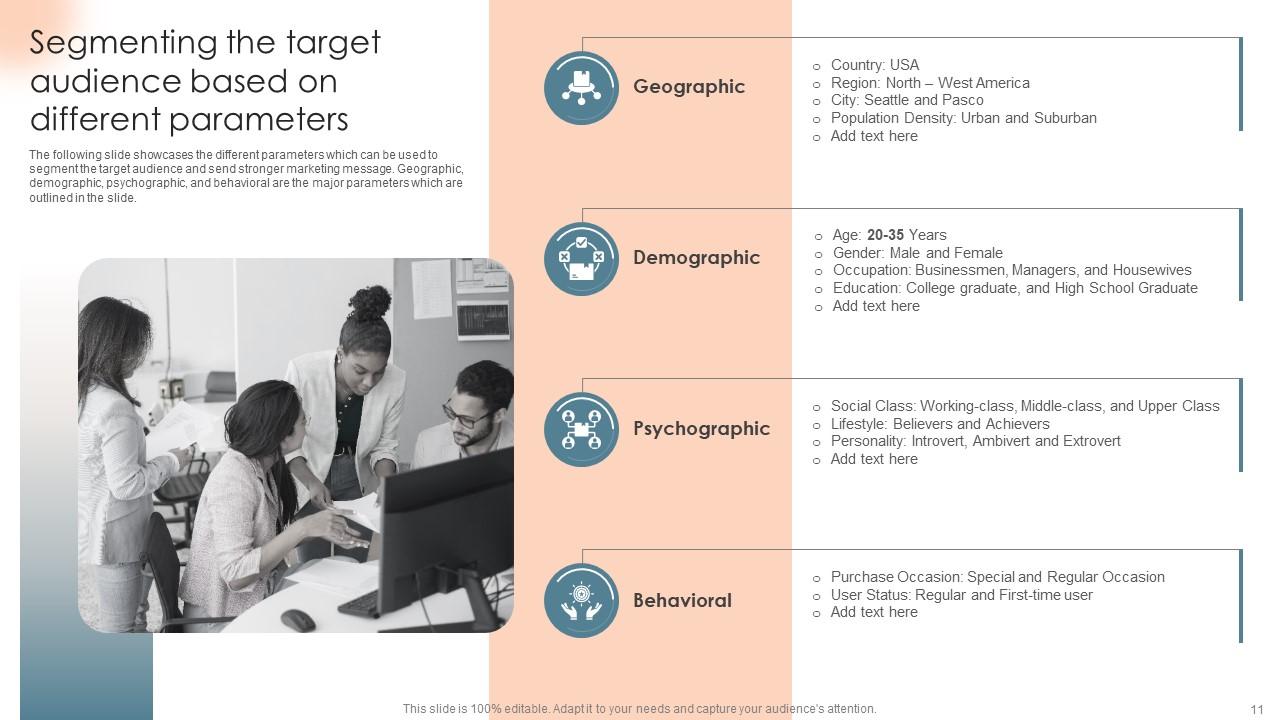
Slide 11: This slide talks about Segmenting the target audience based on different parameters.
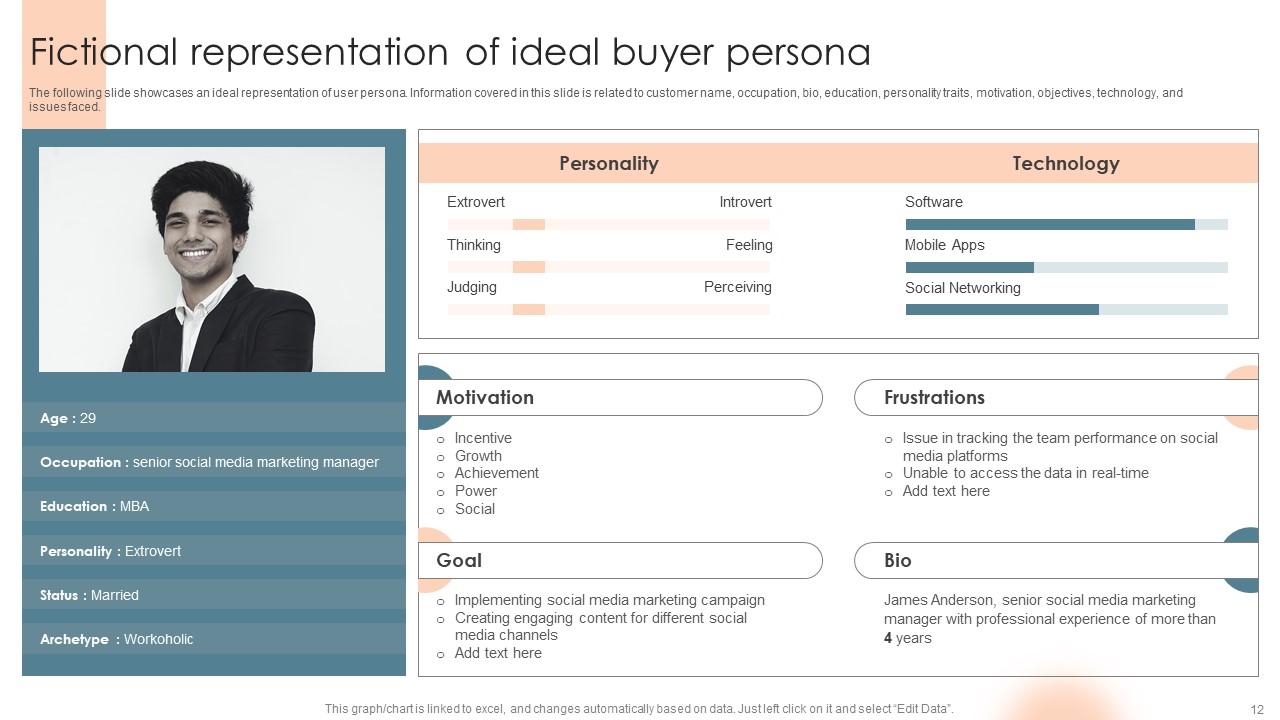
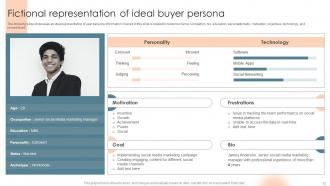
Slide 12: This slide displays the Fictional representation of ideal buyer persona.
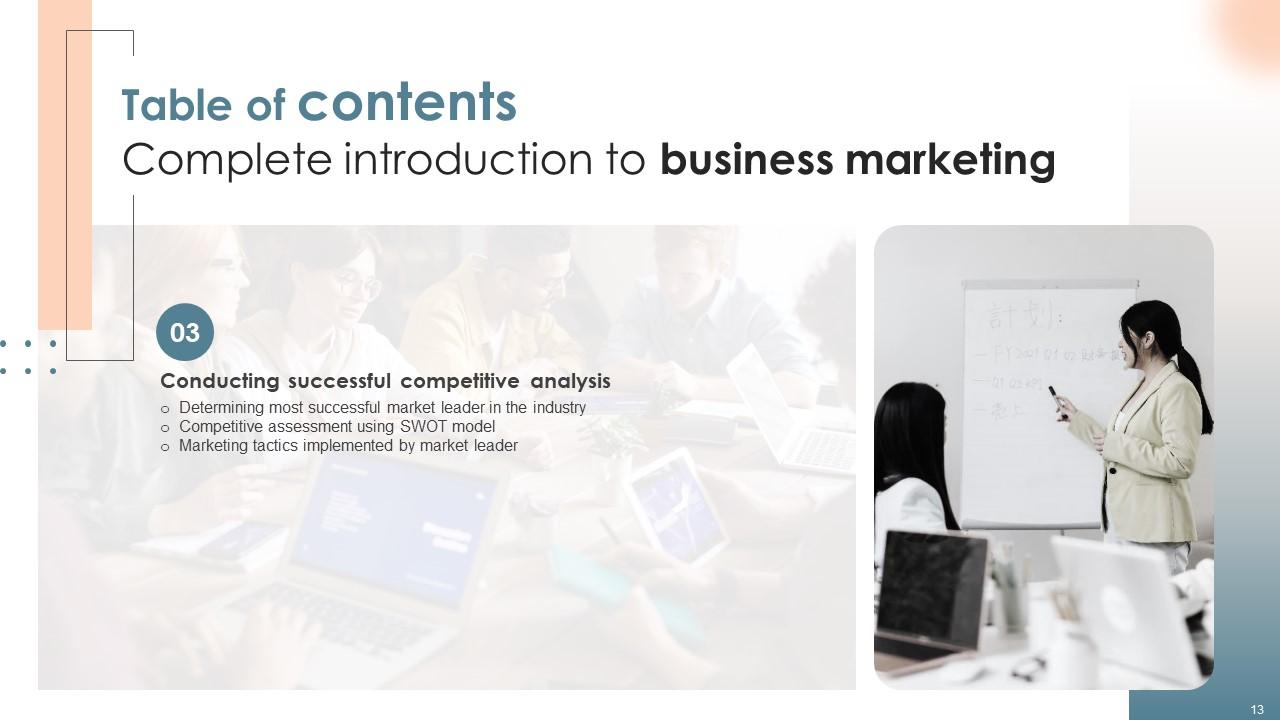
Slide 13: This slide portrays the Title for the Ideas to be covered in the forth-coming template.
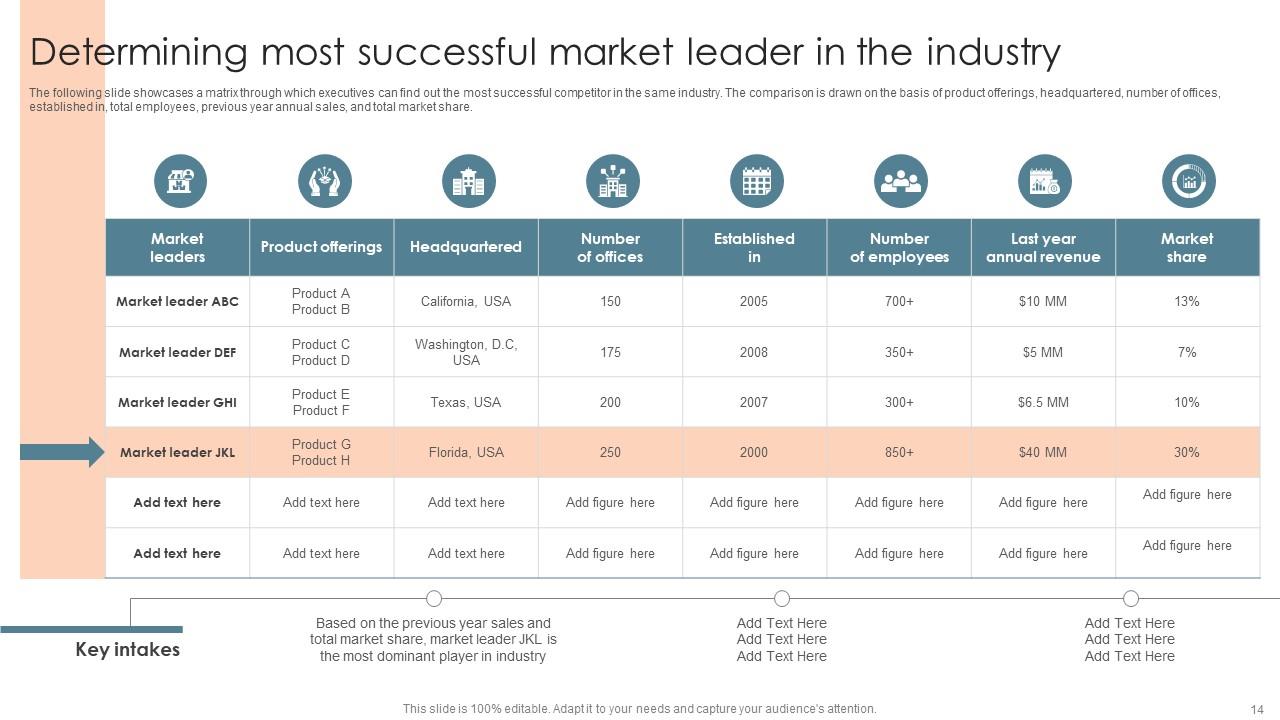
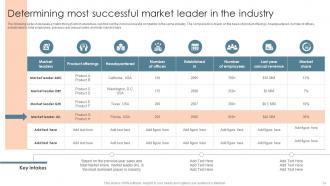
Slide 14: This slide deals with Determining most successful market leader in the industry.
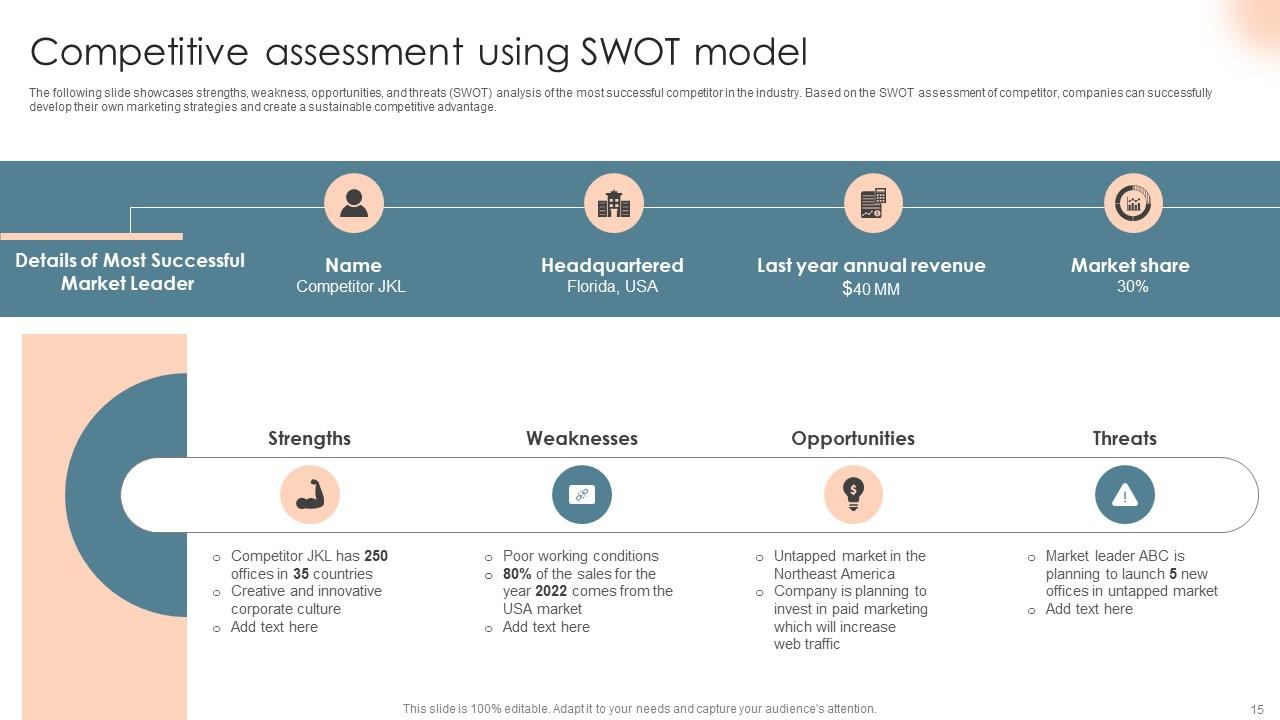
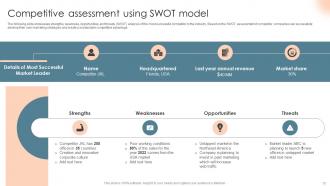
Slide 15: This slide showcases the Competitive assessment using SWOT model.
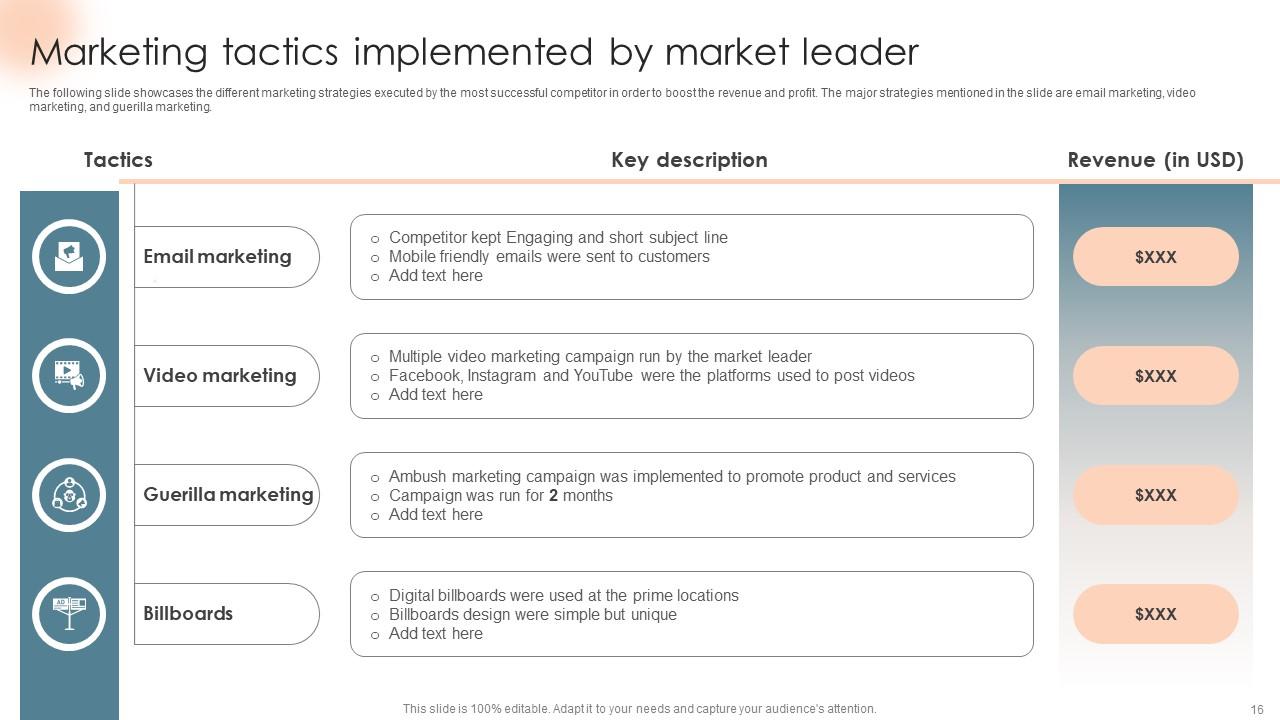
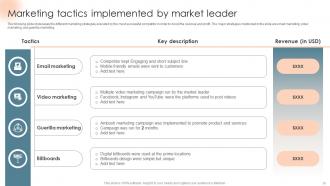
Slide 16: This slide exhibits the Marketing tactics implemented by market leader.
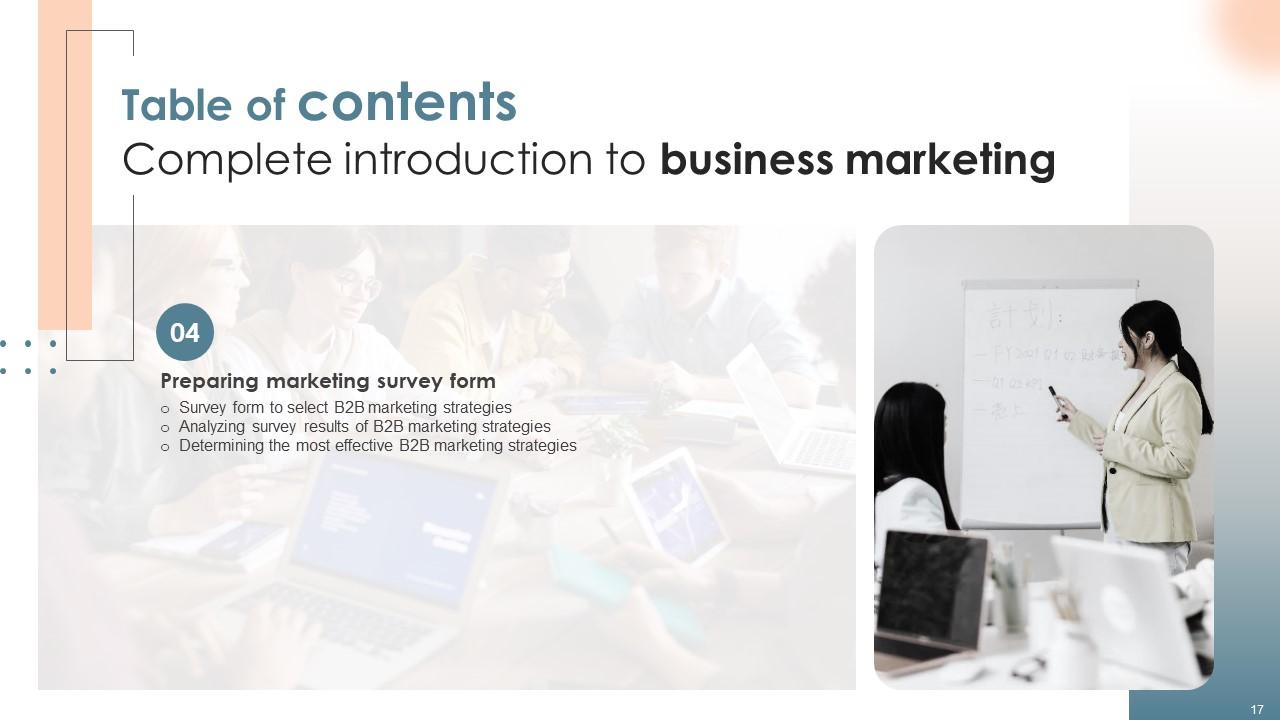
Slide 17: This slide displays the Heading for the Ideas to be discussed in the following template.
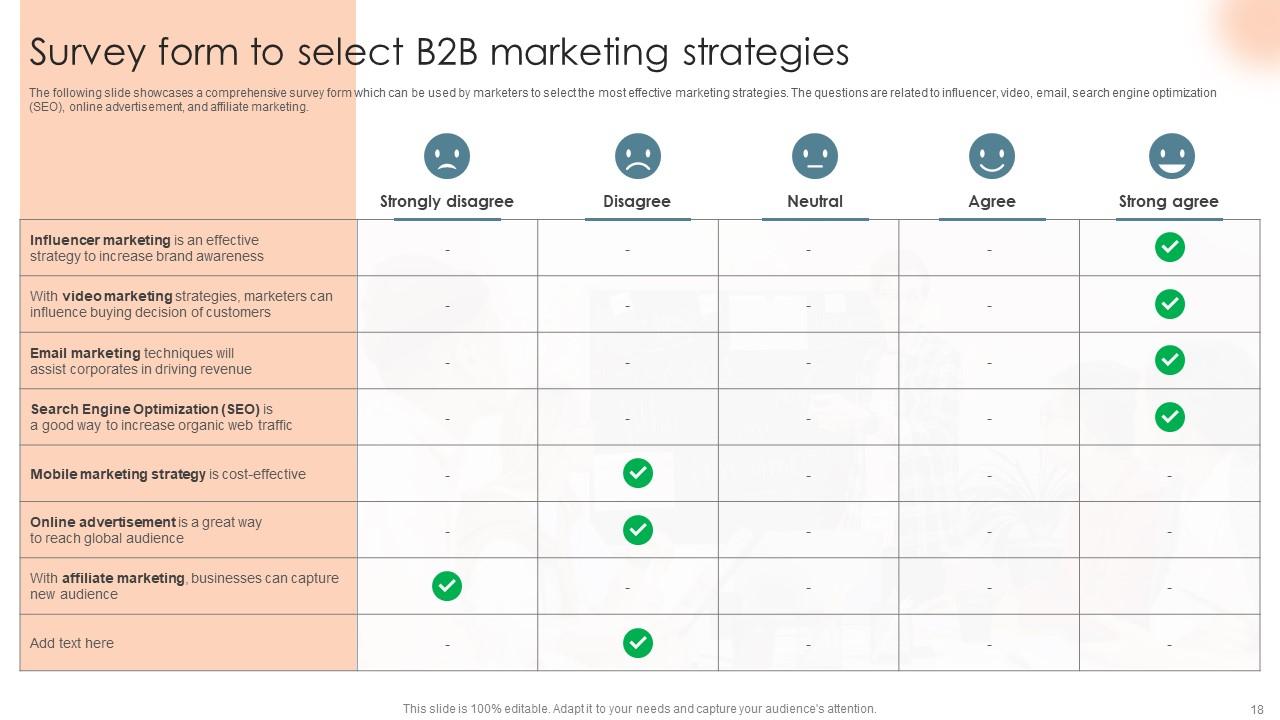
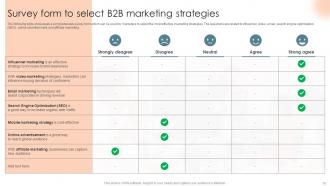
Slide 18: This slide highlights a Survey form to select B2B marketing strategies.
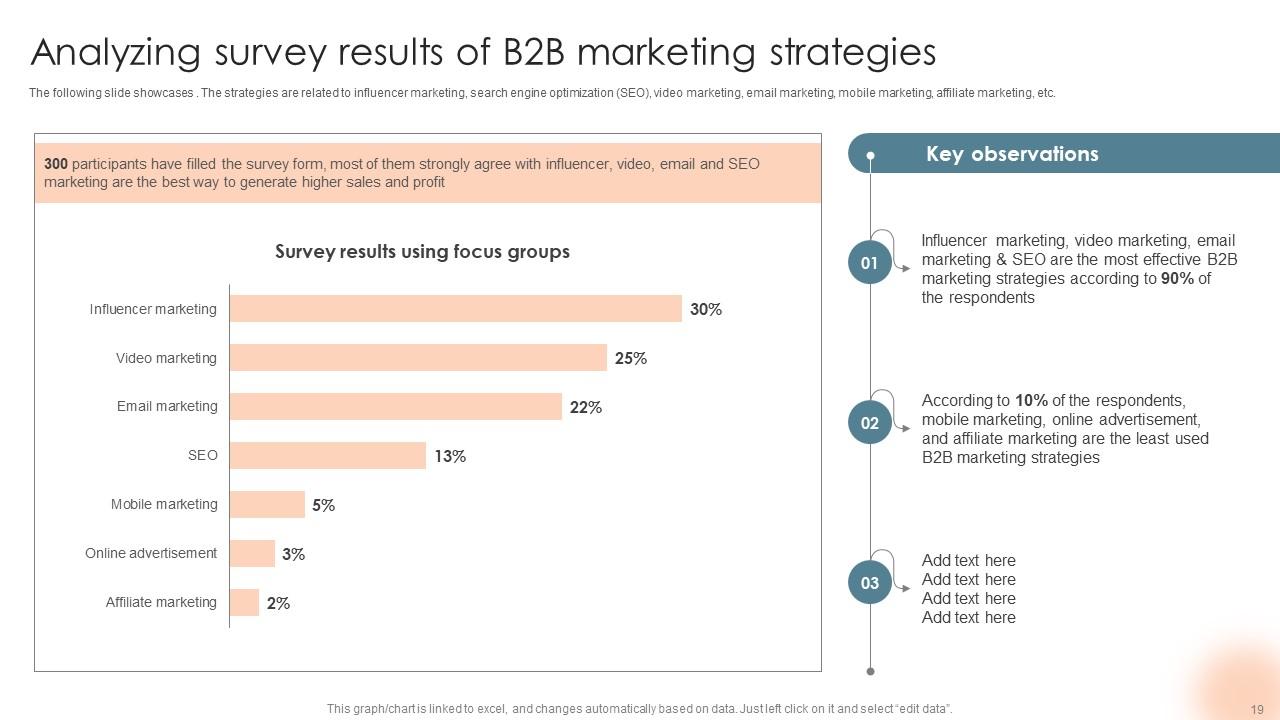
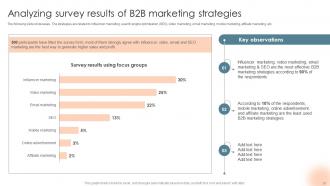
Slide 19: This slide deals with Analyzing survey results of B2B marketing strategies.
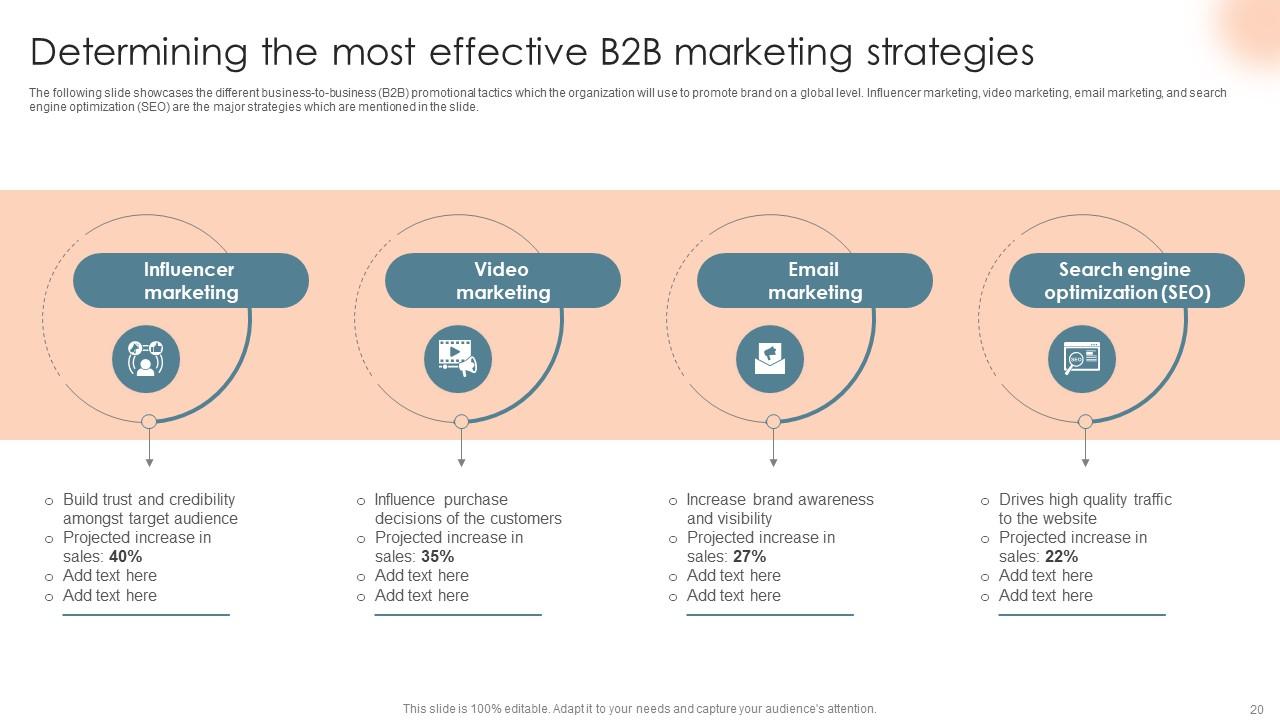
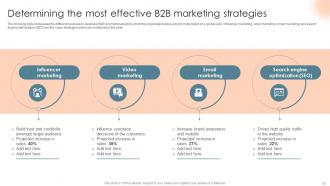
Slide 20: This slide focuses on Determining the most effective B2B marketing strategies.
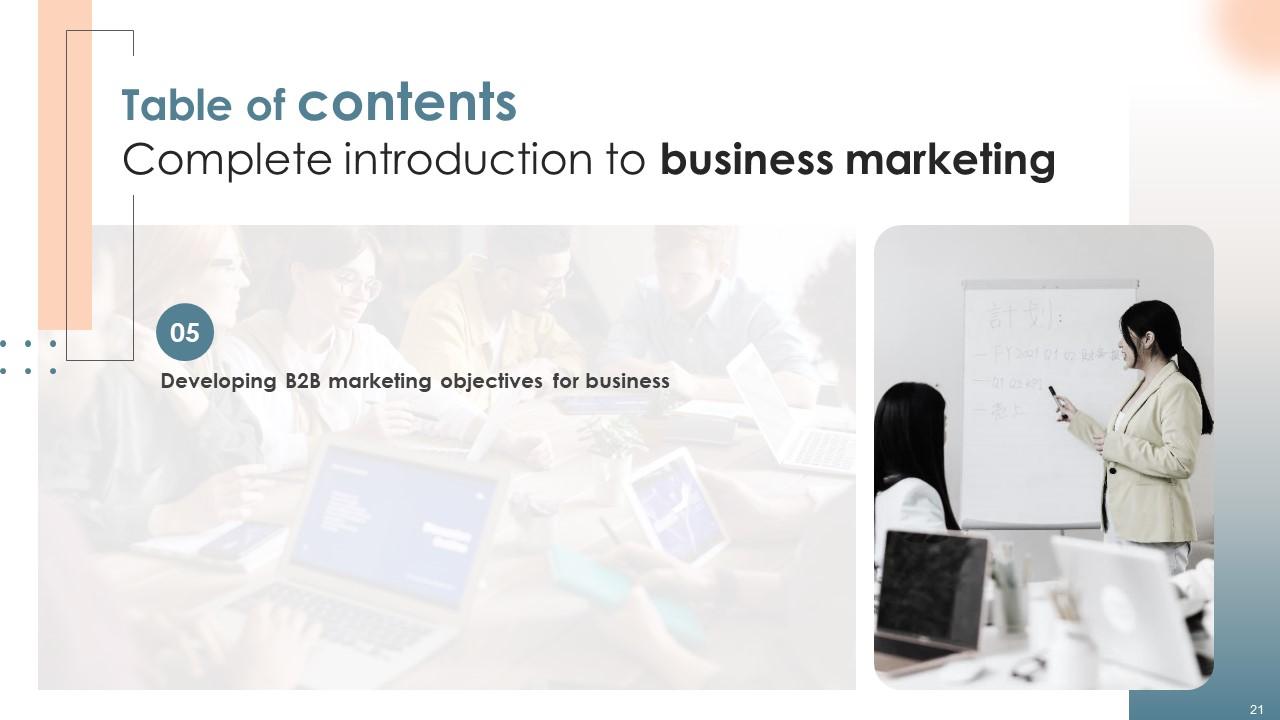
Slide 21: This slide includes the Title for the Contents to be covered next.
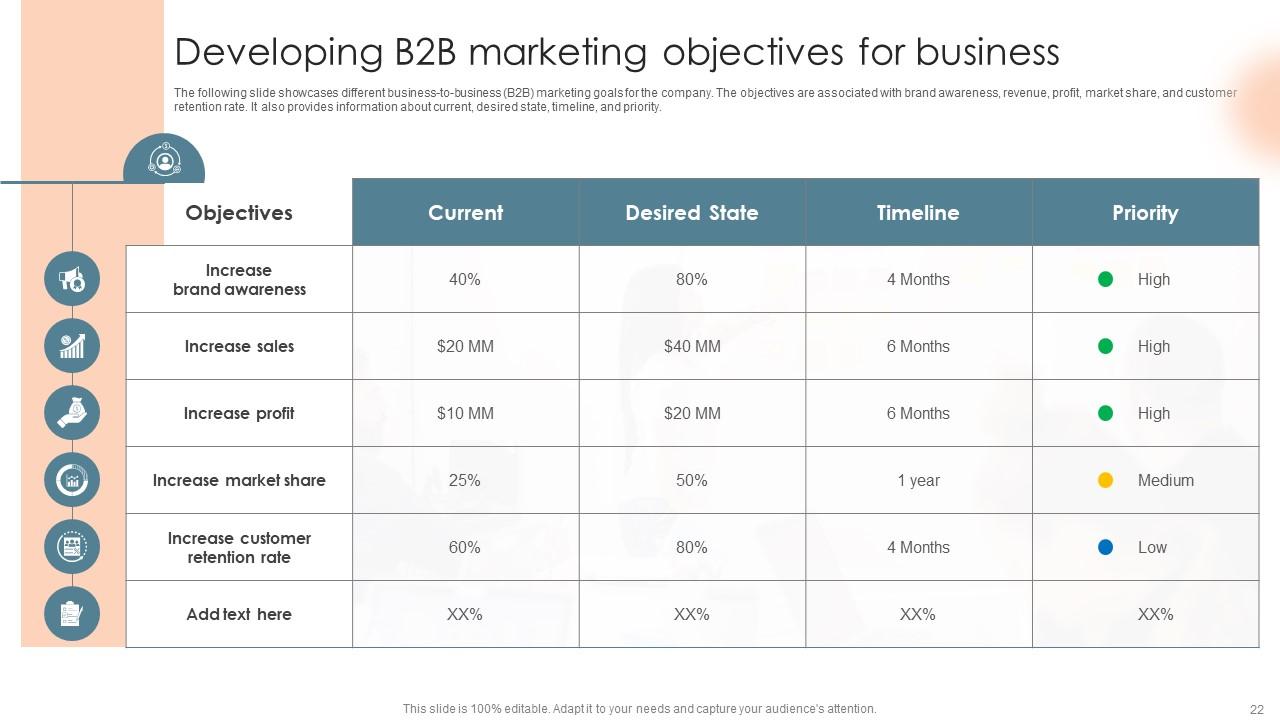
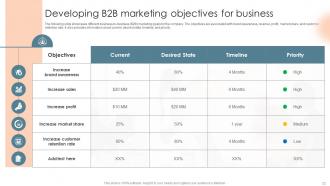
Slide 22: This slide emphasizes on Developing B2B marketing objectives for business.
Slide 23: This slide contains the Heading for the Topics to be covered in the next template.
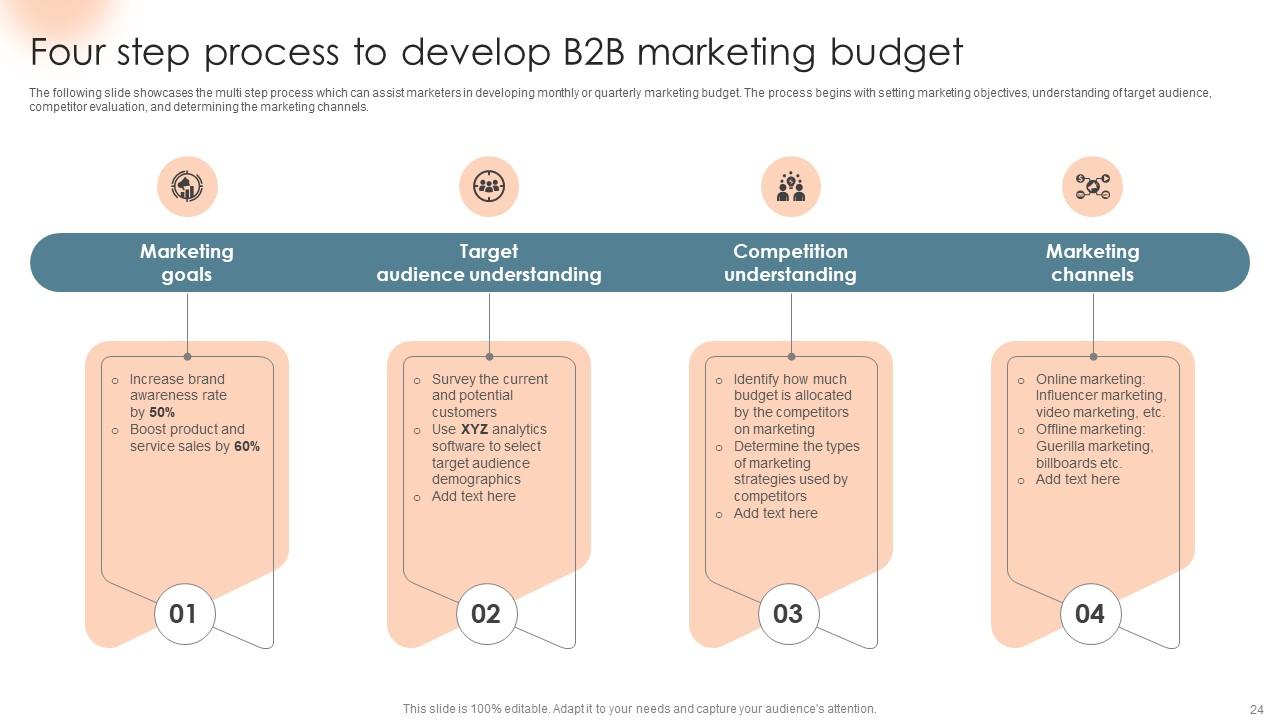
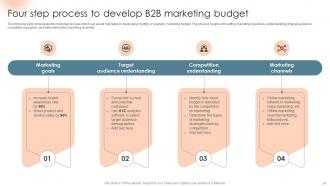
Slide 24: This slide dpeicts the Four step process to develop B2B marketing budget.
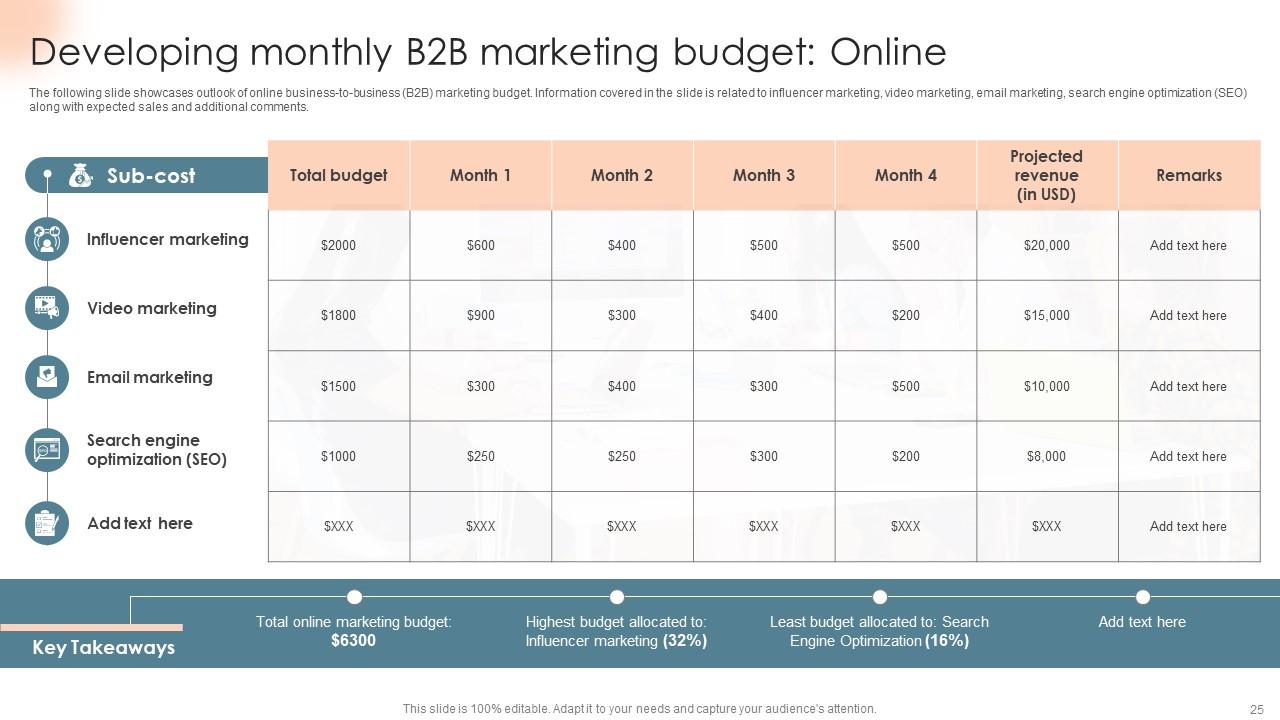
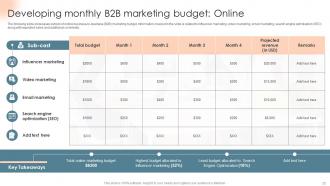
Slide 25: This slide mentions about Developing monthly B2B marketing budget.
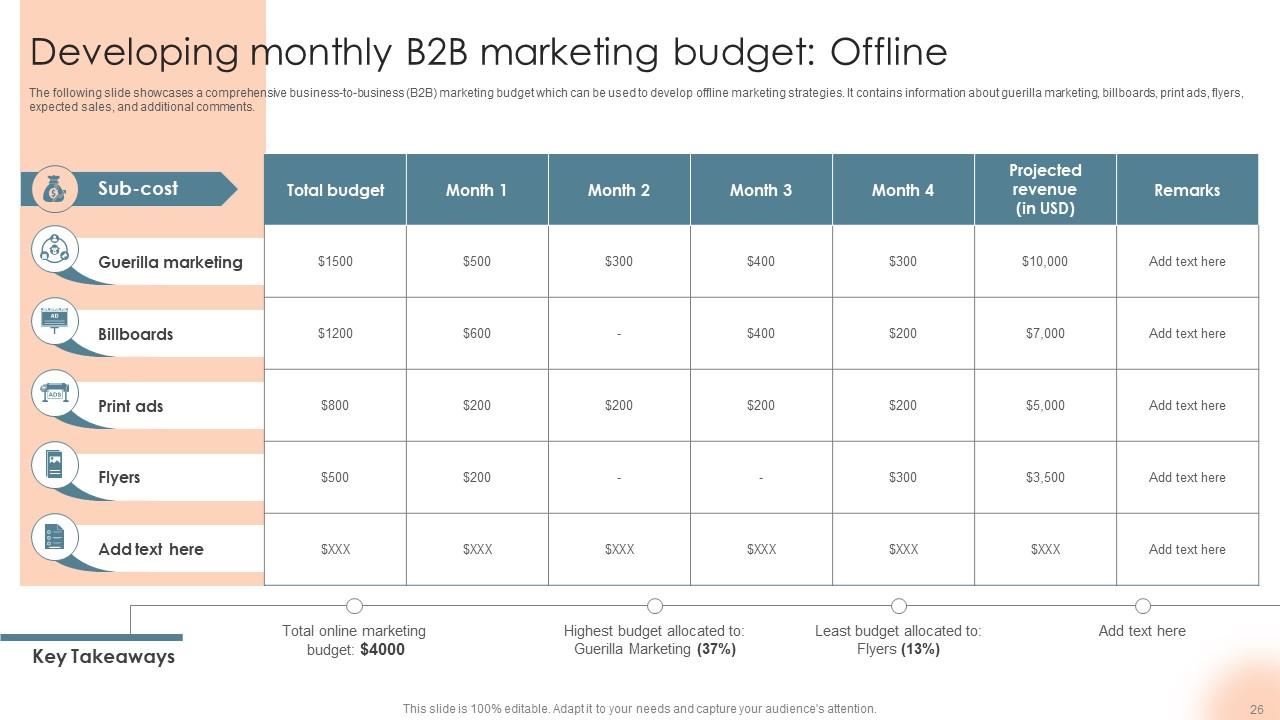
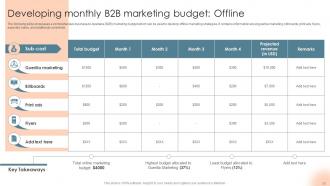
Slide 26: The following slide showcases a comprehensive business-to-business (B2B) marketing budget to develop offline marketing strategies.
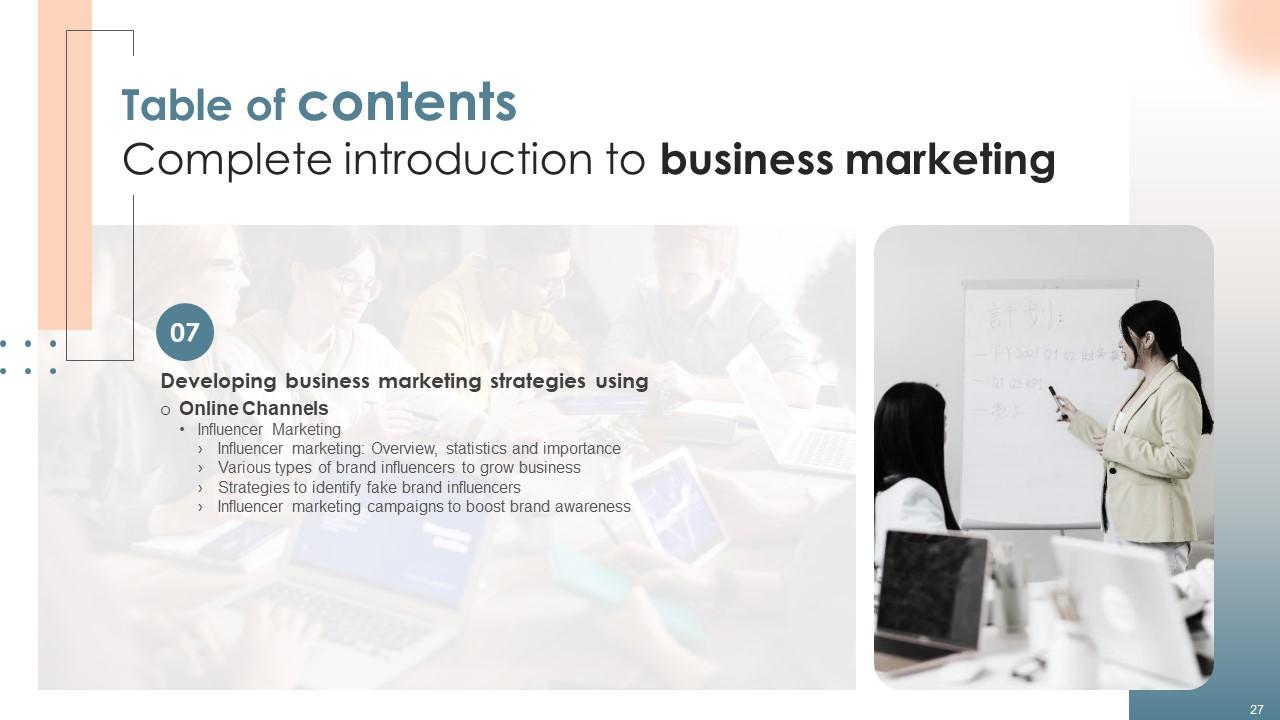
Slide 27: This slide portrays the Title for the Ideas to be discussed next.
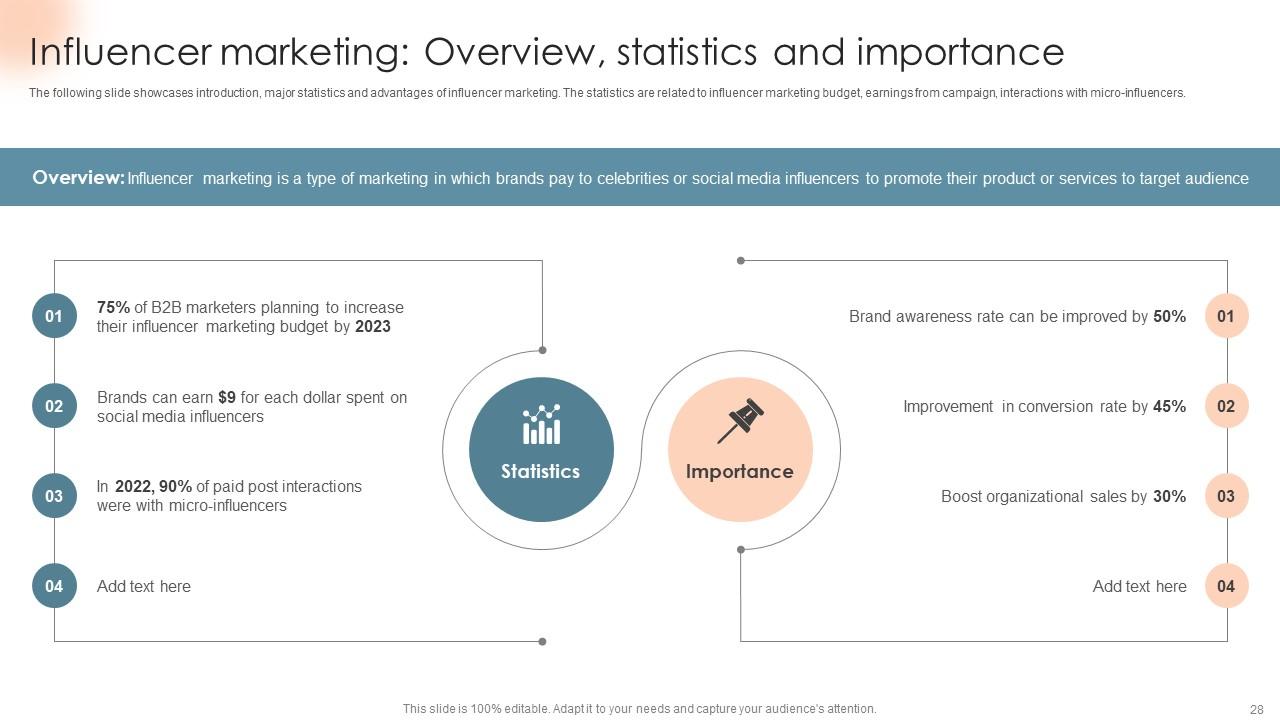
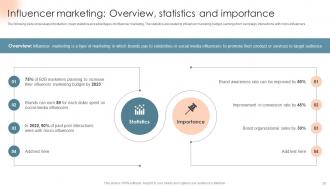
Slide 28: This slide showcases introduction, major statistics and advantages of influencer marketing.
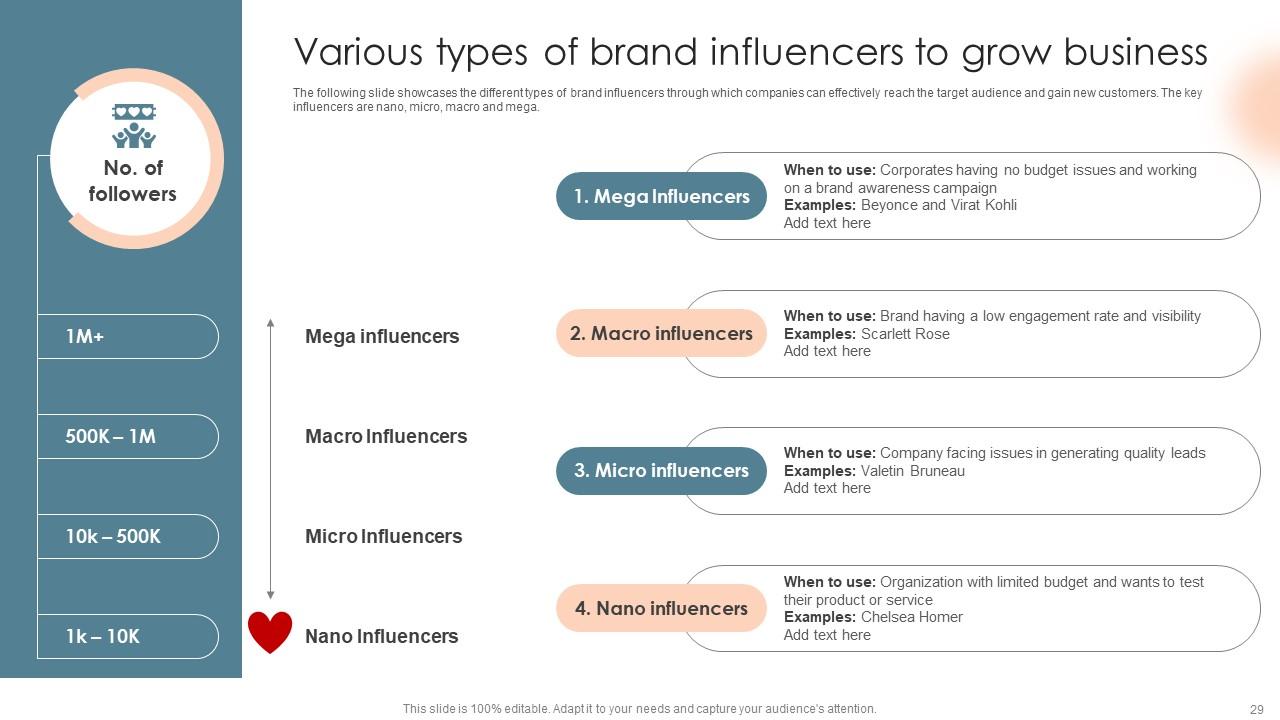
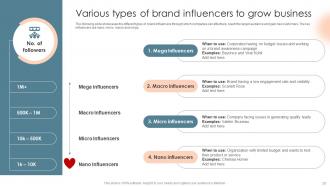
Slide 29: This slide exhibits the Various types of brand influencers to grow business.
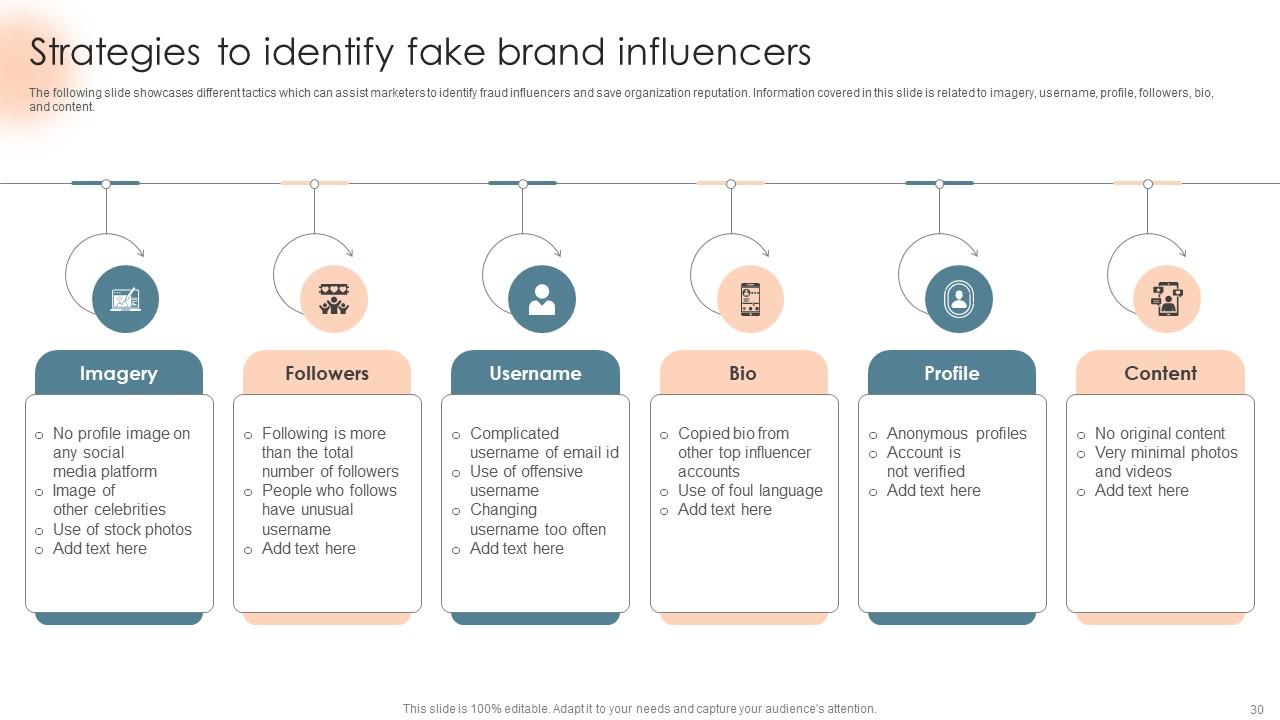
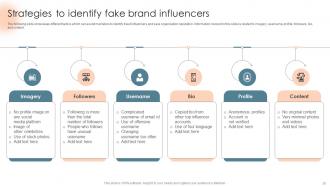
Slide 30: This slide presents the Strategies to identify fake brand influencers.
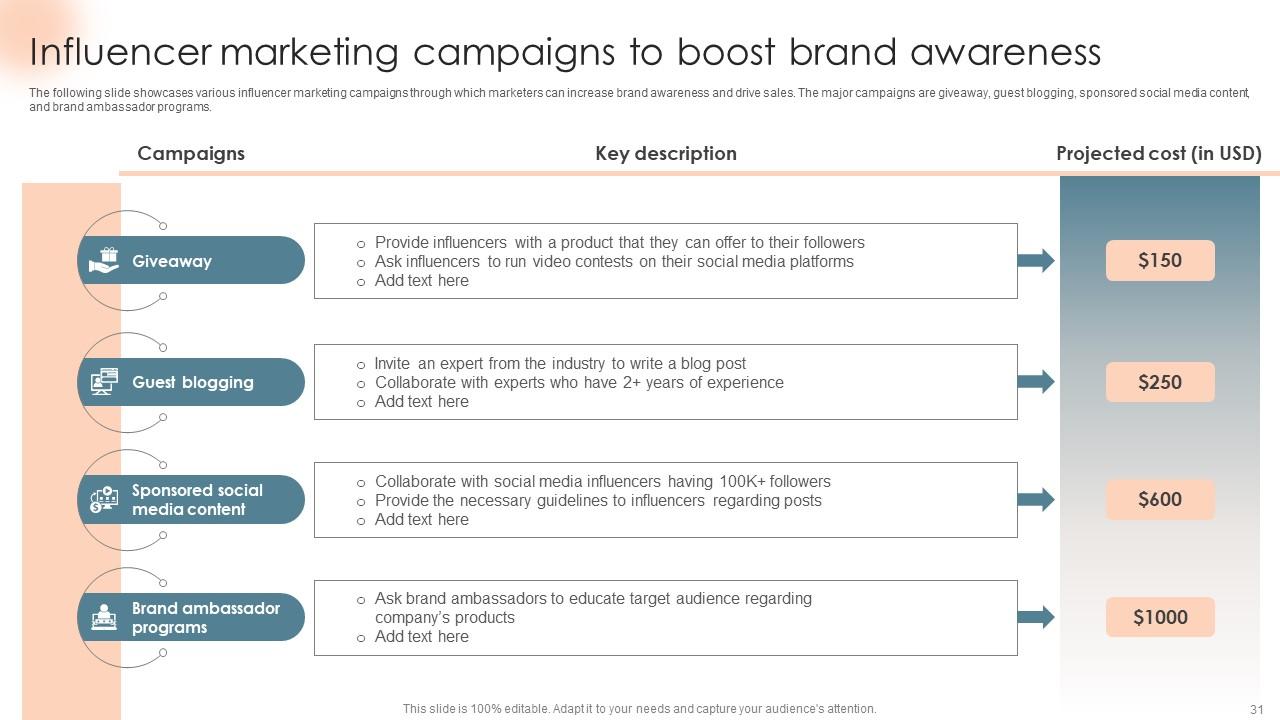
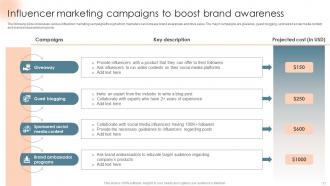
Slide 31: This slide talks about the Influencer marketing campaigns to boost brand awareness.
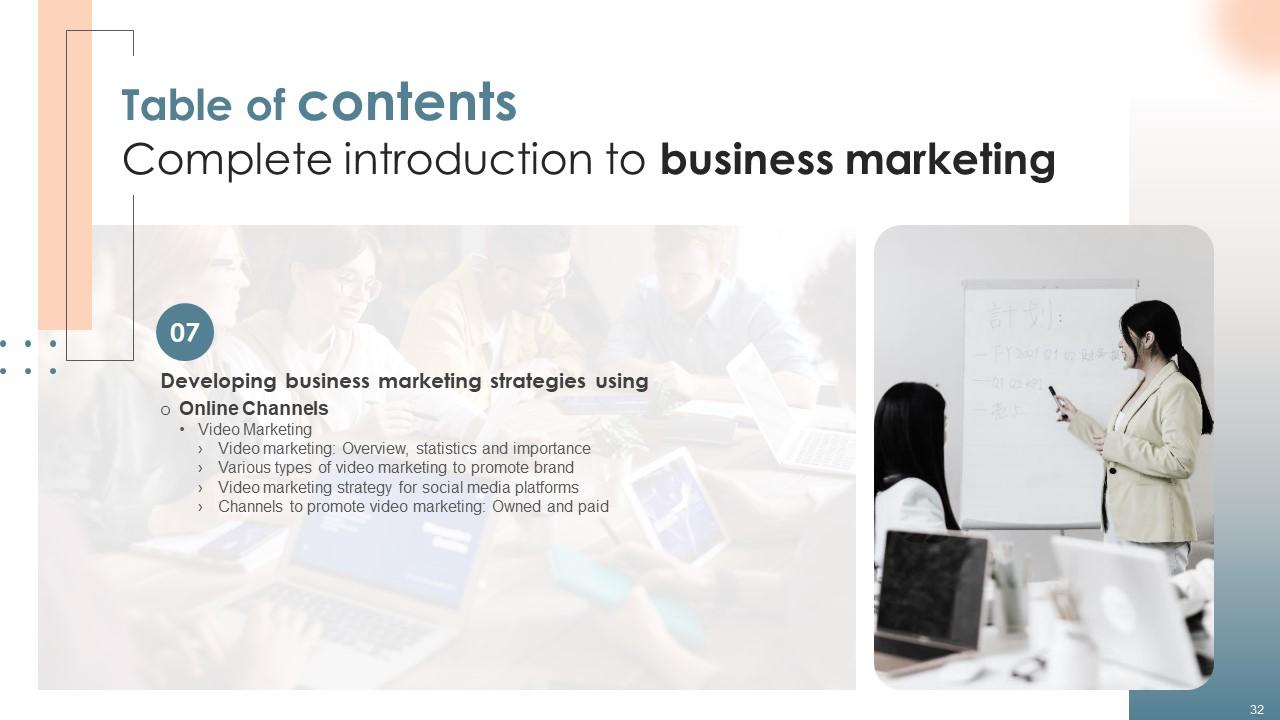
Slide 32: This slide reveals the Heading for the Ideas to be covered in the following template.
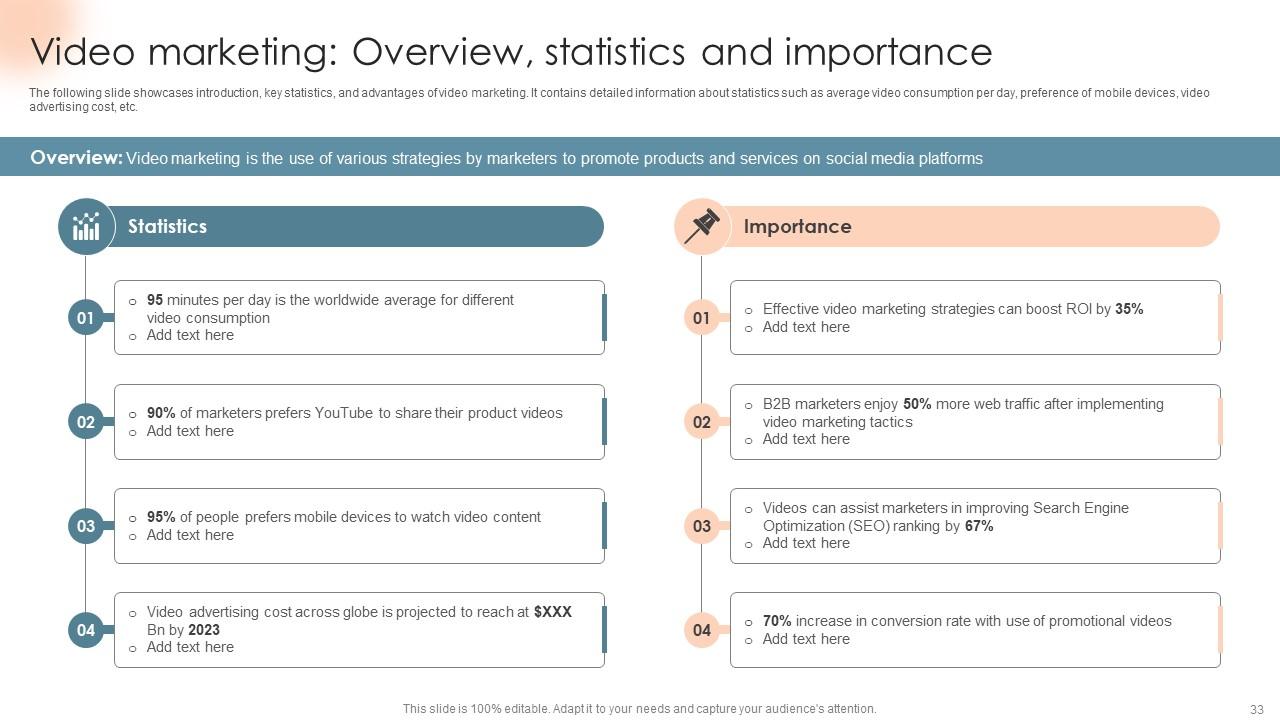
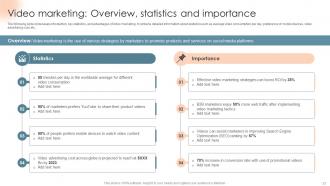
Slide 33: This slide outlines the introduction, key statistics, and advantages of video marketing.
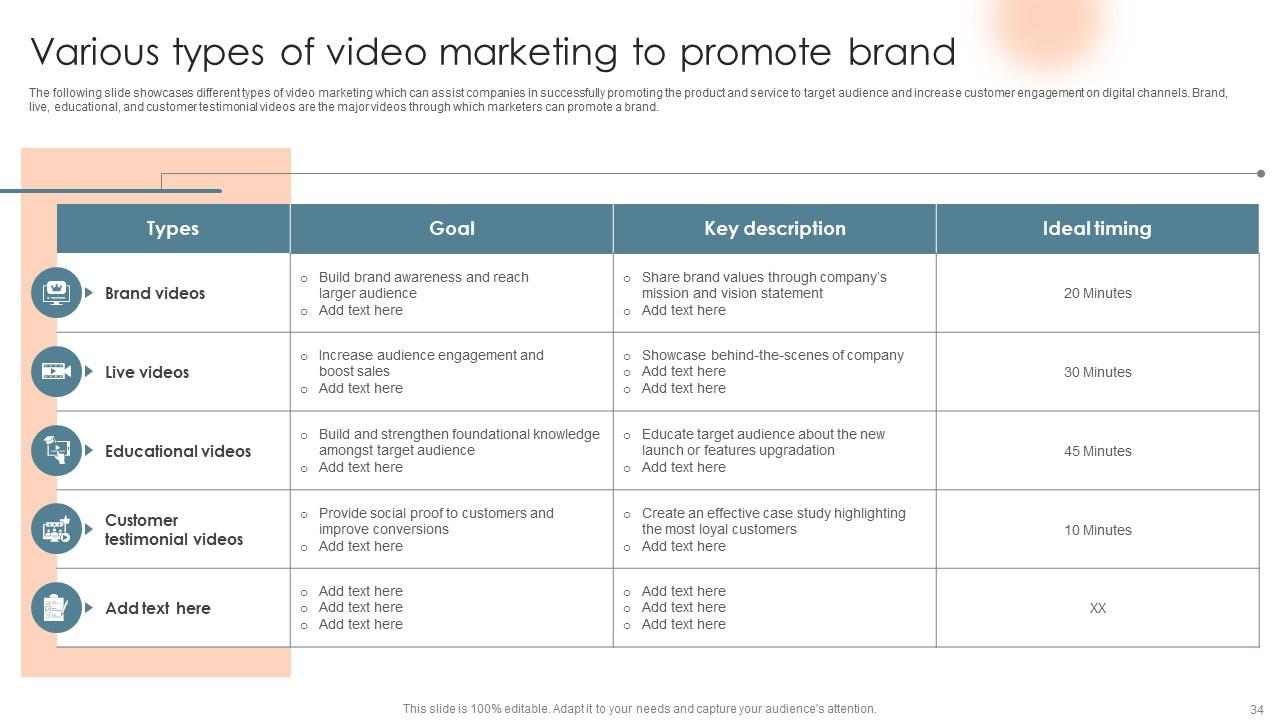
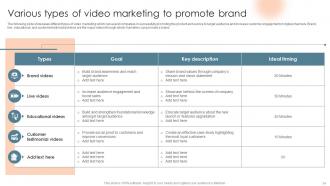
Slide 34: This slide states the Various types of video marketing to promote brand.
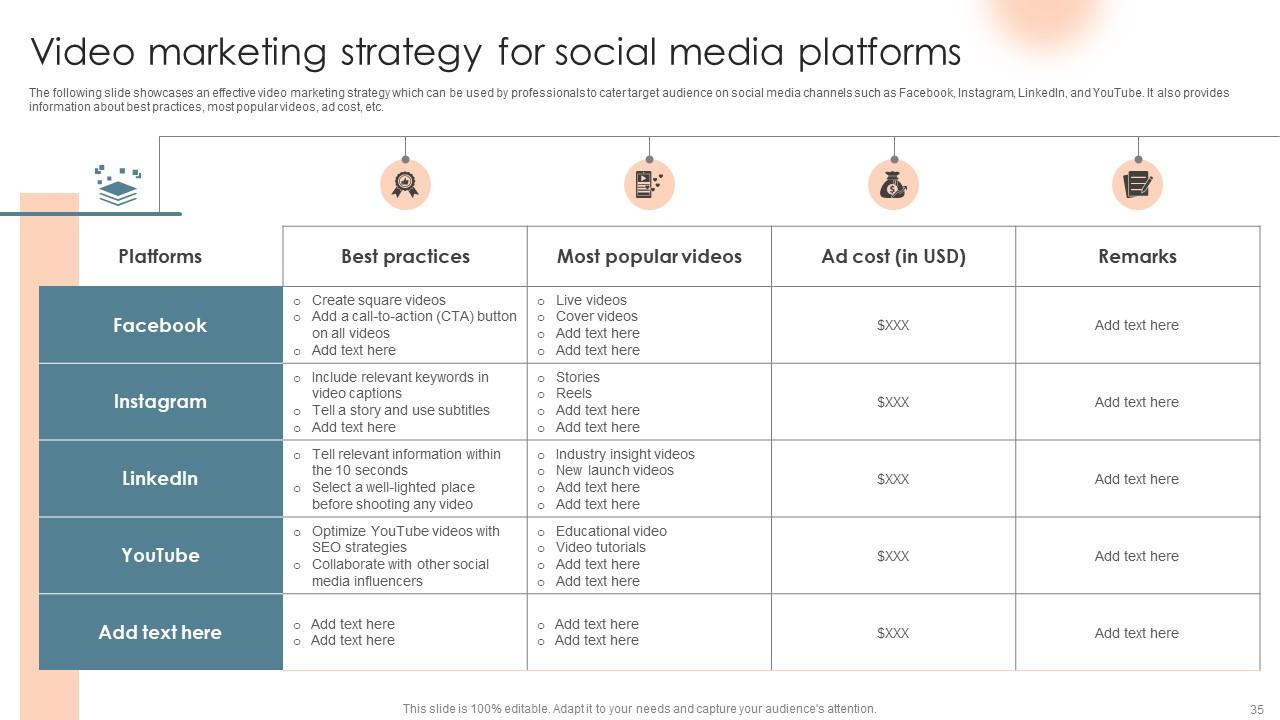
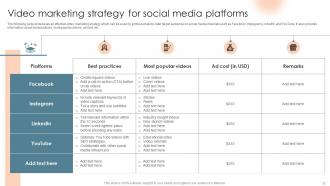
Slide 35: This slide portrays the Video marketing strategy for social media platforms.
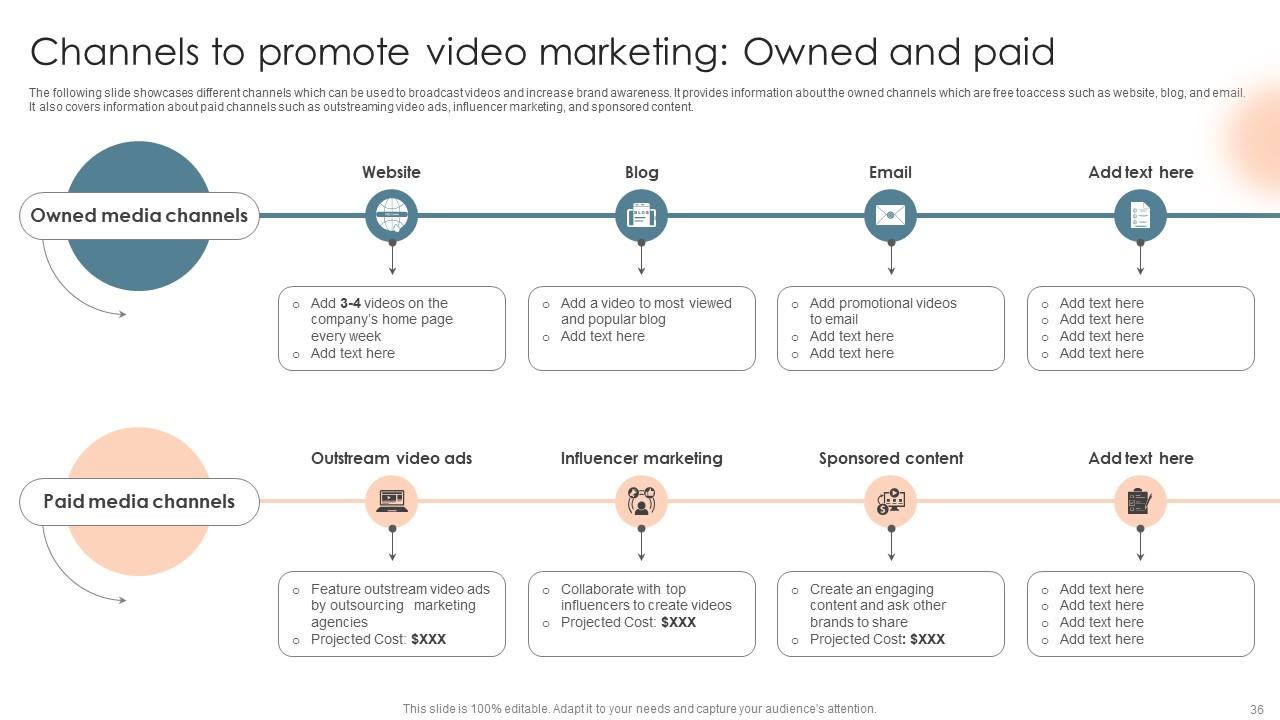
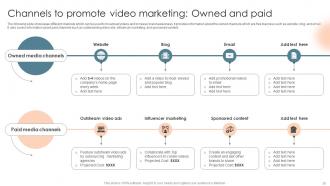
Slide 36: This slide indicates the different channels which can be used to broadcast videos and increase brand awareness.
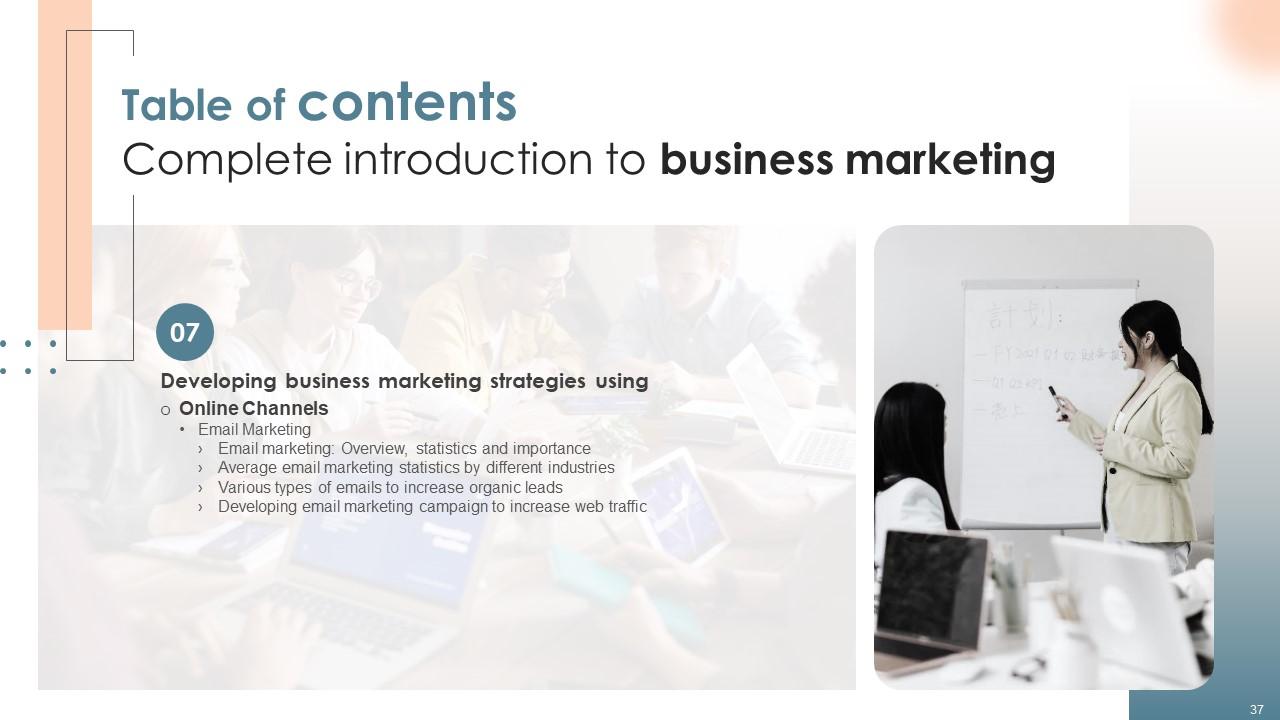
Slide 37: This slide includes the Title for the Components to be discussed further.
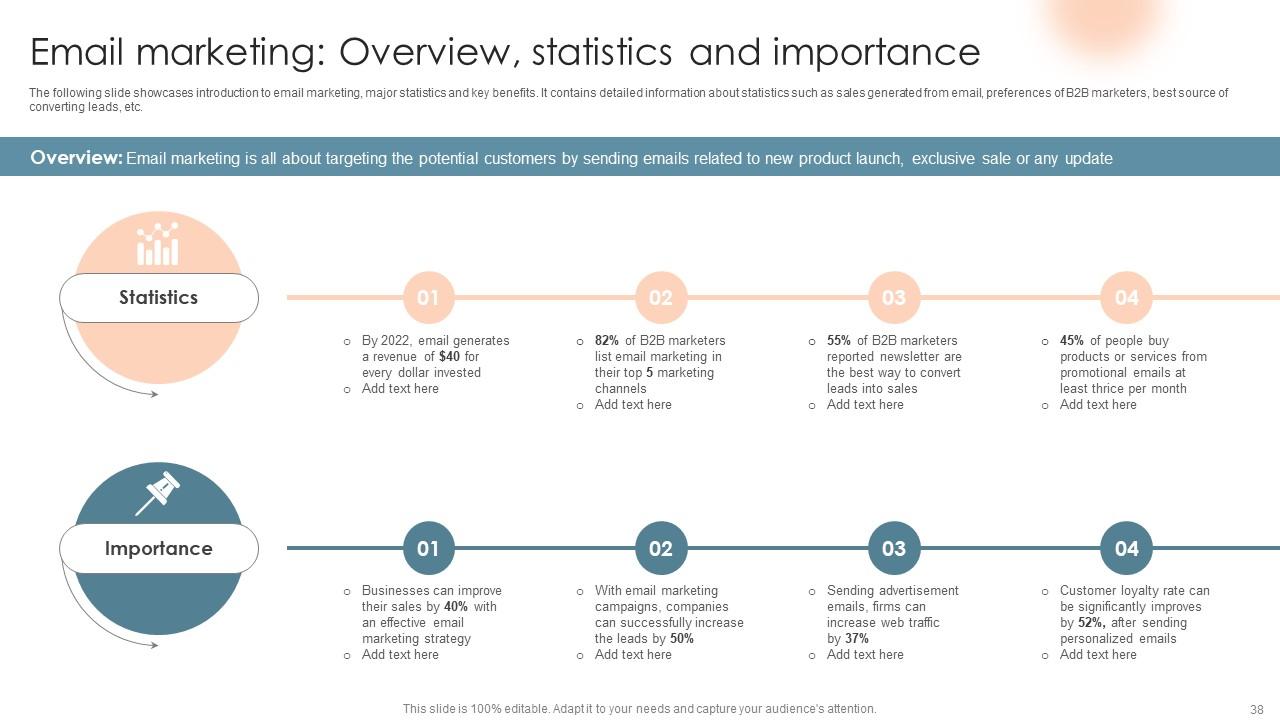
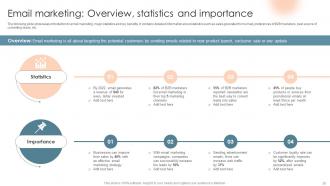
Slide 38: The following slide showcases introduction to email marketing, major statistics and key benefits.
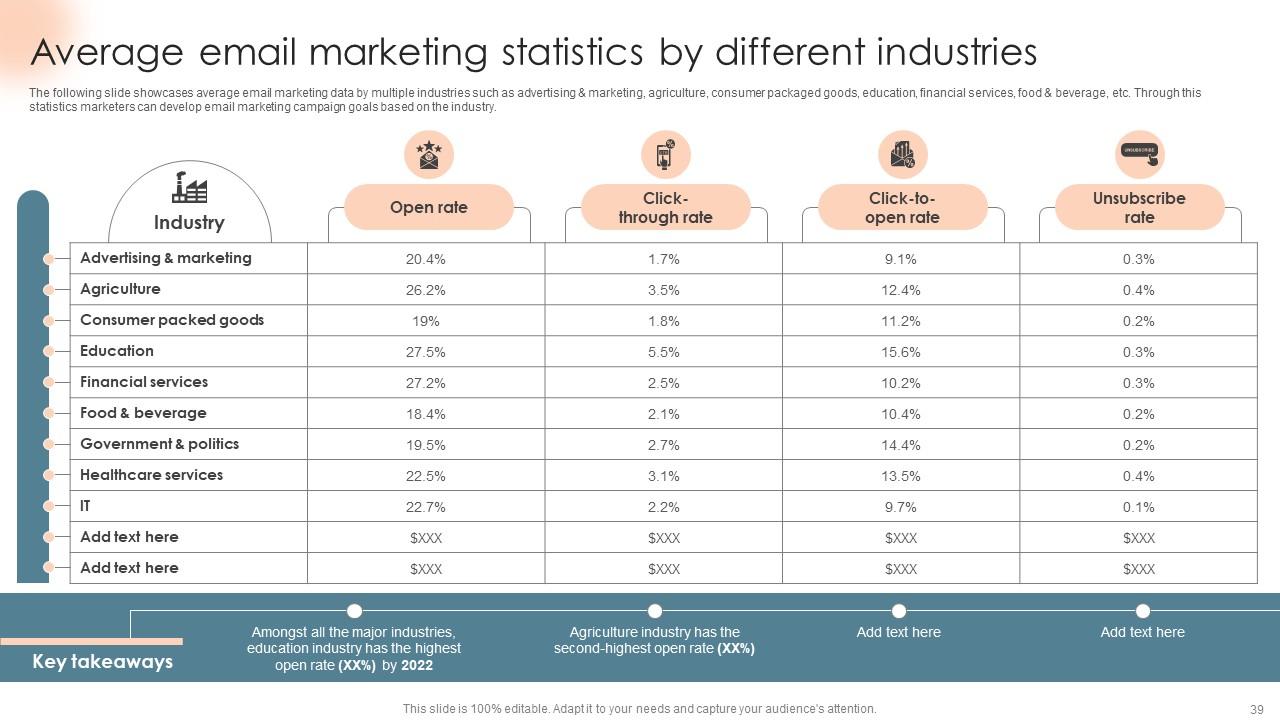
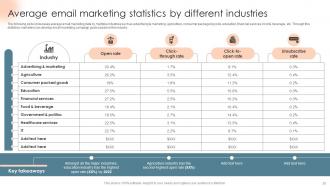
Slide 39: This slide represents the Average email marketing statistics by different industries.
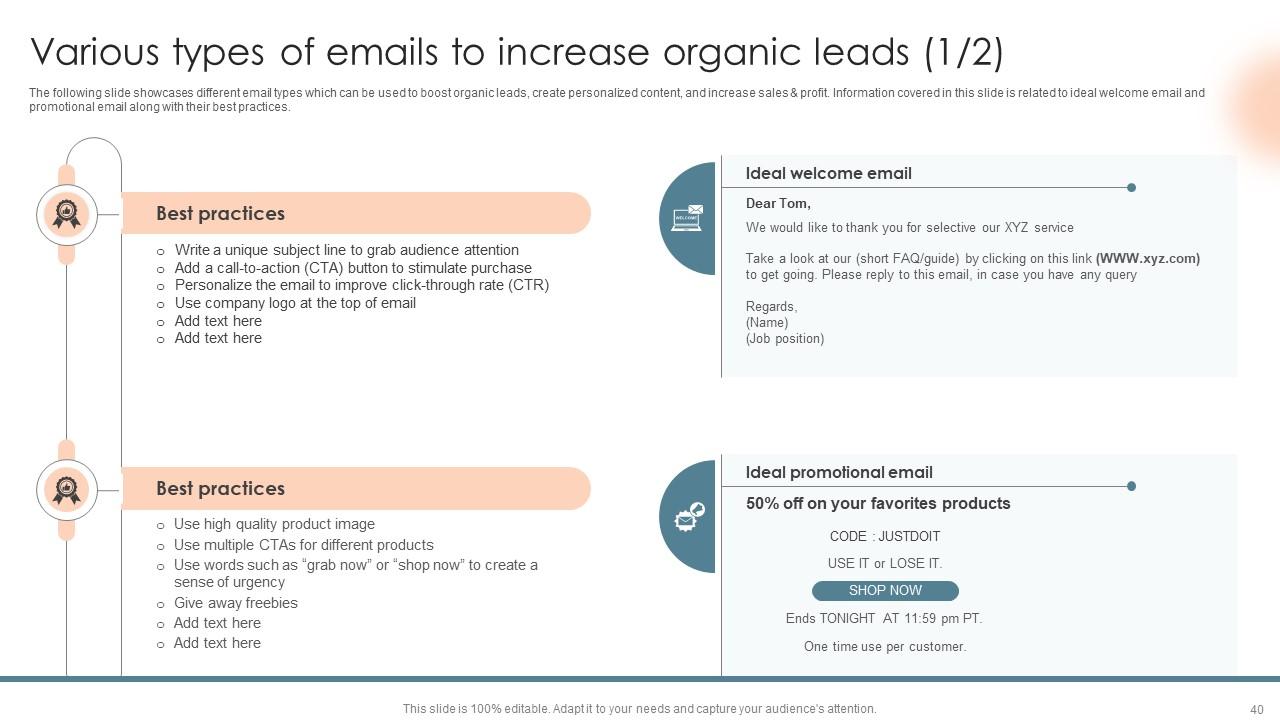
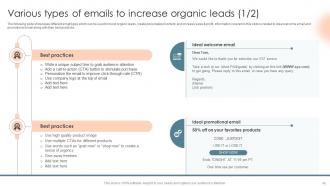
Slide 40: This slide exhibits the Various types of emails to increase organic leads.
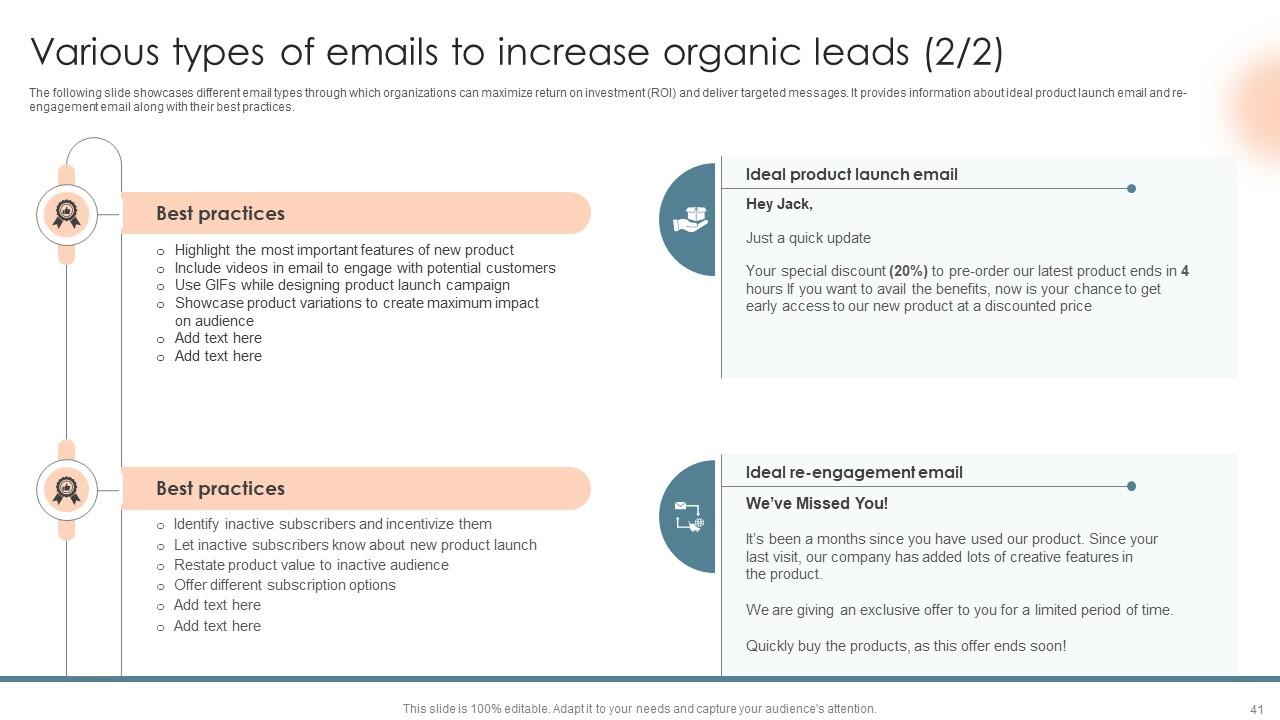
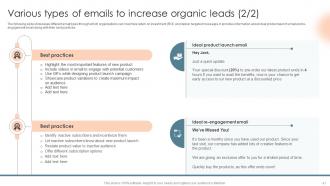
Slide 41: This slide continues the Various types of emails to increase organic leads.
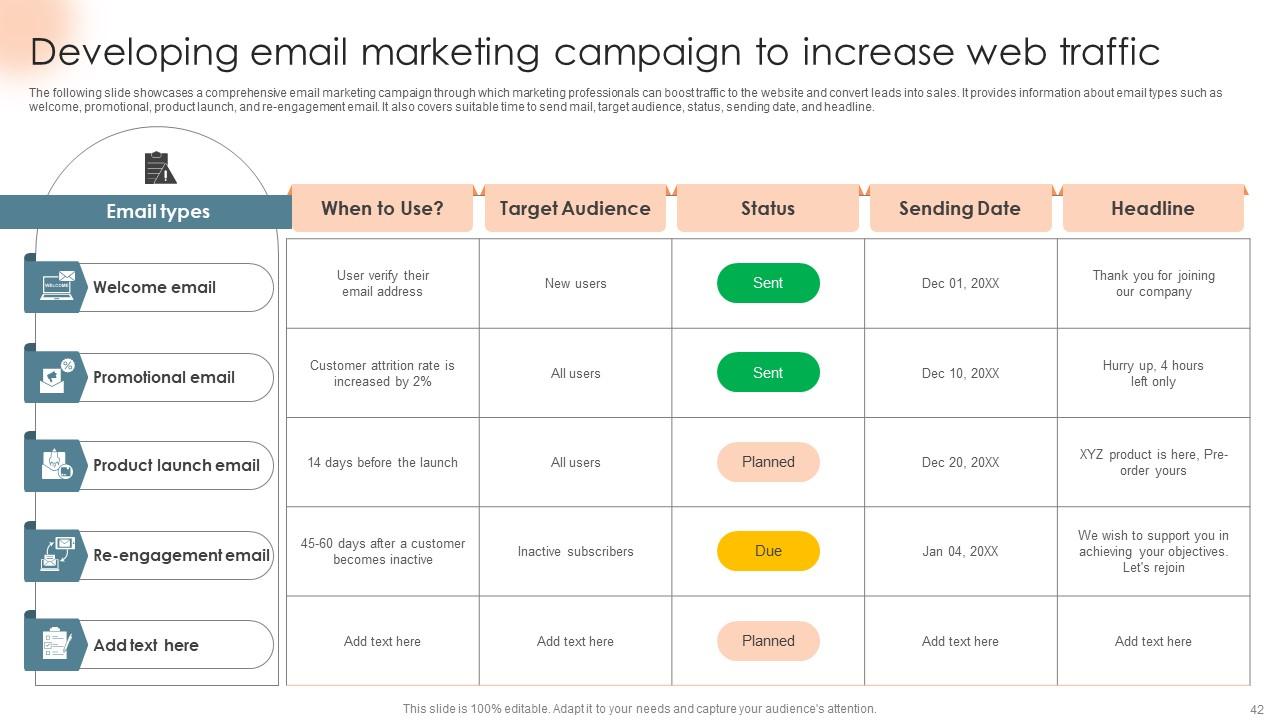
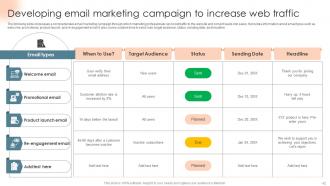
Slide 42: This slide deals with Developing email marketing campaign to increase web traffic.
Slide 43: This slide reveals the Heading for the Topics to be covered next.
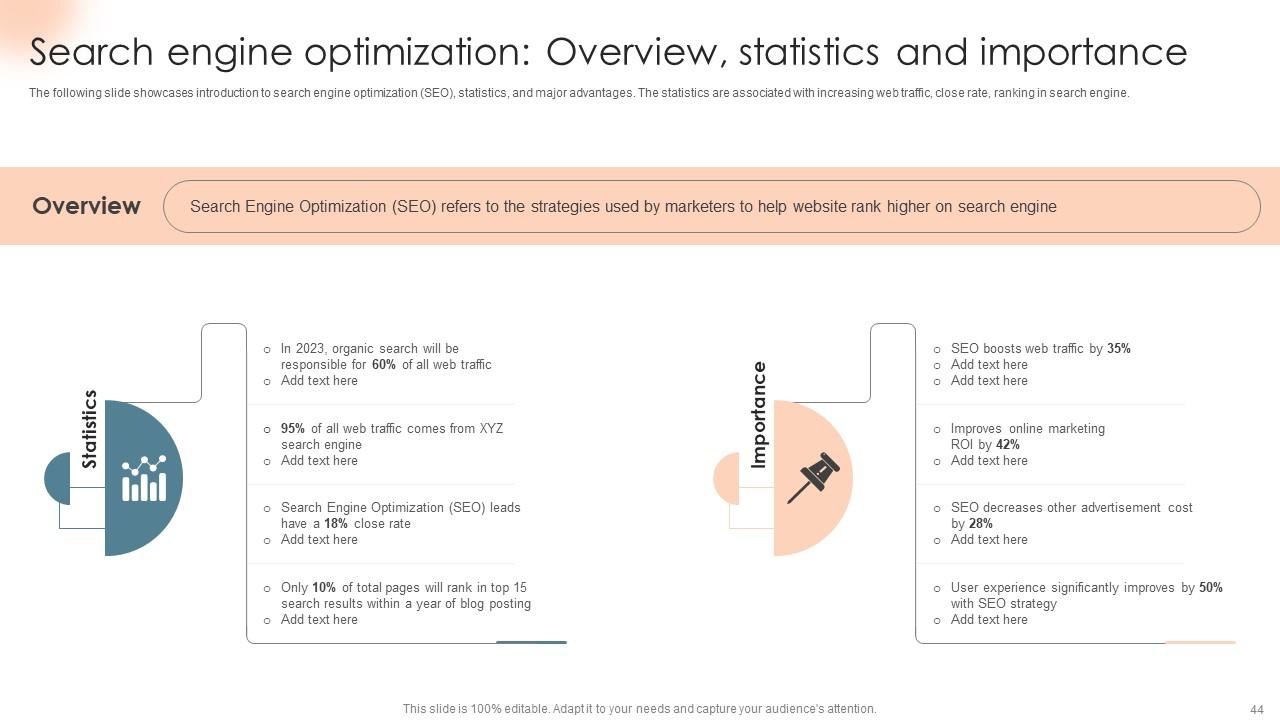
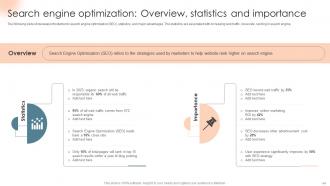
Slide 44: This slide showcases introduction to search engine optimization (SEO), statistics, and major advantages.
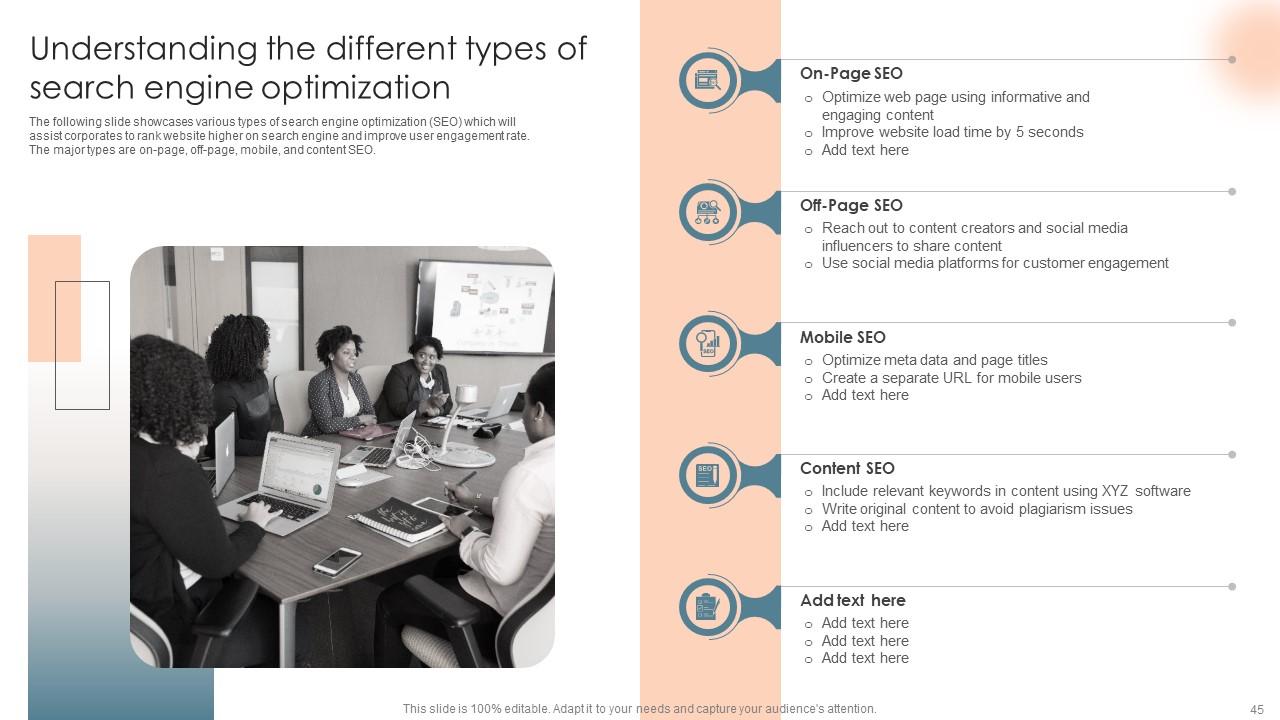
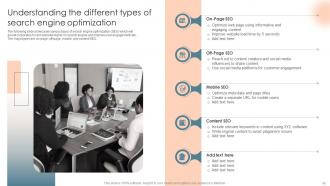
Slide 45: This slide focuses on Understanding the different types of search engine optimization.
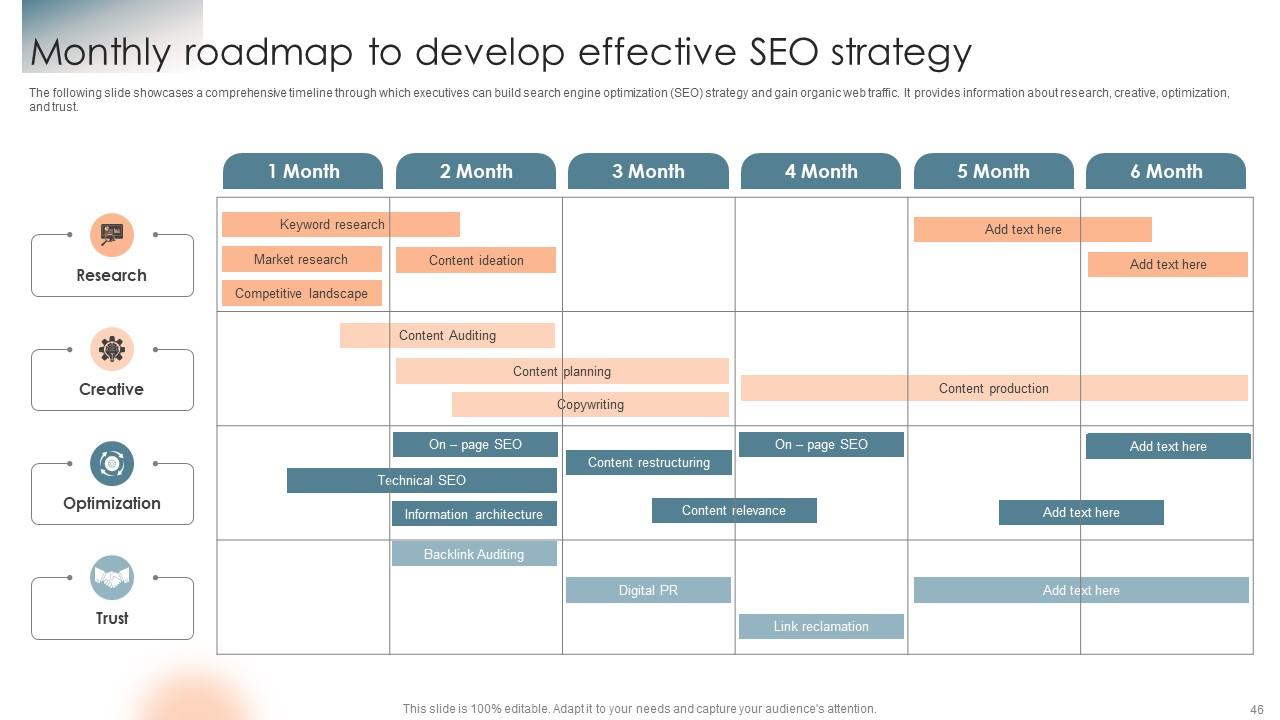
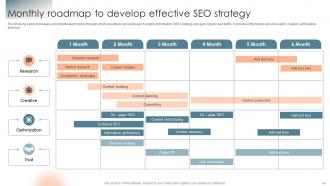
Slide 46: This slide elucidates the Monthly roadmap to develop effective SEO strategy.
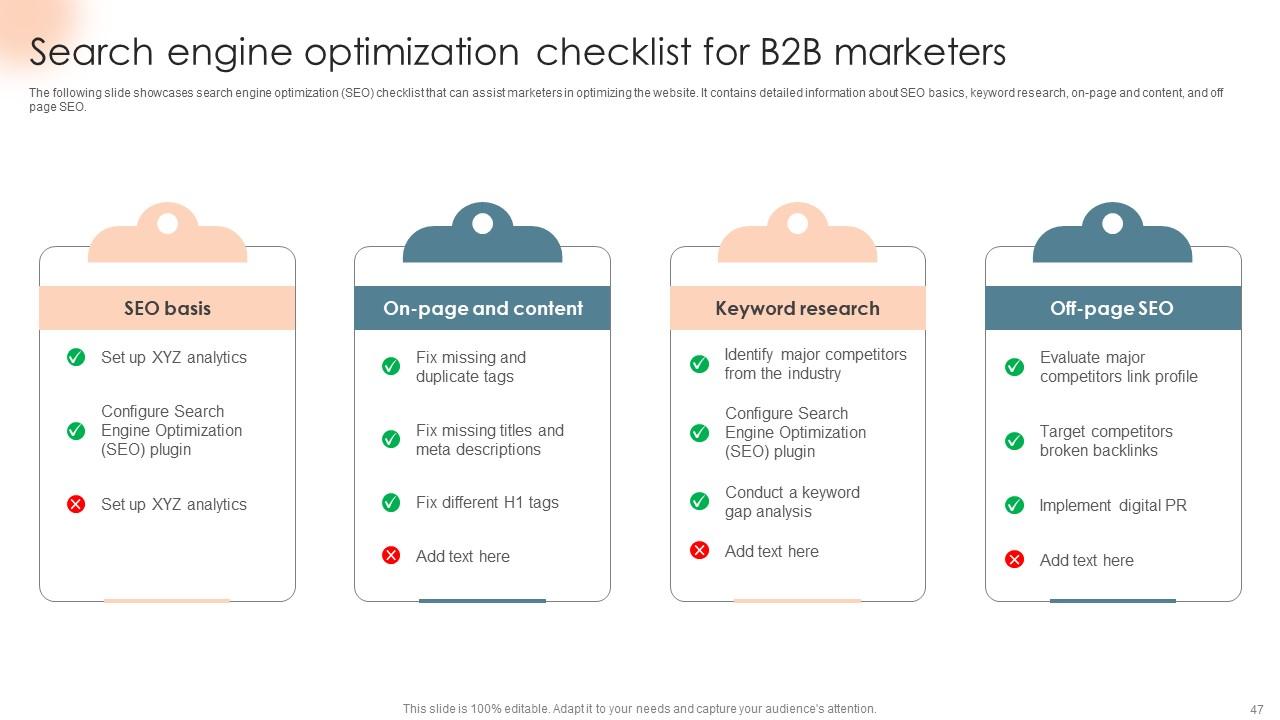
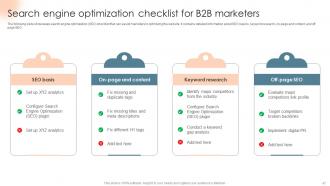
Slide 47: Thsi slide deals with Search engine optimization checklist for B2B marketers.
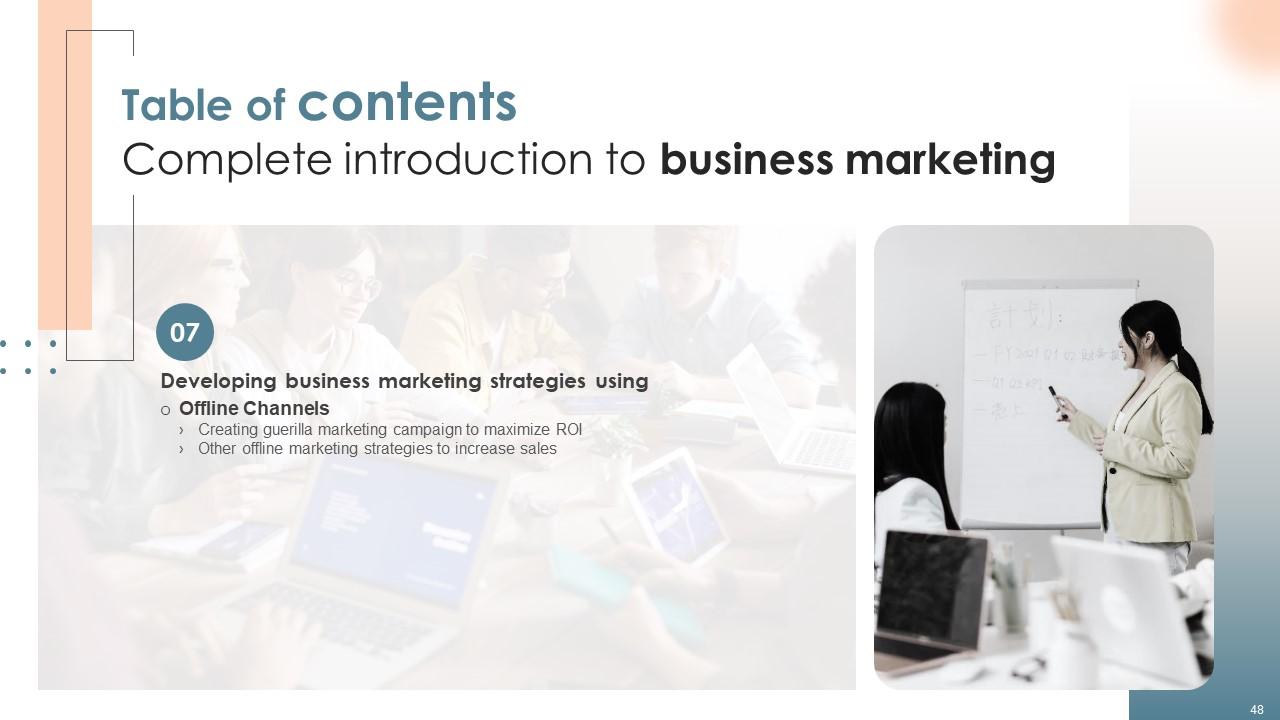
Slide 48: This slide includes the Title for the Topics to be discussed in the upcoming template.
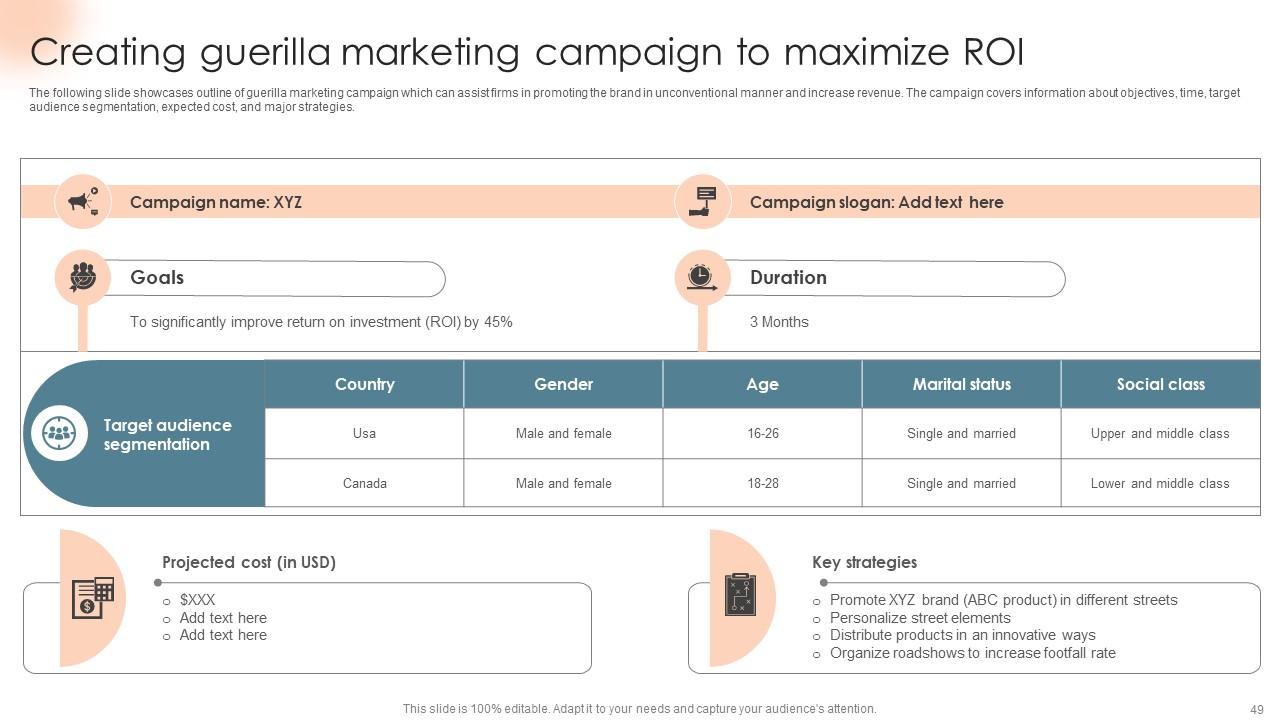
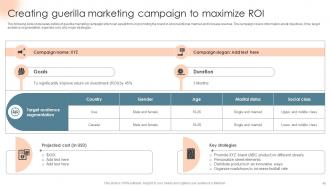
Slide 49: This slide emphasizes on Creating guerilla marketing campaign to maximize ROI.
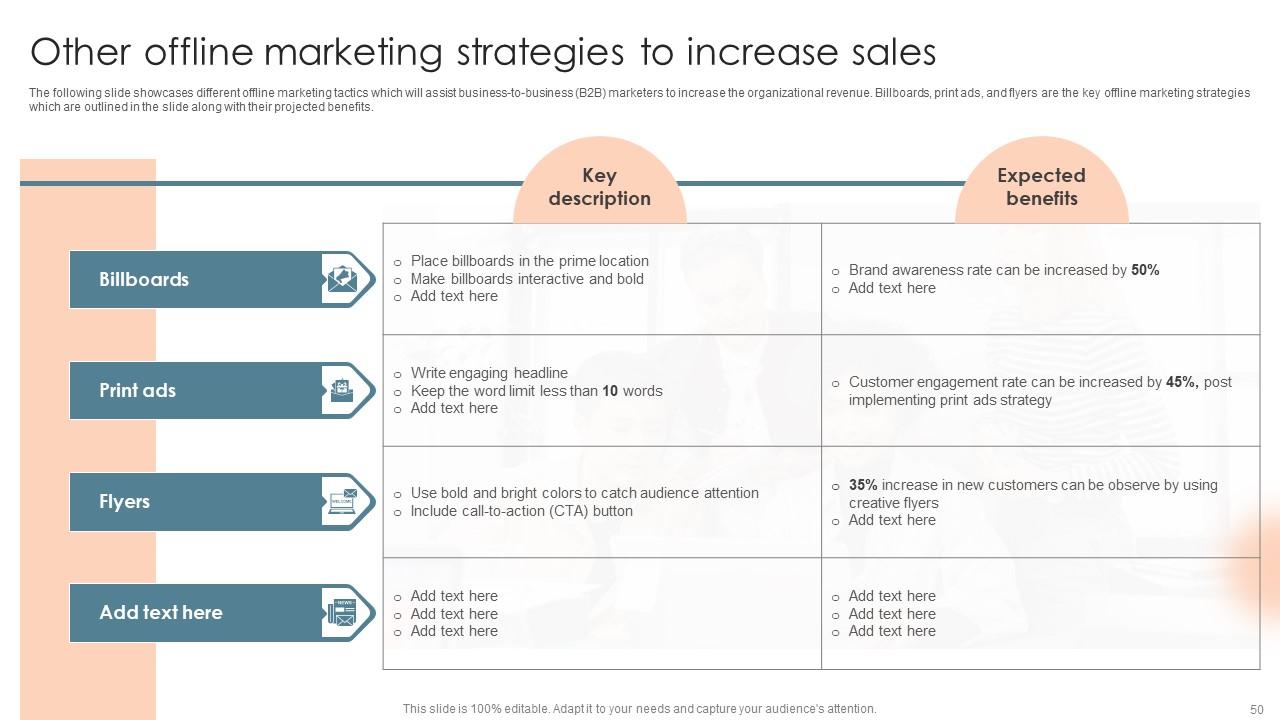
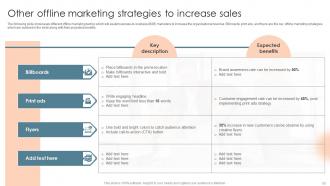
Slide 50: This slide mentions about the Other offline marketing strategies to increase sales.
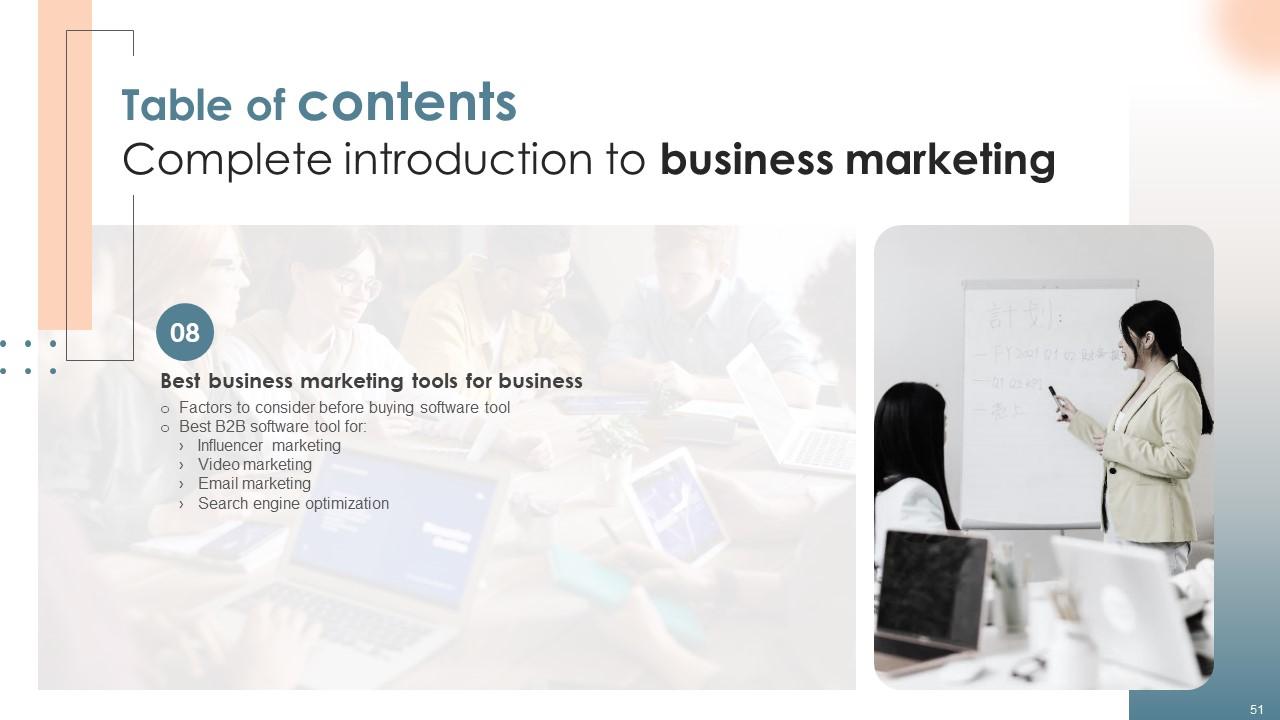
Slide 51: This slide exhibits the Heading for the Contents to be covered next.
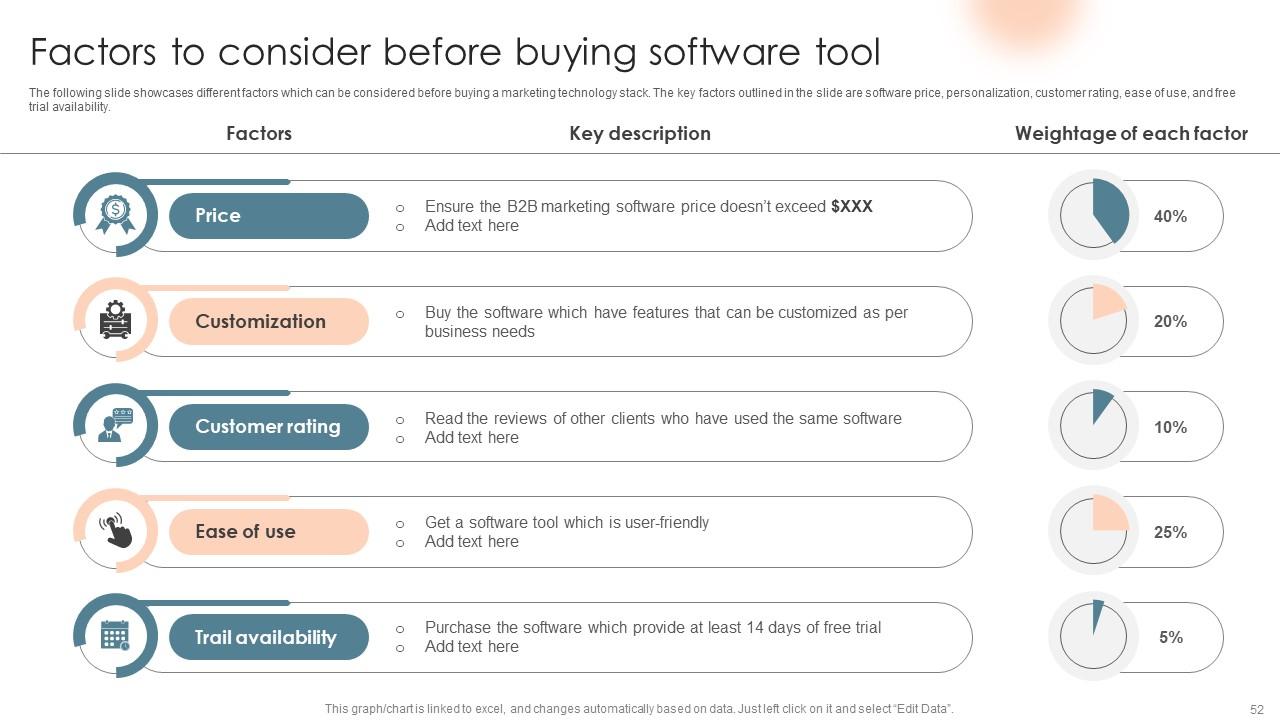
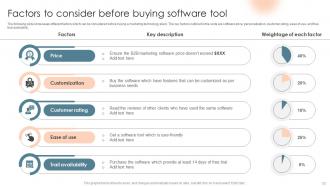
Slide 52: This slide states the Factors to consider before buying software tool.
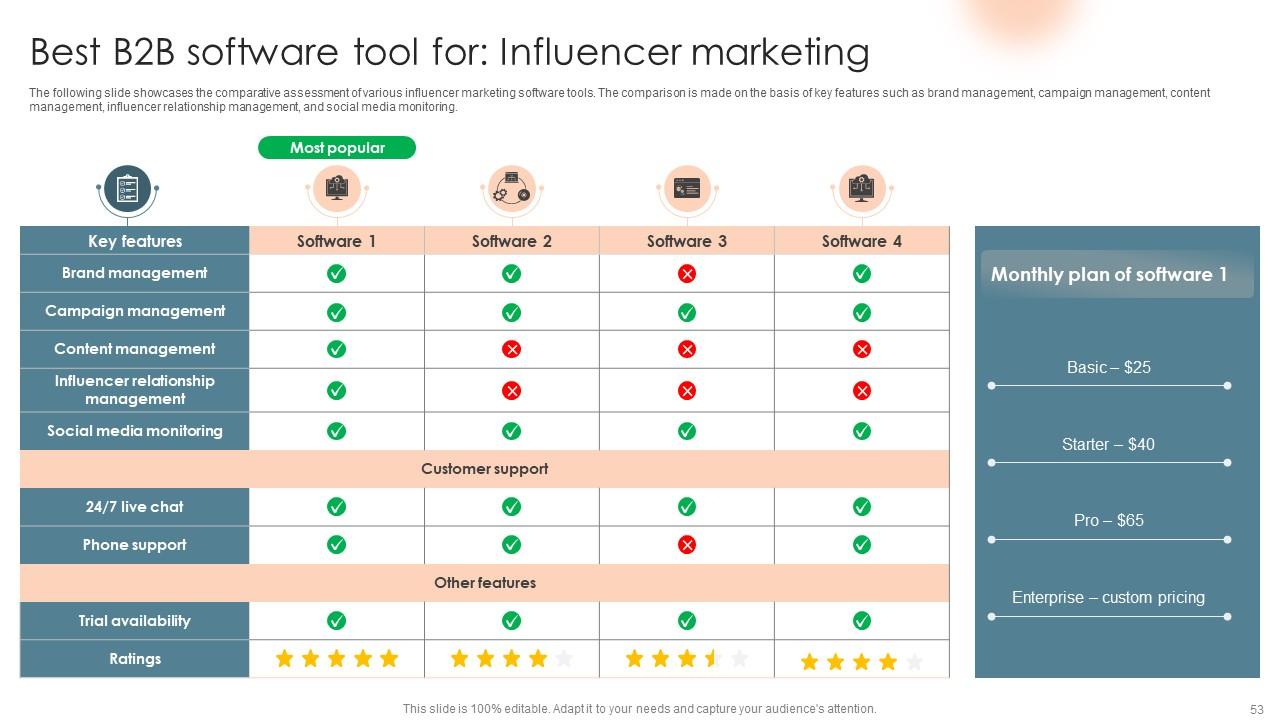
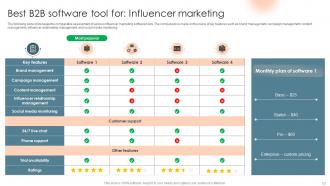
Slide 53: The following slide showcases the comparative assessment of various influencer marketing software tools.
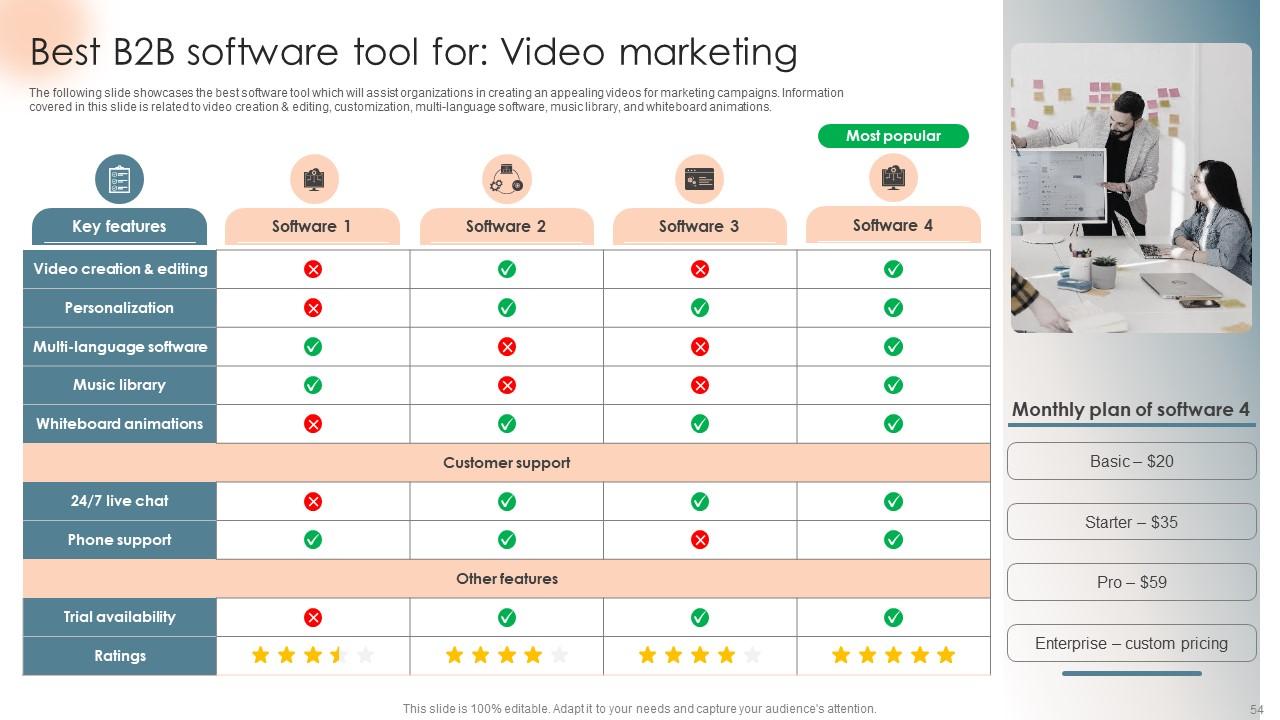
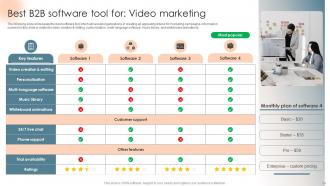
Slide 54: This slide reveals the best software tool for creating an appealing videos for marketing campaigns.
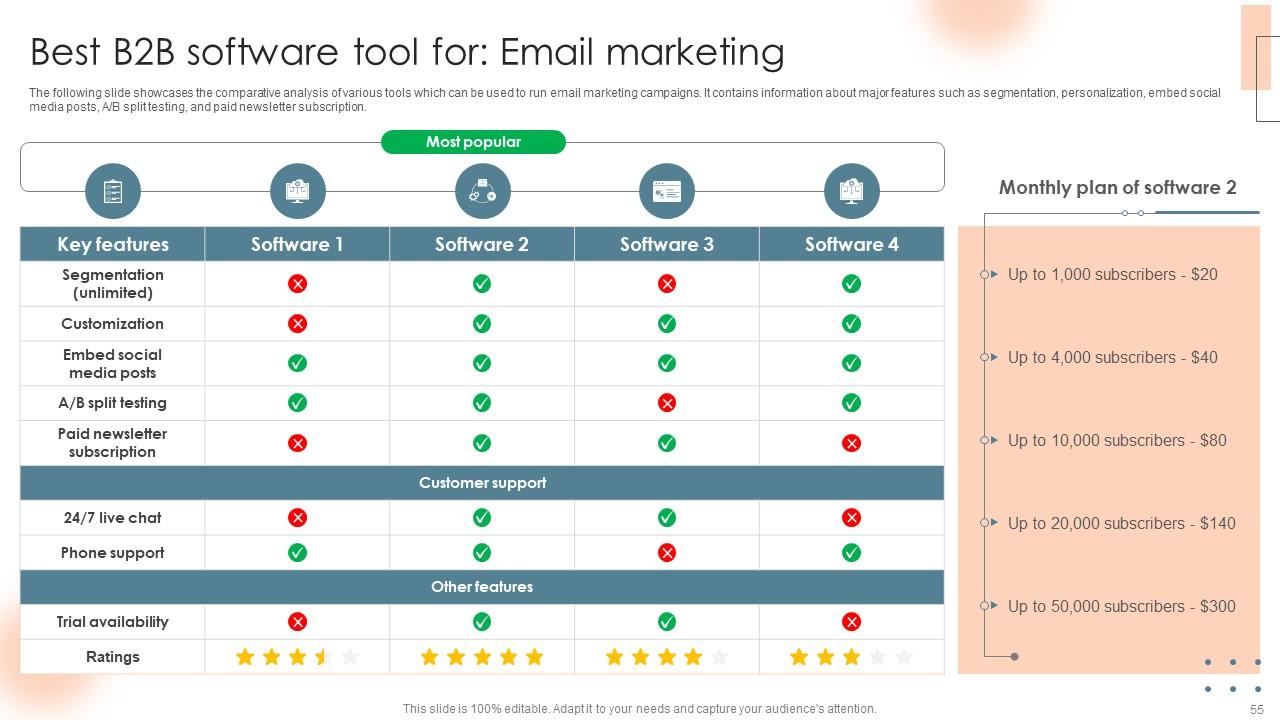
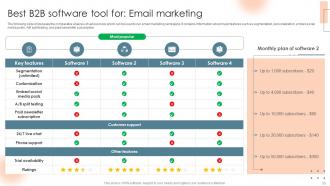
Slide 55: This slide indicates the comparative analysis of various tools to run email marketing campaigns.
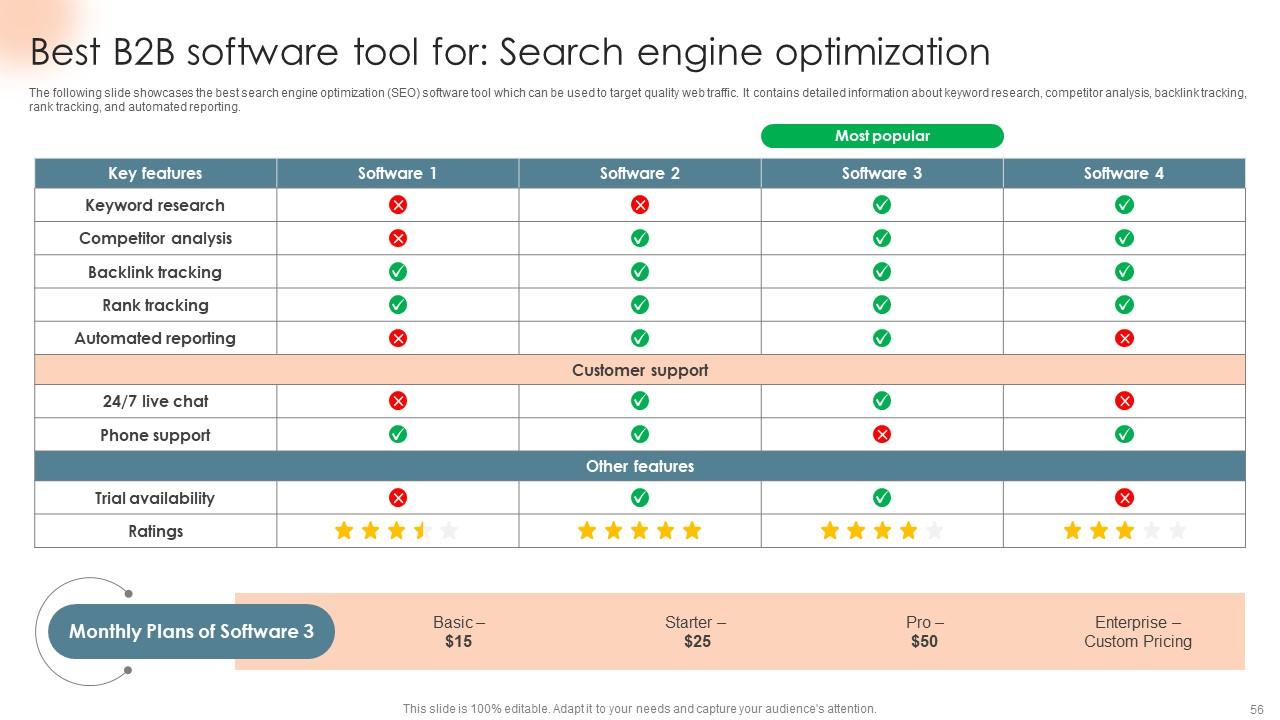
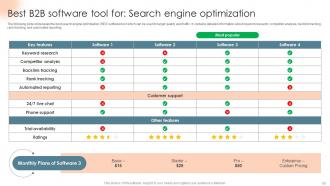
Slide 56: The following slide showcases the best search engine optimization (SEO) software tool which can be used to target quality web traffic.
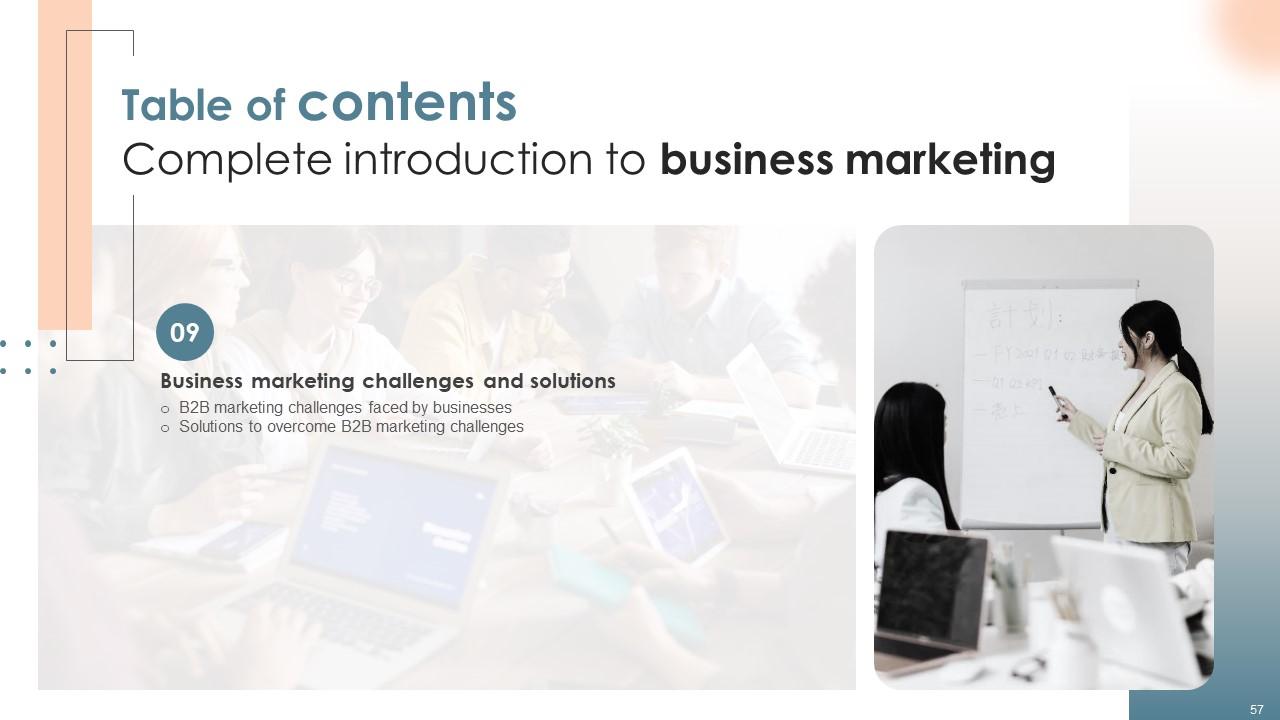
Slide 57: This slide reveals the Title for the Ideas to be discussed further.
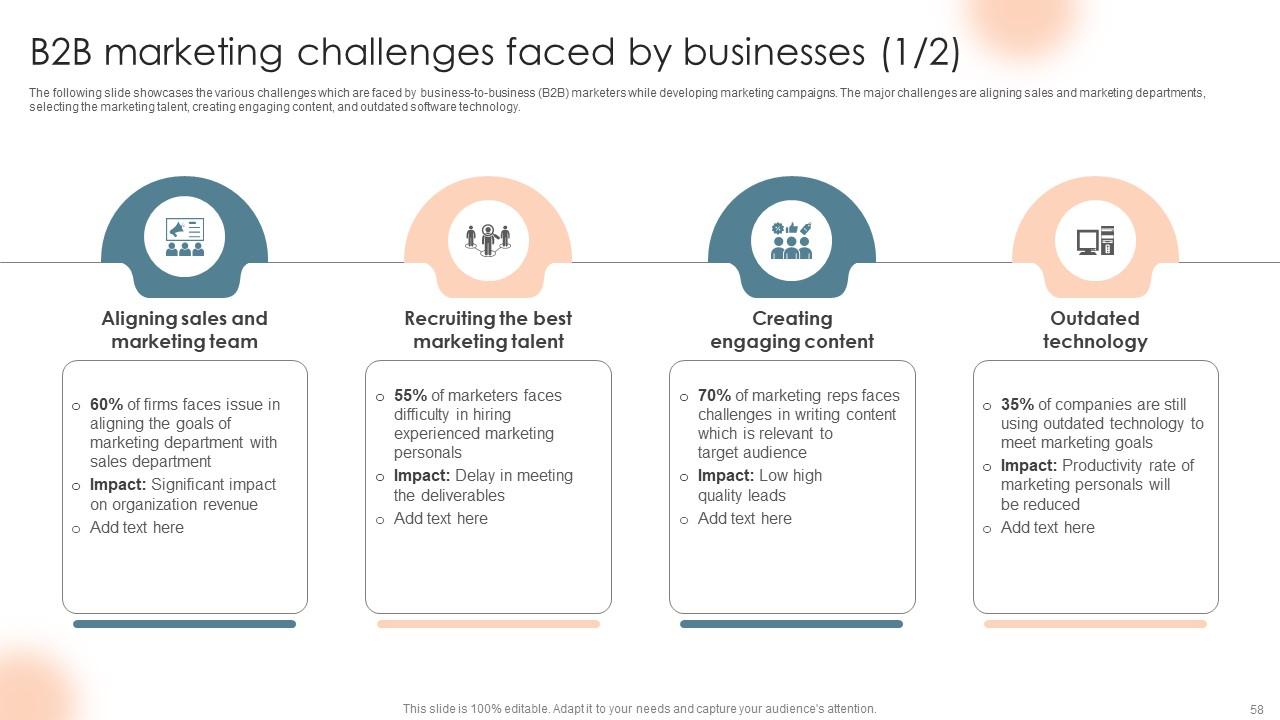
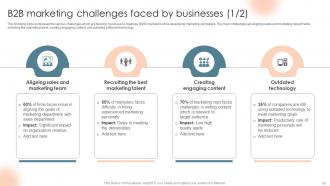
Slide 58: This slide talks about the B2B marketing challenges faced by businesses.
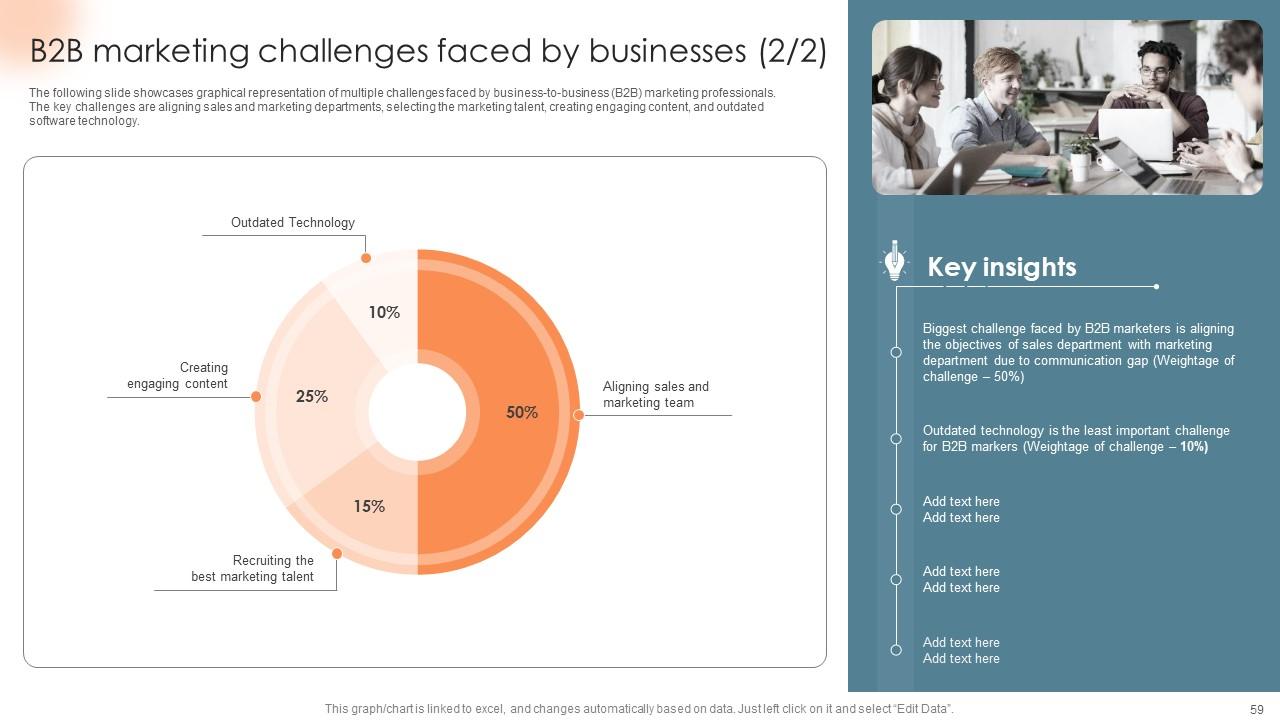
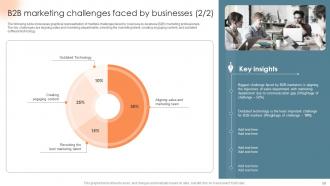
Slide 59: This slide continues the B2B marketing challenges faced by businesses.
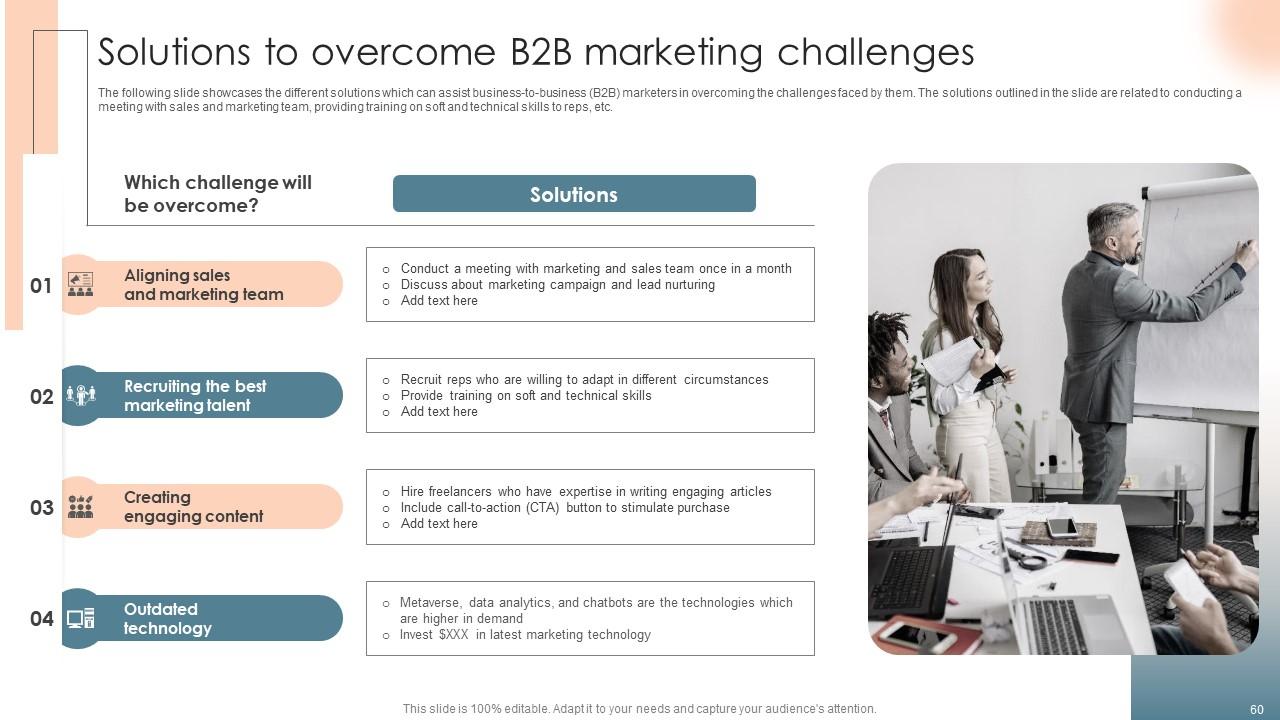
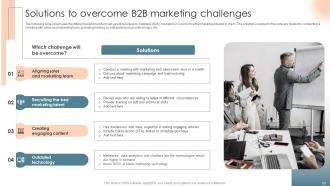
Slide 60: This slide represents the Solutions to overcome B2B marketing challenges.
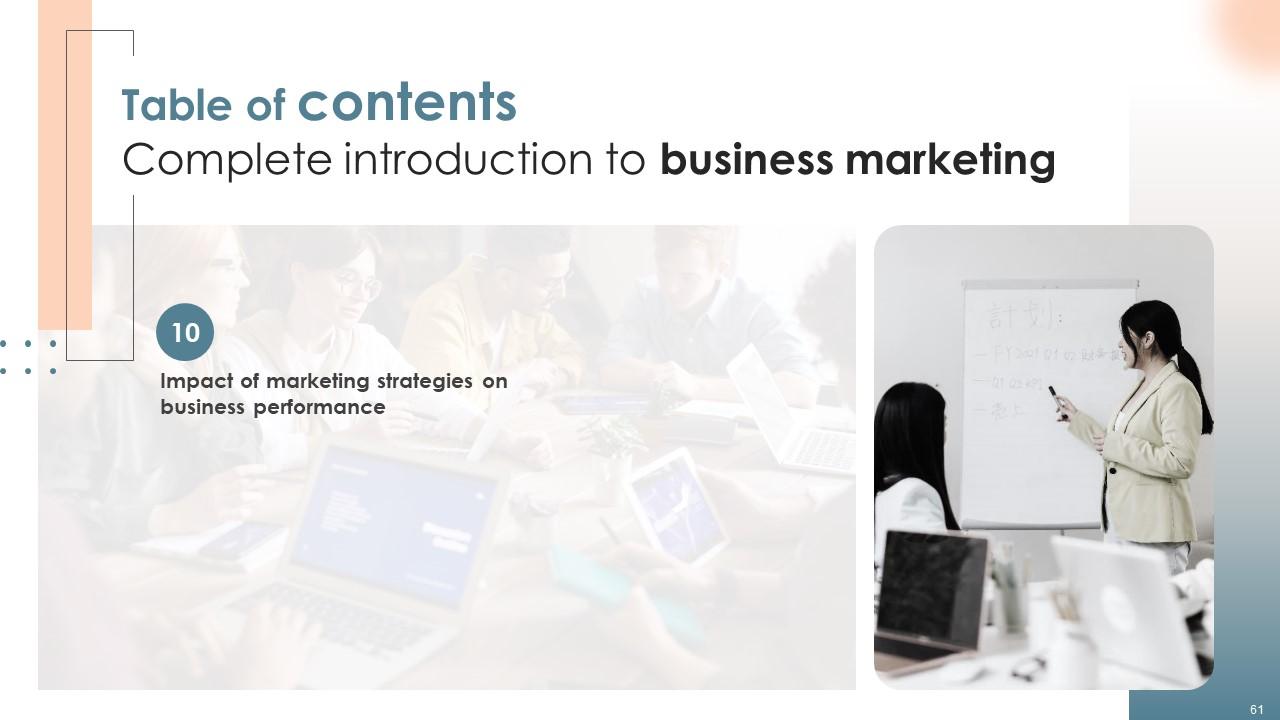
Slide 61: This slide contains the Heading for the Ideas to be covered in the forth-coming template.
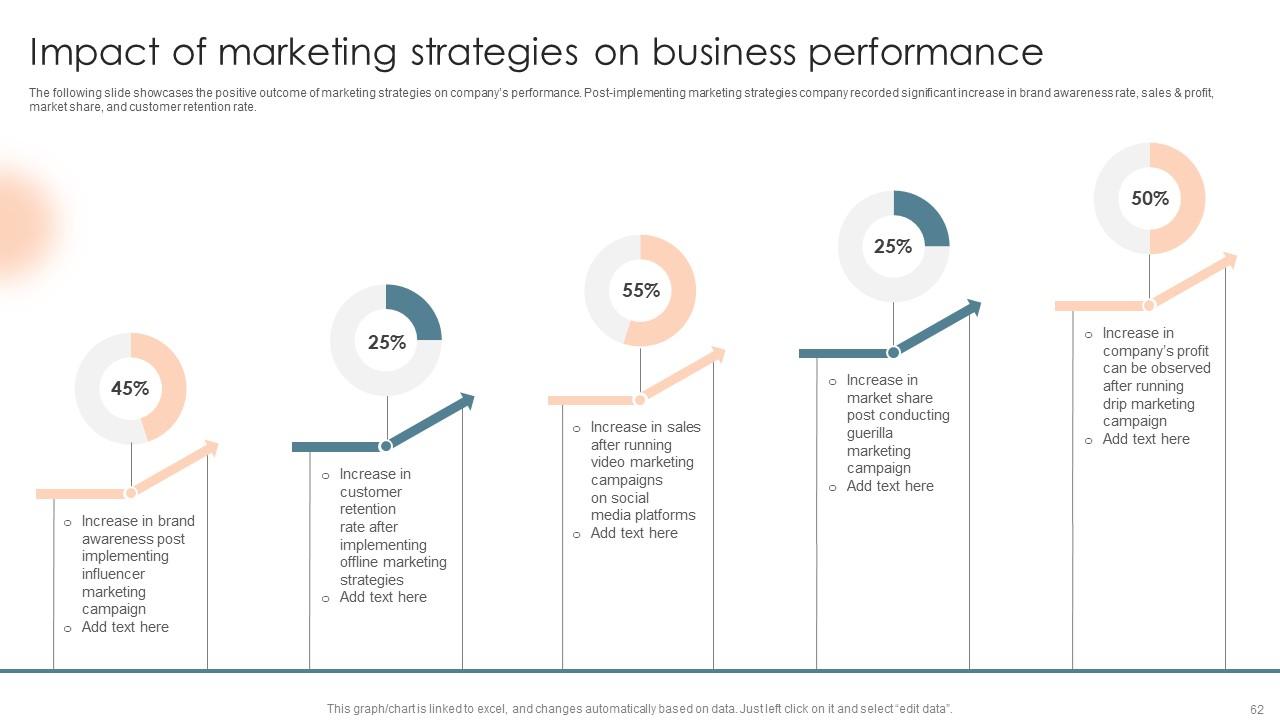
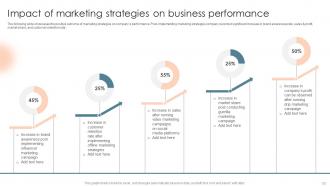
Slide 62: This slide highlights the Impact of marketing strategies on business performance.
Slide 63: This slide depicts the Title for the Contents to be discussed further.
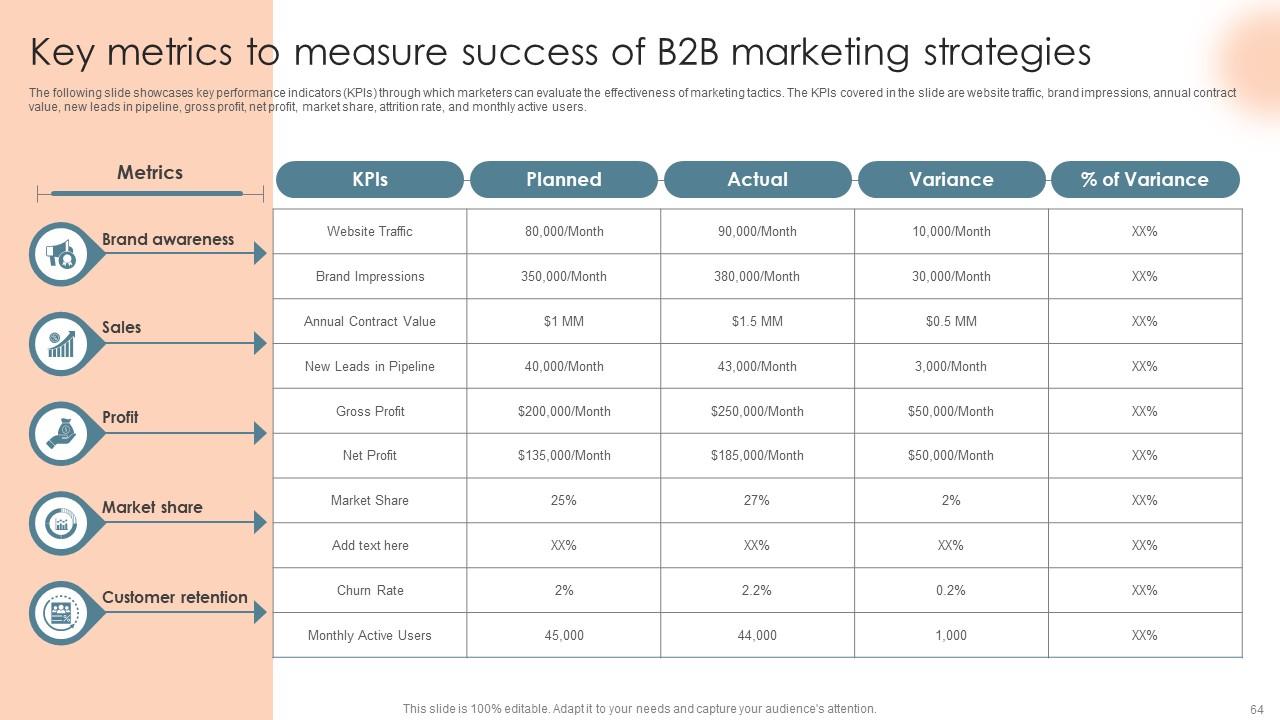
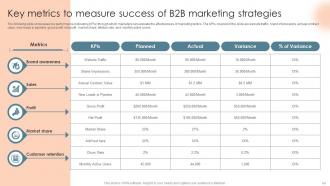
Slide 64: This slide exhibits the Key metrics to measure success of B2B marketing strategies.
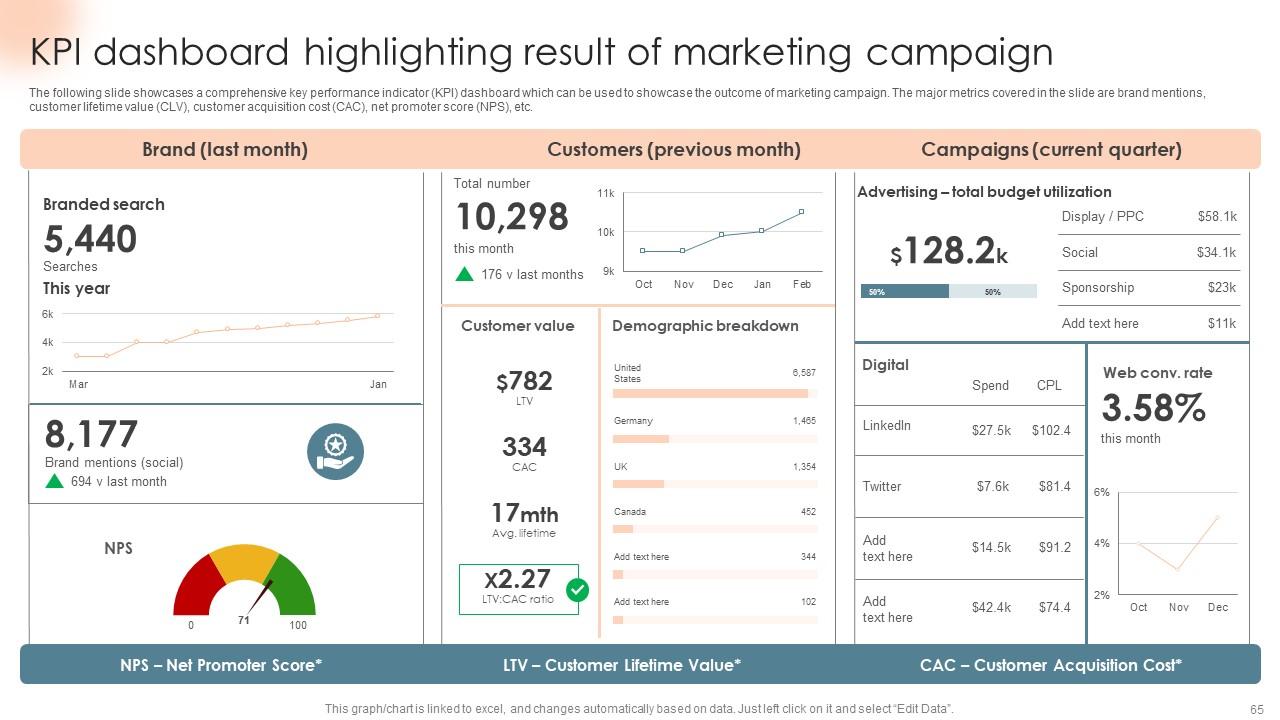
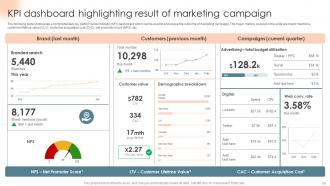
Slide 65: This slide illustrates the KPI dashboard highlighting result of marketing campaign.
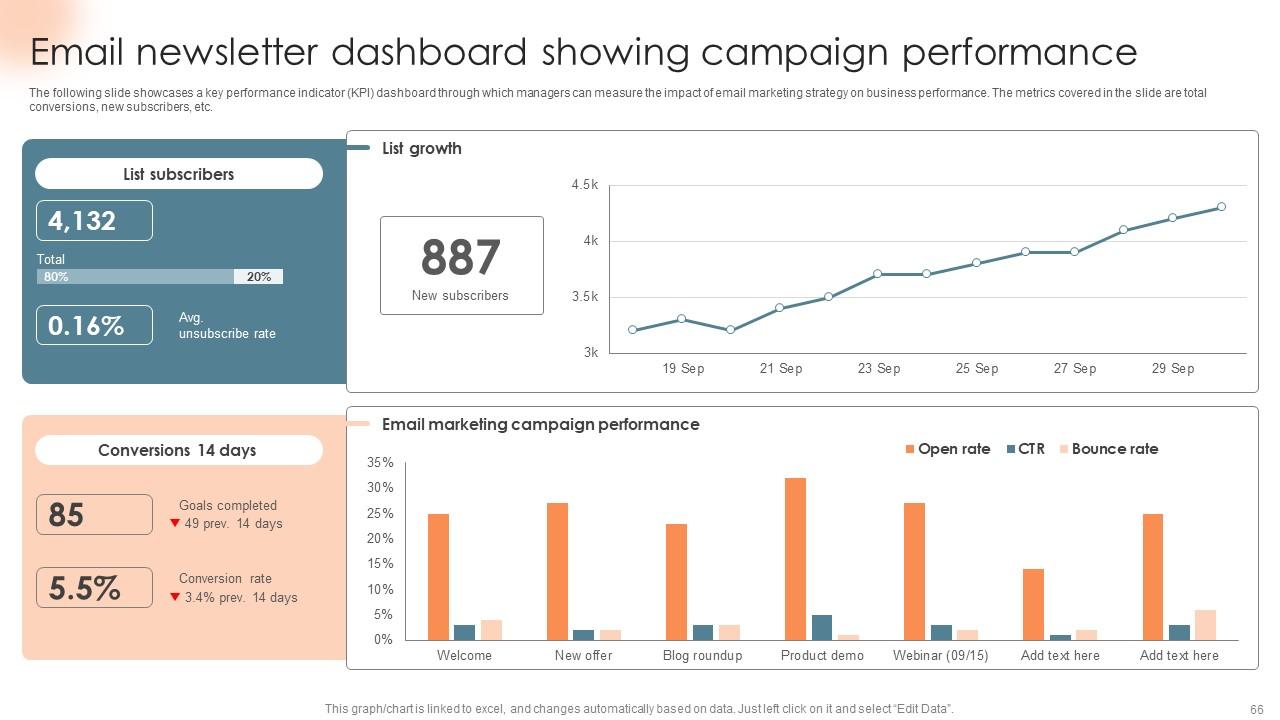
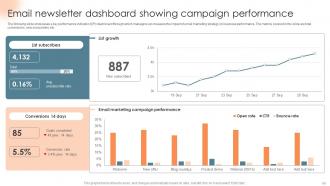
Slide 66: This slide presents the Email newsletter dashboard showing campaign performance.
Slide 67: This is the Icons slide containing all the Icons used in the plan.
Slide 68: This slide dipslays the Additional information.
Slide 69: This slide elucidates the Pie chart.
Slide 70: This is the Clustered column sldie with related imagery.
Slide 71: This is the About us sldie. State your company-related information here.
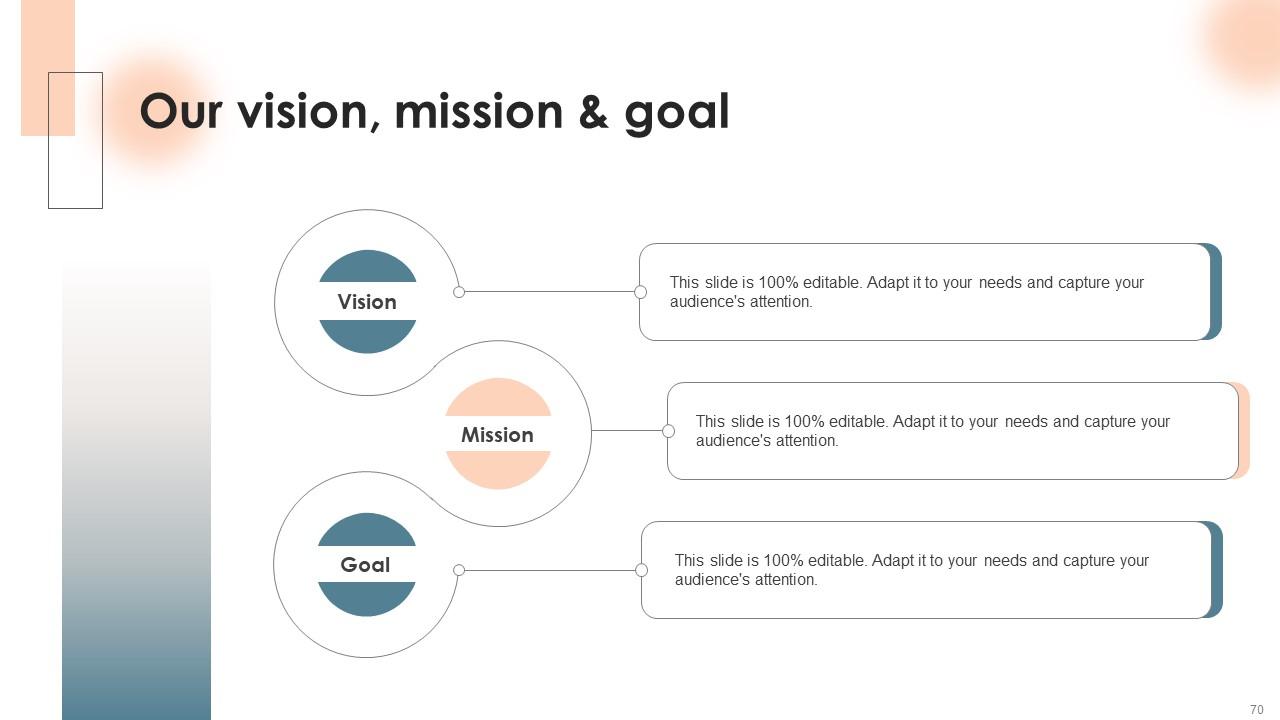
Slide 72: This slide presents the organziation's vision, mission and goal.
Slide 73: This is Meet our team slide. State your team-related information here.
Slide 74: This is the Idea generation sldie for encouraging fresh ideas.
Slide 75: This slide represents the Financial diagram.
Slide 76: This slide exhibits the firm's Timeline process.
Slide 77: This slide reveals the SWOT analysis.
Slide 78: This is the Puzzle slide with related imagery.
Slide 79: This is the Magnifying glass for minute details.
Slide 80: This is the Quotes sldie for motivation.
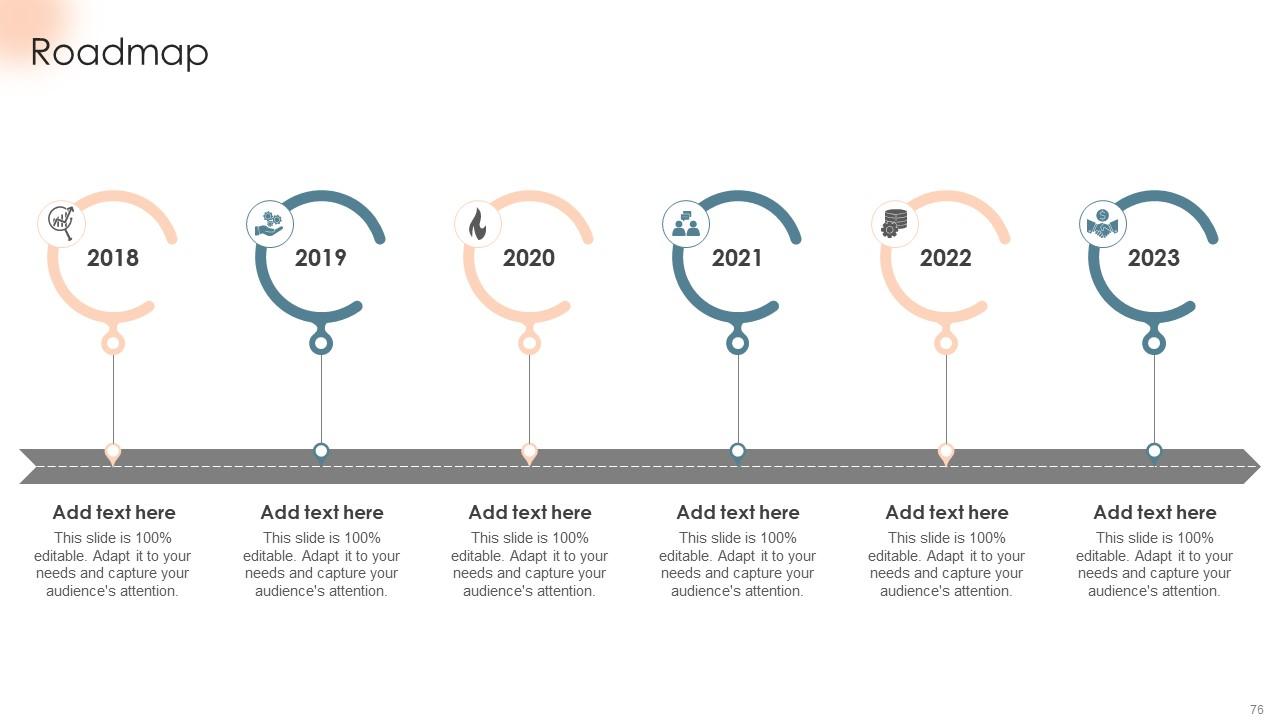
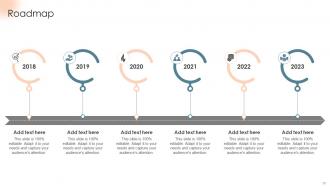
Slide 81: This slide showcases the Roadmap of the firm.
Slide 82: This is the Thank You slide for acknowledgement.
Complete Introduction to Business Marketing Powerpoint Presentation Slides MKT CD V with all 83 slides:
Use our Complete Introduction to Business Marketing Powerpoint Presentation Slides MKT CD V to effectively help you save your valuable time. They are readymade to fit into any presentation structure.
-
The service is fast, and I could access any presentation after buying the subscription. I don’t think I’ll ever have to worry about a presentation in my life.
-
Great designs, Easily Editable.
