


Comprehensive Guide For Network Marketing Strategies Powerpoint Presentation Slides MKT CD




Try Before you Buy Download Free Sample Product
 Impress Your
 Audience
 100%
100% Editable
 Save Hours
 of Time


Network marketing promotion strategy that relies on person-to-person sales by self-dependent representatives, also known as distributors. Grab our Comprehensive Guide for Network Marketing Strategies template. It covers an overview of network marketing, including steps, trends, statistics, ethics, challenges, types, key considerations, and software. Our Multi-level marketing deck showcases a checklist for selecting a network marketing company, working of the multi-level business, comparison for multi-level marketing and pyramid schemes, and significant types of network marketing businesses. It also highlights networking marketing compensation plans like binary, stair-step breakaway, and hybrid multi-level compensation strategies. Additionally, our Direct selling marketing PPT depicts strategies for digital network marketing, like content marketing, social media marketing, email marketing, etc., and a checklist for tracking immediate sales progress. Further, it consists of a network marketing team depicting a skill development training program, a sales training plan, critical skills for network marketers, and training tools for distributor development. Lastly, our Referral marketing module highlights the impact of network marketing, metrics dashboards, and case studies. Get access right away.
People who downloaded this PowerPoint presentation also viewed the following :
Content of this Powerpoint Presentation
Slide 1: This slide introduces Comprehensive Guide for Network Marketing Strategies. Commence by stating Your Company Name.
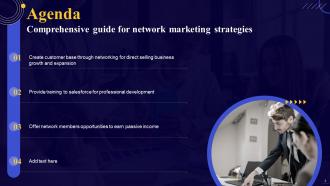
Slide 2: This slide depicts the Agenda of the presentation.
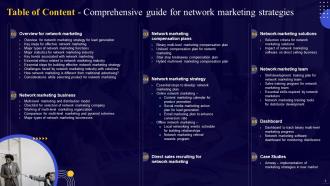
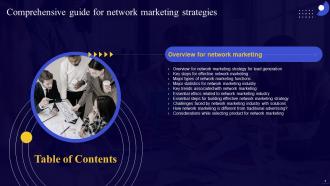
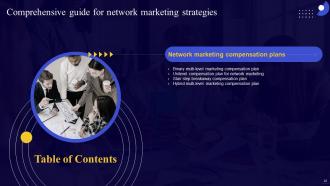
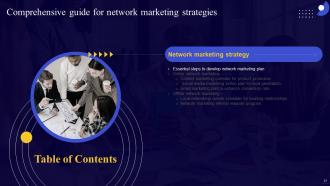
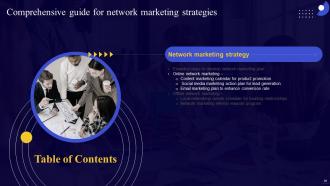
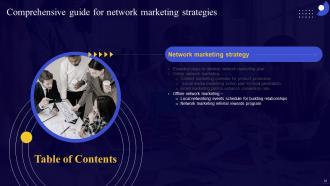
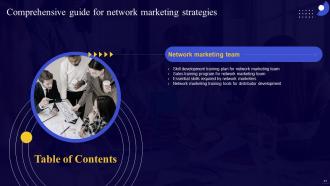
Slide 3: This slide incorporates the Table of Contents.
Slide 4: This slide highlights the Title for the Topics to be discussed further.
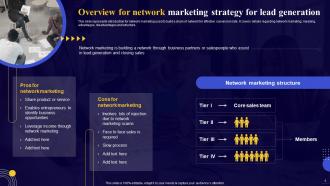
Slide 5: This slide represents the introduction for network marketing used to build a chain of network for effective conversion rate.
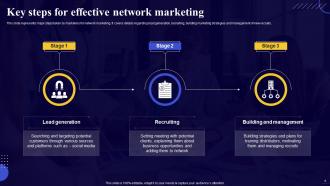
Slide 6: This slide highlights the Key steps for effective network marketing.
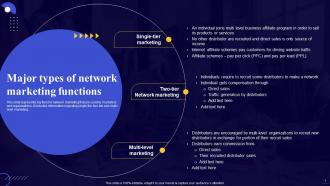
Slide 7: This slide portrays the key tiers for network marketing that are used by marketers and organizations.
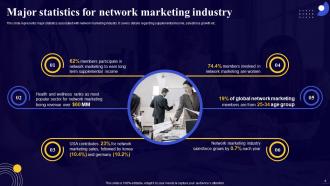
Slide 8: This slide talks about the Major statistics for network marketing industry.
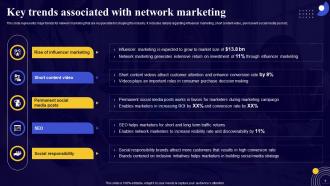
Slide 9: This slide showcases the Key trends associated with network marketing.
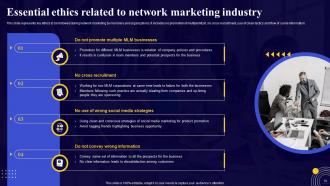
Slide 10: This slide mentions the Essential ethics related to network marketing industry.
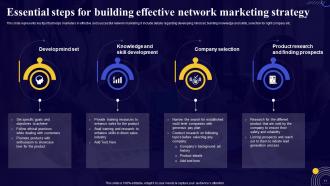
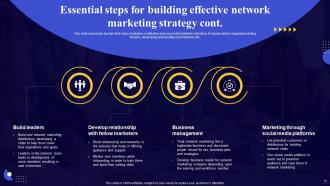
Slide 11: This slide states the Essential steps for building effective network marketing strategy.
Slide 12: This slide represents key tips that helps marketers in effective and successful network marketing.
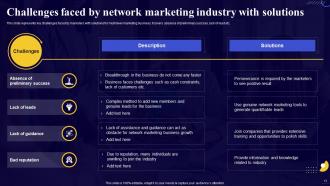
Slide 13: This slide portrays the key challenges faced by marketers with solutions for multi level marketing business.
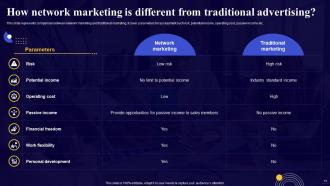
Slide 14: This slide elucidates the comparison between network marketing and traditional marketing.
Slide 15: This slide presents key elements to consider while selecting product for multi-level marketing organization.
Slide 16: This slide displays the Heading for the Contents to be covered further.
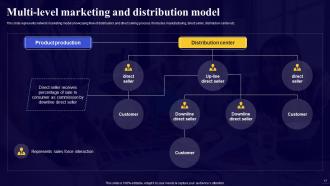
Slide 17: This slide reveals the network marketing model showcasing flow of distributors and direct selling process.
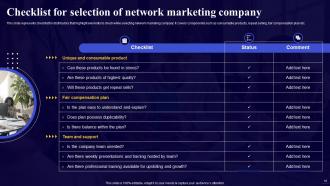
Slide 18: This slide portrays the Checklist for selection of network marketing company.
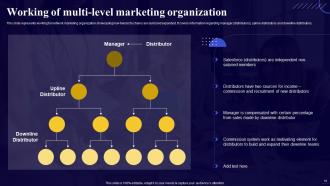
Slide 19: This slide represents working for network marketing organization showcasing how hierarchy chains are build and expanded.
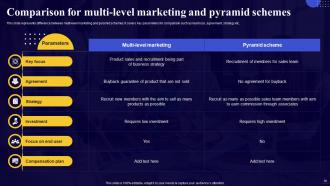
Slide 20: This slide indicates the difference between multi-level marketing and pyramid schemes.
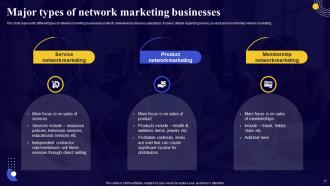
Slide 21: This slide exhibits the Major types of network marketing businesses.
Slide 22: This slide mentions the Title for the Ideas to be covered further.
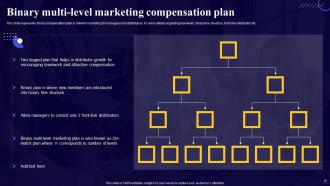
Slide 23: This slide represents binary compensation plan in network marketing for managers and distributors.
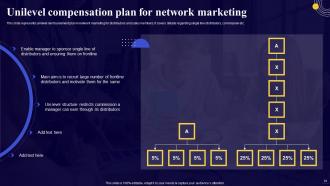
Slide 24: This slide showcases the Unilevel compensation plan for network marketing.
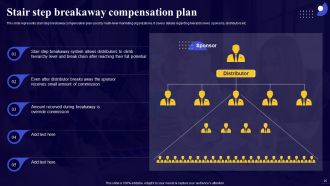
Slide 25: This slide highlights the stair step breakaway compensation plan used by multi-level marketing organizations.
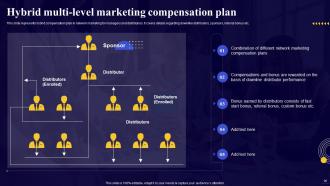
Slide 26: This slide presents hybrid compensation plan in network marketing for managers and distributors.
Slide 27: This slide includes the Heading for the Ideas to be discussed next.
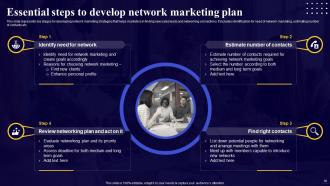
Slide 28: This slide exhibits the Essential steps to develop network marketing plan.
Slide 29: This slide incorporates the Title for the Components to be covreed in the following template.
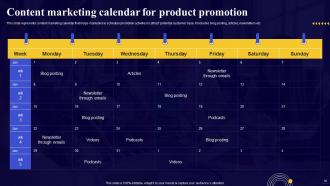
Slide 30: This slide reveals the Content marketing calendar for product promotion.
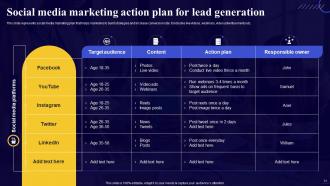
Slide 31: This slide talks about Social media marketing action plan for lead generation.
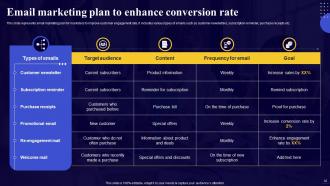
Slide 32: This slide illustrates the Email marketing plan to enhance conversion rate.
Slide 33: This slide depicts the Heading for the Topics to be covered in the forth-coming template.
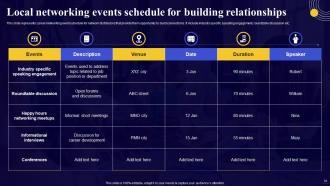
Slide 34: This slide deals with Local networking events schedule for building relationships.
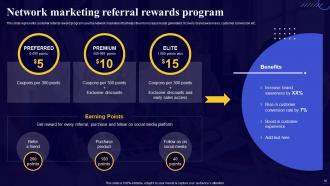
Slide 35: This slide represents customer referral reward program used by network marketers that helps them to increase leads generated.
Slide 36: This slide incorporates the Title for the Topics to be discussed in the following template.
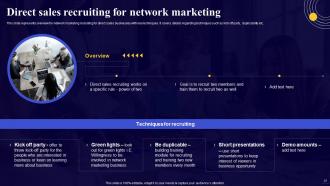
Slide 37: This slide exhibits the overview for network marketing recruiting for direct sales businesses with key techniques.
Slide 38: This slide contains the Heading for the Contents to be covered in the next template.
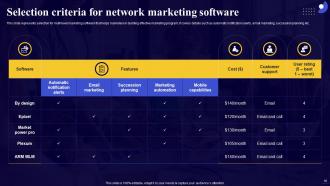
Slide 39: This slide focuses on the Selection criteria for network marketing software.
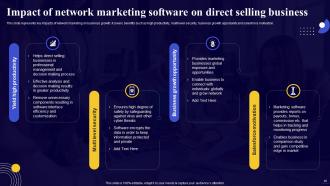
Slide 40: This slide presents key impacts of network marketing on business growth.
Slide 41: This slide elucidates the Title for the Ideas to be discussed in the following template.
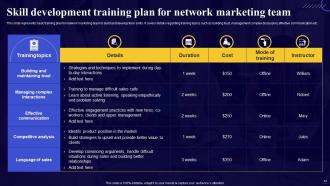
Slide 42: This slide showcases the basic training plan for network marketing team to build and develop their skills.
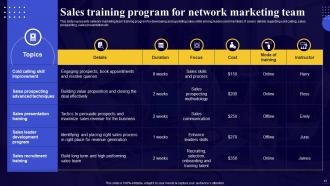
Slide 43: This slide talks about the Sales training program for network marketing team.
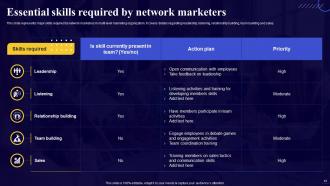
Slide 44: This slide represents major skills required by network marketers in multi level marketing organization.
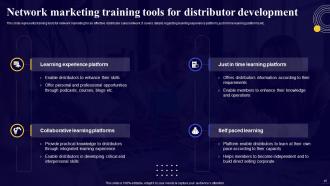
Slide 45: This slide mentions the Network marketing training tools for distributor development.
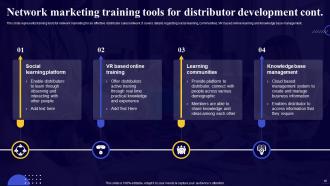
Slide 46: This slide continues the Network marketing training tools for distributor development.
Slide 47: This slide indicates the Heading for the Ideas to be covered further.
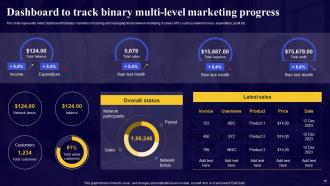
Slide 48: This slide reveals the metric dashboard that helps marketers in tracking and managing binary network marketing.
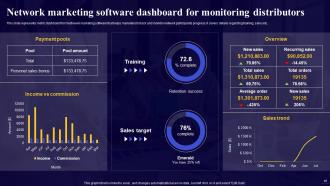
Slide 49: This slide portrays the metric dashboard for multi-level marketing software.
Slide 50: This slide exhibits the Title for the Contents to be discussed next.
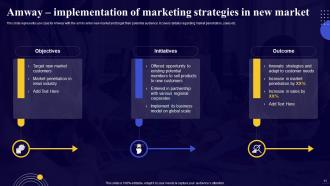
Slide 51: This slide represents use case for Amway with the aim to enter new market and target their potential audience.
Slide 52: This is the Icons slide containing all the Icons used in the plan.
Slide 53: This slide is used for depicting some Additional information.
Slide 54: This slide presents the Company Timeline.
Slide 55: This is the Generate idea slide for encouraging fresh ideas.
Slide 56: This is the 30 60 90 days plan sldie for effective planning.
Slide 57: This is Our target slide. State your organization's targets here.
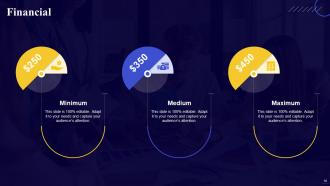
Slide 58: This slide elucidates information related to the Financial topic.
Slide 59: This is the Venn diagram slide.
Slide 60: This slide contains the Post it notes for reminders and deadlines.
Slide 61: This is the Thank you slide for acknowledgement.
Comprehensive Guide For Network Marketing Strategies Powerpoint Presentation Slides MKT CD with all 66 slides:
Use our Comprehensive Guide For Network Marketing Strategies Powerpoint Presentation Slides MKT CD to effectively help you save your valuable time. They are readymade to fit into any presentation structure.










FAQs for Comprehensive Guide For Network Marketing Strategies Powerpoint Presentation
Honestly, it's all about actually caring about people instead of just trying to sell them stuff. Find your audience first, then create content that actually helps them with real problems. Most people screw this up by being way too pushy from day one - like, chill out a bit, you know? Build trust first, then offer solutions that make sense for them. Oh, and don't try to be everywhere at once. Pick one platform, get good at it, then branch out. Social media, email, events - whatever works, but master one thing before you get distracted by shiny new platforms.
Don't jump straight into pitches - that's social media suicide. Build real relationships first by sharing stuff your audience actually cares about, not just sales BS. I spend maybe 15 minutes daily commenting on people's posts (sounds small but it works). LinkedIn's great for professional stuff, Instagram for the behind-the-scenes vibe. Facebook... honestly depends on your crowd. Your story matters way more than perfect copy - people buy from humans, not robots. Oh, and consistency beats perfection every time. Focus on their problems before pushing your solutions.
Honestly, personal branding is what separates you from the thousand other people hawking the same stuff. People don't just buy products anymore - they buy from people they actually like and trust. Your story matters more than you think. Would you rather purchase from some random person or someone whose posts you genuinely enjoy? Social media makes it super easy for people to check you out first anyway. Be real across all your platforms. Share content that actually helps people instead of just pitching constantly. Once you build that connection, they'll choose you over everyone else. It's like having built-in loyalty.
Honestly, stories beat boring stats every time. People remember when you tell them about losing 20 pounds way more than some random product features. Facts are forgettable - but that story about your neighbor making extra cash? That sticks. Plus everyone's so over being sold to these days. Stories feel real, you know? They help people picture themselves getting the same results you're talking about. I'd say collect like 2-3 solid stories that show actual results and just practice telling them naturally. Way more effective than rattling off a bunch of numbers.
Honestly, relationships are everything - people join *you*, not some company name. Look for ambitious people already wanting change instead of trying to convince doubters (I wasted SO much time on that mistake). Tell your real story and results, but then mostly listen to understand what they actually want. Never pressure anyone - that's just awkward for everyone. Oh, and follow up regularly but don't be annoying about it. You'll want some basic system to track who you've talked to and when to circle back with interested prospects.
Honestly, start simple with just 2-3 metrics or you'll drive yourself crazy. Conversion rates are huge - how many leads actually become customers? Track your network size growth too. Revenue per recruit tells you if people are actually making money (not just signing up and disappearing). Customer lifetime value is probably the most telling metric though - it shows if you're building something real or just churning through people. Oh, and definitely watch retention rates in your downline. Are people staying active or dropping off after a month? Just track weekly at first, then add more metrics once you've got the hang of it.
Honestly, stop pushing products constantly - nobody wants to feel like a walking ATM. Check in with people regularly instead, just to see how they're doing. Share actual helpful stuff like tips or educational content related to what you sell. Oh, and create some exclusive perks! Early access to new products, special discounts, whatever makes sense. The biggest thing though? Actually listen when customers give feedback and do something about it when you can. I'd start with reaching out to your best customers once a week, but make it personal. They'll notice the difference.
Honestly, just meet people where they already are - on their phones! Start with SMS for quick product updates since everyone reads texts. Push notifications through your app work great for training stuff. Social media's huge too, but make sure everything's mobile-friendly because people scroll differently on phones vs computers. I'd check how much of your audience is already using mobile first - that'll tell you where to focus. Short, shareable content is key. Oh, and your team needs to be able to easily share whatever you create, otherwise it just sits there doing nothing.
Honestly, just don't lie about how much money people can make - that's where things get really messy. Be real about the time and costs upfront. Never bug your friends and family just because you need to meet some quota (learned that one the hard way lol). Focus on selling stuff people actually need instead of just trying to recruit everyone. Also don't do that pushy sales thing where you corner people. I mean, would you want someone doing that to you? Probably not. Keep it genuine and you'll be fine.
So basically, you wanna split your audience into different groups instead of sending the same boring message to everyone. Think about it - a soccer mom isn't gonna respond like a college kid would, you know? I usually tell people to pick 2-3 main segments first. Maybe group them by age, interests, whatever makes sense for your business. Then test different messages with each group. Your conversion rates will actually improve because people feel like you're talking directly to them. It's way more effective than that one-size-fits-all approach most people try.
Honestly, ditch the constant sales posts - they're annoying and nobody wants that. Share tutorials, tips, maybe some behind-the-scenes stuff instead. People can smell fake from a mile away, so be real about your journey. Wins AND failures, you know? I used to post "join my team!" stuff constantly and crickets every time. Educational content about solving actual problems? Way better engagement. Build trust first. Weave your story in naturally, don't force it. Oh, and track which posts get real comments (not just likes) - that's your goldmine content right there.
Dude, you HAVE to focus on training and support - it's everything. Most people joining have never done sales before, so they'll crash and burn without proper help. I learned this the hard way honestly. Your new recruits need solid onboarding, product knowledge, and ongoing coaching or they'll just quit. Companies that actually invest in good training systems always crush the ones that don't. When people feel supported, they stick around longer and build their own teams. Oh, and start with a really strong onboarding process - that's where you'll make or break someone's success from day one.
Honestly, start with a CRM like HubSpot or Pipedrive - they're lifesavers for tracking leads and automating those annoying follow-ups. For social media, Buffer or Hootsuite will save you hours since you can schedule everything in advance. Mailchimp's great for email campaigns, though I know some people swear by ConvertKit too. Google Analytics is free and actually shows you what's working (versus what you hope is working). Oh, and Canva - even I can make decent graphics with it, which is saying something. Don't go crazy trying to use everything at once though. Pick two, get the hang of them, then add more tools later.
Honestly, it's all about building real relationships first. People only buy from folks they actually trust and like - sounds obvious but so many people skip this part. When you genuinely connect with someone instead of immediately pushing products, sales just happen naturally. No weird pushy vibes. I've watched too many people completely burn through their contact lists by being super sales-heavy right away. Bad move. Ask how you can help them first, not the other way around. Figure out what they actually need. Those referrals from solid relationships? They convert like crazy compared to cold leads.
Dude, network marketing is totally changing right now. Everyone's ditching cold calls for AI targeting and working with micro-influencers instead. Mobile shopping is obviously huge - people live on their phones. Video content and live streams are replacing those awkward in-person presentations (thank god). Authenticity matters way more than being pushy now. Short-form videos are everywhere, and you've gotta tell real stories. Oh, and don't forget sustainability messaging - Gen Z actually cares about that stuff. Honestly? Start making TikToks or Reels now and focus on building actual relationships. That's where the money is.
-
Amazing variety of PowerPoint slides. Really helpful in designing professional presentations.
-
Perfect template with attractive color combination.