


Comprehensive Guide To Sports Marketing Strategy Powerpoint Presentation Slides MKT CD




Try Before you Buy Download Free Sample Product
 Impress Your
 Audience
 100%
100% Editable
 Save Hours
 of Time


Sports marketing involves promoting goods and services through sporting events, endorsement of athletes and teams, etc. Grab our Comprehensive guide to sports marketing strategy template. Its primary purpose is to promote sporting goods and equipment through multiple channels to improve the overall lifestyle of customers and sporting fans. Our Sports brand advertising deck provides a general overview of sports marketing along with processes, challenges, trends, etc. It offers access to multiple strategies that can help sports retailers increase customer experience, club sponsorships, and overall brand recall these include athlete branding and digital sports brand promotion. Additionally, our Sports marketing programs PPT contains slides that can guide sports brands on utilizing the eSports industry as an opportunity to promote their products. It further helps the firms to sponsor famous eSports teams, host related events, and deploy advergaming for immersive customer experience. Furthermore, our Athlete branding module offers content that can guide marketers to track sports advertising campaigns. Lastly, it can help assess the performance of the above strategies through impact analysis, KPIs, and dashboards. Get access now.
People who downloaded this PowerPoint presentation also viewed the following :
Content of this Powerpoint Presentation
Slide 1: This slide introduces Comprehensive Guide to Sports Marketing Strategy. Commence by stating Your Company Name.
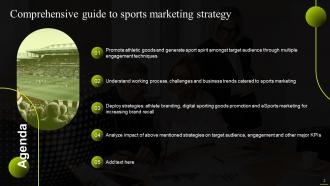
Slide 2: This slide depicts the Agenda of the presentation.
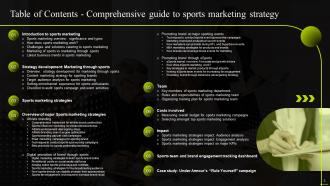
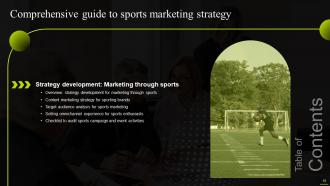
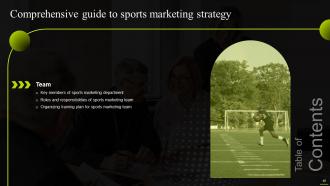
Slide 3: This slide incorporates the Table of Contents.
Slide 4: This slide highlights the Title for the Topics to be covered further.
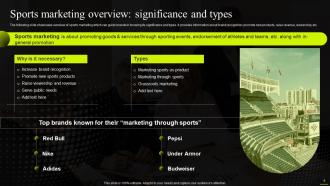
Slide 5: This slide showcases the overview of sports marketing which can guide brands in knowing its significance and types.
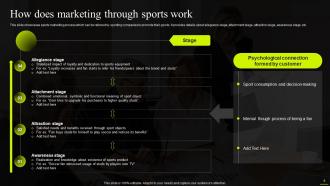
Slide 6: This slide presents the sports marketing process which can be referred by sporting companies to promote their goods.
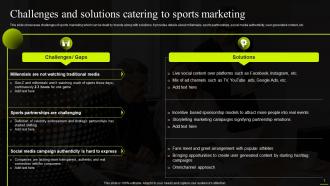
Slide 7: This slide exhibits the Challenges and solutions catering to sports marketing.
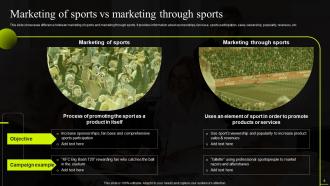
Slide 8: This slide presents the difference between marketing of sports and marketing through sports.
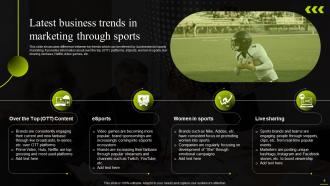
Slide 9: This slide displays the Latest business trends in marketing through sports.
Slide 10: This slide indicates the Heading for the Contents to be discussed in the following template.
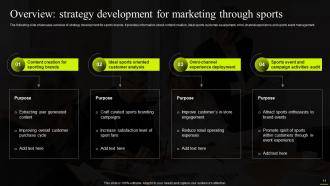
Slide 11: This slide portrays the overview of strategy development for sports brands.
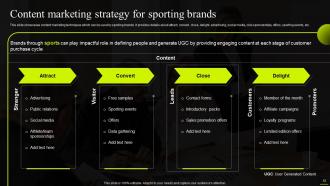
Slide 12: This slide highlights the content marketing techniques which can be used by sporting brands.
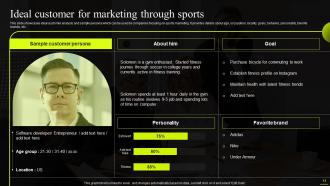
Slide 13: This slide depicts the Ideal customer for marketing through sports.
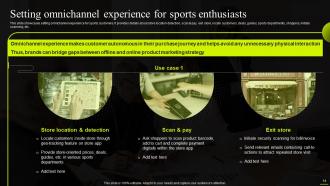
Slide 14: This slide presents setting omnichannel experience for sports customers.
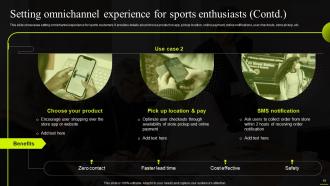
Slide 15: This slide continues Setting omnichannel experience for sports enthusiasts.
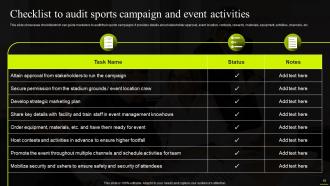
Slide 16: This slide exhibits the Checklist to audit sports campaign and event activities.
Slide 17: This slide displays the Title for the Ideas to be further discussed.
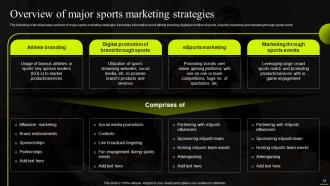
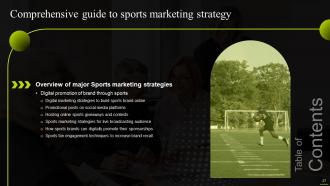
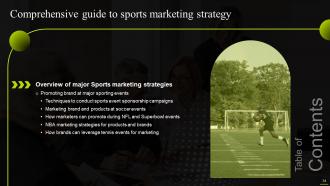
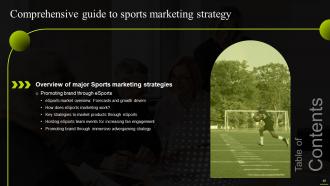
Slide 18: This slide portarys the Overview of major sports marketing strategies.
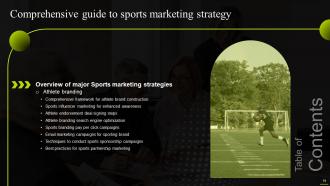
Slide 19: This slide mentions the Heading for the Ideas to be covered in the following template.
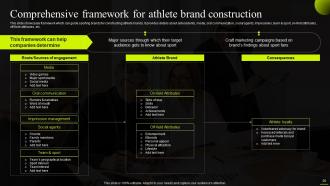
Slide 20: This slide showcases framework which can guide sporting brands for constructing athlete brands.
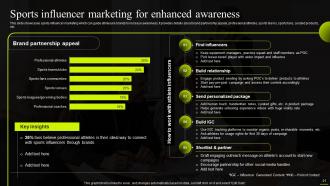
Slide 21: This slide talks about Sports influencer marketing for enhanced awareness.
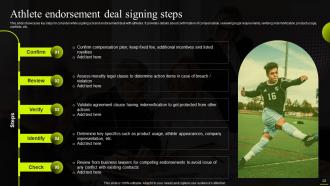
Slide 22: This slide states the key steps to consider while signing a brand endorsement deal with athletes.
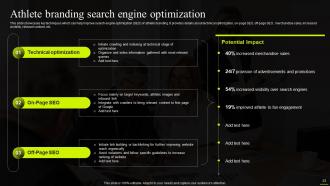
Slide 23: This slide deals with Athlete branding search engine optimization.
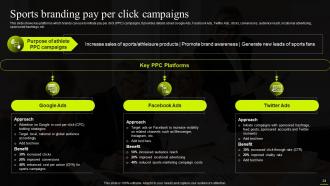
Slide 24: This slide shows key platforms which brands can use to initiate pay per click (PPC) campaigns.
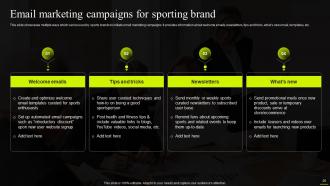
Slide 25: This slide indicates the Email marketing campaigns for sporting brand.
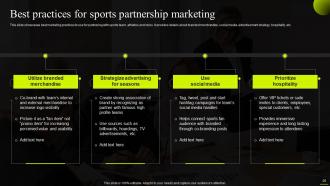
Slide 26: This slide exhibits the Best practices for sports partnership marketing.
Slide 27: This slide presents the Title for the Contents to be discussed next.
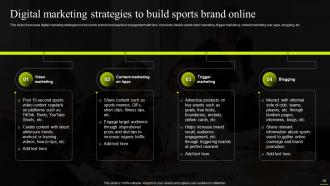
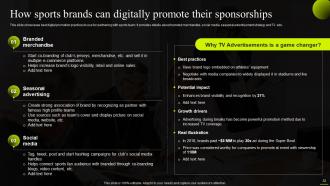
Slide 28: This slide portrays the Digital marketing strategies to build sports brand online.
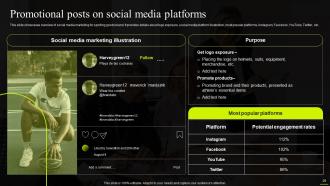
Slide 29: This slide displays the Promotional posts on social media platforms.
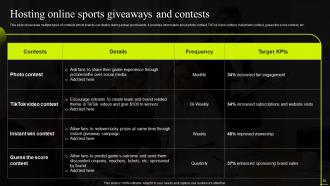
Slide 30: This slide deals with Hosting online sports giveaways and contests.
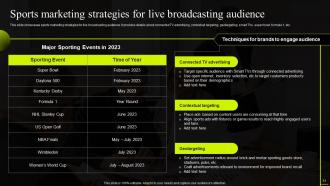
Slide 31: This slide mentions about the Sports marketing strategies for live broadcasting audience.
Slide 32: This slide showcases best digital promotion practices to use for partnering with sports team.
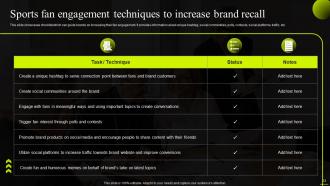
Slide 33: This slide incorporates the Sports fan engagement techniques to increase brand recall.
Slide 34: This slide depicts the Heading for the Topics to be covered further.
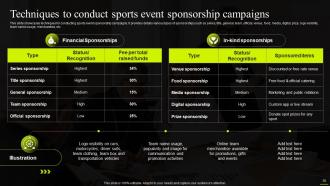
Slide 35: This slide elucidates the Techniques to conduct sports event sponsorship campaigns.
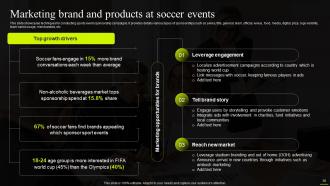
Slide 36: This slide reveals the Marketing brand and products at soccer events.
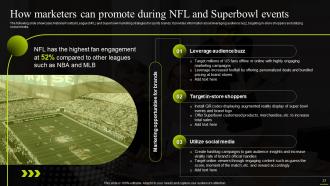
Slide 37: This slide shows National Football League (NFL) and Superbowl marketing strategies for sports brands.
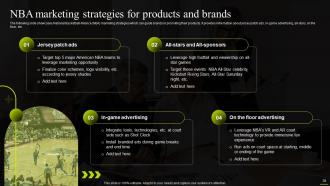
Slide 38: This slide outlines the NBA marketing strategies for products and brands.
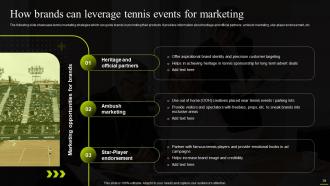
Slide 39: This slide highlights tennis marketing strategies which can guide brands in promoting their products.
Slide 40: This slide depicts the Title for the Topics to be discussed in the upcoming template.
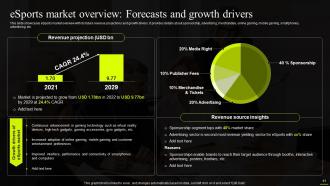
Slide 41: This slide showcases eSports market overview with its future revenue projections and growth drivers.
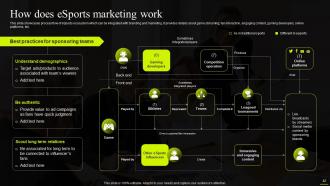
Slide 42: This slide elucidates the process flow of eSports ecosystem which can be integrated with branding and marketing.
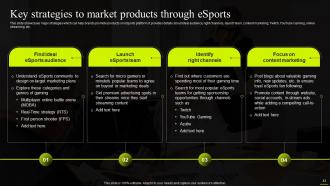
Slide 43: This slide states the Key strategies to market products through eSports.
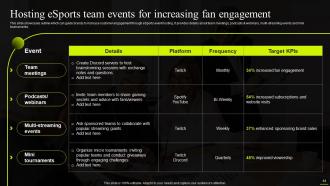
Slide 44: This slide talks about Hosting eSports team events for increasing fan engagement.
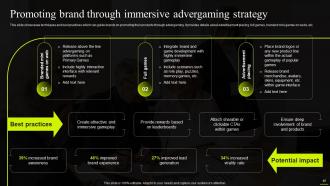
Slide 45: This slide emphasizes on Promoting brand through immersive advergaming strategy.
Slide 46: This slide includes the Heading for the Contents to be covered in the forth-coming template.
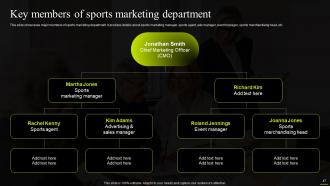
Slide 47: This slide highlights the Key members of sports marketing department.
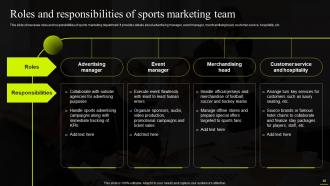
Slide 48: This slide exhibits the Roles and responsibilities of sports marketing team.
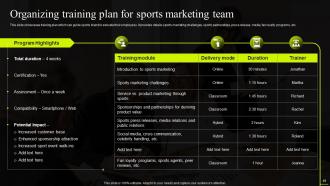
Slide 49: This slide deals with Organizing training plan for sports marketing team.
Slide 50: This slide reveals the Title for the Ideas to be discussed next.
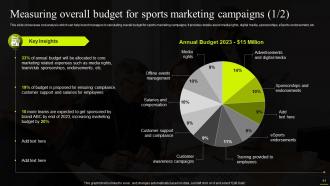
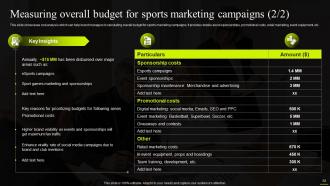
Slide 51: This slide focuses on Measuring overall budget for sports marketing campaigns.
Slide 52: This slide continues Measuring overall budget for sports marketing campaigns.
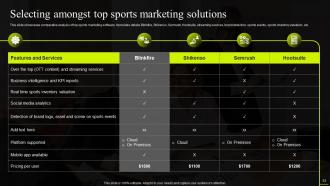
Slide 53: This slide deals with Selecting amongst top sports marketing solutions.
Slide 54: This slide presents the Heading for the Ideas to be covered further.
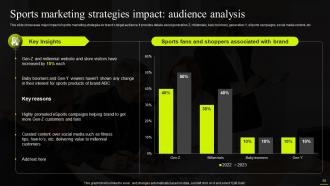
Slide 55: This slide showcases major impact of sports marketing strategies on brand’s target audience.
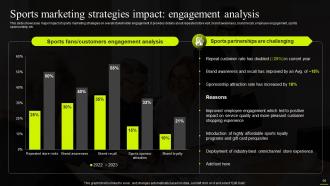
Slide 56: This slide states the major impact of sports marketing strategies on overall stakeholder engagement.
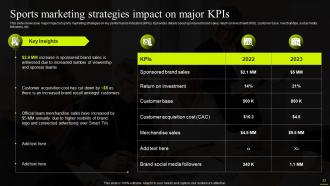
Slide 57: This slide portrays the Sports marketing strategies impact on major KPIs.
Slide 58: This slide represents the Title for the Topics to be discussed next.
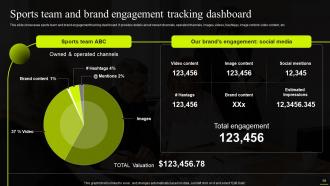
Slide 59: This slide reveals the sports team and brand engagement tracking dashboard.
Slide 60: This slide indicates the Heading for the Contents to be covered in the forth-coming template.
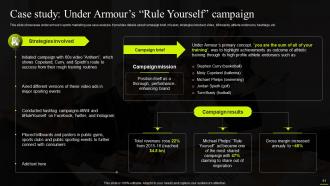
Slide 61: This slide showcases under armour’s sports marketing use case analysis.
Slide 62: This is the Icons slide containing all the Icons used in the plan.
Slide 63: This slide is used for depicting some Additional information.
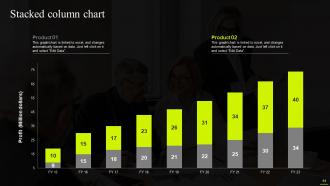
Slide 64: This slide elucidates the Stacked column chart.
Slide 65: This is Our team slide. State your team-related information here.
Slide 66: This is the 30 60 90 days plan slide for effective planning.
Slide 67: This is the Venn Diagram slide.
Slide 68: This slide represents the organization's Timeline.
Slide 69: This slide contains the Post it notes for reminders and deadlines.
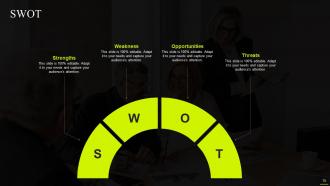
Slide 70: This slide showcases information related to SWOT.
Slide 71: This is the Thank you slide for acknowledgement.
Comprehensive Guide To Sports Marketing Strategy Powerpoint Presentation Slides MKT CD with all 76 slides:
Use our Comprehensive Guide To Sports Marketing Strategy Powerpoint Presentation Slides MKT CD to effectively help you save your valuable time. They are readymade to fit into any presentation structure.











FAQs for Comprehensive Guide To Sports Marketing Strategy Powerpoint Presentation
Look, you really need to nail four things here. Figure out exactly who you're targeting first - like really dig into demographics and what makes them tick. Brand positioning comes next, then hit them everywhere they hang out: digital, events, sponsorships, content, whatever. Most companies screw this up by casting way too wide a net, honestly. Oh and track literally everything - sales, engagement, brand awareness. I'd probably start with audience research though, since that'll shape everything else you do. Makes the whole process way less of a guessing game.
Honestly, data analytics just turns your hunches into stuff you can actually use. You can track which demographics actually convert instead of just guessing who likes your campaigns. The numbers make everything so much clearer - like, you'll see which social platforms sell tickets vs. merch, or when people actually engage with your posts. ROI tracking across different audience segments happens in real-time too, which is pretty cool. My advice? Start simple though. Pick one metric that actually matters for whatever you're working on right now and go from there.
Influencers are like your shortcut to reaching younger fans who probably don't watch SportsCenter anymore. They make content that actually feels real - you know, behind-the-scenes stuff, hanging with players, that whole vibe. Way more relatable than whatever your official team account posts. Honestly, I'm always surprised how much people trust what influencers say over regular ads. The engagement is crazy good too. Just don't get stuck chasing those accounts with millions of followers - find someone whose fans actually care about your sport. That matters way more than pure numbers.
Look for partnerships where you're actually helping, not just throwing money around. Youth clinics at community centers are gold. Little league sponsorships work great too. Pick local schools or small nonprofits where your team can genuinely contribute something meaningful. Don't be one of those teams that only shows up during playoffs - consistency matters way more than flashy one-offs. Community drives are perfect for this. You want people thinking "oh yeah, they're always around helping out." Honestly, start with maybe 2-3 solid partnerships rather than spreading yourself thin everywhere.
Honestly, it's like borrowing credibility from stuff people already love. Your brand gets to ride alongside something fans are actually passionate about - which is pretty genius when you think about it. Most marketing annoys people, but with sports sponsorship they genuinely want you there because you're making their experience better. You'll get crazy reach plus access to your exact target audience. The trick is picking events that actually match your demo (not just whatever's popular) and having a real plan beyond throwing your logo around everywhere. Otherwise you're just burning money.
VR and AR are game-changers for fan engagement, seriously. Start with something simple like AR filters where people can try on jerseys virtually - those always do well on social. VR stadium tours work great for fans who can't make it to games. 360-degree broadcasts make you feel like you're actually there courtside (though honestly, sometimes the tech still makes me dizzy). AR overlays during live games showing player stats are pretty cool too. Oh, and virtual mascot selfies - fans love that stuff. Don't go overboard though. Pick one thing, test it out, see what your audience actually uses. Then build from there.
You can't outspend the big leagues, so go hyper-local instead. Partner with businesses in your area for cross-promotion deals. Social media is your best friend - show off your athletes' personalities, not just game stats. Behind-the-scenes content works great too. Email marketing still crushes it (seriously, people sleep on this). Build real relationships with local sports bloggers who actually care about grassroots stuff. Oh, and make your fan experience so good that people won't shut up about it to their friends. That's honestly your cheapest marketing right there.
So demographic analysis shows you who's actually watching and engaging with sports content. Age, income, gender, location - that stuff matters for targeting your marketing. Like, hitting up 18-25 year olds on TikTok is totally different than reaching older folks through TV ads, you know? The data helps you pick the right channels and messaging. I'd start by checking your current audience data first - see what your biggest segments look like. Then build campaigns around those core groups. It's honestly pretty straightforward once you know who you're talking to.
Honestly, you've gotta track both the hard numbers and the fuzzy brand stuff to really know if it's working. Set up promo codes and watch for ticket sales spikes during campaigns - that's your direct revenue. But also do before/after surveys for brand awareness and purchase intent. Social metrics matter too, especially user-generated content (that stuff spreads like crazy). Here's the thing though - sports marketing takes forever to convert sometimes, so don't panic if you're not seeing immediate sales. I'd build a monthly dashboard comparing cost-per-acquisition across different sponsorships. Shows you exactly where your money's actually working.
Look, fans want to feel like you actually get them, not like they're just another email address. Use what you know - their buying habits, which teams they follow, when they show up. Send them stuff that actually matters, like deals on their favorite player's gear or first dibs on games they'd care about. The amount of data you can grab these days is honestly crazy. Season ticket holders need different content than someone who shows up twice a year, right? I'd start with splitting up your email list based on how people behave and test what works.
Honestly? Go where they're already hanging out - TikTok, Instagram, Twitter. But here's the thing: they'll spot fake content instantly and just scroll past. So skip the polished marketing stuff and show them real behind-the-scenes moments instead. Interactive stuff works great too - AR filters, fantasy leagues, apps where they can actually DO something instead of just watching. Oh, and partner with influencers they genuinely follow, not just whoever's got the most followers. Sports needs to feel social, you know? Something they can share and get their friends hyped about.
So eSports totally flips your audience strategy on its head. You're dealing with way younger, digitally native crowds now - those old TV ad buys won't cut it anymore. Streaming platforms and influencer partnerships become your new best friends. The cool part? These audiences actually give a damn compared to people zoning out during TV commercials. Oh, and you're not just targeting individuals anymore - it's all about communities. I'd say start small by finding gaming communities that match your brand's vibe and run some test campaigns there first. Way less risky than going all-in.
Authenticity's huge - don't let your athletes make claims they can't actually back up. Demographics matter too, especially when you're targeting kids or other vulnerable groups. Some youth sports marketing I've seen lately is honestly pretty gross. Be upfront about sponsorship deals and partnerships. Always get proper consent before using an athlete's image or personal stuff. Oh, and respect their privacy obviously. The test I use? Would I be cool with someone using this same approach on my family? If the answer's no, you're probably crossing a line.
Be real about who you are first - figure out what you actually care about, then find sponsors who get that. Don't just take whatever money's thrown at you. I've watched so many athletes completely change their vibe for a check and it's honestly painful to watch. Your brand has to stay consistent everywhere. Share actual stories and behind-the-scenes stuff to connect with people. When you pitch sponsors, bring them solid ideas for working together - show your numbers and explain how you'll help their goals. Oh, and start small! Prove you're worth it first.
So the Olympics turn countries into marketing machines, it's actually insane. Nations dump crazy money into athlete sponsorships and cultural campaigns that go way past the actual games. Tourism marketing goes through the roof too. Here's the thing though - smart countries don't just chase short-term hype. They use these events to build lasting sports tourism and athlete programs. Like, think about how South Korea is still benefiting from their Olympics years later. When you're planning your sports marketing, figure out how to catch those waves and keep the momentum going afterward. The ripple effects can last for years if you play it right.
-
Appreciate the research and its presentable format.
-
Understandable and informative presentation.