


Comprehensive Guide To Sustainable Marketing Powerpoint Presentation Slides MKT CD
Sustainable marketing refers to the practice of promoting products and services in an environmentally and socially responsible manner, with the goal of preserving resources for future generations. It prioritizes the use of environmentally friendly materials and ethical business practices and minimizes waste and negative impact on the environment. The PPT slides provide important principles that act as a foundation for sustainable marketing, prioritizing the protection and preservation of the environment, as well as ethical business practices. Marketers aim for transparency and honesty in their marketing claims and strive to minimize waste and negative impact on the environment through the use of environmentally friendly materials. Sustainable marketing also involves promoting sustainability to consumers and adopting a long term focus rather than a short term one. Additionally, sustainable marketers engage and collaborate with all stakeholders to ensure their marketing efforts align with their principles. The PowerPoint presentation also contains strategies to improve processes under sustainable marketing for profitable returns through performance tracking sheets, reports, etc. The PPT slides provide dashboards to monitor sustainable marketing ad campaigns along with success stories of deploying sustainable marketing in top companies. Customize this 100 percent editable template with our highly skilled research and design team. Get access now.
Sustainable marketing refers to the practice of promoting products and services in an environmentally and socially responsi..
































-

- Google Slides is a new FREE Presentation software from Google.
- All our content is 100% compatible with Google Slides.
- Just download our designs, and upload them to Google Slides and they will work automatically.
- Amaze your audience with SlideTeam and Google Slides.
-

Want Changes to This PPT Slide? Check out our Presentation Design Services
-

- WideScreen Aspect ratio is becoming a very popular format. When you download this product, the downloaded ZIP will contain this product in both standard and widescreen format.
-

- Some older products that we have may only be in standard format, but they can easily be converted to widescreen.
- To do this, please open the SlideTeam product in Powerpoint, and go to
- Design ( On the top bar) -> Page Setup -> and select "On-screen Show (16:9)” in the drop down for "Slides Sized for".
- The slide or theme will change to widescreen, and all graphics will adjust automatically. You can similarly convert our content to any other desired screen aspect ratio.
Compatible With Google Slides

Get This In WideScreen
You must be logged in to download this presentation.


Do you want to remove this product from your favourites?
PowerPoint presentation slides
Deliver this complete deck to your team members and other collaborators. Encompassed with stylized slides presenting various concepts, this Comprehensive Guide To Sustainable Marketing Powerpoint Presentation Slides MKT CD is the best tool you can utilize. Personalize its content and graphics to make it unique and thought-provoking. All the seventy nine slides are editable and modifiable, so feel free to adjust them to your business setting. The font, color, and other components also come in an editable format making this PPT design the best choice for your next presentation. So, download now.

People who downloaded this PowerPoint presentation also viewed the following :
Content of this Powerpoint Presentation
Slide 1: This slide displays the title Comprehensive Guide to Sustainable Marketing.
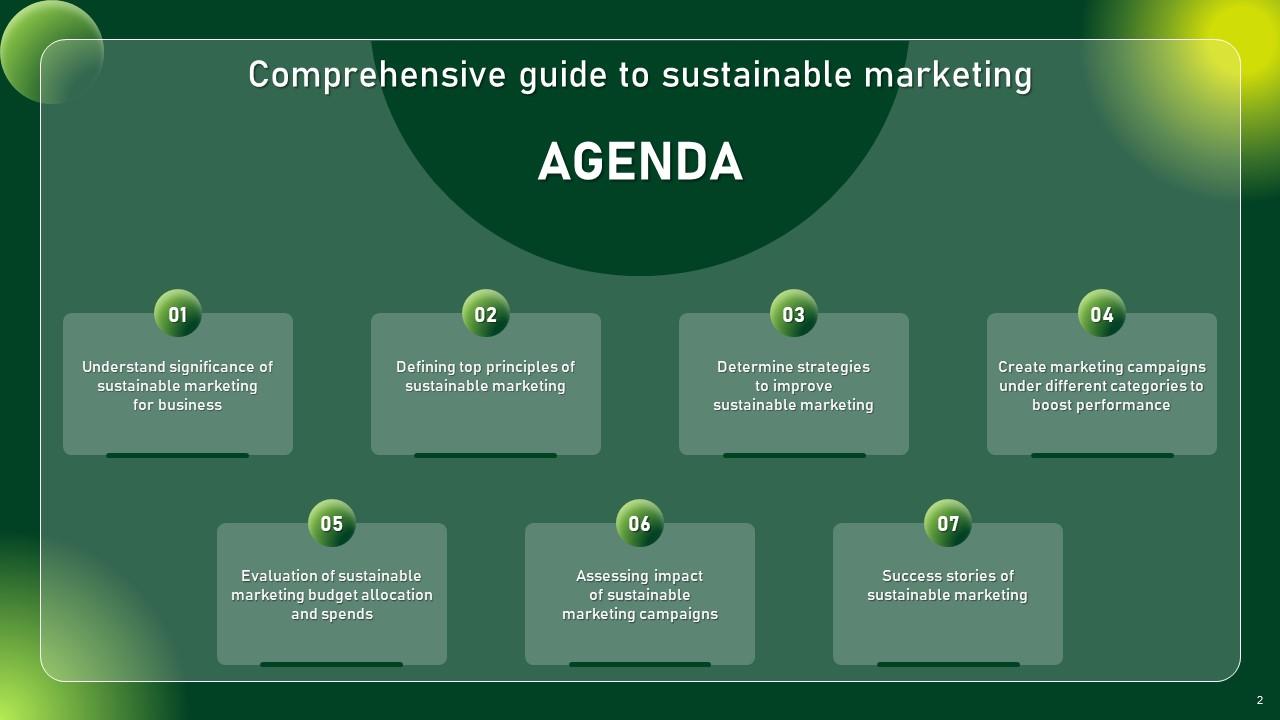
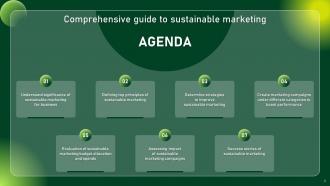
Slide 2: This slide displays the title AGENDA.
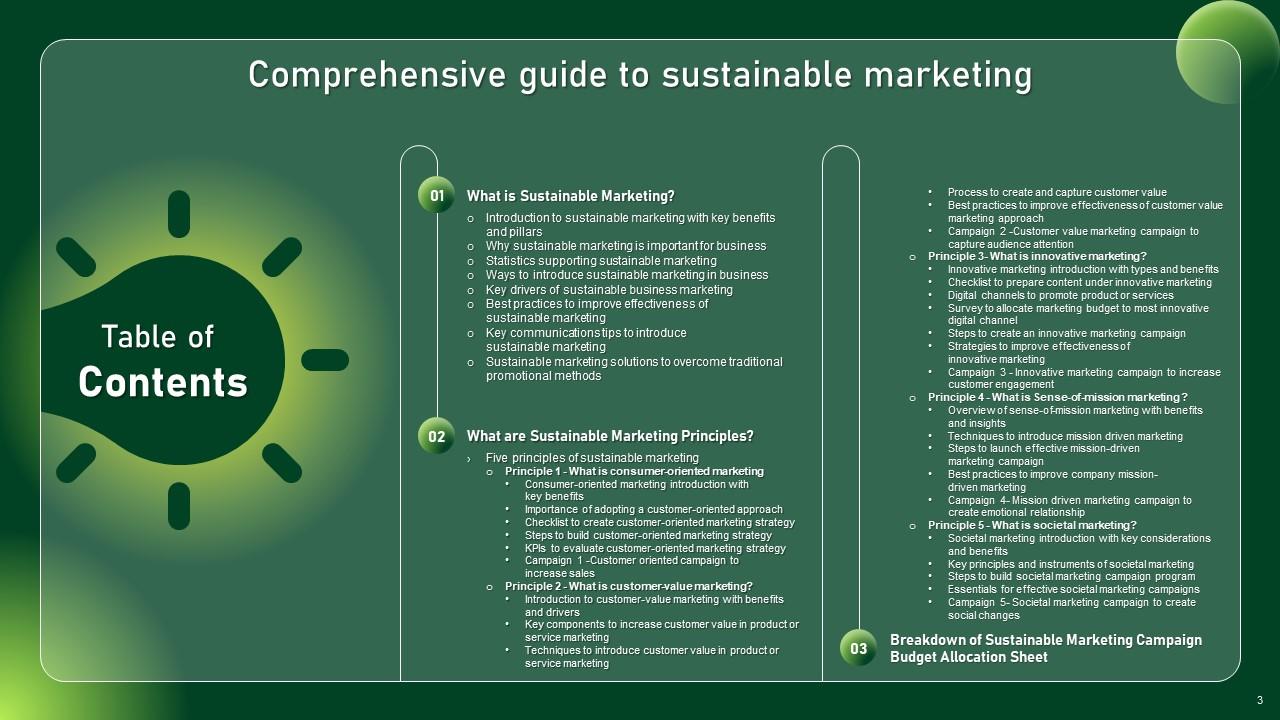
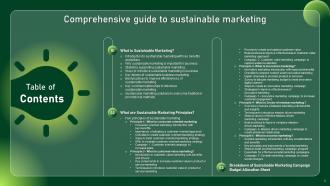
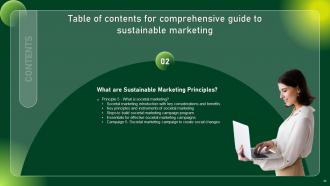
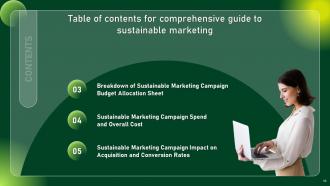
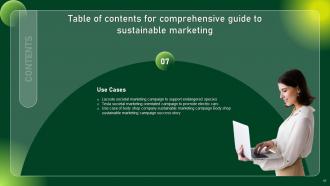
Slide 3: This slide exhibit table of content.
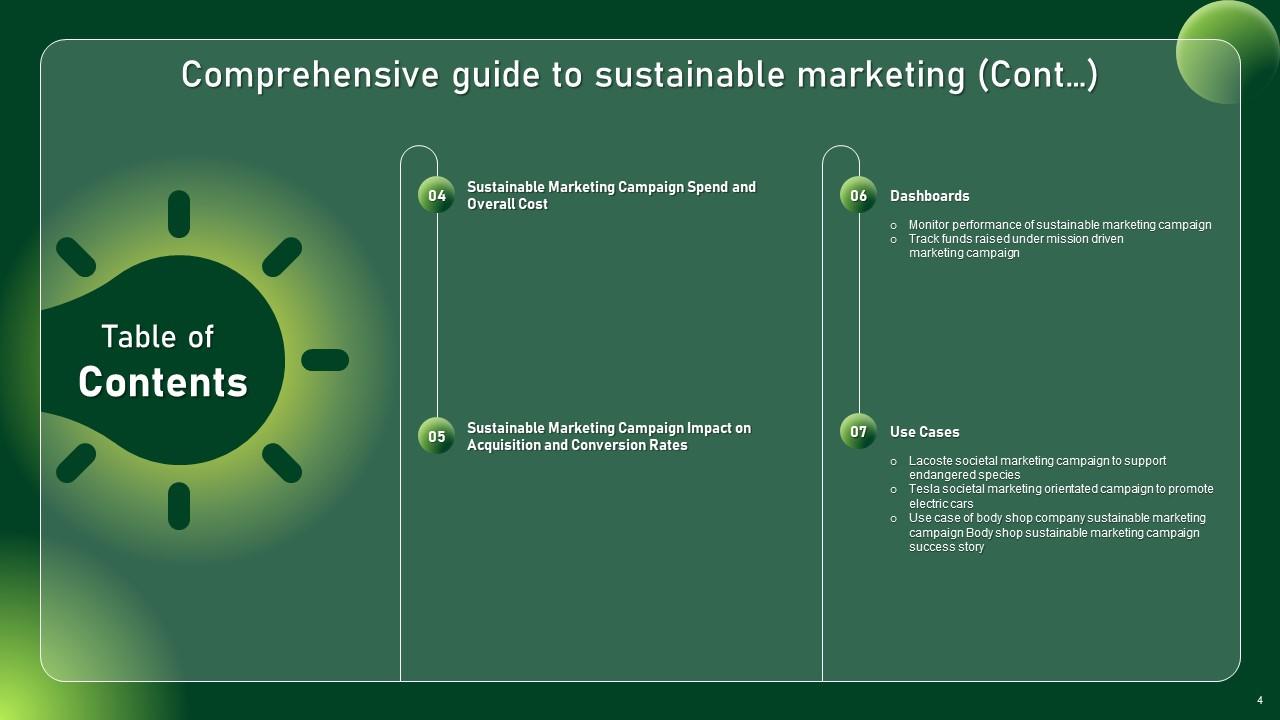
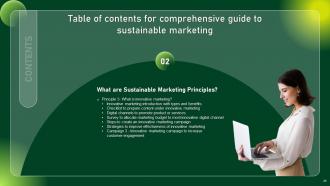
Slide 4: This slide exhibit table of content that is to be discuss further.
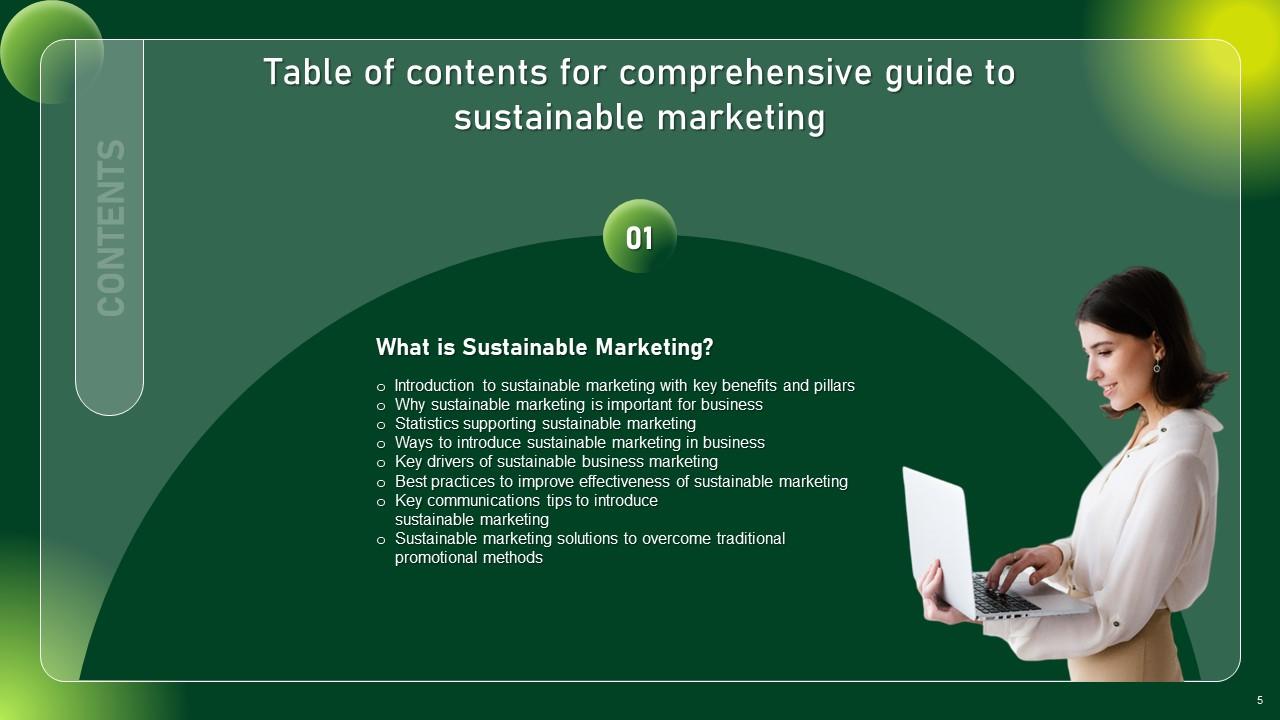
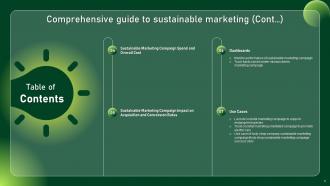
Slide 5: This slide exhibit table of content that is to be discuss further.
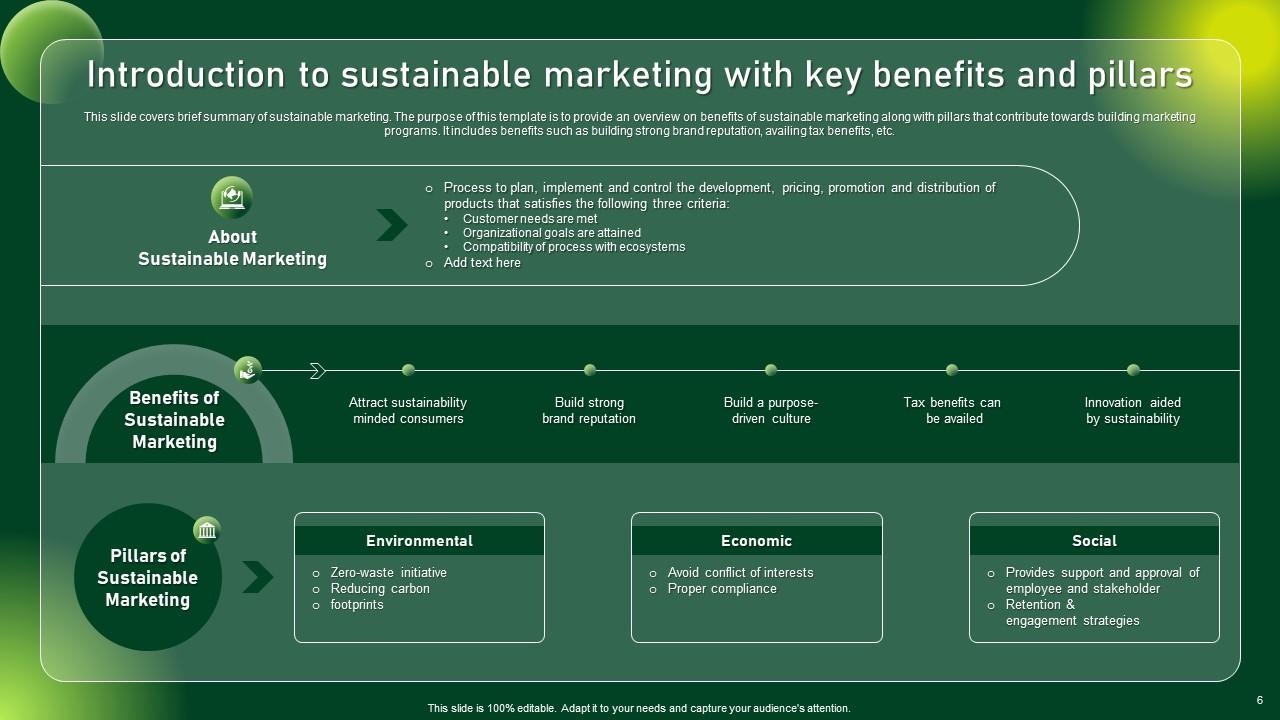
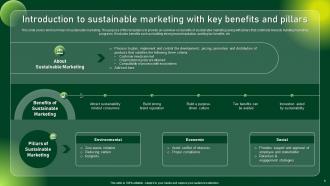
Slide 6: This slide covers brief summary of sustainable marketing.
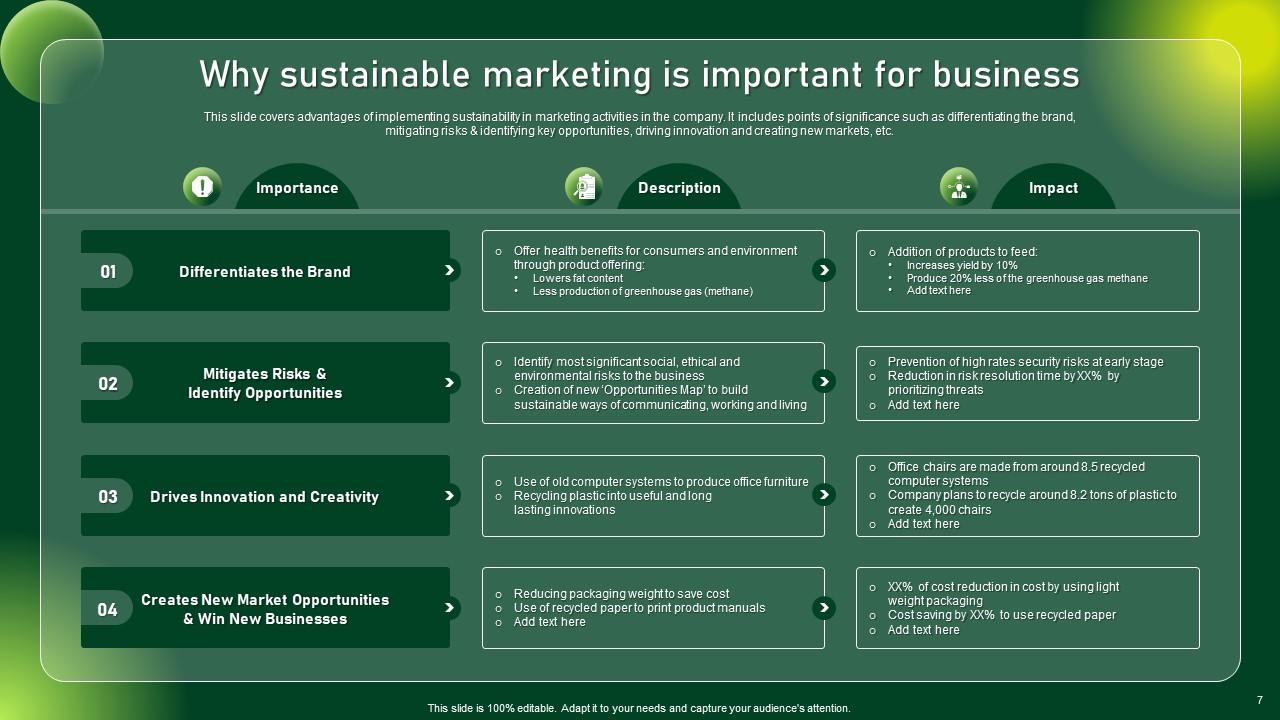
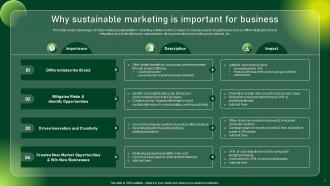
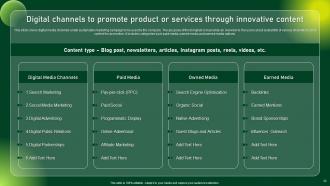
Slide 7: This slide covers advantages of implementing sustainability in marketing activities in the company.
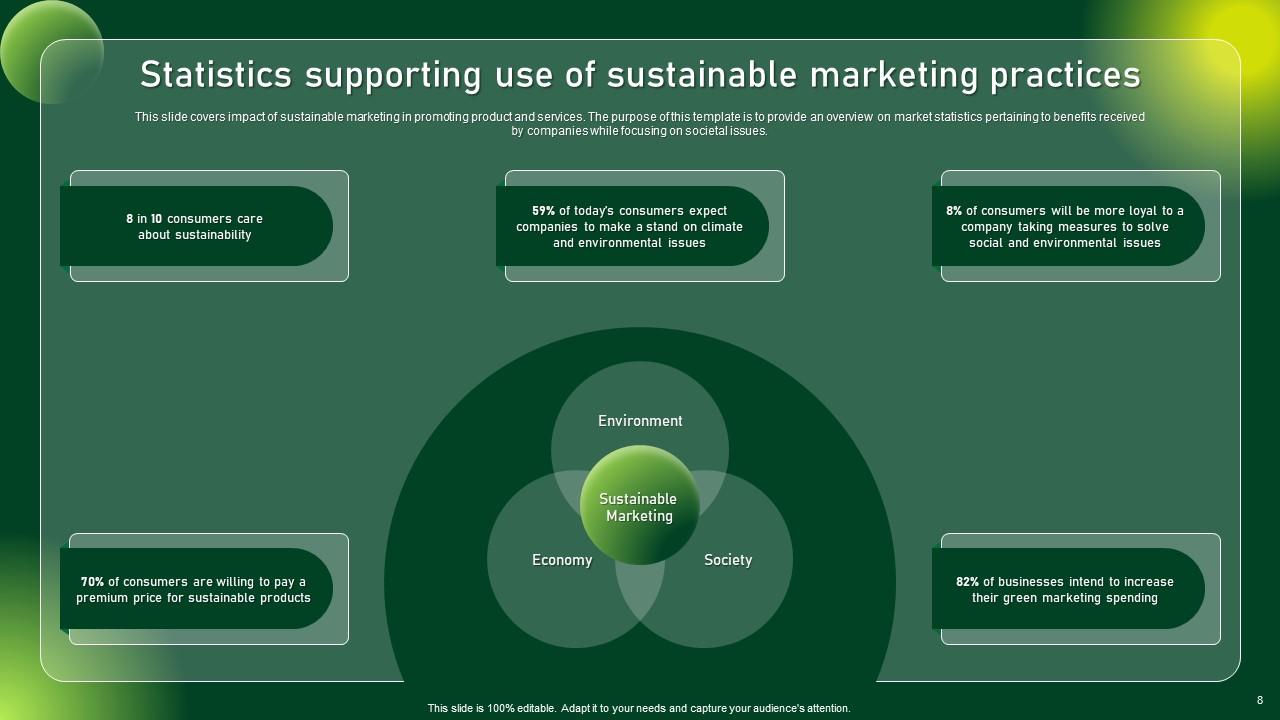
Slide 8: This slide covers impact of sustainable marketing in promoting product and services.
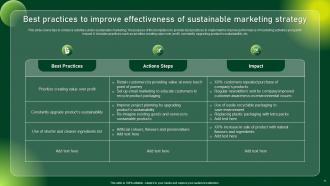
Slide 9: This slide covers methods through which sustainability can be maintained in marketing process.
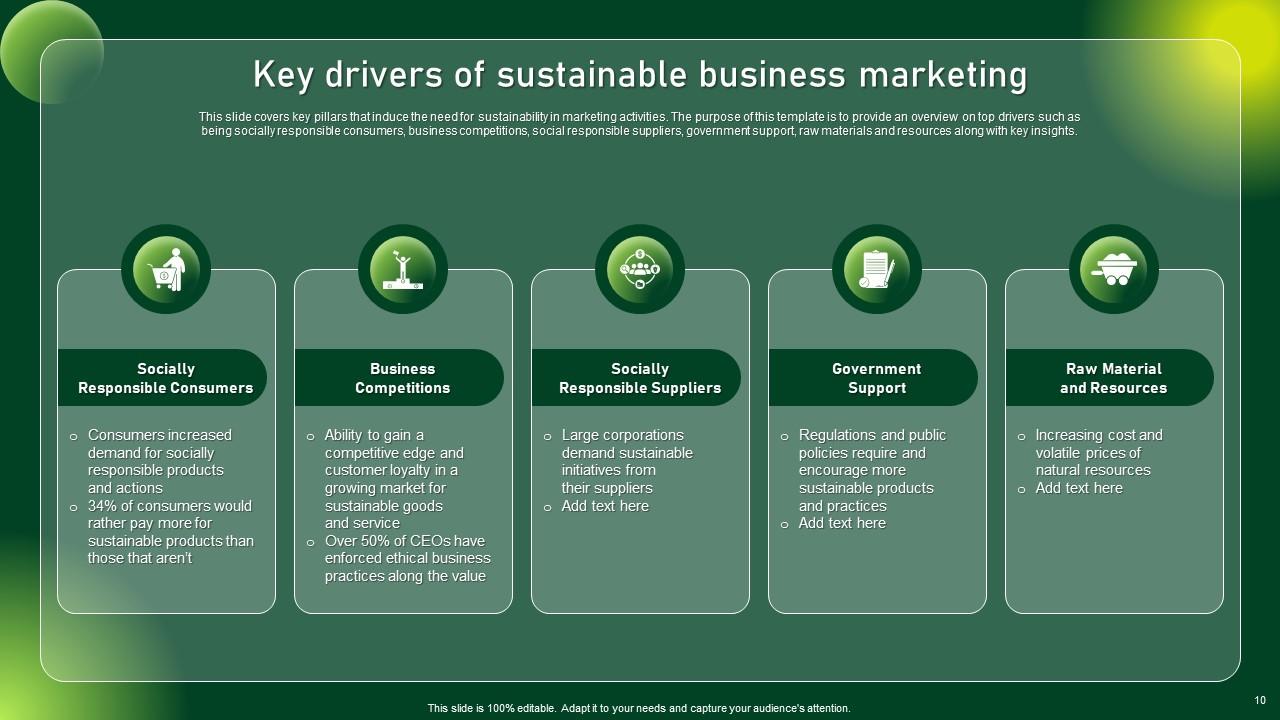
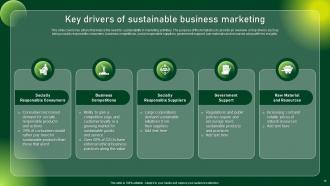
Slide 10: This slide covers key pillars that induce the need for sustainability in marketing activities.
Slide 11: This slide covers tips to enhance activities under sustainable marketing.
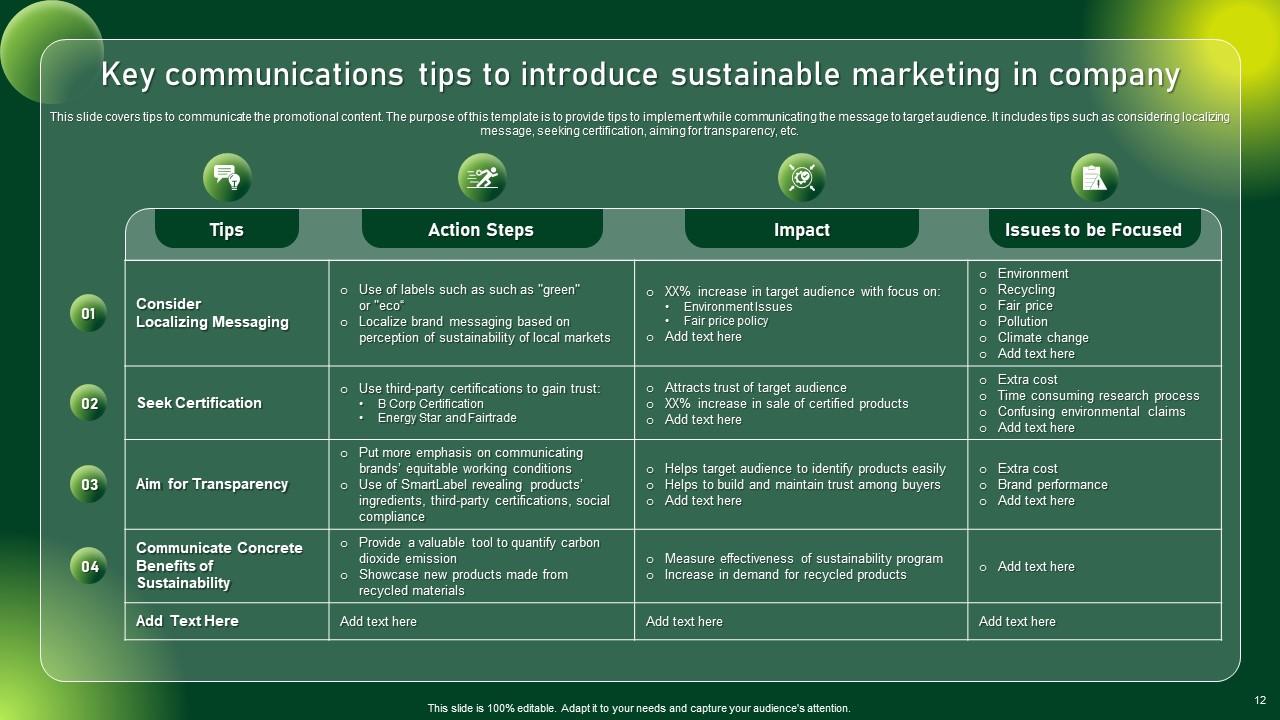
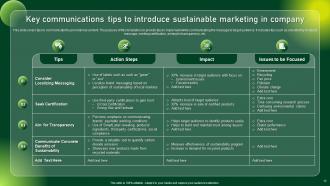
Slide 12: This slide covers tips to communicate the promotional content.
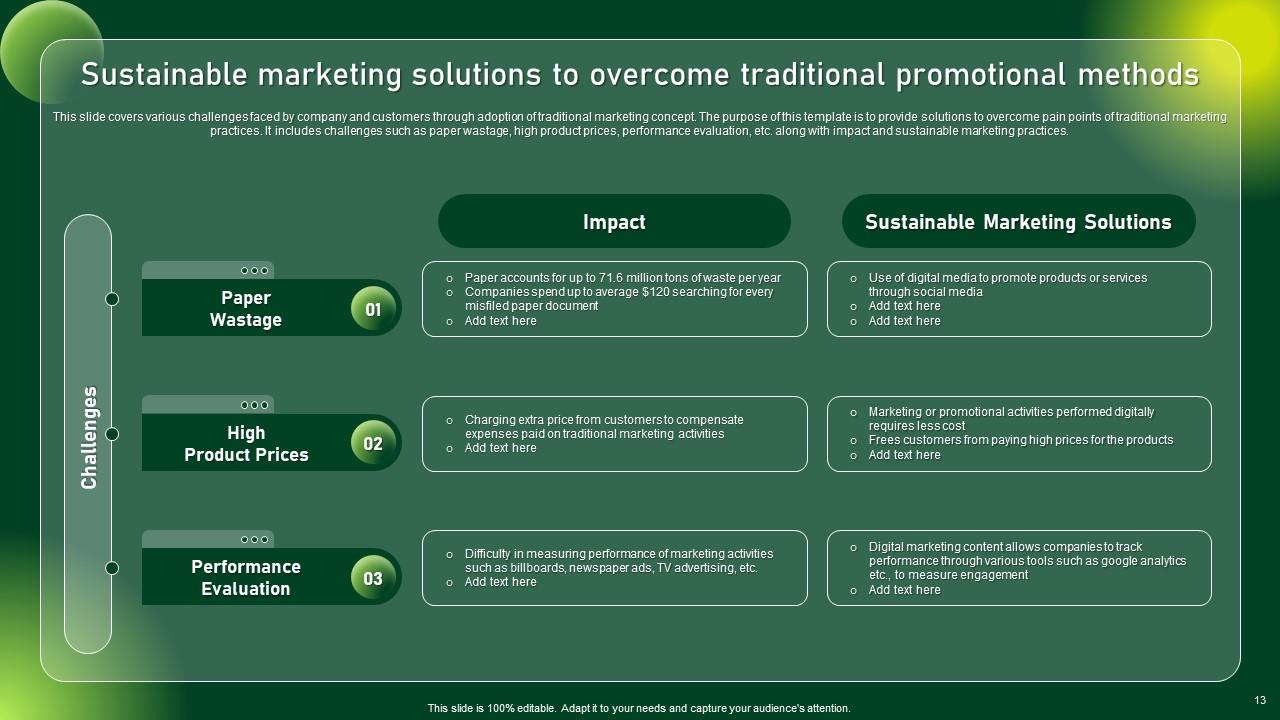
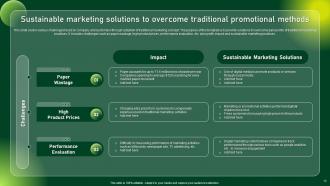
Slide 13: This slide covers various challenges faced by company and customers through adoption of traditional marketing concept.
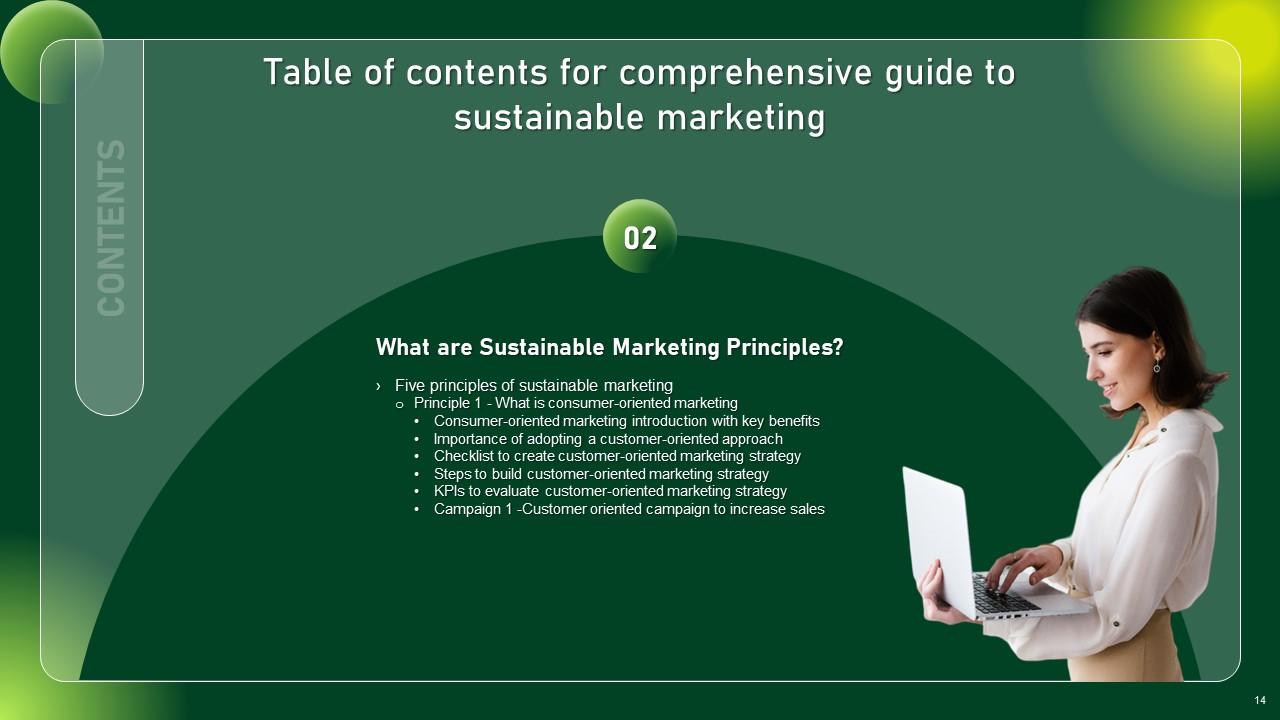
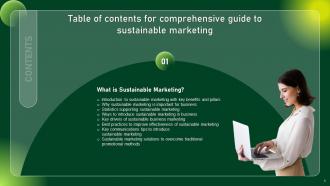
Slide 14: This slide exhibit table of content that is to be discuss further.
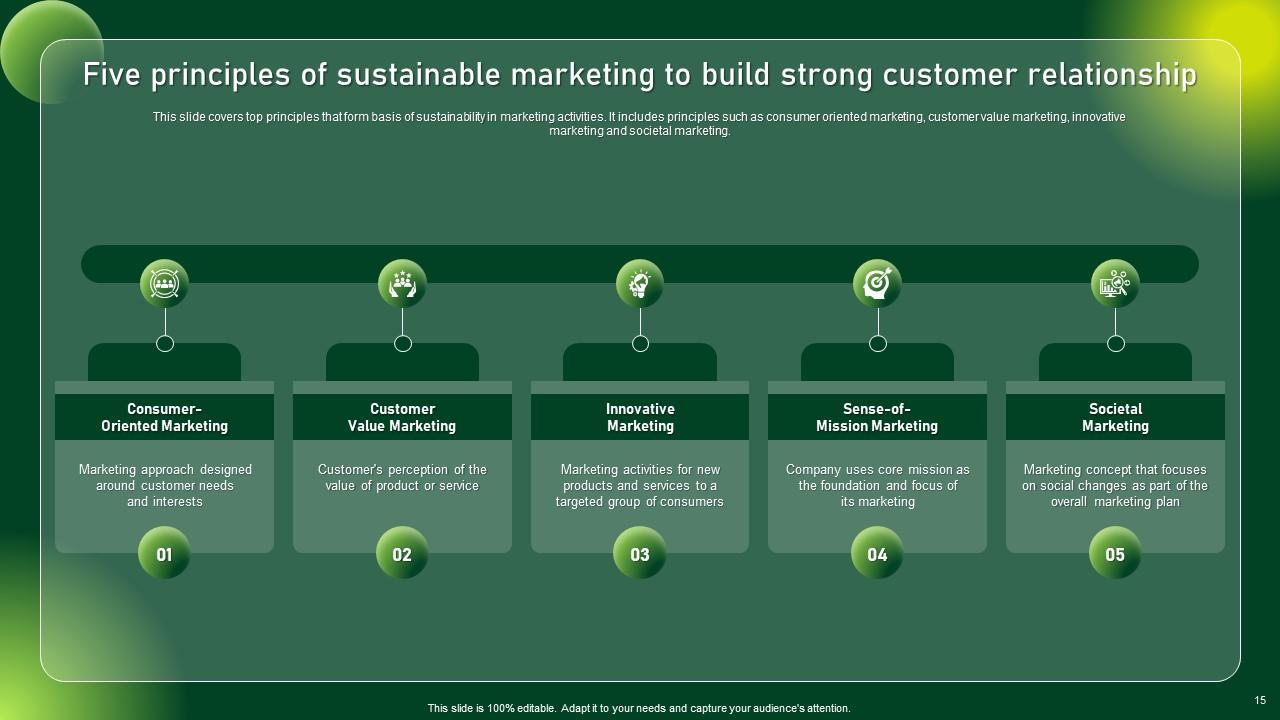
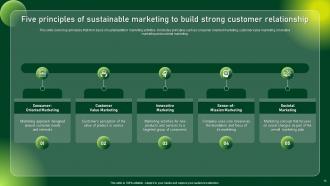
Slide 15: This slide covers top principles that form basis of sustainability in marketing activities.
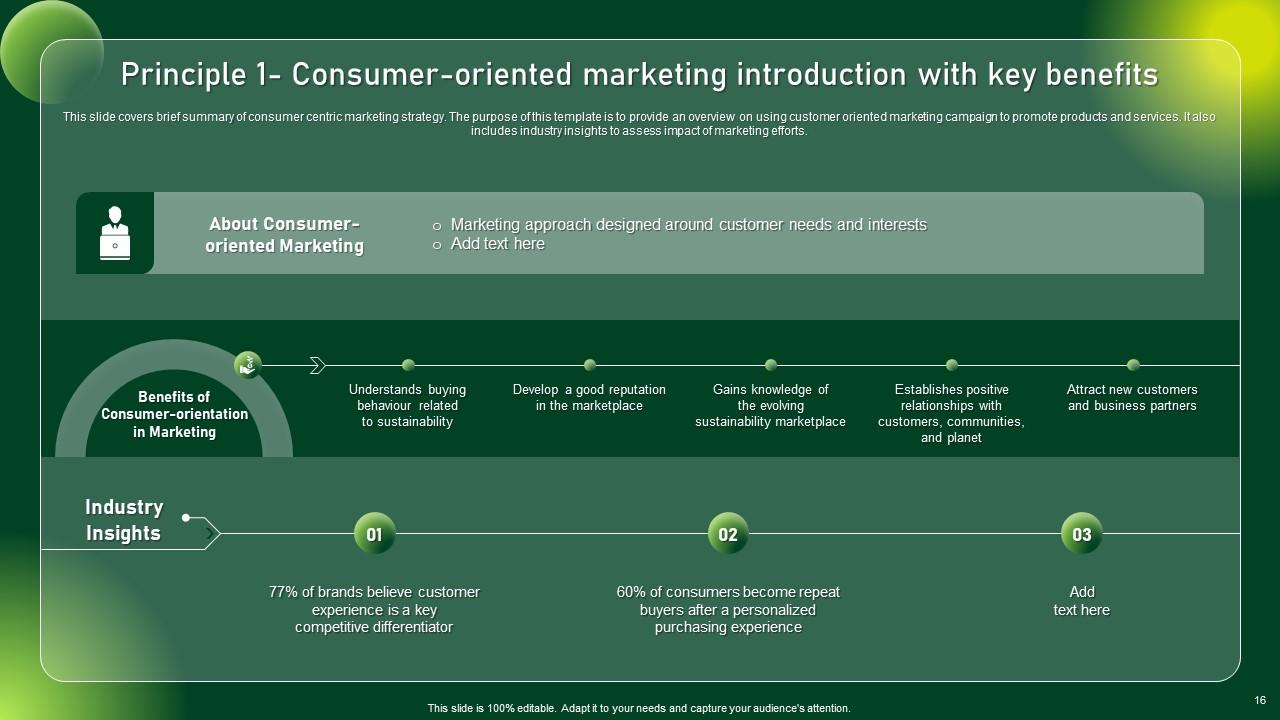
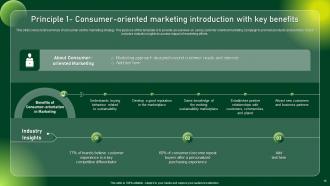
Slide 16: This slide covers brief summary of consumer centric marketing strategy.
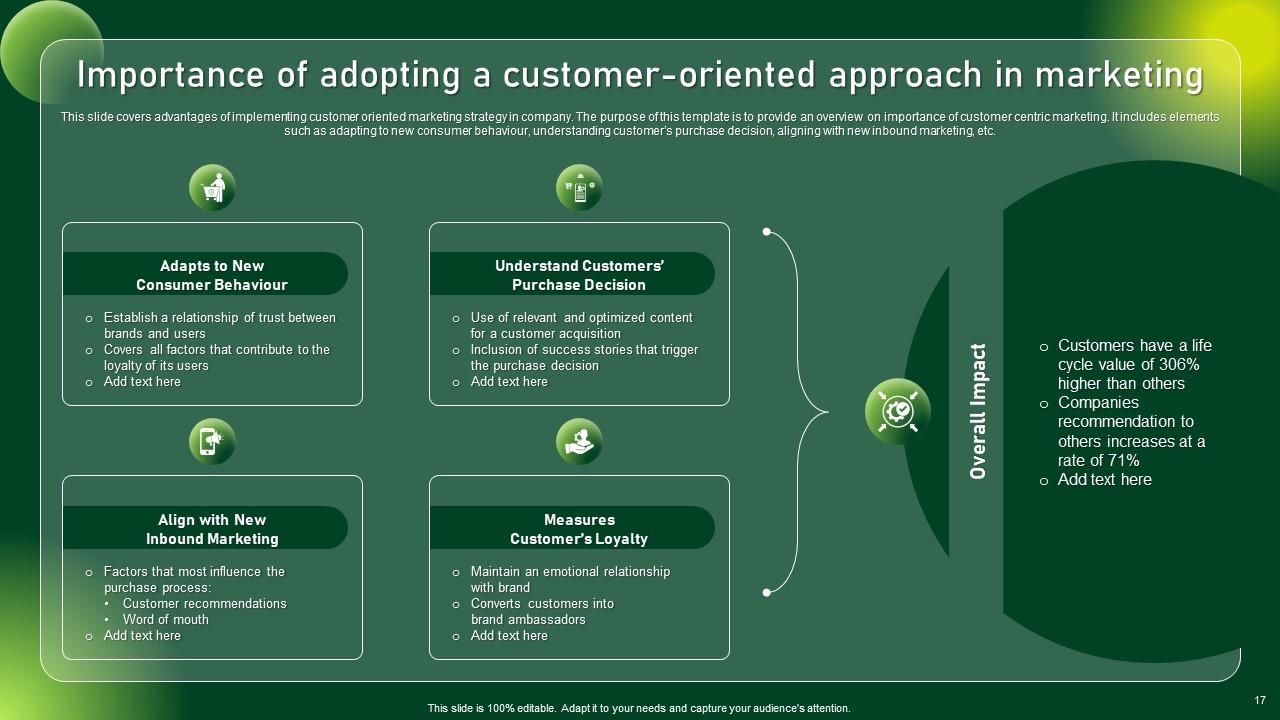
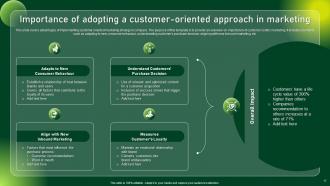
Slide 17: This slide covers advantages of implementing customer oriented marketing strategy in company.
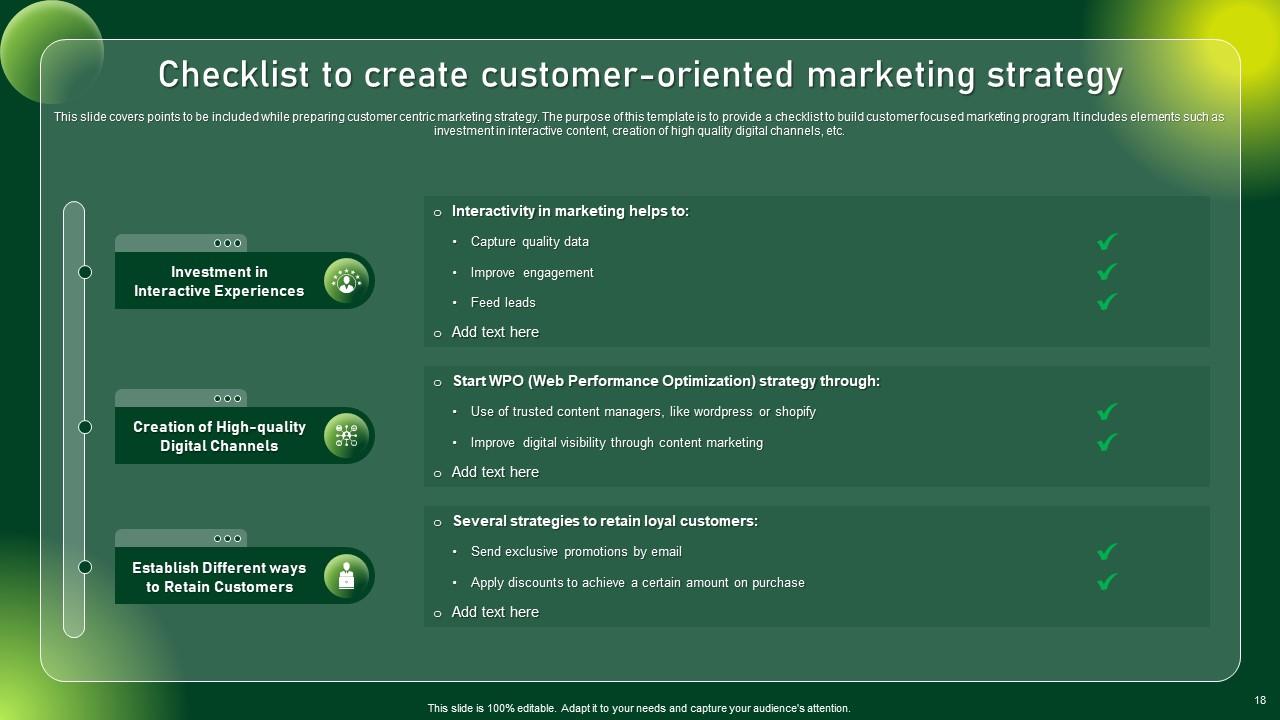
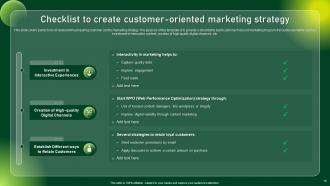
Slide 18: This slide covers points to be included while preparing customer centric marketing strategy.
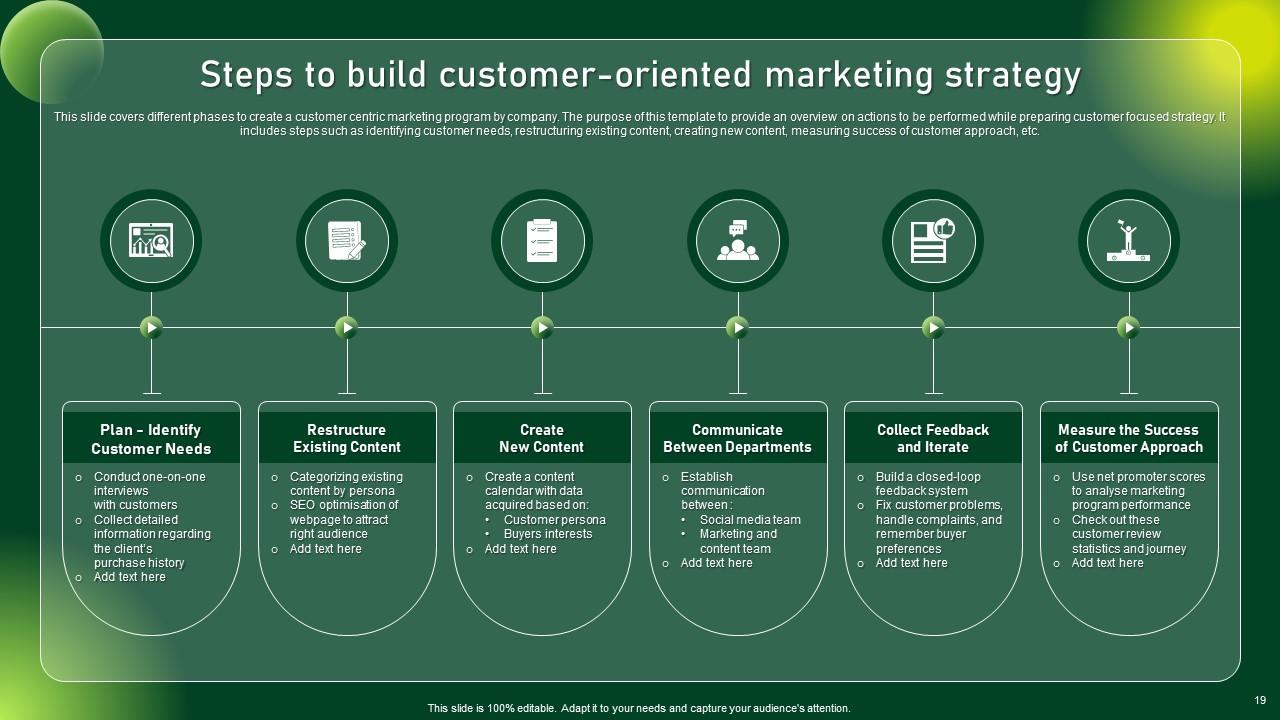
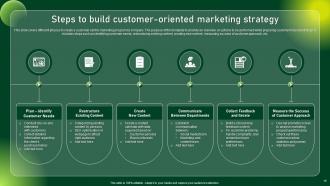
Slide 19: This slide covers different phases to create a customer centric marketing program by company.
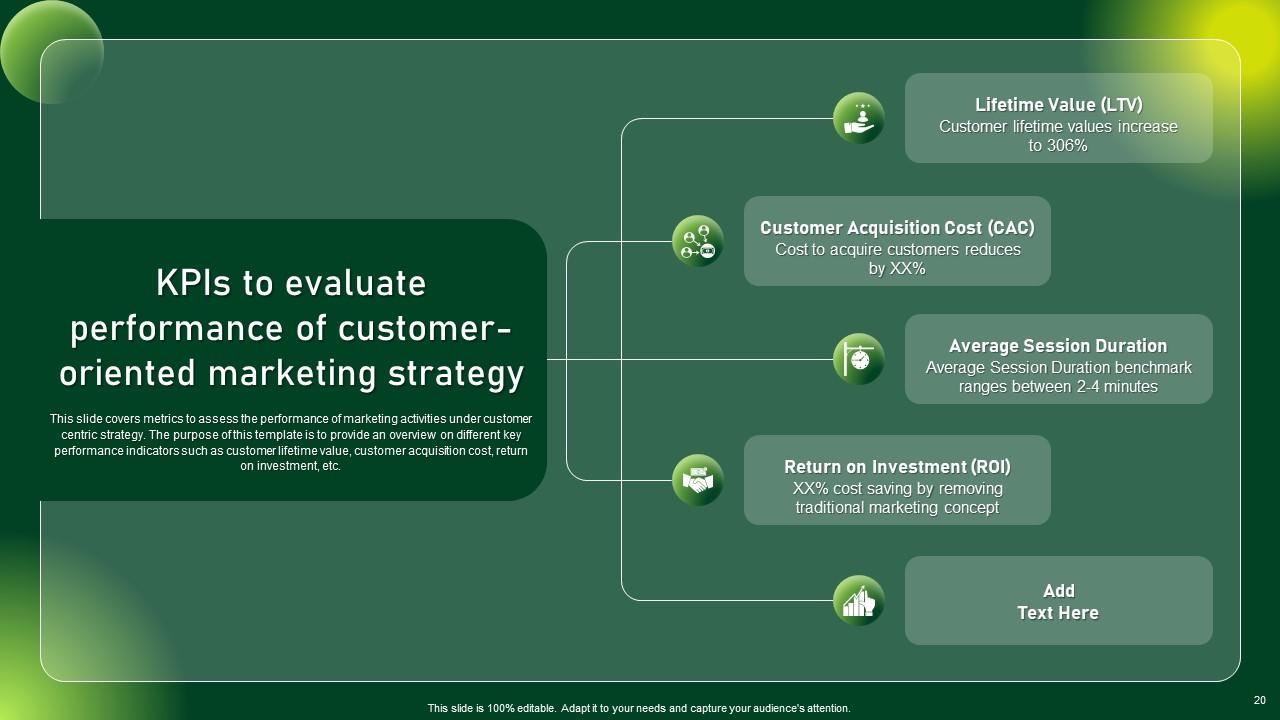
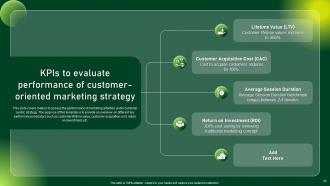
Slide 20: This slide covers metrics to assess the performance of marketing activities under customer centric strategy.
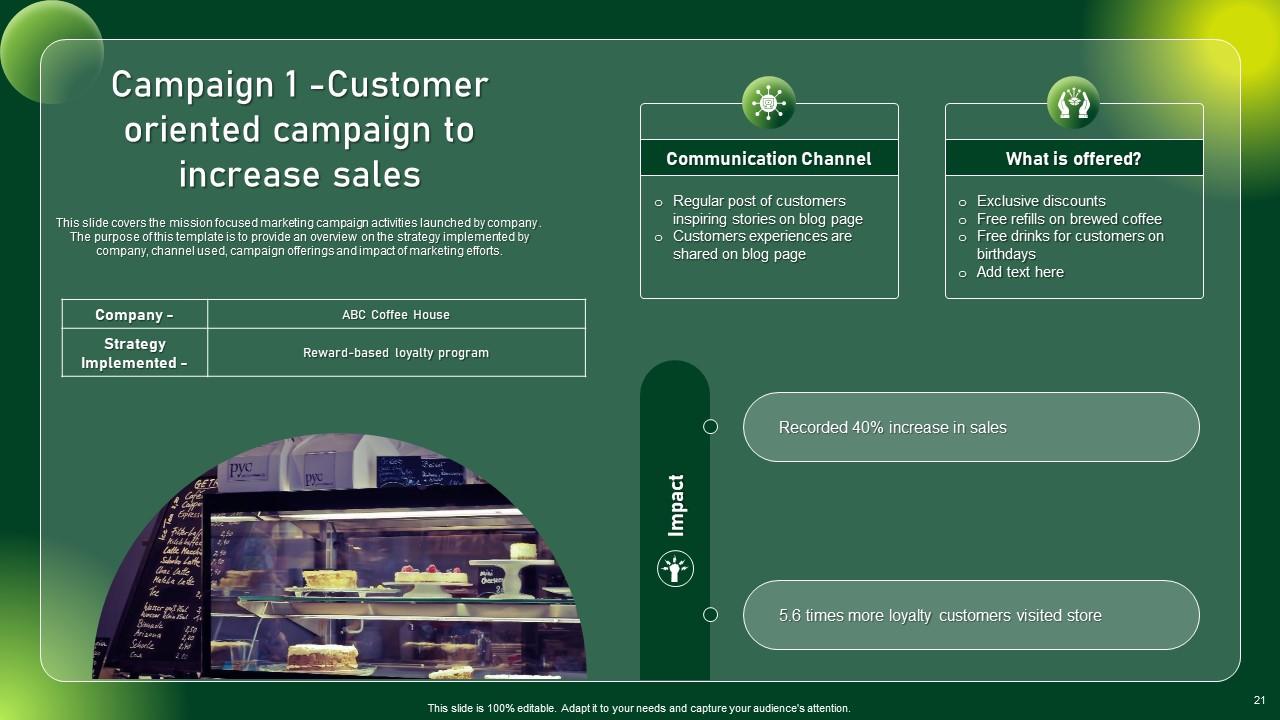
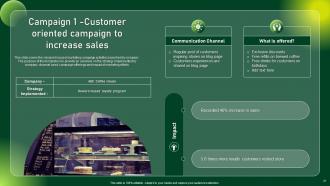
Slide 21: This slide covers the mission focused marketing campaign activities launched by company.
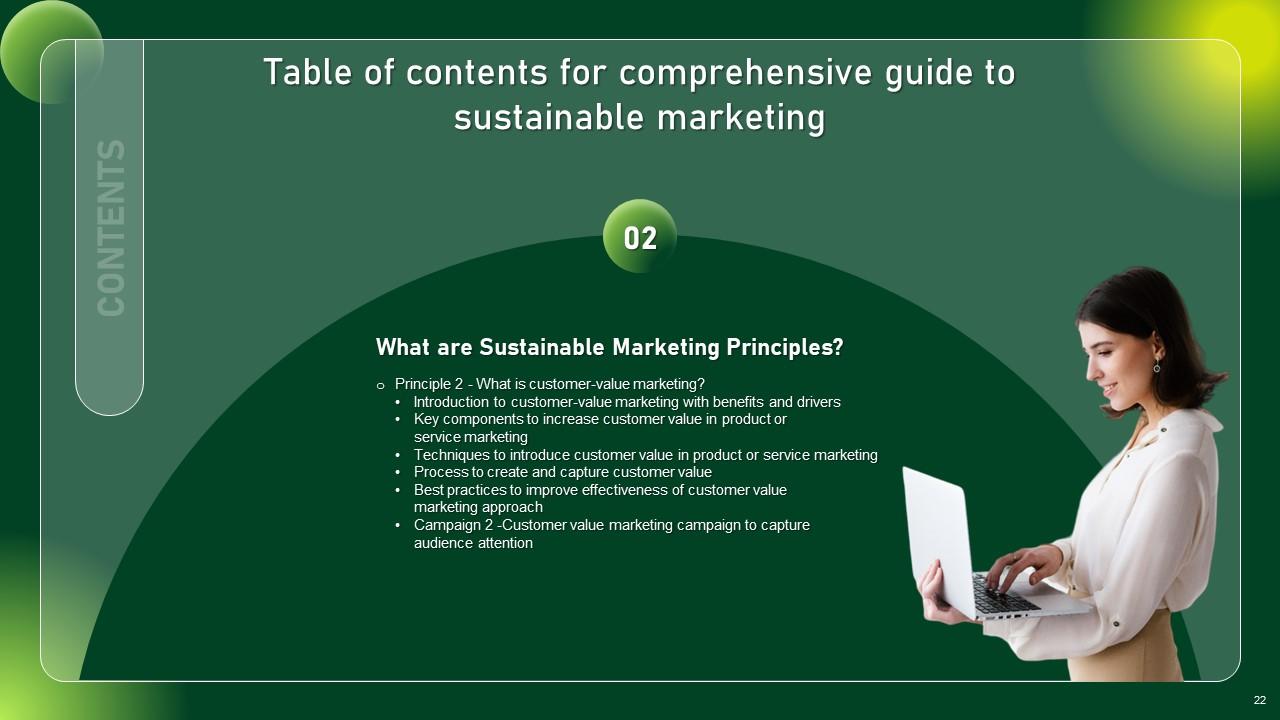
Slide 22: This slide exhibit table of content that is to be discuss further.
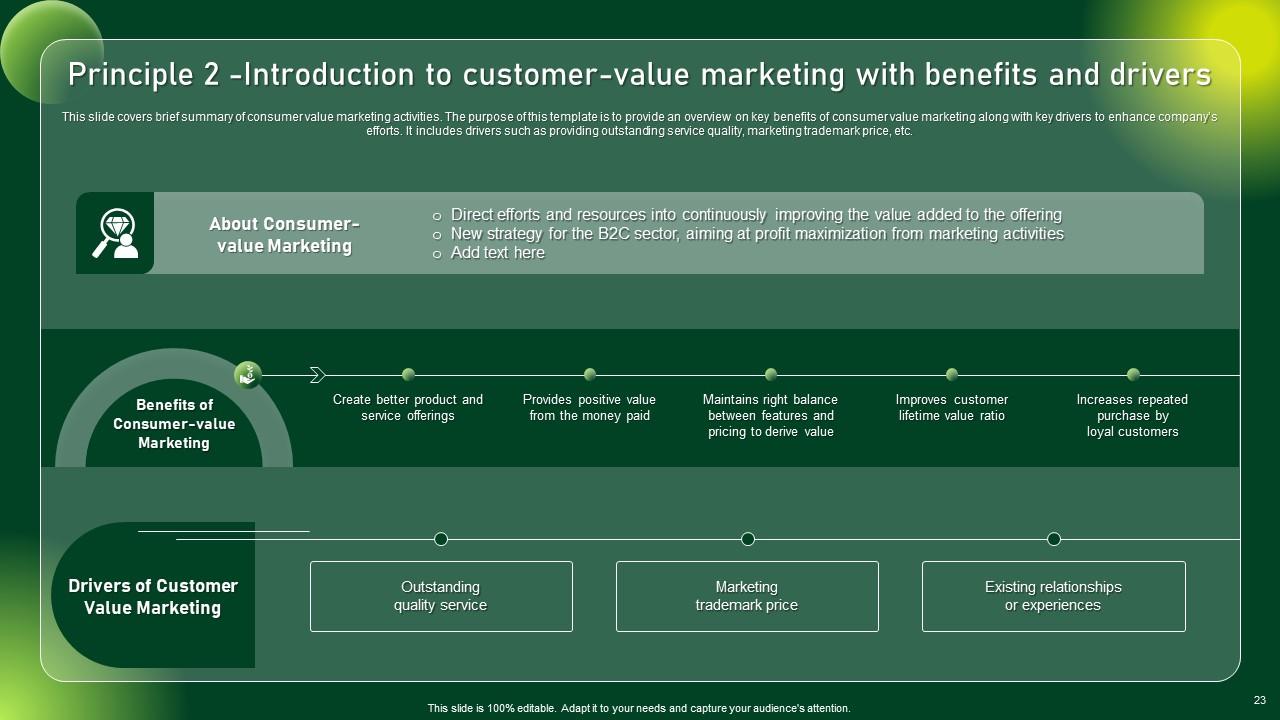
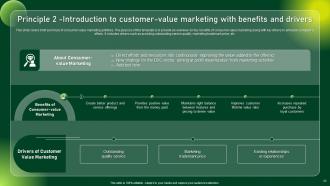
Slide 23: This slide covers brief summary of consumer value marketing activities.
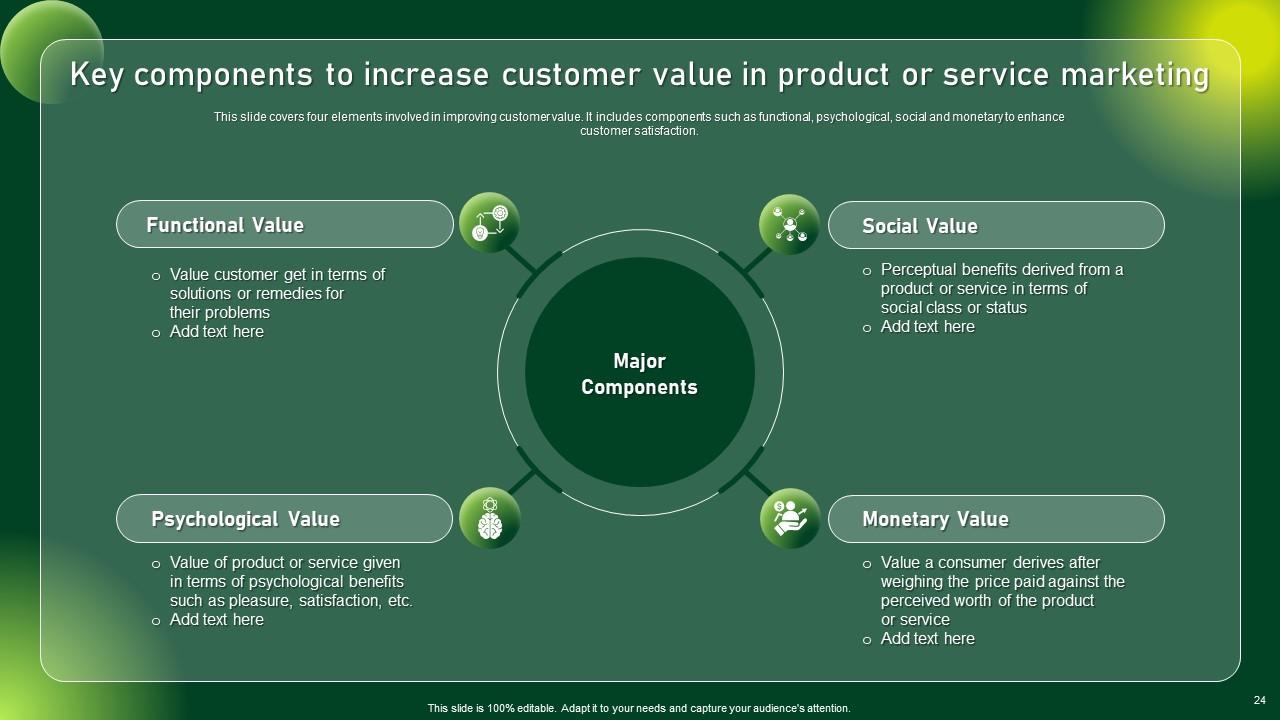
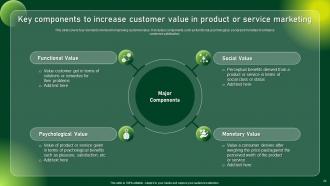
Slide 24: This slide covers four elements involved in improving customer value.
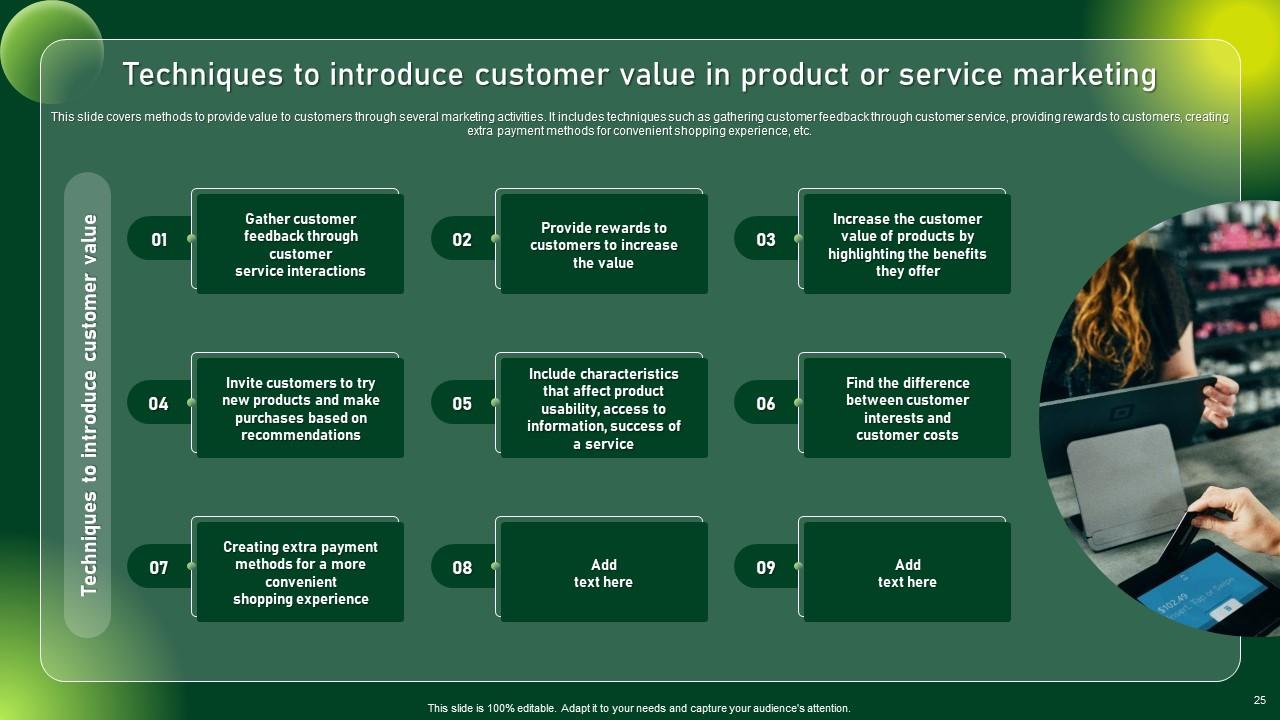
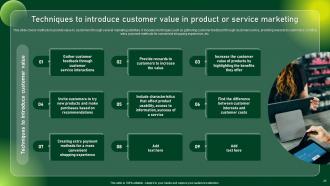
Slide 25: This slide covers methods to provide value to customers through several marketing activities.
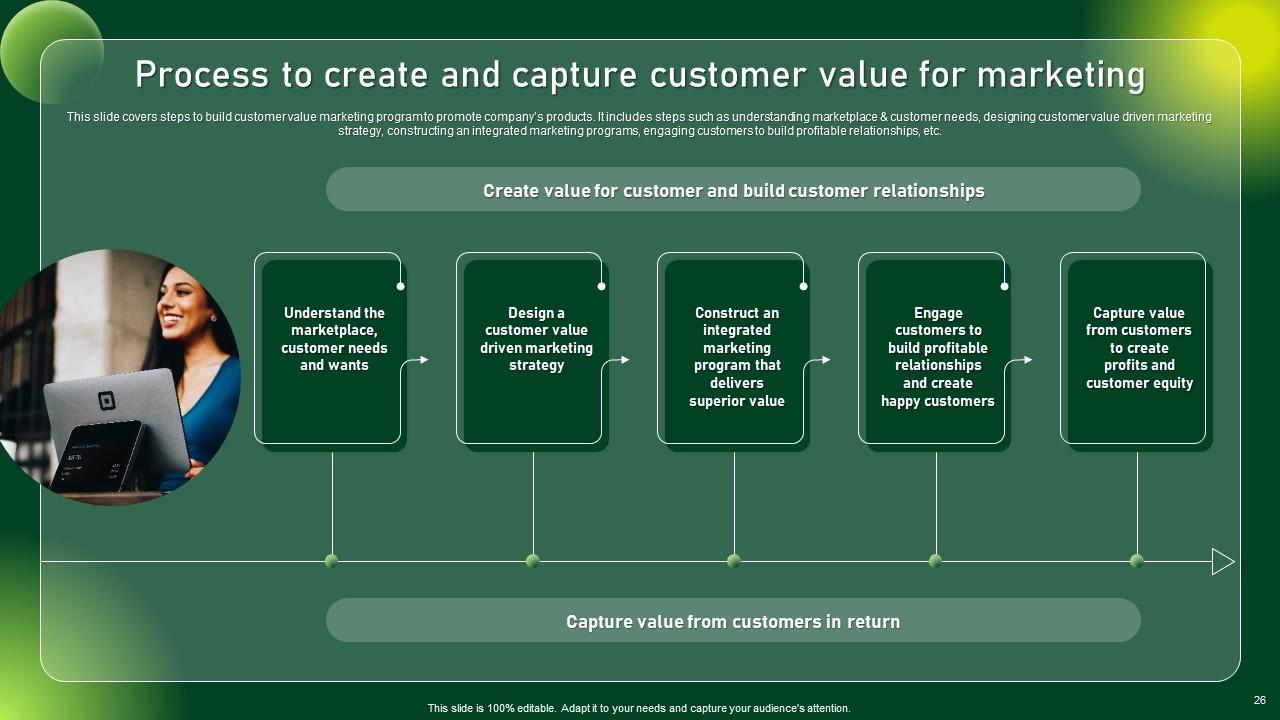
Slide 26: This slide covers steps to build customer value marketing program to promote company’s products.
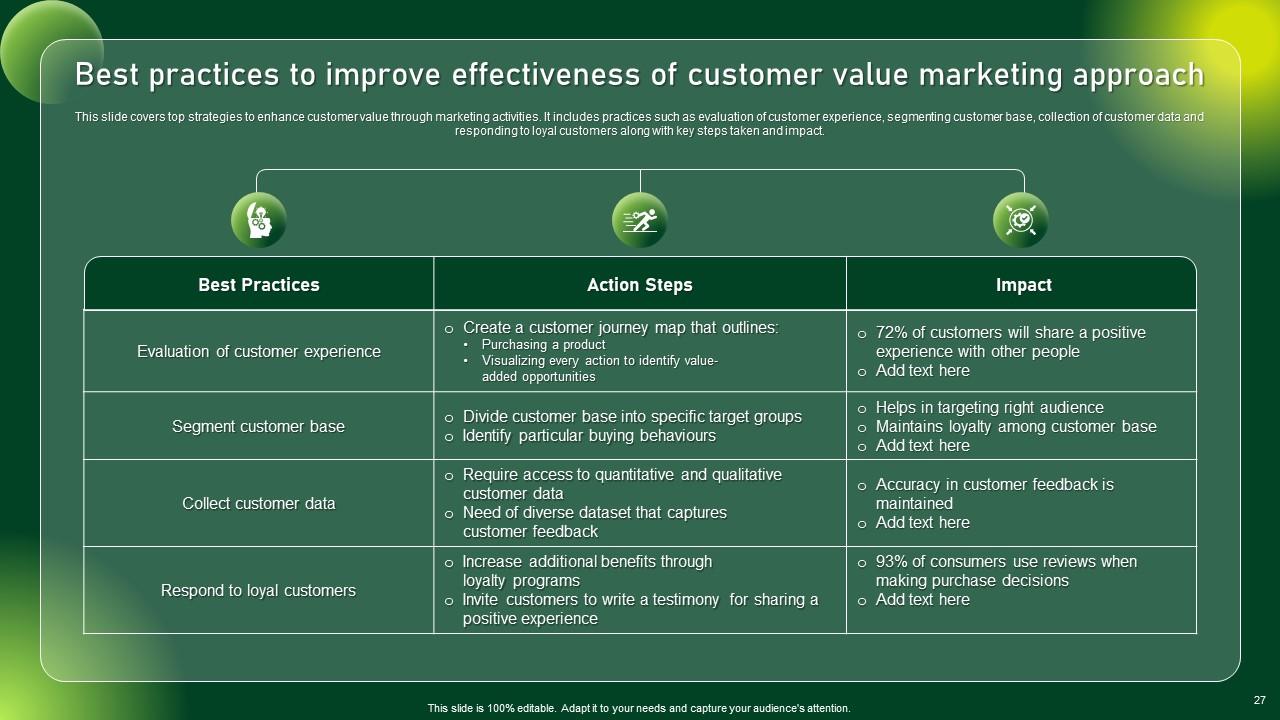
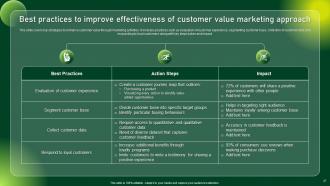
Slide 27: This slide covers top strategies to enhance customer value through marketing activities.
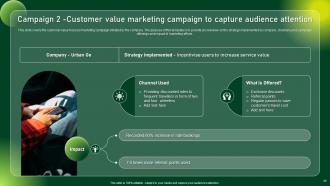
Slide 28: This slide covers the customer value focused marketing campaign initiated by the company.
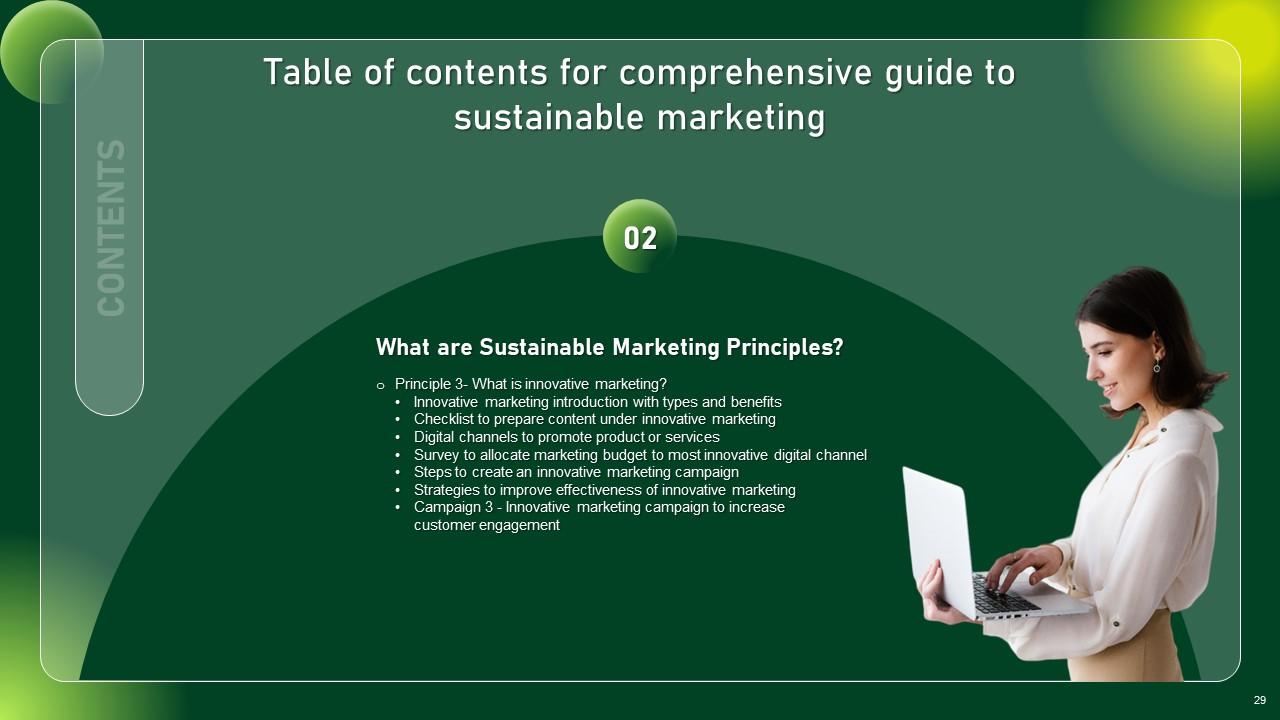
Slide 29: This slide exhibit table of content that is to be discuss further.
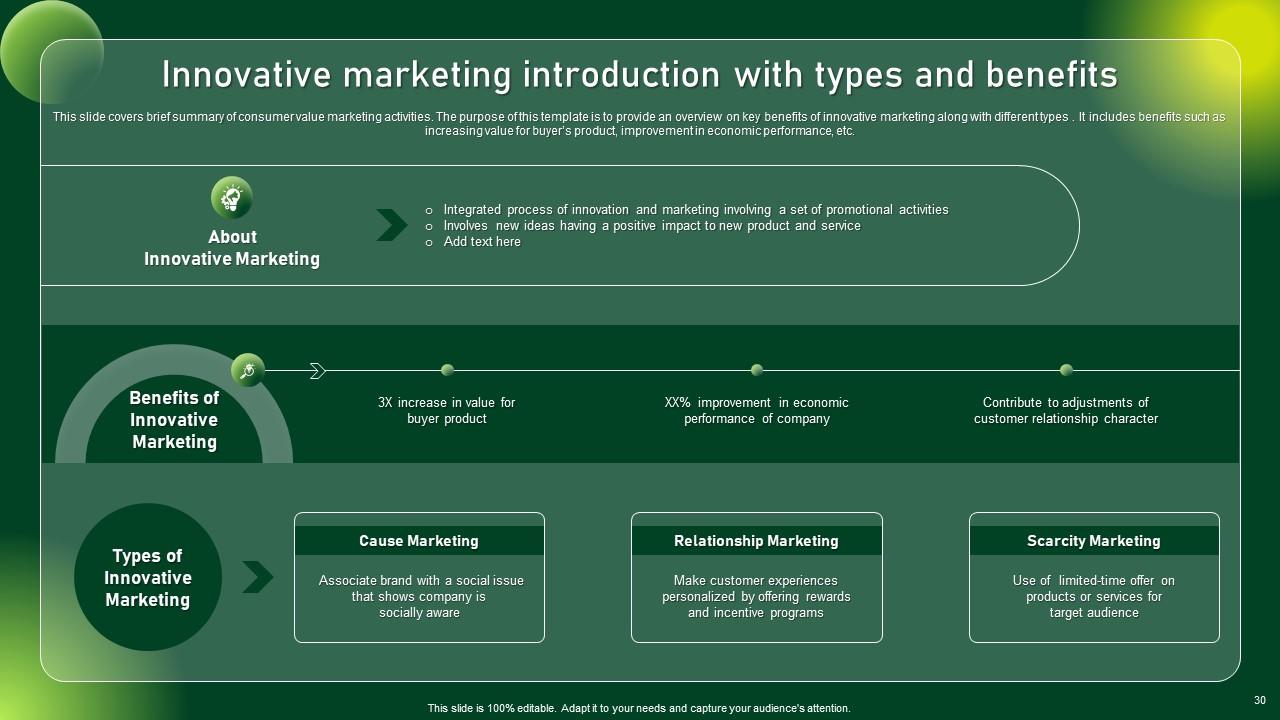
Slide 30: This slide covers brief summary of consumer value marketing activities.
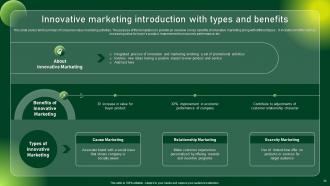
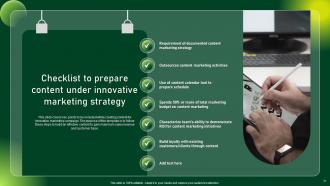
Slide 31: This slide covers key points to be included while creating content for innovative marketing campaign.
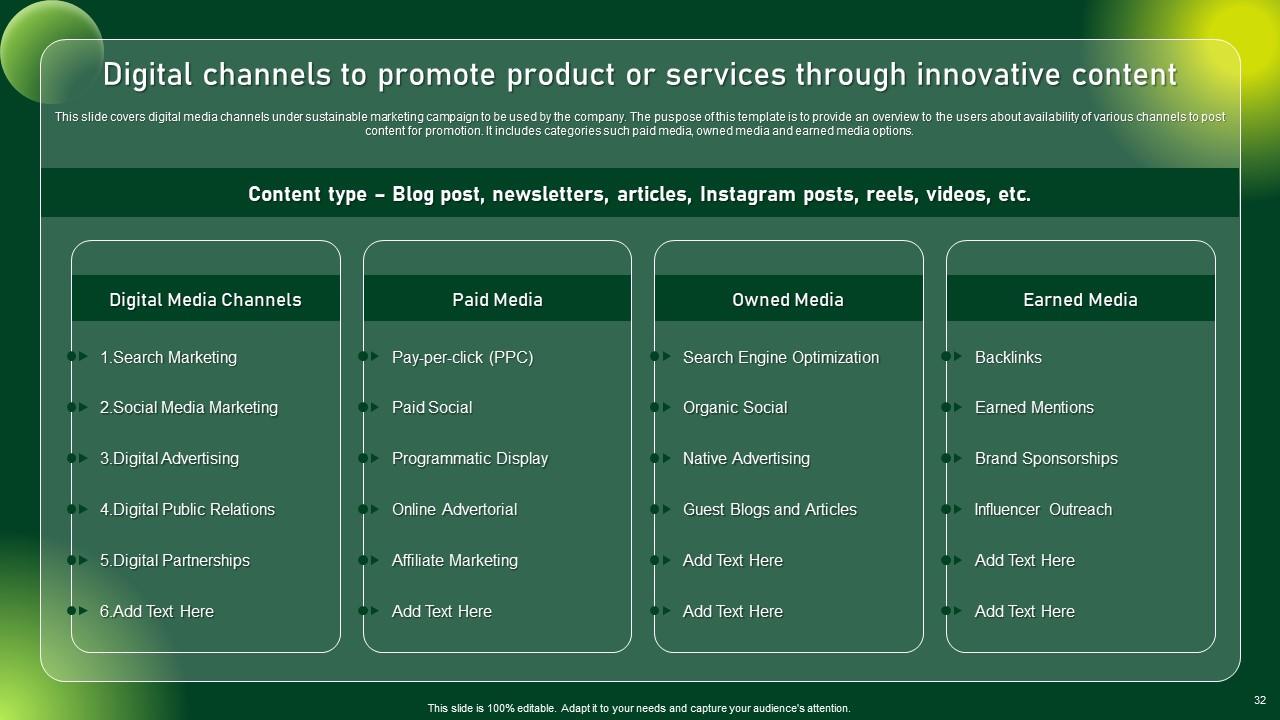
Slide 32: This slide covers digital media channels under sustainable marketing campaign to be used by the company.
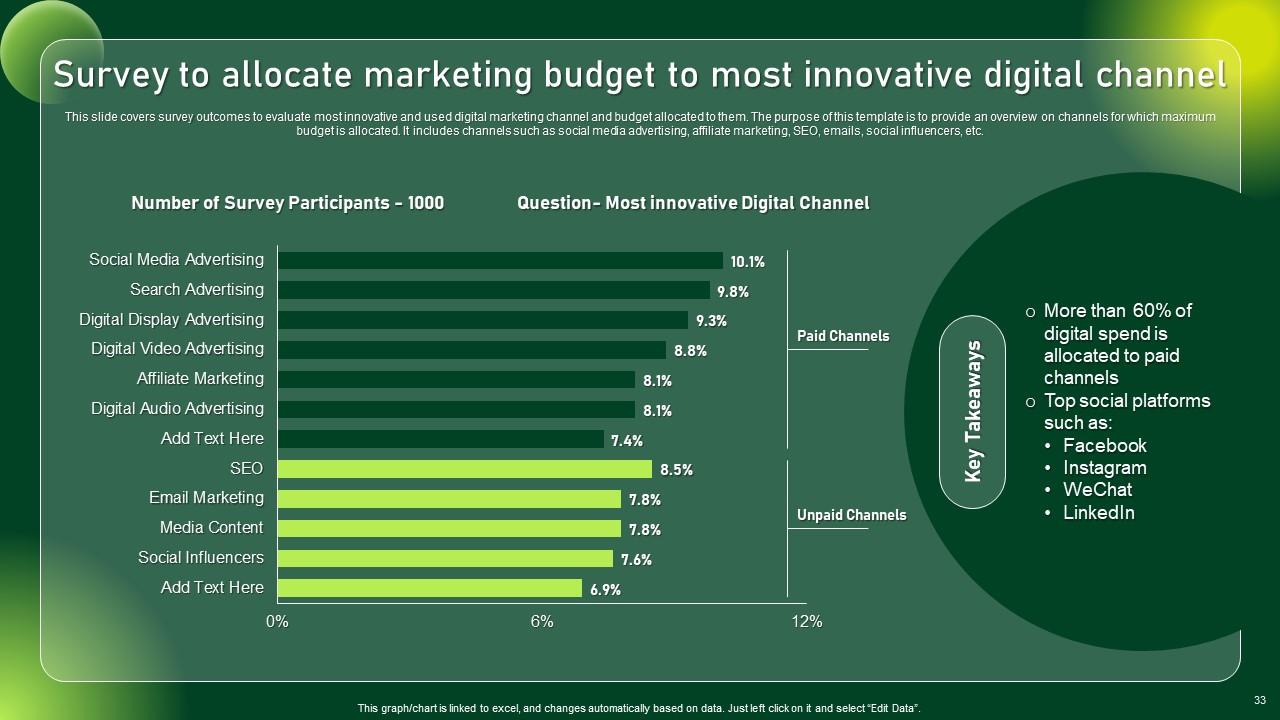
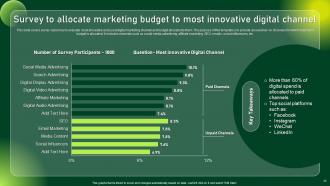
Slide 33: This slide covers survey outcomes to evaluate most innovative and used digital marketing channel and budget allocated to them.
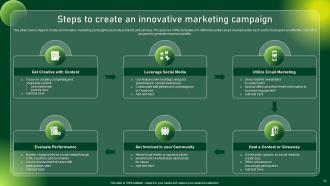
Slide 34: This slide covers steps to create an innovative marketing campaign to promote products and services.
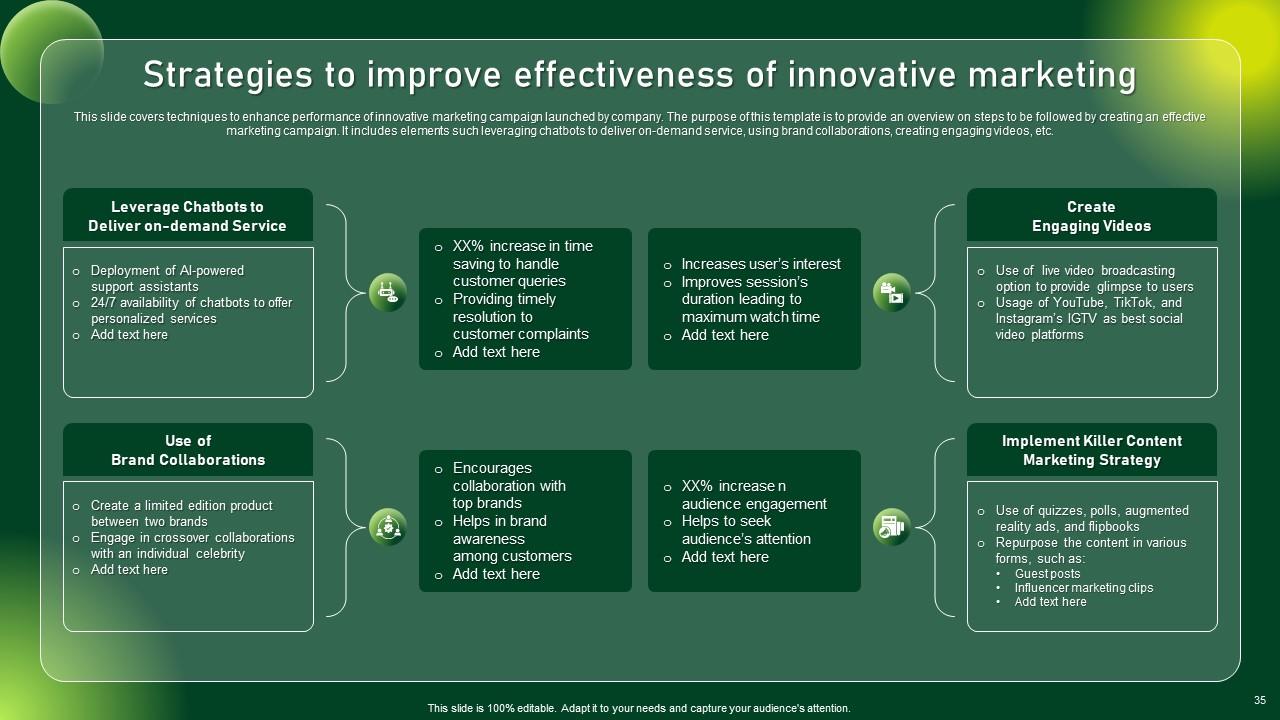
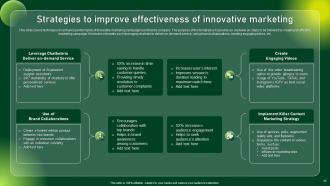
Slide 35: This slide covers techniques to enhance performance of innovative marketing campaign launched by company.
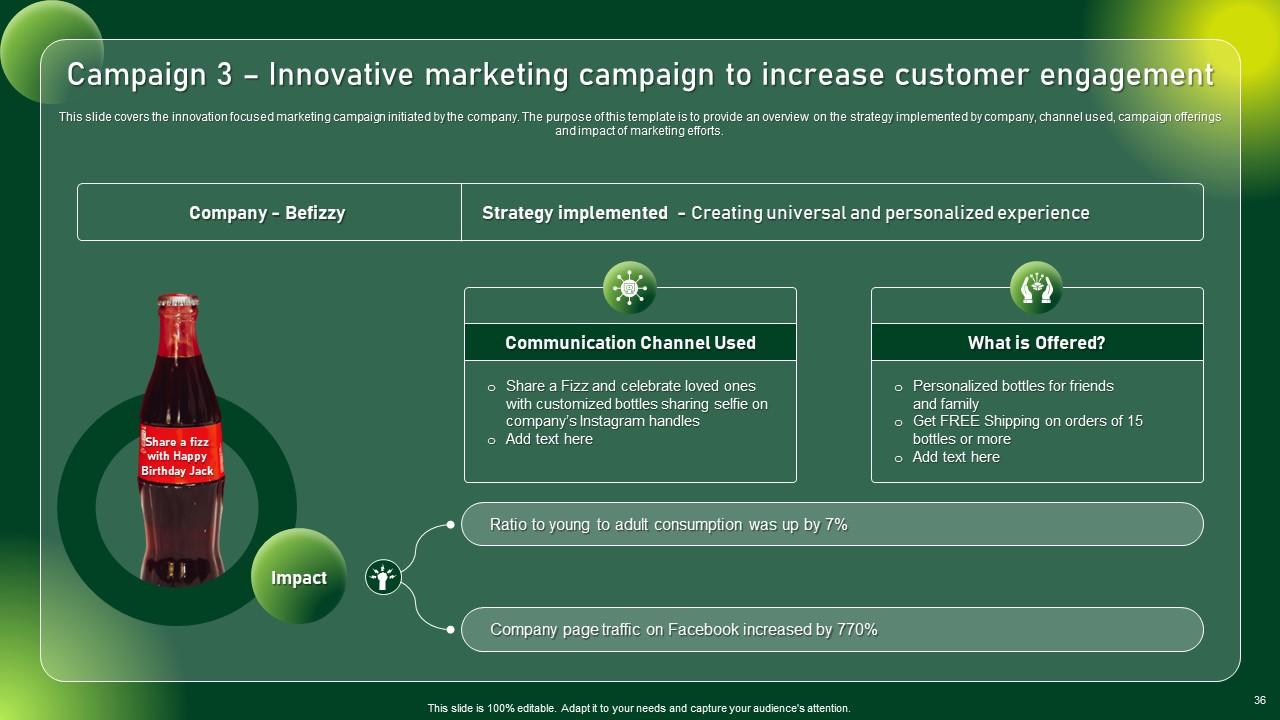
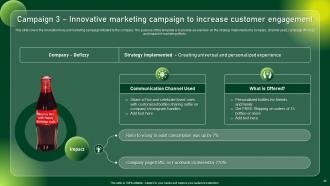
Slide 36: This slide covers the innovation focused marketing campaign initiated by the company.
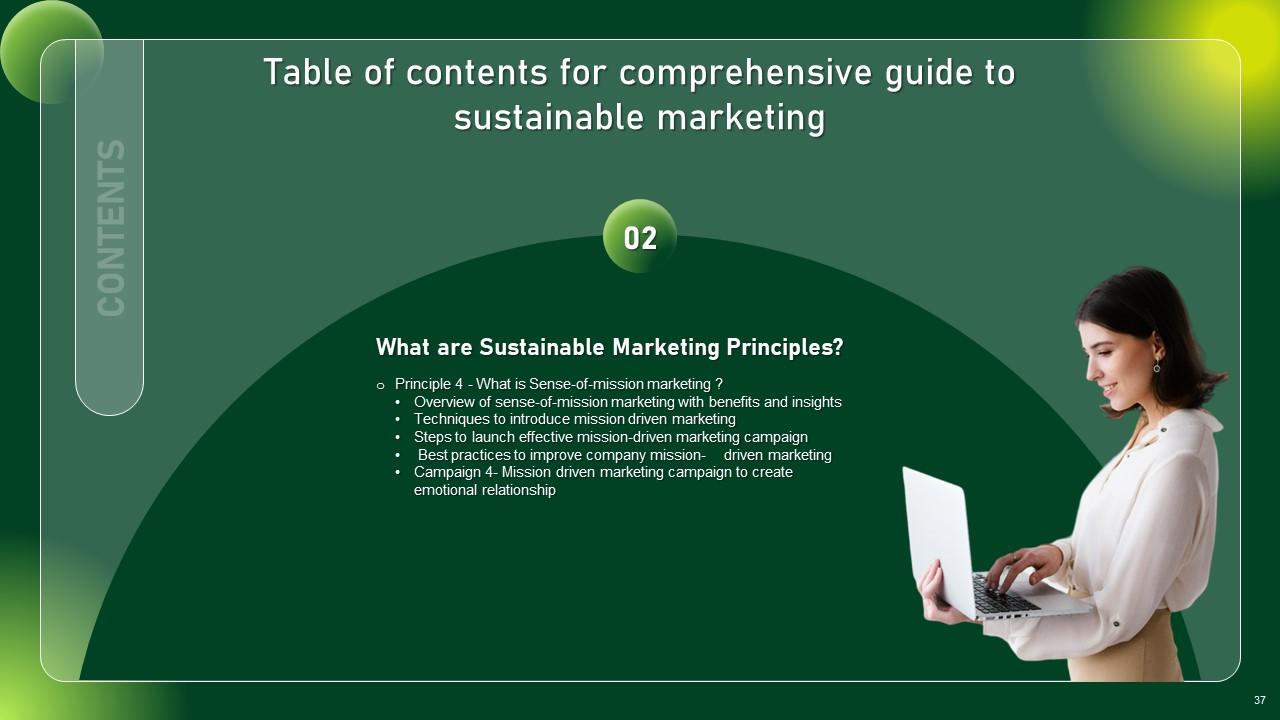
Slide 37: This slide exhibit table of content that is to be discuss further.
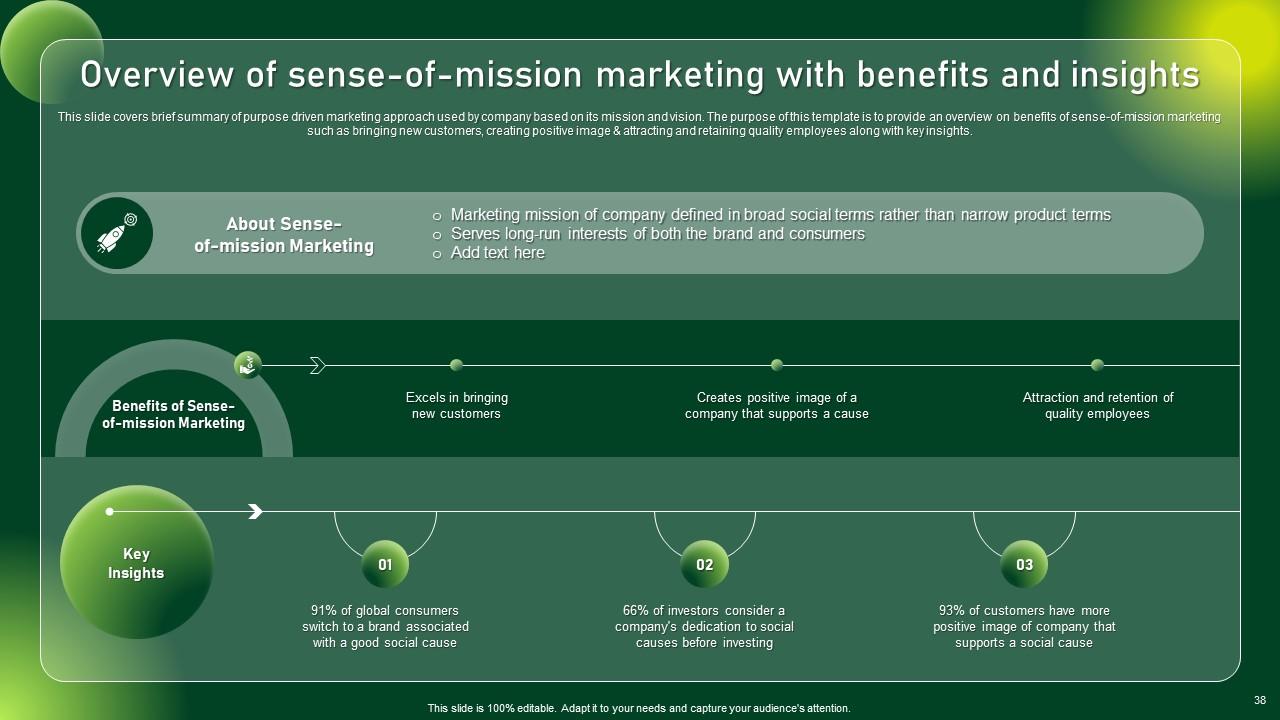
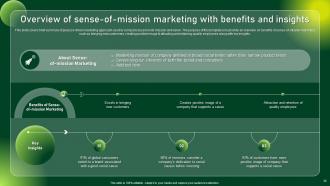
Slide 38: This slide covers brief summary of purpose driven marketing approach used by company based on its mission and vision.
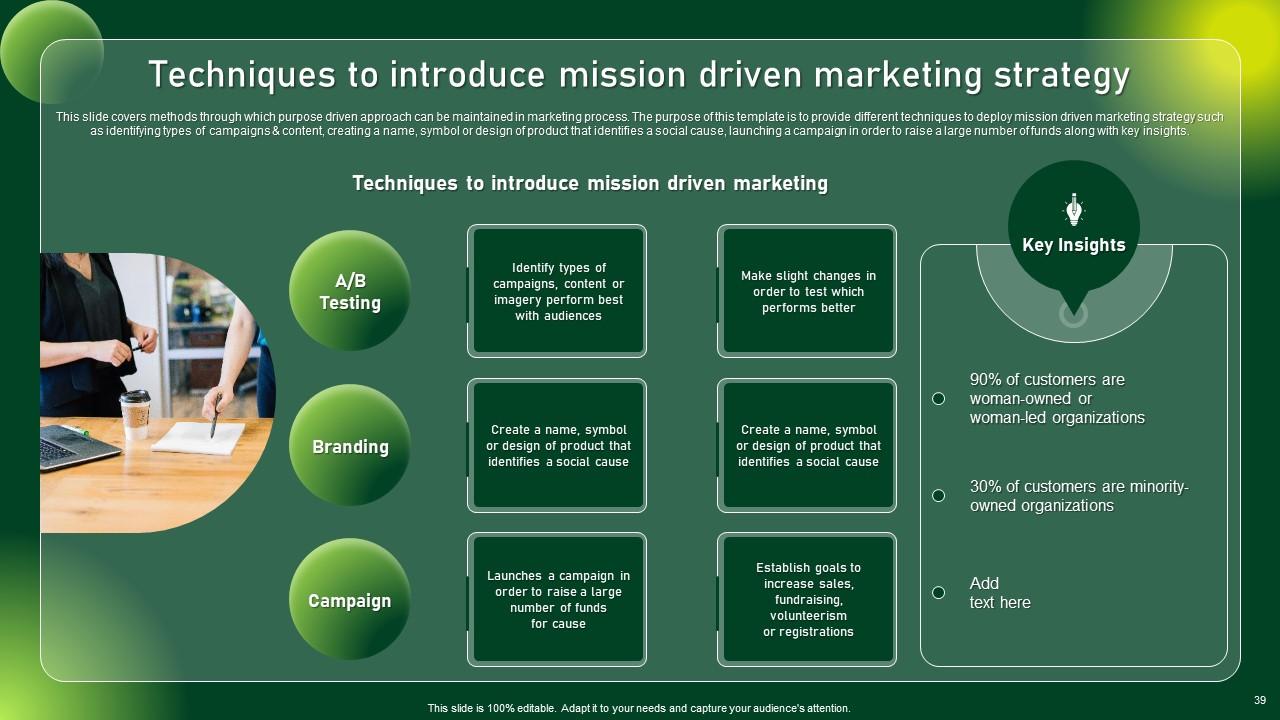
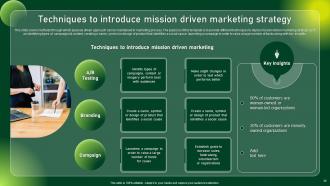
Slide 39: This slide covers methods through which purpose driven approach can be maintained in marketing process.
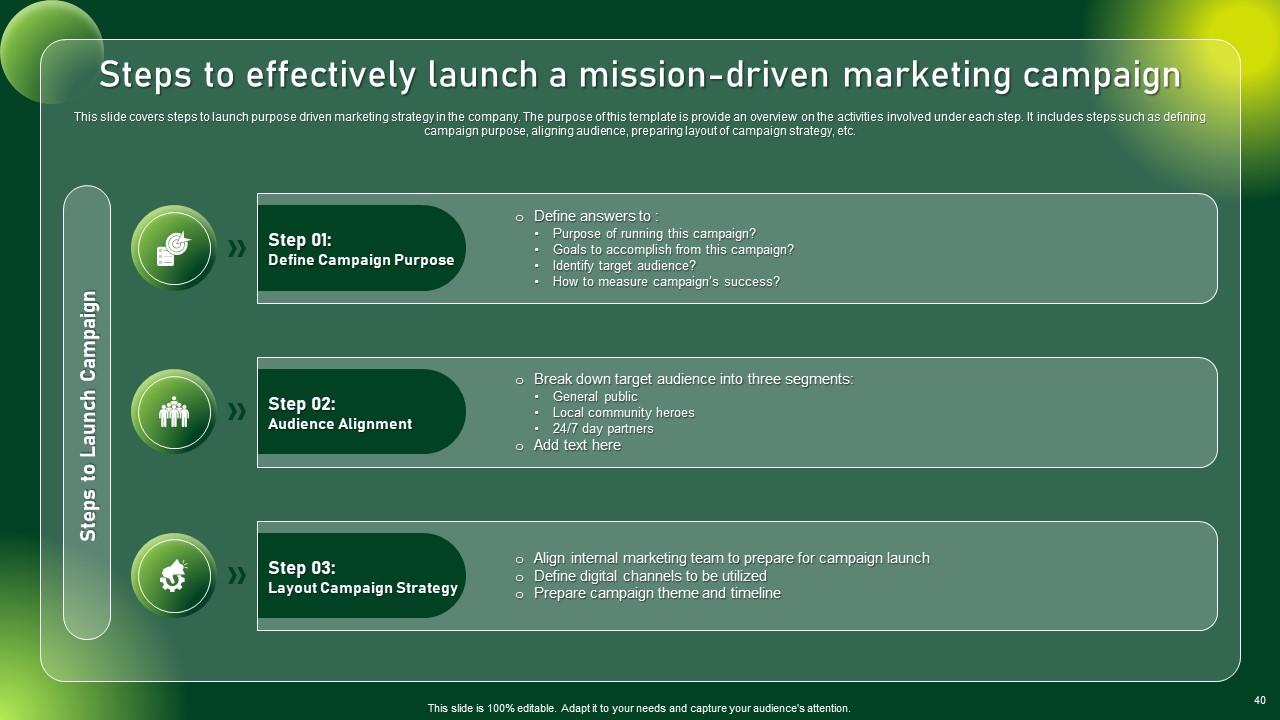
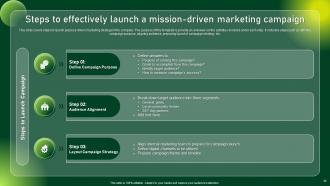
Slide 40: This slide covers steps to launch purpose driven marketing strategy in the company.
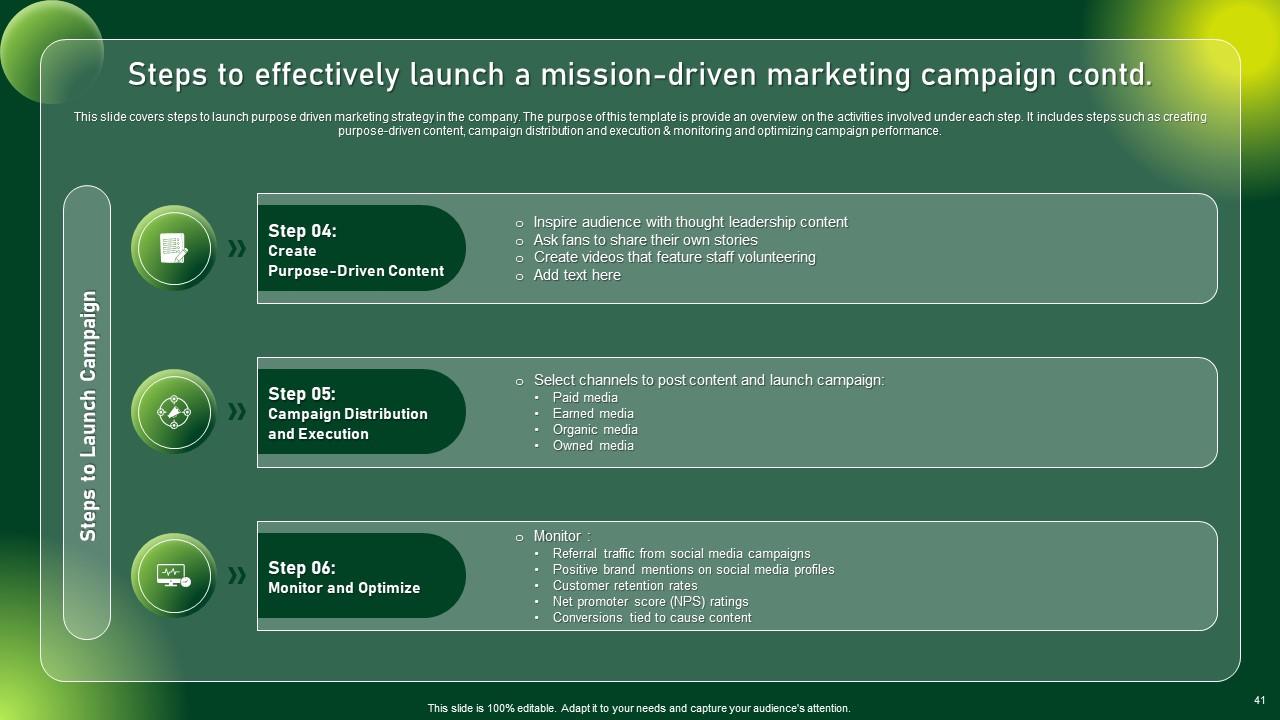
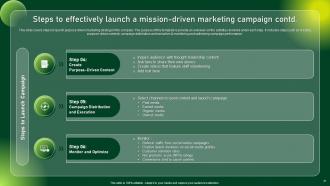
Slide 41: This slide covers steps to launch purpose driven marketing strategy in the company.
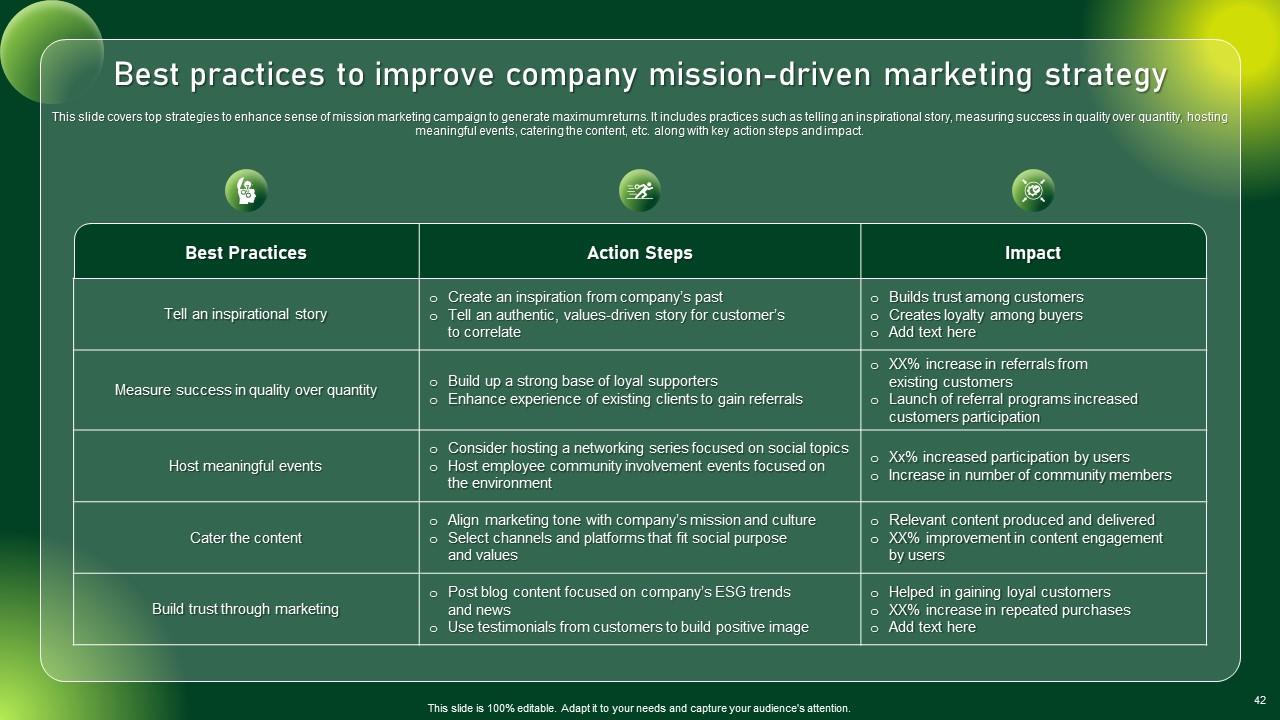
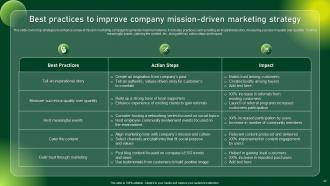
Slide 42: This slide covers top strategies to enhance sense of mission marketing campaign to generate maximum returns.
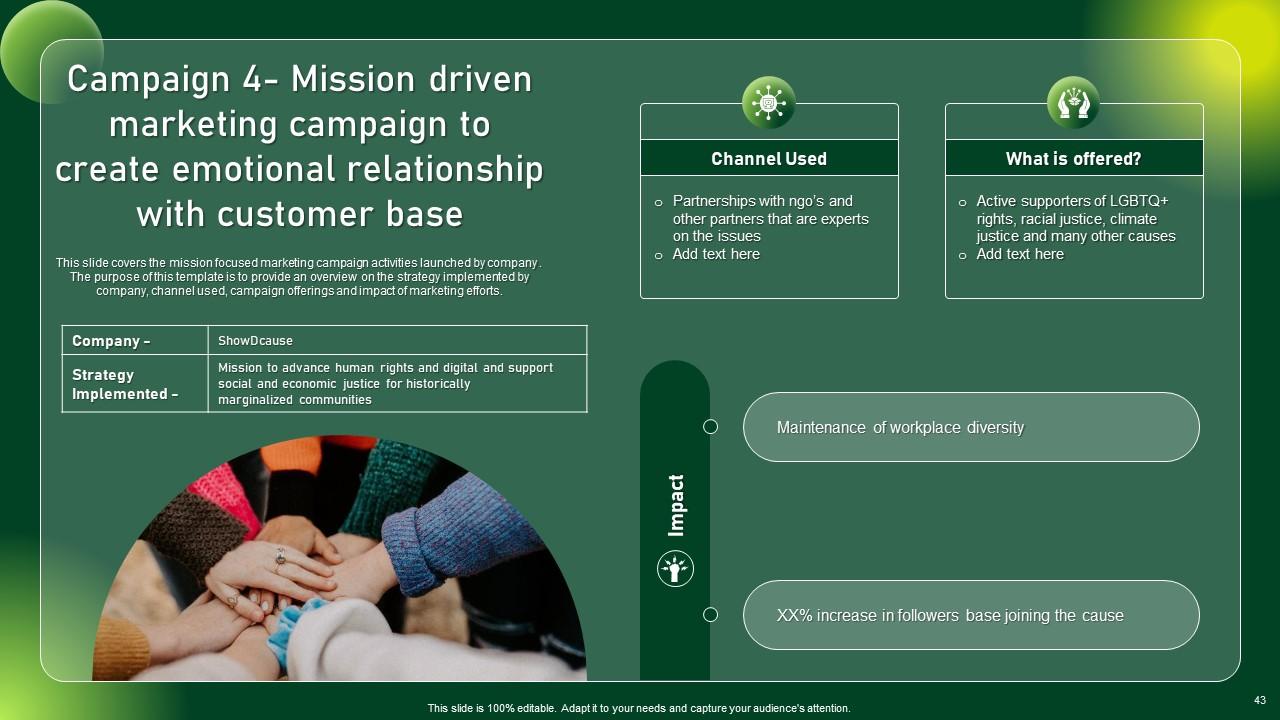
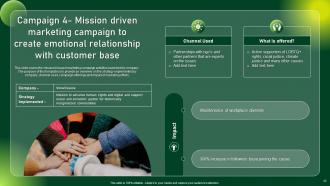
Slide 43: This slide covers the mission focused marketing campaign activities launched by company.
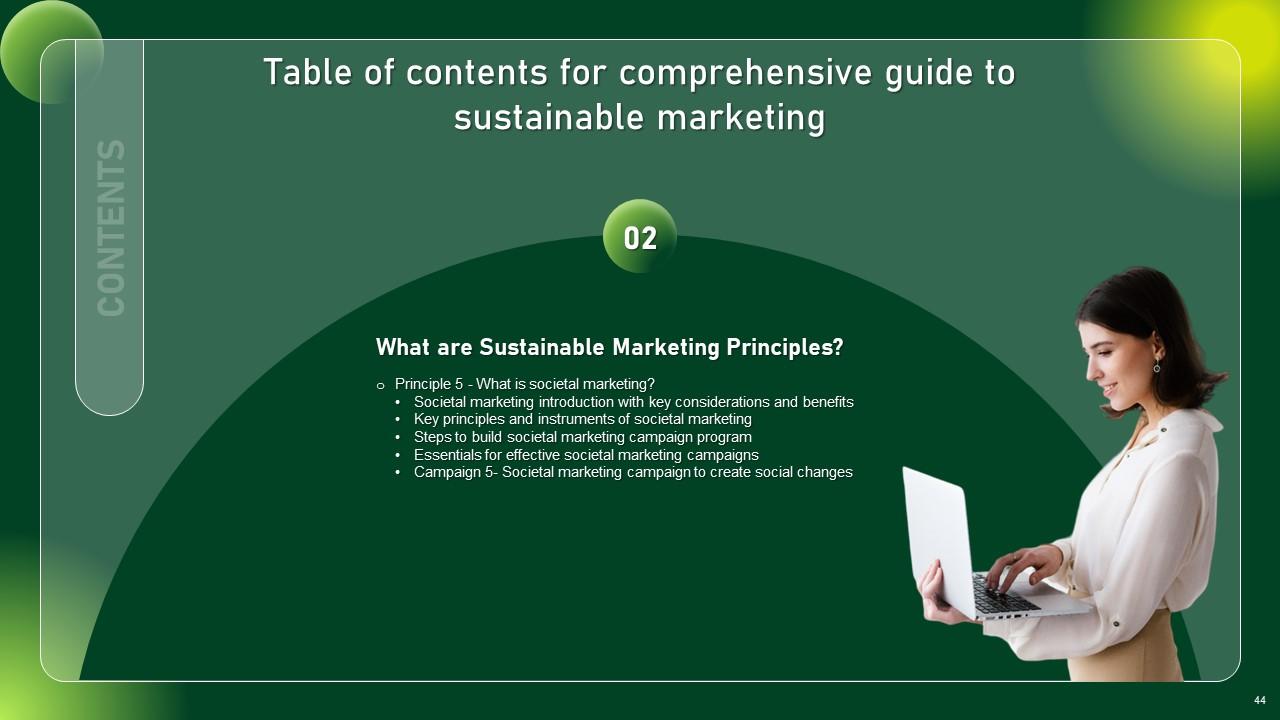
Slide 44: This slide exhibit table of content that is to be discuss further.
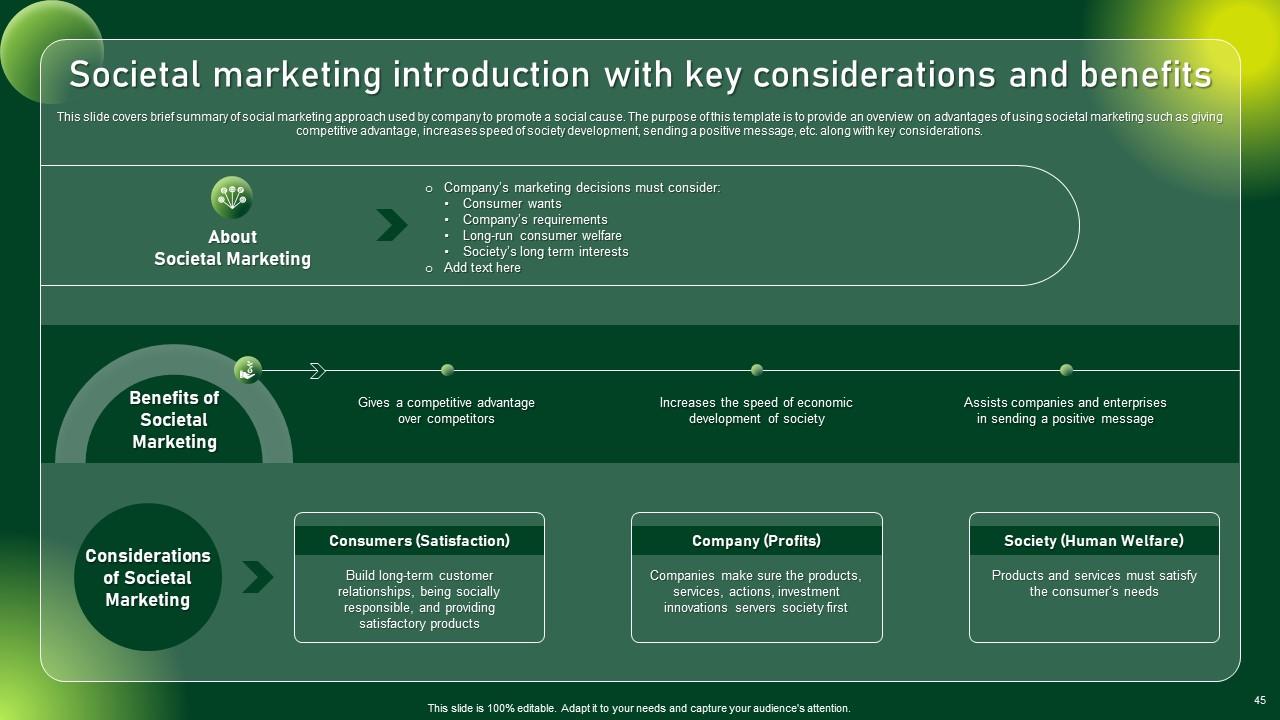
Slide 45: This slide covers brief summary of social marketing approach used by company to promote a social cause.
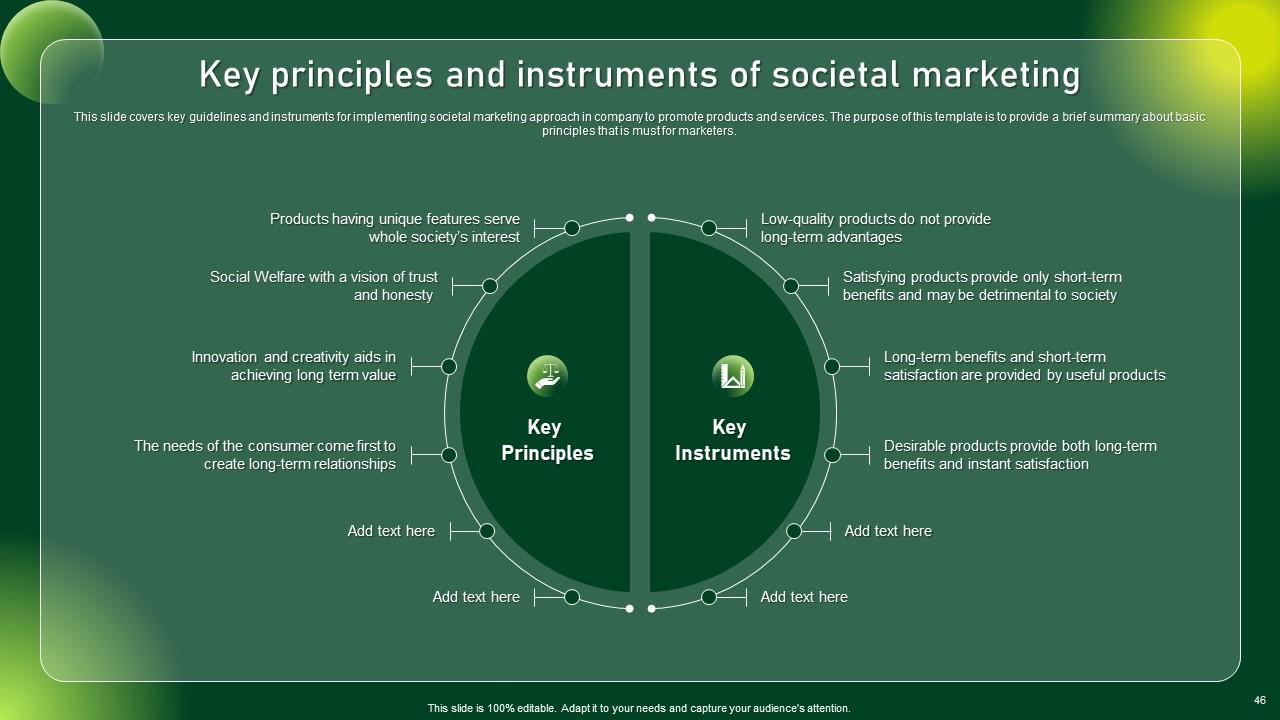
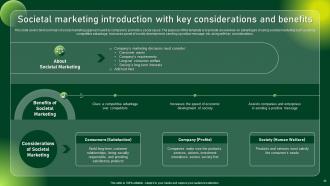
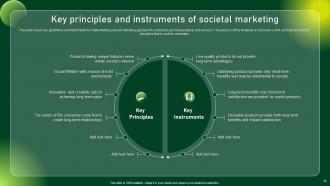
Slide 46: This slide covers key guidelines and instruments for implementing societal marketing approach in company to promote products and services.
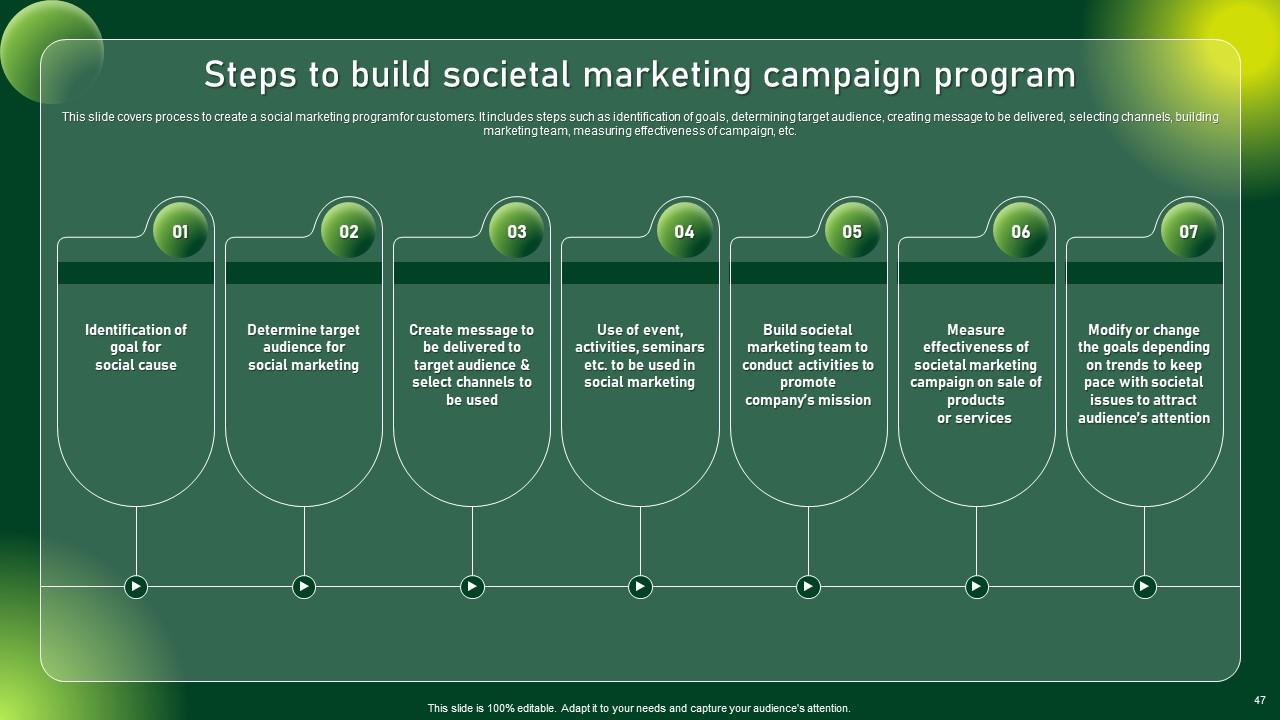
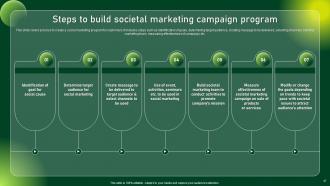
Slide 47: This slide covers process to create a social marketing program for customers.
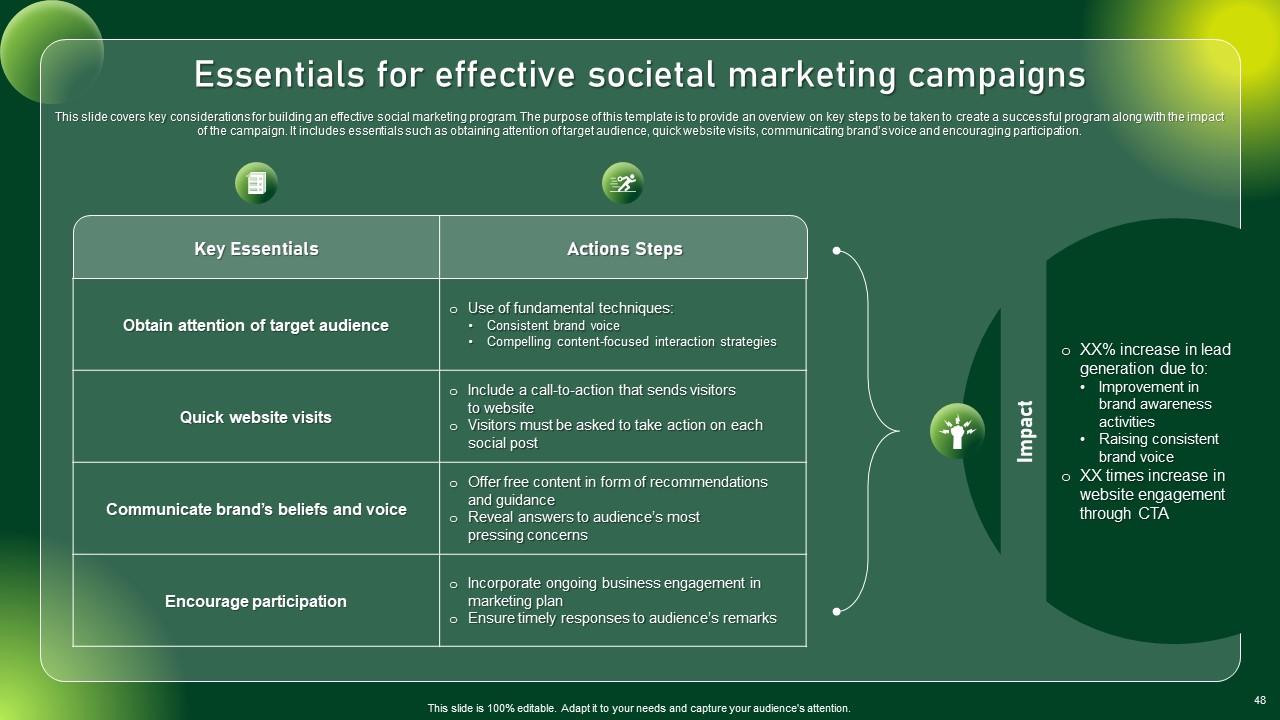
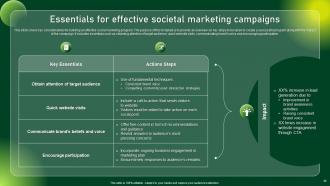
Slide 48: This slide covers key considerations for building an effective social marketing program.
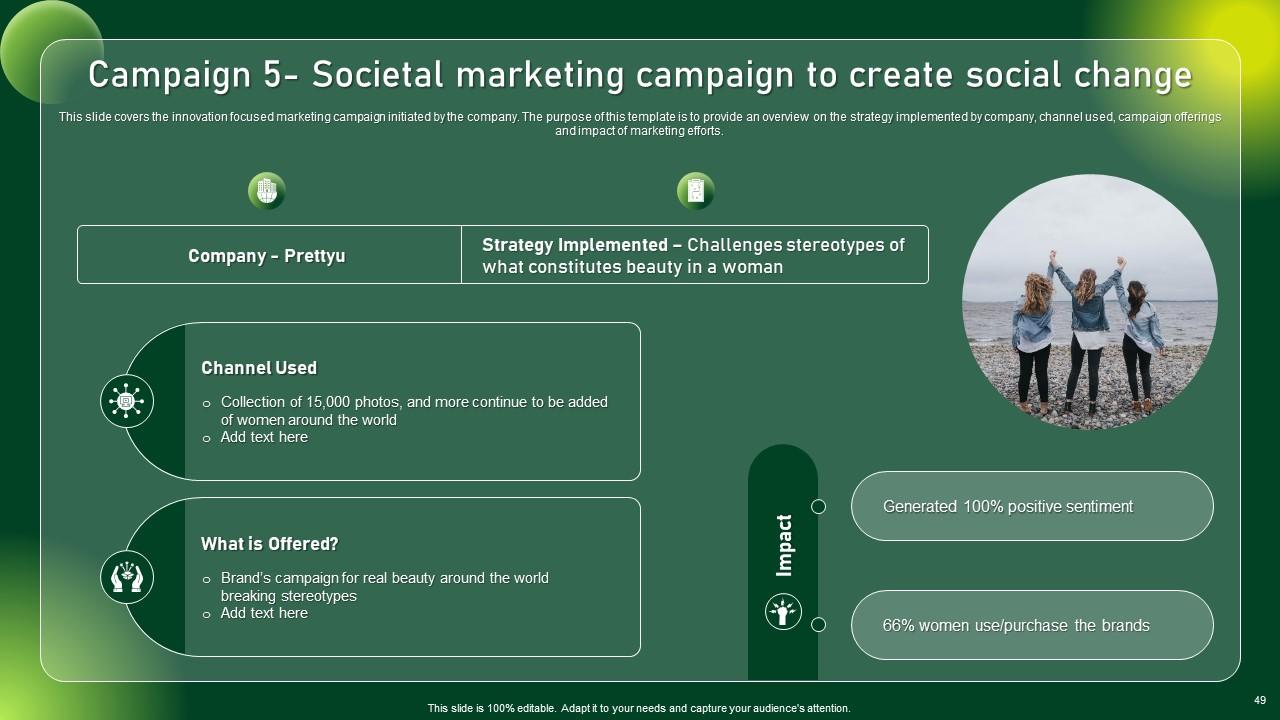
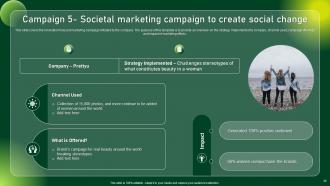
Slide 49: This slide covers the innovation focused marketing campaign initiated by the company.
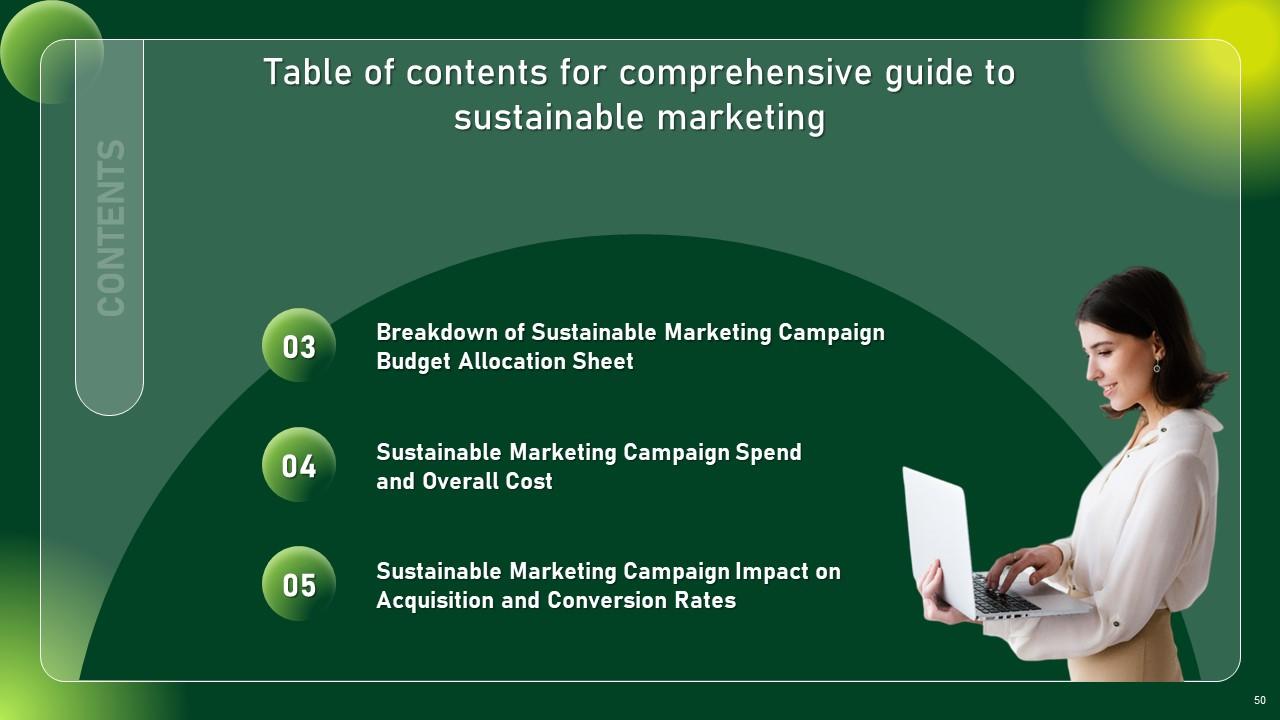
Slide 50: This slide exhibit table of content that is to be discuss further.
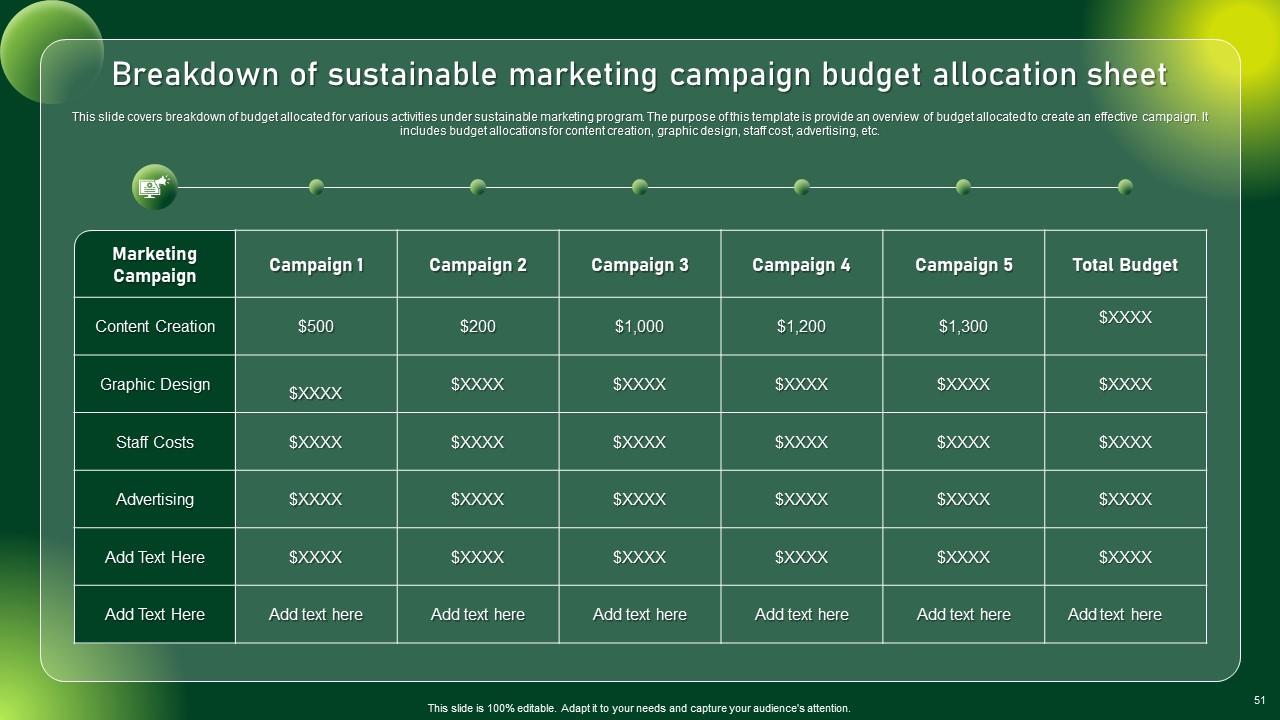
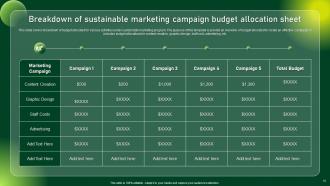
Slide 51: This slide covers breakdown of budget allocated for various activities under sustainable marketing program.
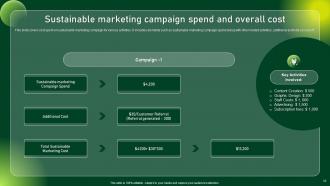
Slide 52: This slide covers cost spent on sustainable marketing campaign for various activities.
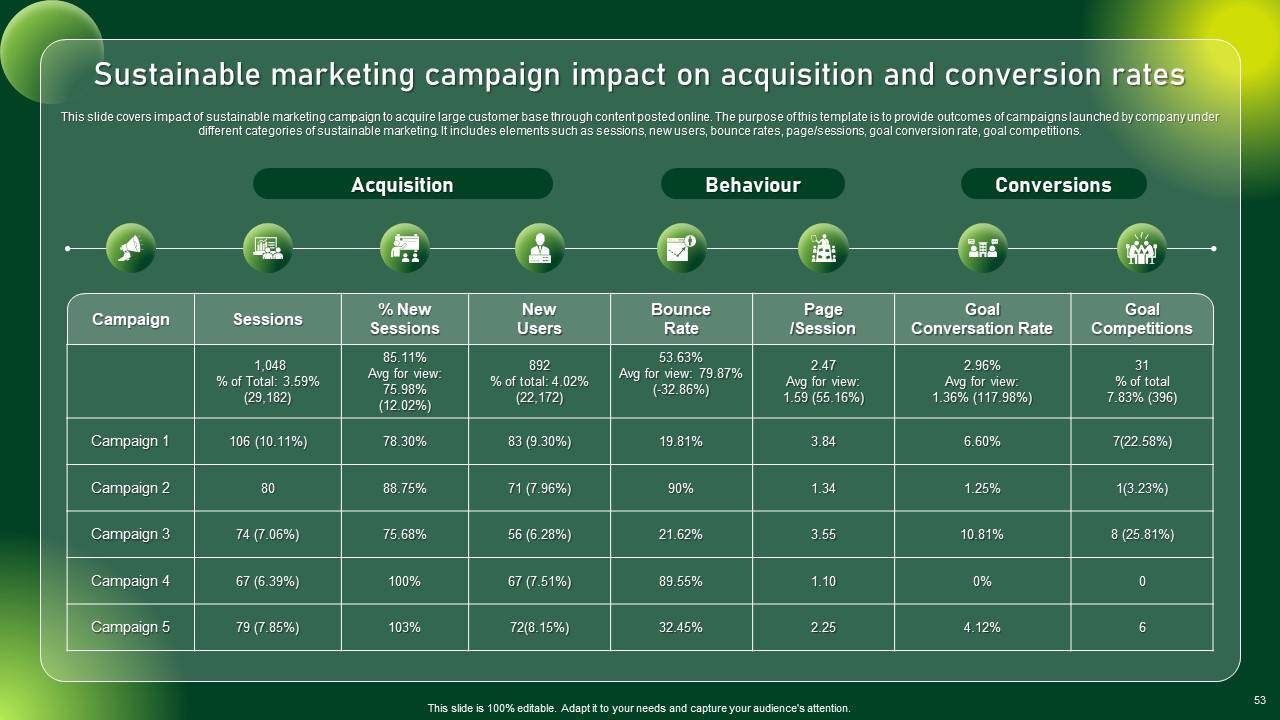
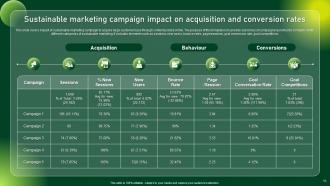
Slide 53: This slide covers impact of sustainable marketing campaign to acquire large customer base through content posted online.
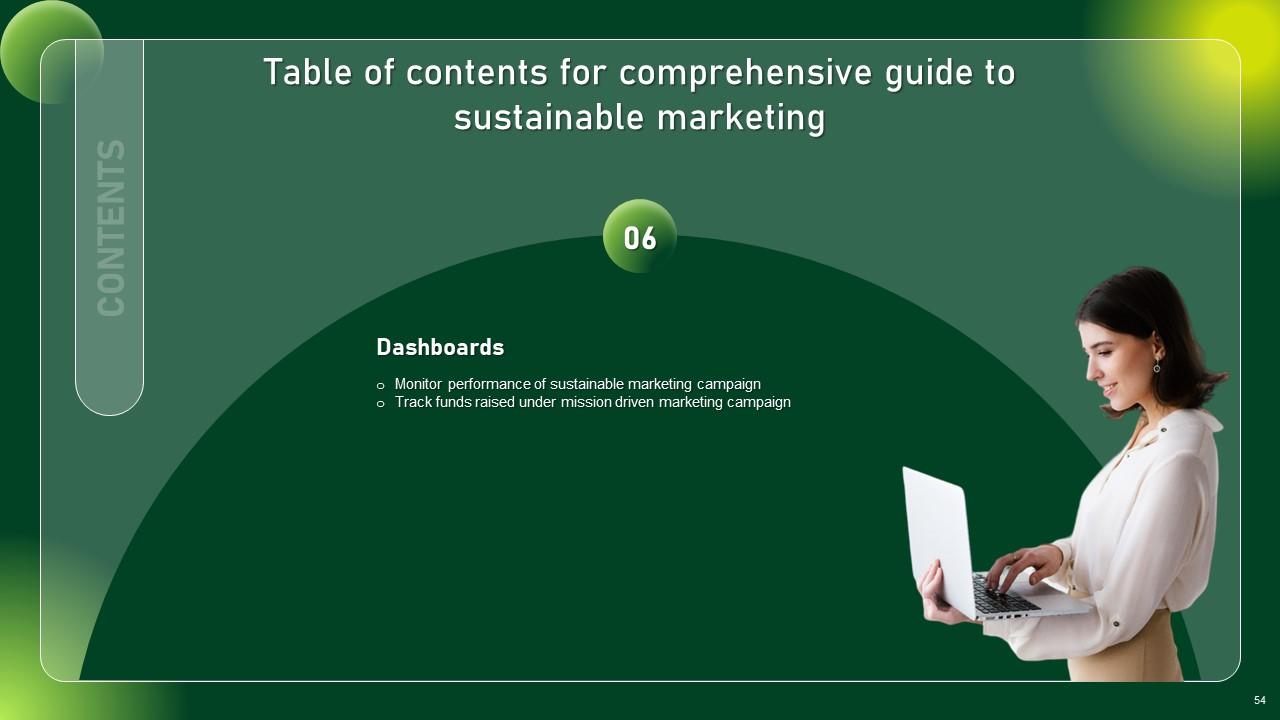
Slide 54: This slide exhibit table of content that is to be discuss further.
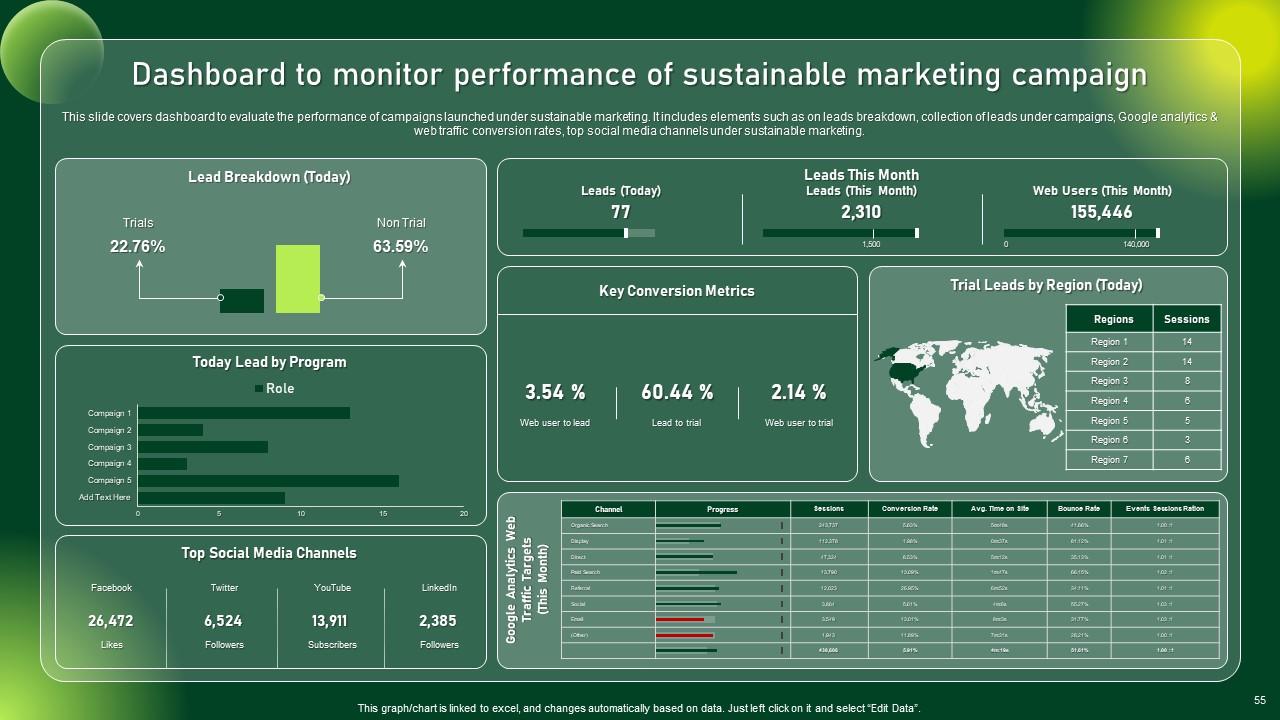
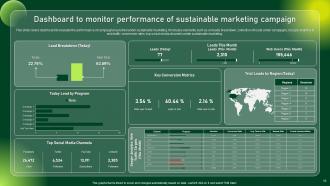
Slide 55: This slide covers dashboard to evaluate the performance of campaigns launched under sustainable marketing.
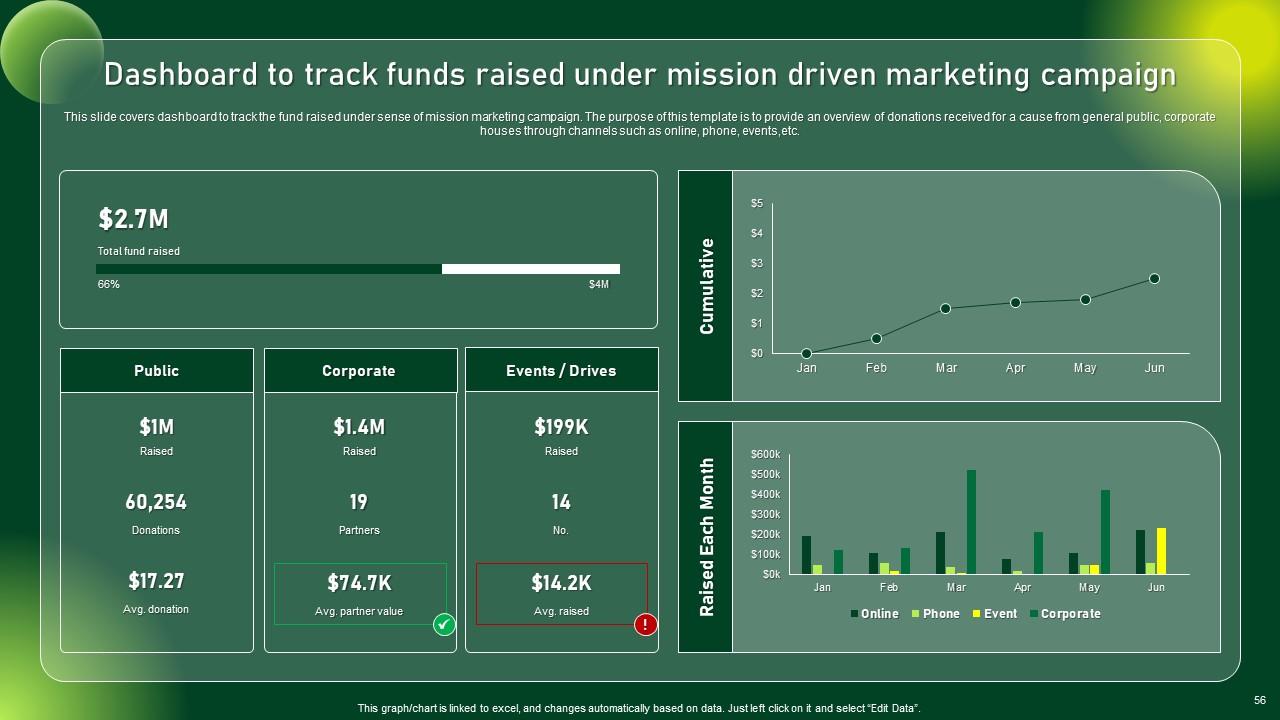
Slide 56: This slide covers dashboard to track the fund raised under sense of mission marketing campaign.
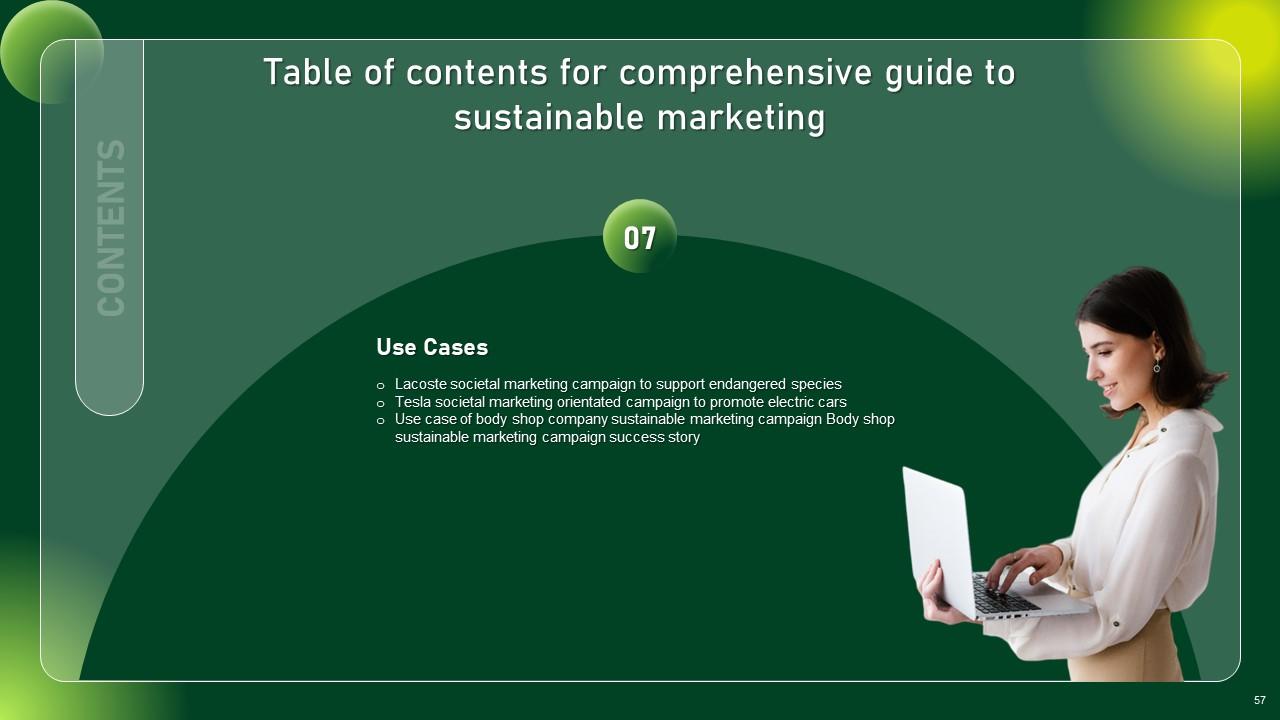
Slide 57: This slide exhibit table of content that is to be discuss further.
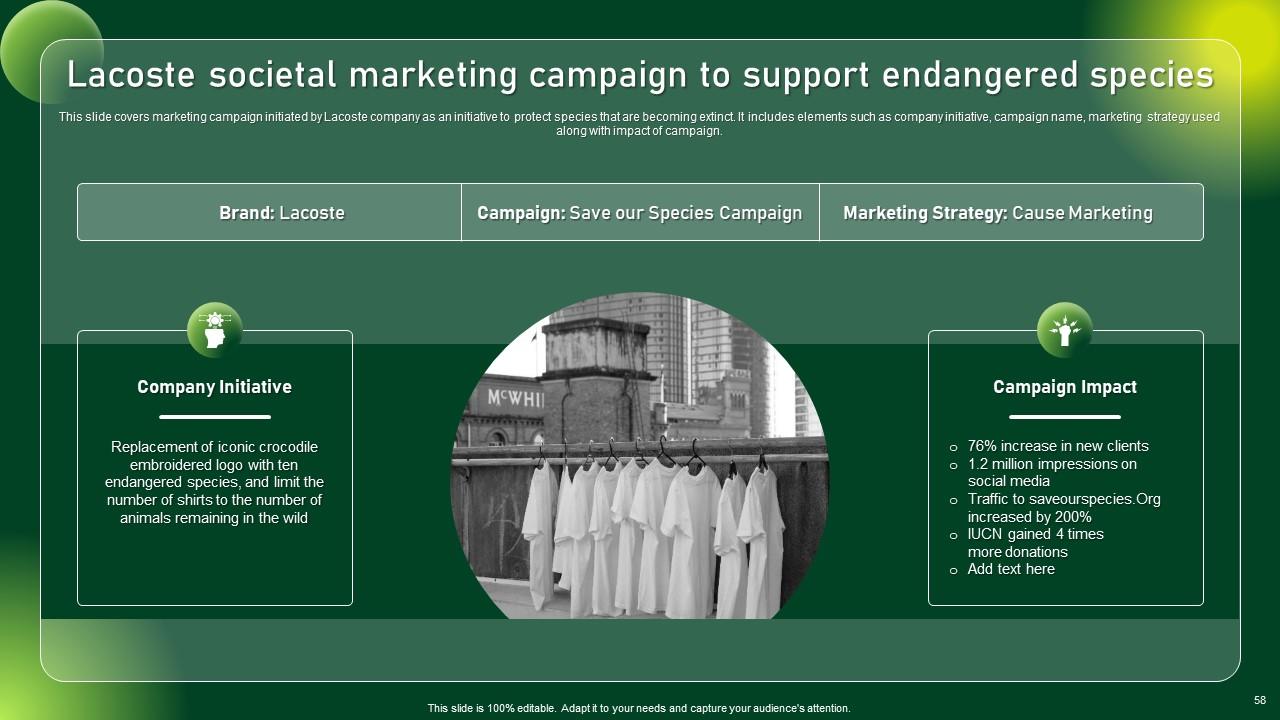
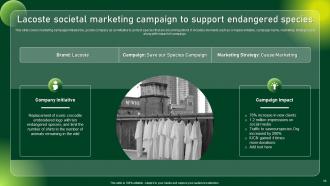
Slide 58: This slide covers marketing campaign initiated by Lacoste company as an initiative to protect species that are becoming extinct.
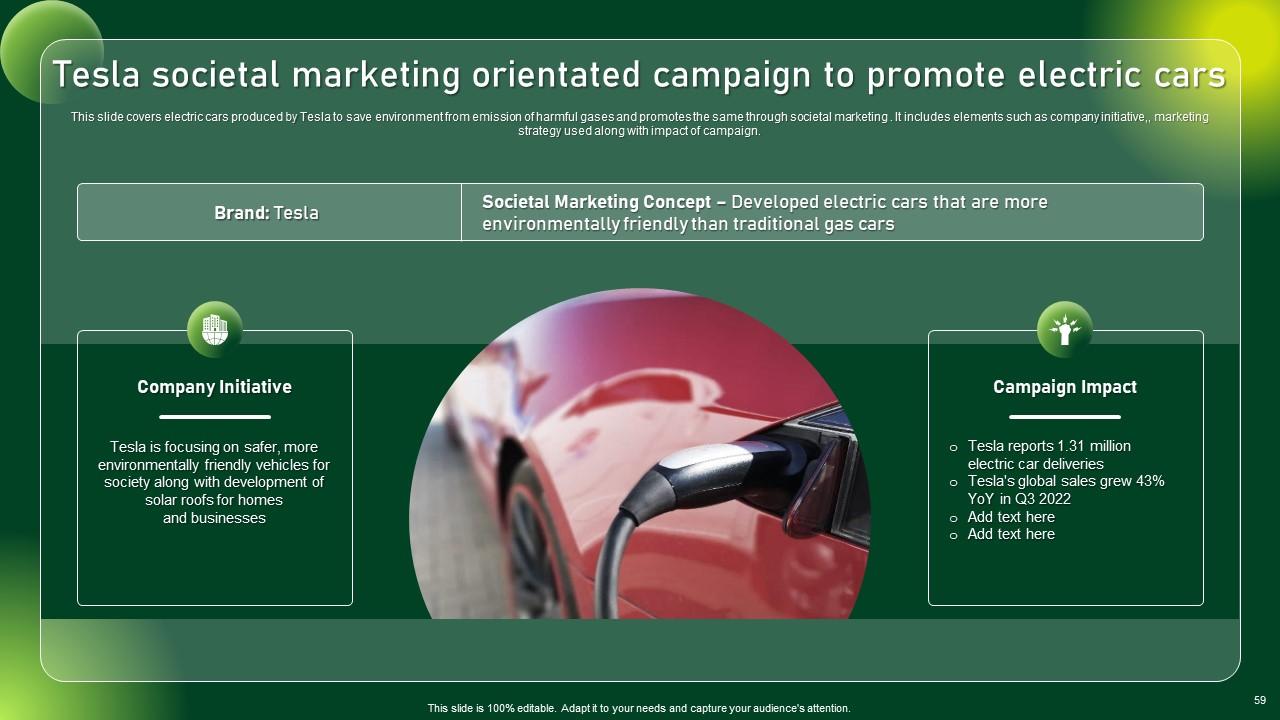
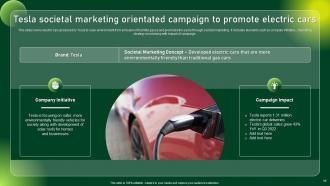
Slide 59: This slide covers electric cars produced by Tesla to save environment from emission of harmful gases and promotes the same through societal marketing.
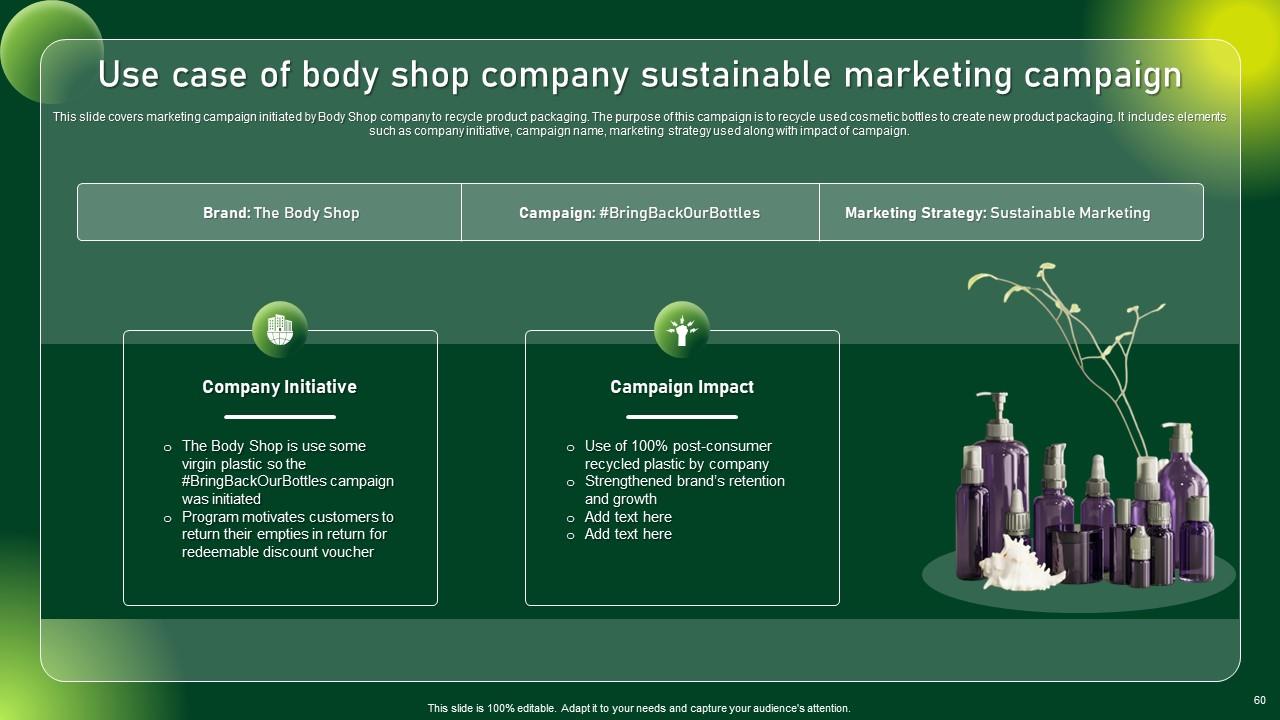
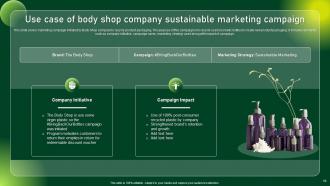
Slide 60: This slide covers marketing campaign initiated by Body Shop company to recycle product packaging.
Slide 61: This is the icons slide.
Slide 62: This slide presents title for additional slides.
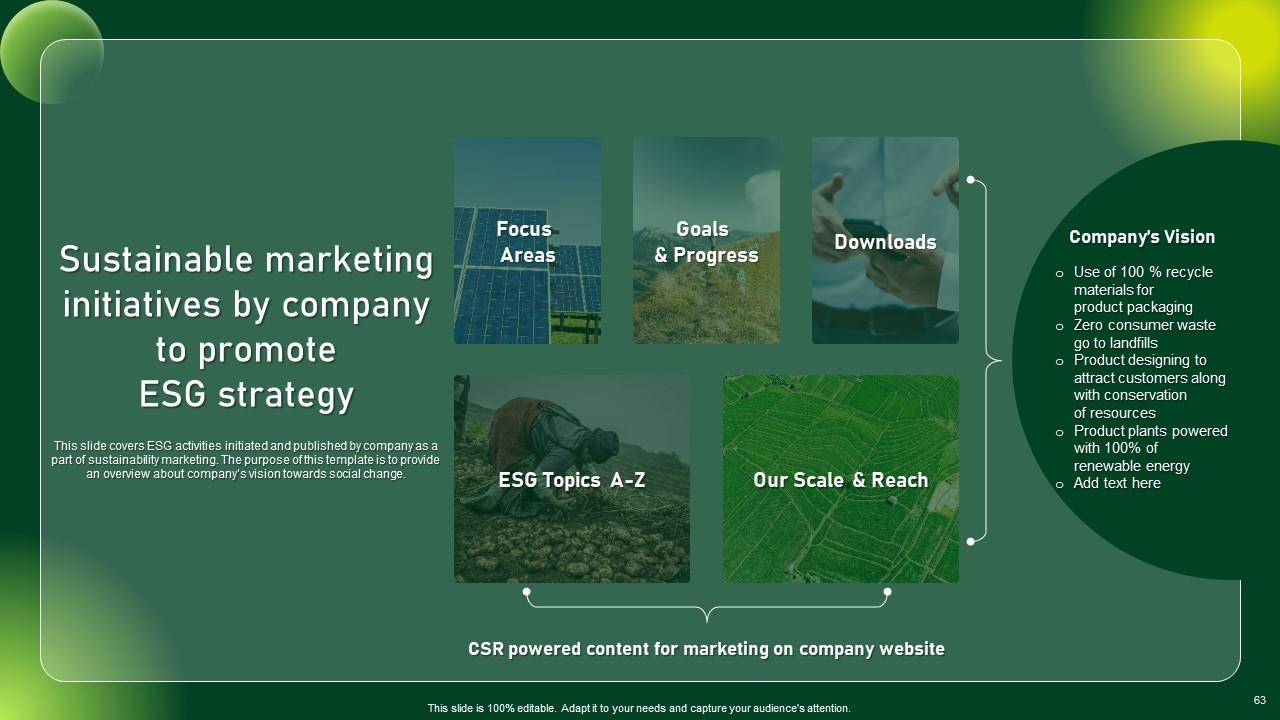
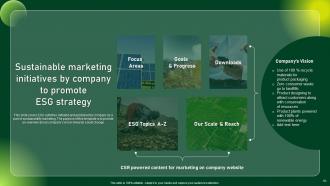
Slide 63: This slide covers ESG activities initiated and published by company as a part of sustainability marketing.
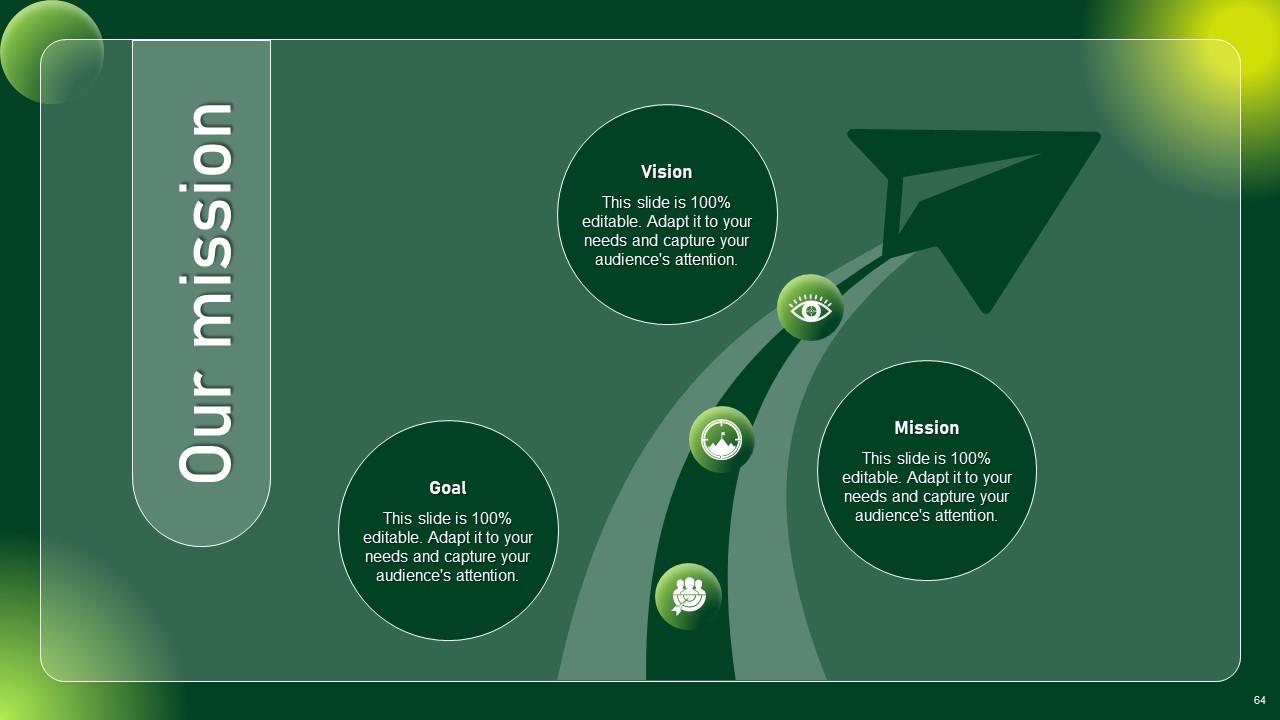
Slide 64: This slide presents your company's vision, mission and goals.
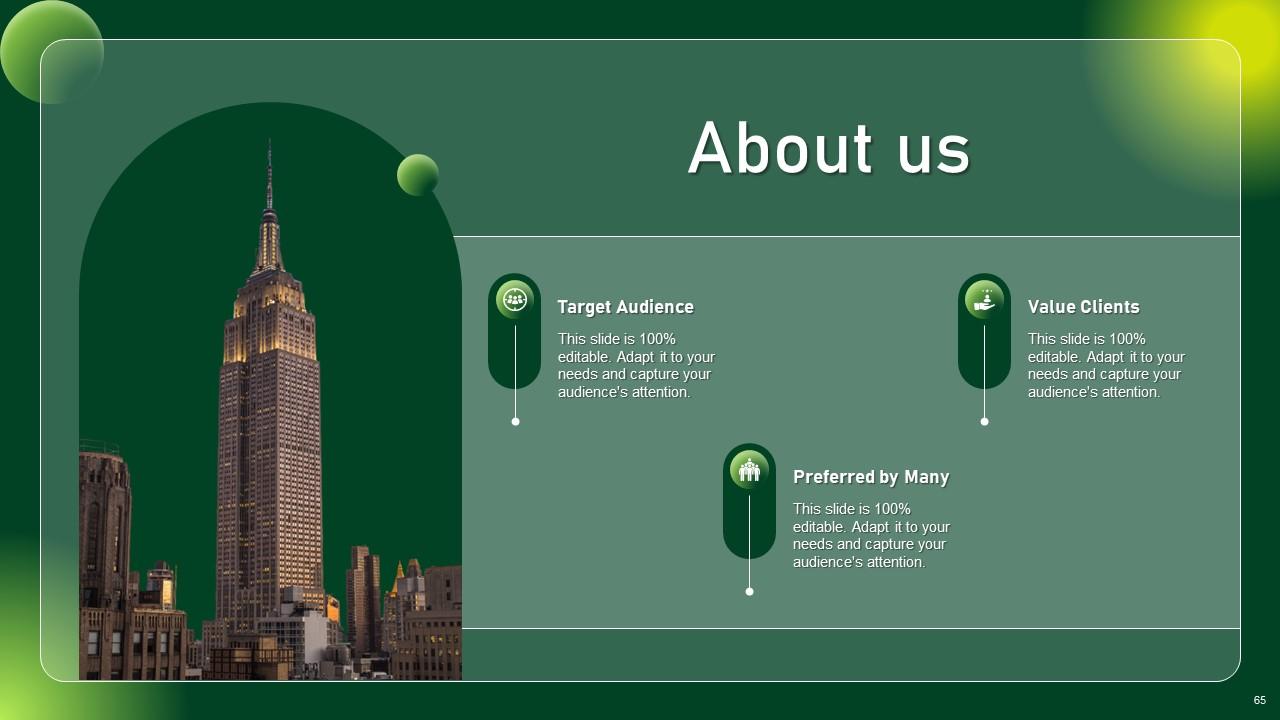
Slide 65: This slide shows about your company, target audience and its client's values.
Slide 66: This slide shows details of team members like name, designation, etc.
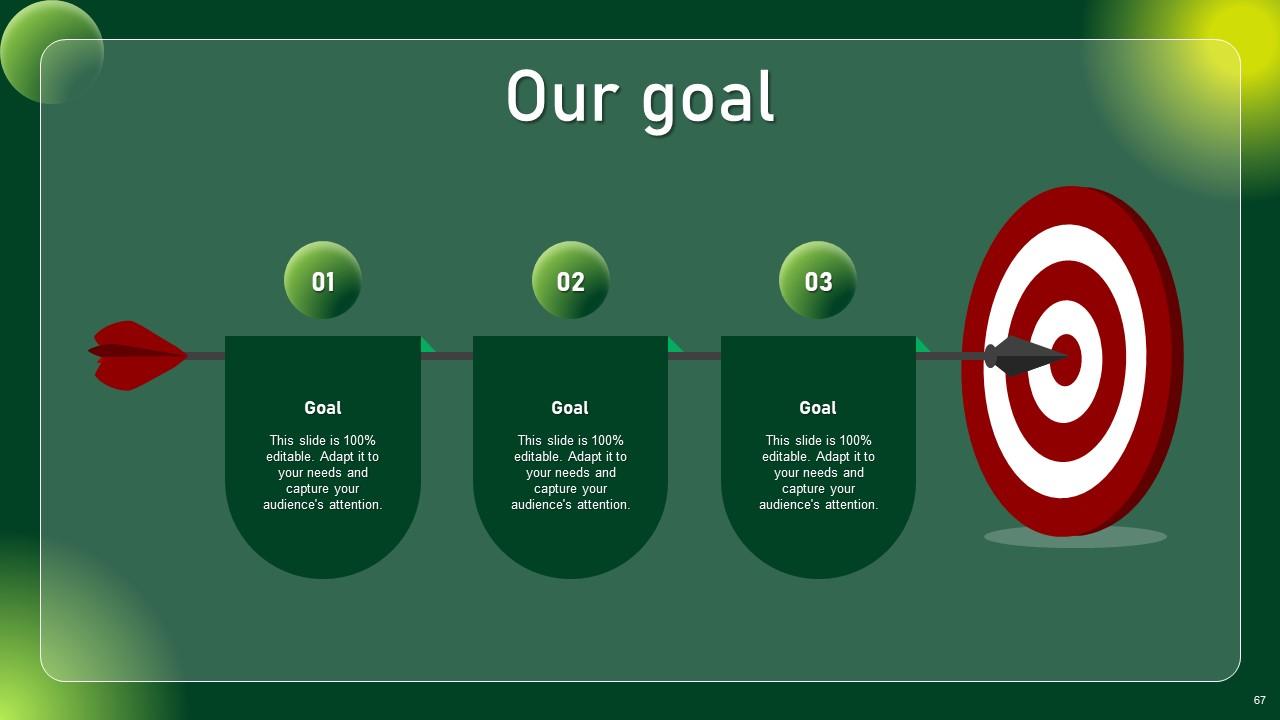
Slide 67: This slide display Our goal.
Slide 68: This slide display Quotes.
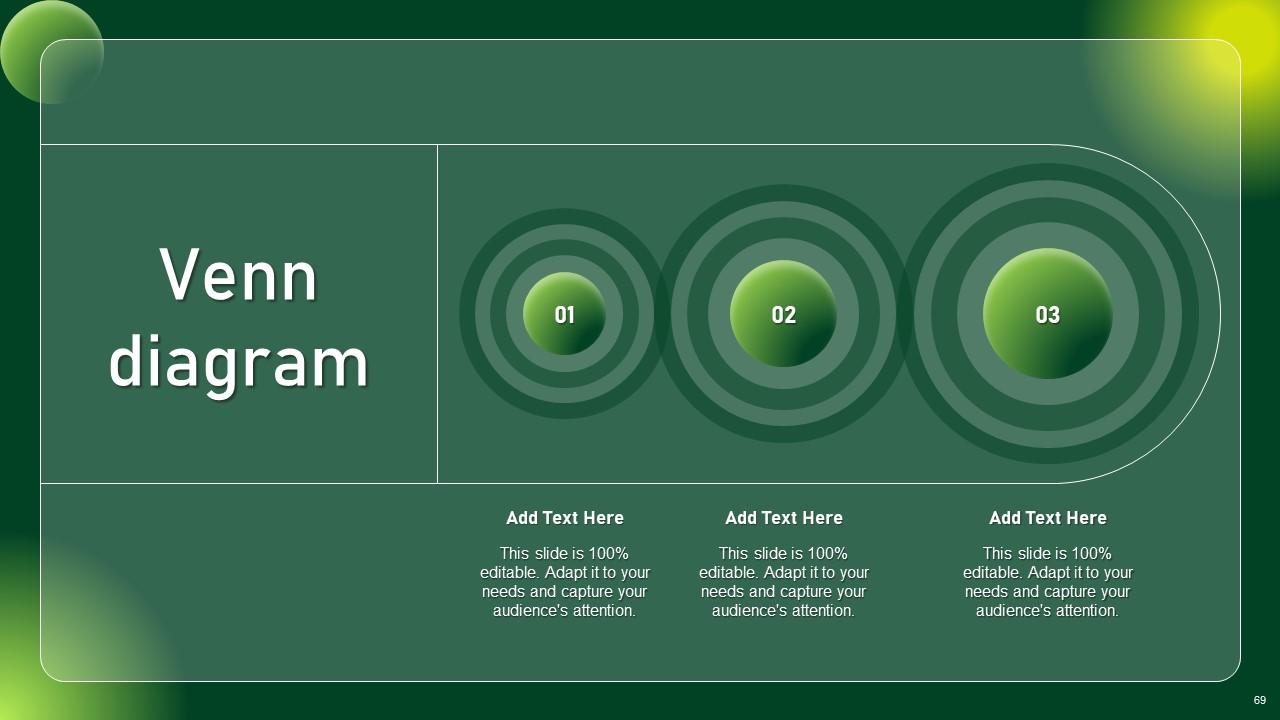
Slide 69: This slide display Venn diagram.
Slide 70: This slide depicts posts for past experiences of clients.
Slide 71: This slide exhibits ideas generated.
Slide 72: This slide shows puzzle for displaying elements of company.
Slide 73: This slide display Mind map.
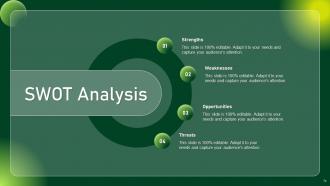
Slide 74: This slide display SWOT Analysis.
Slide 75: This slide display Timeline.
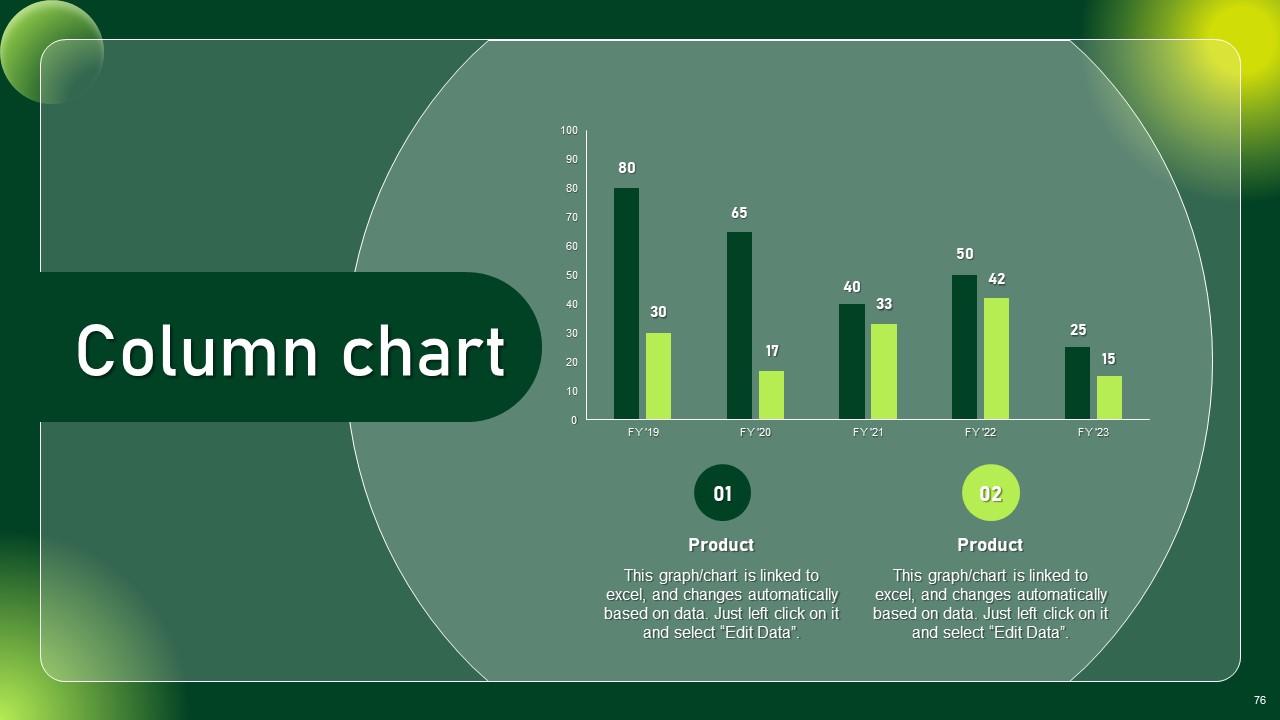
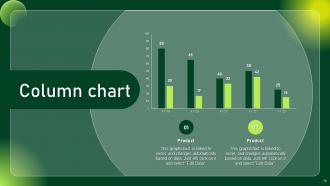
Slide 76: This slide display Column chart for different products.
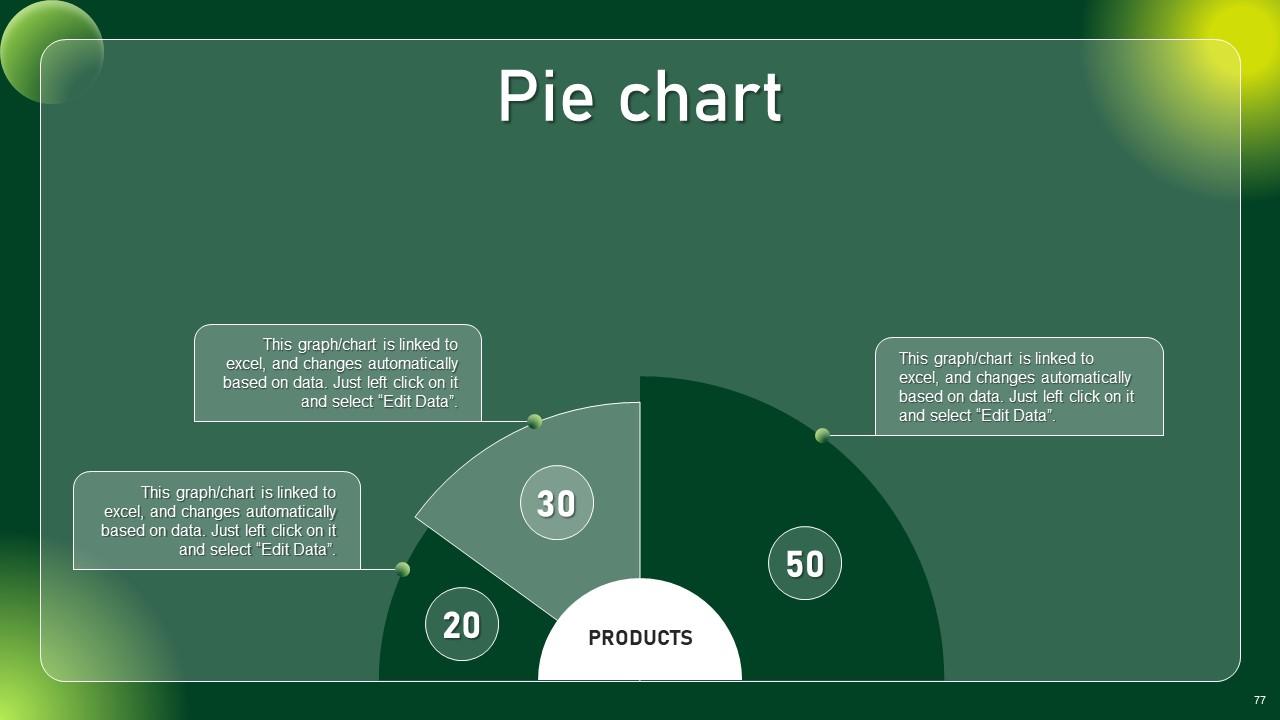
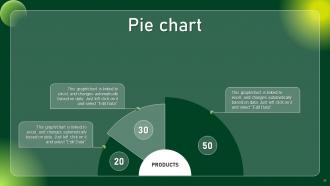
Slide 77: This slide display Pie chart.
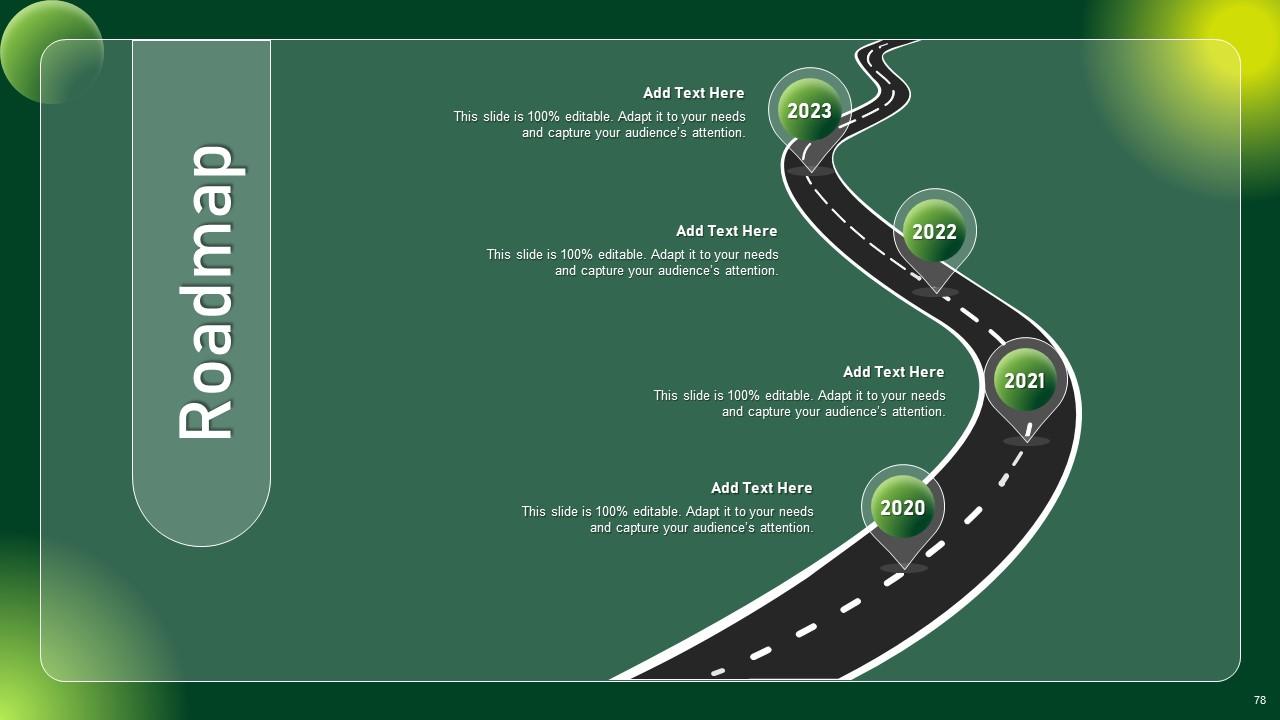
Slide 78: This slide display Roadmap.
Slide 79: This is thank you slide & contains contact details of company like office address, phone no., etc.
Comprehensive Guide To Sustainable Marketing Powerpoint Presentation Slides MKT CD with all 84 slides:
Use our Comprehensive Guide To Sustainable Marketing Powerpoint Presentation Slides MKT CD to effectively help you save your valuable time. They are readymade to fit into any presentation structure.
-
Fantastic and innovative graphics with useful content. The templates are the best and latest in the industry.
-
My team has been relying on SlideTeam’s professional PPT designs for a while now. It has greatly sped up quality work at my organization. So thanks!
