


Sports Marketing Programs To Promote Athletic Products Powerpoint Presentation Slides MKT CD V




Try Before you Buy Download Free Sample Product
 Impress Your
 Audience
 100%
100% Editable
 Save Hours
 of Time


Discover the dynamic world of sports marketing, where goods and services are promoted through sporting events, athlete endorsements, and more. Our Comprehensive Guide to Sports marketing programs to promote athletic products PowerPoint Presentation is designed to provide valuable insights and strategies. Our Sports Brand Advertising deck offers a comprehensive overview of sports marketing, including processes, challenges, and emerging trends. It provides access to a range of strategies that can help sports retailers elevate customer experiences, secure club sponsorships, and increase brand recall. These strategies encompass athlete branding and digital sports brand promotion. Additionally, our Sports Marketing Programs PPT provides guidance on leveraging the rapidly growing eSports industry as an opportunity to promote sports products. It outlines approaches such as sponsoring renowned eSports teams, hosting related events, and deploying advergaming to create immersive customer experiences. Furthermore, our Athlete Branding module offers valuable content to help marketers track sports advertising campaigns effectively. It also includes methods for assessing the performance of these strategies through impact analysis, key performance indicators KPIs, and customizable dashboards. Access our comprehensive template now and unlock the potential of this exciting industry.
People who downloaded this PowerPoint presentation also viewed the following :
Content of this Powerpoint Presentation
Slide 1: This slide introduces Sports Marketing Programs to Promote Athletic Products. State your company name and begin.
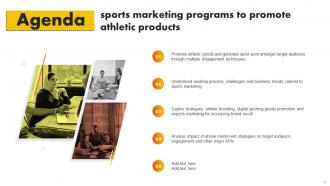
Slide 2: This is an Agenda slide. State your agendas here.
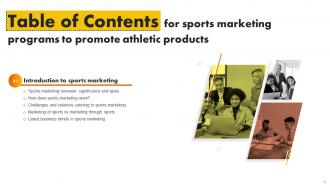
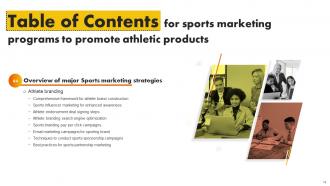
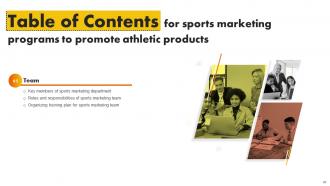
Slide 3: This slide shows Table of Content for the presentation.
Slide 4: This slide shows title for topics that are to be covered next in the template.
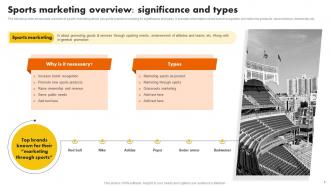
Slide 5: This slide showcases overview of sports marketing which can guide brands in knowing its significance and types.
Slide 6: This slide presents sports marketing process which can be referred by sporting companies to promote their goods.
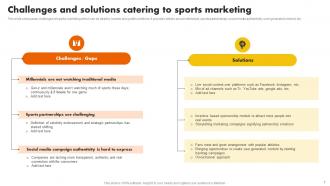
Slide 7: This slide showcases challenges of sports marketing which can be dealt by brands along with solutions.
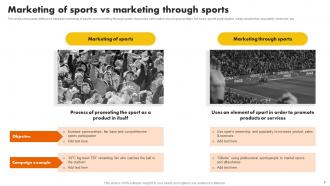
Slide 8: This slide displays difference between marketing of sports and marketing through sports.
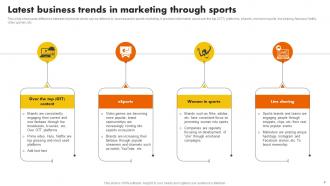
Slide 9: This slide presents difference between key trends which can be referred by businesses for sports marketing.
Slide 10: This slide shows title for topics that are to be covered next in the template.
Slide 11: This slide showcases overview of strategy development for sports brands.
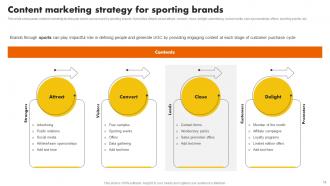
Slide 12: This slide presents content marketing techniques which can be used by sporting brands.
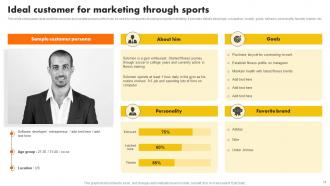
Slide 13: This slide showcases ideal customer analysis and sample persona which can be used by companies focusing on sports marketing.
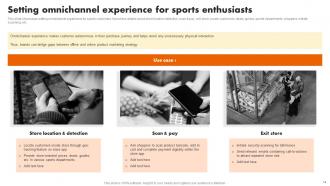
Slide 14: This slide displays setting omnichannel experience for sports customers.
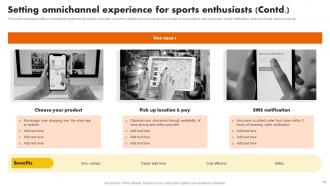
Slide 15: This slide also presents setting omnichannel experience for sports customers.
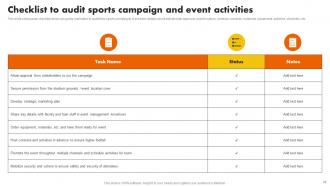
Slide 16: This slide showcases checklist which can guide marketers to audit their sports campaigns.
Slide 17: This slide shows title for topics that are to be covered next in the template.
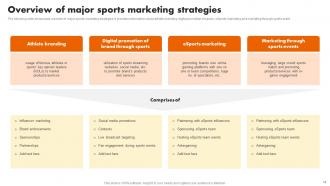
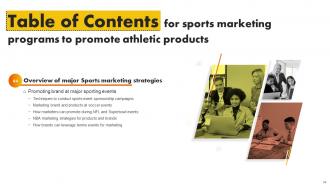
Slide 18: This slide presents overview of major sports marketing strategies.
Slide 19: This slide shows title for topics that are to be covered next in the template.
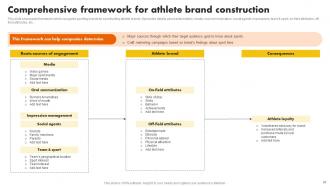
Slide 20: This slide showcases framework which can guide sporting brands for constructing athlete brands.
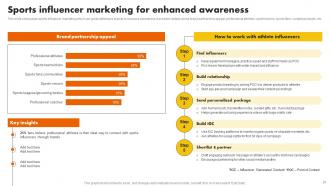
Slide 21: This slide displays sports influencer marketing which can guide athleisure brands to increase awareness.
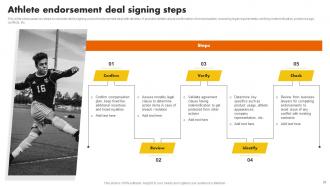
Slide 22: This slide showcases key steps to consider while signing a brand endorsement deal with athletes.
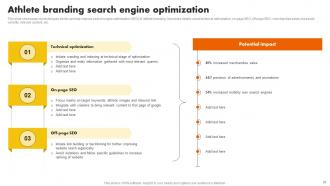
Slide 23: This slide presents key techniques which can help improve search engine optimization (SEO) of athlete branding.
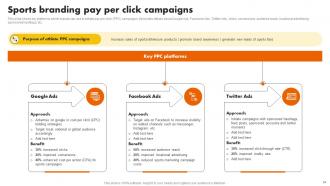
Slide 24: This slide shows key platforms which brands can use to initiate pay per click (PPC) campaigns.
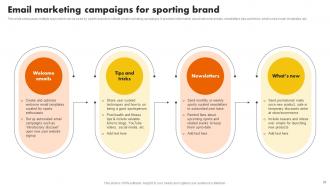
Slide 25: This slide describes multiple ways which can be used by sports brands to initiate email marketing campaigns.
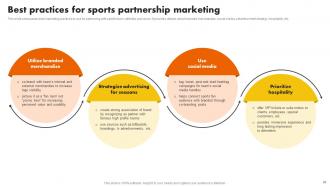
Slide 26: This slide showcases best marketing practices to use for partnering with sports team, athletes and clubs.
Slide 27: This slide shows title for topics that are to be covered next in the template.
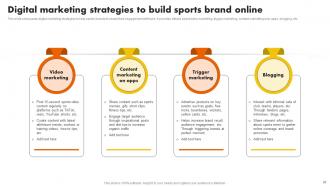
Slide 28: This slide presents digital marketing strategies to help sports brands increase their engagement with fans.
Slide 29: This slide showcases overview of social media marketing for sporting goods brand.
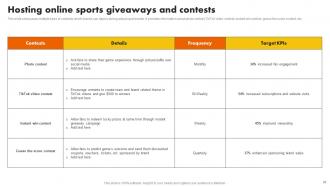
Slide 30: This slide presents multiple types of contests which brands can deploy during actual sport events.
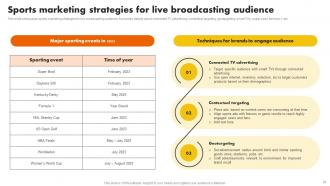
Slide 31: This slide showcases sports marketing strategies for live broadcasting audience.
Slide 32: This slide presents best digital promotion practices to use for partnering with sports team.
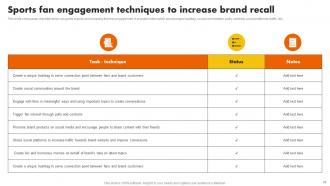
Slide 33: This slide showcases checklist which can guide brands on increasing their fan engagement.
Slide 34: This slide shows title for topics that are to be covered next in the template.
Slide 35: This slide showcases techniques for conducting sports event sponsorship campaigns.
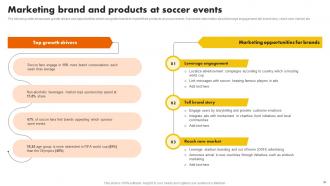
Slide 36: This slide displays growth drivers and opportunities which can guide brands to market their products at soccer events.
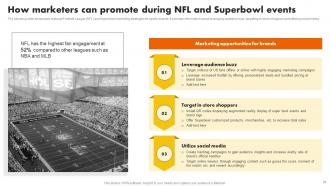
Slide 37: This slide showcases National Football League (NFL) and Superbowl marketing strategies for sports brands.
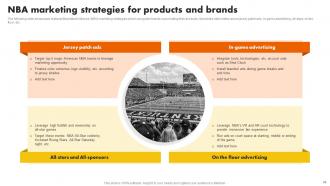
Slide 38: This slide presents National Basketball Alliance (NBA) marketing strategies which can guide brands in promoting their products.
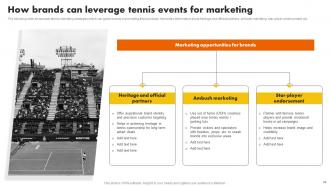
Slide 39: This slide showcases tennis marketing strategies which can guide brands in promoting their products.
Slide 40: This slide shows title for topics that are to be covered next in the template.
Slide 41: This slide showcases eSports market overview with its future revenue projections and growth drivers.
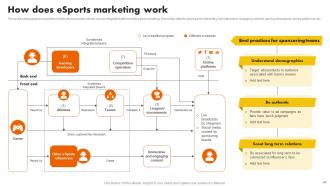
Slide 42: This slide presents process flow of eSports ecosystem which can be integrated with branding and marketing.
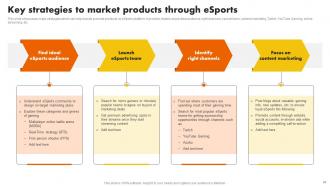
Slide 43: This slide showcases major strategies which can help brands promote products on eSports platform.
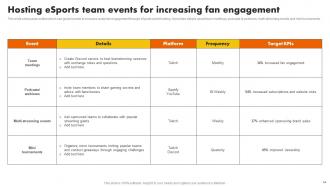
Slide 44: This slide displays outline which can guide brands to increase customer engagement through eSports event hosting.
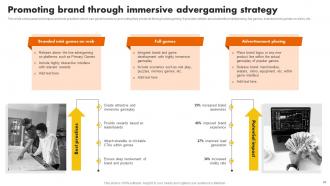
Slide 45: This slide showcases techniques and best practices which can guide brands on promoting their products through advergaming.
Slide 46: This slide shows title for topics that are to be covered next in the template.
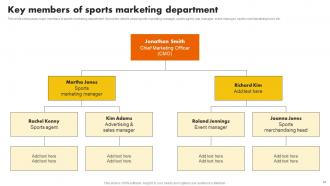
Slide 47: This slide showcases major members of sports marketing department.
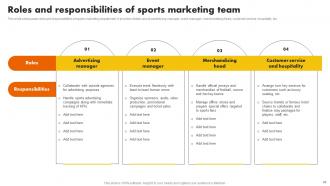
Slide 48: This slide presents roles and responsibilities of sports marketing department.
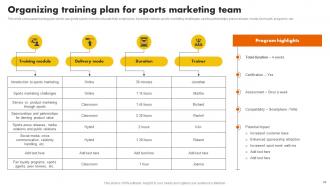
Slide 49: This slide showcases training plan which can guide sports brand to educate their employees.
Slide 50: This slide shows title for topics that are to be covered next in the template.
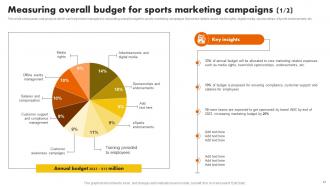
Slide 51: This slide showcases cost analysis which can help brand managers in calculating overall budget for sports marketing campaigns.
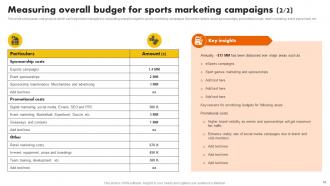
Slide 52: This is another slide showcasing cost analysis which can help brand managers in calculating overall budget for sports marketing campaigns.
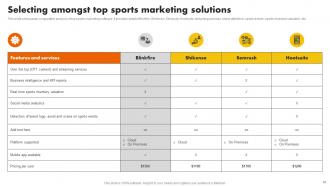
Slide 53: This slide presents comparative analysis of top sports marketing software.
Slide 54: This slide shows title for topics that are to be covered next in the template.
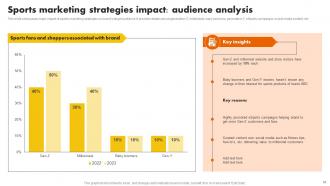
Slide 55: This slide showcases major impact of sports marketing strategies on brand’s target audience.
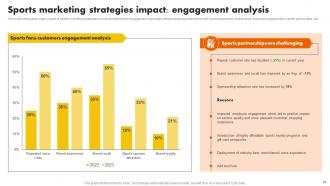
Slide 56: This slide displays major impact of sports marketing strategies on overall stakeholder engagement.
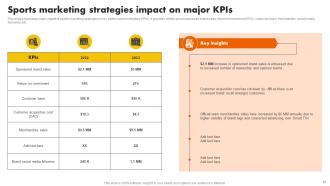
Slide 57: This slide showcases major impact of sports marketing strategies on key performance indicators (KPIs).
Slide 58: This slide shows title for topics that are to be covered next in the template.
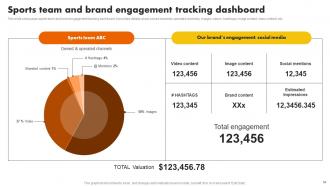
Slide 59: This slide showcases sports team and brand engagement tracking dashboard.
Slide 60: This slide shows title for topics that are to be covered next in the template.
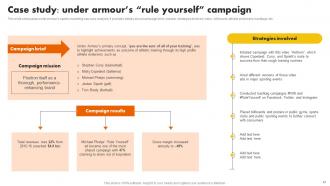
Slide 61: This slide presents under armour’s sports marketing use case analysis.
Slide 62: This slide shows all the icons included in the presentation.
Slide 63: This slide is titled as Additional Slides for moving forward.
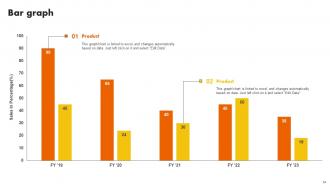
Slide 64: This slide presents Bar chart with two products comparison.
Slide 65: This slide contains Puzzle with related icons and text.
Slide 66: This slide depicts Venn diagram with text boxes.
Slide 67: This slide shows Post It Notes for reminders and deadlines. Post your important notes here.
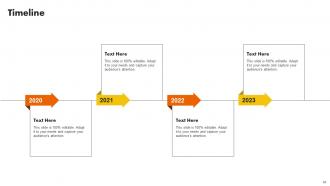
Slide 68: This is a Timeline slide. Show data related to time intervals here.
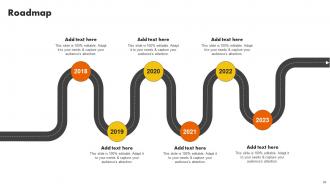
Slide 69: This slide presents Roadmap with additional textboxes.
Slide 70: This is a Thank You slide with address, contact numbers and email address.
Sports Marketing Programs To Promote Athletic Products Powerpoint Presentation Slides MKT CD V with all 75 slides:
Use our Sports Marketing Programs To Promote Athletic Products Powerpoint Presentation Slides MKT CD V to effectively help you save your valuable time. They are readymade to fit into any presentation structure.


















FAQs for Sports Marketing Programs To Promote Athletic Products Powerpoint Presentation Slides
Successful sports marketing campaigns include authentic athlete partnerships, targeted audience segmentation, compelling storytelling, strategic timing around events, and multi-channel activation across digital and traditional platforms. These elements work together by creating emotional connections with fans, leveraging peak engagement moments, and delivering measurable brand exposure, with many organizations finding that integrated approaches ultimately drive stronger consumer loyalty and significant ROI increases.
Brand partnerships significantly enhance sports teams' and athletes' visibility by expanding reach across multiple platforms, creating cross-promotional opportunities, and leveraging sponsors' marketing resources and audiences. These strategic collaborations enable teams and athletes to access new demographics, generate additional media coverage, and build stronger fan engagement through joint campaigns, ultimately delivering increased brand recognition and commercial value while sponsors benefit from enhanced sports-driven marketing impact.
Social media serves as the primary engagement platform in modern sports marketing, enabling real-time fan interaction, content amplification, behind-the-scenes access, and targeted advertising campaigns. These platforms revolutionize how teams and athletes connect with audiences by delivering personalized experiences, driving merchandise sales, and building global communities, with many organizations finding that strategic social media presence significantly enhances brand loyalty and revenue generation.
Data analytics improves fan engagement by tracking viewing patterns, social media interactions, purchasing behaviors, and demographic preferences to create personalized experiences. Through predictive modeling and real-time insights, sports organizations deliver targeted content, optimize game-day experiences, and enhance merchandise recommendations, ultimately building stronger fan loyalty and increasing revenue streams across digital and physical touchpoints.
Ethical considerations in sports marketing include athlete authenticity, transparent disclosure of partnerships, fair compensation practices, responsible targeting of vulnerable demographics, and avoiding exploitation of athlete personal struggles. These standards help organizations build genuine brand relationships while protecting both athletes and consumers, with many sports agencies finding that ethical approaches ultimately deliver stronger long-term partnerships and enhanced brand credibility.
Sponsorship deals vary significantly based on audience size, demographics, media coverage, and commercial appeal, with major leagues like NFL and NBA commanding premium rates while niche sports offer targeted demographic access. Through strategic partnerships, brands in financial services leverage high-visibility sports for mass reach, while specialized sectors like medical devices partner with golf or tennis, ultimately delivering tailored marketing outcomes.
Storytelling in sports branding creates emotional connections between fans and teams, athletes, or brands by transforming statistics into compelling narratives about triumph, perseverance, and community. These narratives enhance fan loyalty, drive merchandise sales, and attract sponsorship opportunities, with teams like the Golden State Warriors leveraging underdog stories to build global followings and significantly increase revenue streams.
AR and VR enhance fan experiences by creating immersive stadium tours, virtual seat previews, and interactive player statistics overlays during live games. These technologies enable sports organizations to deliver personalized content, simulate game scenarios for training visualization, and provide remote fans with courtside experiences, ultimately increasing engagement and generating new revenue streams.
Marketing less popular sports faces challenges including limited media coverage, smaller sponsor budgets, reduced audience awareness, fewer distribution channels, and competition from mainstream sports entertainment. These sports often struggle with building consistent viewership and attracting major brand partnerships, though targeted digital strategies and niche community engagement increasingly help deliver dedicated fan bases and specialized sponsorship opportunities.
Demographic shifts significantly influence sports marketing trends by driving changes in audience preferences, consumption patterns, and engagement channels across different age groups, ethnicities, and geographic regions. With younger audiences increasingly favoring digital platforms and diverse communities seeking authentic representation, sports organizations are adapting their strategies through targeted social media campaigns, influencer partnerships, and culturally relevant content, ultimately delivering more personalized experiences and broader market reach.
Influencers serve as authentic brand ambassadors who leverage their dedicated followings to drive awareness, engagement, and ticket sales for sports events while promoting merchandise through personal endorsements. Through social media campaigns, behind-the-scenes content, and product demonstrations, they create emotional connections between fans and brands, ultimately delivering higher conversion rates and expanded audience reach for sports organizations.
Teams leverage community engagement through local partnerships, youth programs, charity initiatives, fan events, and neighborhood outreach activities that build emotional connections beyond game attendance. These strategies create loyal fan bases by demonstrating genuine investment in local causes, with many professional franchises finding that community-focused marketing delivers enhanced brand loyalty, increased ticket sales, and ultimately stronger revenue streams through deeper regional relationships.
Athlete activism significantly influences sports marketing by reshaping brand narratives, driving consumer engagement, and creating polarized audience responses. While activism can enhance brand authenticity and attract socially conscious consumers, it also presents risks of backlash and boycotts, with many organizations finding that strategic alignment with athlete values ultimately delivers stronger emotional connections and competitive differentiation.
Olympic ticket sales involve global marketing campaigns, premium pricing tiers, hospitality packages, and multi-year advance sales through international partnerships and lottery systems. Local games rely on community engagement, season passes, group discounts, and last-minute promotions, with many teams finding that personalized fan experiences and flexible pricing ultimately drive loyalty and sustained attendance.
Sports brands should adapt by prioritizing authentic social media engagement, partnering with diverse micro-influencers, embracing social causes, and creating interactive digital experiences across platforms like TikTok and Instagram. Through genuine storytelling, user-generated content campaigns, and values-driven messaging, brands connect with Gen Z's preference for authenticity and social responsibility, ultimately building stronger brand loyalty and driving engagement in an increasingly competitive youth market.
-
SlideTeam’s pool of 2Million+ PPTs has really benefited my team, everyone from the IT department to HR. We are lucky to have crossed ways with them.
-
I was able to find the right choice of PPT template for my thesis with SlideTeam. Thank you for existing.