

Complete Guide For Understanding Storytelling Marketing Powerpoint Presentation Slides MKT CD




Try Before you Buy Download Free Sample Product
 Impress Your
 Audience
 100%
100% Editable
 Save Hours
 of Time


Storytelling is a valuable tool that brands should include in their marketing arsenal. To sell, entertain, educate, or brag are just a few of the many reasons people tell stories. Our Complete Guide For Understanding Storytelling Marketing PPT will give you an overview of what storytelling marketing actually is and how to put campaigns intended for target audiences into action. It covers different forms of storytelling marketing including written, audio, and video storytelling and how to implement them to reach out to potential customers. Then, it evaluates the impact of storytelling on various KPIs and brand sales and conversions. Lastly, it includes managing storytelling marketing and tracking dashboards to evaluate performance. Download this PPT and make it a focal point for your storytelling marketing campaigns and reach out to your audiences. Download it now.
People who downloaded this PowerPoint presentation also viewed the following :
Content of this Powerpoint Presentation
Slide 1: This slide displays the title Complete Guide for Understanding STORYTELLING MARKETING.
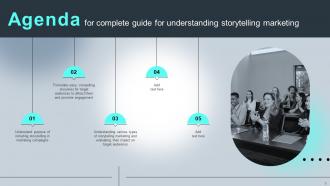
Slide 2: This slide displays the title Agenda for complete guide for understanding storytelling marketing.
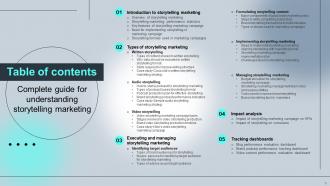
Slide 3: This slide exhibit table of content.
Slide 4: This slide exhibit table of content that is to be discuss further.
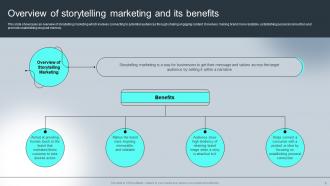
Slide 5: This slide showcases an overview of storytelling marketing which involves connecting to potential audiences through sharing engaging content.
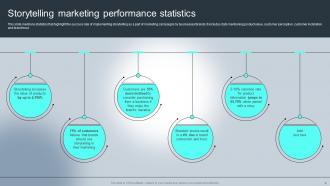
Slide 6: This slide mentions statistics that highlight the success rate of implementing storytelling as a part of marketing campaigns by businesses/brands.
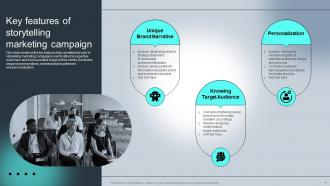
Slide 7: This slide mentions the key features that constitute the part of storytelling marketing campaigns used to attract prospective customers.
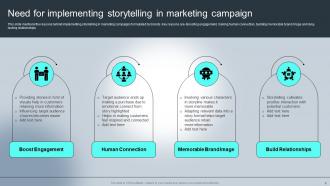
Slide 8: This slide mentions the reasons behind implementing storytelling in marketing campaigns formulated by brands.
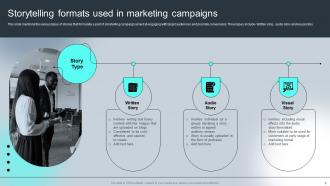
Slide 9: This slide mentions the various types of stories that formulate a part of storytelling campaign aimed at engaging with target audiences.
Slide 10: This slide exhibit table of content that is to be discuss further.
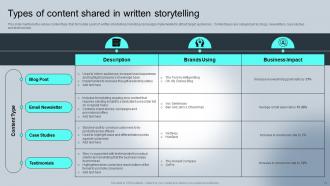
Slide 11: This slide the various content that formulates a part of written storytelling marketing campaigns implemented to attract target audiences.
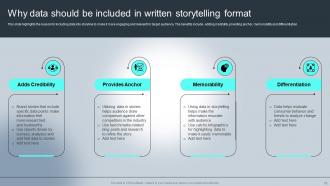
Slide 12: This slide highlights the reason for including data into storyline to make it more engaging and relevant for target audience.
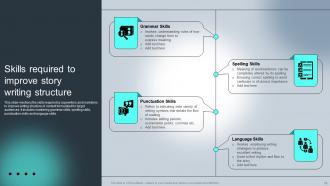
Slide 13: This slide mentions the skills required by copywriters and marketers to improve writing structure of content formulated for target audiences.
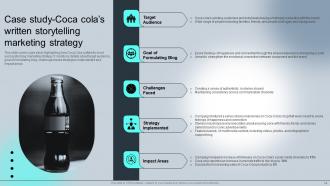
Slide 14: This slide covers case study highlighting how Coca Cola crafted its most successful blog marketing strategy.
Slide 15: This slide exhibit table of content that is to be discuss further.
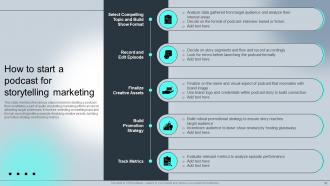
Slide 16: This slide mentions the various steps involved in starting a podcast that constitutes a part of audio storytelling marketing efforts.
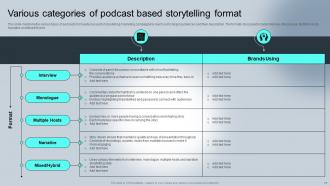
Slide 17: This slide mentions the various types of podcasts formulated as part of storytelling marketing campaigns to reach out to target audiences.
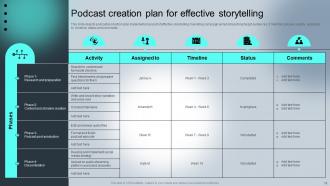
Slide 18: This slide depicts podcast production plan implemented as part of effective storytelling marketing campaign aimed at reaching target audiences.
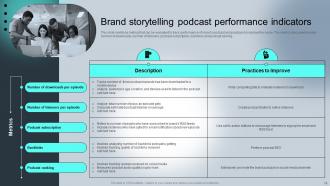
Slide 19: This slide mentions metrics that can be evaluated to track performance of brand’s podcast and practices to improve the same.
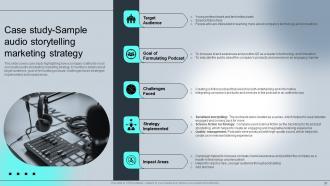
Slide 20: This slide covers case study highlighting how a company crafted its most successful audio storytelling marketing strategy.
Slide 21: This slide exhibit table of content that is to be discuss further.
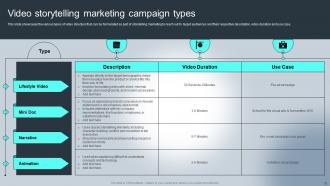
Slide 22: This slide showcases the various types of video structure that can be formulated as part of storytelling marketing to reach out to target audiences.
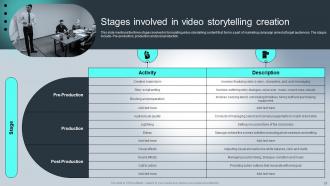
Slide 23: This slide mentions the three stages involved in formulating video storytelling content that forms a part of marketing campaign.
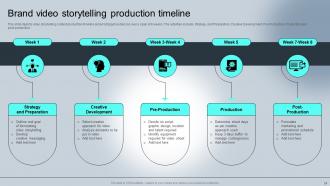
Slide 24: This slide depicts video storytelling content production timeline aimed at target audiences over a span of 8 weeks.
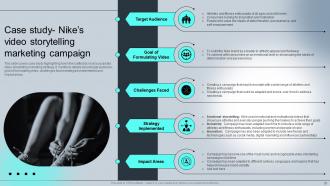
Slide 25: This slide covers case study highlighting how Nike crafted its most successful video storytelling marketing strategy.
Slide 26: This slide exhibit table of content that is to be discuss further.
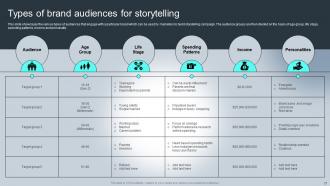
Slide 27: This slide shows the various types of audiences that engage with a particular brand which can be used by marketers to build storytelling campaign.
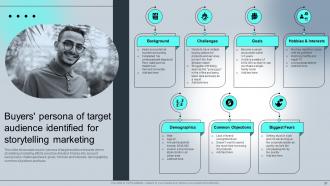
Slide 28: This slide showcases buyers' persona of target audience towards whom storytelling marketing efforts would be directed.
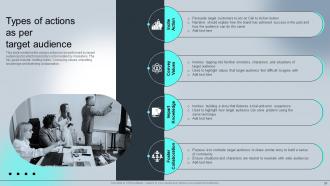
Slide 29: This slide mentions the various actions to be performed by target audiences for which brand story is formulated by marketers.
Slide 30: This slide exhibit table of content that is to be discuss further.
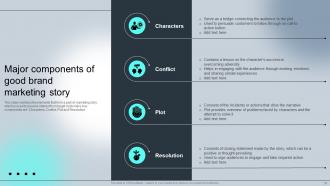
Slide 31: This slide mentions the elements that form a part of marketing story which is used to provoke interest from target customers.
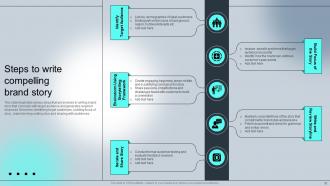
Slide 32: This slide illustrates various steps that are involved in writing brand story that connects with target audience and generates required response.
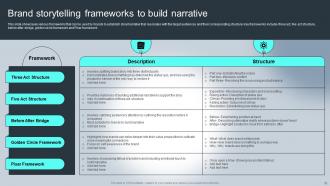
Slide 33: This slide showcases various frameworks that can be used by brands to establish story/narrative that resonates with the target audiences.
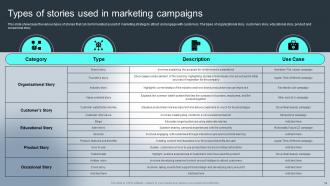
Slide 34: This slide showcases the various types of stories that can be formulated as part of marketing strategy to attract and engage with customers.
Slide 35: This slide exhibit table of content that is to be discuss further.
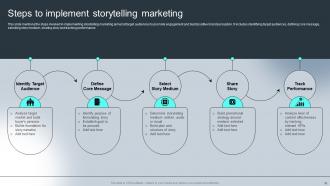
Slide 36: This slide mentions the steps involved in implementing storytelling marketing aimed at target audiences to promote engagement.
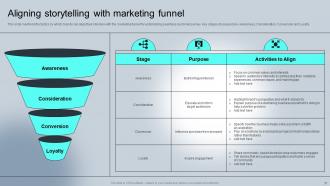
Slide 37: This slide mentions the tactics by which brands can align their storyline with the marketing funnel for establishing seamless customer journey.
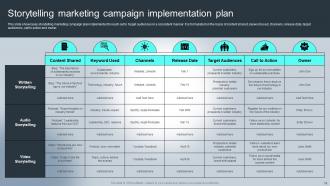
Slide 38: This slide showcases storytelling marketing campaign plan implemented to reach out to target audiences in a consistent manner.
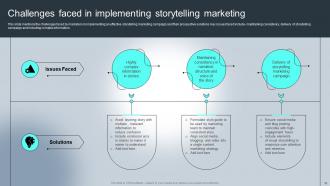
Slide 39: This slide mentions the challenges faced by marketers in implementing an effective storytelling marketing campaign and their prospective solutions.
Slide 40: This slide exhibit table of content that is to be discuss further.
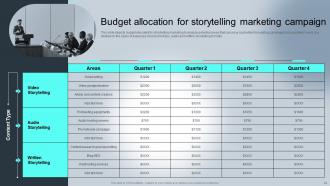
Slide 41: This slide depicts budget allocated for storytelling marketing to analyze potential areas that can incur cost while formulating campaigns.
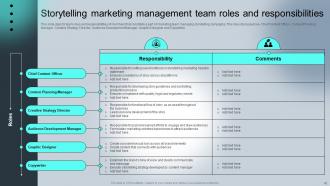
Slide 42: This slide depicts team roles and responsibilities of members that constitute a part of marketing team managing storytelling campaigns.
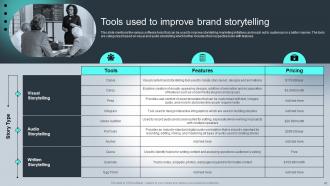
Slide 43: This slide various software tools that can be used to improve storytelling marketing initiatives and reach out to audiences in a better manner.
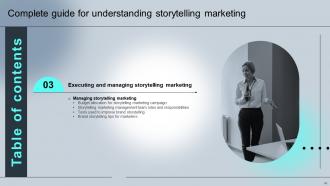
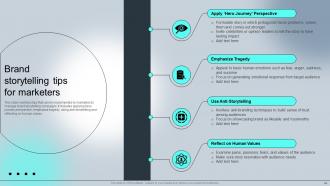
Slide 44: This slide mentions tips that can be implemented by marketers to manage brand storytelling campaigns.
Slide 45: This slide exhibit table of content that is to be discuss further.
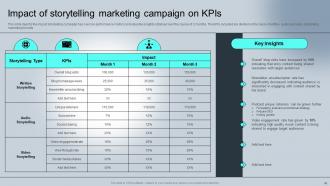
Slide 46: This slide depicts the impact storytelling campaign has over key performance metrics and valuable insights obtained over the course of 3 months.
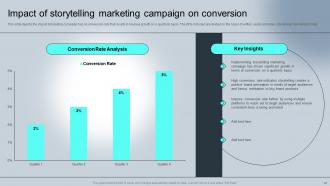
Slide 47: This slide depicts the impact storytelling campaign has on conversion rate that results in revenue growth on a quarterly basis.
Slide 48: This slide exhibit table of content that is to be discuss further.
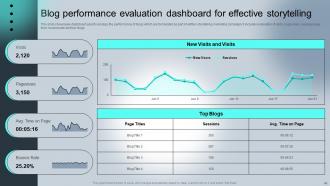
Slide 49: This slide showcases dashboard used to analyze the performance of blogs which are formulated as part of written storytelling marketing campaign.
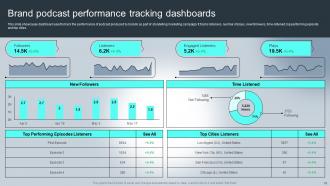
Slide 50: This slide showcases dashboard used to track the performance of podcast produced by brands as part of storytelling marketing campaign.
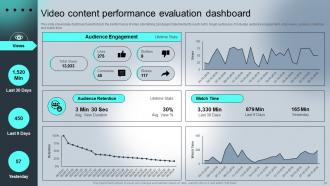
Slide 51: This slide showcases dashboard used to track the performance of video storytelling campaign implemented to reach out to target audiences.
Slide 52: This is the icons slide.
Slide 53: This slide presents title for additional slides.
Slide 54: This slide shows about your company, target audience and its client's values.
Slide 55: This slide presents your company's vision, mission and goals.
Slide 56: This slide shows details of team members like name, designation, etc.
Slide 57: This slide shows puzzle for displaying elements of company.
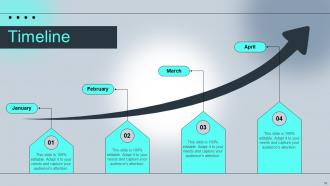
Slide 58: This slide exhibits yearly timeline of company.
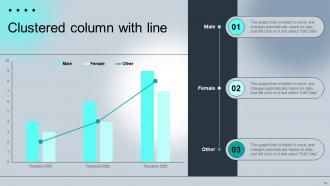
Slide 59: This slide display Clustered column with line.
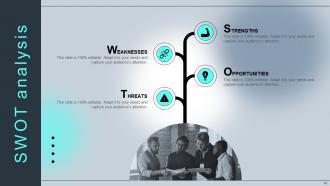
Slide 60: This slide display SWOT analysis.
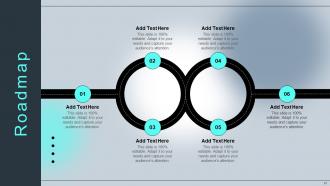
Slide 61: This slide shows roadmap of company.
Slide 62: This slide showcase Magnify glass.
Slide 63: This slide depicts 30-60-90 days plan for projects.
Slide 64: This slide display Venn diagram.
Slide 65: This slide depicts posts for past experiences of clients.
Slide 66: This is thank you slide & contains contact details of company like office address, phone no., etc.
Complete Guide For Understanding Storytelling Marketing Powerpoint Presentation Slides MKT CD with all 71 slides:
Use our Complete Guide For Understanding Storytelling Marketing Powerpoint Presentation Slides MKT CD to effectively help you save your valuable time. They are readymade to fit into any presentation structure.







FAQs for Complete Guide For Understanding Storytelling Marketing Powerpoint Presentation
Honestly, it's all about character, conflict, and resolution. You need someone relatable facing a problem your product actually solves. Your customer should be the hero here - not your brand (seriously, brands mess this up constantly). Find the real stakes and tension. What keeps them up at night? Then connect emotionally to their values or pain points. The story has to feel authentic and naturally lead to where your solution fits. I'd start by mapping real customer journeys - that's where you'll find the good narrative threads. Don't make it all about you though. Nobody wants to hear a company talk about itself for five minutes straight.
Okay so first - dig into your origin story and what you actually stand for. That's usually where the good stuff is hiding. Figure out what problem you're solving, not just what you're selling. I always ask teams "what would disappear if we didn't exist?" because it cuts through all the fluff. Your founder's background might be the differentiator, or maybe it's how you built the product. Could be your culture too - honestly varies so much by company. Find where what matters to your audience overlaps with what makes you different. Test out 3-4 narrative ideas and see what sticks.
Okay so here's the thing - people connect with stories way more than boring feature lists. Your brain literally remembers a good story for years while forgetting stats immediately. When someone hears your customer success story, they start picturing themselves in that situation. That emotional connection is pure gold. I mean, think about it - we've been telling stories since we were kids, right? It's just how humans work. Instead of jumping straight into product specs, try opening with "So this customer had a problem..." You'll hook them from the start.
Dude, emotion is literally what makes storytelling work in marketing. People forget your product details but they'll always remember how you made them feel - that's just how our brains are wired. Joy, fear, nostalgia, even anger... these feelings create connections that boring facts can't touch. I mean, think about the last ad that actually stuck with you - bet it wasn't because of the specs, right? Your audience won't share or buy unless they feel something first. So whenever you're crafting a story, just ask yourself what emotion you're going for.
Honestly, I used to just throw stories out there and hope for the best. Now I track everything - which emotional tones get shares, what character types drive conversions, even sentiment analysis on comments. The trick is A/B testing your story hooks without losing that authentic feel. Pick one campaign and measure it all: views, engagement, sales, whatever matters to you. Then just iterate based on what actually works. I know it sounds kinda clinical for creative stuff, but the data doesn't lie. You'll spot patterns in what resonates and can double down on those elements.
Nike's "Just Do It" campaigns are perfect examples - they follow real athletes through their actual struggles. Dove does this well too with their "Real Beauty" stories about everyday women. And honestly? Coca-Cola's holiday ads hit different every time because they nail those family moments. Airbnb crushes it with host/guest stories that feel genuine. The trick is focusing on human experiences, not just what your product does. You'll want stories that match your brand values and actually speak to what your audience goes through. Figure out what journey or change your customers experience first - that's your goldmine right there.
Okay so visuals basically make your abstract stuff feel real and hit people in the feelings. Don't let them fight with your story though - they're like the wingman, not the main character. Pick images and charts that actually back up what you're saying. Consistent colors and fonts help everything flow together. A single good photo honestly beats a whole slide of boring bullet points any day. Oh and emotions are key - figure out the moments where you want people to feel something, then find visuals that punch those buttons. Makes such a difference.
Honestly, just make them messy and real. Give your characters the same stupid problems we all have - like being great at their job but still burning dinner every night. I'd start by actually talking to real customers first (sounds boring but trust me). Then build characters around what they tell you. Be super specific too - don't just say "busy professional." Say "32-year-old marketing manager who meal preps on Sundays but orders takeout by Wednesday." Show what's going on in their head, not just what they're doing. The flaws are what make people connect.
Stories are what make customers actually give a shit about your brand, you know? Like, when people feel connected to your mission or values through authentic storytelling, they stick around way longer than they would otherwise. I've watched companies completely flip their customer retention just by sharing real experiences instead of boring product features. It's wild how much more memorable you become when there's emotion involved. Your brand stops being just another option and becomes something people want to be part of. Find that one story that captures what you're really about and run with it.
Oh totally! B2B buyers are still people - they just want stories that feel real, not more feature dumps. Customer success stories work amazing because you're showing actual transformation. Like that software helping some burnt-out manager actually get home for dinner again? That hits way harder than talking about "increased efficiency." Case studies are gold too - walk them through the whole messy journey from problem to solution. Honestly, B2B stories sometimes land better because the stakes feel so concrete and relatable. Your company's origin story builds trust too. Start small - grab one solid customer story this week and try it in your next pitch. You'll see the difference immediately.
Dude, cultural context can totally make or break your campaign. I found this out the hard way when something that crushed it here in the US completely tanked overseas. Different cultures have their own humor, values, even color meanings that'll change how people see your story. What's emotional and powerful to one group might be boring or straight-up offensive to another. You've gotta dig into their storytelling traditions and social norms first. Test with local focus groups if you can - trust me, it beats learning from embarrassing mistakes later. Oh, and watch out for taboos too.
Think of it like speaking different languages to the same person. Instagram? Go visual-first with carousels that tell your story in chunks. LinkedIn eats up those longer posts where you dig into the "why" - people actually read there. Twitter threads are where some brands really shine honestly, just keep each tweet punchy. TikTok's weird because it wants that "spontaneous" vibe even though nothing's actually spontaneous anymore. Your main message doesn't change, just how you package it. Maybe try taking one story and tweaking it for two platforms this week?
Oh man, don't make it all about your company - your customer should be the hero, not you guys. And please don't be super promotional either. Nobody wants to sit through what's basically a disguised ad, you know? Here's the thing though - forced drama is the worst. If it doesn't naturally fit, it'll sound fake as hell. Keep it short too since people's attention spans are basically nonexistent now. Before you post anything, just ask yourself: would I actually watch this if I wasn't getting paid to? That test works every time.
Dude, the Hero's Journey is like marketing gold because customers are literally living it. They've got some problem (that's their "call to adventure"), then they're struggling to fix it on their own. Your product becomes the wise mentor who swoops in with the solution. Every customer thinks they're the main character of their story anyway - might as well lean into it! Look at how Nike tells those athlete transformation stories. Pure genius. Just structure everything as: problem they face → watching them struggle → here's your solution → boom, transformation. Way better than boring feature lists that nobody cares about.
Honestly, I'd start with whatever you're already comfortable using. Canva's solid for quick graphics and infographics. Video stuff? Loom works great for casual storytelling, though Animoto gives you more polish if that's your vibe. Your phone camera is probably underrated too - I use mine way more than fancy tools. Grammarly can clean up your writing, but don't stress about perfection. Sometimes messy stories hit harder anyway. Oh, and Buffer or Hootsuite help if you want to plan out story arcs across posts. Pick one thing and just mess around with it first.
-
Professional and unique presentations.
-
SlideTeam is the way to go when you are in a time crunch. Their templates have saved me many times in the past three months.