


Sustainable Competitive Advantage In Strategic Management Powerpoint Presentation Slides Strategy CD V
A sustainable competitive advantage is the companys ability to outperform its competitors in serving its consumers. Grab our insightfully designed Sustainable Competitive Advantage in a Strategic Management template. Its main objective is to expand the companys market share among formidable rivals. The Strategy PPT gives a broad overview and information on the types, significance, procedures, and structures that various corporates can use. Access to a variety of competitive advantage boosting techniques, like cost leadership, differentiation, focus, and sustainable initiatives plan, are provided in this PowerPoint presentation. Our cost leadership strategy deck includes an organizational chart, a communication strategy, and a training program. Additionally, it offers information on selecting software and prices for putting sustainable competitive advantage methods into practice. Further, this modules impact analysis, KPIs, and dashboards can aid in evaluating the effectiveness of the approach above. Finally, it overviews numerous case studies of businesses using sustainable competitive advantage tactics, including Walmart, Zara, and Harley Davidson. Download this utterly editable presentation to get our well researched and expertly crafted offering.
A sustainable competitive advantage is the companys ability to outperform its competitors in serving its consumers. Grab ou..












-

- Google Slides is a new FREE Presentation software from Google.
- All our content is 100% compatible with Google Slides.
- Just download our designs, and upload them to Google Slides and they will work automatically.
- Amaze your audience with SlideTeam and Google Slides.
-

Want Changes to This PPT Slide? Check out our Presentation Design Services
-

- WideScreen Aspect ratio is becoming a very popular format. When you download this product, the downloaded ZIP will contain this product in both standard and widescreen format.
-
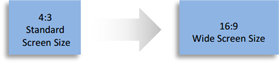
- Some older products that we have may only be in standard format, but they can easily be converted to widescreen.
- To do this, please open the SlideTeam product in Powerpoint, and go to
- Design ( On the top bar) -> Page Setup -> and select "On-screen Show (16:9)” in the drop down for "Slides Sized for".
- The slide or theme will change to widescreen, and all graphics will adjust automatically. You can similarly convert our content to any other desired screen aspect ratio.
Compatible With Google Slides

Get This In WideScreen
You must be logged in to download this presentation.


Do you want to remove this product from your favourites?
PowerPoint presentation slides
Deliver this complete deck to your team members and other collaborators. Encompassed with stylized slides presenting various concepts, this Sustainable Competitive Advantage In Strategic Management Powerpoint Presentation Slides Strategy CD is the best tool you can utilize. Personalize its content and graphics to make it unique and thought-provoking. All the fifty nine slides are editable and modifiable, so feel free to adjust them to your business setting. The font, color, and other components also come in an editable format making this PPT design the best choice for your next presentation. So, download now.

People who downloaded this PowerPoint presentation also viewed the following :
Content of this Powerpoint Presentation
Slide 1: This slide introduces Sustainable Competitive Advantage in Strategic Management. Commence by stating Your Company Name.
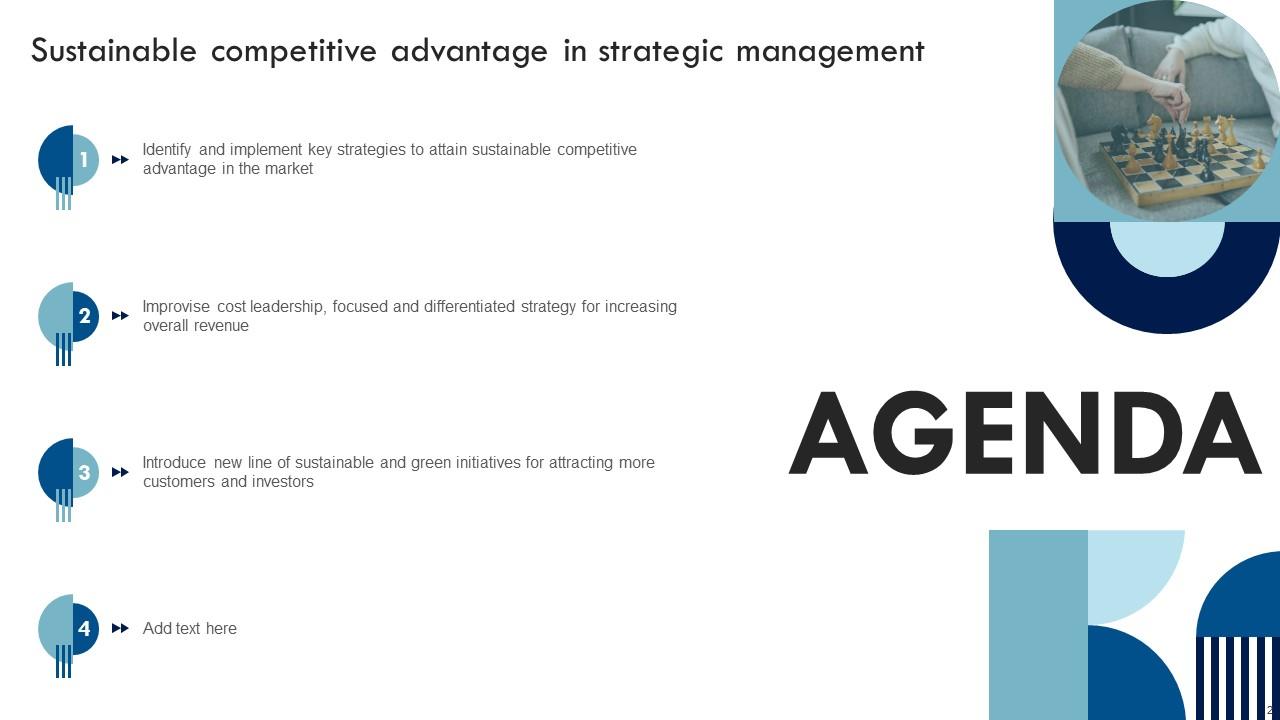
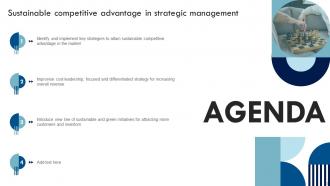
Slide 2: This slide depicts the Agenda of the presentation.
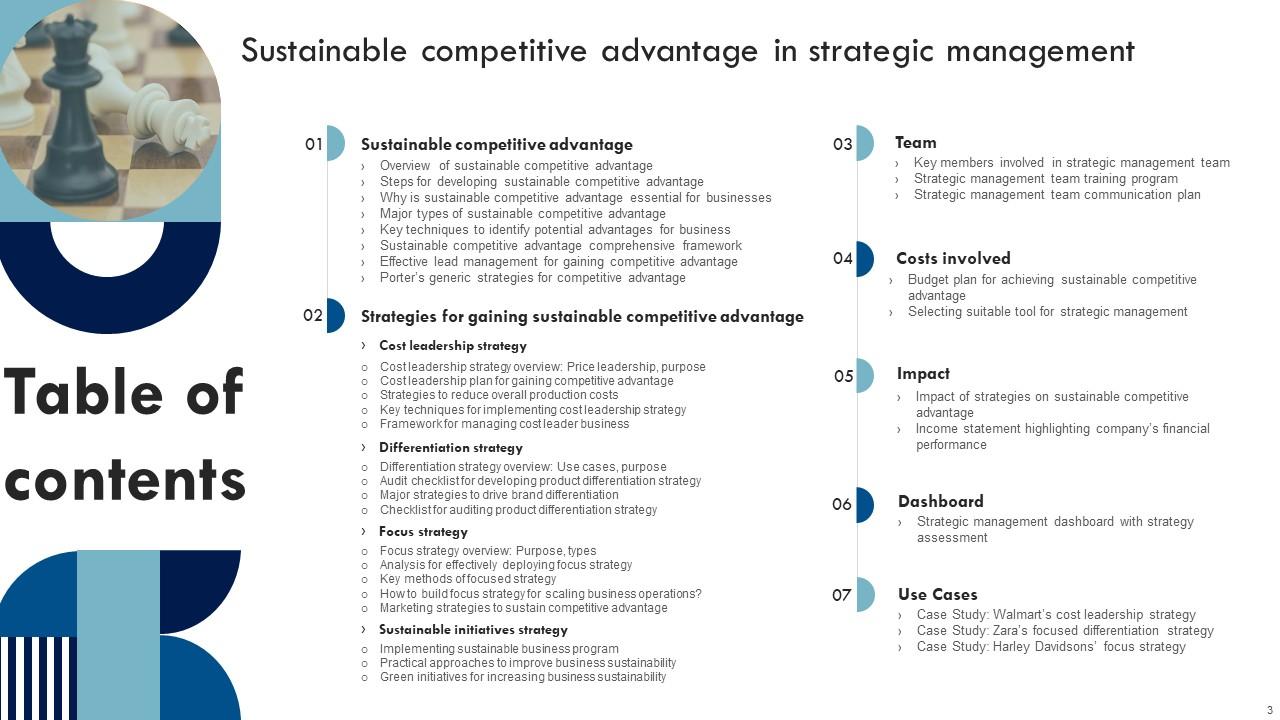
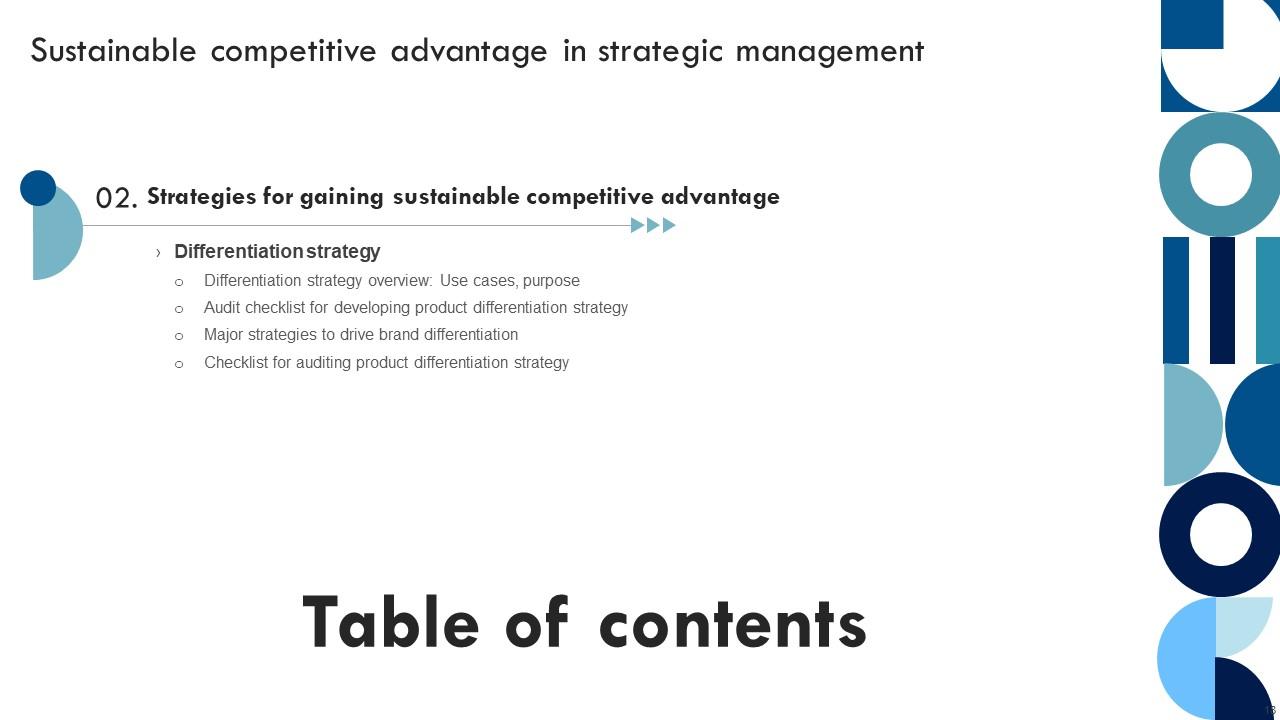
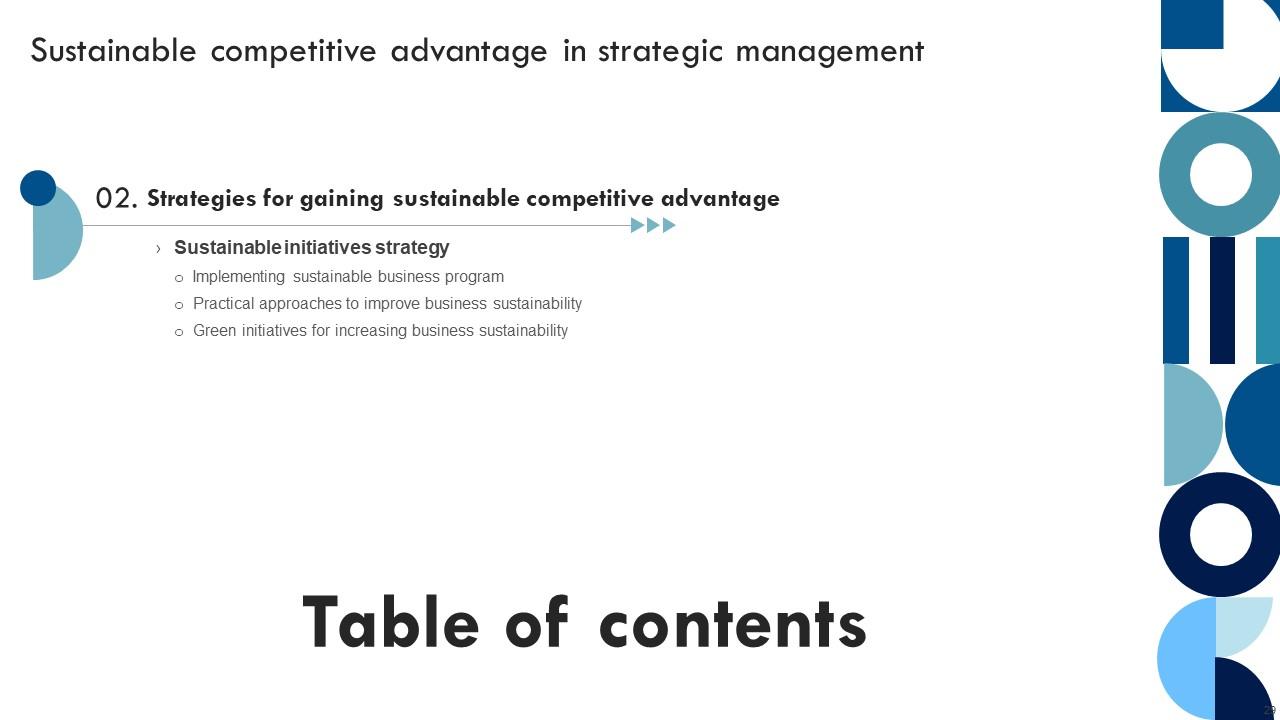
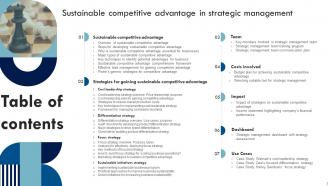
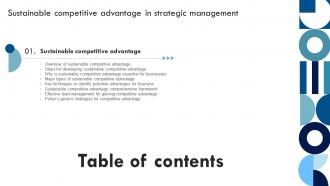
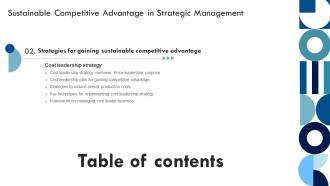
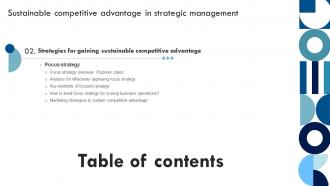
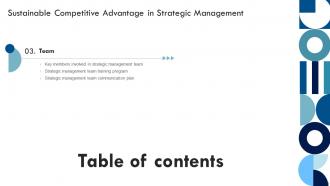
Slide 3: This slide incorporates the Table of contents.
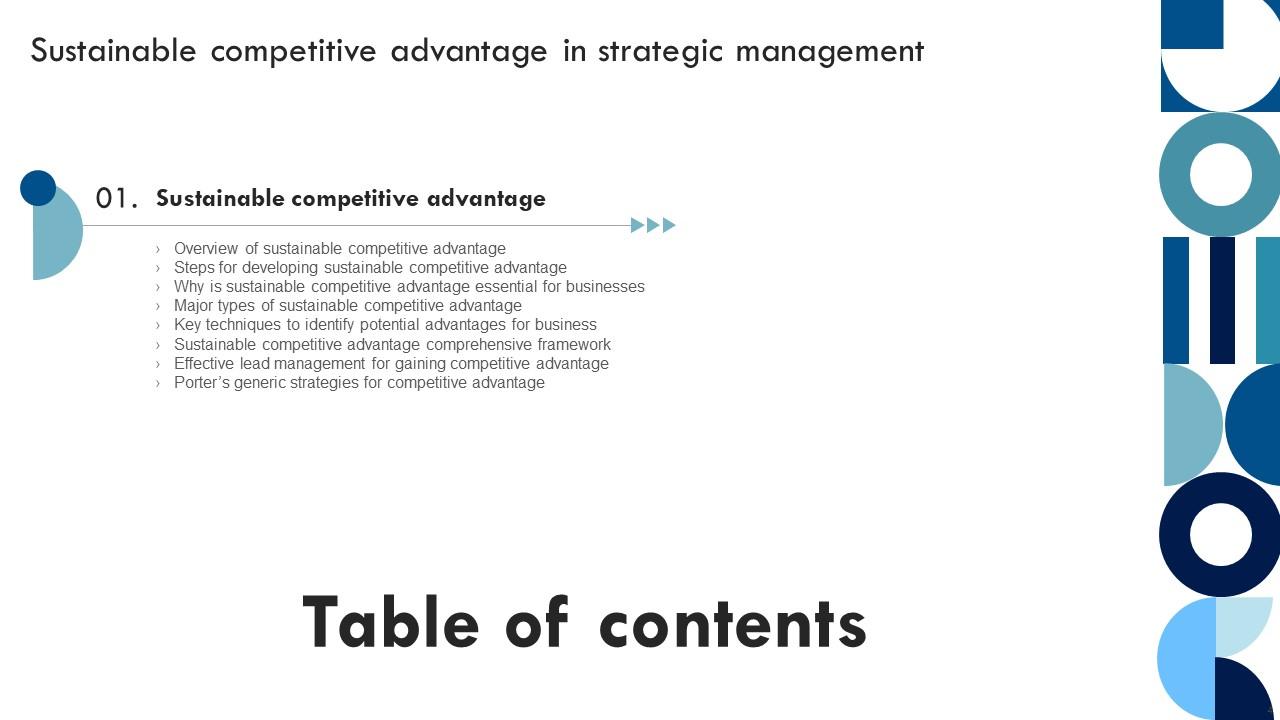
Slide 4: This slide highlights the Title for the Topics to be discussed next.
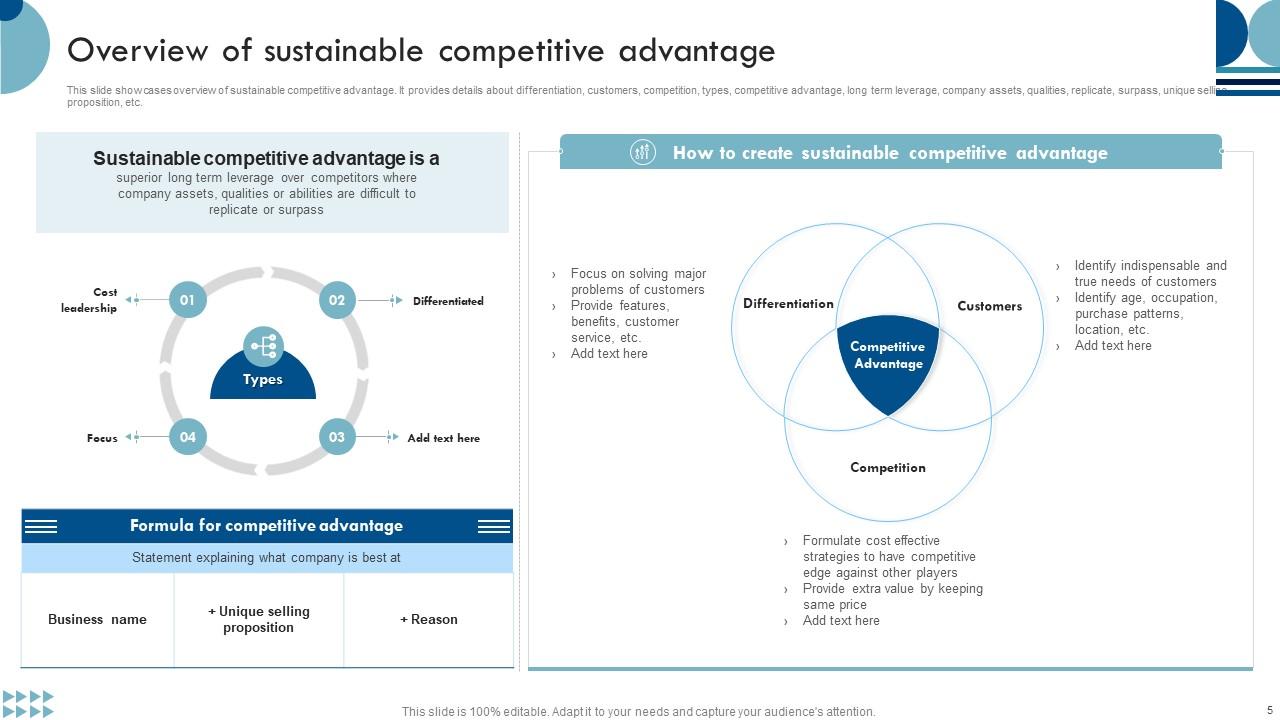
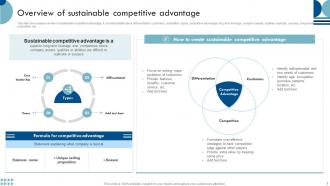
Slide 5: This slide showcases the overview of sustainable competitive advantage.
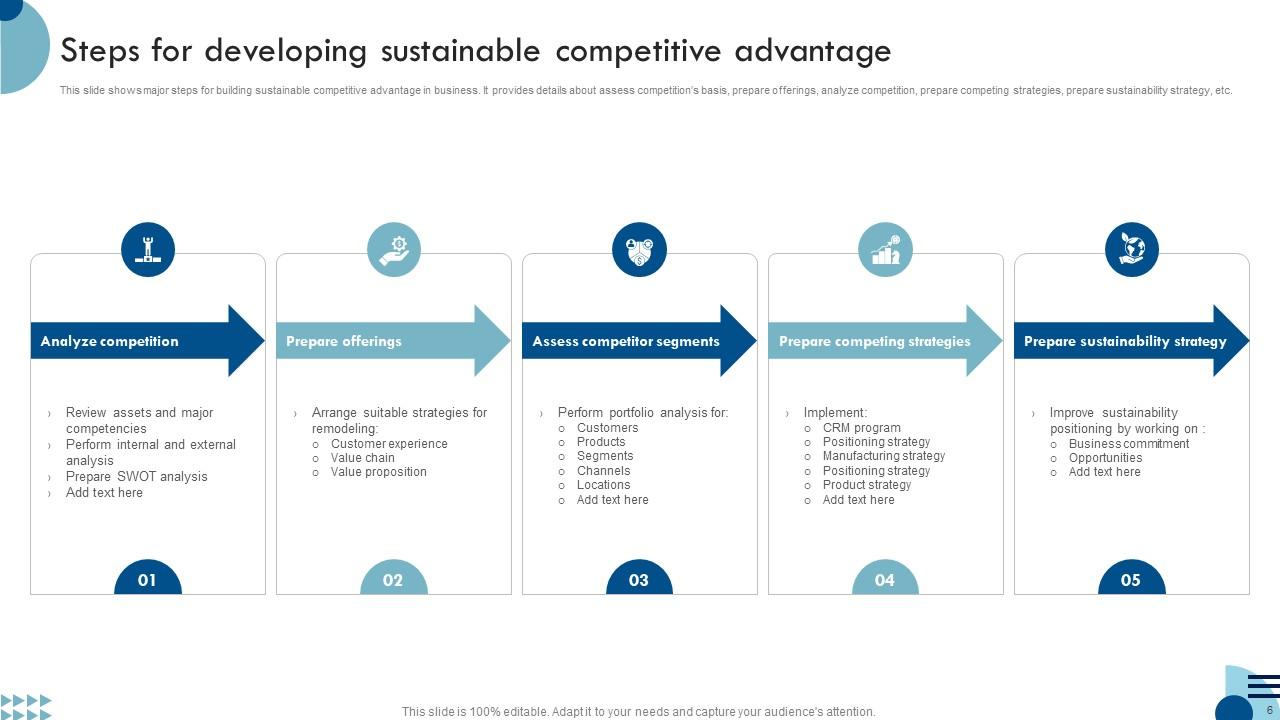
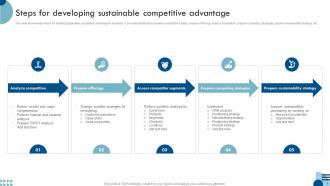
Slide 6: This slide states the Steps for developing sustainable competitive advantage.
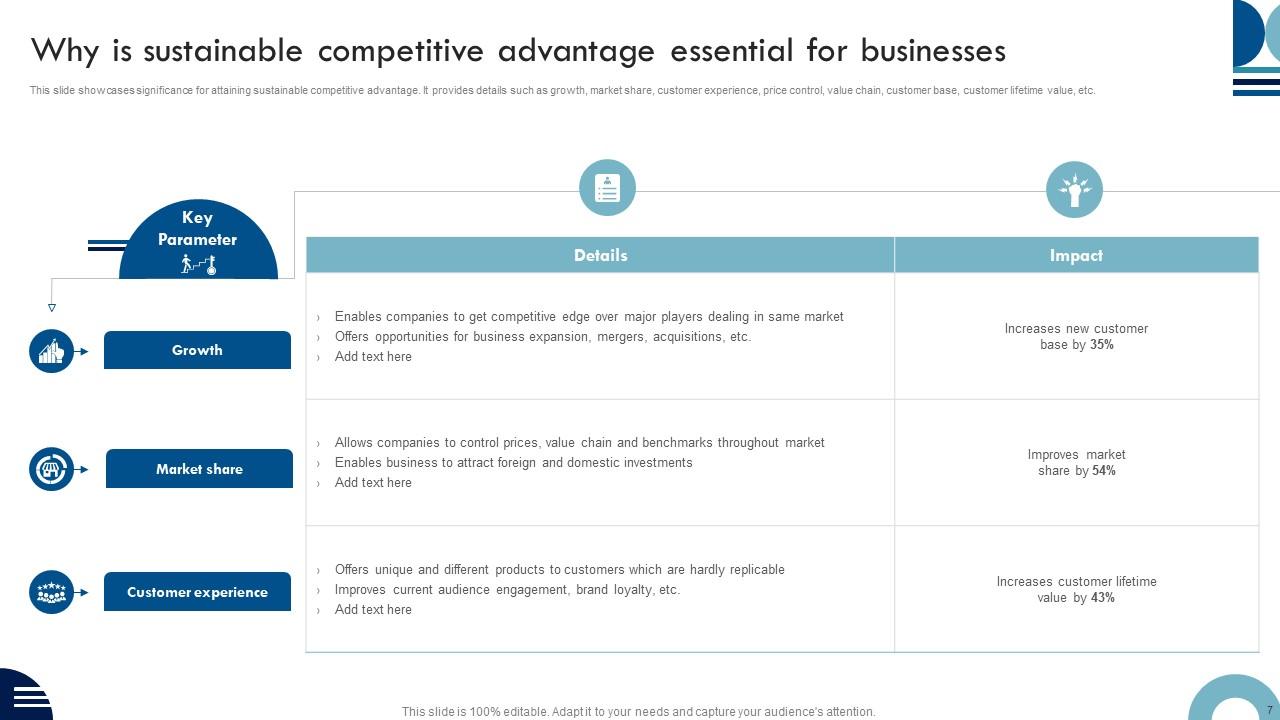
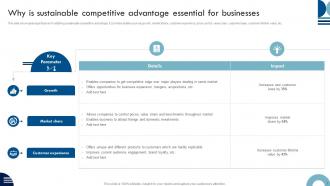
Slide 7: This slide exhibits the significance for attaining sustainable competitive advantage.
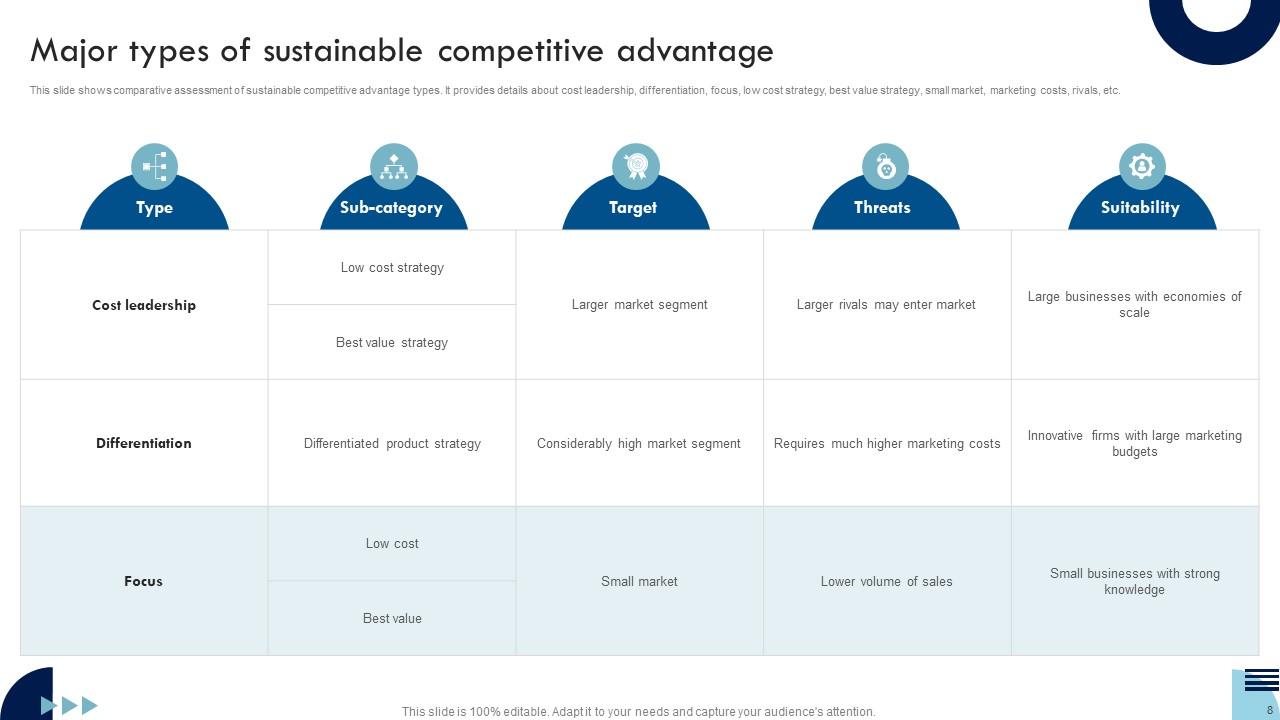
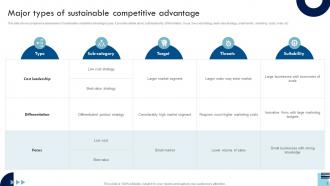
Slide 8: This slide elucidates the comparative assessment of sustainable competitive advantage types.
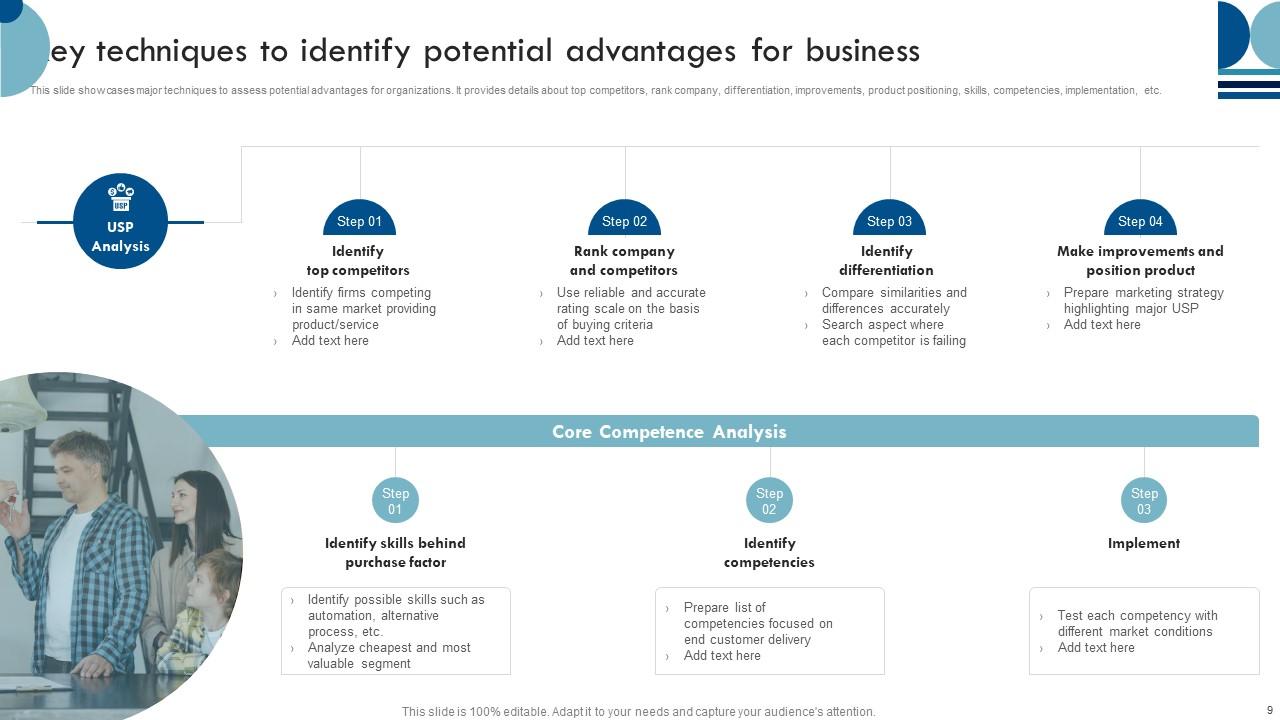
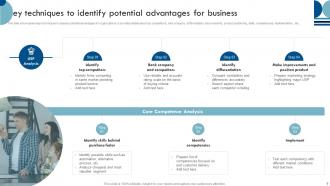
Slide 9: This slide takes into consideration the Key techniques to identify potential advantages for business.
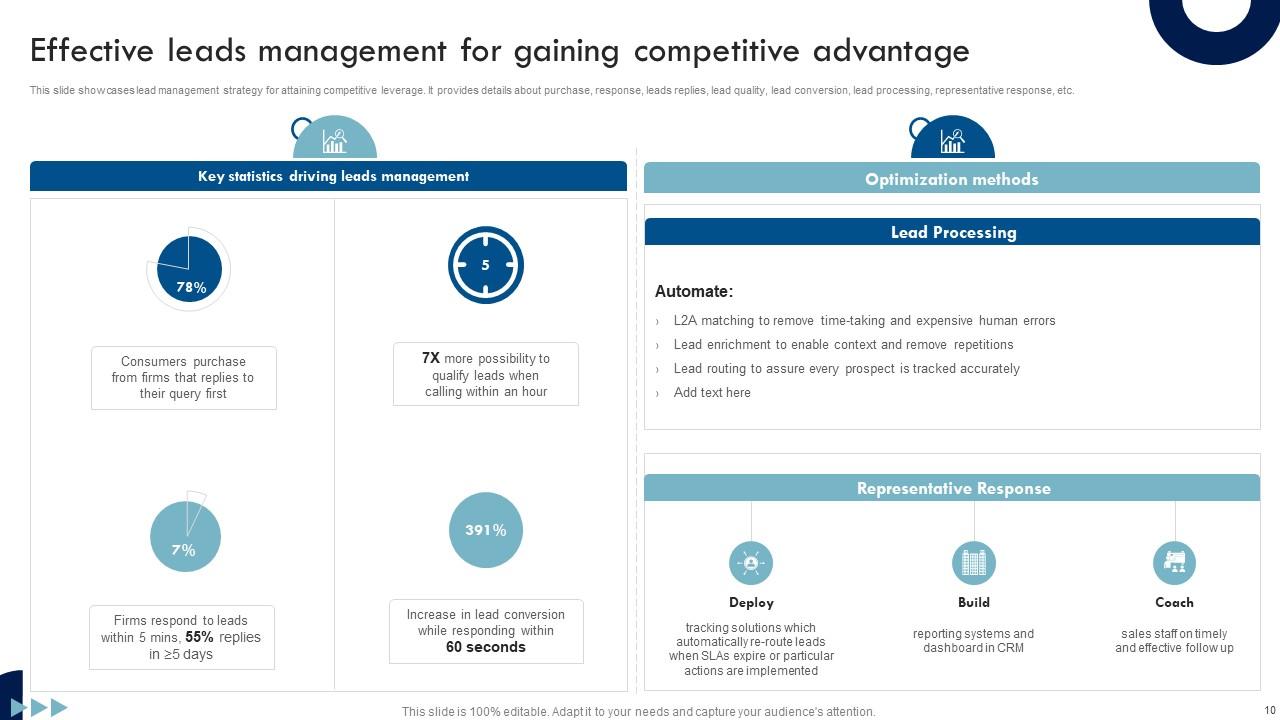
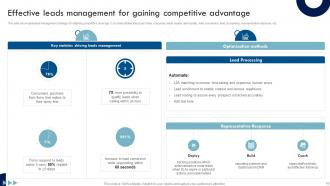
Slide 10: This slide showcases lead management strategy for attaining competitive leverage.
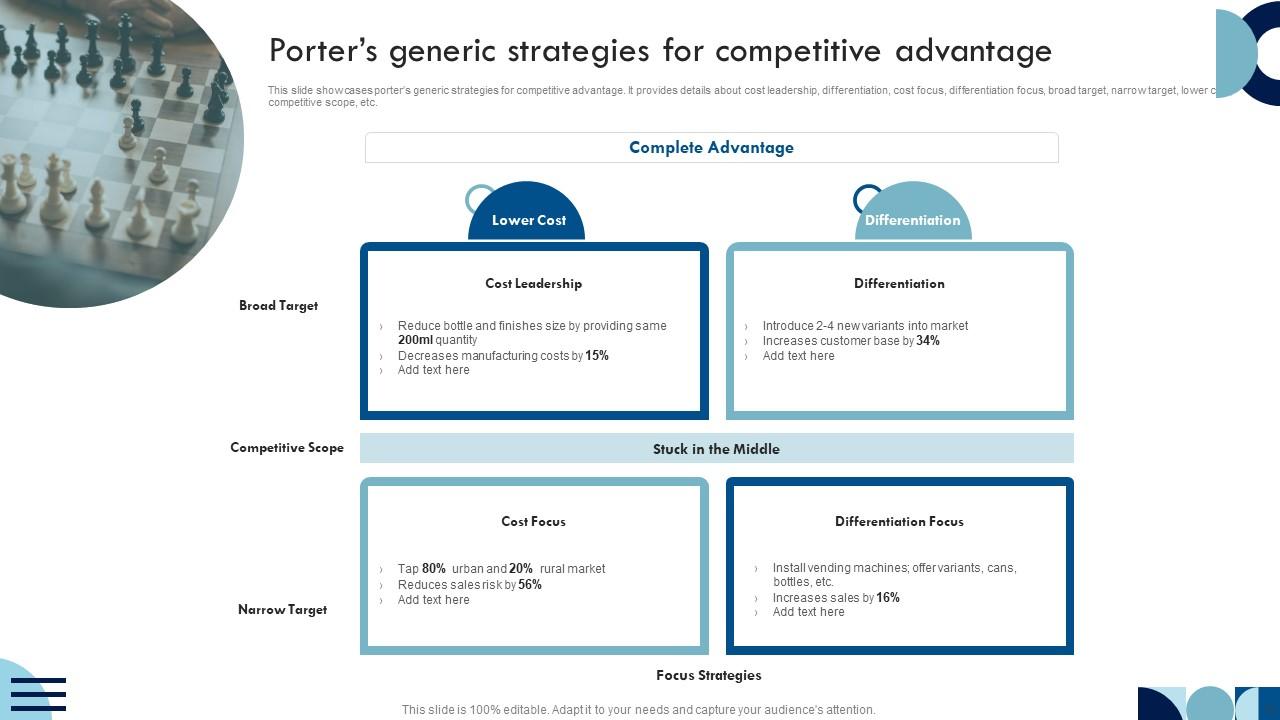
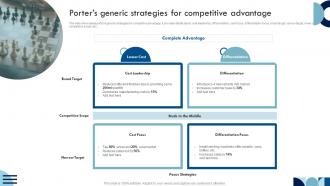
Slide 11: This slide presents the Porter’s generic strategies for competitive advantage.
Slide 12: This slide reveals the Heading for the Components to be covered in the upcoming template.
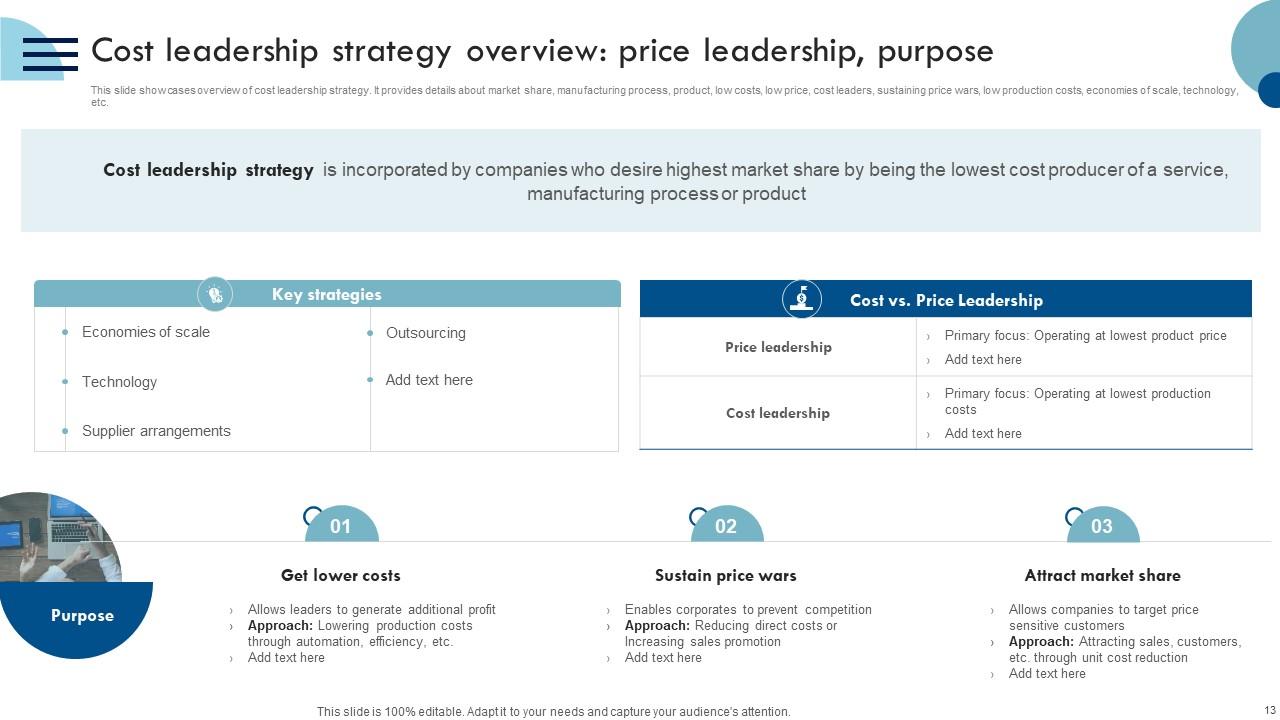
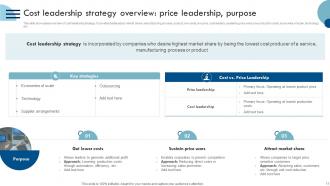
Slide 13: This slide portrays the overview of cost leadership strategy.
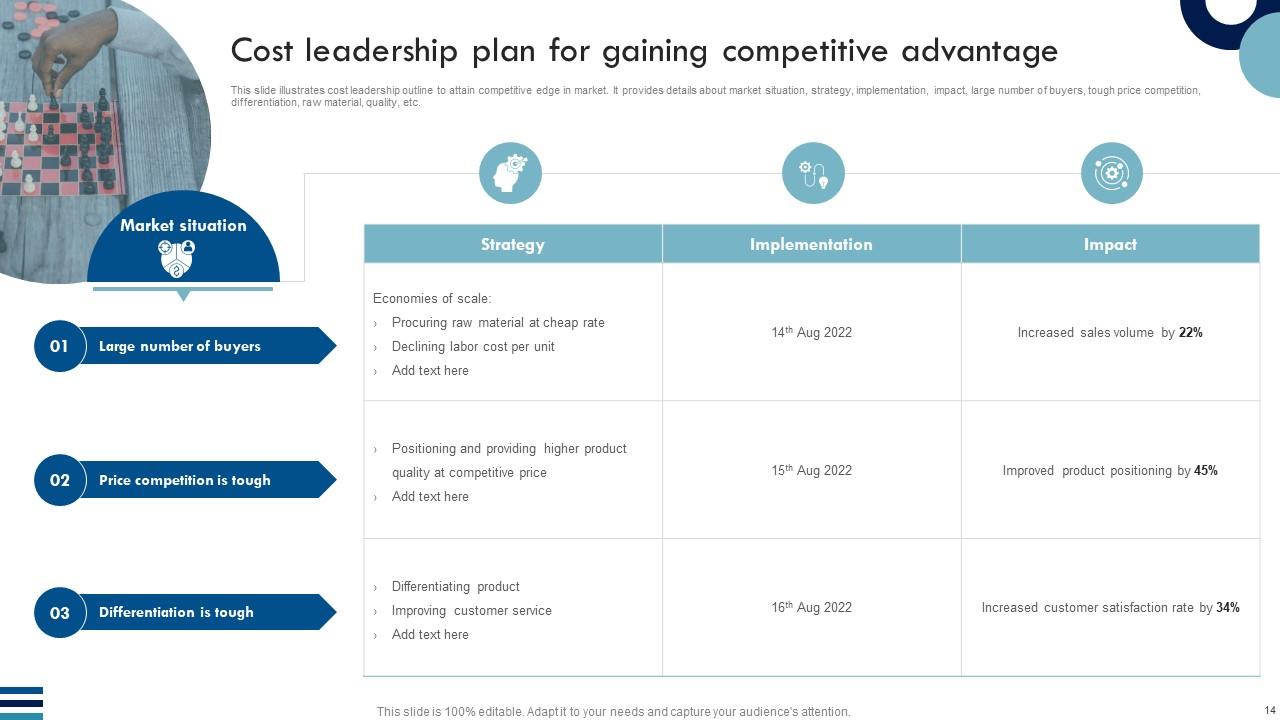
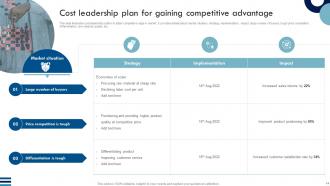
Slide 14: This slide illustrates cost leadership outline to attain competitive edge in market.
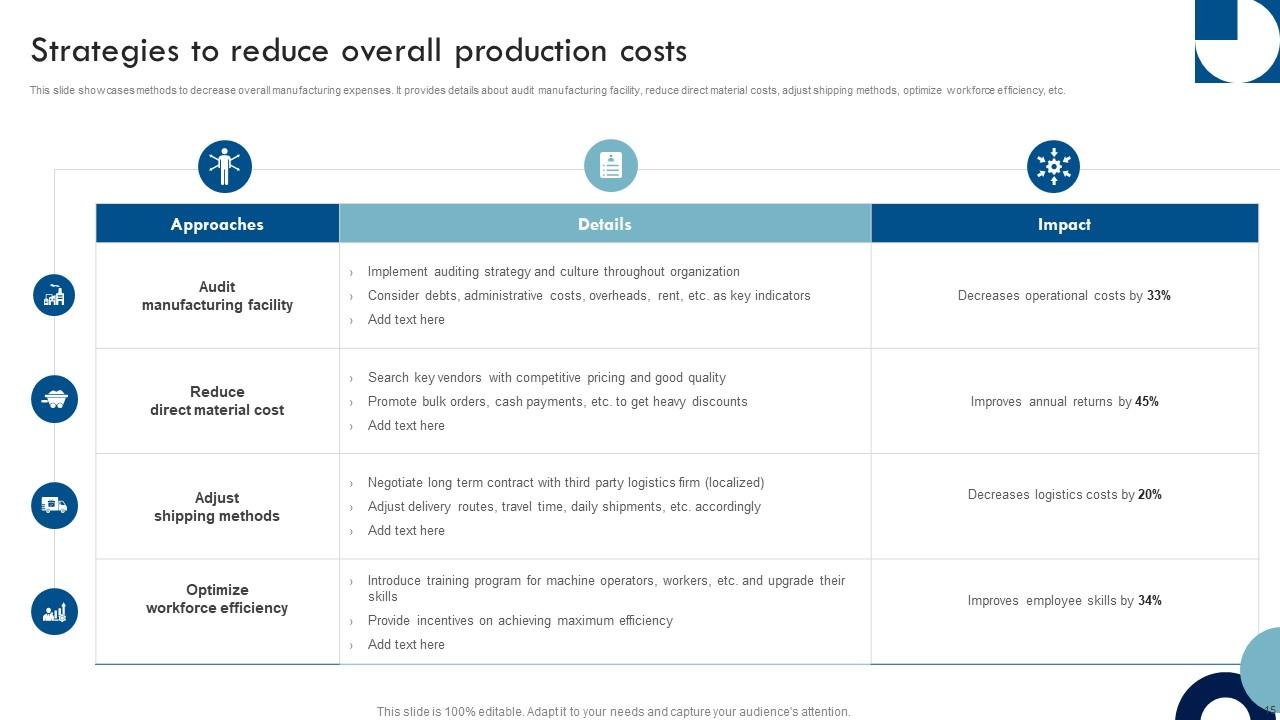
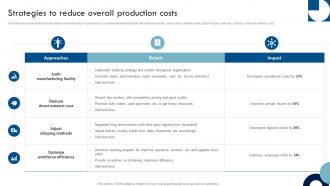
Slide 15: Thi slide lists the Strategies to reduce overall production costs.
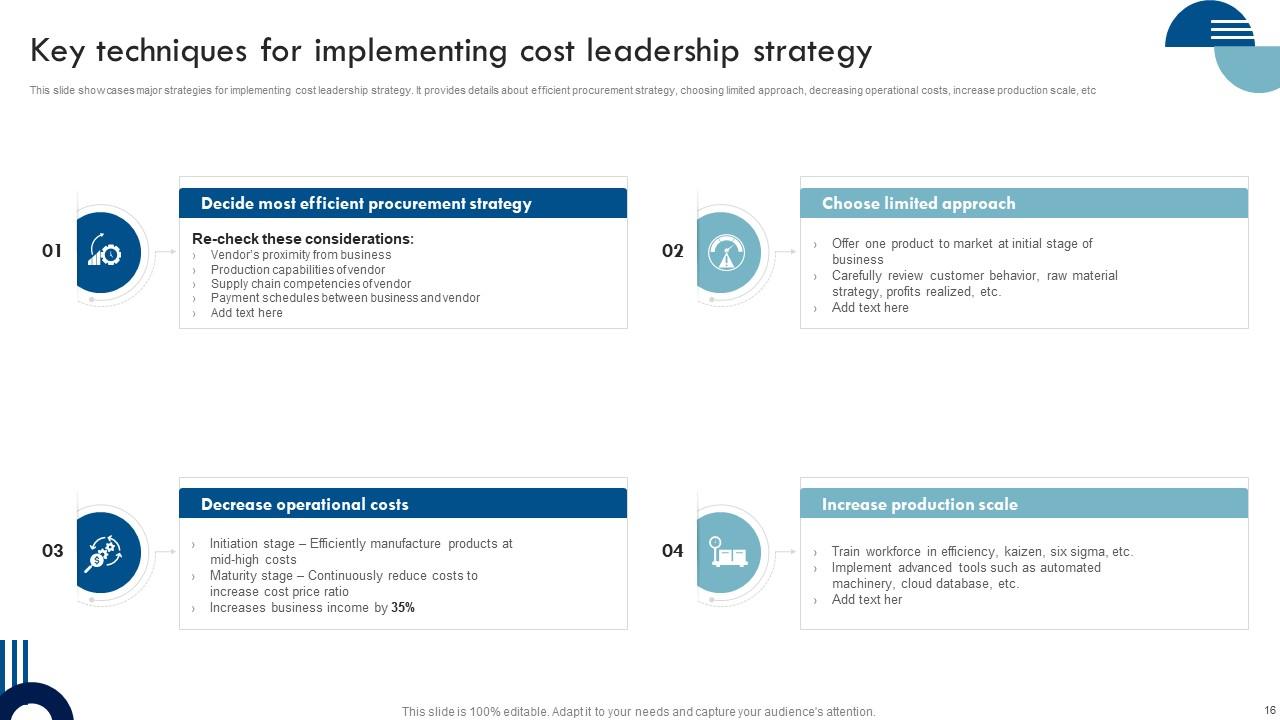
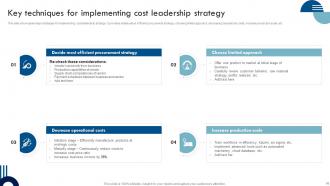
Slide 16: This slide highlights the Key techniques for implementing cost leadership strategy.
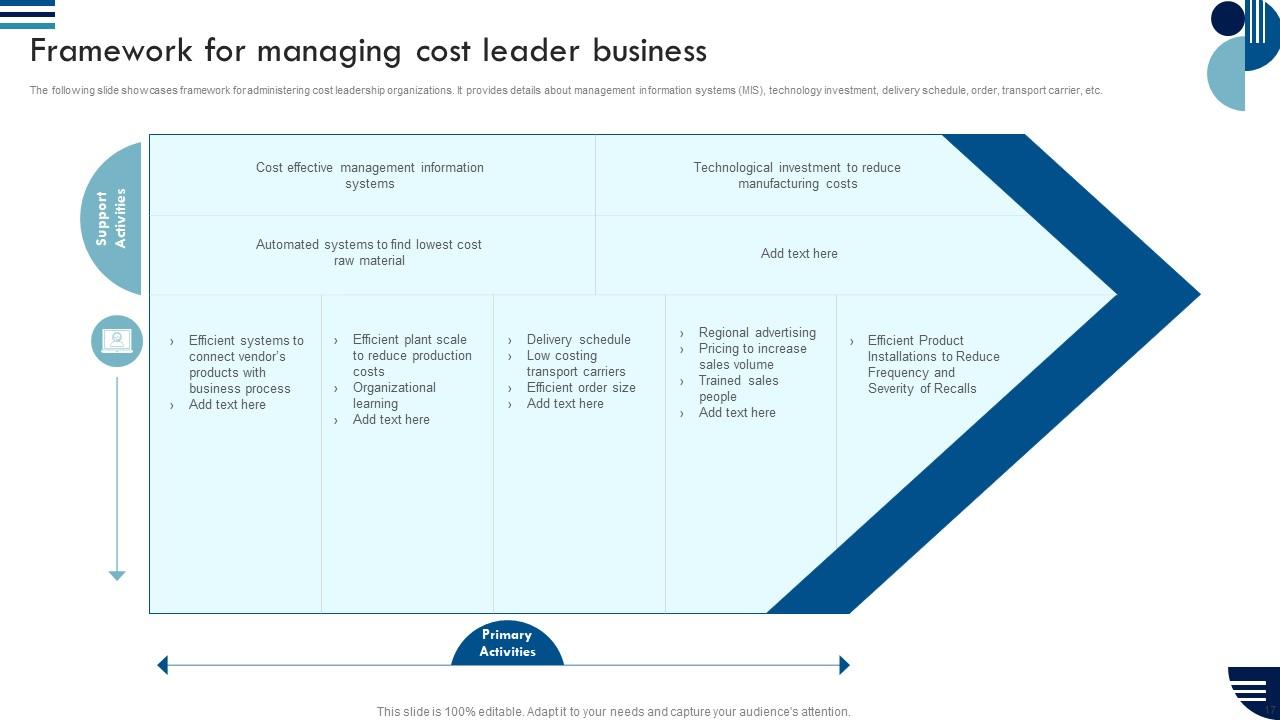
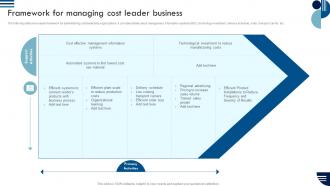
Slide 17: The following slide shows the framework for administering cost leadership organizations.
Slide 18: This slide contains the Title for the Ideas to be discussed next.
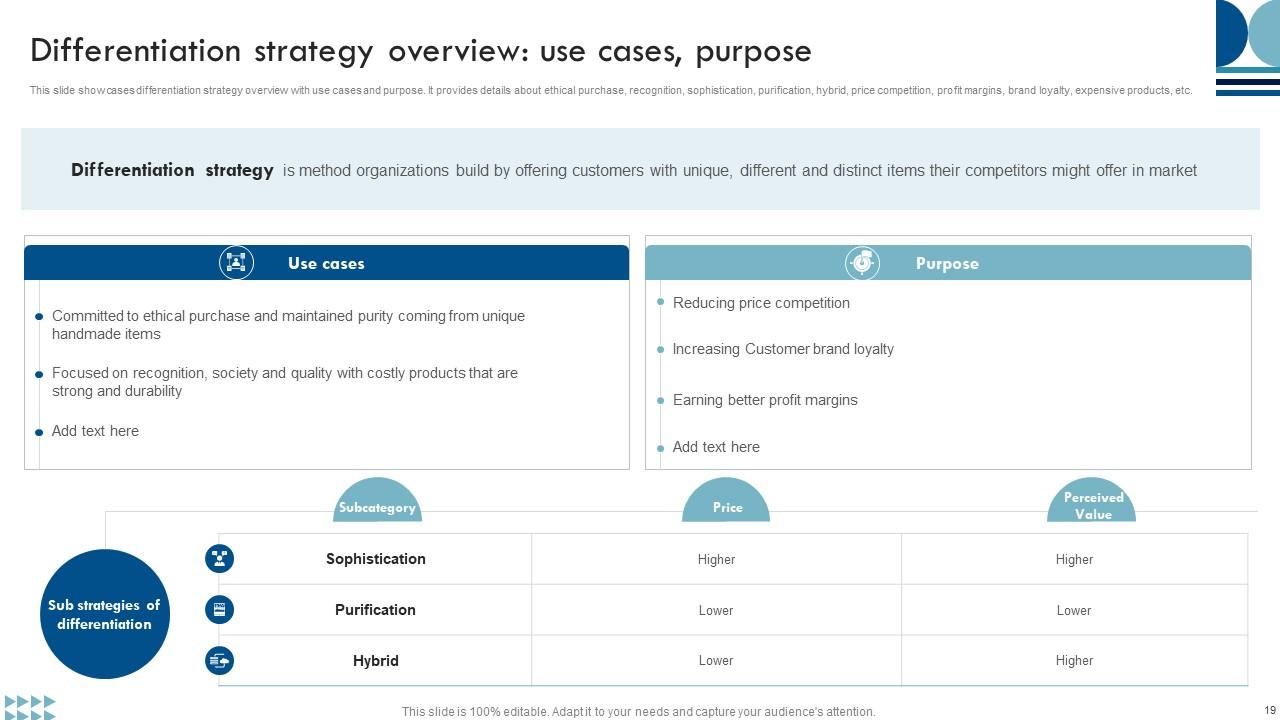
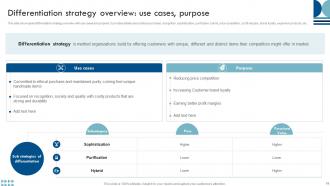
Slide 19: This slide presents differentiation strategy overview with use cases and purpose.
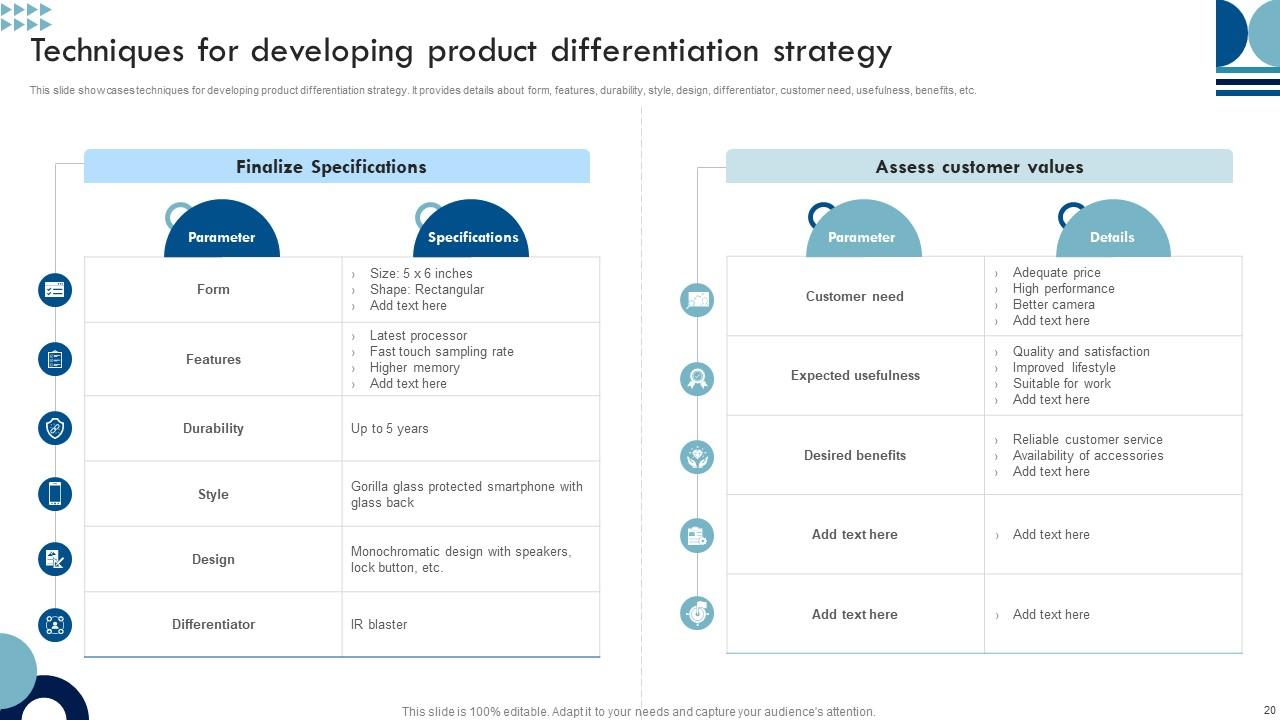
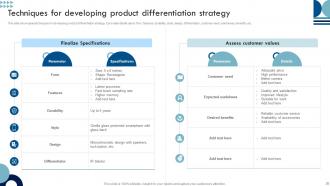
Slide 20: This slide elucidates the techniques for developing product differentiation strategy.
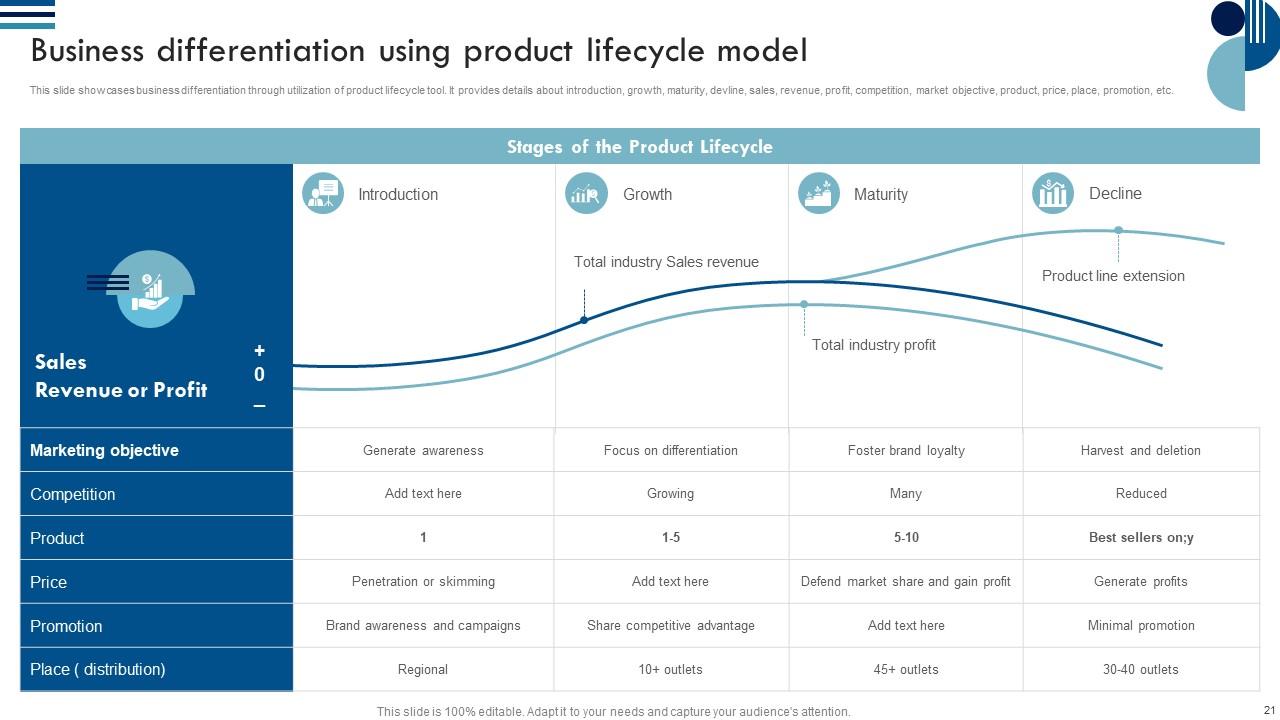
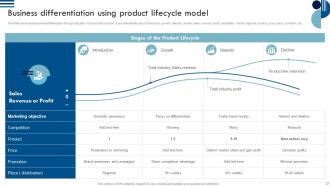
Slide 21: This slide represents business differentiation through utilization of product lifecycle tool.
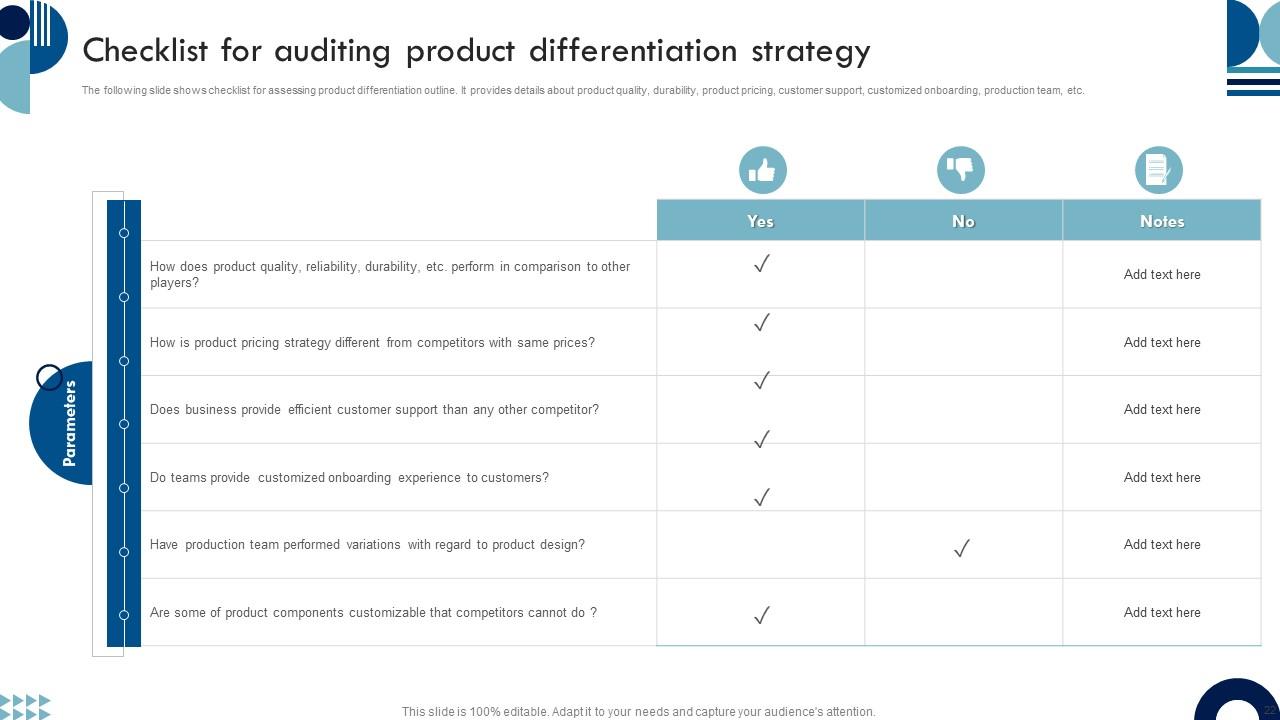
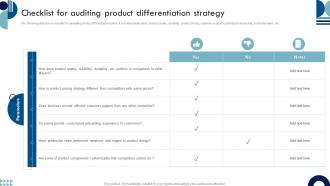
Slide 22: The following slide depicts a checklist for assessing product differentiation outline.
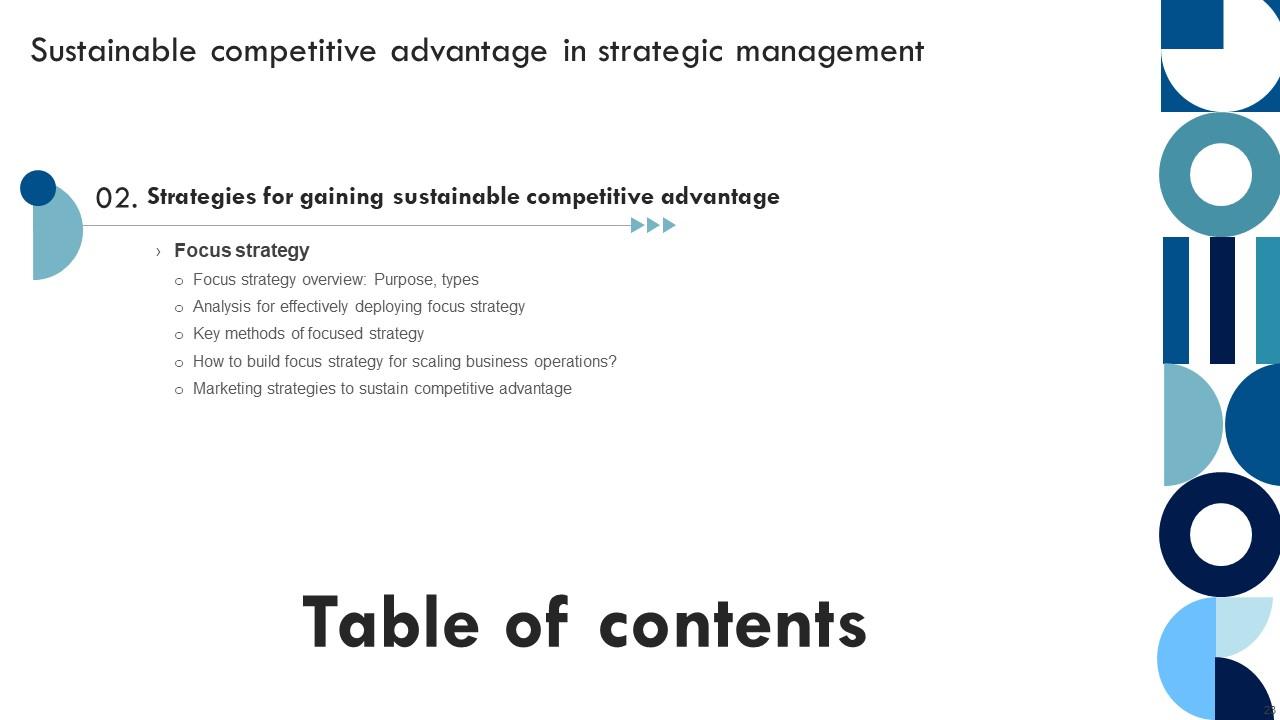
Slide 23: This slide indicates the Heading for the Ideas to be covered further.
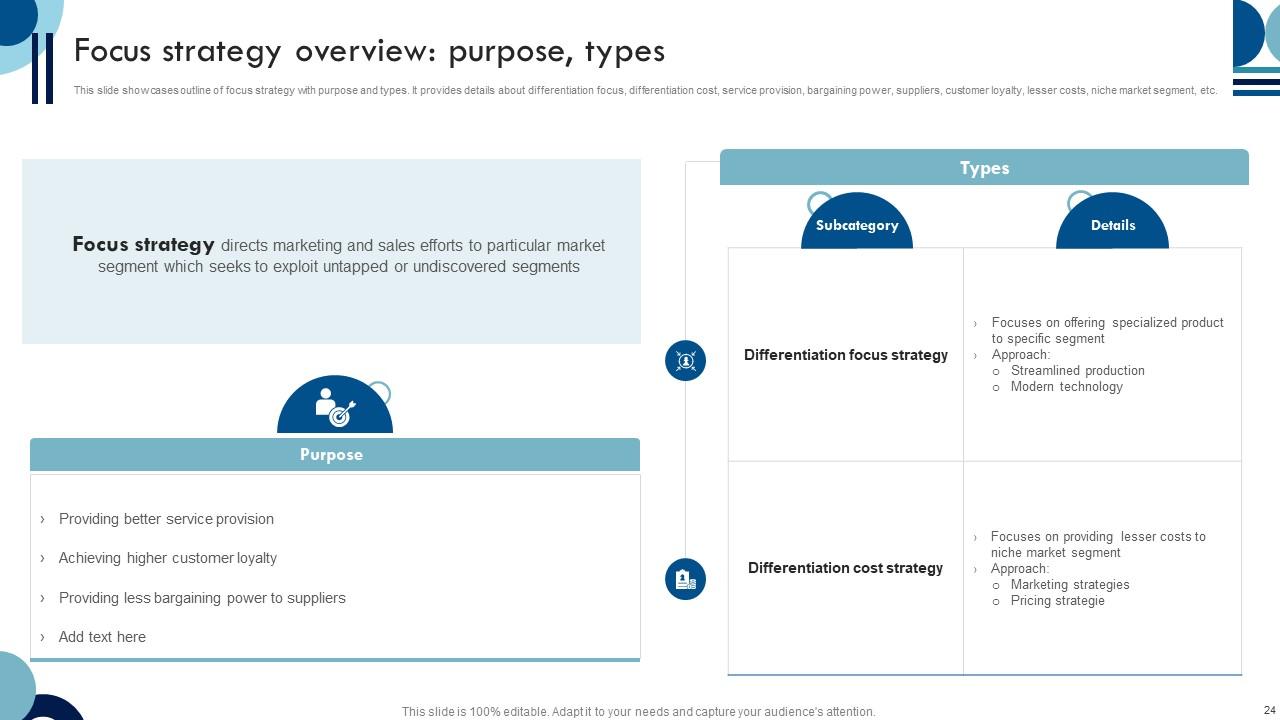
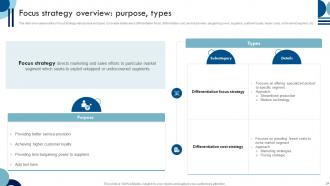
Slide 24: This slide showcases outline of focus strategy with purpose and types.
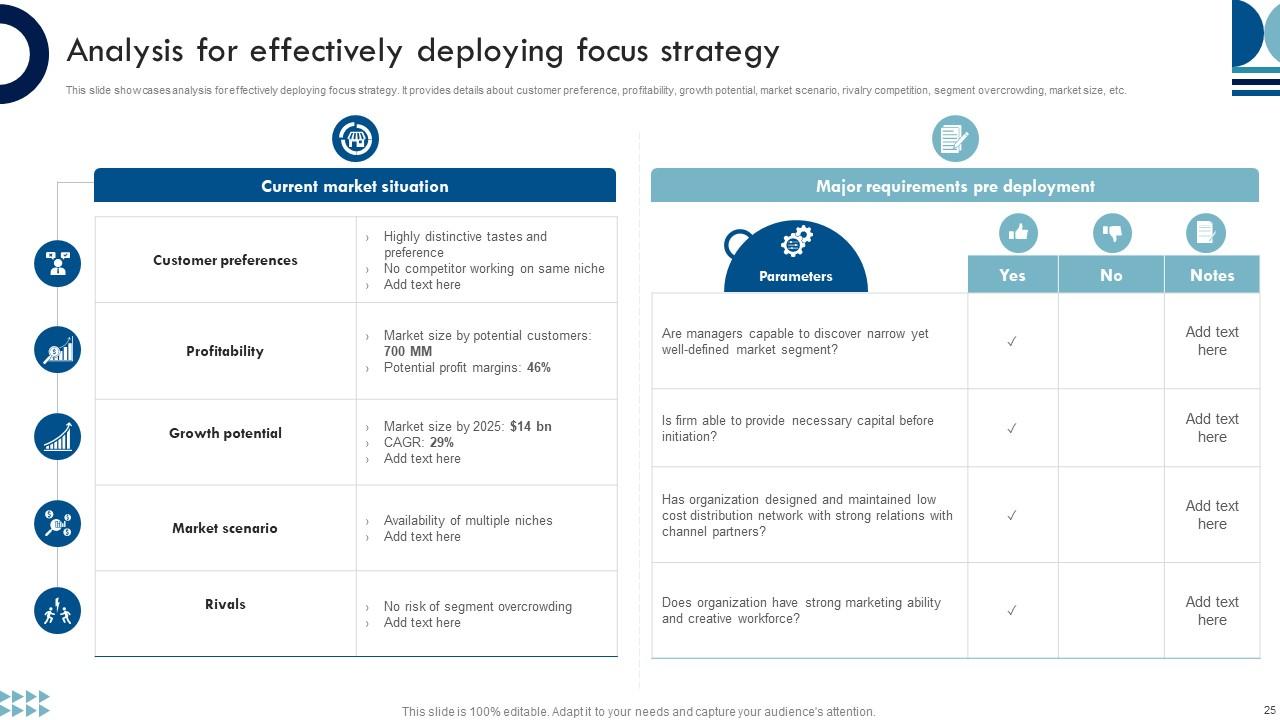
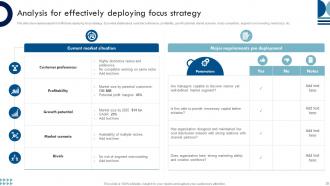
Slide 25: This slide deals with the Analysis for effectively deploying focus strategy.
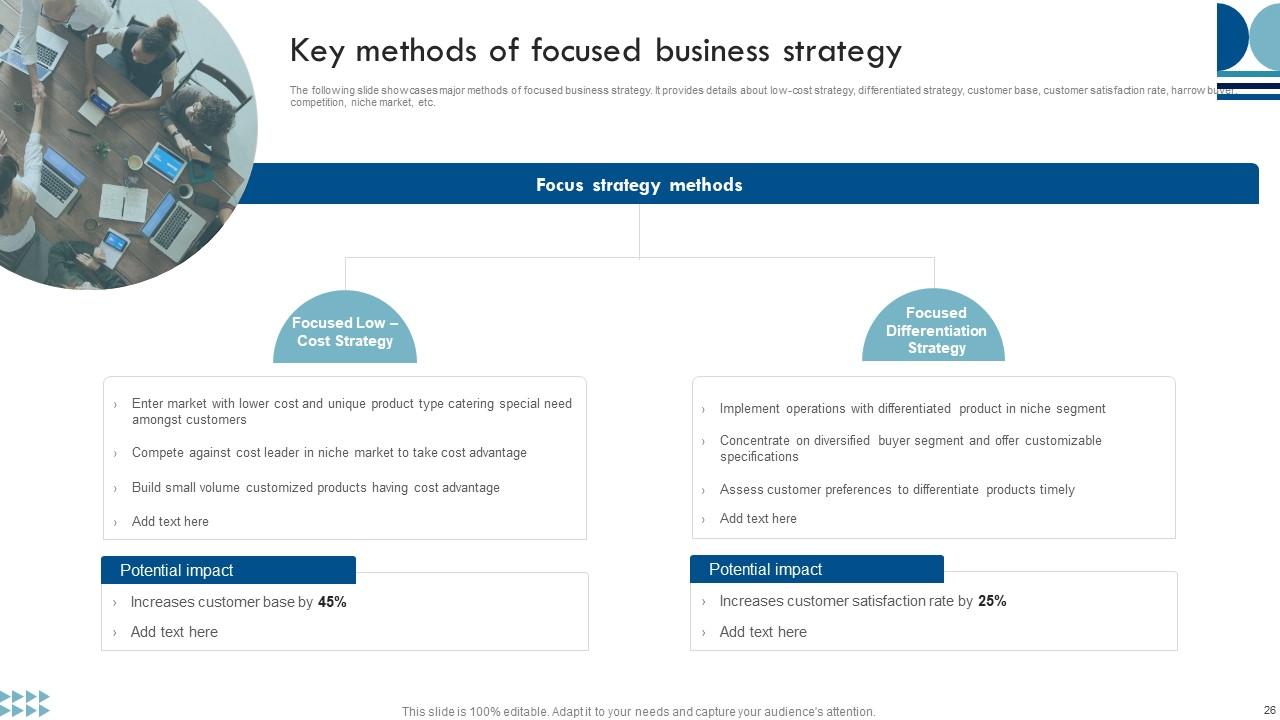
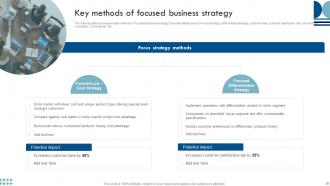
Slide 26: This slide highlights the Key methods of focused business strategy.
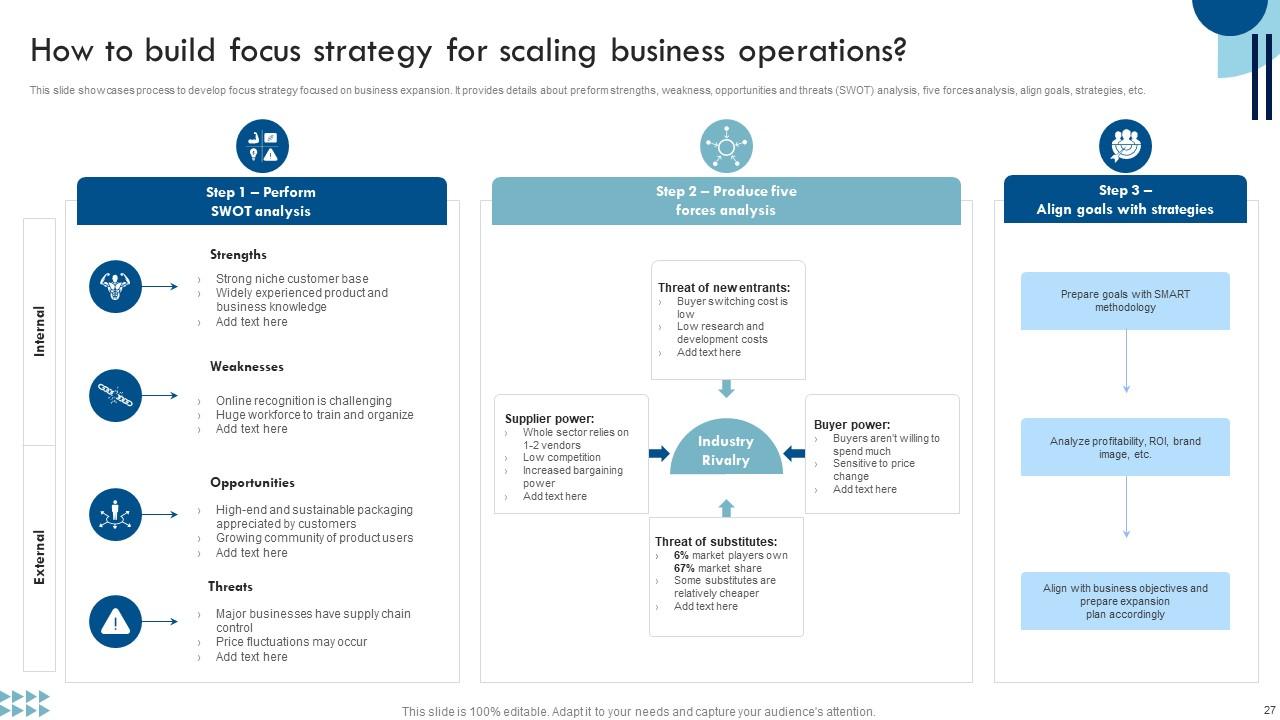
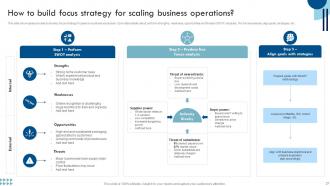
Slide 27: This slide reveals the process to develop focus strategy focused on business expansion.
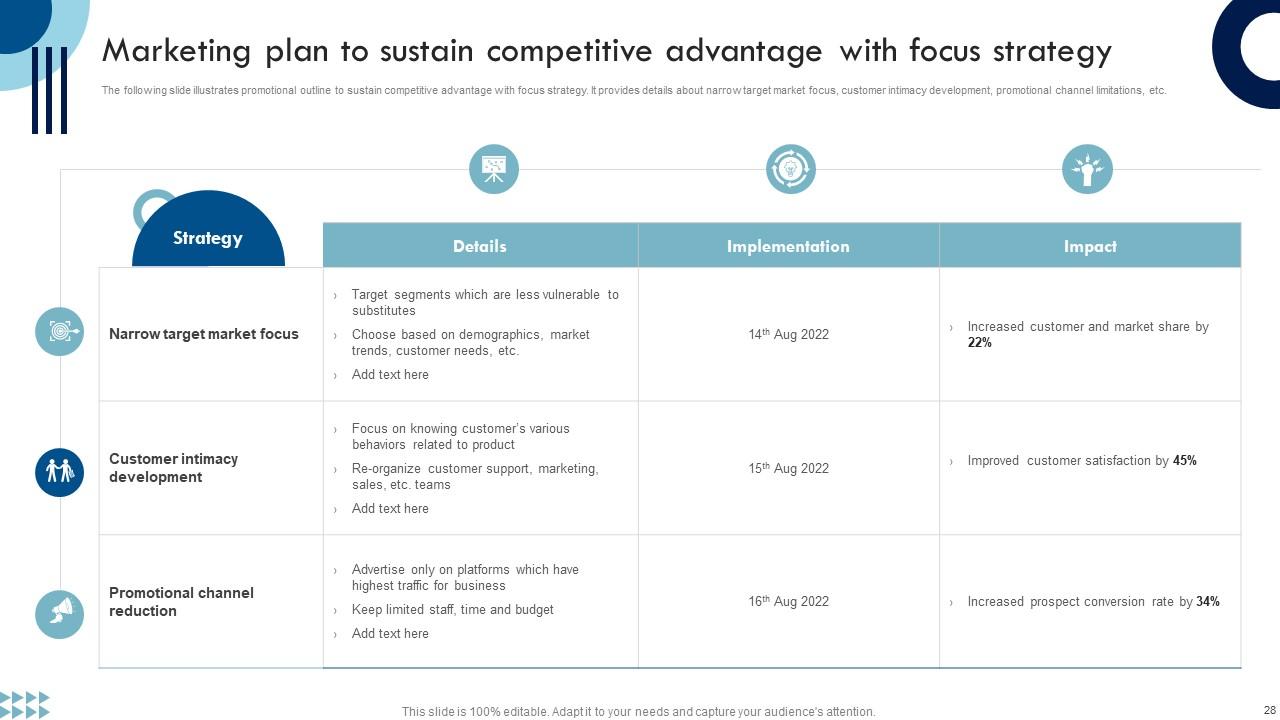
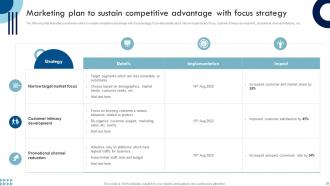
Slide 28: The following slide illustrates promotional outline to sustain competitive advantage with focus strategy.
Slide 29: This slide mentions the Title for the Components to be discussed next.
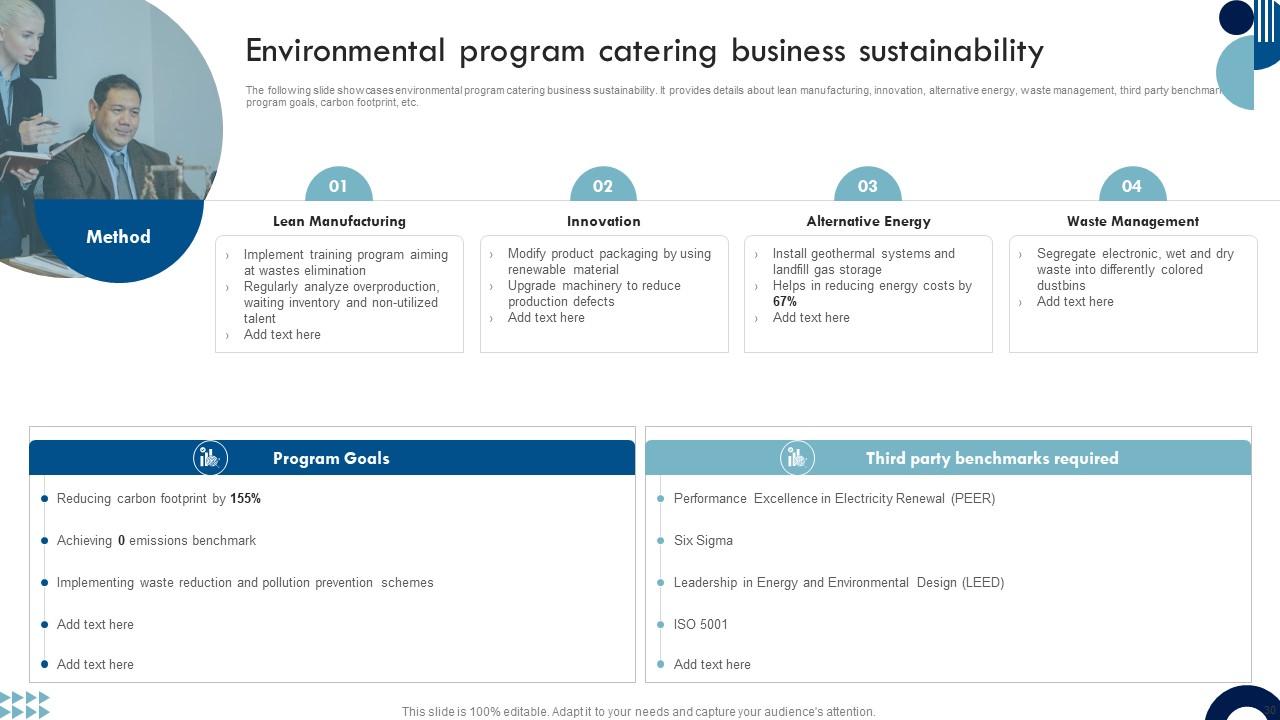
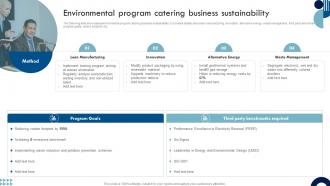
Slide 30: The following slide showcases environmental program catering business sustainability.
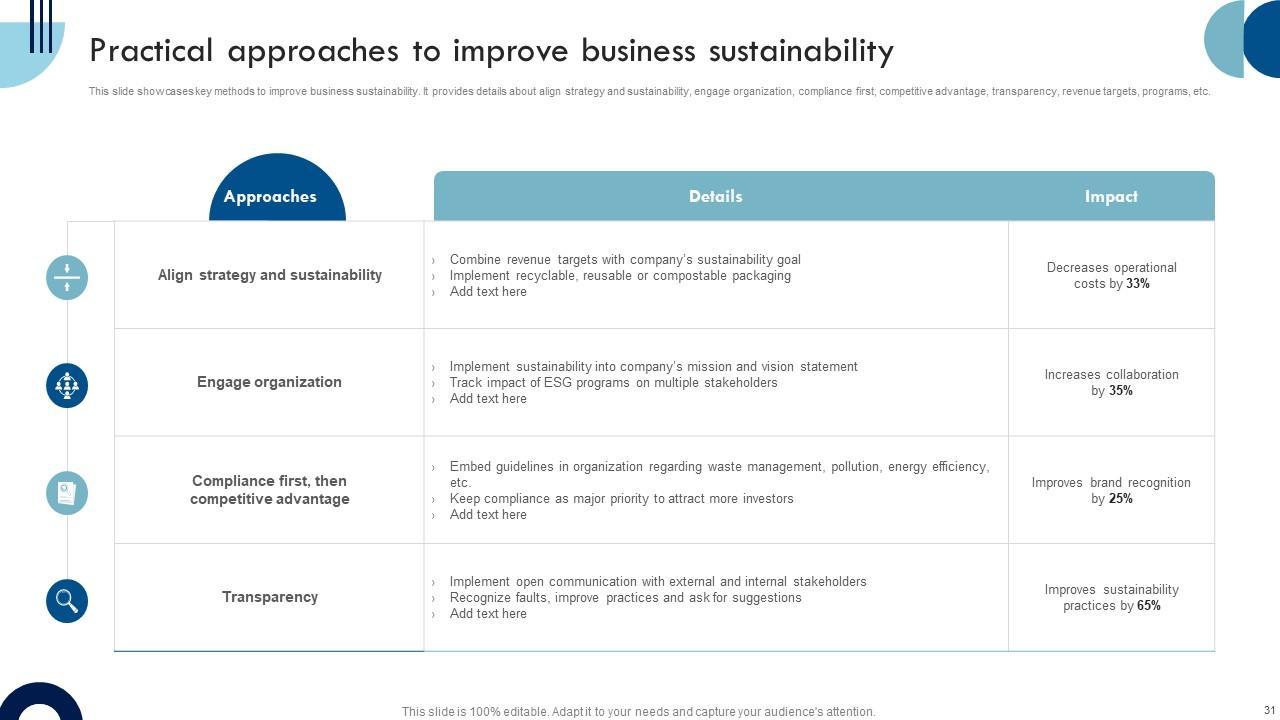
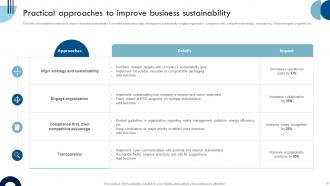
Slide 31: This slide focuses on the Practical approaches to improve business sustainability.
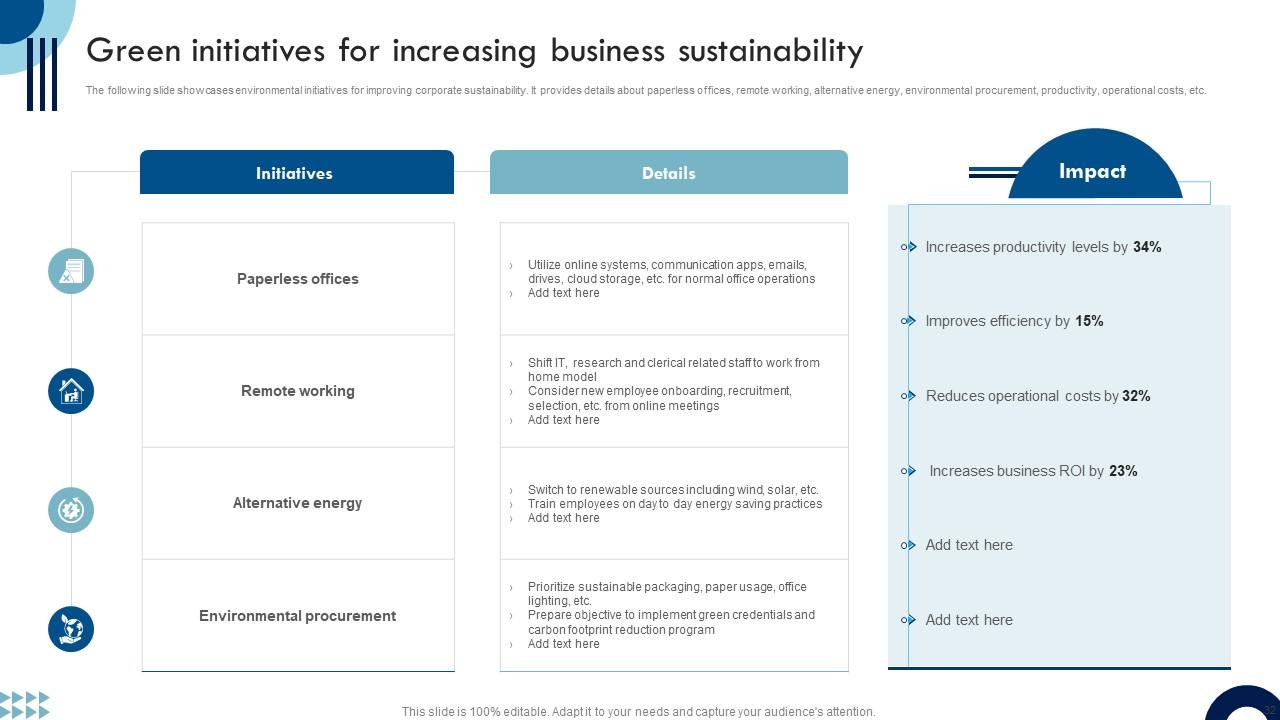
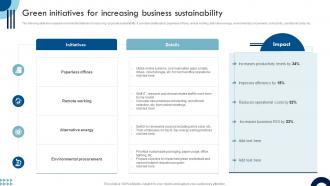
Slide 32: This slide talks about the Green initiatives for increasing business sustainability.
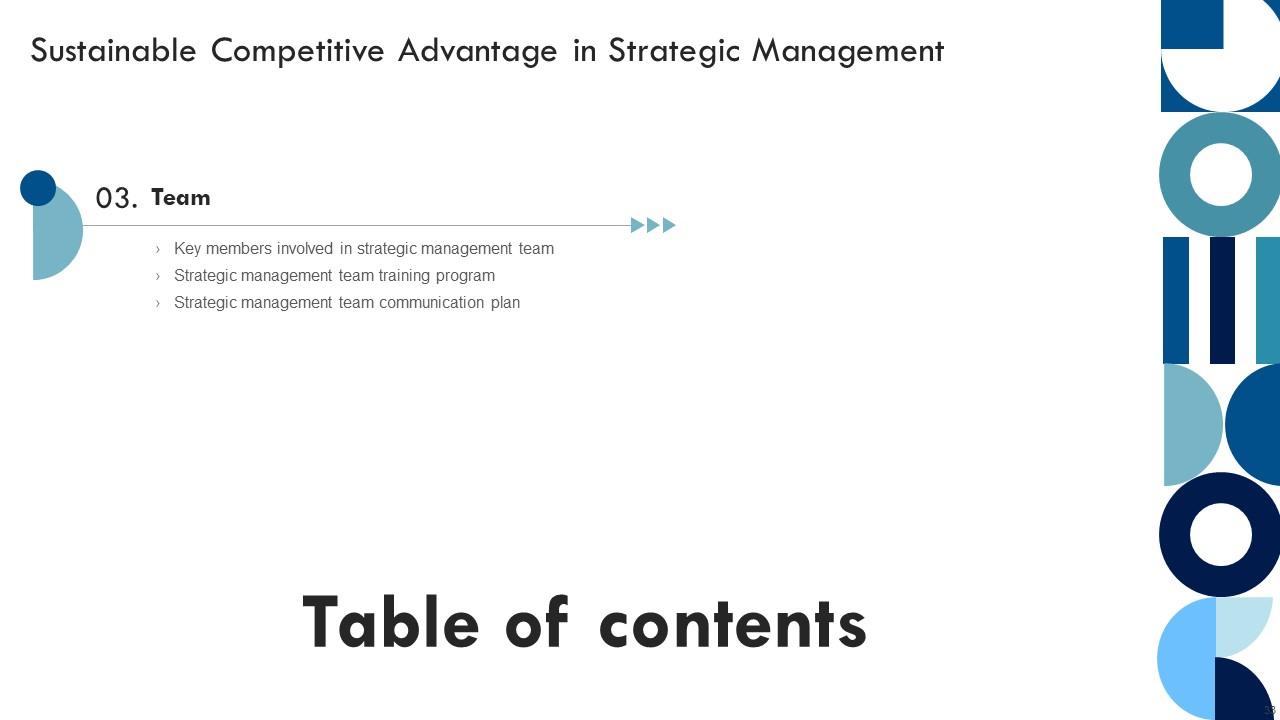
Slide 33: This slide indicates the Heading for the Topics to be covered further.
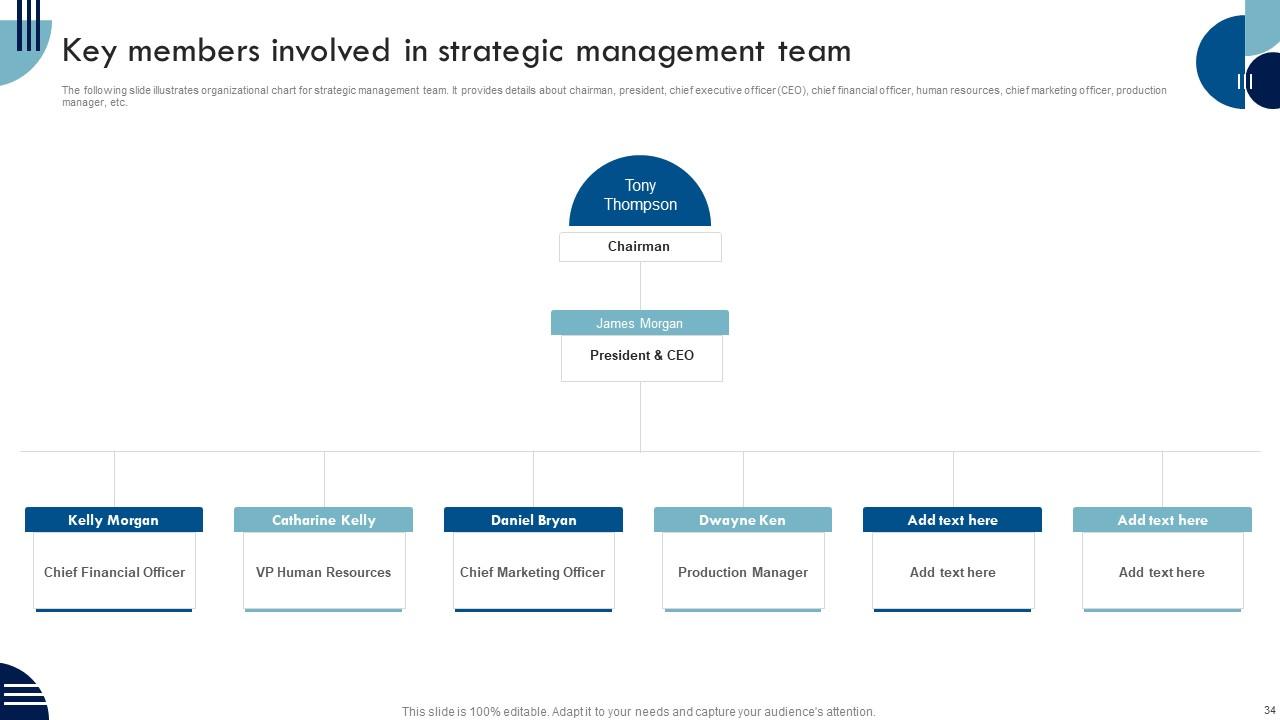
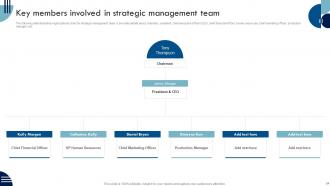
Slide 34: The following slide illustrates organizational chart for strategic management team.
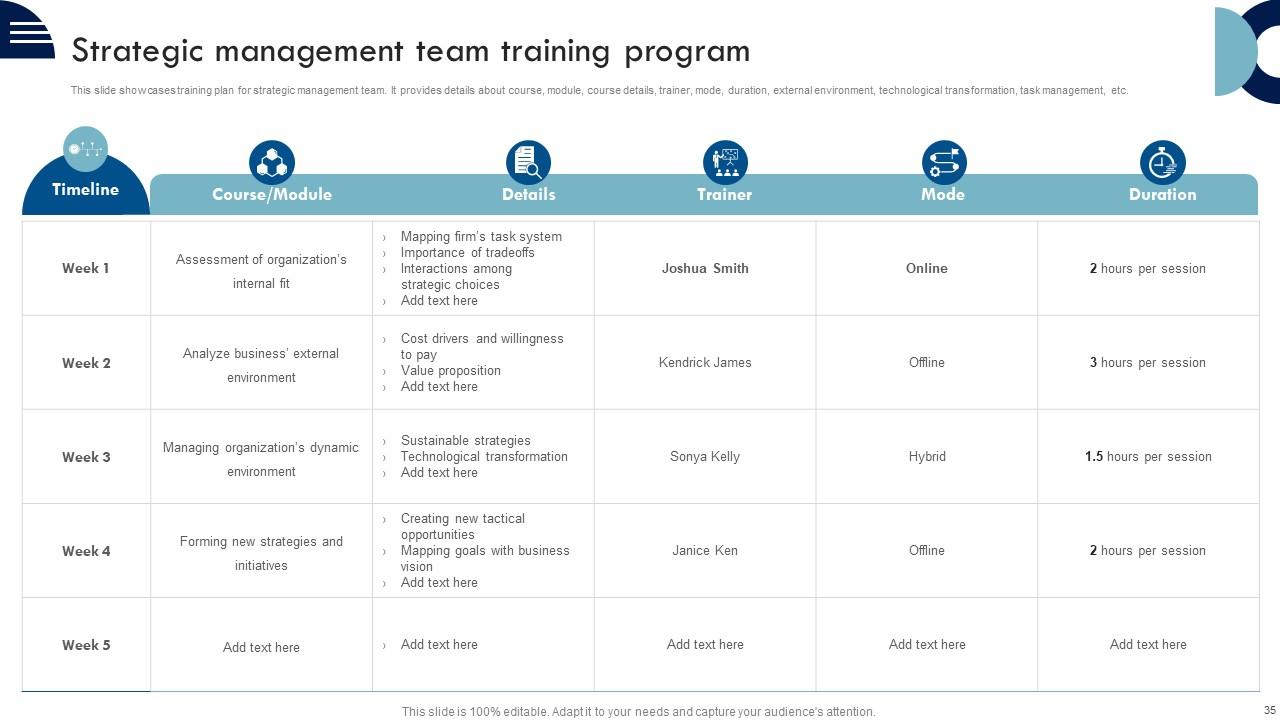
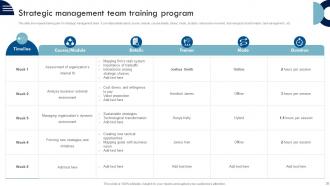
Slide 35: This slide showcases training plan for strategic management team.
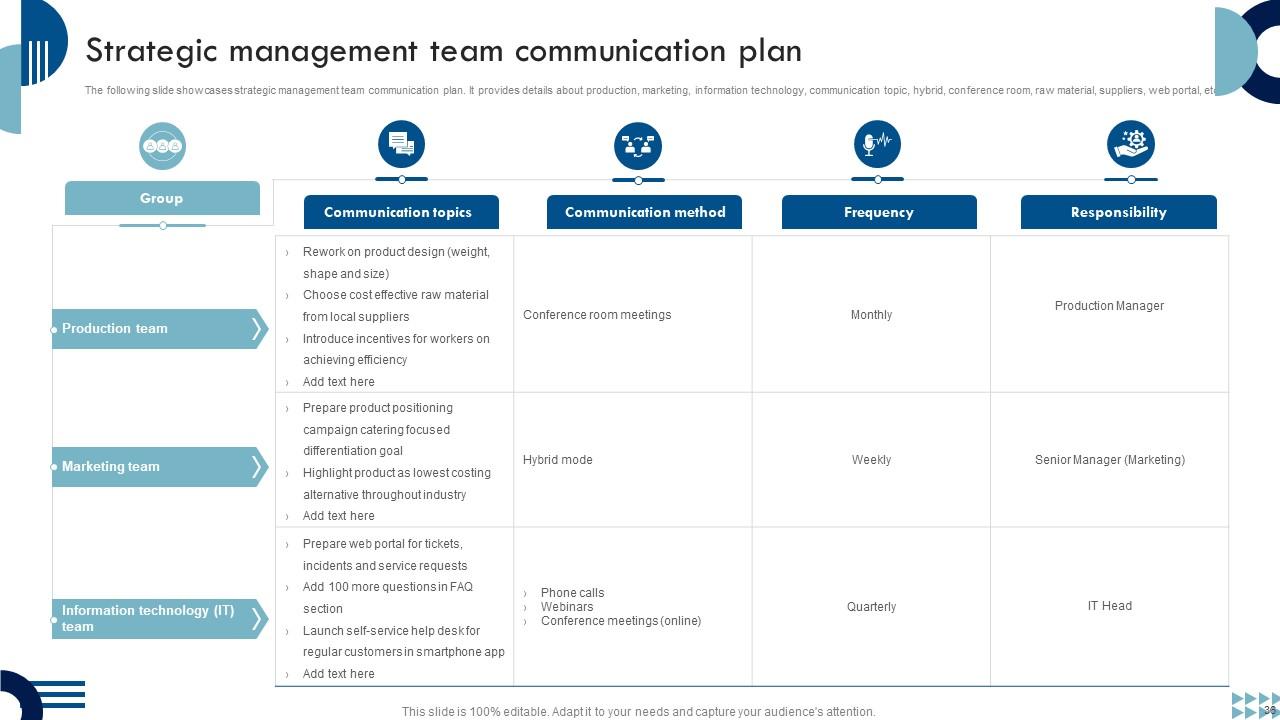
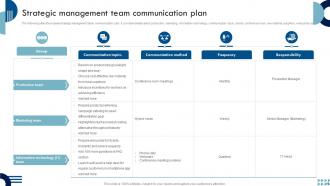
Slide 36: The following slide displays the strategic management team communication plan.
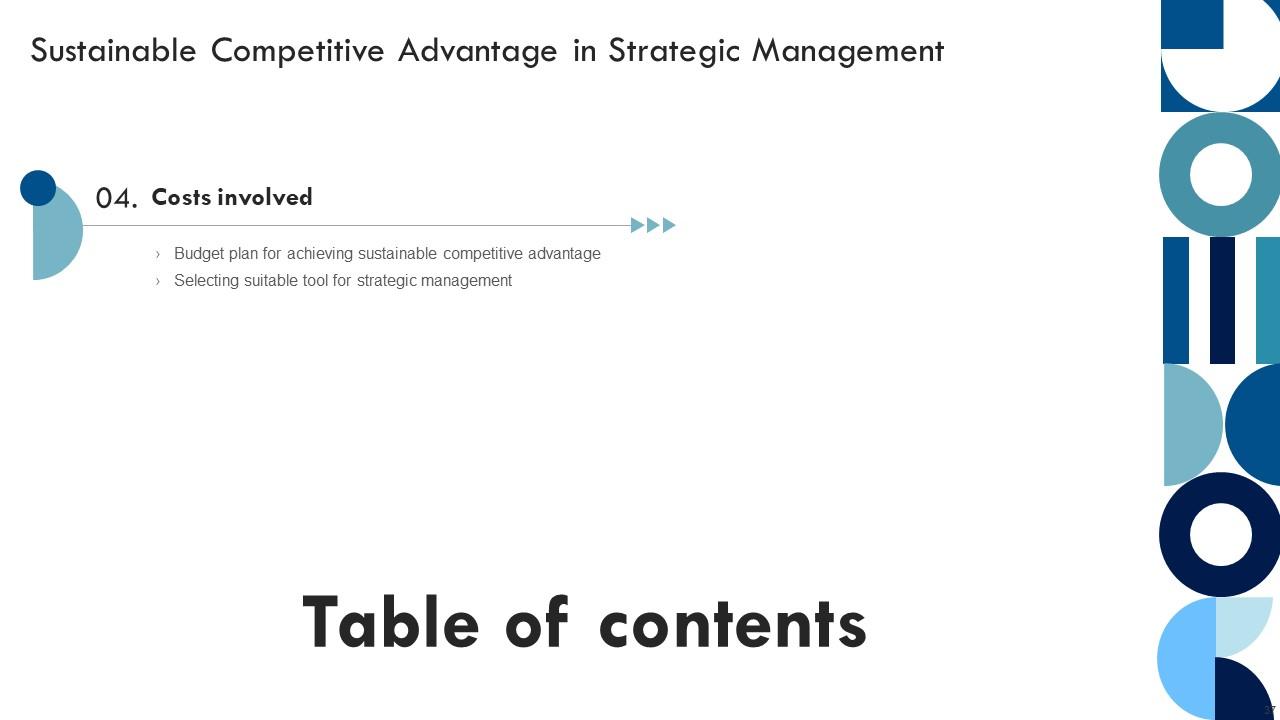
Slide 37: This slide indicates the Title for the Topics to be covered next.
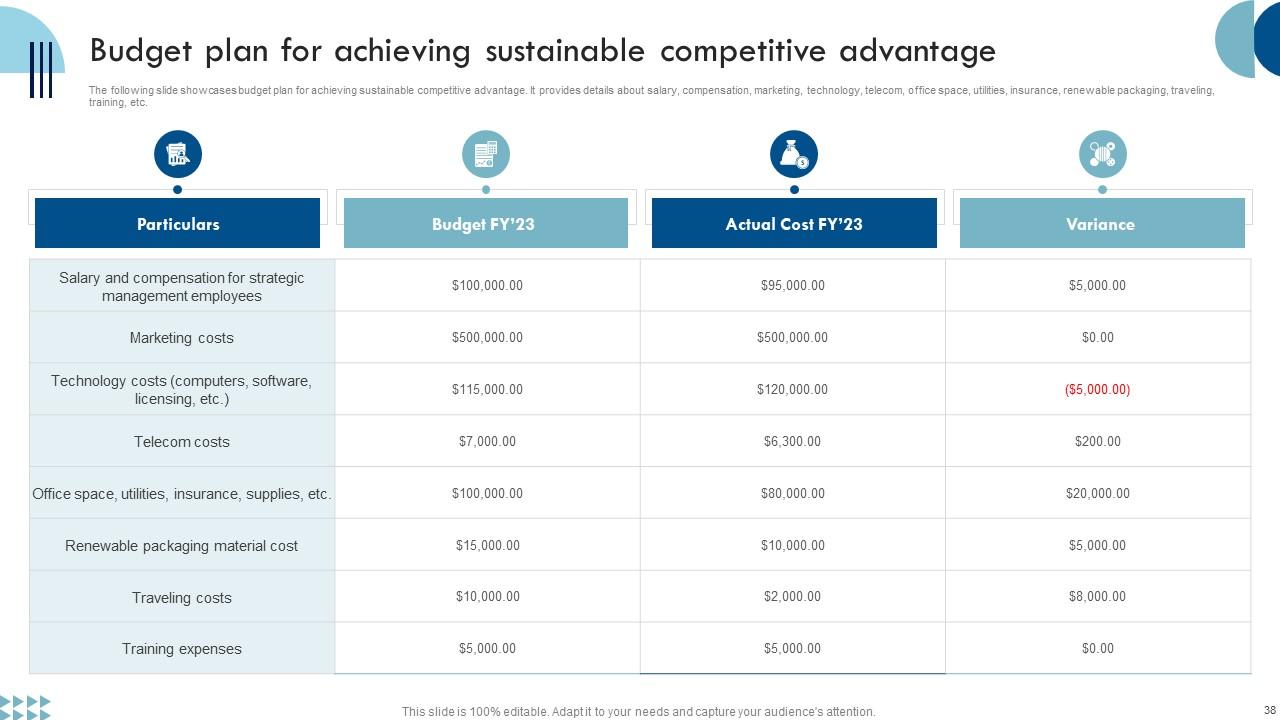
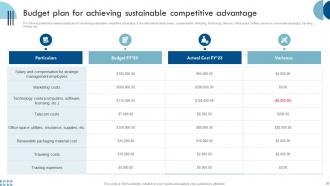
Slide 38: This slide highlights the Budget plan for achieving sustainable competitive advantage.
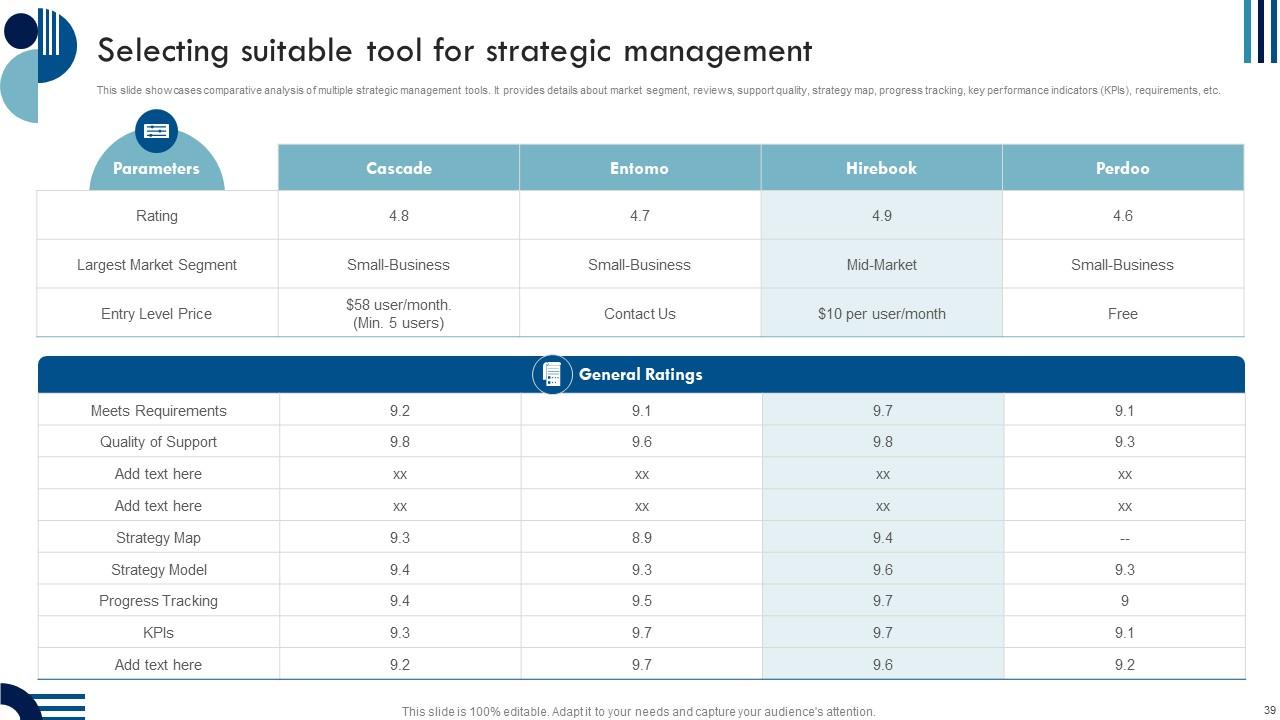
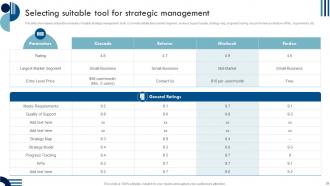
Slide 39: This slide reveals comparative analysis of multiple strategic management tools.
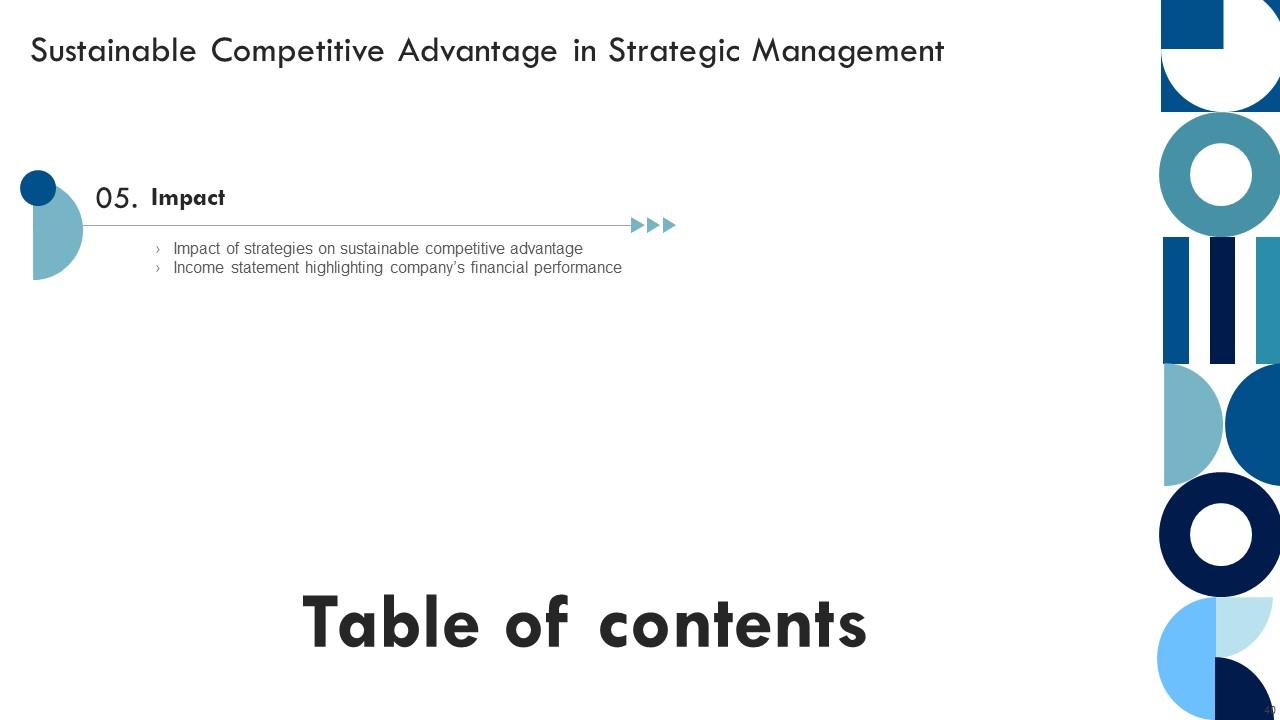
Slide 40: This slide incorporates the Heading for the Contents to be discussed in the forth-coming template.
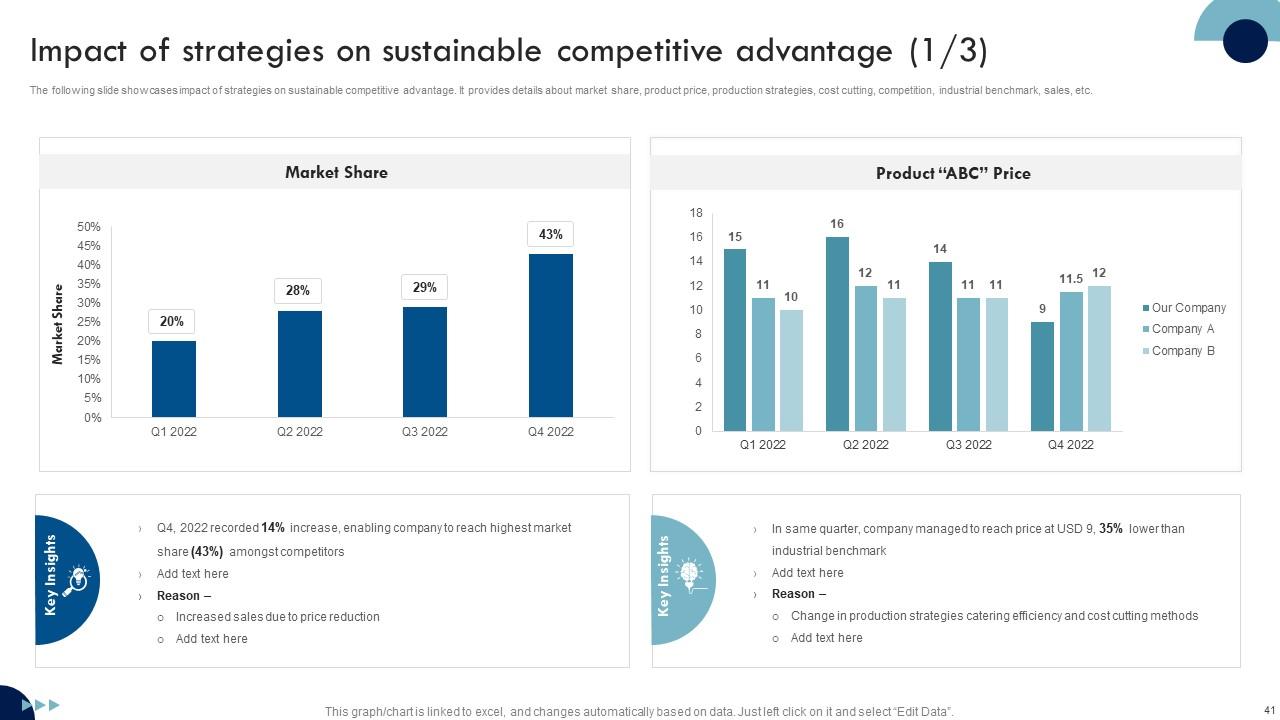
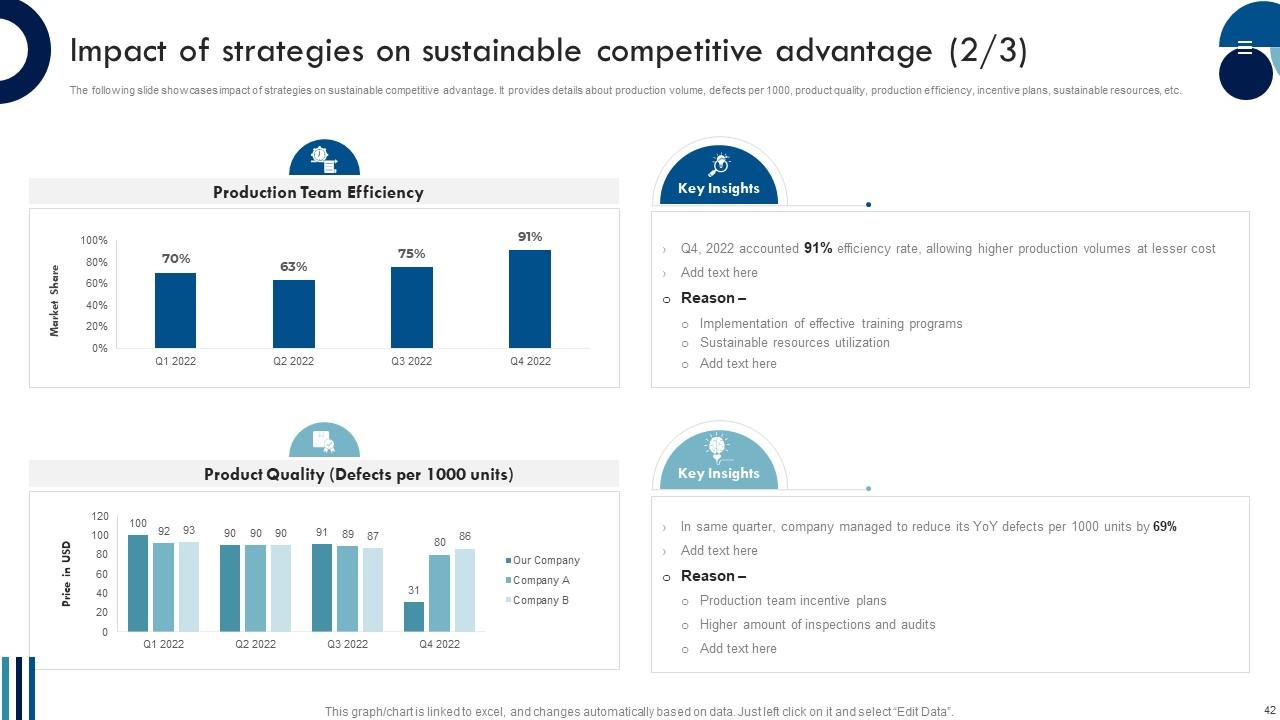
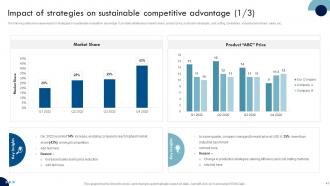
Slide 41: The following slide deals with the impact of strategies on sustainable competitive advantage.
Slide 42: Impact of strategies on sustainable competitive advantage
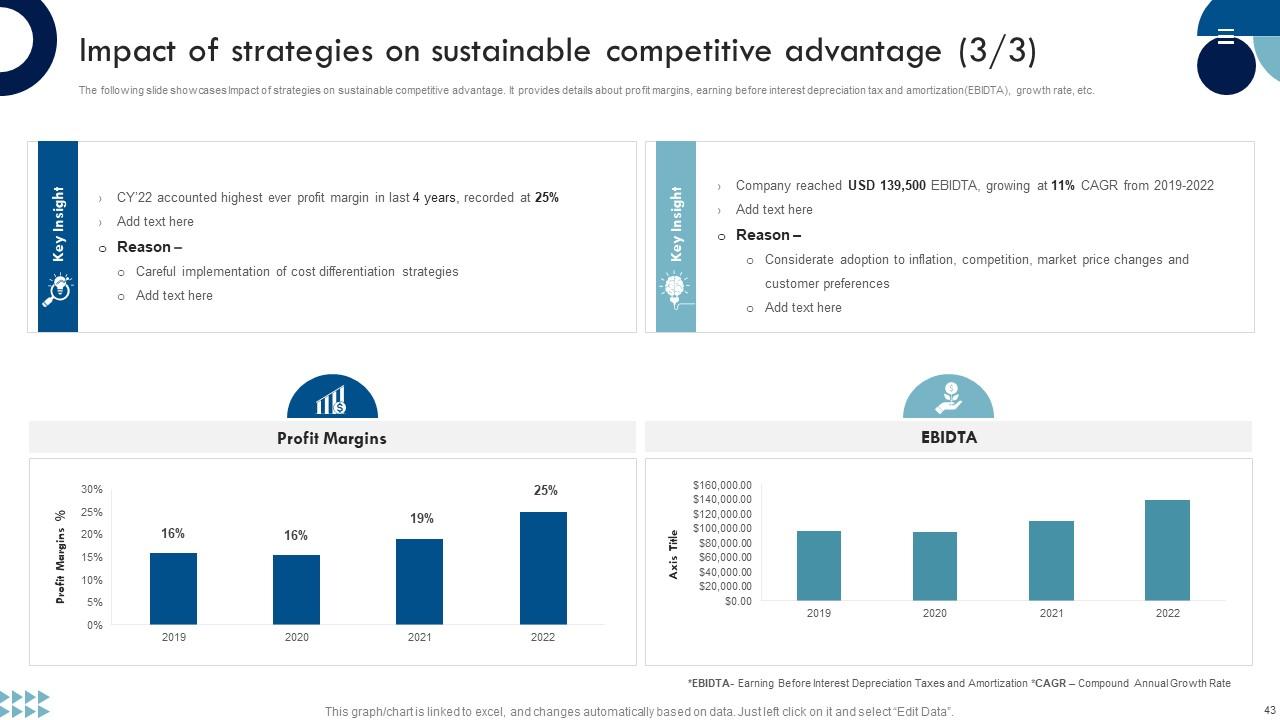
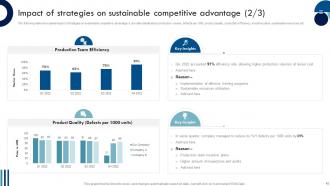
Slide 43: This slide continues the Impact of strategies on sustainable competitive advantage.
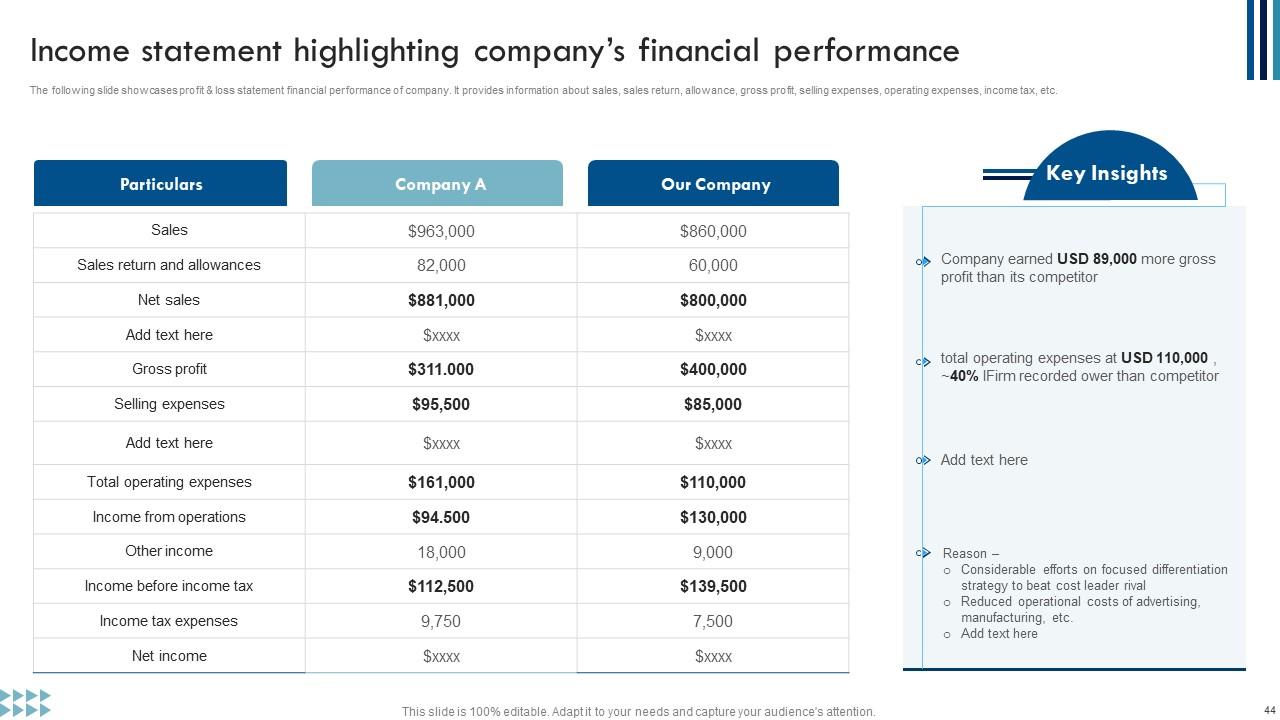
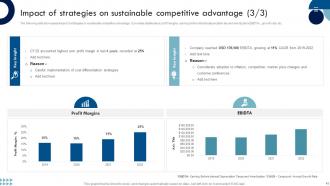
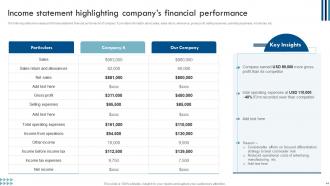
Slide 44: This slide represents the Income statement highlighting company’s financial performance.
Slide 45: This slide contains the Title for the Components to be covered further.
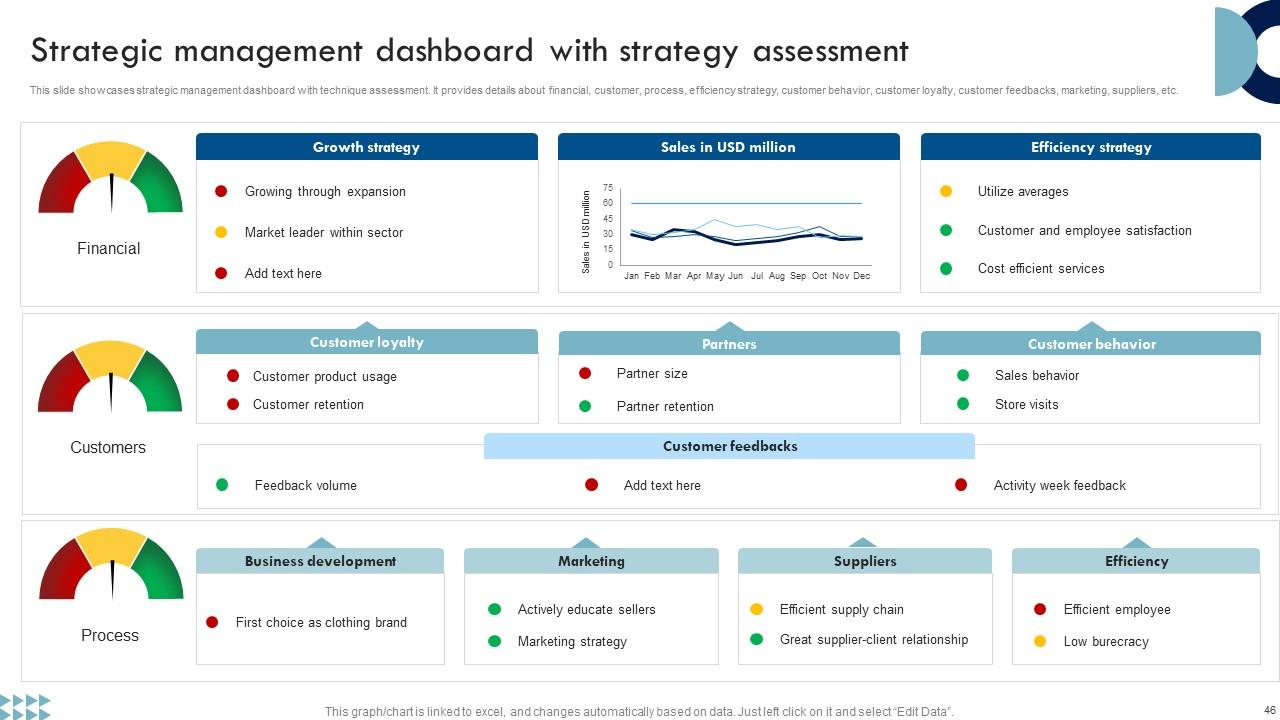
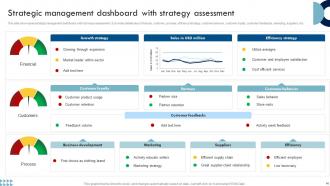
Slide 46: This slide focuses on the Strategic management dashboard with strategy assessment.
Slide 47: This slide elucidates the Heading for the Topics to be discussed next.
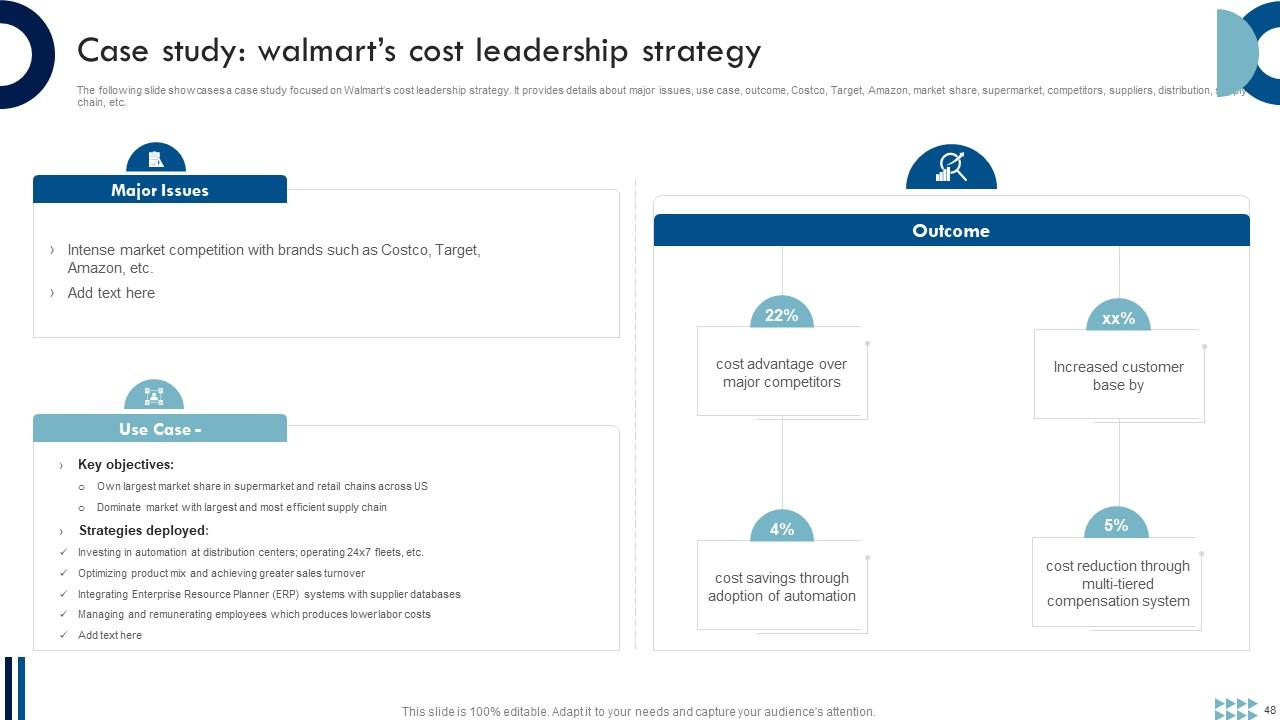
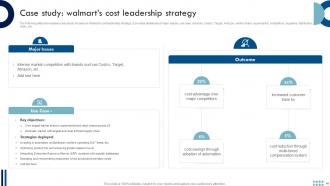
Slide 48: The following slide showcases a case study focused on Walmart’s cost leadership strategy.
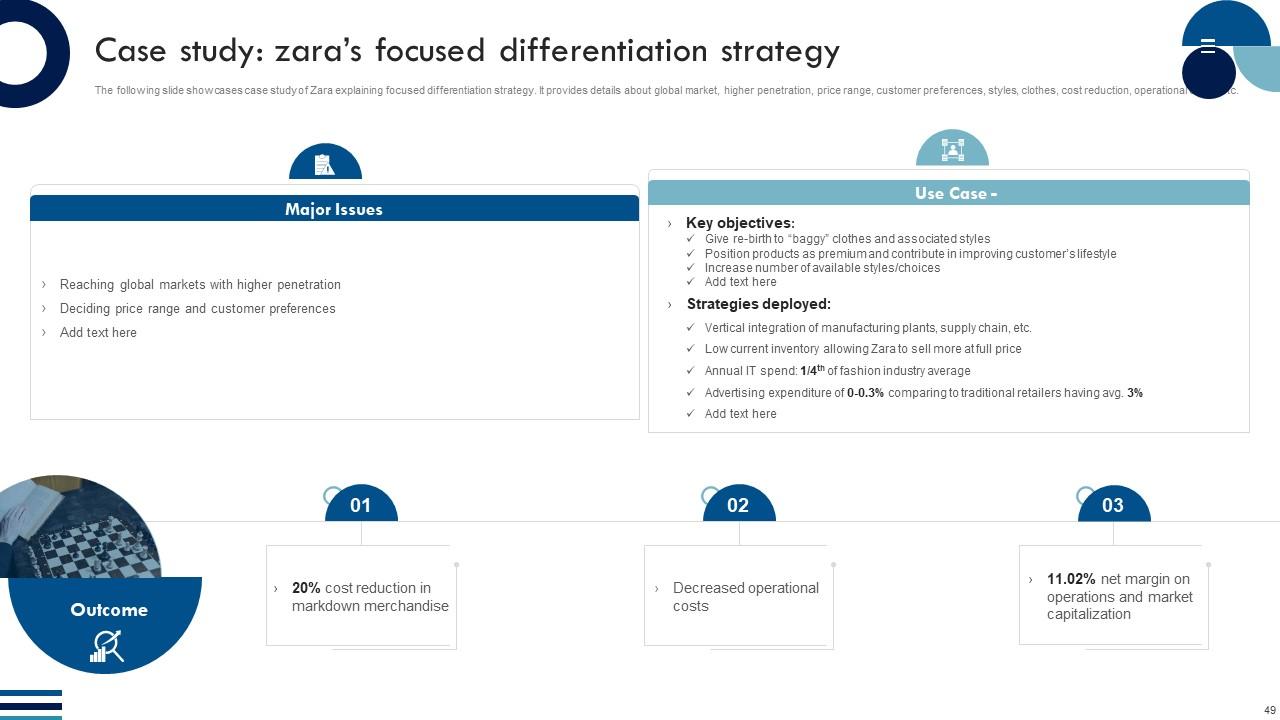
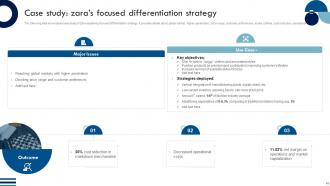
Slide 49: The following slide exhibits information on the case study of Zara explaining focused differentiation strategy.
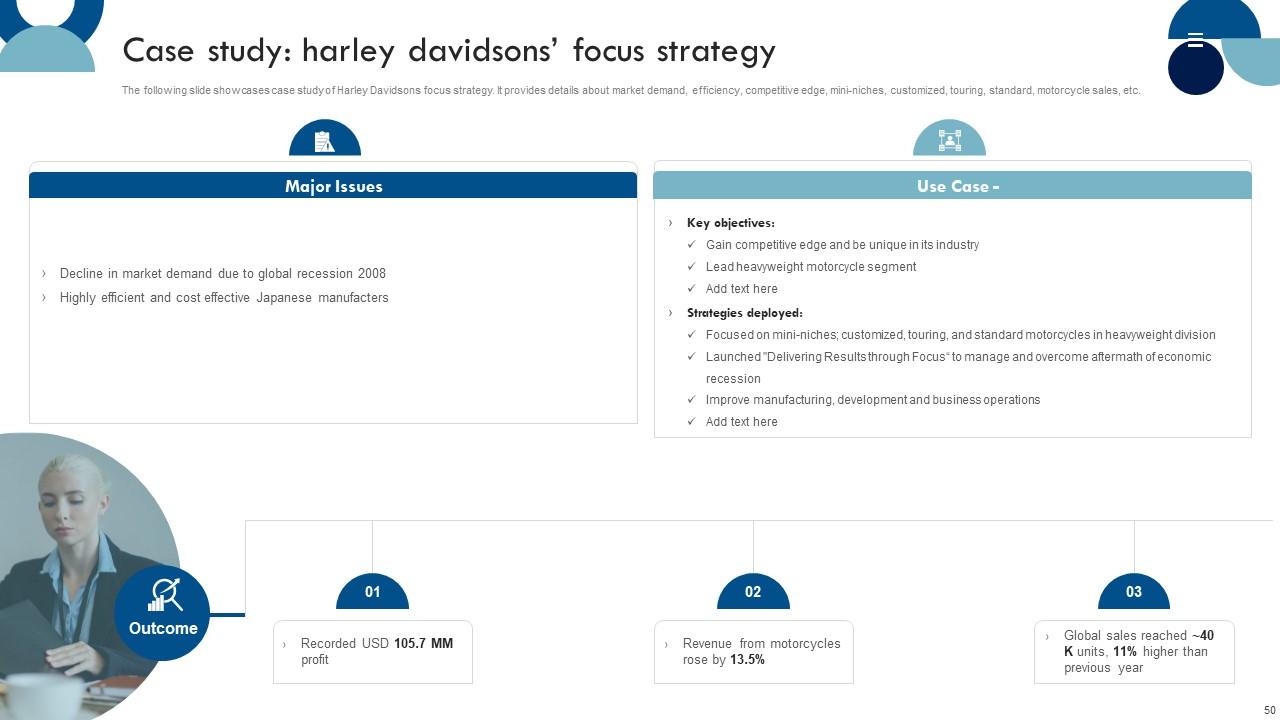
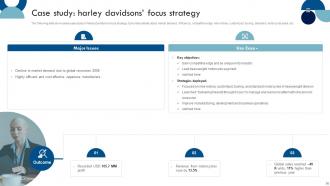
Slide 50: The following slide highlights the case study of Harley Davidsons focus strategy.
Slide 51: This is the Icons slide containing all the Icons used in the plan.
Slide 52: The purpose of this slide is to depict Additional information.
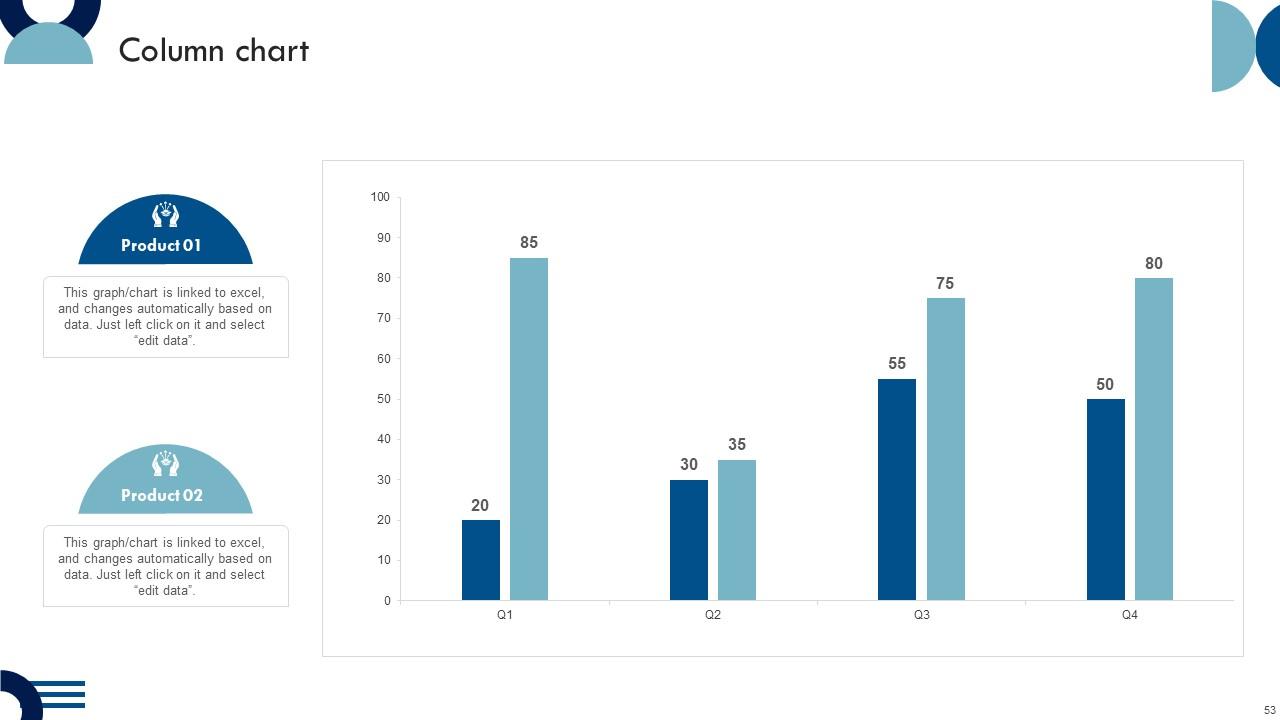
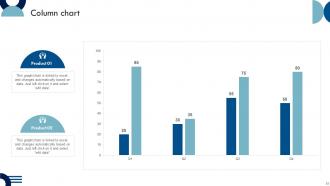
Slide 53: This slide presents the Column chart.
Slide 54: This slide contains the Post it notes for reminders and deadlines.
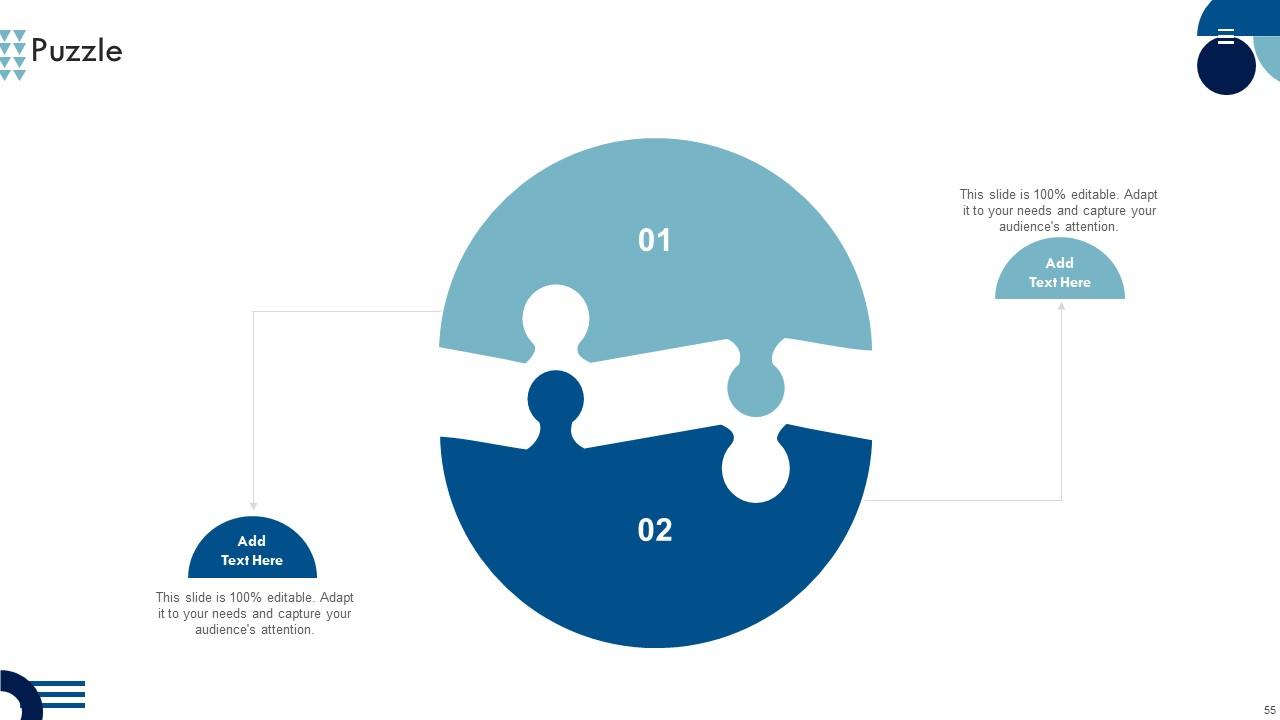
Slide 55: This is the Puzzle slide eiwth related imagery.
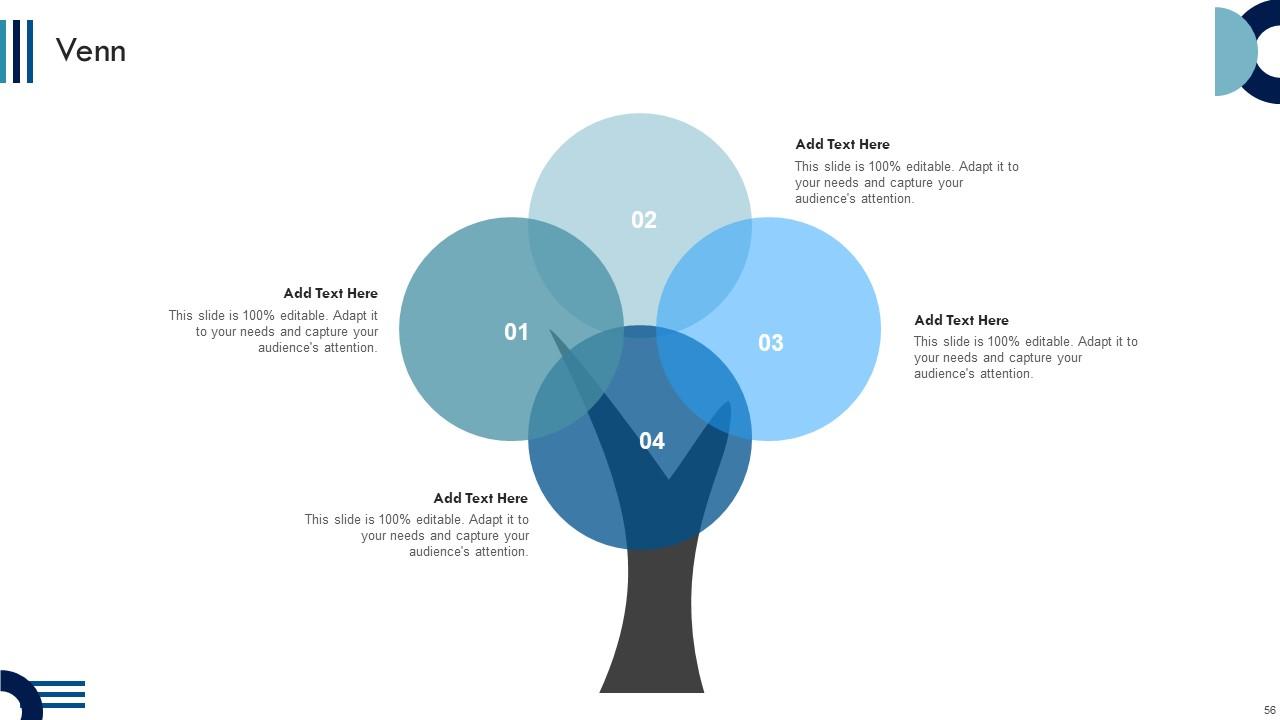
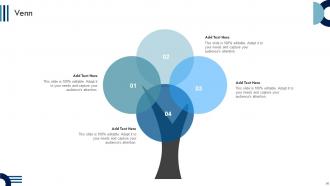
Slide 56: This slide reveals the Venn Diagram.
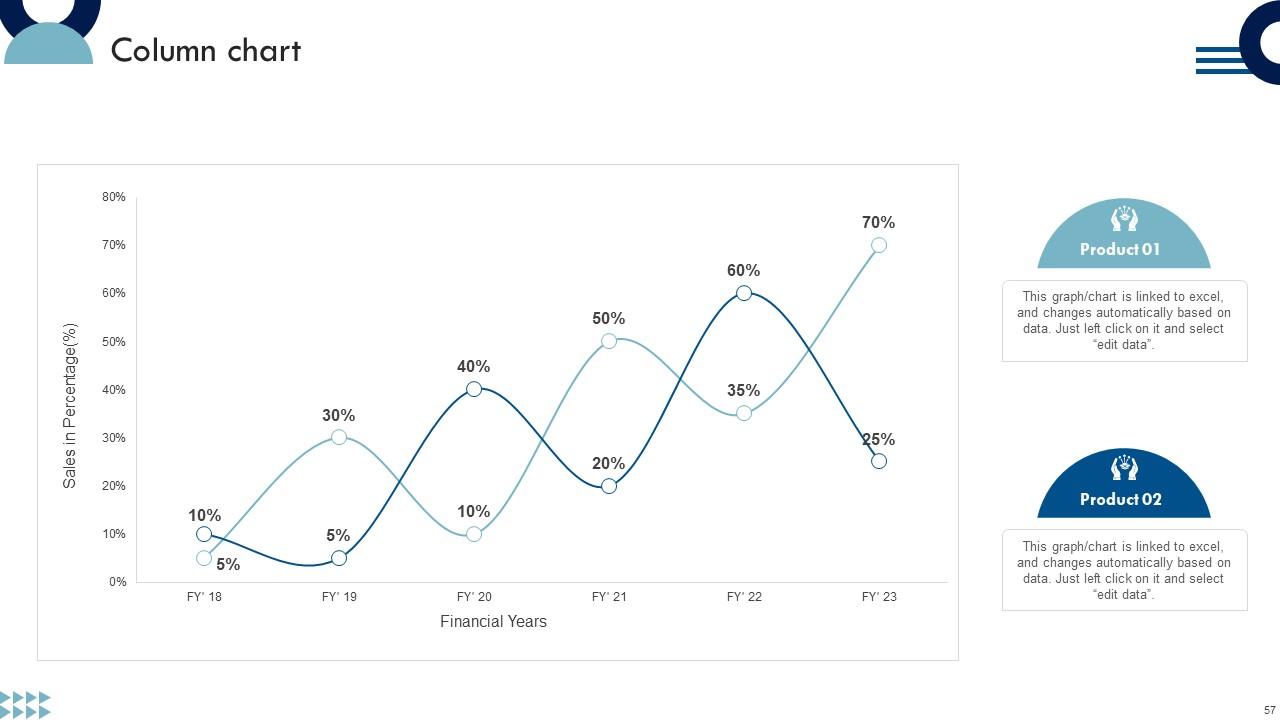
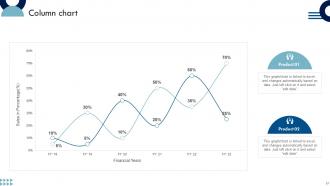
Slide 57: This slide shows the Column chart.
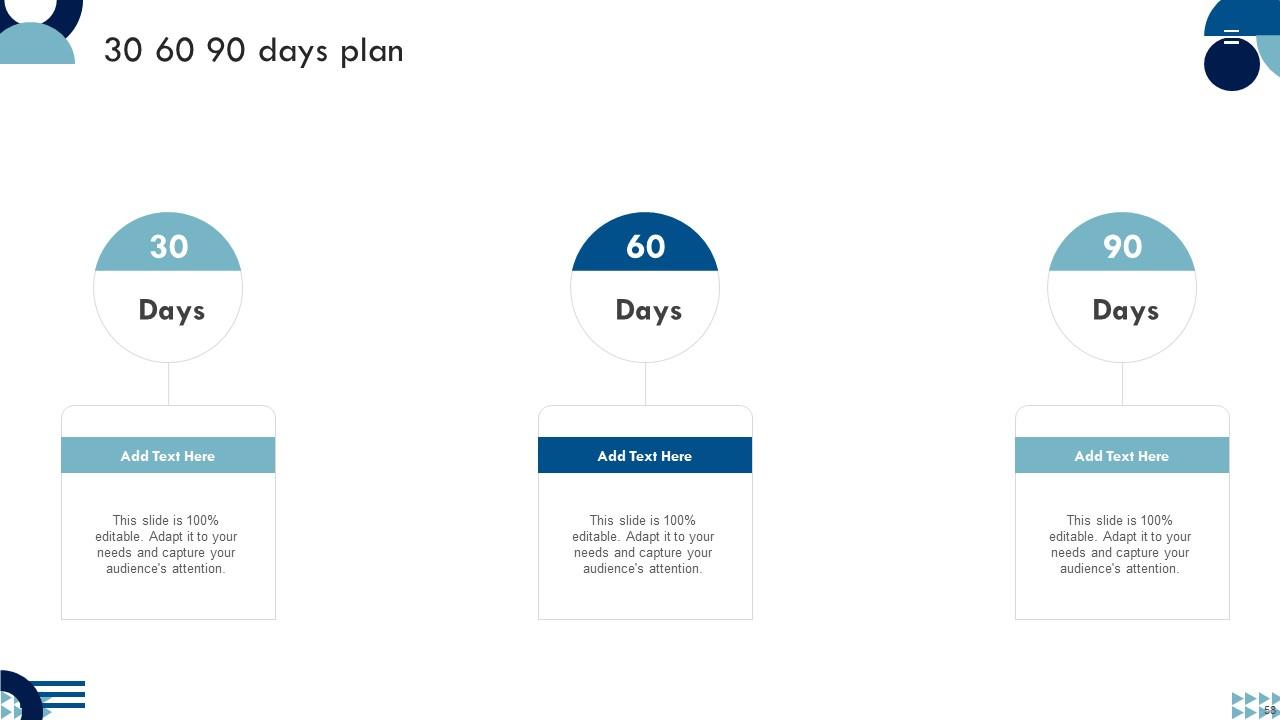
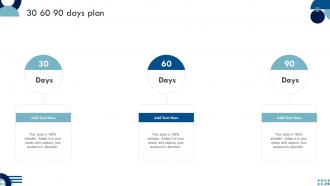
Slide 58: This is the 30 60 90 days plan for efficient plannning.
Slide 59: This is the Thank you slide for acknowledgement.
Sustainable Competitive Advantage In Strategic Management Powerpoint Presentation Slides Strategy CD V with all 64 slides:
Use our Sustainable Competitive Advantage In Strategic Management Powerpoint Presentation Slides Strategy CD to effectively help you save your valuable time. They are readymade to fit into any presentation structure.
-
The slides are remarkable with creative designs and interesting information. I am pleased to see how functional and adaptive the design is. Would highly recommend this purchase!
-
It’s really cool, and you can find pretty much everything you could need for your work or school.
