SWOT Analysis Of Food Industry To Make Strong Customer Base

Rating:
100%
SWOT Analysis Of Food Industry To Make Strong Customer Base
Slide 1 of 6

or

Favourites Favourites

Try Before you Buy Download Free Sample Product

Audience Impress Your
Audience
Editable 100%
Editable
Time Save Hours
of Time
The Biggest Sale is ending soon in
0
0
:
0
0
:
0
0
Rating:
100%
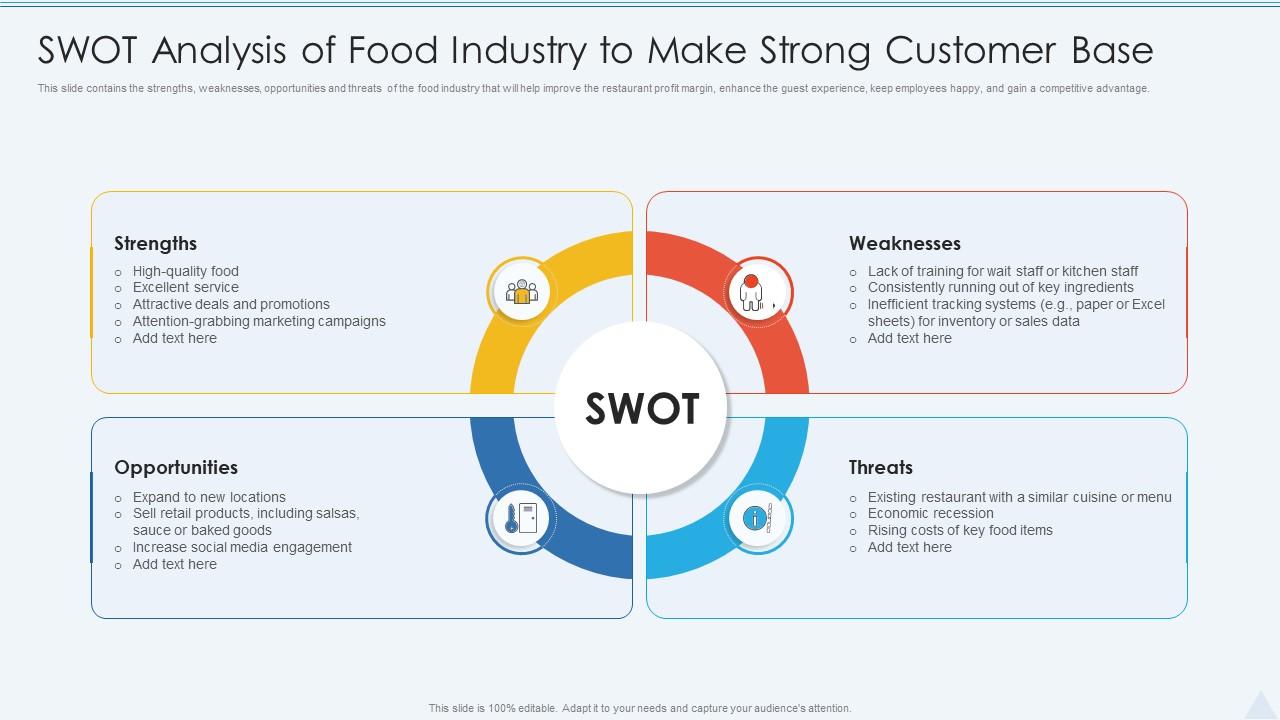
This slide contains the strengths, weaknesses, opportunities and threats of the food industry that will help improve the restaurant profit margin, enhance the guest experience, keep employees happy, and gain a competitive advantage. Presenting our set of slides with name SWOT Analysis Of Food Industry To Make Strong Customer Base. This exhibits information on four stages of the process. This is an easy to edit and innovatively designed PowerPoint template. So download immediately and highlight information on Strength, Opportunities, Weakness, Threats.

FAQs for SWOT Analysis Of Food Industry To Make

Honestly, the brands crushing it right now nail their storytelling and keep quality super consistent. Supply chain stuff is boring but critical - customers bail fast when shelves are empty. Social media helps if you're actually authentic (half these brands sound like robots though). Don't chase every random trend that pops up. Digital marketing matters, but I'd rather see you absolutely dominate one or two things instead of doing everything mediocre. Building real relationships with customers beats flashy campaigns every time.

Honestly, consumer shifts are like gold mines if you catch them early. People suddenly want plant-based everything? Jump on it before McDonald's does. Track what they're actually buying though, not just what they tell surveys - that stuff's usually BS. Social media complaints are way more telling than focus groups. The TikTok comparison is spot on - timing's everything. Companies that move first get to own the whole category. I'd be checking sales data and social sentiment at least weekly. Even stuff like grocery store shortages can tip you off to what's hot. Quick pivots beat perfect planning every time in these situations.

Dude, tech is where it's at for food businesses right now. You can automate production lines which cuts labor costs big time and reduces mistakes. AI helps predict demand so you're not throwing away spoiled stuff - that alone saves crazy money. Apps and delivery platforms get you in front of way more customers too. Oh and that blockchain traceability thing? People are obsessed with knowing where their food comes from these days, it's kind of wild. Smart packaging keeps stuff fresh longer. Get on this early before your competitors do and you'll crush them.

Dude, it's brutal out there. Cash burns way faster than you'd think - like, stupidly fast. Finding suppliers who'll actually work with tiny orders? Good luck with that nightmare. Then you're trying to build a brand while Coca-Cola's dropping millions on Super Bowl ads and you can barely afford decent packaging. Food safety stuff gets crazy complicated once you start growing too. Oh, and all the regulatory hoops - that'll catch you off guard if you don't prep for it early. Honestly, whatever you budget for operations, double it. Maybe triple it. And nail down your supply chain before you do anything else or you'll hate your life.

Look at what people are actually buying - plant-based stuff, less packaging, local products. My neighbor who used to roll her eyes at kombucha now has like 6 bottles in her fridge, so this shift is real. Check your SWOT analysis and see where these trends match what you're already doing well. Got local suppliers? Expand that. Manufacturing setup could handle different packaging? There's your entry point. Honestly, the easiest money is where sustainability meets your existing strengths. Don't overthink it - just find that sweet spot.

Honestly, food safety compliance will probably hit your wallet the hardest. FDA inspections are no joke - they can literally shut you down overnight. I've watched it happen to companies you'd think were bulletproof. Labeling laws change constantly, and don't get me started on how every state has different rules when you're trying to scale. Environmental regs keep getting tighter too. Oh, and allergen disclosure stuff is getting crazy detailed now. Supply chain transparency is another headache. Build compliance costs into your budget upfront though - trust me on this one.

Honestly, competition is like having a brutally honest friend - it shows you exactly where you're screwing up. When other companies are crushing you on pricing or customer service, those weaknesses become impossible to ignore. Your competitors' wins basically spotlight your losses, whether that's in supply chain stuff, brand recognition, whatever. The trick is figuring out which gaps to fix first based on what's actually costing you customers. I mean, you can't tackle everything at once, right? Use competitive analysis to prioritize the weaknesses that are really hurting your market position.

Your supply chain basically runs through your entire SWOT analysis - it's wild how connected everything is. Good supplier relationships? That's a huge strength. Weak logistics? Major weakness right there. I've watched companies completely miss opportunities because their supply chain couldn't keep up with demand (so frustrating to see). Then there's the risk side - ingredient shortages, crazy price swings, all that fun stuff. Honestly, when you're doing your SWOT, just follow the supply chain thread. You'll be shocked how it touches literally every section you write down.

Think of market research as your secret weapon for spotting food business opportunities. Consumer surveys and competitor analysis will show you gaps nobody's filling yet - maybe plant-based options in certain areas or convenience foods for busy people. Social media listening is honestly where you'll find the best insights. I'd also check out emerging dietary trends and underserved demographics. The trick is mixing hard data with actual customer feedback to make sure there's real demand. Define your target market first, then figure out what they're missing. Don't skip the qualitative stuff - numbers only tell half the story.

Honestly, the stuff that'll really mess you up comes from outside your control. Regulatory changes hit hard. Supply chain disasters too - one bad supplier and you're scrambling. Climate change is wreaking havoc on crops now, creating food safety issues nobody saw coming. Your customers want total transparency these days, which can catch you off guard if you're not ready. Economic swings jack up ingredient costs and make suppliers flaky. Oh, and contamination from your supply chain is always lurking. Do threat assessments every quarter instead of playing defense when things go sideways.

Honestly, double down on what's already working. Your brand recognition is pure gold - use it to get premium pricing and grab that prime shelf space smaller companies can only dream of. Don't be too safe though, I see established brands do this all the time. Push your R&D team to innovate hard within your main categories. Scale gives you massive negotiating power with suppliers too. Distribution networks you've built? Perfect for launching new products before competitors even know what hit them. Be aggressive with these advantages instead of just playing defense - that's where the real money is.

When the economy crashes, your SWOT gets totally scrambled. Premium pricing? That's suddenly a liability when everyone's hunting for deals. Competition heats up, supply chains get messy, and customers just don't have the cash they used to. But honestly, I've seen some companies actually thrive during recessions - value brands especially clean up while fancier competitors struggle. Weaker players often bail out entirely, which can open doors if you play it right. Oh, and definitely update your SWOT way more often during downturns. Maybe quarterly instead of once a year? Things change ridiculously fast when everything's falling apart.

Dude, people are SO into health stuff right now - it's actually crazy how much they scrutinize labels. This is perfect for food innovation though. Plant-based everything is huge, plus functional foods with added vitamins or probiotics. Clean ingredients are non-negotiable now. You could reformulate existing products to be healthier without killing the taste, or create totally new categories. Keto options still sell like crazy too. Personalized nutrition is getting big but honestly might be jumping ahead too fast. I'd start by just asking your customers what health trends they actually care about - surveys work great for this.

Dude, the biggest pain is that your home recipes just don't translate - people have totally different taste buds and eating habits abroad. Supply chains get messy fast too. Each country throws different regulations at you, costs spiral, and logistics become a headache. Local competitors already have the trust and supplier connections locked down. You're basically the outsider trying to prove yourself. Honestly though, I've seen companies nail it by doing serious market research first - like actually talking to people, not just surveys. Partner with local distributors who get the culture. They'll save you from faceplanting hard.

Honestly, diversifying suppliers is huge - don't put all your eggs in one basket geographically. Tech innovation helps too, plus you need supply chains that can actually pivot fast when stuff hits the fan. Cash reserves are boring but saved so many companies during COVID. Speaking of which, look how meal kit companies crushed it when restaurants closed - that's the kind of alternative revenue thinking you need. Oh and compliance teams might be dull but they'll keep you out of regulatory trouble. I'd start by figuring out your top 3 weak spots and making real contingency plans. Stress-test everything regularly against weird scenarios like trade wars or sudden consumer shifts.

Ratings and Reviews

100% of 100
Review Form
Write a review
Most Relevant Reviews
  1. 100%

    by Cody Bell

    SlideTeam was so customer-centric and quick service-provider that I doubted the amount I was paying and literally re-checked the transaction.
  2. 100%

    by Dudley Delgado

    The designs by SlideTeam are honestly the best I have seen so far. Will be definitely coming back for more.

2 Item(s)

per page: