Unique Selling Proposition USP Analysis Of Food Industry

Rating:
90%
Unique Selling Proposition USP Analysis Of Food Industry
Slide 1 of 6

or

Favourites Favourites

Try Before you Buy Download Free Sample Product

Audience Impress Your
Audience
Editable 100%
Editable
Time Save Hours
of Time
The Biggest Sale is ending soon in
0
0
:
0
0
:
0
0
Rating:
90%
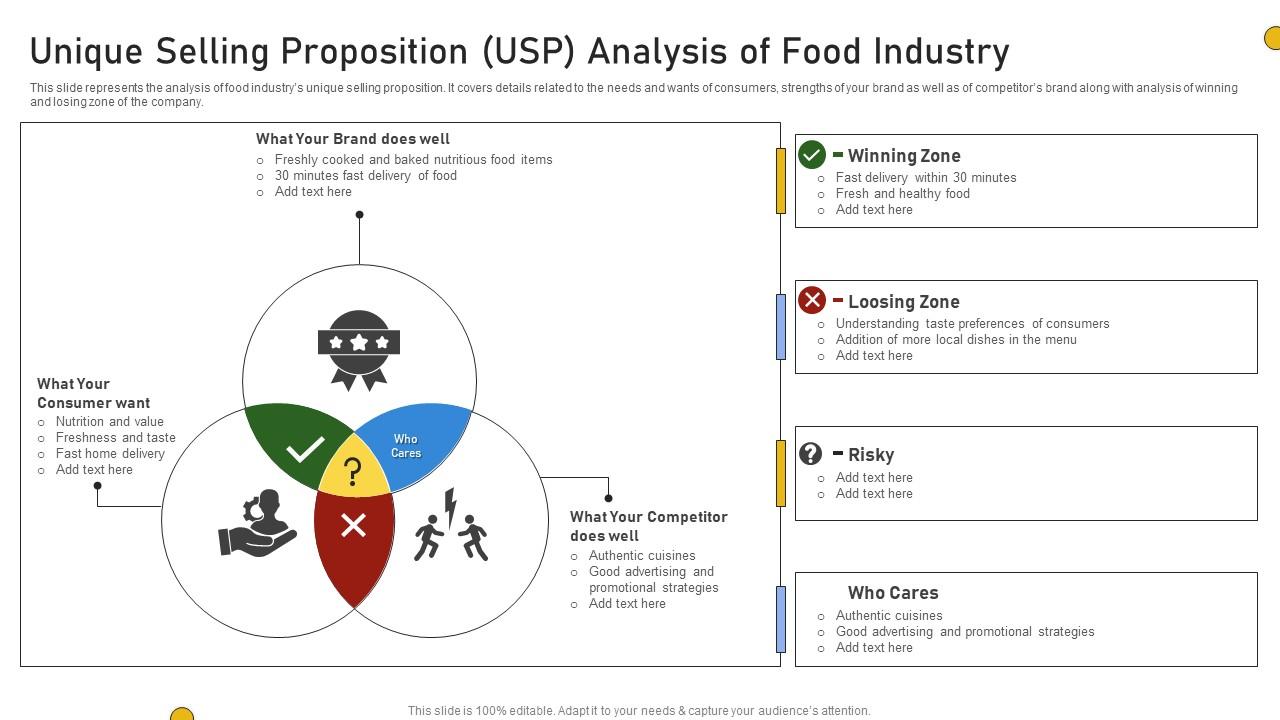
This slide represents the analysis of food industrys unique selling proposition. It covers details related to the needs and wants of consumers, strengths of your brand as well as of competitors brand along with analysis of winning and losing zone of the company. Presenting our set of slides with name Unique Selling Proposition USP Analysis Of Food Industry. This exhibits information on three stages of the process. This is an easy-to-edit and innovatively designed PowerPoint template. So download immediately and highlight information on Winning Zone, Loosing Zone, Risky.

FAQs for Unique Selling Proposition USP Analysis

So for a food USP, you've gotta figure out three main things. First, what actually makes your product different - could be ingredients, how it's made, where it comes from, whatever. Second, know exactly who you're targeting and why they'd give a damn. Most brands screw this up by trying to please everybody, which never works. Third thing is making sure your benefit statement is something people actually believe and your competitors can't easily copy. Oh, and test it with real people first - what sounds amazing to you might be total gibberish to customers.

Look for gaps where the big guys just can't compete well. Hyper-specific stuff works - like plant-based foods specifically for athletes, or zero-waste packaging that millennials actually want. Your story is huge too, way more than I thought it'd be when I started. Where you source ingredients, how you make things, your whole origin thing - that emotional connection is gold because competitors can't just copy it overnight. Oh, and definitely hit underserved groups or new diet trends before everyone else jumps in. I'd start by figuring out what the top 3 brands in your space totally suck at.

Your USP totally depends on how people actually behave around food. Watch what they do in real life - not surveys or whatever they claim they want. Those are usually way off. Dig into their daily routines and see where they're struggling. Maybe they're protein-obsessed but can't deal with meal prep? There's your angle right there. The gaps in what consumers need vs. what's available - that's where you find your positioning opportunity. I'd start by really getting into your target audience's food habits and pain points. That's where the magic happens.

Okay so basically don't just tack sustainability onto your brand as an afterthought - make it the actual reason people should choose you. Pick something specific and real, like zero-waste packaging or carbon-neutral shipping. People can smell BS from a mile away these days, honestly. What really works is showing how your green practices actually make the product better or match what your customers already care about. You want them thinking "of course I'll pick this one" instead of feeling guilty about the environment. Does that make sense?

Honestly, storytelling is everything here. Get real about your "why" - customer testimonials, behind-the-scenes stuff, founder stories work great. Video content crushes it on social, especially showing your product doing its thing. I've watched brands blow up from super simple Instagram posts that just... show their actual process, you know? Your packaging should scream your USP too. Find influencers who actually get what you're about (not just anyone with followers). Oh, and audit your current messaging first - might be surprised where it's not hitting. Keep everything consistent from website to retail displays.

Honestly, pricing is like a huge signal to customers about what your food product actually is. Price too low and people assume cheap ingredients - even if you're going for that whole artisanal vibe. But here's the thing: premium pricing can actually back up your "craft-made" or "organic" claims because people expect to pay more for the good stuff. Psychology is crazy that way! Your price has to match whatever story you're telling with your unique selling point. Otherwise buyers get confused by the mixed messages. I'd definitely test a few different price points to see where your target market actually bites.

Your packaging is literally make-or-break for showing what makes you different. People glance at shelves for maybe 3 seconds, so if your "organic" or "high-protein" thing isn't obvious through colors and big text, you're screwed. Don't bury your main selling point in tiny back-panel copy - nobody reads that stuff anyway. Put your differentiator right up front where it actually gets seen. Honestly, most brands completely blow this part. Quick test: show your package to someone random and see if they instantly get what makes you special without explaining anything.

Honestly, start by just asking your customers what they actually care about - not what you think they should care about. Run some focus groups on your messaging because I guarantee people interpret "premium quality" way differently than you do. Check out what your competitors are saying too, there might be obvious gaps you're missing. The survey stuff is clutch for figuring out if your USP hits people emotionally or if it just sounds like generic marketing BS. Better to test this now than blow your budget on campaigns that totally whiff.

Look, stories just stick better than boring feature lists. When you share something real - like your grandma's recipe or why you only work with local farmers - people actually remember it. Your competitors can copy your ingredients but they can't steal your story, you know? It creates this emotional hook that makes customers care about *why* you're different, not just what's different. Short sentences work too. I'd say start with figuring out your "why" first, then build everything around that. Way more powerful than listing specs.

Partnerships can totally boost your unique selling point by borrowing credibility or creating stuff competitors can't copy. Ben & Jerry's did this perfectly with cookie brands - boom, exclusive flavors nobody else could make. You could team up with local farms for that authentic farm-to-table vibe, or work with nutritionists to get health creds. Sustainable packaging companies are huge right now too if you want to own the eco space. Find partners whose strengths fill your gaps, you know? List what would make your brand untouchable, then hunt down whoever can help you get there.

Look at Chipotle - they totally own that "fast Mexican food but with ingredients you can actually read" thing. Ben & Jerry's went with weird flavors plus activism, which sounds random but somehow works perfectly. Whole Foods grabbed the premium organic space early. Subway pushed "fresh" and customization forever (though honestly their definition of fresh is... questionable). KIND bars did the simple ingredients angle for snacks. What they all did right? They picked ONE thing and stuck with it religiously. No trying to be everything to everyone.

Dude, food companies are totally flipping their whole pitch now. Instead of "this tastes incredible," they're going with "this'll make you feel incredible." Even ice cream brands are shouting about protein and probiotics - which honestly still feels weird to me. Plant-based, gut-friendly, clean ingredients - that's what's leading the marketing now, not just flavor. The shift happened so fast. If you're positioning food products, figure out what health problem you're actually solving first. That functional benefit? It's become the main selling point, not some afterthought. Build everything around that specific wellness angle.

Honestly? The market's insanely crowded. You're up against these massive brands with crazy marketing budgets and they basically own the shelf space. Your angle has to be super specific - not just "we're organic" because literally everyone says that now. Food regulations are brutal too. Can't pivot fast like tech startups when things don't work out. Look for gaps the big guys won't touch - weird dietary restrictions, local sourcing, or ingredients that sound like they're from Mars. Test small first. I learned this the hard way watching friends burn through cash trying to scale too early.

Tech can definitely help you stand out - personalization is huge right now. Look at Beyond Meat's plant-based stuff or how meal kit companies use AI for custom recommendations based on what people actually eat. Blockchain for supply chain transparency is getting big too, which honestly makes sense since everyone wants to know where their food comes from these days. Smart packaging that keeps things fresh longer or apps that cut down food waste work well too. But here's the thing - pick tech that actually fixes something annoying for your customers. Don't just add tech because it sounds cool. What's bugging your target market most?

Start with brand recall - do people actually remember what sets you apart? That's your foundation right there. Customer acquisition cost and retention rates will show if your positioning drives real money, not just buzz. Social media engagement is honestly underrated for this stuff. When people share your content, that's positioning working. Purchase intent surveys help too, especially if you test different messages. Watch how fast prospects move through your sales funnel. Conversion rates don't lie. I'd focus on maybe 3-4 metrics tops - you can always add more later once you've got those figured out.

Ratings and Reviews

90% of 100
Review Form
Write a review
Most Relevant Reviews
  1. 100%

    by Clay Castillo

    It’s really cool, and you can find pretty much everything you could need for your work or school.
  2. 80%

    by Taylor Hall

    “Superb. What a great finding. Thankful for SlideTeam. We were paying people to make slides which went all in vain. We are so happy to have found you.”

2 Item(s)

per page: