


Talent Pool Management Powerpoint Presentation Slides
Motivate and encourage your employees who are generally identified as the top talent in the organization with this content ready talent pool management PowerPoint presentation slides. Incorporate professionally designed strategic workforce planning PPT templates to showcase the growth and development to meet the company’s needs. The strategic workforce management PowerPoint complete deck contains ready-to-use slides such as succession and career planning overview, identify the critical position, employee competency and assessment grid, succession plan sample flowchart, succession planning modeling chart, key succession, and career planning metrics, development of succession and career plan, manage ongoing process, roadblocks to succession and career planning, performance improvement plan, key development practices, evaluate, monitor and observe success planning, succession planning backup summary, etc. Download this visually appealing employee development PPT deck to show how career planning and being competent is a ladder to success. Grab this presentation now to motivate the employees. Our Talent Pool Management Powerpoint Presentation Slides actually facilitate ease of functioning. It delivers on it's boasts.
Motivate and encourage your employees who are generally identified as the top talent in the organization with this content..







-

- Google Slides is a new FREE Presentation software from Google.
- All our content is 100% compatible with Google Slides.
- Just download our designs, and upload them to Google Slides and they will work automatically.
- Amaze your audience with SlideTeam and Google Slides.
-

Want Changes to This PPT Slide? Check out our Presentation Design Services
-

- WideScreen Aspect ratio is becoming a very popular format. When you download this product, the downloaded ZIP will contain this product in both standard and widescreen format.
-

- Some older products that we have may only be in standard format, but they can easily be converted to widescreen.
- To do this, please open the SlideTeam product in Powerpoint, and go to
- Design ( On the top bar) -> Page Setup -> and select "On-screen Show (16:9)” in the drop down for "Slides Sized for".
- The slide or theme will change to widescreen, and all graphics will adjust automatically. You can similarly convert our content to any other desired screen aspect ratio.
Compatible With Google Slides

Get This In WideScreen
You must be logged in to download this presentation.


Do you want to remove this product from your favourites?
PowerPoint presentation slides
Presenting this set of slides with name - Talent Pool Management Powerpoint Presentation Slides. This presentation comprises a total of thirty-one slides. Each slide focuses on one of the aspects of Talent Pool Management Powerpoint Presentation Slides with content extensively researched by our business research team. Our team of PPT designers used the best of professional PowerPoint templates, images, icons and layouts. Also included are impressive, editable data visualization tools like charts, graphs and tables. When you download this presentation by clicking the Download button, you get the presentation in both standard and widescreen format. All slides are fully customizable. Change the colors, font, size, add and remove things as per your need and present before your audience.

People who downloaded this PowerPoint presentation also viewed the following :
Content of this Powerpoint Presentation
Slide 1: This slide introduces Talent Pool Management. State Your Company Name and begin.
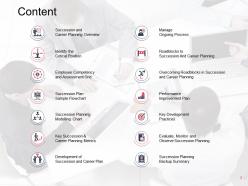
Slide 2: This slide shows Content of the presentation.
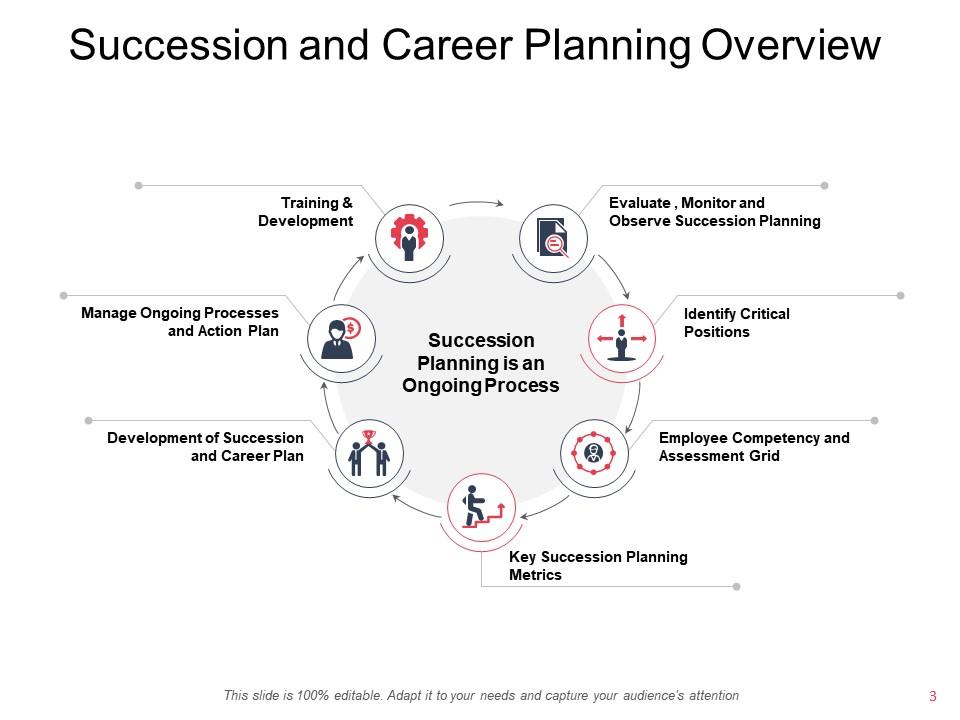
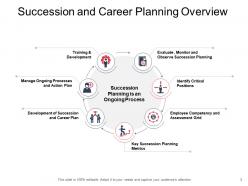
Slide 3: This slide presents Succession and Career Planning Overview.
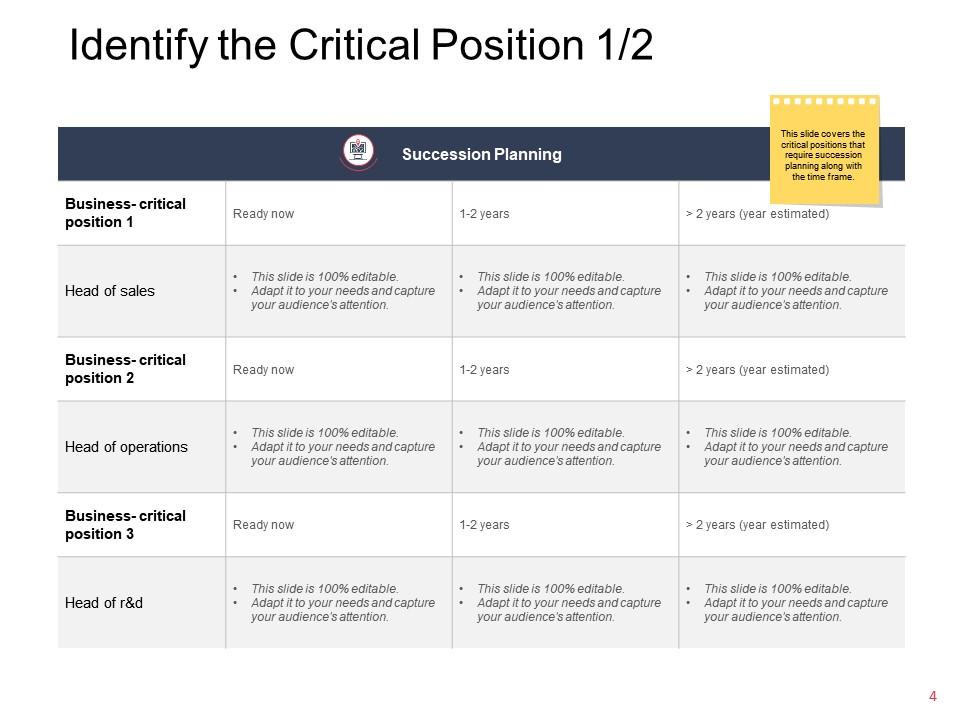
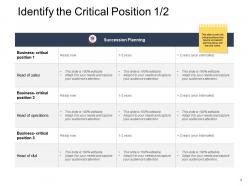
Slide 4: This slide displays Identify the Critical Position that require succession planning along with the time frame.
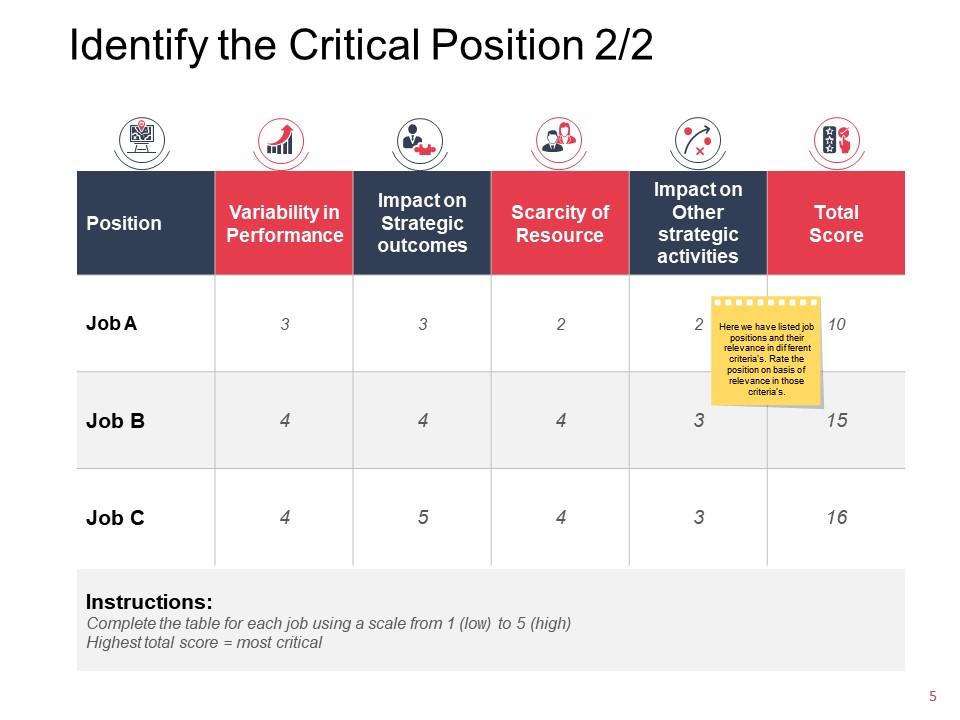
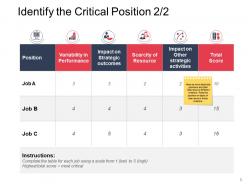
Slide 5: This is another slide representing Identify the Critical Position in tabular form.
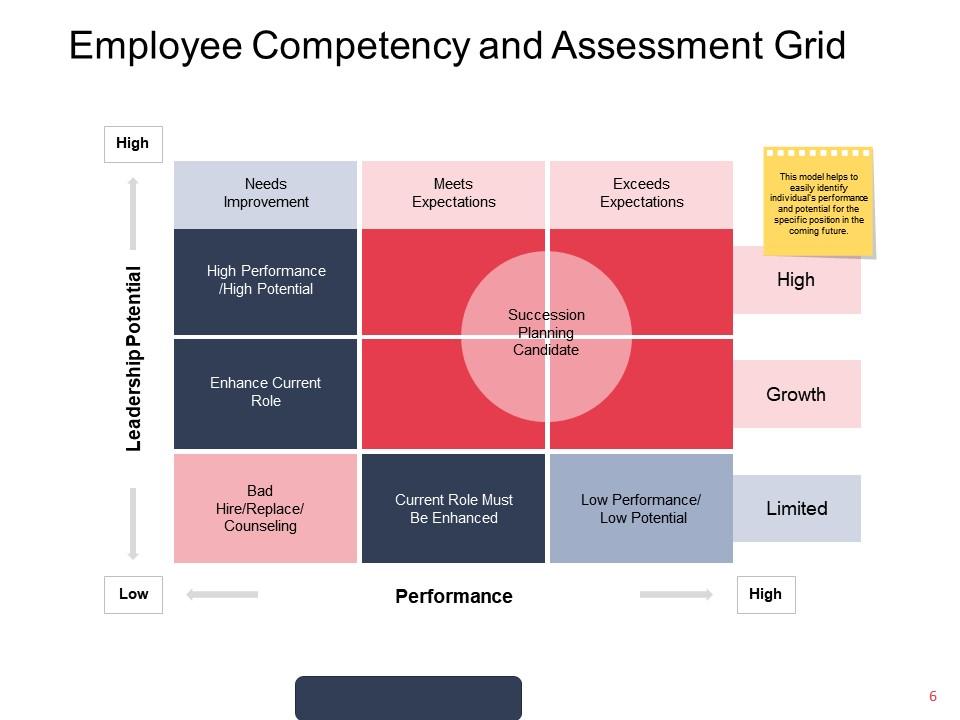
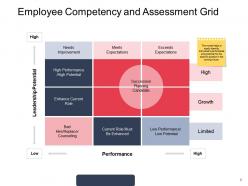
Slide 6: This slide showcases Employee Competency and Assessment Grid to identify individual’s performance and potential for the specific position in the coming future.
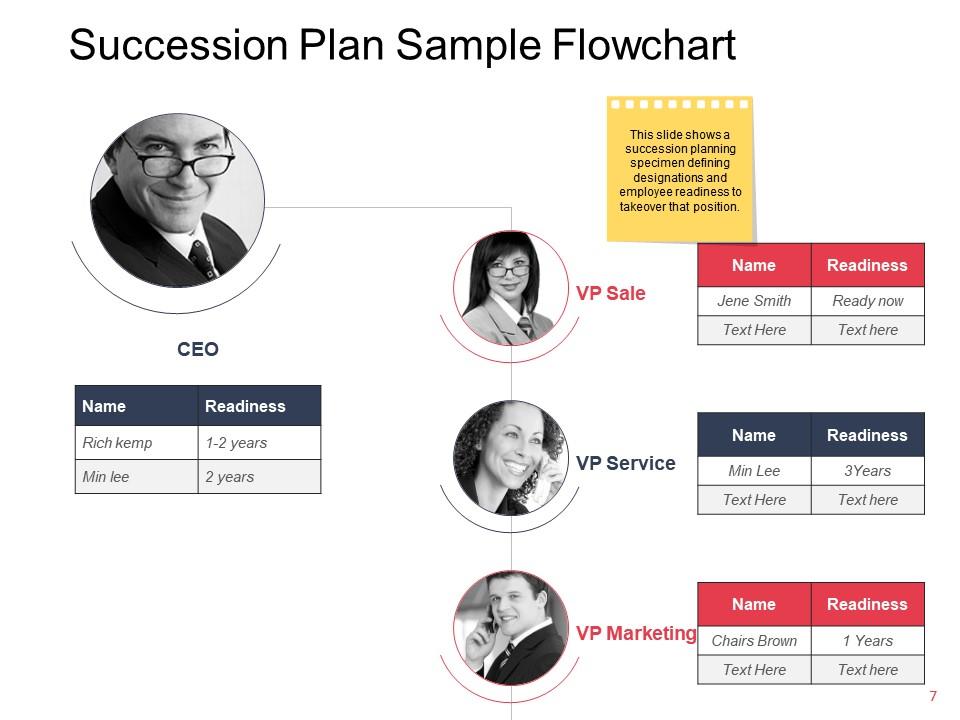
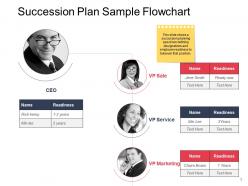
Slide 7: This slide shows Succession Plan Sample Flowchart defining designations and employee readiness to takeover that position.
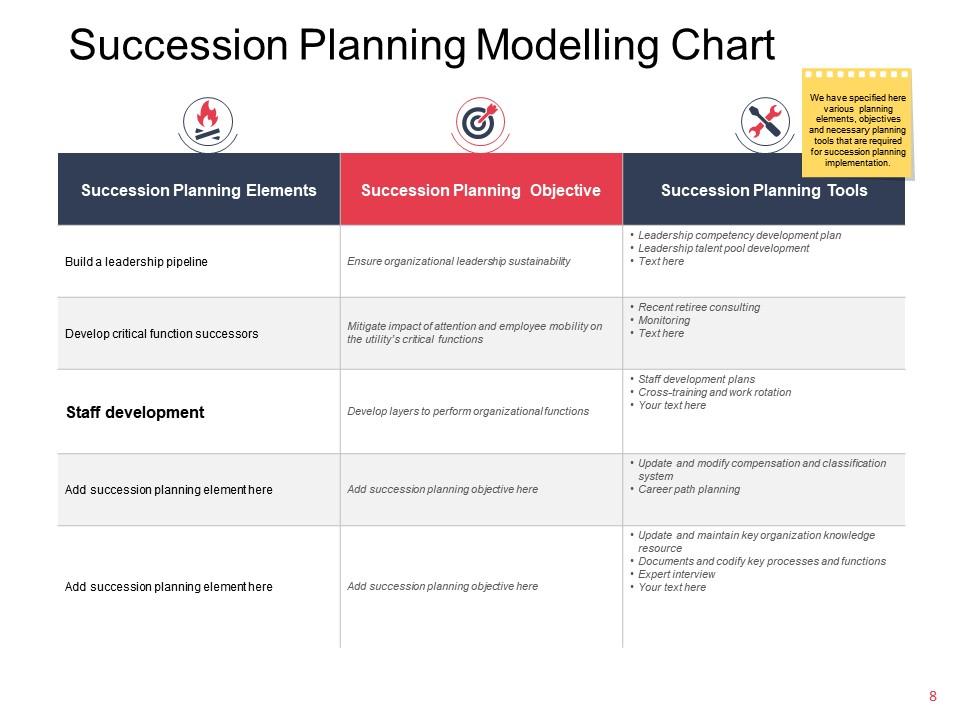
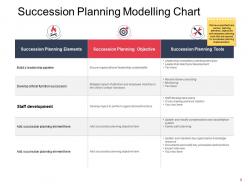
Slide 8: This slide presents Succession Planning Modelling Chart describing various planning elements, objectives and necessary planning tools that are required for succession planning implementation.
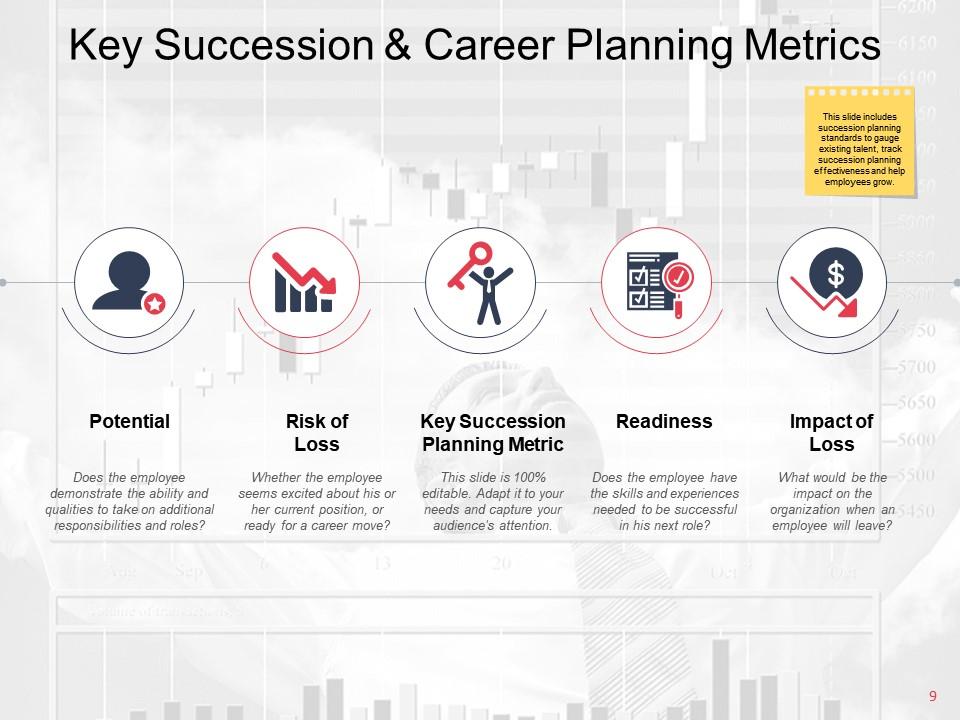
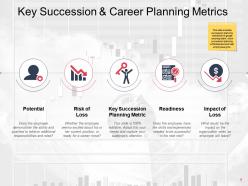
Slide 9: This slide displays Key Succession & Career Planning Metrics describing- Potential, Risk of Loss, Key Succession Planning Metric, Readiness, Impact of Loss.
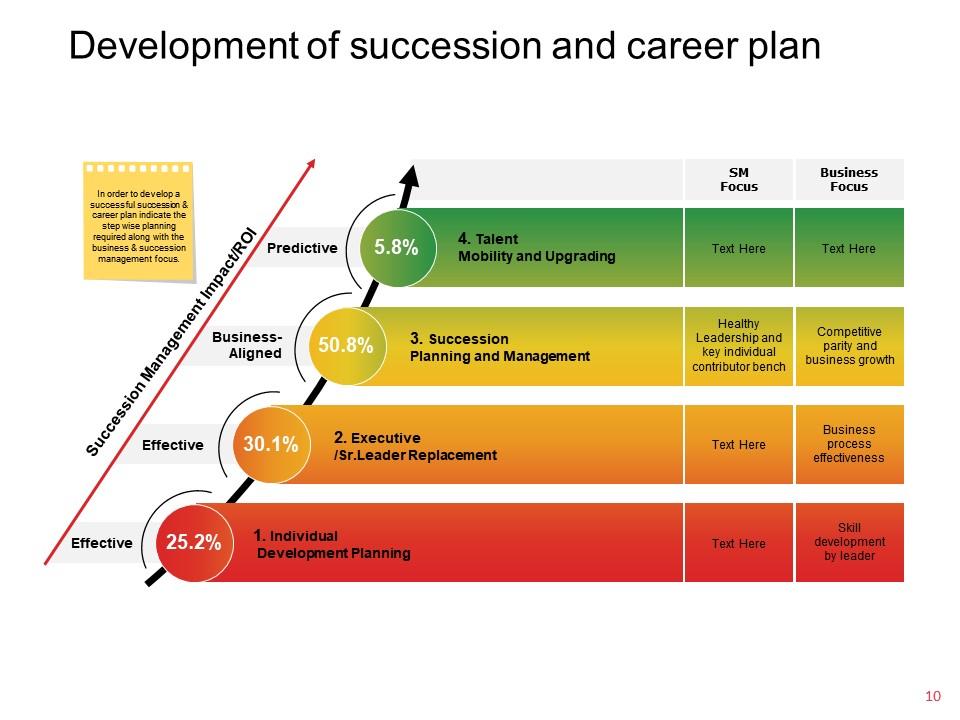
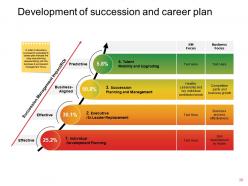
Slide 10: This slide represents Development of succession and career plan with data in percentage.
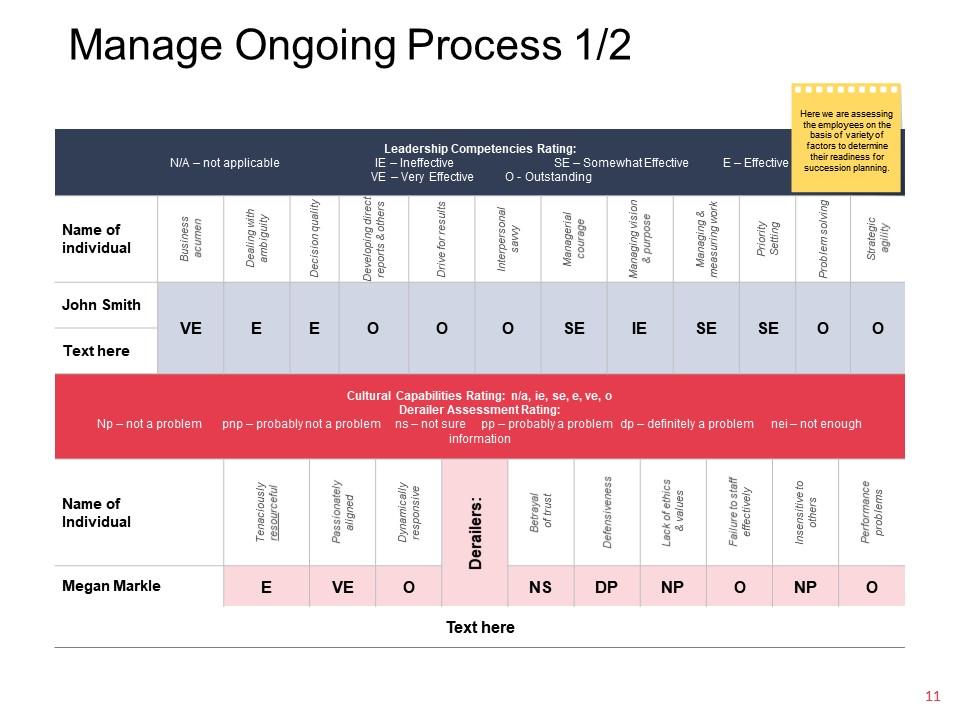
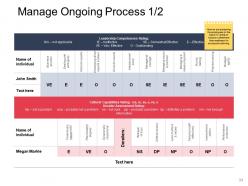
Slide 11: This slide showcases Manage Ongoing Process by assessing the employees on the basis of variety of factors to determine their readiness for succession planning.
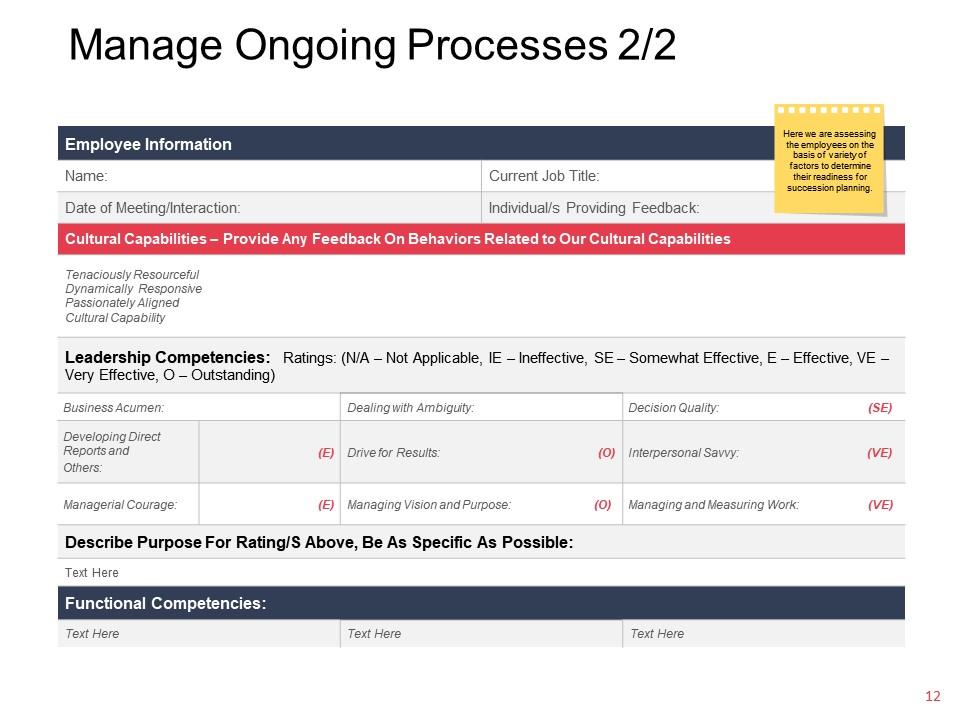
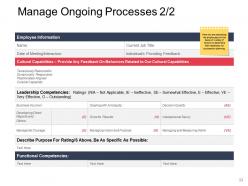
Slide 12: This is another slide for Managing Ongoing Processes.
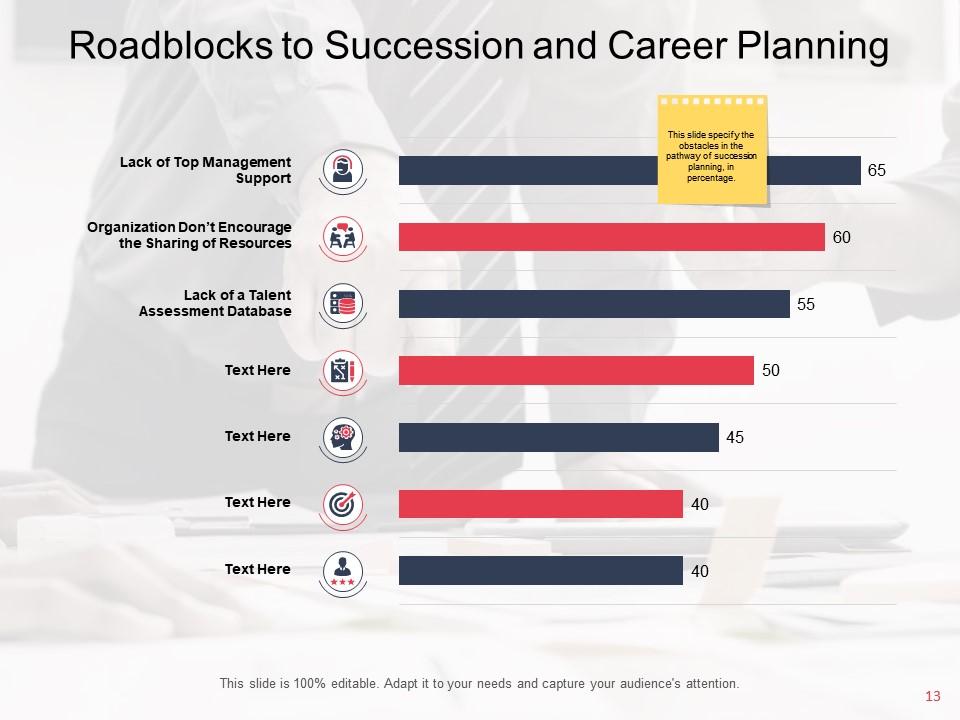
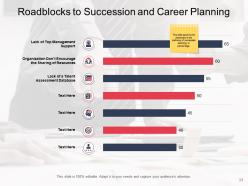
Slide 13: This slide shows Roadblocks to Succession and Career Planning.
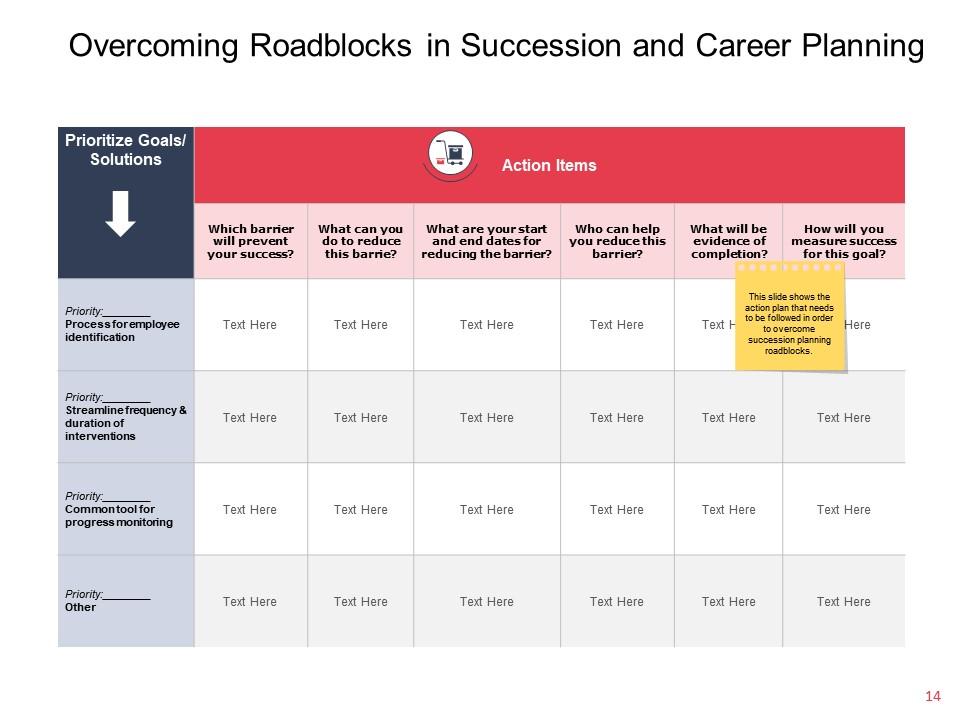
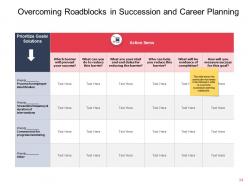
Slide 14: This slide shows the action plan that needs to be followed in order to overcome Roadblocks in Succession and Career Planning.
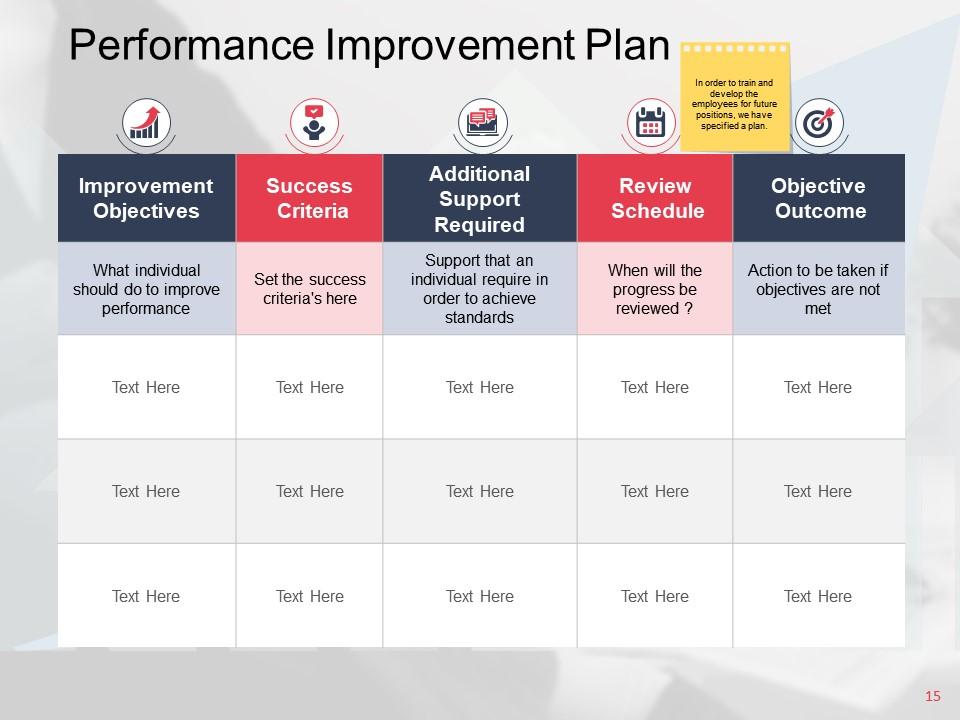
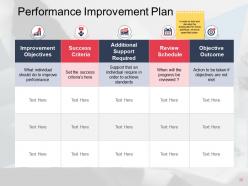
Slide 15: This slide presents Performance Improvement Plan to train and develop the employees for future positions.
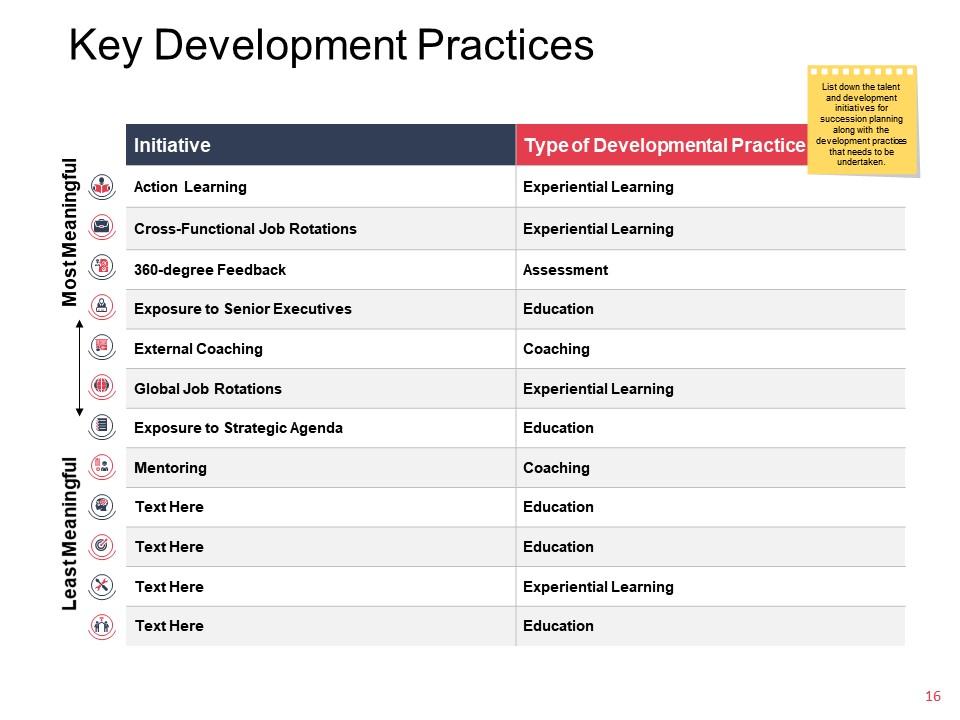
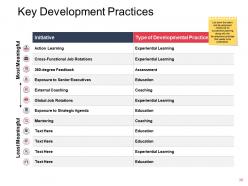
Slide 16: This slide displays Key Development Practices in tabular form.
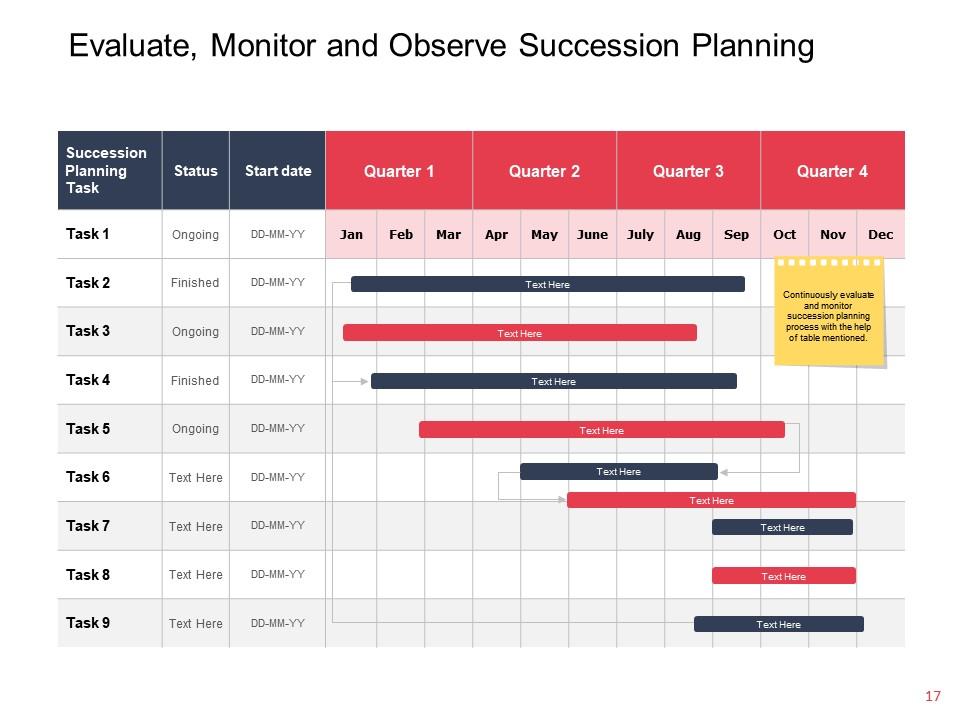
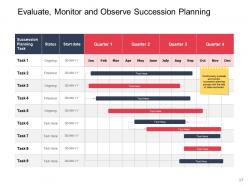
Slide 17: This slide represents Evaluate, Monitor and Observe Succession Planning.
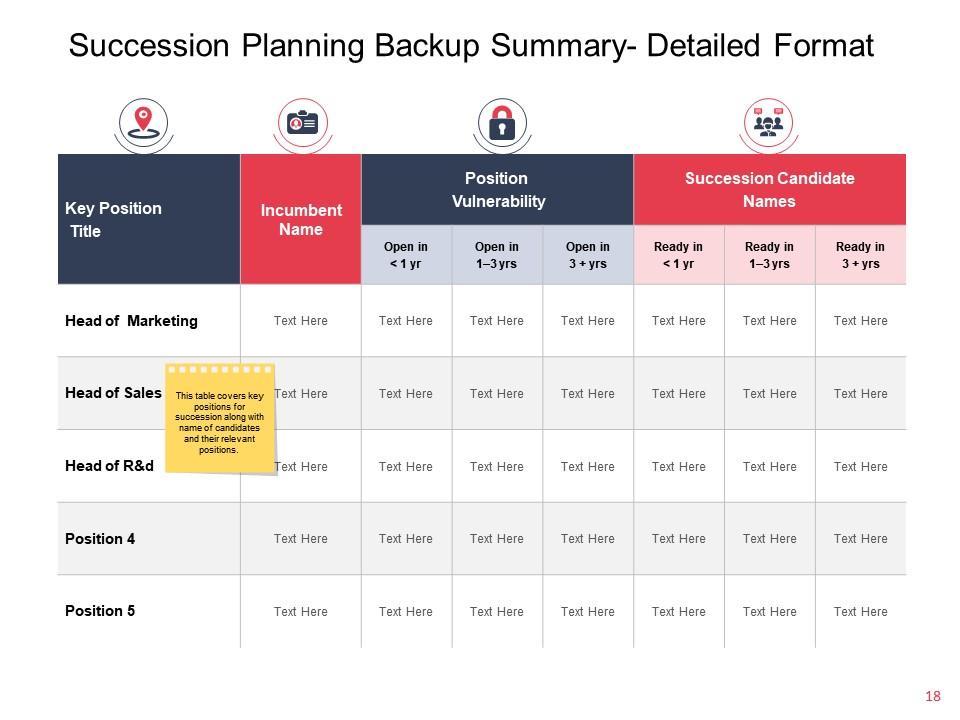
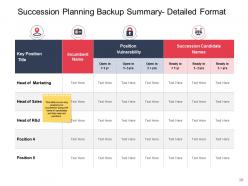
Slide 18: This slide showcases Succession Planning Backup Summary- Detailed Format covering key positions for succession along with name of candidates and their relevant positions.
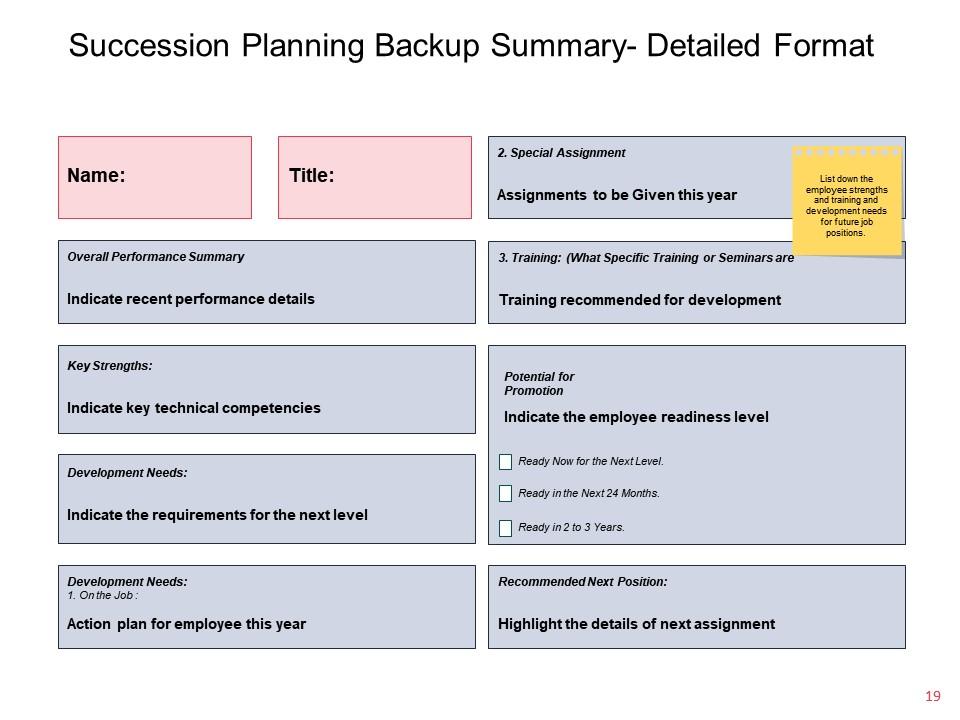
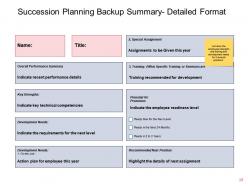
Slide 19: This slide shows Succession Planning Backup Summary- Detailed Format listing employee strengths and training and development needs for future job positions.
Slide 20: This slide reminds about a 15 minutes coffee break.
Slide 21: This slide is titled as Post It. Post your important notes here.
Slide 22: This is Meet Our Team slide with names and designation.
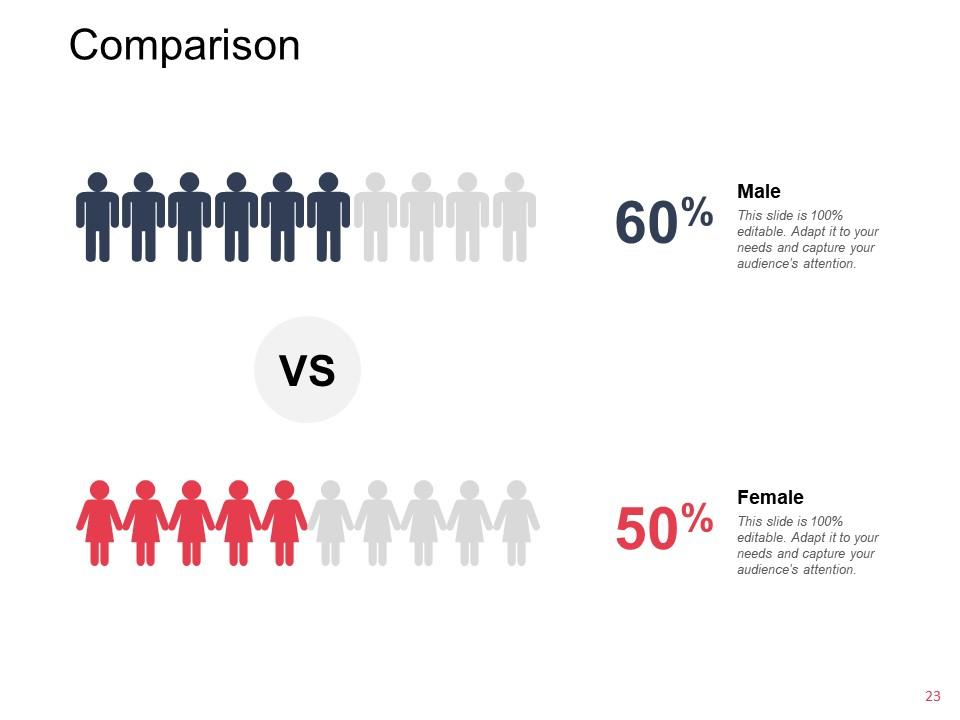
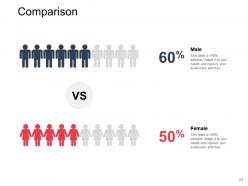
Slide 23: This is a Comparison slide to state comparison between commodities, entities etc.
Slide 24: This is About Our Company slide to show company specifications etc.
Slide 25: This is a Target slide. State your targets here.
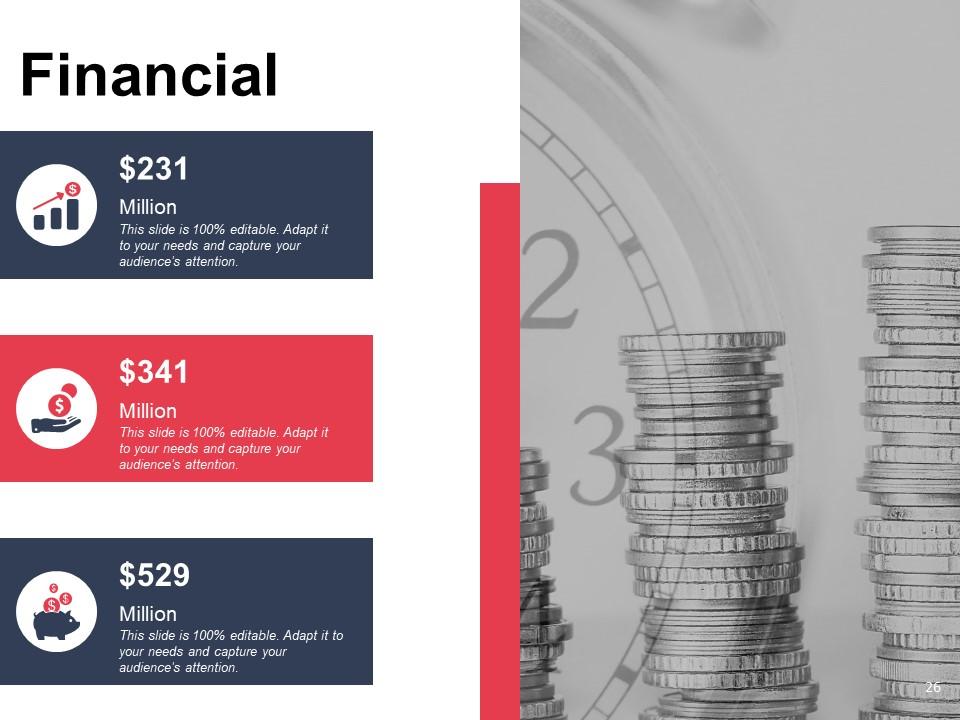
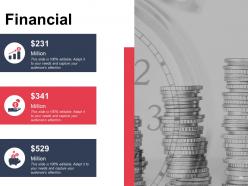
Slide 26: This is a Financial slide. Show your finance related stuff here.
Slide 27: This is a Puzzle slide with text boxes.
Slide 28: This is Our Mission slide with related imagery and text boxes.
Slide 29: This is a Lego slide with additional text boxes.
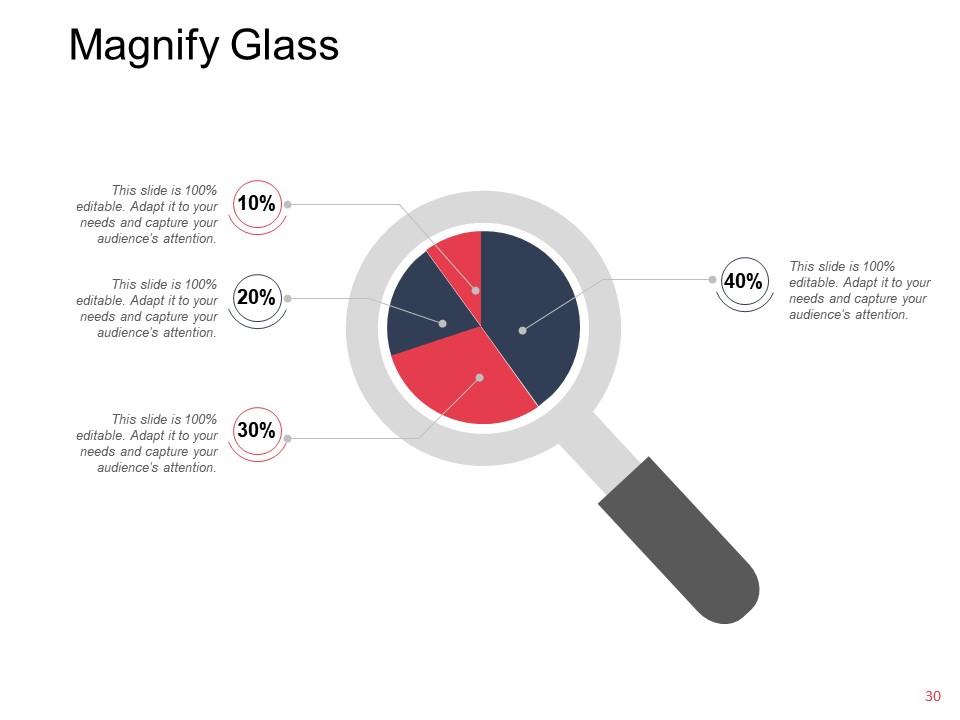
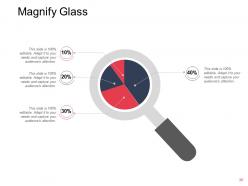
Slide 30: This slide displays Magnifying Glass to highlight information.
Slide 31: This is a Thank You slide with address, contact numbers and email address.
Talent Pool Management Powerpoint Presentation Slides with all 31 slides:
Use our Talent Pool Management Powerpoint Presentation Slides to effectively help you save your valuable time. They are readymade to fit into any presentation structure.
-
Informative design.
-
Best way of representation of the topic.
