


Team achievement ppt template diagram




Try Before you Buy Download Free Sample Product
 Impress Your
 Audience
 100%
100% Editable
 Save Hours
 of Time


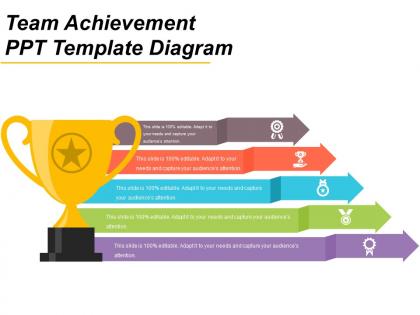
Download the team achievement PPT template diagram to illustrate your accomplishments, goals, targets, and so on. Attaining success or accomplishing targets is the core of any business and this success depends on several factors like vision, goals, teamwork, strategic planning and much more. You as a presenter can make use of our success trophy with factors presentation model to structuralize and present the long term or short-term goals and achievements. This colorful achievement trophy PPT graphic are used to organize the goals and planning into a linear and rational path. With the assistance of our professionally designed achievement presentation PPT infographic you can conceptualize your strategic business planning. As a business analyst or business professional, you need to come up with plans which you can present in this PPT and use as a roadmap to success. The provided achievement PowerPoint template will help you portray the planning of strategies astonishingly. Assert your ideas in a firm fashion with our Team Achievement Ppt Template Diagram. Acquire the correct degree of ferocity.
People who downloaded this PowerPoint presentation also viewed the following :
Team achievement ppt template diagram with all 5 slides:
Intercede on their behalf with our Team Achievement Ppt Template Diagram. Express the feelings of the downtrodden.

FAQs for Team achievement
Honestly? Clear goals are everything - you'd be shocked how many teams just wing it without actually defining what they're trying to accomplish. Communication and trust come next. Someone needs to step up as a leader, doesn't have to be official though. The psychological safety thing is massive - people won't share real ideas if they're scared of getting roasted for mistakes. I've seen that kill so many good projects. Regular check-ins help maintain momentum, and don't skip celebrating small wins along the way. But yeah, start with making sure everyone's on the same page about goals first.
Honestly, recognizing what each person brings to the table is such a game-changer. People work way harder when they feel appreciated for their specific talents - it's just human nature. Plus it helps everyone see how their work connects to everyone else's, which makes collaboration so much smoother. I've noticed (maybe this is obvious?) that when you acknowledge someone's strengths, they naturally want to keep building on them. Short wins during team meetings work great for this. Call out specific contributions and watch how the whole room's energy changes. It really does make people feel valued instead of just... there.
Honestly, good communication is what makes or breaks team success. Without it, everyone's just doing their own thing and crossing their fingers. Regular check-ins are clutch - they help people understand what they're supposed to be doing and how it fits together. Trust builds up naturally when everyone can actually talk about problems without drama. Your team needs to feel comfortable saying "hey, this isn't working" so you can adjust before things go sideways. I've seen teams fall apart just because nobody wanted to admit they were stuck on something stupid.
Honestly, just figure out what everyone's actually good at first. Then give them tasks that match those skills - sounds obvious but people mess this up constantly. Your detail person shouldn't be doing high-level strategy stuff, right? Have your creative people generate ideas while the numbers folks validate whether they'll actually work. The real trick is pairing people up so they cover each other's blind spots. Next time, literally ask your team what they excel at and what gets them excited about work. Trust me, everything flows way better when people are doing what comes naturally to them.
Honestly, just start with one weekly session where everyone has to work on something together. Daily standups help too - keeps people actually talking instead of disappearing into their own projects. I'd also do those quick coffee chats, even virtual ones work fine. The key thing is making sure everyone gets how their stuff fits into the bigger goal. Otherwise people just do their own thing in silos. Oh and celebrate the small wins! Sounds cheesy but it actually works. Try the weekly thing first and see what happens - you can always add more touchpoints later.
Honestly, team dynamics can make or break everything. Good communication and trust? Your group will crush their goals. But when things get toxic, even perfect plans fall apart - I've seen it happen so many times. The way people handle conflict and share responsibility directly affects productivity. You can't just cross your fingers and hope things work out though. Set up clear communication rules from day one. Check in regularly about how everyone's feeling about the workflow. Short meetings work better than hoping everyone reads minds, trust me.
Your leadership style basically makes or breaks everything with your team. Micromanage too much? People stop caring and you kill all creativity. But if you're too hands-off, everyone just floats around confused with zero accountability. What works is switching it up based on what they actually need right now. Could be coaching one day, directing the next, or just staying out of their way (which is way harder than it sounds, trust me). Be super clear on the goals but let them figure out how to get there. That's honestly where the magic happens.
Honestly, vision and mission statements are like having a GPS for your team - stops everyone from wandering around doing random stuff. When people actually know what they're working toward, they quit wasting time on tasks that don't matter. The motivation piece is huge too. Your daily grind feels way more meaningful when you can connect it to the bigger picture. I've watched teams do complete 180s once they figure this out (though some take forever to get there, not gonna lie). Best move? Get your whole crew together and really hash out what success looks like for you specifically.
Oh man, definitely go with Asana or Trello for tracking your tasks - Monday.com's pretty solid too. Communication-wise, Slack is way better than drowning in email chains (seriously, email's dead for quick stuff). Google Workspace is clutch if you're doing lots of collaborative docs, though Notion's been growing on me lately. Zoom's fine for calls, Teams works too if you're already in that ecosystem. Here's the thing though - stick to like 3-4 tools max. I've seen teams try to use everything and it becomes a mess where nobody knows what's happening where.
Honestly, start with super specific milestones - actual dates and deliverables, not fuzzy stuff like "make progress." Weekly check-ins work great, even if it's just a quick Slack update. For celebrating, skip the corporate BS and do something real. Team lunch, public shoutouts, or even those random celebration emoji threads (they're cheesy but people actually love them). Oh, and don't wait until you're done - celebrate at 25% and 50% too. Keeps everyone from burning out halfway through. The timing matters way more than how fancy it is.
Honestly, most team problems boil down to people not talking to each other properly. Goals get fuzzy, priorities clash, and suddenly everyone's doing their own thing. Budget's always tight too - that's just life I guess. What actually works is nailing down who does what from day one. Weekly check-ins help tons because people can actually say "hey, I'm stuck on this." Make your goals super specific so there's no confusion about what winning looks like. Start with those weekly meetings and you'll probably see things shift pretty quick.
Dude, morale is everything for productivity. Happy teams just get more done - they're creative, focused, and actually want to succeed. But when morale tanks? I've literally watched brilliant people just mentally check out and everything grinds to a halt. It's wild how fast it spreads too. Good vibes mean better communication and faster problem-solving. People will actually push through tough spots instead of giving up. Watch for those energy dips and jump on issues before they kill your whole project. Trust me, fixing team mood pays off way more than you'd think.
Honestly, team-building stuff actually works if you don't make it cheesy. Better communication happens naturally when people aren't strangers anymore. You'll be shocked how much the quiet ones contribute once they're comfortable - I've seen it happen so many times. Trust builds up, which means less drama and faster decisions. People start sharing ideas instead of hoarding them. Conflict resolution gets easier too. My advice? Do quarterly activities that actually relate to work problems you're facing. Skip the trust falls though, nobody needs that awkwardness.
Honestly, skip the annual review BS and do weekly check-ins instead. Way better than those fake quarterly surveys everyone ignores anyway. Get feedback flowing everywhere - teammates talking to each other, people actually telling leadership what's up, managers being real with their teams. After projects wrap up, do quick retrospectives or those simple pulse surveys (nothing fancy). Here's the thing though - you gotta actually DO something with what people tell you, otherwise it's pointless. Oh and don't try to fix everything at once. Pick one feedback thing that works and stick with it first.
Honestly, start with communication - like actual regular check-ins, not just those painful all-hands meetings. Make your goals super clear too because half the time people are just nodding along while having no clue what they're supposed to do. I'd also throw some money at training your team since burnt-out people will jump ship the second they get a better offer. Cross-training is clutch for when someone inevitably quits without notice. Oh, and celebrate the small wins! Sounds cheesy but it actually works. Pick ONE of these things first though - don't try to overhaul everything at once or you'll burn yourself out too.
-
Innovative and attractive designs.
-
Excellent design and quick turnaround.