

Path forward template powerpoint templates




Try Before you Buy Download Free Sample Product
 Impress Your
 Audience
 100%
100% Editable
 Save Hours
 of Time


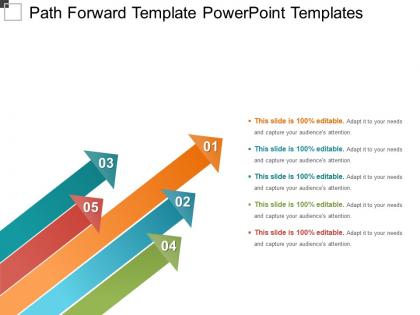
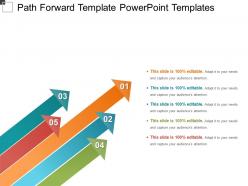
Pick this path forward template PowerPoint templates PPT slide for presenting a business presentation to discuss about the progress of business and workplace. The way ahead Powerpoint presentation enables the presenter to explain the team members and viewers that how the employees and seniors should develop the ways of working and which ways of working should be abandoned to be able to respond to changes in the market, reach our objectives and maintain our position as a pioneer. Five important factors have been considered by the experts designers while crafting this business progress PPT in order to get the results of development in the operations which are; focus on customers, improve cooperation, give and take responsibility, value good results and react when needed and work safely and professionally always and everywhere. As we all know that change in the operating culture is there and the company changes when the working of the people changes. Therefore, the template has been crafted to study and monitor the changes in the operating culture by way of personal performance reviews and development discussions, as well as through a company level monitoring survey. Halt any decline with our Path Forward Template Powerpoint Templates. They will bring you back on course.
People who downloaded this PowerPoint presentation also viewed the following :
Path forward template powerpoint templates with all 5 slides:
Dreams take form with our Path Forward Template Powerpoint Templates. They give them a definite shape.
FAQs for Path forward
Honestly, most people overcomplicate this stuff. You need four things: clear goals that actually connect to what you're trying to accomplish (not just nice-sounding fluff), concrete tasks assigned to real people, timelines with padding because everything takes forever, and ways to measure if it's working. I always throw in extra time - learned that the hard way. Map it out in a basic table first. Don't get fancy yet. The metrics part is what separates real progress from just being busy, which happens more than you'd think.
Honestly, arrows and flowcharts are your best friend here - they'll show people exactly how to get from point A to B. Color coding helps too, especially for grouping stuff that goes together. Trust me, nobody wants to stare at endless bullet points (I've sat through way too many of those presentations). Icons work great for different phases, and timelines are perfect when you've got dependencies to show. Keep your visuals super simple though - they should just point people toward what actually matters. Oh, and sketch it out on paper first! Way easier than trying to figure it out in PowerPoint.
Honestly, stakeholder input is everything when you're building a path forward template. Without it, you're basically flying blind. Map out everyone who'll be affected first - then actually talk to them. Trust me, I've watched so many plans crash because people assumed they knew what was needed. These conversations help you figure out realistic timelines and spot problems early. People on the ground always see stuff you miss from your perspective. Short, focused chats work best before you lock anything down. Don't skip this step - it's the difference between a template that works and one that collects dust.
So basically you gotta tailor the main sections to what actually matters in each industry. Healthcare needs compliance stuff and patient safety tracking, while tech companies care more about sprint cycles and how many users they're getting. Manufacturing is all about supply chain and quality checkpoints - honestly, it's pretty obvious once you think about it. The overall structure stays the same though. Just figure out the 3-5 things that really drive success in your specific field, then build your template around those instead of using boring generic categories. Way more useful that way.
Don't treat it like some sacred checklist - it's just a starting point. Make your action items actually actionable too. Like, "improve communication" tells you literally nothing useful. Oh, and definitely talk to stakeholders first because your assumptions are probably wrong (learned this the hard way). Realistic timelines matter way more than pretty formatting. I always build in checkpoints now since projects go off the rails constantly. Keep steps specific and deadlines doable. Honestly, the flexibility part is what most people mess up - they get too attached to their original plan.
Start measuring within the first month - numbers and feelings both matter here. Monthly check-ins work great for tracking your original KPIs, but honestly? The data's only half the picture. Talk to your team about how things actually feel day-to-day. Processes running smoother? Communication less of a nightmare? I'd do quick surveys or just casual pulse checks - whatever feels right for your crew. The trick is catching both hard metrics and human stuff early enough to pivot if something's not clicking.
Honestly, timelines are what separate actual plans from pipe dreams. You know those "someday I'll organize my garage" projects? Yeah, that's what happens without deadlines. Having specific dates means everyone knows what's due when. Plus you'll catch problems before they blow up - like realizing two people need the same resources at the same time. Work backwards from your end date. Set checkpoint dates for each big milestone along the way. Stakeholders love having concrete stuff to track against too (makes them feel useful, I guess). Without that structure, tasks just drift around forever and nothing actually gets finished.
So instead of just winging it, you'll actually know what's working and what isn't - which can be brutal but super helpful. The numbers show you patterns you'd totally miss otherwise. Pick maybe 3-4 metrics that matter for your goals (don't go crazy with data overload). Check in on them regularly and don't be afraid to change direction when something's clearly not hitting. I used to think I knew what was effective until I started tracking properly - turns out my instincts were way off on some things. It's honestly game-changing once you get into the habit.
Honestly, I'd build flexibility right into the thing from day one. My first template was completely useless after like two weeks - total disaster. What works is creating framework boxes instead of rigid steps, so you can fill them differently when stuff changes (and it always does). Schedule checkpoint reviews where you actually reassess everything. Don't skip this part! Also throw in contingency planning sections and make sure everyone knows the plan will shift. The whole point is setting it up so when you need to update it, you're not starting from zero again.
Make it interactive and visual - people zone out otherwise. Tell stories about what success actually looks like, then tie it back to how they personally benefit. Rhetorical questions work surprisingly well to keep them engaged even when you're doing most of the talking. Break your timeline into clear milestones they can see, and here's the thing - don't just list next steps, explain why each one matters. Oh, and encourage pushback! I know it sounds scary, but start by asking "What concerns do you have?" right upfront. Leave real time for questions too.
So basically, these templates just get everyone aligned on what you're actually doing. No more of those awkward meetings where half the team is confused about the plan. You map out the problem, solutions, timelines, plus who's responsible for what. Honestly, the best part is it forces you to spot potential issues before they blow up your project. Dependencies, roadblocks - all that stuff gets discussed upfront instead of surprising you later. Your team stops working in weird silos too. Just pick one project you've got coming up and build the template together. Makes a huge difference.
Don't just slap feedback at the end - build it right into your whole presentation. Start with a "What we heard" section upfront so people know you actually listened. Then reference specific feedback throughout, like "Sarah mentioned tight timelines, so we're doing this in phases." I know it sounds a bit extra, but trust me on this one. Call out exactly which feedback changed which decisions. Finish with an "open items" slide for stuff you couldn't tackle yet. People need to see their input actually moved the needle, not just got noted somewhere.
So basically treat your template like you're telling a story. Your current situation? That's where the story starts - what's going wrong right now? The steps you're planning become this journey with roadblocks and wins. Honestly, I've done this and it makes boring project stuff way more interesting to read. Skip the bullet points and use real examples instead. Make people actually picture what winning looks like at the end. Oh and definitely try writing your next one as a story first - you'll be surprised how much clearer everything gets.
Basically, it's all about how much you can share. With your internal team, go ahead and be brutally honest - talk about budget issues, political BS, resource problems, whatever. External stakeholders don't need (or want) to hear about your internal mess though. They care about outcomes and value, not the drama behind the scenes. I'd actually start with the detailed internal version first, then clean it up for outside people. Strip out the sensitive stuff and focus more on milestones they'll care about. Internal folks need the nitty-gritty process details anyway.
Honestly, Miro and Figma are game-changers for this stuff - you can build interactive roadmaps that people actually want to click around in. Notion works great too if your team's already living in there. I've also seen some wild setups in Airtable (though that might be overkill depending on what you're doing). The main thing is picking something where everyone can jump in and make updates without it being a whole production. Digital beats static docs every time because you can just drop in links, switch up timelines, whatever. Just go with what your team won't complain about using.
-
Good research work and creative work done on every template.
-
Unique and attractive product design.