

The digital marketing funnel step by step process creating digital marketing strategy ppt gallery




Try Before you Buy Download Free Sample Product
 Impress Your
 Audience
 100%
100% Editable
 Save Hours
 of Time


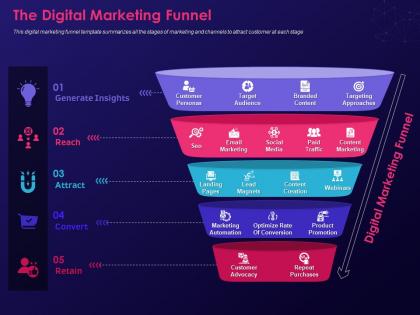
This digital marketing funnel template summarizes all the stages of marketing and channels to attract customer at each stage
People who downloaded this PowerPoint presentation also viewed the following :
The digital marketing funnel step by step process creating digital marketing strategy ppt gallery with all 2 slides:
Use our The Digital Marketing Funnel Step By Step Process Creating Digital Marketing Strategy Ppt Gallery to effectively help you save your valuable time. They are readymade to fit into any presentation structure.
FAQs for The digital marketing funnel step by step process creating digital marketing
Think of it like dating - you can't propose on the first meeting, right? People go through awareness (they discover you exist), then interest (start following your stuff), consideration (actually debating if they want to buy), and finally conversion. Each stage needs different content though. Cold traffic shouldn't see "BUY NOW" ads - that's just weird. Start with helpful content to get noticed, then maybe offer free downloads when they're interested. Once they're considering, that's when you can show comparisons and testimonials. Don't skip steps or you'll scare people off before they're ready to spend money.
So basically you want different metrics for each stage. Impressions and reach work for awareness stuff. When people are considering, check engagement rates and email opens. Conversions are about actual sales and leads - pretty straightforward there. But here's the thing that trips everyone up: you NEED proper attribution tracking or you're flying blind. Google Analytics 4, Facebook Pixel, UTM parameters - use whatever combo works. Don't just look at last-click either because people see your ads multiple times before buying. I set up weekly dashboards for each stage so I can catch problems early. Sounds like overkill but it's not.
Content marketing pulls strangers into your funnel by creating stuff they actually want to read. Blog posts, videos, guides - whatever solves problems your ideal customers are searching for. Someone googles "how to increase website traffic" and finds your killer guide? Now they know you exist. Here's the thing though - you gotta be helpful first, not pushy. I mean, nobody likes getting sold to right away. Make your content so good they'll happily trade their email for more. It's basically being the friend who always has great recommendations, except for business.
Okay so three things that actually work for landing pages. Your headline needs to match whatever they clicked to get there - like if your ad says "free trial," don't suddenly switch to talking about "premium access" or whatever. Also, cut down those forms! I've seen people ask for someone's life story just to download a PDF. Keep it to like 3-4 fields max. Then throw some customer logos or testimonials near your CTA button - people are way more likely to convert when they see others already did. Test different versions of this stuff and you'll figure out what clicks with your audience pretty quick.
Honestly, email sequences are gonna be your bread and butter here. You can tailor the content based on exactly where someone is in their research phase. Retargeting ads work amazing too - keeps you top of mind while they're still comparing options. If you're doing B2B stuff, don't sleep on LinkedIn. I've seen conversion rates there that made me do a double-take. Social media's more about just... being around, you know? Not really driving purchases but staying visible. The trick is keeping your messaging consistent but not pushy - they're still figuring things out, not ready to swipe that card yet.
Look, data analytics shows you what's actually happening at each stage instead of you just guessing. Top of funnel - see which channels bring quality traffic and focus there. Email open rates and content engagement in the middle tell you what messaging hits (most people just wing this part tbh). Then conversion data reveals exactly where folks bail before buying. Set up tracking first though - that's crucial. Make small changes based on the numbers, not whatever feels right. I learned this the hard way when I kept tweaking things based on hunches.
So I'd hit up those dropped leads with a "hey, we miss you" email series first - addresses their objections and throws in some case studies or demos. Retargeting ads are solid too, especially testimonials on social and Google. Here's the thing though: you gotta segment based on where they bailed. Someone who checked your pricing needs totally different messaging than someone who just grabbed a freebie. Email's your cheapest bet to start. Then if you've got budget, layer in paid retargeting for the big fish prospects.
Dude, personalization is a game changer - we're talking 10-15% conversion bumps at every stage. Instead of blasting the same message to everyone (guilty as charged), you're actually speaking to where people are in their journey. Someone browsing for the first time needs totally different content than someone who already grabbed your lead magnet. The thing is, people can smell generic marketing from a mile away. But when you nail their specific interests? They don't feel sold to anymore. Start simple though - personalized email subjects or showing relevant blog posts based on what they've read before. Those small tweaks seriously move the needle on getting people further down your funnel.
Honestly, the worst thing I see is companies shoving sales pitches at people who just discovered they exist - like, slow down! Marketing and sales teams also have this terrible habit of not talking to each other, so leads just disappear into thin air. Most businesses create one generic message and blast it everywhere instead of actually meeting people where they are. Oh and the middle part? Totally ignored. People need different stuff depending on if they're just learning or ready to buy. I'd focus on figuring out your handoff process first, then build content that actually matches each stage.
Okay so social media is where you get your name out there to people who don't know you exist yet. You've got your regular posts, ads, and honestly user-generated stuff works really well too. The algorithms can be annoying but when they actually help, your content reaches way beyond just your followers. What I love about it is the targeting - you can get super specific with demographics instead of just posting random stuff and hoping someone cares. Main thing is making content people actually want to share and talk about. Gets the conversation going naturally, you know?
Honestly, Google Analytics is where I'd start - it's free and tracks everything you need to see where people bail out. For email stuff, Mailchimp's pretty solid, or ConvertKit if you want something fancier. HubSpot and Marketo are like the fancy all-in-one solutions, but they're pricey. Hotjar's cool for seeing actual heatmaps of where users click around (or don't). Facebook and Google ads both have decent tracking built in too. I'd say pick Google Analytics plus one email tool first - you can always get fancy later once you figure out what you actually need.
Honestly, email marketing kills it for conversions because you're hitting people with the right message at the right time. Top of funnel gets educational stuff to build trust. Those case studies and demos work perfectly for middle-funnel people who are warming up. And yeah, those "last chance" offers are super cheesy but they actually convert like crazy at the bottom. The real trick is segmenting your list properly - you don't want to send cart abandonment emails to someone who just signed up for your newsletter yesterday, you know? Map out what you're currently sending and see where the gaps are. Trust me, most people are missing obvious touchpoints.
So basically, match your CTA to where people are in their journey. Early on? Keep it chill with "Learn More" or "Download Guide" - they're just getting to know you. Once they're warmer, try "Start Free Trial" or "See Pricing." Bottom of funnel is where you get aggressive: "Buy Now" all the way. Someone who just found your site isn't ready for that though - it's like proposing on the first date, you know? Everyone obsesses over button colors but honestly the words matter way more. I mean, test orange vs blue if you want, but focus on the messaging first.
Personas totally change how you build your funnel - like, a CEO needs completely different messaging than some hands-on manager, you know? We learned this the hard way when our one-size-fits-all approach bombed last quarter. So now I map out how each persona moves through their buying journey first. Then create specific entry points and nurture sequences for each path. Pain points are different, preferred channels are different, decision-making process - all of it. Start with your top two personas and audit your current funnel against them. Makes such a difference once you get it right.
So SEO is clutch for getting found when people don't even know you exist yet. Picture this - someone's got a problem and they're googling around for answers. Your blog posts or guides pop up in those search results instead of your competitors'. Way cheaper than running ads all the time, honestly. You're basically intercepting people right when they're hunting for solutions you actually provide. The key is writing content that answers those early-stage questions your audience has. Like, before they even know what product they want - that's the sweet spot where SEO really pays off for visibility.
-
Very well designed and informative templates.
-
Great product with effective design. Helped a lot in our corporate presentations. Easy to edit and stunning visuals.
-
Innovative and Colorful designs.
-
Editable templates with innovative design and color combination.