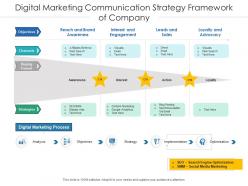
Digital marketing communication strategy framework of company
Try Before you Buy Download Free Sample Product
Audience
Editable
of Time
Our Digital Marketing Communication Strategy Framework Of Company are topically designed to provide an attractive backdrop to any subject. Use them to look like a presentation pro.
People who downloaded this PowerPoint presentation also viewed the following :
Digital marketing communication strategy framework of company with all 2 slides:
Use our Digital Marketing Communication Strategy Framework Of Company to effectively help you save your valuable time. They are readymade to fit into any presentation structure.
FAQs for Digital marketing communication strategy
Honestly, start with knowing exactly who you're targeting - that's half the battle right there. Set some actual measurable goals so you're not just throwing stuff at the wall. Content strategy and picking the right channels come next, plus you'll need SEO, social media, email marketing, maybe some paid ads. But here's the thing - don't try doing everything at once or you'll burn out fast. Map out your customer journey first, then figure out which 2-3 channels you can actually do well. I learned this the hard way! Analytics are key for tracking what's working. Quality over quantity wins every time.
Honestly, social media can totally boost your digital marketing if you use it right. Pick maybe 2-3 platforms where your customers actually are - don't spread yourself everywhere because that never works well. Post your blog stuff, videos, whatever you've got, but here's the thing: the real results come from actually talking to people. Reply to comments, start conversations, be genuine about it. The paid ads are pretty solid too with all their targeting options. Plus you get decent data about your audience that helps with everything else. I'd focus on doing a few platforms really well instead of being mediocre on ten platforms, you know?
Honestly, forget the vanity metrics - they're just ego boosters. Focus on what actually makes you money: conversion rates, cost per acquisition, and customer lifetime value. Click-through rates are nice and all, but they don't mean squat if nobody's buying. ROAS is huge too. I'd also track attribution across channels so you know where to spend more. Here's the thing though - pick like 3-5 metrics max that directly hit your revenue. Otherwise you'll go crazy staring at dashboards with a million numbers that don't matter.
So here's the thing about SEO - it's like the backbone that makes all your other marketing stuff actually work. Your paid ads perform better when people already know your brand from seeing you in search results. Same with social media and email campaigns. The keyword research you do for SEO? That tells you what content to create and who to target with ads. I mean, once you get it going, it's honestly the cheapest way to get consistent traffic. Oh and start with an audit of where you rank now - there's usually some easy wins sitting there that can give your whole strategy a nice boost pretty quickly.
Honestly, you gotta know who you're talking to first - what bugs them, what they actually care about. Don't just post about your brand 24/7 because nobody wants that. I learned this the hard way lol. Try different stuff - videos work great but so do polls and stories. People consume content totally differently. Your voice should stay consistent but maybe be more casual on TikTok vs LinkedIn, you know? And this might sound obvious but actually reply when people comment! Too many brands forget social media is supposed to be... social. Build real connections instead of just broadcasting into the void.
Honestly, email marketing is where you build real relationships, not just blast people with sales stuff. I'd start by mapping out how it connects with your social media and content - use those to feed leads into email sequences. Then segment based on where people are in their buying journey. Way cheaper than running ads all the time too. The trick is matching your email content to whatever stage someone's at. Like, don't send product pitches to someone who just downloaded your free guide, you know? Set up some automated sequences that actually help people instead of just selling at them constantly.
Think of customer segmentation like sorting your friends into different group chats - you wouldn't send the same meme to your work friends and your college buddies, right? Same logic applies here. You're splitting your audience into groups based on who they are, what they buy, or how they behave. Way better than sending everyone identical emails (honestly, that's just lazy marketing). Once you segment properly, your click rates will jump because you're actually talking about stuff people care about. I'd start with maybe 3 main customer types and write different content for each group. It's not rocket science, but it works.
Okay so first thing - figure out who you're actually trying to reach and what you want them to do. Otherwise you're just throwing money around hoping something sticks. Set up tracking from day one because guessing what works is basically lighting cash on fire. Try different ad styles and see what clicks with people. Oh and make sure your landing page doesn't feel like a completely different company made it - that's conversion death right there. Start with a small budget and double down on whatever's performing. I learned this the hard way but treat it like you're constantly tweaking, not launching once and walking away.
Start with Google Analytics 4 and Search Console - both are free and you need them anyway. For social media, get something like Hootsuite or Buffer that tracks everything in one place. Trust me, juggling Instagram and LinkedIn analytics separately will drive you crazy. Mailchimp handles email tracking pretty well if you're doing newsletters. Oh, and obviously Facebook Ads Manager and Google Ads have their own dashboards if you're running paid stuff. Just start with the free Google tools first, then add others when you actually need them.
Honestly, video works everywhere if you do it right. Instagram Stories love those quick clips, YouTube's great for longer tutorials, LinkedIn eats up professional stuff. Email open rates go crazy when you throw in video thumbnails - I've seen it work so well it's almost unfair. Your website definitely needs product demos or testimonials too. Each platform has its own vibe though, so don't just copy-paste the same content everywhere. I'd pick one platform first, see what hits, then branch out. Way less overwhelming that way.
Honestly, chatbots are getting insanely good now - the AI personalization stuff is wild. Short-form video is where it's at though. Everyone's obsessed with Reels and TikTok content. Voice search is becoming a bigger deal since people just ask Alexa everything instead of googling. First-party data matters way more now with all the privacy crackdowns happening. Interactive content like polls and those AR filters? Way better engagement than regular posts. Oh, and definitely check what you're doing with video right now. See where you can throw in more interactive stuff - it actually makes a difference in your campaigns.
Dude, you HAVE to get your site mobile-friendly. Like 60% of people browse on their phones now, so if your site sucks on mobile, you're literally losing most of your visitors. Google's search algorithm heavily favors mobile-optimized sites too - honestly, it's been that way for years and some people still don't get it. Mobile users have zero patience compared to desktop users. They'll bounce in seconds if something's weird. Test your site on your phone and maybe borrow a friend's too. Fix any slow loading or wonky navigation stuff you find.
Dude, interactive stuff is where it's at - polls, quizzes, live Q&As actually make people stop scrolling. Personalized emails are solid too, just don't blast everyone the same generic message. Stories are weirdly addictive (I still don't get why people watch my breakfast content but whatever). User-generated campaigns can blow up if you throw some incentives at people. Oh, and pick ONE platform first! I made that mistake early on trying to be everywhere at once. Focus beats being mediocre across five different apps.
Honestly, user-generated content is like having customers do your marketing for you. People trust random reviews and photos from other buyers way more than your fancy ads - it's just human nature. The best part? You're not paying for any of it. Create a hashtag for your brand and get people sharing their experiences. I've seen brands blow up just from reposting customer photos on their Instagram. The engagement is crazy because it feels real, not like some polished corporate BS. Just make sure you ask permission before reposting someone's stuff.
Okay so basically focus on three main things: data privacy, transparency, and not being sketchy with your tactics. GDPR compliance is pretty much expected everywhere now, not just Europe. Always disclose sponsored stuff upfront - people can totally tell when you're being fake about partnerships. Avoid those annoying dark patterns that trick people into buying things (honestly hate when companies do that). Quick reality check: would you feel weird explaining your current campaign tactics to your mom? If yes, probably time to rethink some things. Most of this just comes down to treating people like actual humans instead of numbers on a spreadsheet.
-
Great quality slides in rapid time.