

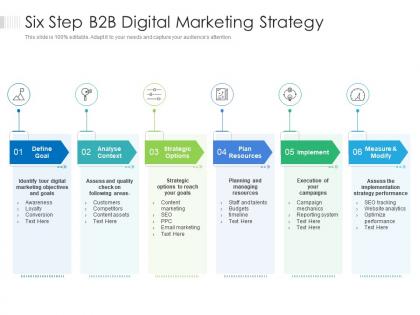
Six step b2b digital marketing strategy




Try Before you Buy Download Free Sample Product
 Impress Your
 Audience
 100%
100% Editable
 Save Hours
 of Time


Our Six Step B2B Digital Marketing Strategy are topically designed to provide an attractive backdrop to any subject. Use them to look like a presentation pro.
People who downloaded this PowerPoint presentation also viewed the following :
Six step b2b digital marketing strategy with all 2 slides:
Use our Six Step B2B Digital Marketing Strategy to effectively help you save your valuable time. They are readymade to fit into any presentation structure.
FAQs for Six step b2b
Honestly, content marketing is huge here - whitepapers, case studies, stuff that actually helps your prospects solve real problems. SEO and email nurturing are must-haves too. LinkedIn's where your decision-makers live, so don't ignore that. You need solid lead scoring since B2B cycles take forever compared to B2C impulse buys. Account-based marketing works well if you're going after bigger fish. Oh, and marketing automation is pretty much non-negotiable for tracking everything. Map out your buyer's journey first though - figure out where your ideal customers actually spend their time online before you start throwing content everywhere.
Okay so here's what actually works - connect your marketing straight to closed deals using UTM parameters and CRM integration. Don't get caught up in clicks and impressions (I made this mistake for way too long). Focus on cost per lead, conversion rates, and lifetime value instead. Set up first-touch and last-touch attribution in Google Analytics first. Multi-touch comes later once you're not drowning in data. The real trick? Make sure your data flows cleanly between all your tools. Otherwise you're just guessing which campaigns actually make money.
Look, content marketing is huge for B2B - it's how you actually build trust instead of just cold calling people. Create stuff like whitepapers and case studies that solve real problems your prospects have. Way better than pushy sales tactics, honestly. B2B buyers research everything before they'll even take a meeting (which is smart, tbh). Good content walks them through their decision process and makes you the obvious pick. Oh, and it brings in way better leads too. Just figure out what keeps your ideal clients up at night, then make content addressing those specific headaches.
Honestly, you want to go after those longer, specific keywords that match how B2B people actually search - like "enterprise project management software comparison" instead of just "project management." These buyers research the hell out of everything before buying, way more than regular shoppers. Build content for each stage: detailed guides, case studies, comparison pages that genuinely help them decide. Oh and target the problems you solve, not just your product names - that's where the real traffic is. Map out their typical search journey first, then create content around those actual questions. Trust me, it works way better than guessing.
Honestly, content marketing is where I'd start - whitepapers and case studies are gold for B2B. LinkedIn ads let you get super specific with targeting by job titles, which is clutch. Once you grab those leads, email sequences are what actually convert them (though everyone's inbox is crazy overflowing these days). SEO takes forever to kick in but it's worth it long-term. Account-based marketing is trendy right now if you're chasing big fish specifically. My advice? Pick like two things you can actually do well instead of half-assing a bunch of different channels.
ABM is huge for B2B right now - like, you really can't ignore it if you're going after big accounts. Instead of spraying and praying, you pick maybe 20-30 high-value targets and get super specific with your messaging. LinkedIn ads, personalized emails, custom landing pages - the whole nine yards tailored to their actual problems. ROI tends to be way better since you're not wasting budget on random leads who'll never buy anyway. I mean, it takes more upfront work but honestly? The results speak for themselves. Start small with your dream accounts and build from there.
LinkedIn's your best bet - that's where business people actually spend time, not scrolling through Facebook memes. Share useful stuff like industry insights and case studies instead of just pitching your product constantly. Comment on your prospects' posts and jump into group discussions (but don't be weird about it). Get your employees posting too since people trust real humans way more than corporate accounts. Oh and track engagement quality, not just how many followers you have - that stuff's pretty meaningless. Master LinkedIn first, then you can branch out once you've got the content thing figured out.
Stop pitching and start helping - B2B folks can smell a sales email from miles away. Break down your lists by industry or company size so you're talking their language. Yeah, personalization matters beyond just dropping in their first name. Tuesday through Thursday mornings work best since that's when these people actually look at their inbox (not Monday chaos or Friday checkout mode). Share case studies and useful content that makes their job easier. Oh, and your subject lines? Be specific about the benefit. "Cut IT costs 30%" crushes generic newsletter garbage every single time.
Look, you want the stuff that actually shows dollars coming in. MQL to SQL conversion rates are gold - tells you if your leads are worth anything. Cost per lead and customer acquisition cost too. Pipeline velocity matters because B2B sales take forever (seriously, why does everything move so slow?). Skip the vanity metrics like social likes, though LinkedIn engagement isn't totally useless for B2B. Revenue attribution shows what's actually working. Customer lifetime value and ABM engagement scores are solid picks. Just don't go crazy - pick maybe 3-5 metrics that match your funnel stages and you'll be good.
Honestly, webinars are amazing for B2B - they make you look like an expert while pulling in solid leads. People who register are already interested, so you're talking to actual decision-makers. Way cheaper than flying somewhere for a conference too. Here's the thing though: don't pitch your product the whole time. Share useful stuff instead - industry trends, case studies, tutorials that actually help them solve problems. The real magic happens after. Sort your attendees by how engaged they were, then customize your follow-up messages. Oh, and definitely record everything for content later!
Honestly, start with HubSpot or Salesforce for your CRM - those long B2B cycles will kill you without proper lead tracking. For email automation, Marketo's great but pricey, so maybe try Mailchimp if budget's tight. LinkedIn Sales Navigator is where I'd put my money though, total game-changer for finding prospects. Google Analytics is obvious for web stuff, and Hotjar shows you what people actually do on your site (pretty cool heat maps). WordPress handles content fine. Oh, and get some social media scheduler - saves tons of time. But seriously, nail down your CRM and email flows first. Everything else can wait.
Dude, personalization is everything in B2B right now. Those generic "Dear Sir/Madam" emails? Total garbage. Your prospects are drowning in cookie-cutter pitches, so when you actually reference their company or industry challenges, you'll stand out immediately. I always tell people to start simple - drop their company name, mention something recent about their business, maybe a news story you saw. Trust builds way faster when it doesn't feel mass-produced. Even basic stuff like this can bump response rates 20-30%, which honestly surprised me at first. Short bursts of real personalization beat lengthy generic content every time.
Honestly, video is crushing it right now - those quick LinkedIn clips everyone's posting actually work. AI personalization is getting crazy good too, and ABM strategies are way more dialed in than they used to be. Since cookies are basically dead, first-party data collection is where it's at. Interactive stuff like live demos beat boring static content every time. Intent data's probably the coolest part though - you can literally see when companies are ready to buy. I'd mess around with some AI writing tools first, then focus on video. Even crappy iPhone videos perform better than perfect blog posts sometimes.
Okay so basically you want everything working together instead of fighting each other. Like, use your direct mail to send people to specific landing pages, throw QR codes on print ads that link to digital stuff. Your trade show booth should definitely push your social channels too. Keep your messaging consistent though - I swear, some companies have their billboard saying one thing while their website says something totally different. It's ridiculous. Track what's actually working with UTM codes and separate phone numbers for each channel. Honestly? Just start with connecting two channels first, then add more once you've got the tracking down.
Honestly, the hardest part is dealing with way longer sales cycles and like 5 different people who all need to sign off. These buyers research everything to death before they'll even talk to you. You've got to have content for each stage - can't just focus on top-funnel awareness stuff anymore. Account-based marketing is clutch for this since you can actually personalize your outreach to specific companies and their key players. Map your content to different personas and sales stages, then track how they engage throughout the whole journey. I'd start by figuring out what content gaps you have for mid and bottom-funnel prospects.
-
Great experience, I would definitely use your services further.
-
Content of slide is easy to understand and edit.
-
Great designs, really helpful.
-
Excellent work done on template design and graphics.
-
It saves your time and decrease your efforts in half.