


B2b sales powerpoint presentation slides




Try Before you Buy Download Free Sample Product
 Impress Your
 Audience
 100%
100% Editable
 Save Hours
 of Time


Discuss effective channels used in b2b marketing by using B2B Sales PowerPoint Presentation Slides. Take the assistance of our readily available PowerPoint templates to describe trends related to b2b marketing. Mention the most effective paid advertising methods for b2b marketing by using this PowerPoint slideshow. Challenges and solutions associated with b2b marketing can be easily depicted by using our content-ready PPT slideshow. With our thoroughly researched PPT, you can include the lead generation funnel, strategies, conversion process, and grading parameters. The slides also help to showcase the lead nurturing process and its lifecycle. Discuss social media platforms, b2b marketing key statistics, and budget with this complete deck. Take the assistance of our thoroughly researched digital marketing PowerPoint slideshow to depict email marketing mediums, its plan and performance evaluation. Furthermore, the slides cover a list of ROI metrics to track and report. Download our ready-to-use b2b digital marketing plan PPT slide deck to showcase KPI metrics and dashboard.
People who downloaded this PowerPoint presentation also viewed the following :
Content of this Powerpoint Presentation
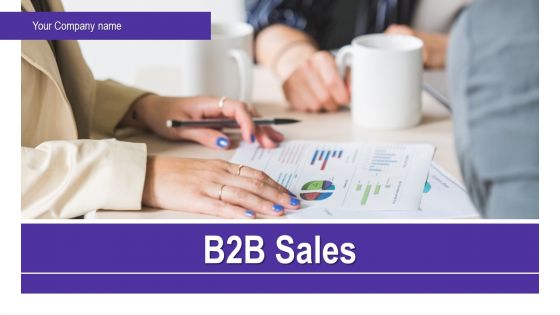
Slide 1: This slide introduces B2B Sales. State Your Company Name and begin.
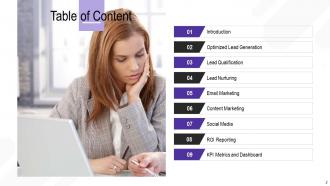
Slide 2: This slide shows Table of Content for the presentation describing- Introduction, Optimised lead generation, Lead qualification, etc.
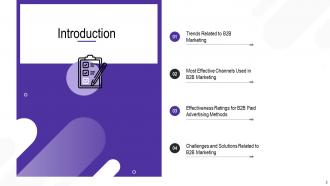
Slide 3: This slide shows Introduction describing- Trends Related to B2B Marketing, Most Effective Channels Used in B2B Marketing, etc.
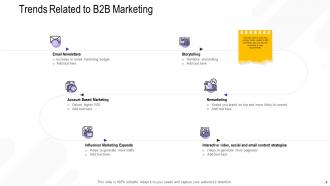
Slide 4: This slide presents Trends Related to B2B Marketing describing- Account Based Marketing, Email Newsletters, Remarketing, Influencer Marketing Expands, etc.
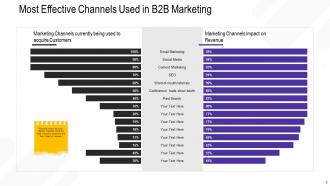
Slide 5: This slide displays Most Effective Channels Used in B2B Marketing.
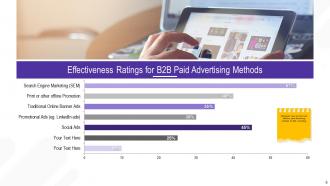
Slide 6: This slide represents Effectiveness Ratings for B2B Paid Advertising Methods.
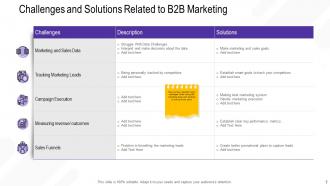
Slide 7: This slide showcases Challenges and Solutions Related to B2B Marketing describing the most effective paid advertising methods for B2b marketing.
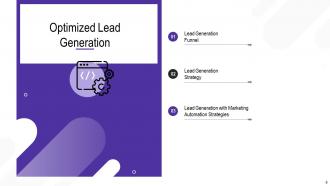
Slide 8: This slide shows Optimized Lead Generation describing- Lead Generation Strategy, Lead Generation with Marketing Automation Strategies, Lead Generation Funnel.
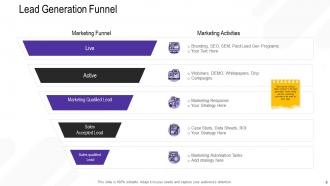
Slide 9: This slide presents Lead Generation Funnel with various marketing activities.
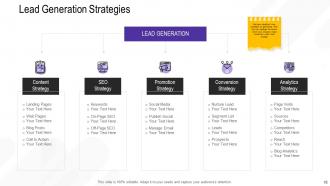
Slide 10: This slide displays Lead Generation Strategies describing- Conversion Strategy, Content Strategy, Analytics Strategy, etc.
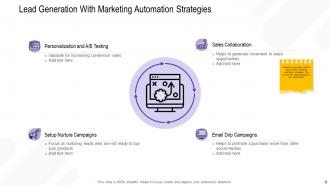
Slide 11: This slide represents Lead Generation with Marketing Automation Strategies.
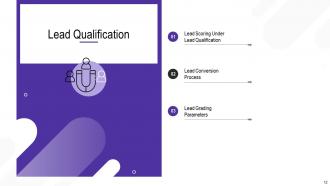
Slide 12: This slide showcases Lead Qualification describing- Lead Scoring Under Lead Qualification, Lead Grading Parameters, and Lead Conversion Process.
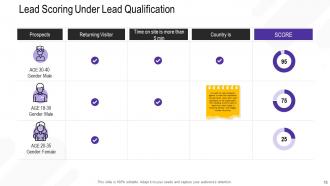
Slide 13: This slide shows Lead Scoring Under Lead Qualification.
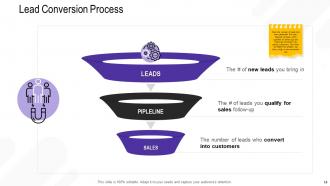
Slide 14: This slide presents Lead Conversion Process describing- Leads, Pipelines and Sales.
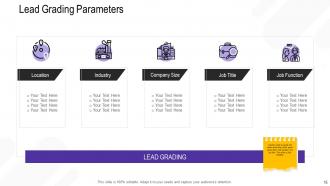
Slide 15: This slide displays Lead Grading Parameters like- Location, Industry, Company Size, etc.
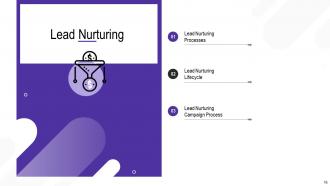
Slide 16: This slide represents Lead Nurturing describing- Lead Nurturing Processes, Lead Nurturing Lifecycle, and Lead Nurturing Campaign Process.
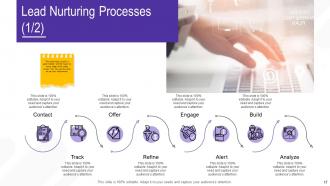
Slide 17: This slide showcases Lead Nurturing Processes describing process to build a good relation with the buyer at every stage of the sales funnel.
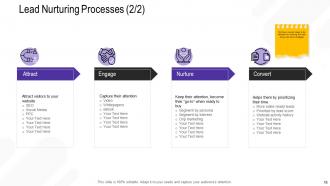
Slide 18: This is another slide showing Lead Nurturing Processes.
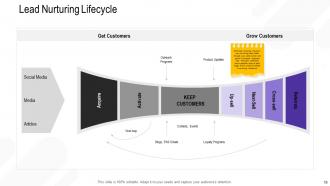
Slide 19: This slide presents Lead Nurturing Lifecycle describing- Social Media, Media, Articles, etc.
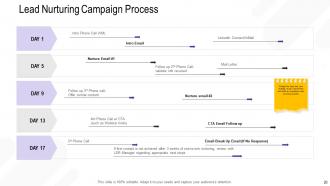
Slide 20: This slide displays Lead Nurturing Campaign Process comparing various days data.
Slide 21: This slide represents Email Marketing describing- Email Marketing Mediums, Email Marketing Effectiveness Under B2b Marketing, Email Marketing Plan, etc.
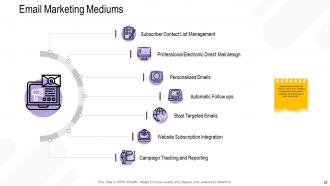
Slide 22: This slide showcases Email Marketing Mediums describing- Subscriber Contact List Management, Professional Electronic Direct Mail design, Personalized Emails, etc.
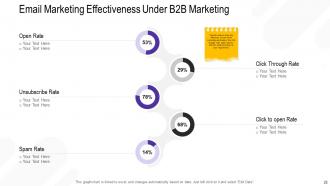
Slide 23: This slide shows Email Marketing Effectiveness Under B2B Marketing describing- Open Rate, Click Through Rate, Spam Rate, etc.
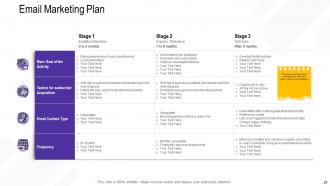
Slide 24: This slide presents Email Marketing Plan with main goals of activity and frequency.
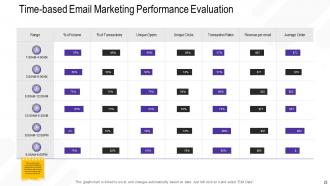
Slide 25: This slide displays Time-based Email Marketing Performance Evaluation.
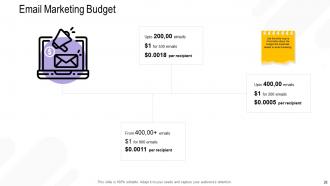
Slide 26: This slide represents Email Marketing Budget with related imagery.
Slide 27: This slide showcases Content Marketing describing- Platforms Used Under Content Marketing, Content Marketing Effectiveness, and Budget For Content Marketing.
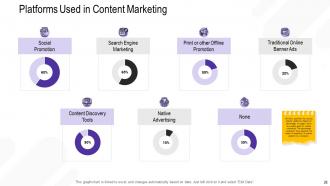
Slide 28: This slide shows Platforms Used in Content Marketing like- Social Promotion, Search Engine Marketing, Traditional Online Banner Ads, etc.
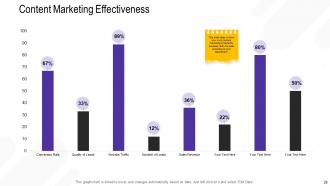
Slide 29: This slide presents Content Marketing Effectiveness showing data in bar graph to know how much content marketing effects the business.
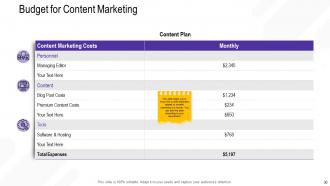
Slide 30: This slide displays Budget for Content Marketing to know the overall expenses related to content marketing in a month.
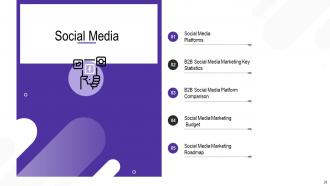
Slide 31: This slide represents Social Media describing- Social Media Platforms, B2B Social Media Marketing Key Statistics, B2B Social Media Platform Comparison, etc.
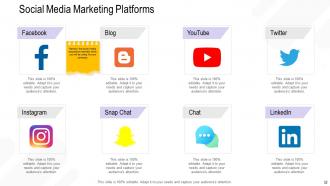
Slide 32: This slide showcases Social Media Marketing Platforms like- LinkedIn, Blog, Snapchat, etc.
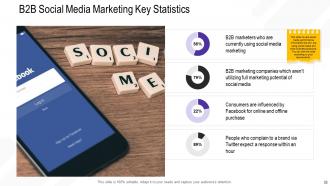
Slide 33: This slide shows B2B Social Media Marketing Key Statistics with data in percentage.
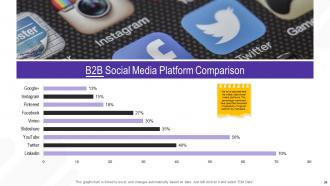
Slide 34: This slide presents B2B Social Media Platform Comparison with the help of bar graph.
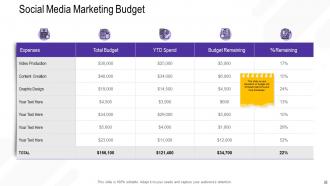
Slide 35: This slide displays Social Media Marketing Budget with different platforms and time schedules.
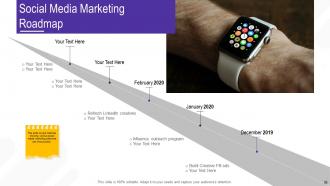
Slide 36: This slide represents Social Media Marketing Roadmap showing various social media marketing platforms with time duration.
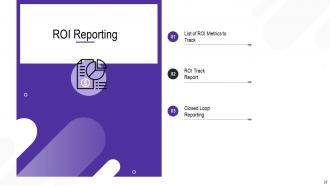
Slide 37: This slide showcases ROI Reporting describing- Closed Loop Reporting, ROI Track Report, List of ROI Metrics to Track, etc.
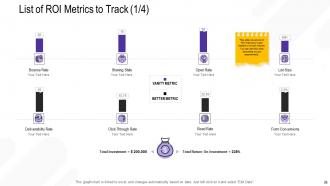
Slide 38: This slide shows List of ROI Metrics to Track like- Bounce Rate, Sharing Stats, Open Rate, etc.
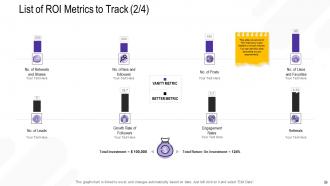
Slide 39: This slide presents List of ROI Metrics to Track describing- No. of Retweets and Shares, No. of fans and followers, No. of Posts, etc.
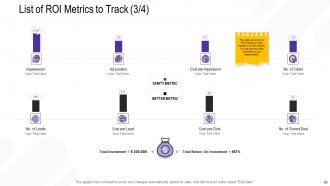
Slide 40: This is another slide displaying List of ROI Metrics to Track describing- Impressions, Ad position, Cost per Impression, etc.
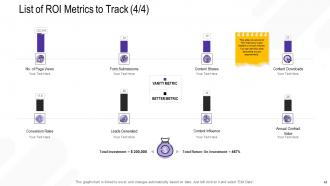
Slide 41: This is another slide representing List of ROI Metrics to Track describing- Conversion Rates, Leads Generated, Content Influence, etc.
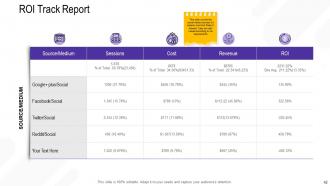
Slide 42: This slide showcases ROI Track Report showing data in tabular form.
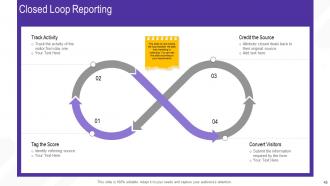
Slide 43: This slide shows Closed Loop Reporting describing- Track Activity, Credit the Source, Convert Visitors, etc.
Slide 44: This slide presents KPI Metrics and Dashboard with related icons.
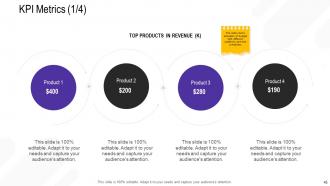
Slide 45: This slide displays KPI Metrics showing allocation of budget with different platforms and time schedules.
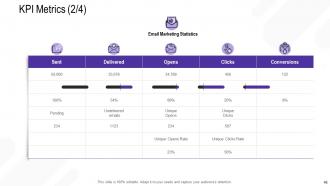
Slide 46: This slide represents KPI Metrics showing Email Marketing Statistics.
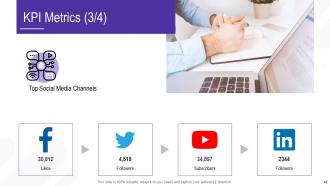
Slide 47: This slide showcases KPI Metrics showing Top Social Media Channels.
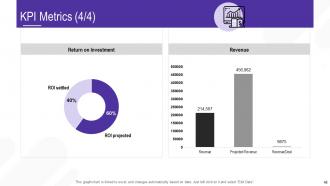
Slide 48: This slide presents KPI Metrics showing Return on Investment.
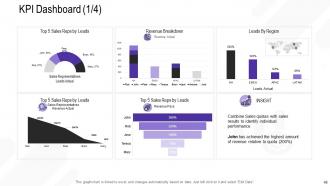
Slide 49: This slide displays KPI Dashboard describing- Top 5 Sales Reps by Leads, Sales Representatives Leads Actual, Sales Representatives Revenue Actual, etc.
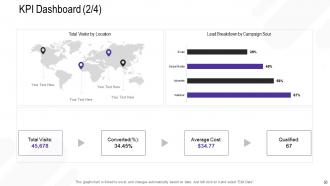
Slide 50: This slide represents KPI Dashboard describing- Total Visitor by Location, Total Visits, Average Cost, etc.
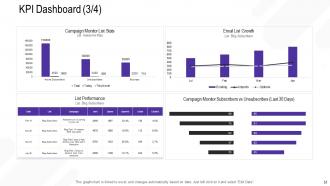
Slide 51: This is another slide showing KPI Dashboard describing- List Performance, Campaign Monitor List Stats, etc.
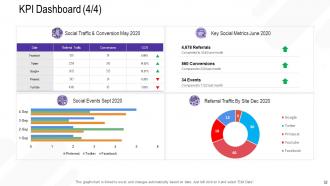
Slide 52: This is another slide displaying KPI Dashboard showing- Social Traffic & Conversion, Key Social Metrics, Social Events, etc.
Slide 53: This slide shows B2B Sales Icons.
Slide 54: This slide is titled as Additional Slides for moving forward.
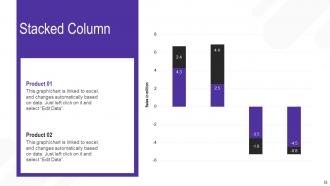
Slide 55: This slide shows Stacked Column chart with two products comparison.
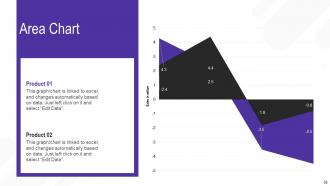
Slide 56: This slide displays Area Chart with two products comparison.
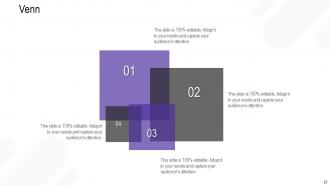
Slide 57: This slide represents Venn diagram with text boxes.
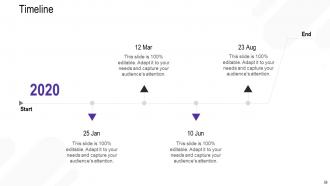
Slide 58: This is a Timeline slide. Show data related to time intervals here.
Slide 59: This slide displays Post It Notes. Show your important notes here.
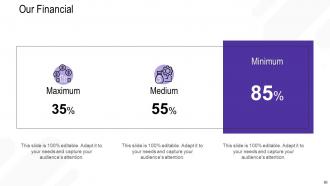
Slide 60: This is Our Financial slide. Show finance related stuff here.
Slide 61: This is a Thank you slide with address, contact number and email address.
B2b sales powerpoint presentation slides with all 61 slides:
Use our B2B Sales Powerpoint Presentation Slides to effectively help you save your valuable time. They are readymade to fit into any presentation structure.


FAQs for B2b sales
Honestly, it's all about relationship building. B2B takes forever - like months of nurturing because you're dealing with committees who need to justify spending. B2C? People buy on impulse for that instant gratification. Different emotional triggers too. B2C buyers want to feel good, but B2B folks are obsessing over ROI and covering their ass if things go wrong. You'll need way more demos and educational stuff since these purchases are complicated. Skip the flashy marketing - I've seen that backfire. Build trust by actually knowing your shit instead.
Look at your best customers first - what do they have in common? Company size, industry, problems they're trying to solve. I know it's boring as hell, but map out detailed buyer personas with decision-makers and budget info. LinkedIn Sales Navigator and ZoomInfo are solid for finding similar prospects. Then actually test it - reach out to companies that fit your profile and see what converts. You want to be specific enough to focus your outreach but not so picky that you're turning down good opportunities. Track everything so you'll know what's working.
Dude, relationships are everything in B2B sales. Think about it - these people are dropping serious cash on decisions that could make or break their careers. They're not gonna trust some random salesperson they just met. The top performers get this. They focus on actually helping people instead of just pitching their stuff all the time. Once you build real trust, buyers will open up about their actual problems (not just the surface stuff), introduce you to other decision makers, and honestly? They'll think of you first when new opportunities come up. It's way more effective than the hard sell approach most people try.
Honestly, your CRM probably already has most of this data sitting there unused. Track which leads convert fastest and what content actually moves deals forward - that stuff matters way more than vanity metrics. Start simple with maybe 2-3 things you can watch consistently. The real magic happens when you spot patterns. Like where prospects get stuck, or which messaging works versus the fluff that doesn't. Then you can focus your energy on high-value prospects instead of chasing everyone. I used to ignore this data completely, but tweaking your approach based on what's actually worked before? Total game changer.
Honestly, ditch talking about your features right off the bat. Lead with whatever problem is keeping them up at night - that's your hook. Do some homework on their company first because generic pitches are painfully obvious and kill your credibility instantly. Focus on what outcomes they'll actually get, not how your process works. Ask questions that make them open up about their real challenges. I like this flow: problem → your solution → concrete results they can expect. Oh, and practice until it doesn't sound rehearsed, then tweak details for each person. Make it their story, not yours.
Honestly, social media is perfect for this - you're building trust way before they even realize they need your stuff. LinkedIn's your best bet obviously. Share good industry content, jump into conversations on their posts, that kind of thing. Twitter works if that's where your people hang out. Here's the thing though - don't be salesy at all. I know reps who just consistently post helpful stuff and prospects literally reach out to them first. It's wild. Start small - pick maybe 20-30 key people and genuinely engage with what they're posting for a few weeks. You'll be surprised how fast it works.
Listen first, then flip their objections into problems you can tackle together. "Too expensive" usually means dig deeper - what's their actual budget? What ROI do they need? I always acknowledge it upfront like "yeah, cost is huge, I get it" before jumping into value stuff. That old "feel, felt, found" thing actually works - "totally understand, my other clients thought the same thing, but here's what happened..." Case studies are clutch. Oh and don't be afraid to get creative with payment plans if the deal makes sense. Sometimes you gotta bend a little to make it work.
Dude, personalization is everything in B2B outreach. Your prospects get bombarded with copy-paste emails all day - but mention their recent office expansion or some industry challenge they're facing? Boom, you're already different. I've literally watched response rates triple just from swapping out generic openers. Something like "saw you guys just opened in Denver" beats "hope this finds you well" every single time. Honestly, people can smell a mass email from miles away. Don't overthink it though - even one specific detail about their company in your first line works wonders.
Track conversion rates at each funnel stage, plus average deal size and sales cycle length. Win rates matter too. But honestly? Pipeline velocity is where it's at - shows you if deals are actually moving instead of just sitting there forever. Also watch your leading indicators: qualified leads, meetings booked, that stuff. Customer acquisition cost vs lifetime value is huge. I'd start with these basics first, then add more specific metrics once you figure out what actually drives your business. Makes way more sense than trying to track everything at once.
Honestly, CRMs are total lifesavers for B2B sales. All your prospect info lives in one spot instead of scattered across random spreadsheets and sticky notes (guilty as charged). You'll actually know when to follow up instead of that awkward "oh crap, I forgot about them" moment three weeks later. The pipeline stuff is clutch too – you can see exactly where deals are stuck and forecast revenue without pure guesswork. My buddy started using one last year and his close rate went up like 30%. Just dump all your contacts in first, then worry about the fancy automation later.
Dude, the worst thing you can do is rush through everything and just talk at people instead of actually listening. I've wasted SO much time on leads that were never gonna convert - honestly painful looking back. Ask way better questions upfront about their real problems and budget situation. Don't even think about pitching until you actually understand what they're dealing with. Oh, and figure out who all the decision-makers are early on because nothing sucks more than hearing "we gotta check with our board" right when you think you're closing. One quick thing - always confirm the agenda at the start so nobody's confused about what we're doing.
Figure out what each person actually cares about before you walk in there. CFOs want hard numbers - show them ROI and cost savings upfront. IT folks? They're worried about implementation headaches and security risks. End users are honestly the easiest win if you can prove it'll make their day less annoying. C-suite needs the big picture strategic stuff. Technical teams want to dig into specs and how everything connects together. I'd ask discovery questions beforehand - what's their biggest pain point right now? Then just position your thing as the solution to whatever's keeping them up at night.
Honestly, customer feedback will completely flip how you think about B2B sales. Your recent wins? Ask them what almost made them bail - you'll be shocked at what you hear. Most of the time we're pitching features nobody cares about while missing the actual pain points that matter. B2B buyers are pretty generous with detailed feedback too, unlike consumer stuff where you get nothing. Use what they tell you to fix your demo flow and train your team on the objections that actually come up. I learned this the hard way - what marketing thought was our killer feature was barely mentioned in client feedback.
Make it part of the weekly grind, not some big quarterly thing. Weekly sessions where your reps share wins and epic fails are gold - honestly, the disasters teach you more than the successes sometimes. Listen to recorded calls as a team and tear them apart together. Build a shared library where everyone dumps useful articles and competitive intel. Here's the thing though - give people actual work time to learn this stuff, not just their evenings. And celebrate when someone tries something new, even if it crashes and burns. That's how you build a culture where people actually want to get better.
Honestly, everything's getting way more integrated now - your CRM actually talks to your email tools instead of just sitting there like dead weight. AI sales assistants are huge right now, plus conversation intelligence that can predict if deals will close. Some tools even write outreach emails that don't sound completely robotic (though plenty still do lol). Social selling platforms got smarter too for finding LinkedIn prospects. Oh, and lead scoring happens automatically now which is pretty sweet. I'd definitely look at your current stack and see what's overlapping or missing gaps. The whole revenue ops thing is finally clicking together seamlessly.
-
Innovative and attractive designs.
-
Helpful product design for delivering presentation.
-
Great quality product.
-
Visually stunning presentation, love the content.
-
Editable templates with innovative design and color combination.
-
Enough space for editing and adding your own content.