B2B Online Management Powerpoint Presentation Slides
Try Before you Buy Download Free Sample Product
Audience
Editable
of Time
Give an overview of online business to business process, using this B2B Online Management PowerPoint Presentation Slides. Our content ready complete presentation slideshow will save your time and efforts. With the help of this predesigned online trading management PowerPoint presentation, you will be able to represent the numerous techniques to discover, model, examine, measure, refine, optimize, the business to the business industry. This online business management presentation PPT has been designed in such a way so that you can showcase various topics such as e-commerce industry outline, e-commerce business model, emerging e-commerce industry trends, e-commerce sales projection worldwide, e-commerce key growth drivers, e-commerce environment, e-commerce business model, e-commerce marketing strategy, e-commerce participants, e-commerce features, e-commerce marketing solutions, e-commerce challenges and many more. Do not delay, quickly download these predesigned internet marketing introduction PowerPoint templates. Organize your online business with our B2B online management PowerPoint Presentation slides. Ensure an alpha with our B2B Online Management Powerpoint Presentation Slides. A beta test will also confirm the fact.
People who downloaded this PowerPoint presentation also viewed the following :
Content of this Powerpoint Presentation
Slide 1: This slide introduces B2B Online Management. State Your Company Name and begin.

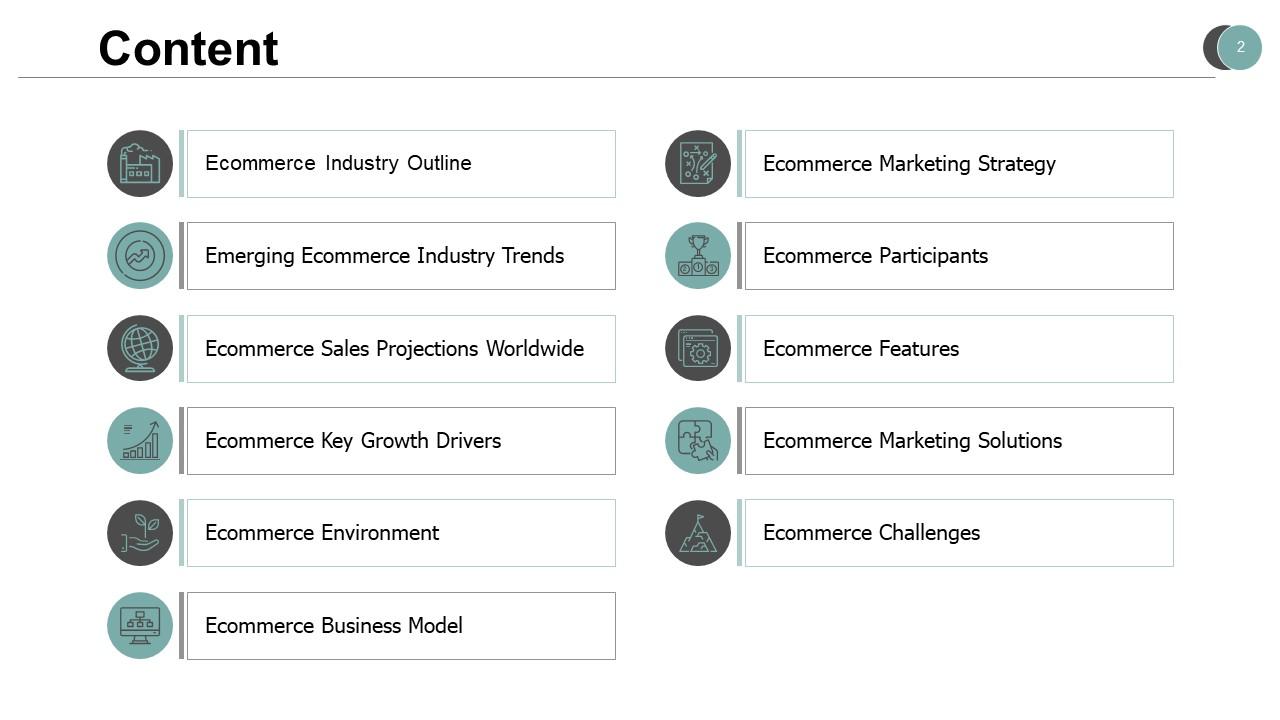
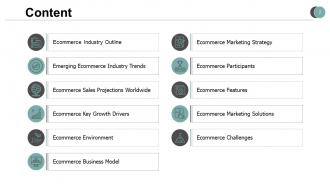
Slide 2: This slide shows Contents of the presentation.
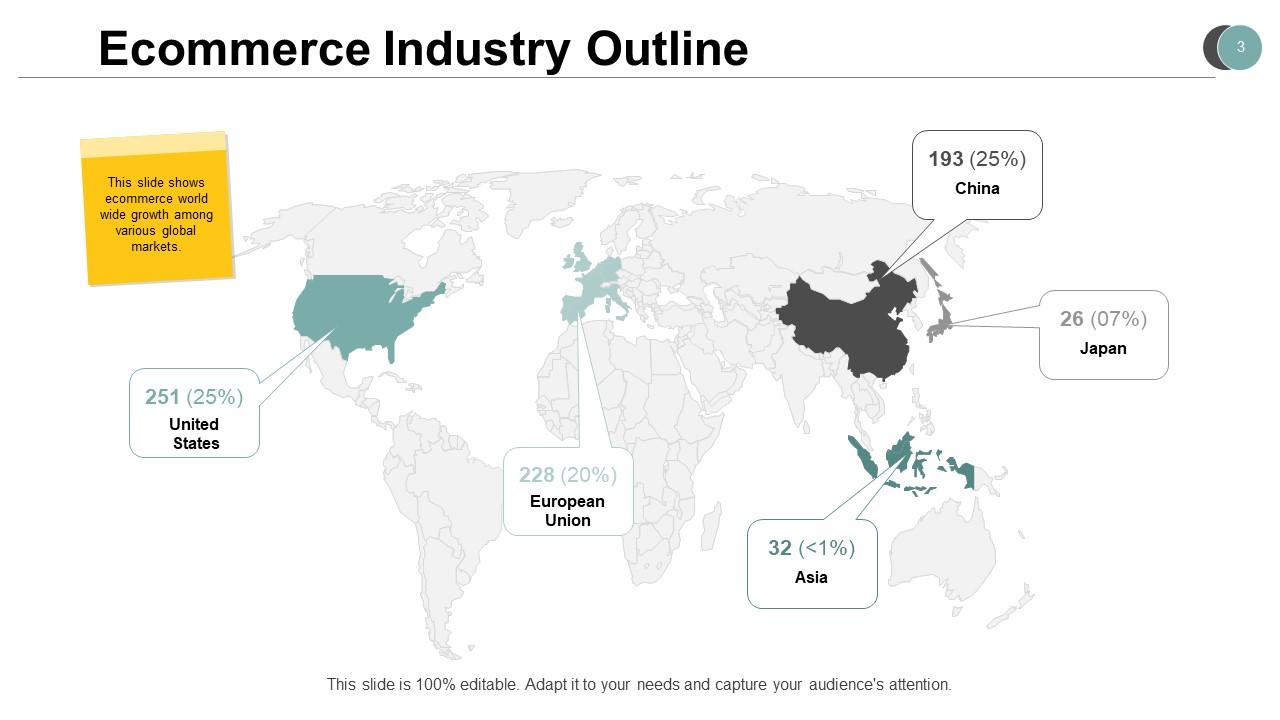
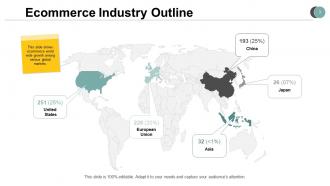
Slide 3: This slide presents Ecommerce Industry Outline to show world wide growth among various global markets.
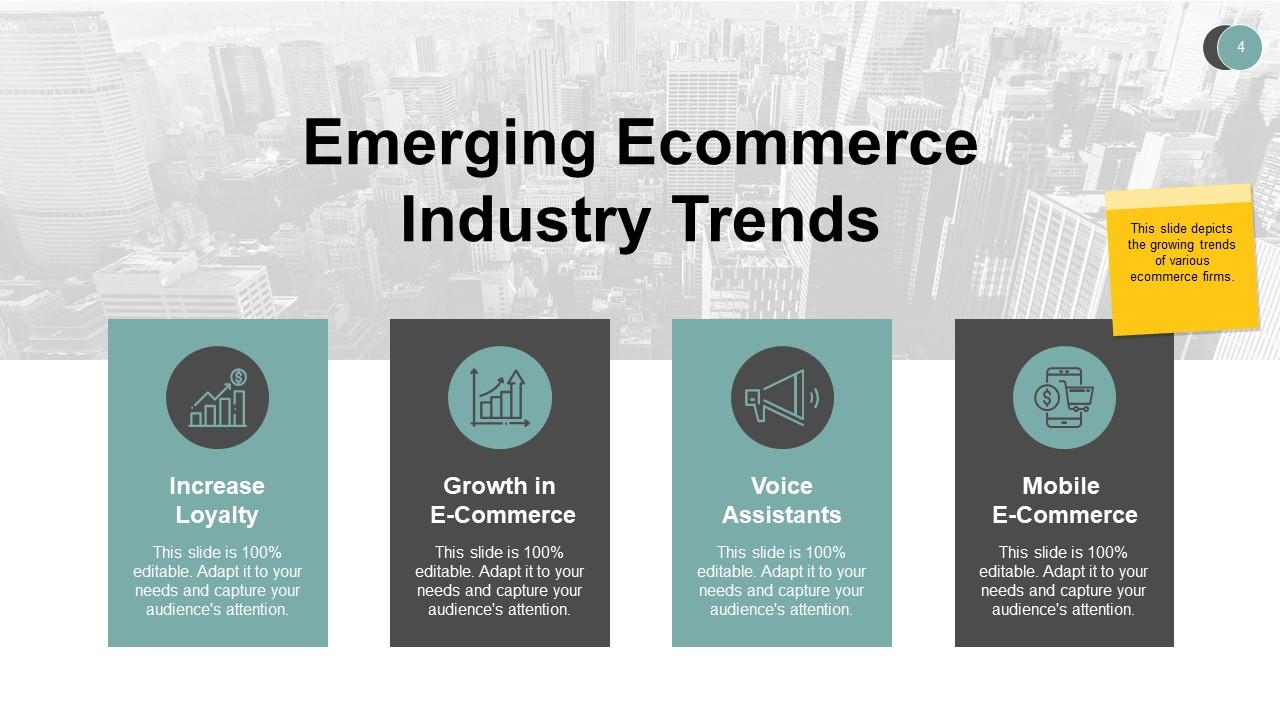
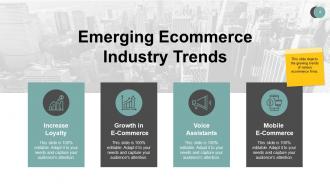
Slide 4: This slide displays Emerging Ecommerce Industry Trends to help in depicting the growing trends of various ecommerce firms.
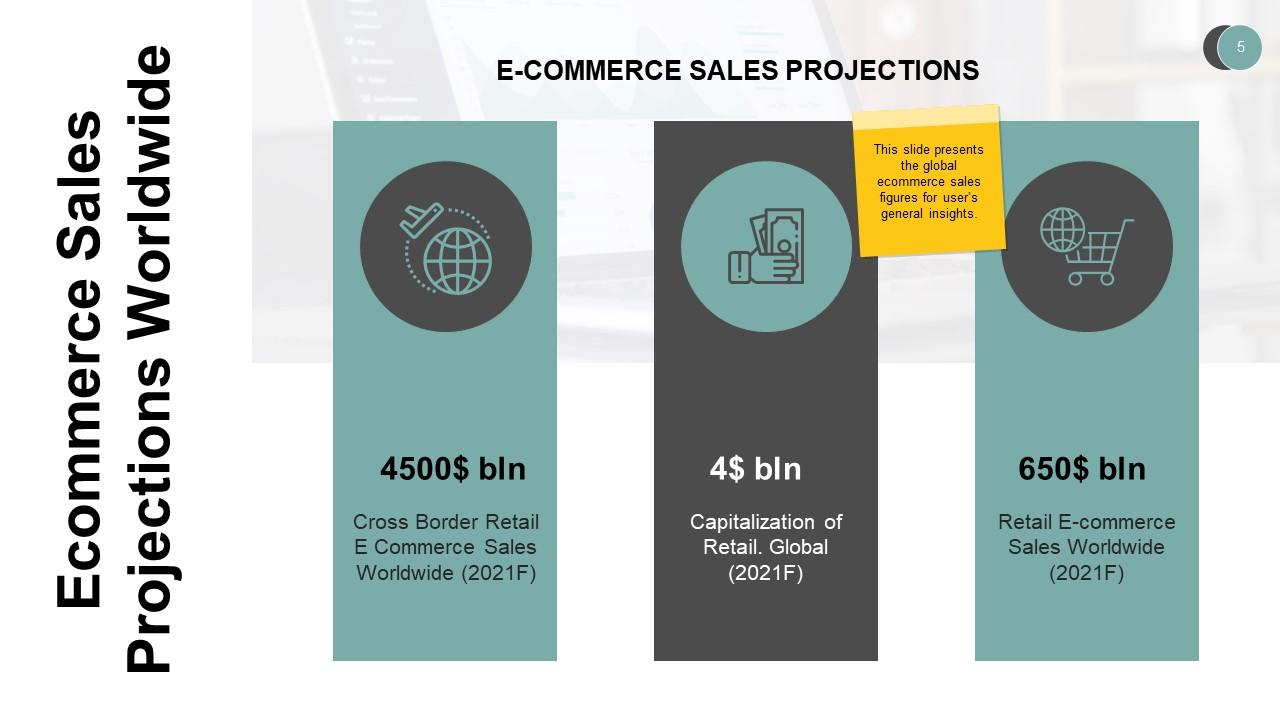
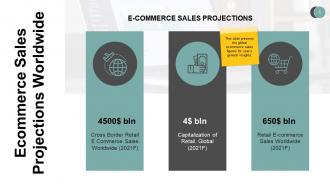
Slide 5: This slide represents Ecommerce Sales Projections Worldwide with sales figures for user’s general insights.
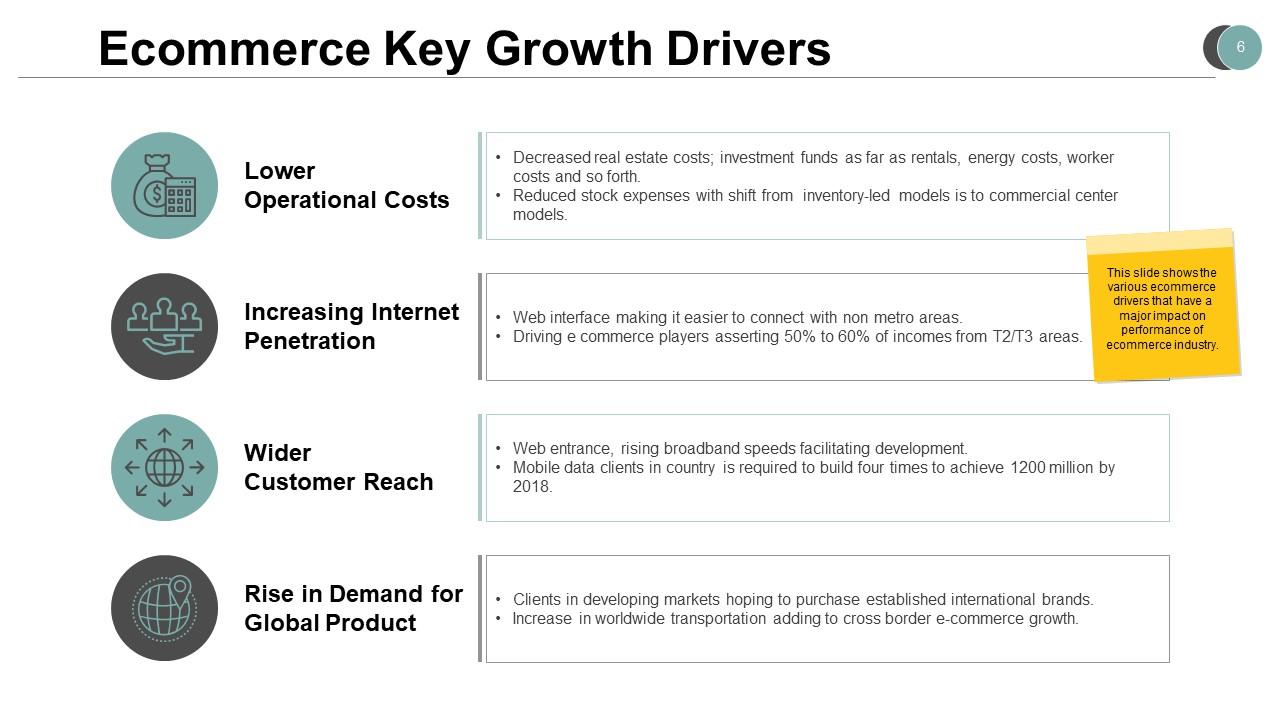
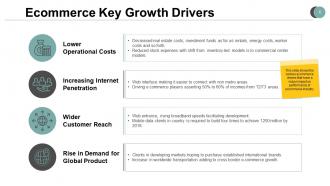
Slide 6: This slide shows the various E-commerce key growth drivers that have a major impact on performance of ecommerce industry.
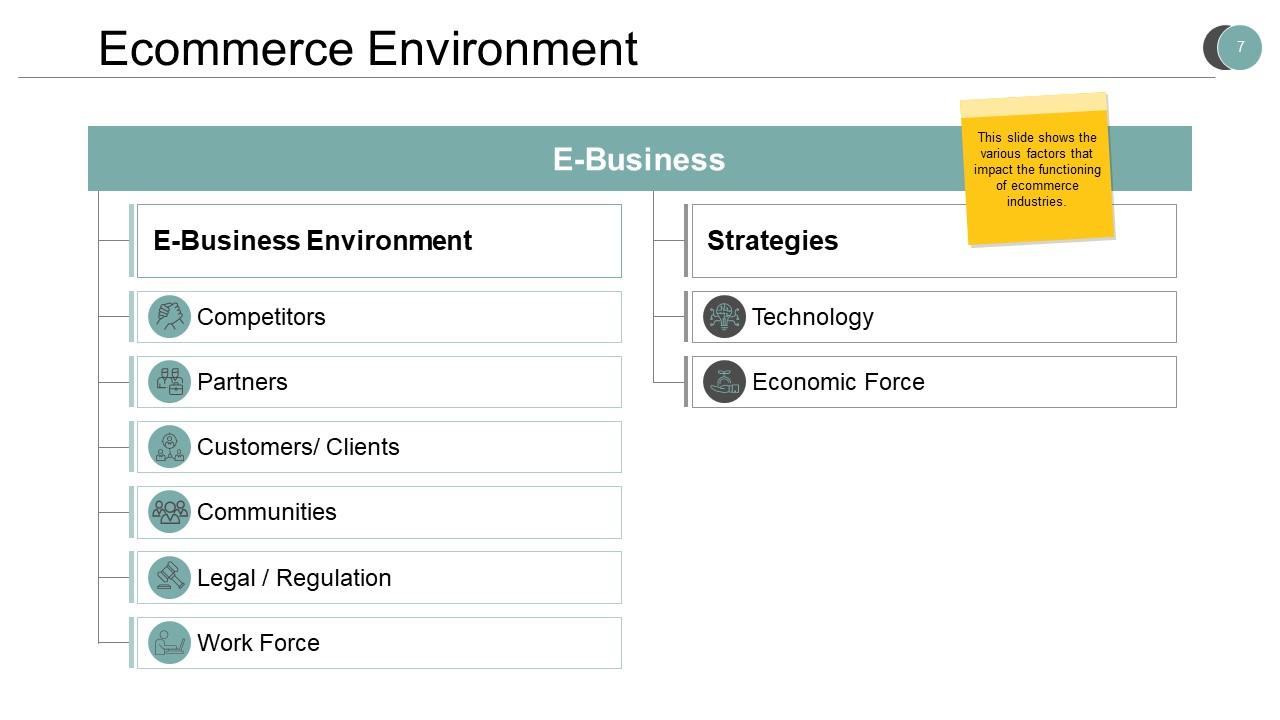
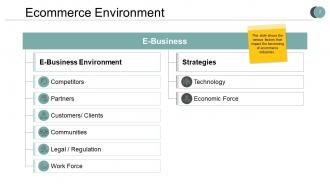
Slide 7: This slide showcases Ecommerce Environment to describe the various factors that impact the functioning of ecommerce industries.
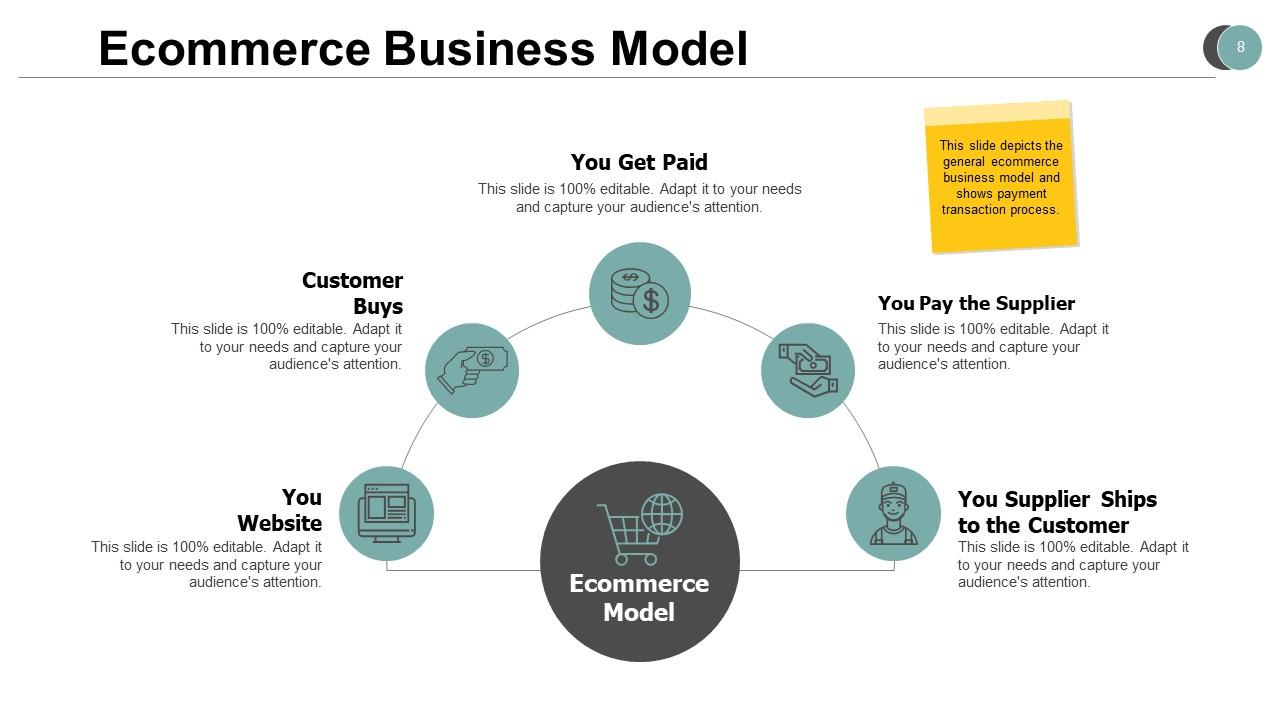
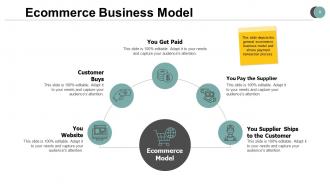
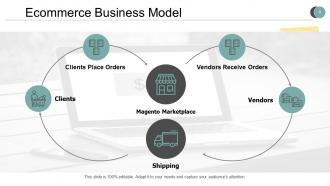
Slide 8: This slide depicts the general E-commerce business model and shows payment transaction process.
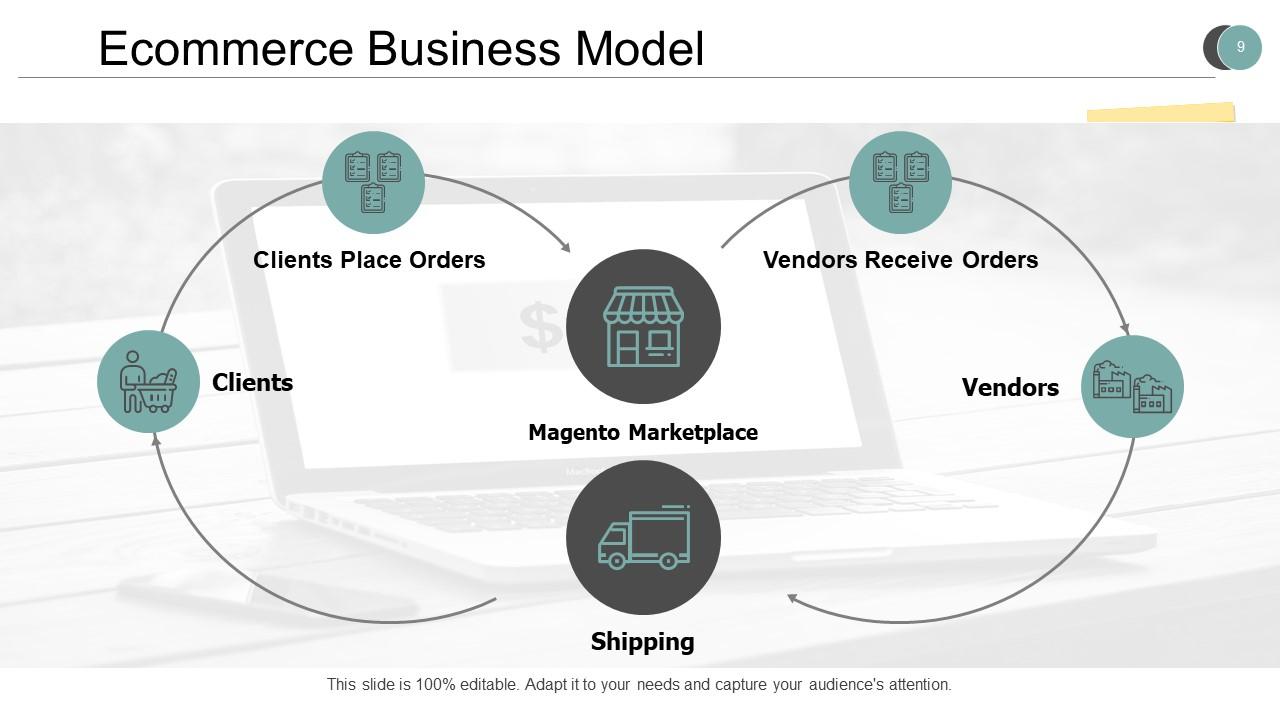
Slide 9: This is an optional slide for Ecommerce Business Model.
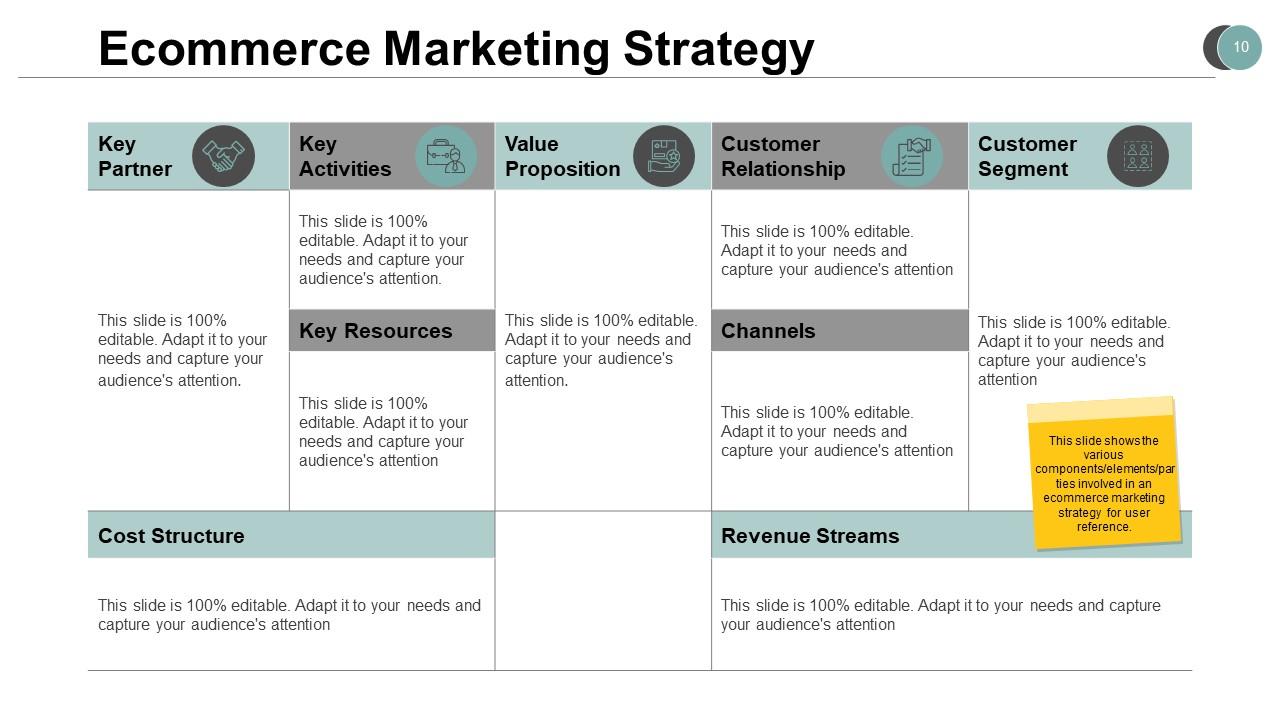
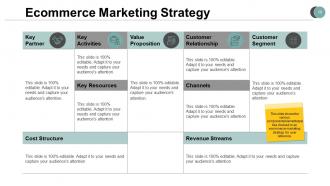
Slide 10: This slide shows the various components/elements/parties involved in an ecommerce marketing strategy for user reference.
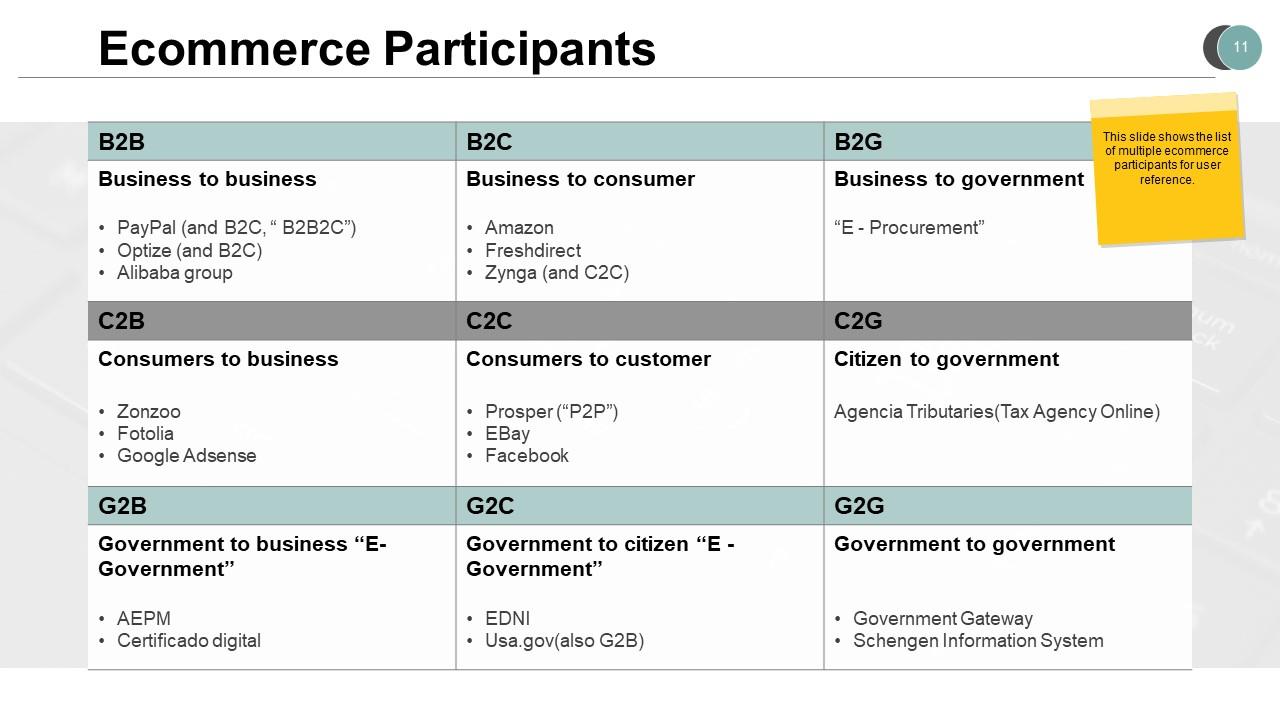
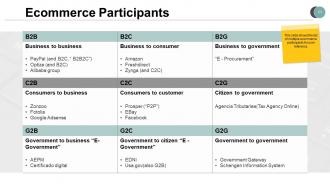
Slide 11: This slide presents the list of multiple ecommerce participants for user reference.
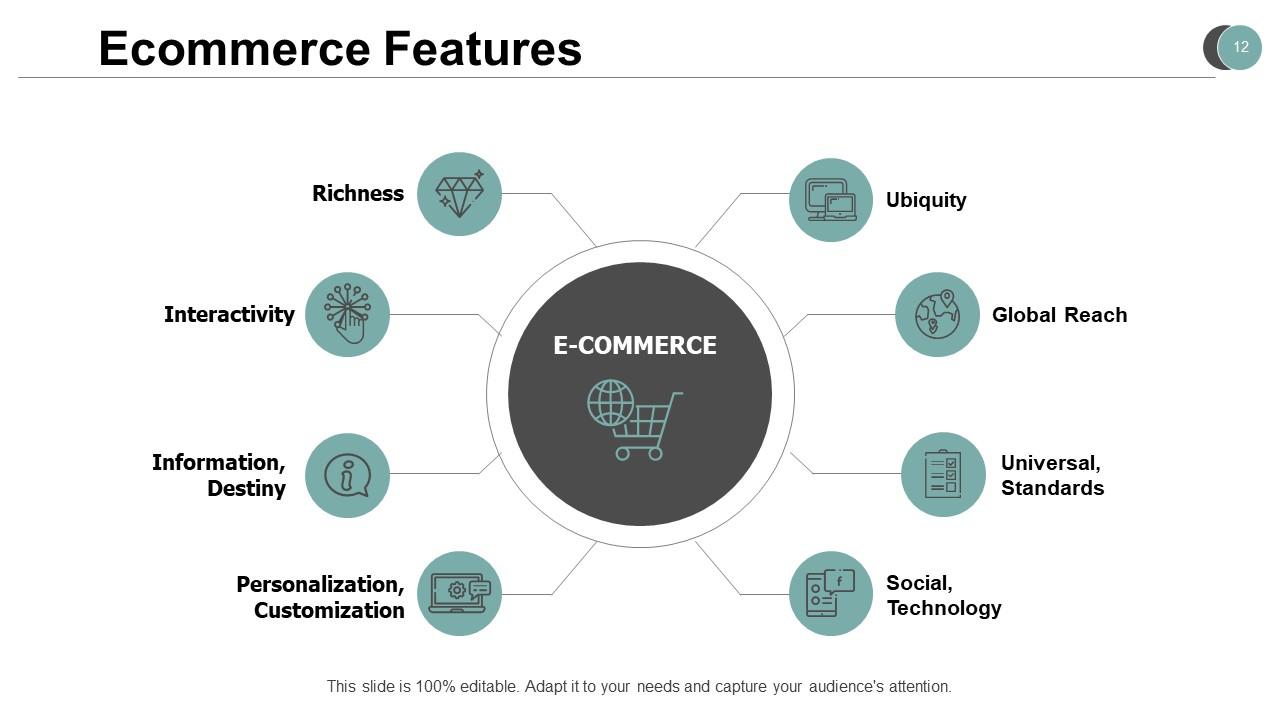
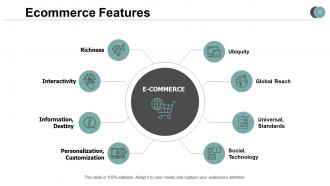
Slide 12: This slide displays Ecommerce Features describing- Richness, Interactivity, Information, Destiny, Personalization, Customization, Ubiquity, Global Reach, Universal, Standards, Social, Technology.
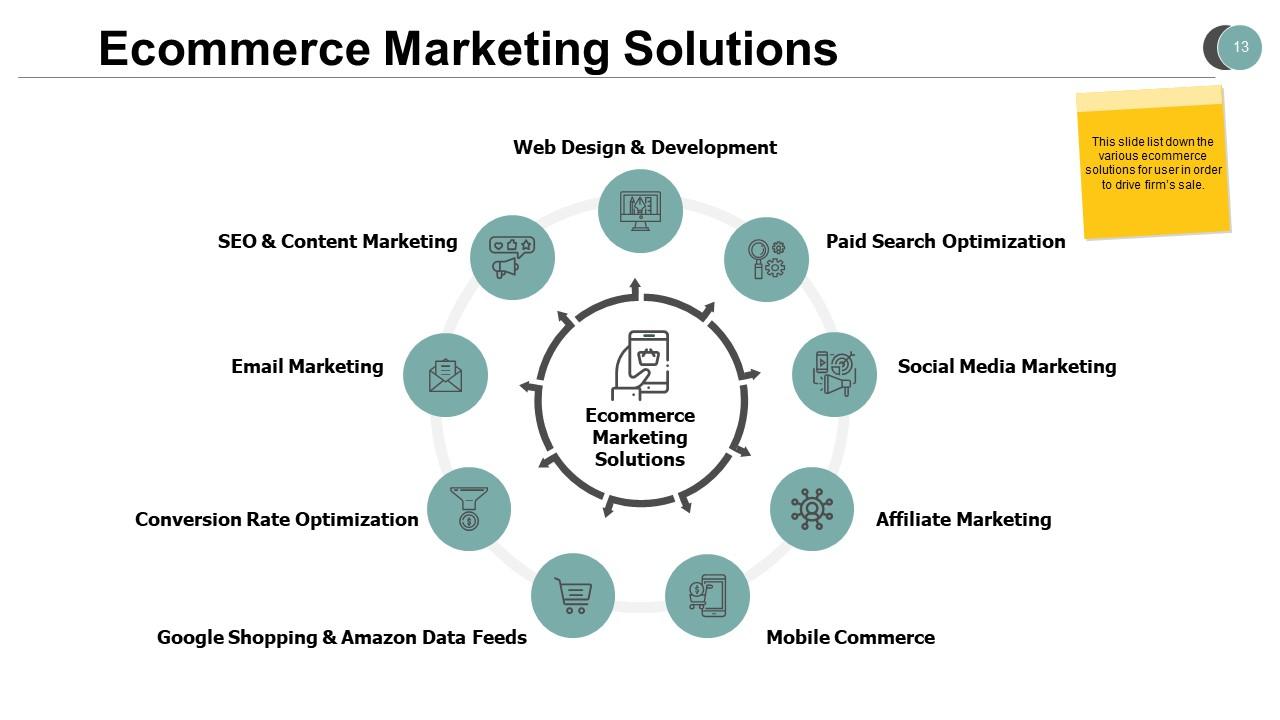
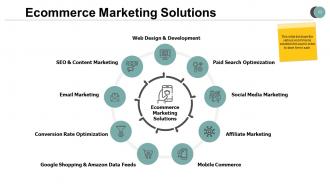
Slide 13: This slide list down the various ecommerce marketing solutions for user in order to drive firm’s sale.
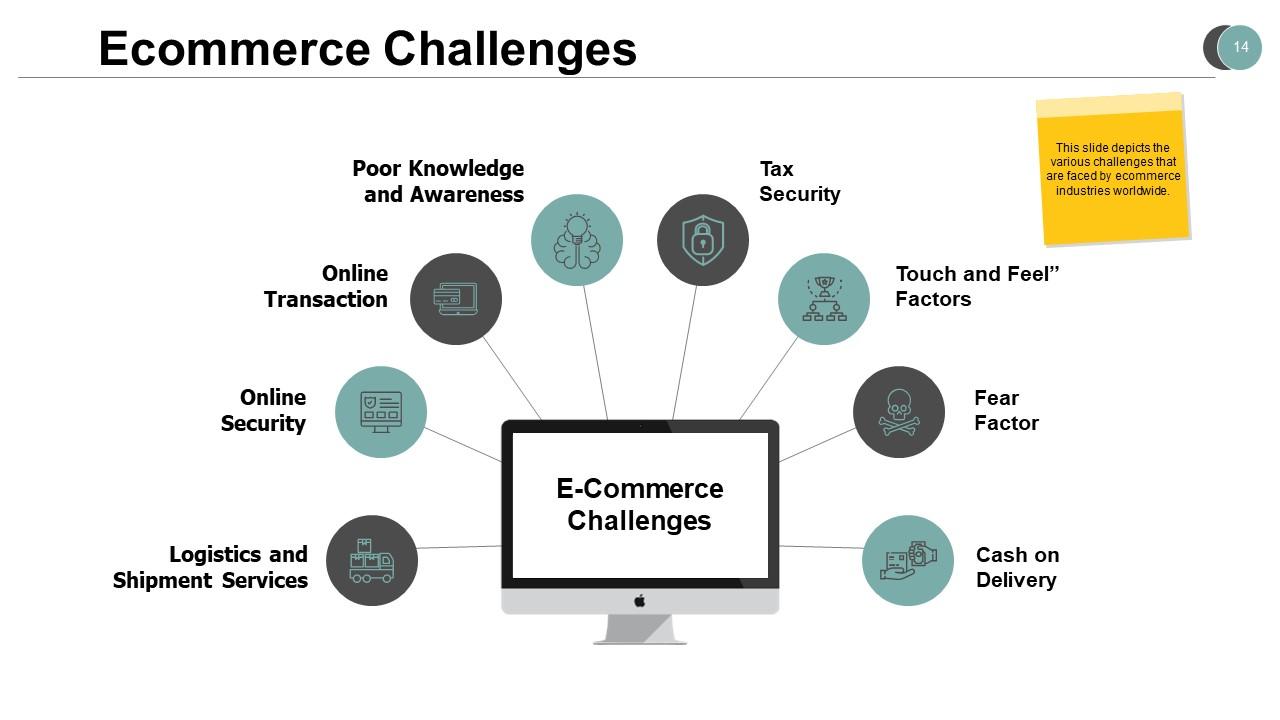
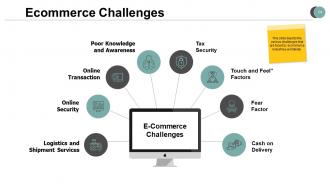
Slide 14: This slide depicts the various challenges that are faced by ecommerce industries worldwide.
Slide 15: This is Our Mission slide with related imagery and text.
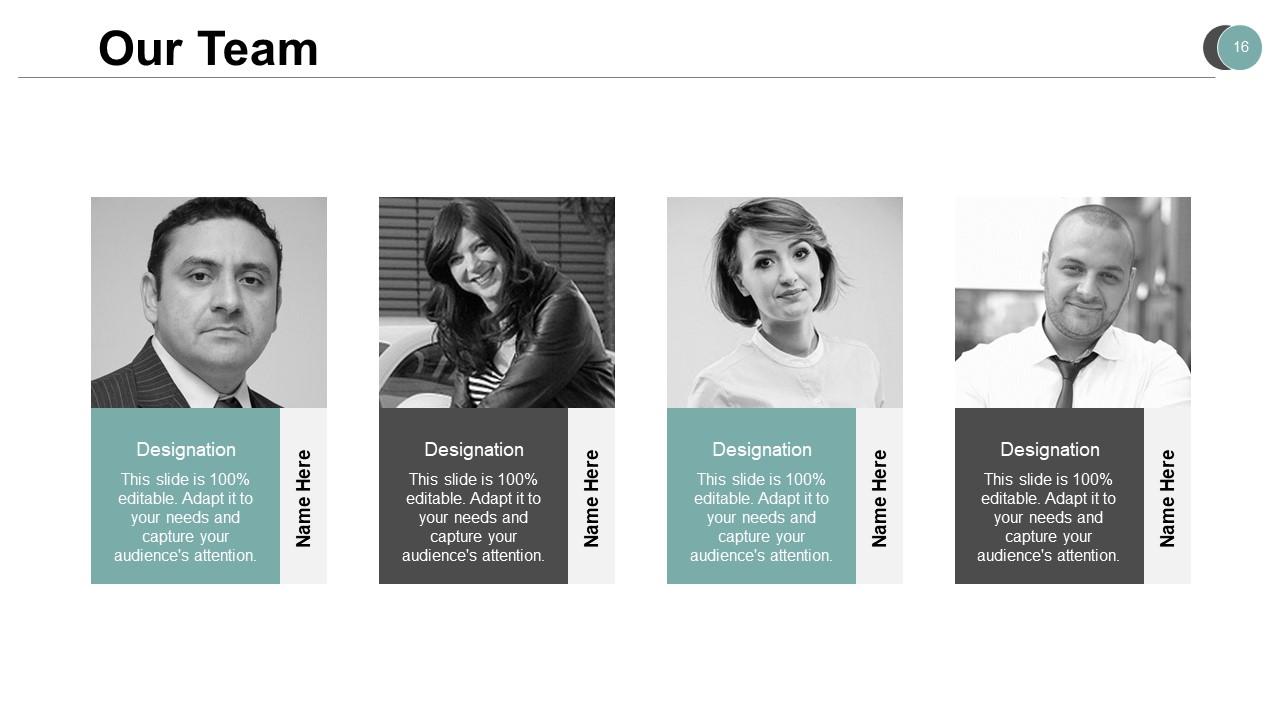
Slide 16: This is Our Team slide with names and designation.
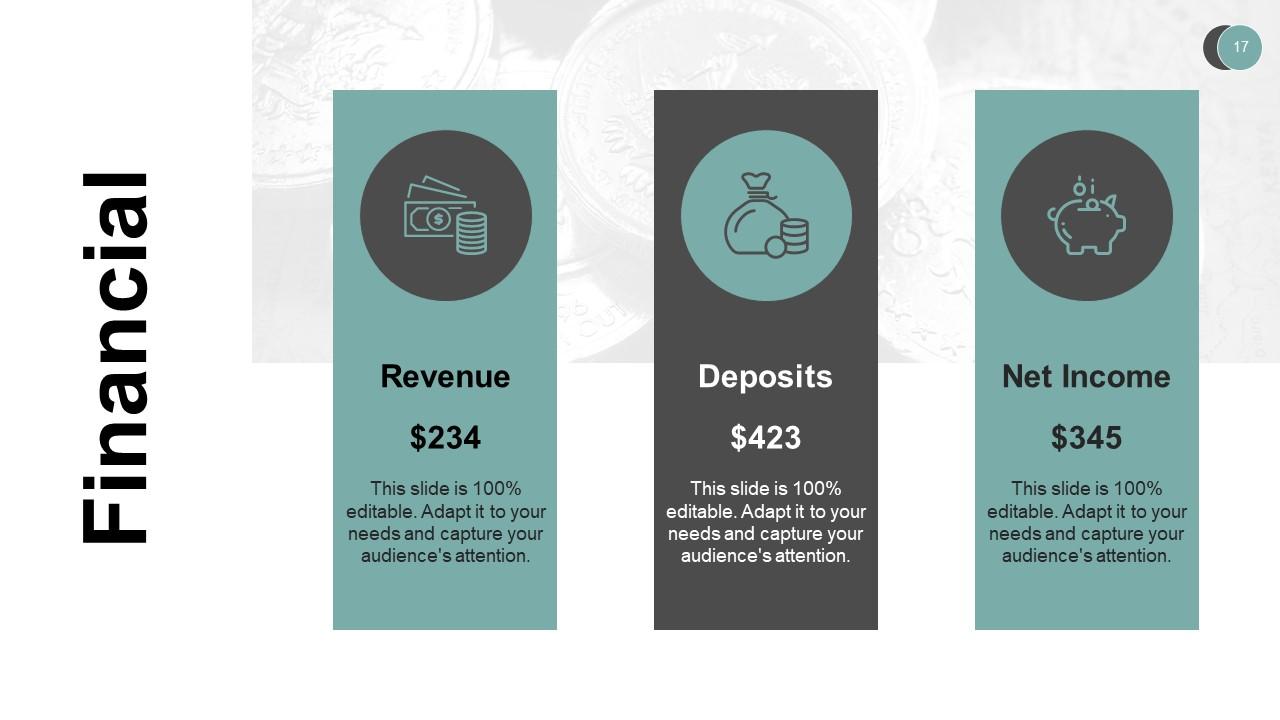
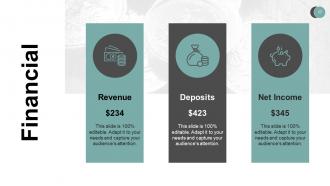
Slide 17: This is a Financial slide. Show your finance related stuff here.
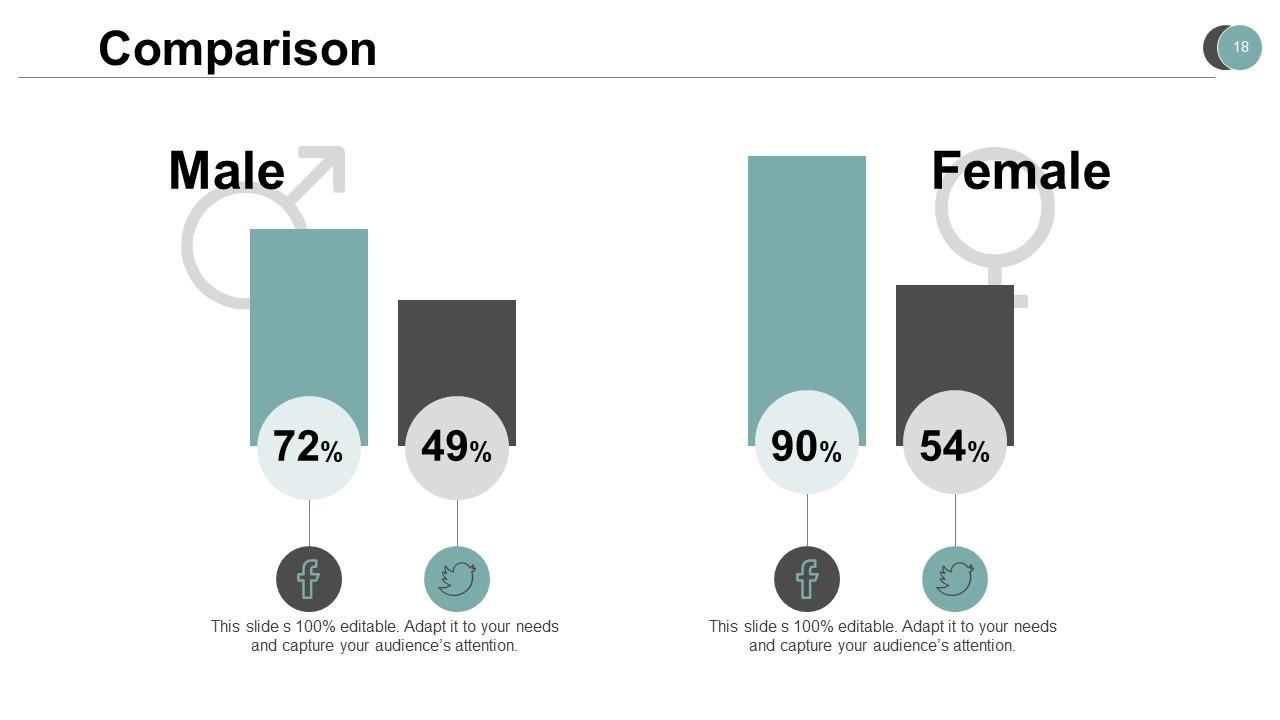
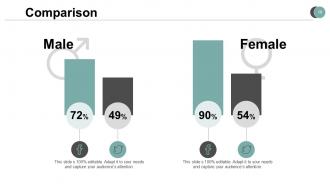
Slide 18: This is a Comparison slide to state comparison between commodities, entities etc.
Slide 19: This is Our Goal slide. Show firm's goals here.
Slide 20: This is a Lego slide with text boxes to show information.
Slide 21: This is a Puzzle slide with text boxes.
Slide 22: This is a Venn slide with additional text boxes.
Slide 23: This is a Thank you slide with address, contact numbers and email address.
B2B Online Management Powerpoint Presentation Slides with all 23 slides:
Our B2B Online Management Powerpoint Presentation Slides bring you to the forefront. Get the boost to go ahead.
FAQs for B2B Online Management
Honestly, start with your CRM, lead nurturing, and content strategy - that's your core foundation right there. Analytics tracking is huge too since B2B sales drag on forever and you'll forget what worked six months ago. Your website better convert visitors, not just look fancy (I've seen too many beautiful sites that do nothing). Account-based marketing is worth exploring if you're chasing enterprise deals. But here's the thing - how well everything connects matters way more than buying expensive tools. I'd audit what you have now and figure out where people are falling out of your funnel.
Honestly, just start with whatever's making you want to pull your hair out daily. CRM systems are a game-changer for tracking leads without losing your mind. We cut our admin BS in half after setting up automated invoicing - such a relief. Project tools like Asana keep everyone on the same page, and Slack kills those never-ending email threads. Oh, and digital procurement platforms make supply chain stuff way less painful. The magic happens when everything talks to each other automatically. Pick one thing that's driving you nuts, nail that down first, then build from there. Don't try to do everything at once or you'll burn out.
Honestly, just track the stuff that actually makes you money. Lead quality and conversion rates are huge - way more important than vanity metrics. Customer acquisition cost too, obviously. Website engagement matters since B2B people research everything to death before they buy anything. Time on product pages, downloads, that kind of thing. Customer lifetime value is where you'll really see the impact though. Sales cycle length is solid if you're trying to speed things up. Start simple with these basics - you can always get into the weedy attribution stuff later once you've got the foundation down.
Look, SEO is how your ideal B2B clients actually find you when they're hunting for solutions. You want to show up when they're searching for stuff you do - that's high-intent traffic right there. Nobody scrolls past page 1 anyway, so ranking matters for credibility too. Focus on longer, specific keywords that match where buyers are in their journey. Map out what your dream clients type into Google at different stages - like when they're just realizing they have a problem vs. when they're ready to buy. Then create content around those exact searches. It's honestly one of the most reliable ways to get in front of people who actually need what you're selling.
Honestly? Lead quality is probably your biggest pain point right now. Most B2B companies are still blasting generic content to everyone when prospects want personalized stuff. Your sales cycles are probably way too complicated too. Data management is a nightmare - I swear, trying to connect your CRM with marketing automation and analytics tools will make you want to pull your hair out. Attribution gets messy when you're dealing with those 6-month sales cycles and like fifty different touchpoints. My advice? Start with auditing your tech stack first. Figure out where your data's disappearing between systems.
Honestly, B2B social media is all about engagement, not pitching constantly. Jump into LinkedIn groups where your people are - that's where the magic happens. Twitter's surprisingly good for this too, way more natural for conversations than people think. Spend like 15 minutes a day commenting on 5-10 prospects' posts before you post anything yourself. Follow company pages and actually engage with their stuff. Share industry insights that are genuinely helpful. I know it sounds obvious, but being useful instead of salesy makes all the difference. LinkedIn's the main one obviously, but don't ignore those other conversations happening elsewhere.
Honestly, data analytics is a game-changer for figuring out what your B2B customers are actually doing on your site. You can see which content hooks them, where they bail in your sales process, and which channels bring in quality leads. It's wild how much insight you get into buyer patterns once you start tracking properly. Plus you can personalize your outreach based on real behavior instead of just winging it. Oh, and definitely check your dashboards weekly - I learned that one the hard way when I missed some obvious trends. Set up tracking from the start though, or you'll be kicking yourself later.
Focus on three main things: intuitive navigation, consistent messaging, and solid self-service tools. Your platform needs to load fast with clear paths to what people actually want - procurement folks get super annoyed hunting for basic stuff. Keep messaging the same everywhere, from login screens to order confirmations. Build out self-service features like order tracking and invoice downloads since B2B buyers work weird hours anyway. Oh, and test with real users constantly. Fix problems right away when you find them. Honestly, I'd start by looking at your current user flow this week and see where people get stuck.
Honestly, just solve real problems instead of pushing your stuff constantly. Your audience wants content that actually helps them - industry insights, practical tips, research they can use. Case studies are gold because B2B people need to see proof before they'll bite. Here's the thing though: B2B doesn't have to be mind-numbing corporate speak. Keep it conversational but don't sound like an amateur. Oh, and always give people a clear next step - otherwise they'll just read and bounce without doing anything.
Dude, automation is a game-changer for all that boring B2B stuff. Lead scoring, follow-ups, data entry - it handles the grunt work while you focus on actual strategy. Set up workflows so qualified leads automatically go to the right sales person, plus your CRM updates itself. Honestly, the best part? No more embarrassing pricing mistakes in emails. I'd start with whatever process annoys you most right now - maybe it's those endless follow-up sequences? Get that running smoothly first, then tackle the next headache. Trust me, once you see how much time it saves, you'll wonder why you waited so long.
Dude, e-commerce totally changed the B2B game. Customers want that Amazon experience now - they'll research stuff, compare prices, maybe even order without talking to anyone. Wild how much that shifted things. Those old-school relationship sales calls? They matter, but honestly they're just part of a way bigger digital thing now. Companies stuck in the past are getting crushed by competitors with slick online catalogs and instant pricing. I'd walk through your buying process like you're the customer - if it feels janky compared to regular shopping sites, time to fix it.
Dude, personalization in B2B is huge - way bigger than most people think. Your buyers want that same customized experience they get shopping on Amazon or whatever. Generic stuff just falls flat now. Like, when you actually tailor your emails and follow-ups to their specific industry problems and role, response rates go through the roof. I've seen it happen so many times. Nobody wants to feel like just another name on a list, you know? Start with something simple - maybe segment your campaigns by company size or industry. Trust me, you'll notice the difference right away.
Honestly, start with a CRM - Salesforce or HubSpot are solid picks. Clean customer data makes everything else way easier. Project management wise, Asana keeps things organized (Monday.com works too). Marketing automation is huge for B2B - those sales cycles drag on forever, so Marketo or Pardot help nurture leads automatically. Google Analytics shows you what's actually working versus what you think is working. Slack for team chat, obviously. Oh and Mixpanel's pretty good for deeper analytics if you need it later. But yeah, nail down the CRM first.
Honestly, most companies totally screw this up by keeping online and offline stuff in separate silos. Your sales team needs to actually see what prospects are doing online - downloaded whitepapers, webinar attendance, all that good stuff. Then they can reference it during calls instead of going in blind (which happens way too often, trust me). Make sure your messaging stays consistent whether someone's reading your emails or talking to your rep. Set up follow-ups that smoothly transition between digital touchpoints and personal outreach. Oh, and track everything across all channels so you can see the whole customer journey - otherwise you're just guessing what's working.
Honestly, personalization is everything now - buyers want stuff tailored to them at every step. Account-based marketing is getting way smarter with better data tools. Here's something wild: B2B buyers do 70% of their research before they even talk to sales. Self-service portals are massive because of this. Video demos are finally killing off those awful PDF brochures (thank god). Mobile's non-negotiable too since executives are constantly on their phones researching. Oh, and interactive content is huge right now. You should audit your current touchpoints and see where you can automate things better.
No Reviews