


Business Change Management Powerpoint Presentation Slides





Try Before you Buy Download Free Sample Product
 Impress Your
 Audience
 100%
100% Editable
 Save Hours
 of Time


Develop the structure for your business change management in our elite presentation design named as Business Change Management PowerPoint Presentation Slides. This PPT template will help in characterizing your change management methodology which will be utilized by your business groups to build up plan of action according to your business change approach. Additionally, upgrade the value of progress by building the change strategies for the association with this presentation layout which helps in portraying your thought toward your potential groups of viewers. In addition to this, this PPT slide design will assist you describing your business value, how to improve your business prestige than your competitors thorough an effective customer service, how to adequately use the business assets and more. So, simply start instating with this business change management PowerPoint design to make a remarkable presentation for your perspective audiences. Your expertise gets acknowledged with our Business Change Management Powerpoint Presentation Slides. Be assured of getting contracts.
People who downloaded this PowerPoint presentation also viewed the following :
Content of this Powerpoint Presentation
Slide 1: This slide introduces Business Change Management. State Your Company Name and get started.
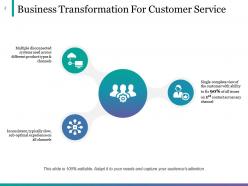
Slide 2: This slide showcases Business Transformation For Customer Service displaying- Multiple disconnected systems used across different product types & channels, Inconsistent, typically slow, sub-optimal experience on all channels, Single complete view of the customer with ability to fix 90% of all issues on 1st contact across any channel.
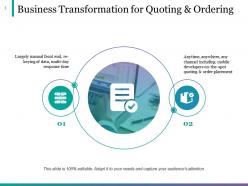
Slide 3: This slide shows Business Transformation for Quoting & Ordering showing- Anytime, anywhere, any channel including mobile developers on-the-spot quoting & order placement, Largely manual front end, re-keying of data, multi-day response time.
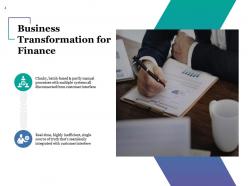
Slide 4: This slide shows Business Transformation for Finance with the following points- Clunky, batch-based & partly manual processes with multiple systems all disconnected from customer interfere, Real-time, highly inefficient, single source of truth that’s seamlessly integrated with customer interfere.
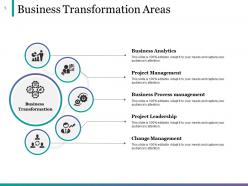
Slide 5: This slide showcases Business Transformation Areas such as- Business Analytics, Project Management, Business Process management, Project Leadership, Change Management.
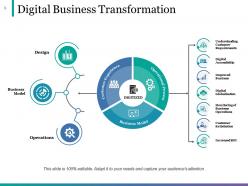
Slide 6: This slide shows Digital Business Transformation showcasing- Understanding Customer Requirements, Digital Accessibility, Improved Business, Digital Globalization, Monitoring of Business Operations, Customer Satisfaction, Increased ROI, Customer Experience, Operational Process, Business Model.
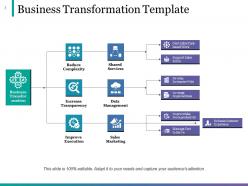
Slide 7: This slide shows Business Transformation Template with the following content- Reduce Complexity, Increase Transparency, Improve Execution, Shared Services, Data Management, Sales Marketing, Centralize Task-based Work, Support Sales Force, Develop Enterprise-Wide, Leverage Improved Data, Improve Sales Force productivity, Enhance Customer Experience, Manage Cost to Serve, Business Transformation.
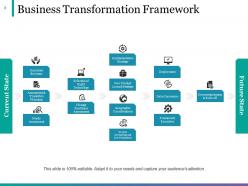
Slide 8: This slide shows Business Transformation Framework comprising of- Current State, Future State, Insurance Business, Assessment & Transition Planning, Needs Assessment, Change Readiness Assessment, Selection of Right Technology, New Product Launch Strategy, Implementation Strategy, Geographic Considerations, Project Estimating and ROI Projections, Deployment, Data Conversion, Framework Execution, Decommissioning & Kick-off.
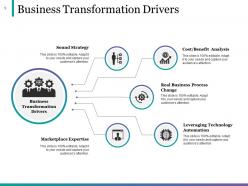
Slide 9: This slide shows Business Transformation Drivers showcasing- Sound Strategy, Marketplace Expertise, Cost/Benefit Analysis, Real Business Process Change, Leveraging Technology Automation.
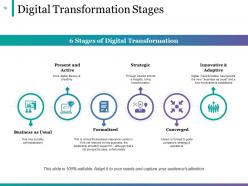
Slide 10: This slide showcases Digital Transformation Stages. The listed stages are- Converged: A team is formed to guide company’s strategy & operations. Formalized: This is where the business relevance comes in. If it’s not relevant for the business, the leadership shouldn’t support it – although that’s not always the case, unfortunately. Business as Usual: This one is pretty self explanatory. Innovative & Adoptive: Digital Transformation has become the new “ business as usual” and a new ecosystem is established. Strategic: Through shared efforts & insights, bring transformation. Present and Active: Drive digital literacy & creativity.
Slide 11: This is a Coffee Break slide. You can change the slide content as per need.
Slide 12: This slide is titled Charts & Graphs to move forward. You can change the slide content as per need.
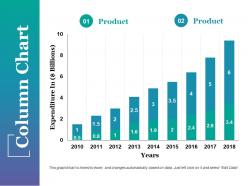
Slide 13: This is a Column Chart slide to show information, comparison specifications etc.
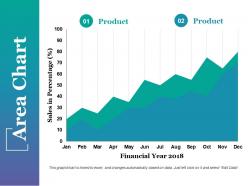
Slide 14: This is an Area Chart slide to show information, comparison specifications etc.
Slide 15: This slide is titled Additional Slides. You can change the slide content as per need.
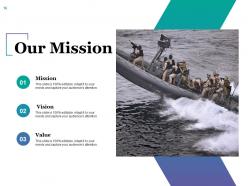
Slide 16: This is Our Mission slide with imagery. State your mission, vision and value aspects here.
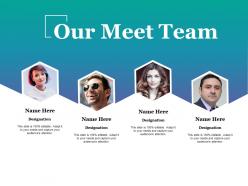
Slide 17: This slide presents Our team with name, designation and image boxes.
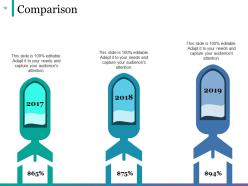
Slide 18: This is a Comparison slide to compare product/enitities etc.
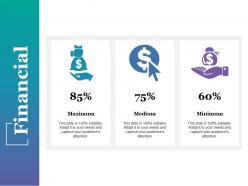
Slide 19: This is a Financial Scores slide. State financial aspects etc. in terms of maximum, medium and minimum here.
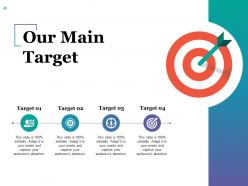
Slide 20: This slide shows Our Main Target image with icons. Present information, specifications etc. here.
Slide 21: This is a Bulb or Idea image slide. State information, specifications, innovative aspects etc. here
Slide 22: This is a Thank You slide with Email, Address# street number, city, state, Contact Numbers.
Business Change Management Powerpoint Presentation Slides with all 22 slides:
Enjoy a cosy chat with our Business Change Management Powerpoint Presentation Slides. Folks around will feel absolutely comfortable.
-
Business Change Management Powerpoint Presentation Slides
-
Business Change Management Powerpoint Presentation Slides
-
Business Change Management Powerpoint Presentation Slides
-
Business Change Management Powerpoint Presentation Slides
-
Business Change Management Powerpoint Presentation Slides
-
Business Change Management Powerpoint Presentation Slides
-
Business Change Management Powerpoint Presentation Slides
-
Business Change Management Powerpoint Presentation Slides
-
Business Change Management Powerpoint Presentation Slides
-
Business Change Management Powerpoint Presentation Slides
-
Business Change Management Powerpoint Presentation Slides
-

Business Change Management Powerpoint Presentation Slides
-
Business Change Management Powerpoint Presentation Slides
-
Business Change Management Powerpoint Presentation Slides
-

Business Change Management Powerpoint Presentation Slides
-
Business Change Management Powerpoint Presentation Slides
-
Business Change Management Powerpoint Presentation Slides
-
Business Change Management Powerpoint Presentation Slides
-
Business Change Management Powerpoint Presentation Slides
-
Business Change Management Powerpoint Presentation Slides
-
Business Change Management Powerpoint Presentation Slides
-

Business Change Management Powerpoint Presentation Slides
FAQs for Business Change Management
Okay so first thing - people need to actually understand WHY you're making changes, not just what's changing. Get your leadership team excited about it first because if they're not sold, forget it. Don't just announce stuff and expect everyone to be cool with it - bring people into the process. I swear, half the drama could be avoided if managers just explained their reasoning upfront. Celebrate small wins as you go (builds momentum), train people properly, and yeah... some folks will complain no matter what. Find your key players early and get them on your side - they'll do half the convincing for you.
Look at three main things: your people, processes, and culture. Survey folks about how they feel about change - you'll get the real story that way. Check if you have the right resources and skills lined up. Leadership support is honestly everything here; without it you're screwed. Also dig into how past changes went. Total disaster or pretty smooth? I'd grab some basic assessment tools or maybe bring in an outsider to get people talking honestly. Way better to find problems now than when you're already knee-deep in the mess.
Dude, communication makes or breaks everything. People need to understand WHY you're changing things, not just what they have to do differently. I've watched so many good ideas crash because leaders just assumed everyone would roll with it - terrible mistake. Set up ways for your team to actually talk back to you. Questions, complaints, whatever. Be honest about the rough parts ahead, don't just sell the benefits. Oh, and keep talking throughout the whole thing. One kickoff meeting won't cut it.
Honestly, most resistance comes down to people feeling left out or scared they'll mess up. First thing - explain WHY you're making the change, not just what's happening. Pull your key people into the planning early so they feel like they're part of it instead of just getting steamrolled. Listen to their complaints too, even the dumb ones (there's always a few). Give them proper training so they don't panic about failing. Oh, and celebrate the small stuff as you go - people need to see it's actually working or they'll lose faith fast.
Start by showing you're open to change yourself - teams mirror their leaders. Always explain WHY something's happening, not just what needs doing. People resist when they don't get the reasoning behind it. Oh, and definitely celebrate quick wins along the way. Makes the whole process feel less awful, honestly. Be upfront about what's hard too - nobody likes being sugarcoated to death. Let your team help figure out HOW to make changes happen instead of just telling them what to do. They'll have way better ideas than you think. Create space where people can actually speak up without getting shot down.
Pick 3-5 metrics max or you'll go crazy with data. Hard numbers are obvious - adoption rates, budget, timelines, whatever KPIs you're trying to move. Soft metrics matter just as much though. How engaged are people? What's the resistance looking like? Check feedback sentiment too. Sustainability is huge - are folks actually still doing the new stuff months later? That's where you really see if it worked. Set up something simple to track it all, maybe review monthly. Oh and dashboards help but don't overcomplicate them. Keep stakeholders in the loop so they stay bought in.
Honestly, getting your team involved early is everything. Don't just announce changes after the fact - that's when people dig their heels in. Instead, bring them into the planning from the start. They'll actually have your back instead of working against you. Plus, your employees know stuff leadership doesn't. Like what'll actually function day-to-day versus what sounds good on paper. When people feel heard and have real input, you get way less drama and much better results. Trust me on this one.
Honestly, most of the time it's just people being scared of change - they don't know what's coming and freak out. Leadership not backing you up is brutal too. Communication usually sucks, so nobody understands why you're doing this in the first place. Then there's the obvious stuff like not having enough budget or ridiculous deadlines. Oh, and if your company's constantly changing direction, people get exhausted by it all. The worst is when you try pushing something that totally clashes with company culture - like good luck with that. Get people on your side early, explain the reasoning behind it, and actually train them properly. Champions at different levels help tons.
You gotta match the framework to how your industry actually works. Healthcare crawls compared to tech because of all the regulatory stuff, so your timelines need to be way longer. Manufacturing? You'll need way more floor-level communication since changes hit production directly. Financial services means drowning in compliance paperwork - honestly, half your time goes to documentation. But the core change principles stay the same. Just adjust your pace, who you talk to, and how approvals work. Oh, and definitely map out your usual project flow first to see where things might clash.
Honestly, most change efforts fail because of people problems, not broken processes. Leadership has to be all-in first - if they're not walking the walk, you're screwed. People need to know what's in it for THEM, not just hear corporate speak about transformation goals. I've watched so many projects die because nobody bothered explaining the personal benefits. Oh, and don't try changing everything overnight. That's insane. Start with small wins to build momentum. Figure out who actually has influence in your org and get them bought in early. Communication is everything - the "why" matters way more than the "what."
So tech is totally changing how we handle change management these days. Analytics help predict who's gonna push back, and you can communicate updates instantly through digital platforms. Tracking adoption rates is way easier with automation tools too. But here's the thing - everyone's burnt out from constant changes because technology makes it possible to do like five transformations at once. Slack and Teams are great for keeping everyone in the loop. Honestly though? Sometimes you just need to walk over and talk to someone face-to-face instead of sending another message.
So stakeholder analysis is just mapping out who can mess with your project and who you need on your side. List everyone who'll be affected or has any power over the change. Then figure out their influence level vs how they feel about what you're doing - this saves you from nasty surprises later. Focus your energy on the high-influence people first. Honestly, I've seen great projects tank because someone ignored the wrong person. Look for potential pushback early so you can deal with it before it becomes a headache. It's basically about not flying blind when you're trying to change things.
Don't treat change like some big one-and-done project. You've got to weave it into how things actually work day-to-day. Update job descriptions, switch up your performance metrics, create rewards for people who stick with the new stuff. Training's fine I guess, but here's the thing - if your managers aren't doing it themselves months later, everyone will just go back to their old ways. That's honestly where most change efforts die. Pick 2-3 specific processes you can tweak right now to support this long-term. Systems beat good intentions every time.
Look, training is what makes changes actually work instead of just flopping. People can't use new systems if nobody shows them how - and honestly, most companies mess this up constantly. You want hands-on practice, not boring PowerPoints. Also, frame it as career development so employees see what's in it for them personally. Short sessions work better than marathon training days (learned that the hard way). The biggest mistake? Treating training like an afterthought instead of planning it from day one. Oh, and timing matters - don't overwhelm people right before a major deadline.
Honestly, everything's moving toward AI analytics and super personalized employee stuff now. Gone are the days of those awful one-size-fits-all approaches (thank god). You're seeing way more psychological safety focus, real-time feedback, and change champions scattered throughout companies instead of just orders from above. Micro-changes are the new thing rather than those massive overhauls that stressed everyone out. Oh, and data literacy is huge – if you can read employee sentiment analytics, you'll be golden. The whole vibe is shifting so people feel like they're actually part of the change, not just victims of it.
-
Presentation Design is very nice, good work with the content as well.
-
Awesome presentation, really professional and easy to edit.