


Business decision management powerpoint presentation slides




Try Before you Buy Download Free Sample Product
 Impress Your
 Audience
 100%
100% Editable
 Save Hours
 of Time


Make better business decisions with our content ready Business Decision Management Powerpoint Presentation Slides. Decision making is an important part of modern business management. Showcase types of decisions such as strategic tactical & operational & impact of implementing these decisions on your business using the decision identification presentation visuals. Furthermore, you can also use our decision management approaches presentation deck in order to achieve higher returns on previous infrastructure investments. Create a better understanding of the key benefits of decision modeling with the help of decision management PPT slides. The intelligent process automation PowerPoint complete deck comprises of professionally designed slides like benefits & types of decision management, automated and manual decision process, implementing business decision management. Incorporate self-explanatory decision engineering PowerPoint templates to demonstrate how effective decision making can affect operational excellence, product innovation, and workforce planning. Download professional-looking enterprise decision management PPT graphics to achieve business objectives and improve business performance. Take it on your head with our Business Decision Management Powerpoint Presentation Slides. Definitely be able to accomplish your duty.
People who downloaded this PowerPoint presentation also viewed the following :
Content of this Powerpoint Presentation
Slide 1: This slide introduces Business Decision Management. State Your Company Name and begin.
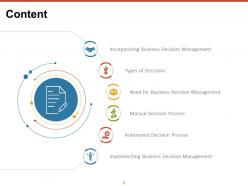
Slide 2: This slide shows Content of the presentation.
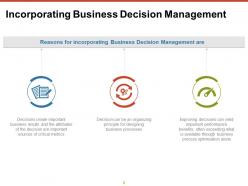
Slide 3: This slide presents Incorporating Business Decision Management.
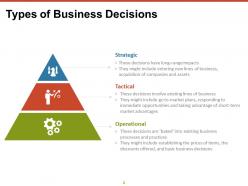
Slide 4: This slide displays Types of Business Decisions as- Strategic, Tactical, and Operational.
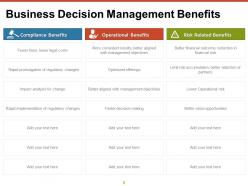
Slide 5: This slide represents Business Decision Management Benefits including- Risk Related Benefits, Operational Benefits, Compliance Benefits.
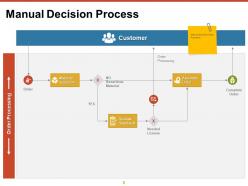
Slide 6: This slide showcases Manual Decision Process with related diagram.
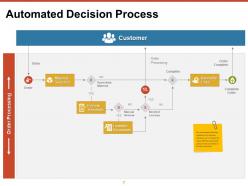
Slide 7: This slide shows Automated Decision Process that replaces the manual decision as it is faster & more efficient.
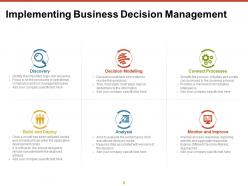
Slide 8: This slide presents Implementing Business Decision Management describing- Discovery, Decision Modelling, Connect Processes, Analysis, Monitor and Improve, Build and Deploy.
Slide 9: This slide is titled as Additional Slides for moving forward.
Slide 10: This slide displays icons for Business Decision Management.
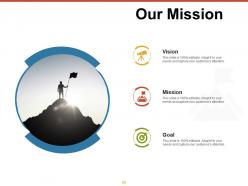
Slide 11: This is Our Mission slide with related imagery and text.
Slide 12: This is Our Team slide with names and designation.
Slide 13: This is a Timeline slide to show information related with time period.
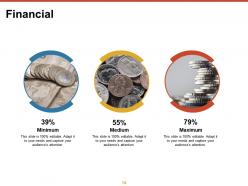
Slide 14: This is a Financial slide. Show your finance related stuff here.
Slide 15: This is About Us slide to show company specifications etc.
Slide 16: This is a Thank You slide with address, contact numbers and email address.
Business decision management powerpoint presentation slides with all 16 slides:
Use our Business Decision Management Powerpoint Presentation Slides to effectively help you save your valuable time. They are readymade to fit into any presentation structure.

FAQs for Business decision management
You'll want decision modeling tools, a rules engine, analytics, and integration layers. Decision modeling maps your business logic visually. Rules engines execute those decisions automatically. Analytics show what's actually working - honestly, it's never what you think it'll be. Integration connects everything to your current systems, databases, whatever you're running. Oh, and don't forget version control and testing. That stuff matters. I'd start with your most repetitive decisions first since those give you quick wins. Way easier to show value that way.
Look, data analytics basically stops you from making decisions based on hunches. You can actually see what customers are doing instead of guessing. Honestly, it's way better than those "strategic planning" meetings where everyone just argues opinions. Spot trends before your competition does, test different pricing strategies, figure out which ads are complete wastes of money. I'd say start simple though - pick something you decide on regularly and see what numbers could help. Like, maybe track which email subject lines get opened more? Don't overthink it at first.
Honestly, the worst part is dealing with people who refuse to change how they make decisions. Even when their current process is obviously broken! Data quality will drive you nuts too - nothing matches up between systems, which makes automation a nightmare. Your legacy IT setup probably won't play nice with new BDM tools either. Oh, and your business folks know the rules but have zero clue about implementation. That gap is real. Pick some easy wins first though - find decisions that are simple but make a big impact. Build some momentum before tackling the messy stuff.
Honestly, automation is a total game changer for making decisions faster. It handles all the boring data collection stuff automatically, so you're not manually pulling reports from like 5 different systems. Plus it spots patterns you'd probably miss otherwise. You'll catch problems way earlier and have more time for actual strategic thinking - which is where you add real value anyway. Start small though. Pick something your team does every week that's super repetitive and automate just the data part first. Way less overwhelming that way.
For BDM evaluation, I'd focus on operational stuff first - decision speed, throughput, how much you're actually automating. Then look at business impact: accuracy, consistency, ROI from automated vs manual work. If you're in a regulated space, definitely add compliance metrics (auditors eat that up). Honestly, don't go overboard tracking everything. Pick maybe 3-5 that actually matter to your stakeholders. I've seen teams get lost in metric hell and it's not pretty. Start with what your business cares about most - revenue, efficiency, whatever - then expand from there if needed.
So BDM hooks into your ERP using APIs and web services - pretty straightforward stuff. Your business rules get embedded right into SAP, Oracle, whatever you're running. No need to tear everything down and start over, which is honestly a relief. The system just layers on top and makes your processes way smarter. Most setups use REST APIs or direct database connections to grab data and push decisions back instantly. I'd start by figuring out which ERP workflows need better decision-making. Then get your IT folks to help map out where everything connects.
Look, you really can't skip stakeholder buy-in when you're doing BDM work. Get them involved early and you'll actually understand what the business needs - plus you won't have to deal with pushback later when people hate the changes. Everyone's more willing to use something they helped build, which honestly should be obvious but apparently isn't always. Map out who matters - business users, IT folks, compliance people, ops teams. Then set up regular check-ins throughout the whole process. I'd start by figuring out your key players and getting those first meetings on the calendar.
Track both the obvious stuff and the softer metrics - you need both for the full picture. Cost savings are easy: automated decisions, faster processing, fewer screw-ups. Operational wins matter too though - quicker loan approvals, happier customers. Risk reduction is honestly where most of the real value hides, but it's a pain to measure. Don't forget decision consistency across your team since that cuts down compliance issues later. Oh, and definitely get your baseline numbers before you roll out BDM - otherwise you're just guessing at impact.
Oh nice question! JPMorgan Chase has this crazy setup where they automated loan approvals - went from waiting days to getting answers in minutes. Netflix is the obvious one with their recommendation thing (drives 80% of what people watch, which is honestly kind of scary when you think about it). UPS did route optimization and apparently saved tons on fuel costs. Capital One's doing real-time fraud detection too. I'd probably check out the JPMorgan example first since it's more straightforward business stuff. Way easier to wrap your head around than Netflix's algorithm magic.
Build those compliance rules right into your BDM system from day one. Automated checks should flag any decisions that violate regulations or company policies before they go live. That's honestly the whole point of BDM - it enforces rules consistently so you don't have to rely on people remembering every policy detail. Set up alerts for weird edge cases and keep solid audit trails. Regulators love seeing clear decision logic. Start by mapping out your main compliance requirements, then get your BDM team to turn them into business rules that fire automatically. Way easier than chasing violations after the fact.
Dude, AI and machine learning are absolutely crushing it right now - they catch patterns you'd never spot and handle crazy complex decisions automatically. Cloud stuff has made advanced analytics way cheaper to access. Real-time data streaming means you don't have to wait around for those annoying batch reports anymore. Oh, and low-code platforms are pretty sweet because your business teams can actually build decision logic themselves instead of constantly pestering IT. The whole space is moving insanely fast, honestly. But don't go nuts - pick one decision process first and show it works before you try revolutionizing everything.
Honestly, predictive modeling is a game-changer when markets are going crazy. You're basically using historical data to spot patterns before they hit you in the face. Customer behavior, supply chain mess, demand swings - all that stuff becomes way more manageable. The algorithms won't be perfect (I mean, what is?), but they beat making decisions based on whatever mood you're in that day. Way better than just reacting after everything's already gone sideways. I'd say pick one problem area first and test it out there.
Look, you gotta bake ethics into your BDM framework right from day one. Fairness, transparency, accountability - especially when decisions hit customers or employees hard. Privacy's massive since you're dealing with tons of personal data. This stuff honestly stresses me out because one bad automated decision can spiral fast. Regular ethical audits are clutch. Get diverse teams reviewing your models, and never let machines make high-stakes calls without human oversight. Oh, and don't just build it once and walk away - ethics needs to be part of your ongoing process, not an afterthought.
Honestly, BDM is perfect for smaller businesses because you can automate all those tedious decisions that bog you down daily. Credit apps, pricing calls, routine approvals - set up rules to handle that stuff automatically. Big companies do this but they're slow as hell to implement anything new. You're not. Start with whatever eats up most of your time each day and automate that first. Then expand from there. It's basically like having someone smart working 24/7, handling the boring decisions so you can focus on actual strategy. Way better than manually reviewing every single thing that crosses your desk.
Focus on three main areas: decision modeling (DMN stuff), your BDM platform, and business rules management. The technical side's pretty overwhelming initially - I remember feeling lost for weeks. Business analysts need deep training on converting requirements into decision logic. Developers should get tons of hands-on platform time. Also train stakeholders on change management since they'll deal with automated decisions. Honestly, classroom training is kinda useless here. Start with a pilot project where your team learns while actually building something. Way more effective that route.
-
Helpful product design for delivering presentation.
-
Unique design & color.
-
Colors used are bright and distinctive.
-
Best way of representation of the topic.