


Trade Show Powerpoint Presentation Slides





Try Before you Buy Download Free Sample Product
 Impress Your
 Audience
 100%
100% Editable
 Save Hours
 of Time


Give your employees a chance to trust our, trade show PowerPoint presentation slides. Providing you with thirty exclusive PPT sides on business trade show representation. Professionally designed templates with associated visuals and subject drove content, high-quality images and icons are your way to represent your business and economics. Introduce your product, show competitors participation, tradeshow objectives, tradeshow budgeting, and performance dashboard and create a bold impression. This comprehensive presentation has PPT slides on a wide range of topics highlighting the core operations of your business needs. Catching visions are shown in the trade show PPT layouts to show your competitors participation. Eligible spreadsheets, charts, graphs, and comparison tables are shown here for a closer view at the topic. Click the download switch and trade show PowerPoint presentation slides are accessible for your next project. Our Trade Show Powerpoint Presentation Slides facilitate intense concentration. Folks invariably find it easy to focus.
People who downloaded this PowerPoint presentation also viewed the following :
Content of this Powerpoint Presentation
Slide 1: This slide introduces the Trade Show. State your company name and begin.
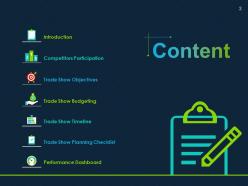
Slide 2: This slide shows Content with- Introduction, Competitors Participation, Trade Show Objectives, Trade Show Budgeting, Trade Show Timeline, Trade Show Planning Checklist, Performance Dashboard.
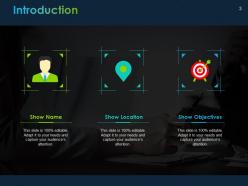
Slide 3: This is an Introduction slide wherein you can show NAME, LOCATION and OBJECTIVES.
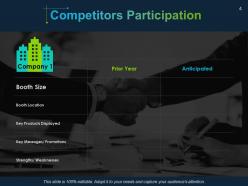
Slide 4: This slide shows Competitors Participation with two parameters- prior year and anticipated.
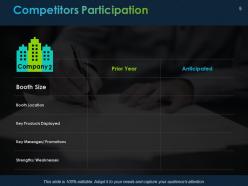
Slide 5: This slide also shows Competitors Participation. Fill relevant data in the table given.
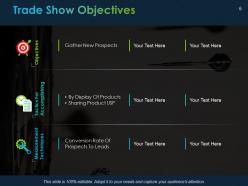
Slide 6: This slide shows Trade Show Objectives divided into three major categories- Objectives: Gather New Prospects, Tactics For Accomplishing: By Display Of Products, Sharing Product USP, Measurement Techniques: Conversion Rate Of Prospects To Leads.
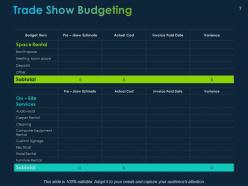
Slide 7: This slide presents Trade Show Budgeting.
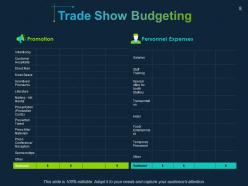
Slide 8: This slide also presents Trade Show Budgeting with two categories to fill- Promotion, Personnel Expenses.
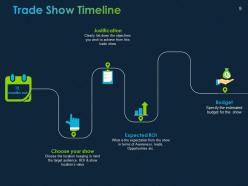
Slide 9: This slide shows Trade Show Timeline with following steps- Choose your show, Justification, Expected ROI, Budget.
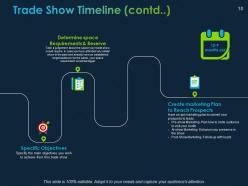
Slide 10: This too is a Trade Show Timeline slide with steps- Specific Objectives, Determine space Requirements & Reserve, Create marketing Plan to Reach Prospects.
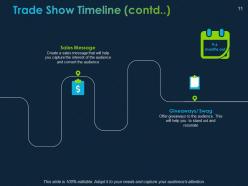
Slide 11: This slide also presents Trade Show Timeline with- Sales Message Giveaways/ Swag.
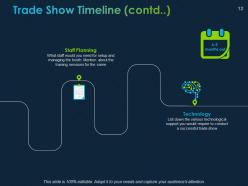
Slide 12: This is yet another Trade Show Timeline slide with Staff Planning and Technology.
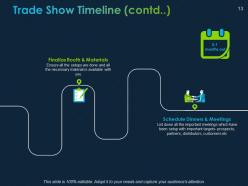
Slide 13: This slide shows another variation of Trade Show Timeline with Finalize Booth & Materials, Schedule Dinners & Meetings.
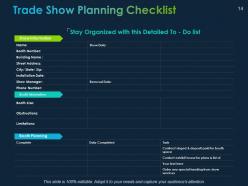
Slide 14: This slide presents Trade Show Planning Checklist to show your information, planning etc.
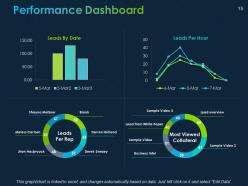
Slide 15: This slide shows Performance Dashboard.
Slide 16: This is a Trade Show For Icon Slide. Use as per your requirement.
Slide 17: This slide is titled Additional Slides to move forward. You can change the slide content as per need.
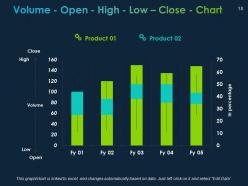
Slide 18: This slide presents Volume - Open-High-Low-Close-Chart. You can add the information.
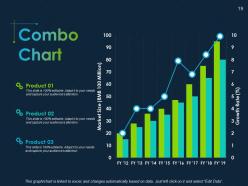
Slide 19: This is a Combo chart slide to show product/ entity growth, comparison etc.
Slide 20: This is Our Mission slide. Show your company mission and goals here.
Slide 21: This is Our team slide with names and designation.
Slide 22: This is an About Us slide showing Target Audiences, Valued Clients, and Preferred By Many as examples.
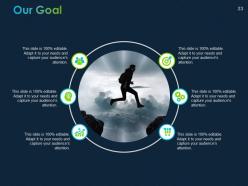
Slide 23: This slide shows Our Goal with relevant imagery.
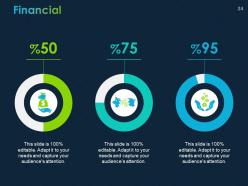
Slide 24: This is a Financial score slide. State financial aspects, information etc. here.
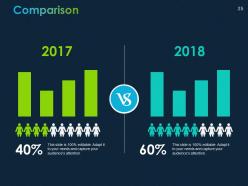
Slide 25: This is a Comparison slide to compare product/ entities etc.
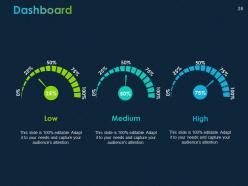
Slide 26: This is a Dashboard slide to show growth factors in terms of High, Low, Medium.
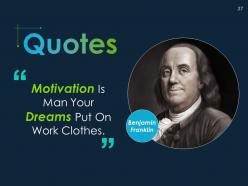
Slide 27: This is a Quotes slide. State business message, beliefs etc. here.
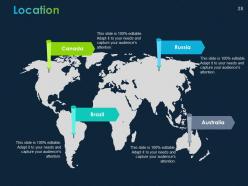
Slide 28: This is Location slide on a world map image to show global growth, presence etc.
Slide 29: This slide shows a Magnifying glass image with text boxes. State information etc. here.
Slide 30: This is a Thank You slide with Address# street number, city, state, Contact Numbers, Email Address.
Trade Show Powerpoint Presentation Slides with all 30 slides:
Appreciate te exposure of facts with our Trade Show Powerpoint Presentation Slides. Congratulate the journalists involved.




FAQs for Trade Show
Okay so first thing - you've got like 10 seconds max to hook people before they walk away. Make it count with something that actually grabs attention. Demos are perfect because people love touching stuff and seeing how things work. Don't do what every other boring company does and rattle off a million features. Focus on ONE problem you solve that they actually care about. Practice your pitch until you're not stumbling over words - trust me on this one. And definitely have some way to grab their contact info so you can follow up later. Keep it short, make it stick in their head, and give them a real reason to keep the conversation going afterward.
Oh man, visuals are EVERYTHING at trade shows. People walk by so fast - you need something that literally stops them mid-stride. Bold graphics work, product demos are solid, even basic before/after shots on your displays. Movement catches eyes, so video loops are your friend. I always tell people to design like you're not gonna be there to explain stuff... because half the time you won't be, right? Keep text super minimal and readable from like 10+ feet away. Trust me, squinting visitors just keep walking. Make it pop or watch everyone pass by!
Don't just talk AT people - actually have conversations with them. Your booth shouldn't look like a garage sale either. Way too many companies pile on random junk that nobody wants. Get your team on the same page about what you're actually selling, and for the love of god, put your phone away when people walk by! I see this constantly and it drives me nuts. Skip the aggressive sales pitch - just build relationships first. Have a simple system to collect contact info, then follow up within 48 hours or you've basically wasted your time. Oh, and train your whole team on the key talking points beforehand.
Okay so first thing - scope out who's actually gonna be there before you show up. Get the attendee list and see what companies/roles you're dealing with. C-suite people? Talk ROI and big picture stuff, they'll zone out on technical details. Engineers and tech folks? Go deep on specs. I honestly prepare like 3 different versions of my pitch because you never know. But here's the thing that really matters - don't just start talking when someone walks up. Ask them what they're looking for first, then match your whole spiel to their actual problems instead of giving everyone the same canned presentation.
Dude, you NEED stories at trade shows. Nobody remembers the booth that just listed features - boring as hell. But tell them about how your product actually saved some company's butt? Now they're listening. Customer wins, how you guys started, real outcomes people can picture - that's the good stuff. I swear, stories are what separate you from the sea of identical pitches. People connect with narratives, not spec sheets. When they're back at the hotel flipping through business cards, you want them thinking "oh yeah, those were the guys who..." Collect 2-3 killer stories before you go.
Get them involved right away - ask questions, do quick polls, get hands up. I throw in something like "who's dealt with this nightmare before?" because it makes people feel like they're in a conversation, not just sitting there. Props and demos work great since trade shows are loud as hell and visual stuff cuts through all that noise. Don't save questions for the end when everyone's already thinking about lunch. Sprinkle them throughout. Oh, and if you can walk around instead of staying planted behind a podium, do it. Way more engaging.
Dude, 5-7 minutes MAX. People are basically goldfish at trade shows. I'd do 2 minutes on the problem/hook, then 3 minutes demoing your solution. Last year I went 15 minutes and literally watched people check their phones - brutal. Save 1-2 minutes for next steps at the end. Practice with your phone timer until transitions don't suck. Oh, and don't just ask "questions?" Give them something concrete like "want to grab 15 minutes next week?" Works way better.
Dude, interactive displays and VR demos are game changers - way better than boring static banners. QR codes make lead capture so easy, plus you won't have to haul around a million brochures. Live streaming extends your reach beyond whoever walks by your booth. AR demos are pretty cool too, lets people see how your product would actually look in their space. Oh, and don't go overboard - pick maybe 2 tech things that actually make sense for what you're selling. Nobody likes flashy stuff that doesn't serve a purpose, you know?
Hit them up within 24-48 hours while they still remember you. Those generic "thanks for stopping by" emails are the worst - nobody reads that garbage. Instead, mention something specific you talked about at your booth. LinkedIn's great too, just don't be weird about it. If you promised a demo or white paper or whatever, actually send it fast. Oh and sort your leads by how interested they seemed: call the hot ones right away, email the warm ones, put the tire-kickers in a longer sequence. Don't forget to circle back in a couple weeks since everyone's swamped after shows anyway.
Hey! So first rule - don't get defensive when they challenge your product. That's like instant death at these things. Listen to every question, even the tough ones. If you don't know something? Just say so and offer to follow up later. Way better than stumbling through some BS answer. Try the "feel, felt, found" thing for objections - "I get how you feel, others felt the same way, but here's what they discovered..." Always thank them for asking since it shows they're actually interested. Keep answers short though - you've got a line of people waiting. Oh, and write down their info right away or you'll totally forget to follow up.
Dude, templates are seriously a game changer for booth stuff. You'll save so much time not having to build everything from scratch, plus your whole team stays consistent with branding. Good ones already have the flow mapped out too, which is clutch. Here's the thing though - you can spend your energy tailoring the actual message for each audience instead of messing around with layouts. I learned this the hard way after doing like 6 shows last year. Just don't go too cookie-cutter with it. People can tell when you're phoning it in, and nobody wants to sit through that generic pitch nonsense.
Branding should be everywhere but don't go crazy with it - I've seen booths that look like they threw up logos and it's honestly terrible. Get a nice backdrop, useful swag people actually want, and keep your colors consistent. Your team needs matching shirts or at least the same color scheme so visitors can find you. Make sure your main message is readable from 10+ feet away (super important). Oh and practice that elevator pitch till it sounds natural, not like you're reading a script. One more thing - invest in decent business cards. Cheap ones make your whole brand look cheap.
Ditch the boring booth setup and go interactive! Live demos where people can actually touch stuff work amazing. Or create like a mini escape room that ties into what you're selling. AR/VR stations are killer if you've got the budget - honestly, people eat that up and will remember you for sure. Pop-up workshops right at your booth draw huge crowds too. Even recording a live podcast there feels way fresher than another slideshow. I'd probably avoid anything too complicated though. Just pick what fits your crowd's energy and definitely test it out first. The hands-on approach beats talking at people every single time.
So honestly, don't just count booth visitors - people will grab any free pen, you know? Focus on qualified leads and actual demo requests during the show. The real money is in your follow-up response rates after. Track conversion rates from leads to sales meetings, plus social media buzz if you can. I'd set up a basic spreadsheet to stay organized. Oh, and debrief with your team within like a week max while you still remember what went down. Brand awareness surveys are solid too if you've got budget for it.
Honestly, rehearse that pitch until you're sick of hearing yourself - I'm talking 10+ times out loud before you go. When I used to get super nervous, having those key points memorized was a lifesaver. You'll automatically fall back on them even if your brain goes blank. Show up early so you can mess around with your booth setup and maybe chat with the people next to you. It's like a warm-up for your social battery, which sounds weird but actually works. Oh, and don't think of it as "presenting" - just have normal conversations with people. Way less pressure that way. Most folks walking around genuinely want to find cool solutions anyway, so they're basically rooting for you.
No Reviews