


Thesis Statement Outline Powerpoint Presentation Slides




Try Before you Buy Download Free Sample Product
 Impress Your
 Audience
 100%
100% Editable
 Save Hours
 of Time


Introducing our thesis statement outline PowerPoint presentation slides. Present the introduction to your thesis with the help of this research exhibiting PowerPoint deck. Our thesis presentation ppt theme has a slide that discusses the methods as well as the approach to prove the hypothesis. Utilizing this assignment plan PPT layout provides you space to have a preliminary discussion on your thesis. Our readymade research analysis PowerPoint design contains slides which help you showcase your work plan with an elaborate timetable. Assimilating this particular practical representation PPT theme allows you to present your conclusions and findings with charts and diagrams. This project dissertation PowerPoint creative set contains a slide for the list of references. Selection of this research work PowerPoint template helps you discuss the implications of your research. This practical project management PPT deck lets you make required variations to icons and colors. Download this PPT slide to avail the benefits of perfection.
People who downloaded this PowerPoint presentation also viewed the following :
Content of this Powerpoint Presentation
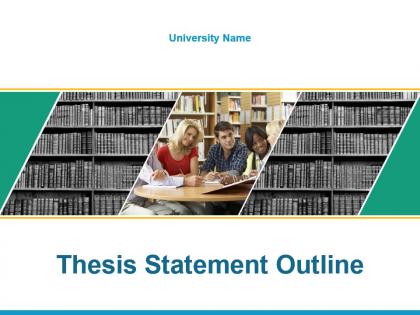
Slide 1: This slide presents Thesis Statement Outline. State your university name and continue.
Slide 2: This slide displays the Title Page with the following content- Name of University, Your Thesis Topic.
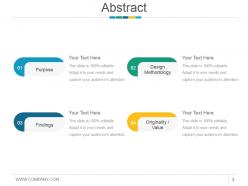
Slide 3: This is an Abstract slide with- Purpose, Design Methodology, Findings, Originality / Value.
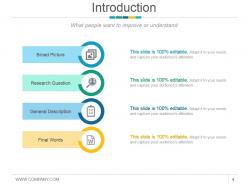
Slide 4: This is an Introduction slide with the following content- Broad Picture, Research Question, General Description, Final Words.
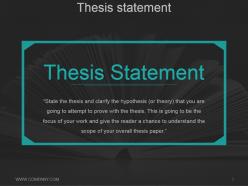
Slide 5: This slide shows the Thesis Statement. It also explains what a thesis statement is.
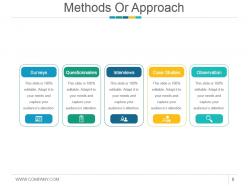
Slide 6: This slide shows Methods Or Approach which include- Surveys, Questionnaires, Interviews, Observation, Case Studies.
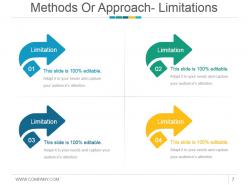
Slide 7: This slide shows Methods Or Approach- Limitations with arrow imagery and text boxes to state Limitations.
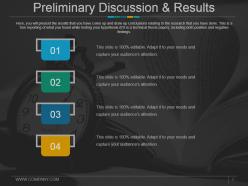
Slide 8: This is Preliminary Discussion & Results slide. Here, you will present the results that you have come up and draw up conclusions relating to the research that you have done. This is a true reporting of what you found while testing your hypothesis (if it is a technical thesis paper), including both positive and negative findings.
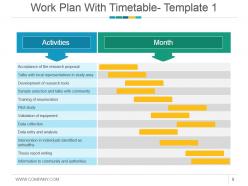
Slide 9: This slide presents first Work Plan With Timetable Template showing Activities and Month.
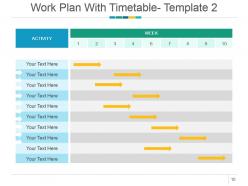
Slide 10: This slide presents second Work Plan With Timetable Template showing Activity, Week.
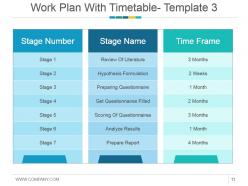
Slide 11: This slide presents third Work Plan With Timetable Template showing Stage Number, Stage Name, Time Frame.
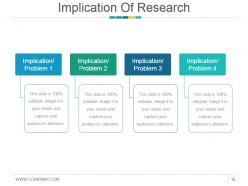
Slide 12: This slide shows Implication Of Research. State them in the given text boxes.
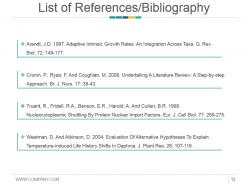
Slide 13: This slide displays a List of References/Bibliography.
Slide 14: This slide is titled Additional Slides. You can change the slide content as per your needs.
Slide 15: This slide shows first layout of Text Slide. Add relevant information in these boxes.
Slide 16: This slide shows second layout of Text Slide with icon imagery.
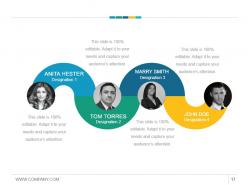
Slide 17: This slide shows third layout of text slide with a circular flow diagram image. You can specify the name, designation of your team members etc. here.
Slide 18: This is Click To Add Title slide with imagery and text boxes. You can mention the name and designation in these text boxes and edit the title as per need.
Slide 19: This slide shows fourth layout of Text Slide with arrow and target imagery.
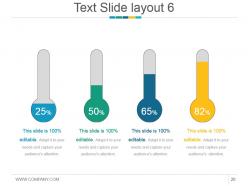
Slide 20: This slide shows fifth layout of Text Slide to show information in percentage etc.
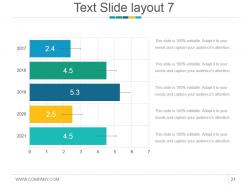
Slide 21: This slide shows sixth layout of Text Slide presented in a bar graph form to state information, specifications etc.
Slide 22: This slide shows seventh layout of Text Slide. Add text as per need.
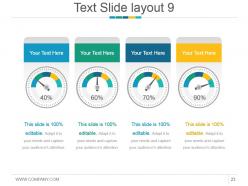
Slide 23: This slide shows eighth layout of Text Slide with metric imagery.
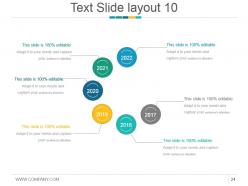
Slide 24: This slide shows ninth layout of Text Slide in a semi-circular timeline form. Show growth, milestones etc. here.
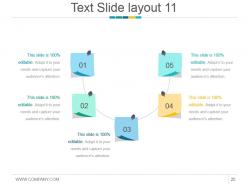
Slide 25: This slide shows tenth layout of Text Slide with post it notes. Post any important information here.
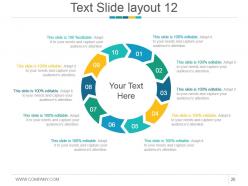
Slide 26: This slide shows eleventh layout of Text Slide in a circular diagram form to state information, specifications etc.
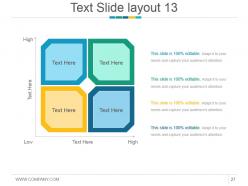
Slide 27: This slide presents twelfth layout of Text Slide showing matrix. You can add relevant data in it.
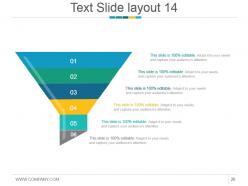
Slide 28: This slide presents thirteenth layout of Text Slide showing funnel imagery. State information, specifications etc. in a funnel form here.
Slide 29: This is a Thank you slide with Address #street number, city, state, Contact Numbers, Email Address.
Thesis Statement Outline Powerpoint Presentation Slides with all 29 slides:
Swing it with our Thesis Statement Outline Powerpoint Presentation Slides. Sway your listeners with the rhythm of your thoughts.



FAQs for Thesis Statement Outline
Effective thesis statement outlines include a clear position or argument, supporting main points with evidence, logical organization structure, counterargument acknowledgment, and conclusive reinforcement of the central claim. These components work together by establishing credibility through balanced analysis, guiding reader understanding through systematic progression, and ultimately delivering compelling academic arguments, with many students and researchers finding that structured outlines significantly enhance their writing clarity and persuasive impact.
A thesis statement outline enhances academic paper clarity by organizing main arguments logically, establishing clear connections between supporting points, and creating a roadmap that guides readers through complex ideas. This structured approach enables students and researchers to maintain focus throughout their writing process, eliminate redundant content, and present compelling evidence systematically, ultimately delivering more persuasive academic work with stronger argumentative flow.
A well-structured thesis statement outline significantly strengthens a presentation's argument by establishing clear logical flow, defining key supporting points, and ensuring each element directly reinforces the central claim. This strategic framework enables presenters to maintain audience focus, anticipate counterarguments, and deliver more persuasive content, with many academic institutions and business organizations finding that structured outlines ultimately enhance credibility and increase argument effectiveness.
Common mistakes include writing overly broad or vague thesis statements, failing to align supporting points with the main argument, creating illogical organizational flow, and neglecting counterarguments or opposing perspectives. These structural weaknesses undermine academic credibility by creating disconnected arguments, confusing readers, and weakening persuasive impact, with many students finding that detailed preliminary planning ultimately delivers clearer reasoning and stronger analytical outcomes.
Audience understanding significantly influences thesis statement outline formulation by determining complexity level, terminology choices, evidence types, and argumentative approaches needed for effective persuasion. Academic audiences require scholarly sources and theoretical frameworks, while general audiences benefit from accessible language and relatable examples, with many writers finding that tailoring their outline's depth and supporting evidence to audience expertise ultimately delivers stronger engagement and more compelling arguments.
Research provides the foundational evidence, data, and scholarly perspectives needed to craft a compelling thesis statement and supporting outline structure. It enables students and researchers to identify knowledge gaps, validate arguments, and develop comprehensive frameworks that address counterarguments, ultimately delivering academically rigorous work that contributes meaningful insights to their field.
Visual aids complement a thesis statement outline by transforming abstract concepts into digestible graphics, charts, and infographics that reinforce key arguments and supporting evidence. Through strategic visual integration, presenters enhance audience comprehension, maintain engagement throughout complex topics, and create memorable experiences, with many organizations finding that well-designed visuals significantly improve information retention and decision-making outcomes.
Effective thesis statement techniques include focusing on a single, specific argument, using active voice, eliminating unnecessary words, and incorporating strong action verbs that clearly convey your position. These approaches streamline academic writing by establishing clear direction, enhancing reader engagement, and delivering precise scholarly communication, with many researchers finding that concise statements ultimately strengthen their entire argument structure and academic credibility.
A thesis statement outline adapts by adjusting its structure, scope, and focus to match specific requirements, whether argumentative essays need clear position statements, analytical pieces require breakdown frameworks, or presentations demand audience-focused messaging. By modifying supporting point hierarchies, evidence types, and logical flow patterns, writers and presenters can tailor their outlines to deliver compelling narratives across academic papers, business proposals, and conference presentations.
Strategies include conducting targeted research to strengthen evidence, testing argument validity through peer feedback, breaking down complex claims into manageable components, and ensuring alignment between main points and supporting details. These approaches enable writers to identify gaps in reasoning, clarify scope boundaries, and enhance logical flow, with many students finding that iterative refinement during outlining ultimately delivers stronger argumentation and more focused academic writing.
Academic disciplines significantly influence thesis statement outlines through distinct methodological approaches, evidence requirements, and structural conventions, with humanities emphasizing argumentative analysis, sciences focusing on hypothesis-driven frameworks, and social sciences blending theoretical and empirical elements. These disciplinary variations enable scholars to streamline their research presentation while meeting field-specific expectations, ultimately delivering more compelling and academically rigorous arguments tailored to their scholarly communities.
Peer review benefits in thesis statement outline development include fresh perspectives on argument clarity, identification of logical gaps, strengthened evidence evaluation, enhanced structural coherence, and improved academic rigor. Through collaborative feedback, students refine their central arguments, anticipate counterpoints, and ensure their thesis effectively guides their research direction, with many finding that peer insights reveal overlooked weaknesses and strengthen overall dissertation quality.
A thesis statement outline assists in time management by providing a clear roadmap that eliminates decision paralysis, streamlines research focus, and prevents costly revisions during drafting. This structured approach enables writers to allocate specific timeframes to each section, maintain consistent argumentation flow, and avoid tangential research, with many academic professionals finding that outlined theses reduce overall writing time by 30-40%.
A thesis statement outline serves as the structural blueprint for your entire paper, with each main point in the outline directly corresponding to body paragraphs or sections that support your central argument. This strategic alignment ensures logical flow, coherent argumentation, and systematic evidence presentation, with many academic writers finding that strong outline-thesis integration significantly streamlines the writing process while enhancing reader comprehension and argumentative impact.
A thesis statement outline serves as a roadmap by presenting the main argument upfront, followed by supporting points that preview the logical sequence readers will encounter throughout the document. This structured approach enables audiences to anticipate key discussions, understand the writer's strategic direction, and follow complex arguments more effectively, ultimately delivering enhanced comprehension and engagement across academic, business, and professional presentations.
-
Appreciate the research and its presentable format.
-
Illustrative design with editable content. Exceptional value for money. Highly pleased with the product.
-
good