

Sample Ppt For Thesis Defense Powerpoint Presentation Slides





Try Before you Buy Download Free Sample Product
 Impress Your
 Audience
 100%
100% Editable
 Save Hours
 of Time


Don't allow instigators a free hand with our Sample Ppt For Thesis Defense Powerpoint Presentation Slides. Expose attempts to foment chaos.
People who downloaded this PowerPoint presentation also viewed the following :
Content of this Powerpoint Presentation
A thesis is the culmination of something you give your soul, body, and mind to. Thus, the stakes are incredibly high when presenting your thesis, for you are emotionally attached to the hypothesis and the results. After countless hours of research, analysis, and writing, it all boils down to that pivotal moment where you must share your study's findings with your professors, peers, and possibly even a wider audience.
The presentation session is your chance to showcase the depth of your knowledge, the rigor of your methodology, and the significance of your conclusions. It's your moment to shine, to prove that your work adds timeless, commercially viable value to your field of study. However, even the most groundbreaking and brilliant research can fall flat without the right presentation.
Crafting a compelling thesis defense presentation is an art form in itself. It's about engaging your audience, telling a story, and making a lasting impact.
That's where the challenge often lies.
How do you transform complex data and detailed analysis into a presentation that is informative and captivating?
If you're grappling with this question, you're not alone—and there's a solution that might just be the game-changer you need: Thesis Defense PowerPoint Templates.
Expanding on this idea and designing the perfect solution, we've developed a versatile PowerPoint Template perfect for defending your thesis.
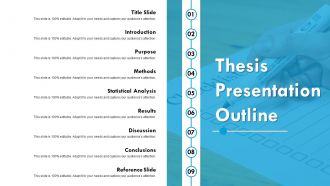
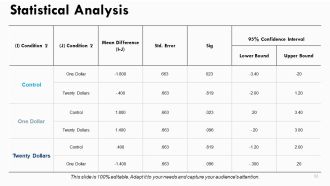
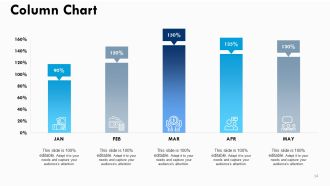
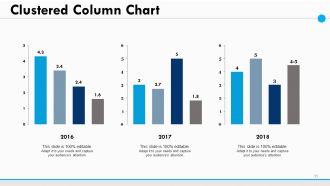
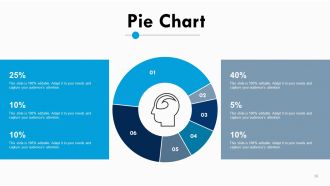
When you download this template, you'll gain access to 100% editable and customizable slides for every part of your presentation, including the cover page, agenda, introduction, purpose, methods, statistical analysis, results, discussion, conclusion, and references. Plus, it comes packed with diagrams like bar graphs, pie charts, and column charts to enhance your data visually.
To give you a taste of what's included, we'll walk you through 5 slides from this comprehensive deck, highlighting the range and functionality you can expect.
Let's begin exploring these samples!
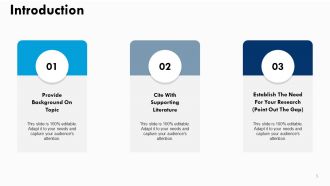
Template 1: Introduction
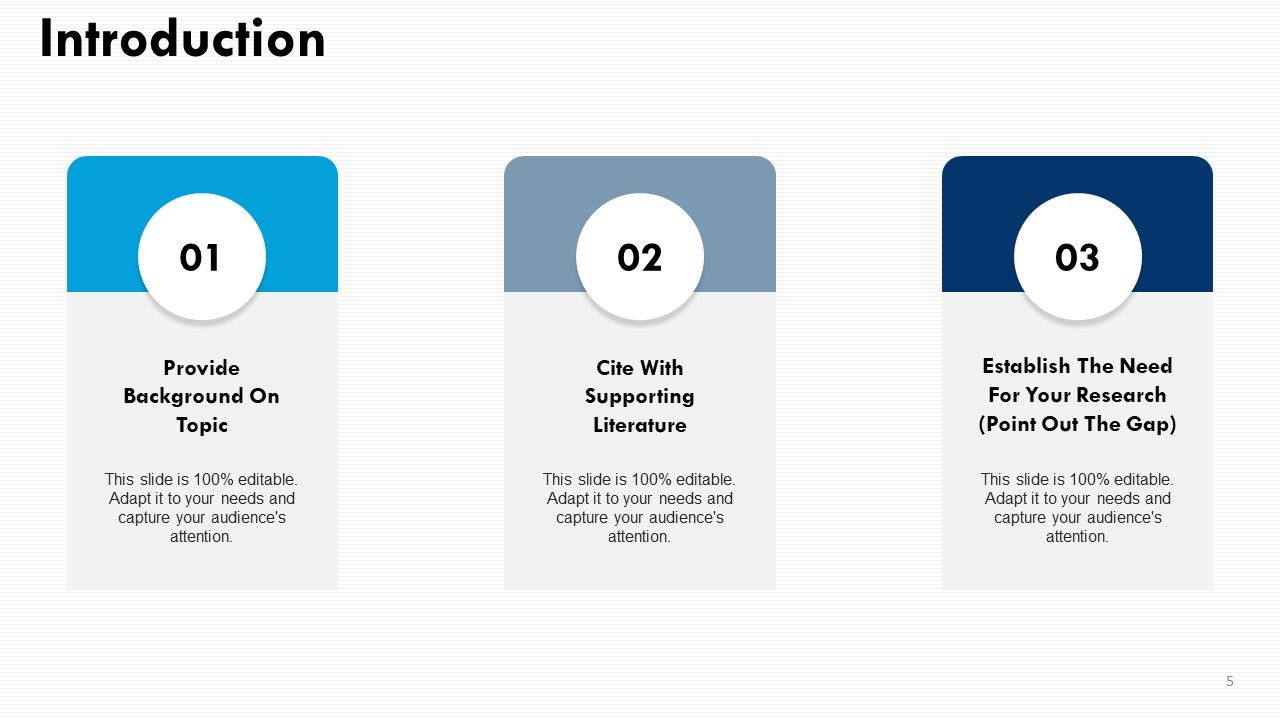
Use this slide to lay a solid foundation with a background on your topic. It guides you in citing relevant literature and encourages you to define the research gap your research addresses. A clean, professional design and focused content areas ensure your opening remarks are impactful and set the right tone for the rest of your presentation. This template is tailored to help you make an authoritative first impression in your scholarly discourse.
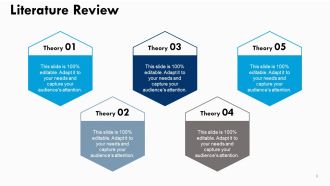
Template 2: Literature Review
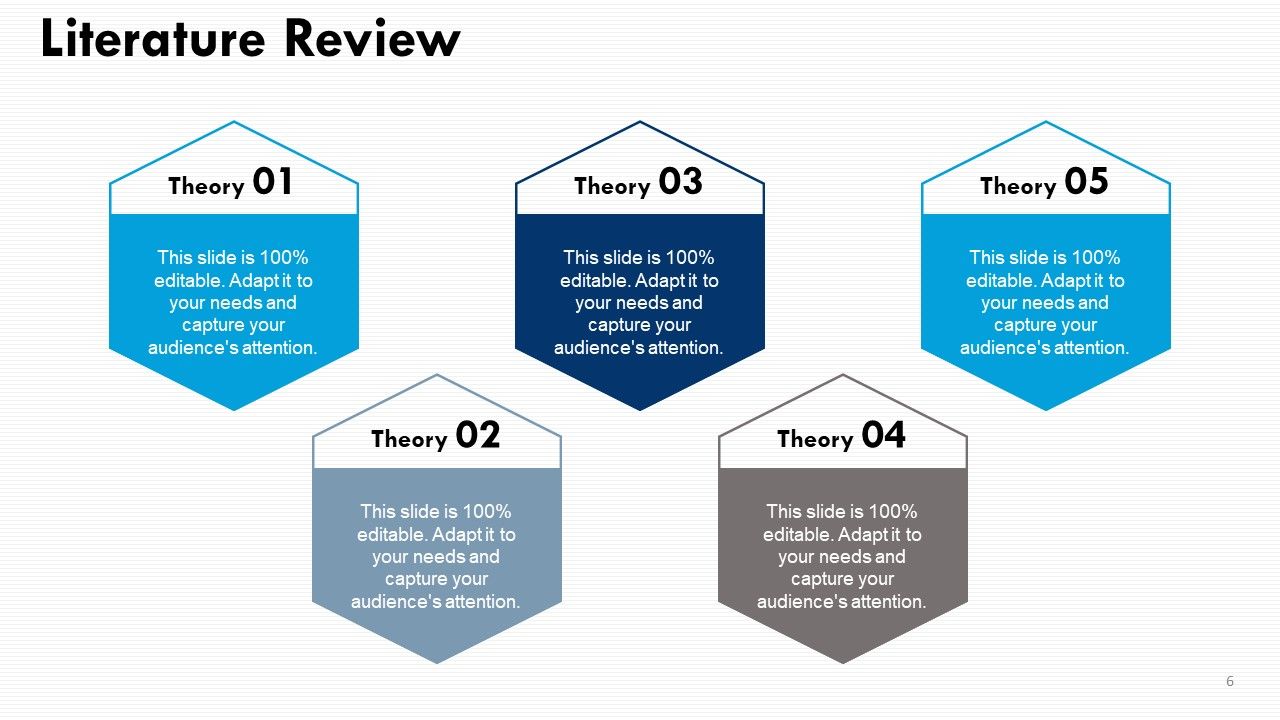
Crafted to help you compare and contrast schools of thought, this slide allows you to position each theory distinctly, aiding your audience in following the evolution of scholarly debate and research. It's designed to streamline your presentation of the theoretical framework, providing a clear, structured overview that facilitates understanding and engagement.
Template 3: Methods
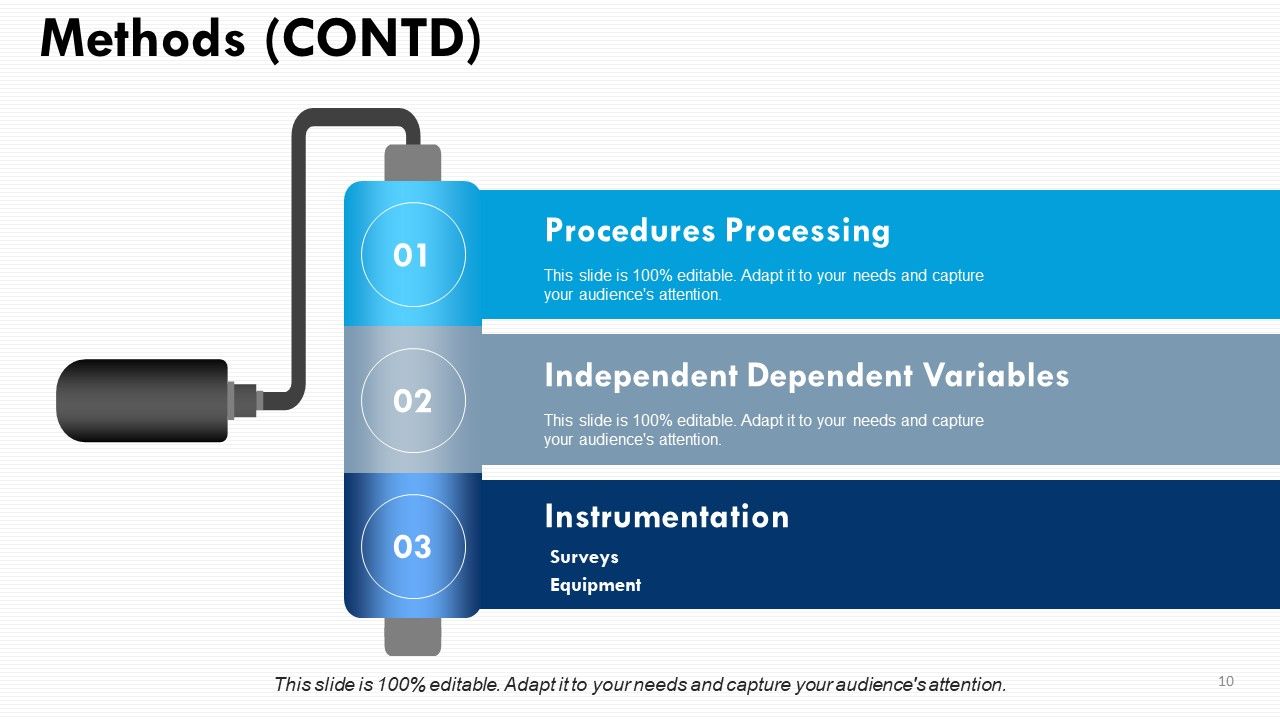
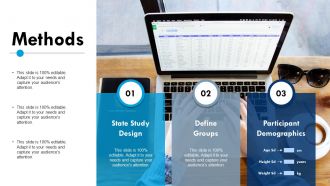
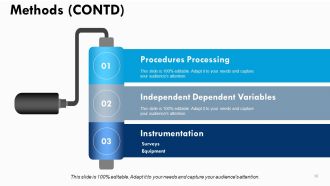
The methods template is geared for a clear presentation of your research process. Detail your procedures, define your variables, and list your instruments and tools. The layout is aimed at delivering the nuts and bolts of your methodology, ensuring your audience grasps the technical aspects of your study with ease. It is perfect for researchers seeking to present their methods in a concise and understandable format.
Template 4: Limitations
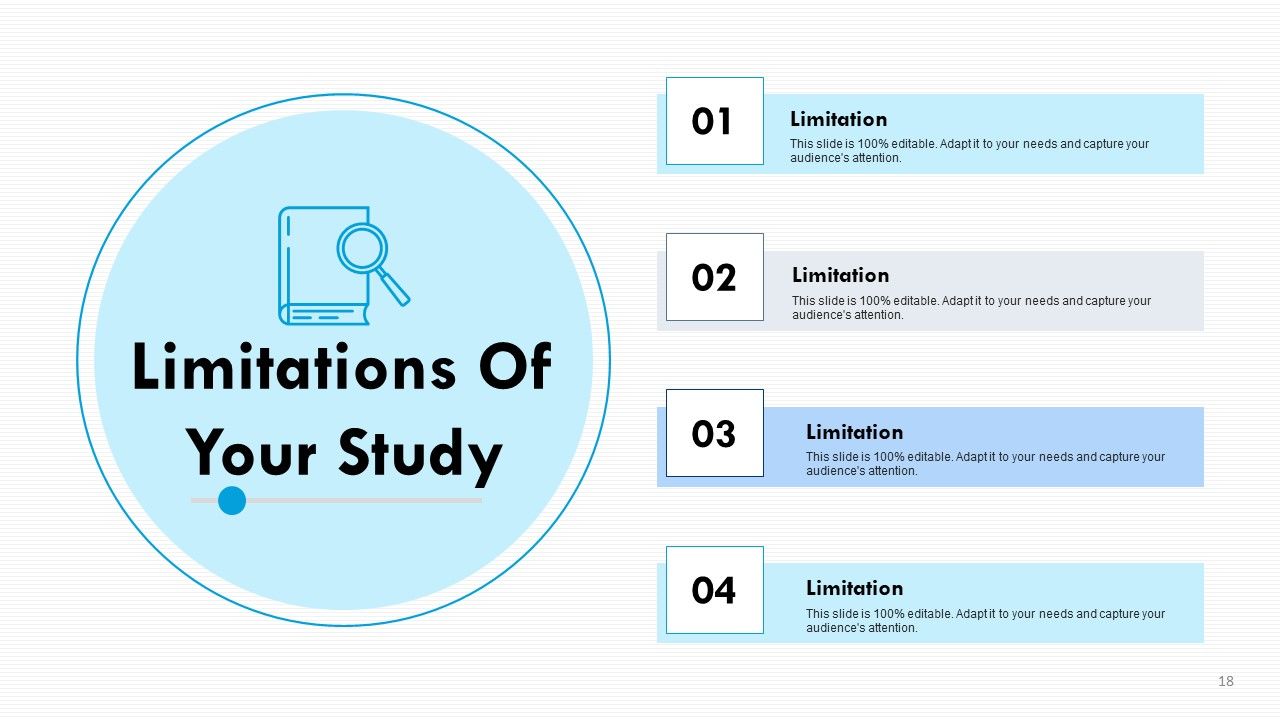
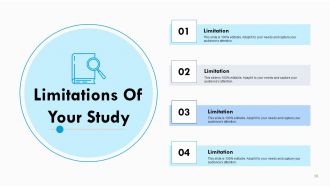
This slide encourages a discussion on factors that may affect the generalizability and applicability of your findings. Using this slide to recognize the limitations shows that you've thoughtfully considered the extent and impact of your work, bolstering its credibility. It's an essential slide for a well-rounded presentation, inviting a transparent and realistic look at what your study covers—and what it doesn't.
Template 5: Conclusions and Findings
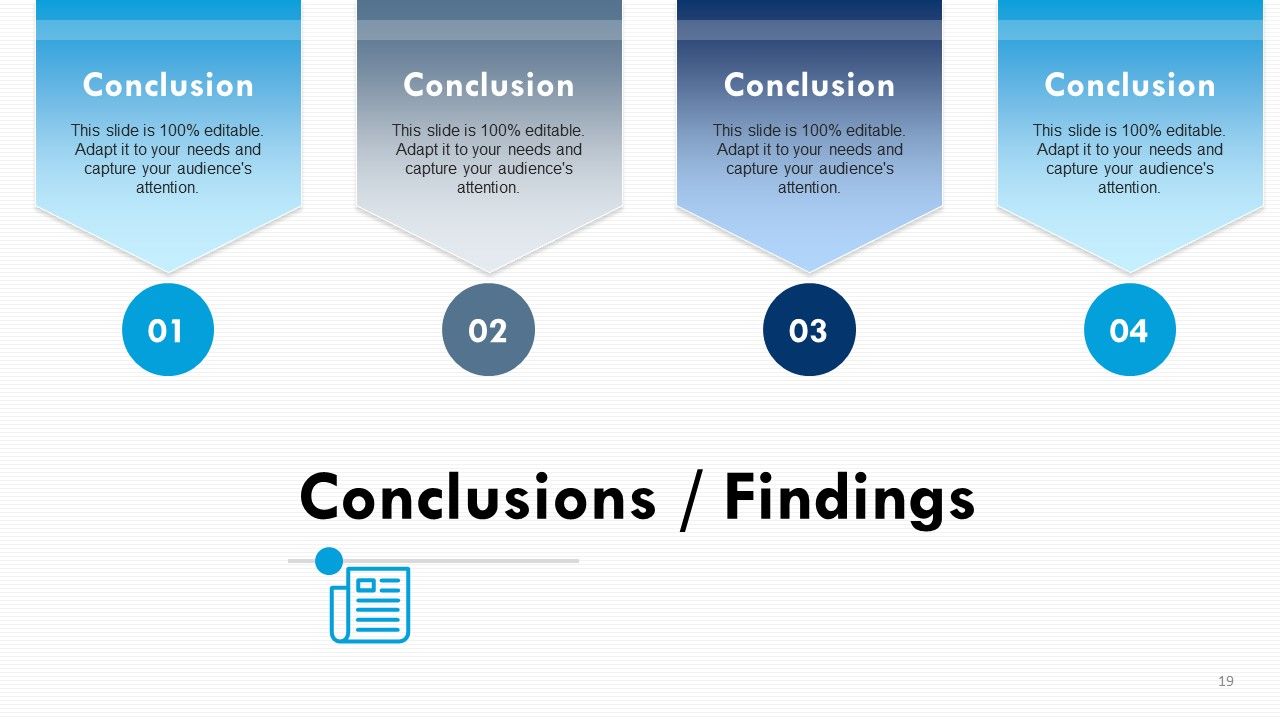
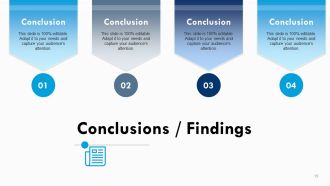
This Conclusions Slide Template is designed to summarize your research's key outcomes in a crisp manner. It's structured to guide you through consolidating your main findings into clear, impactful points. The layout helps you distill the essence of your research into digestible takeaways, ensuring that your conclusions resonate with the audience and leave a strong final impression of your study’s value and relevance. Use this slide to close your presentation with confidence and authority.
Present with Ease!
Templates are a real time-saver during the busy thesis finalization period. They let you concentrate on perfecting your content while the design is already set up for you. They're also great for simplifying complex information, making your points clear, and making your data stand out with visuals like charts and infographics. Plus, with SlideTeam's templates, you can adjust the look to fit your university's style or your project's theme, giving your presentation a professional yet personalized touch. Download now because it’s time to get smarter and ensure you clear the Thesis presentation!
Sample Ppt For Thesis Defense Powerpoint Presentation Slides with all 34 slides:
Elaborate on inflation with our Sample Ppt For Thesis Defense Powerpoint Presentation Slides. Explain the impact on the economy.





FAQs for Sample Ppt For Thesis Defense
Start with title slide and your basic info, then hit problem statement and research questions. Literature review should be short but show the gaps you're filling. Cover your methodology, findings (use lots of visuals here), and wrap up with conclusions. Honestly, spend time on limitations and future work - professors always grill you on that stuff. Make everything readable from way back since some committee member will definitely sit there. Practice timing religiously because you've got maybe 30 minutes max. Oh, and prep backup slides for random questions they'll throw at you.
Dude, good slides are honestly half the battle. Your committee can't follow brilliant research if they're squinting at tiny text or getting blinded by neon colors. Keep fonts consistent and give your slides room to breathe - white space is your friend. I always test mine on a projector first because laptop screens lie to you. Color should highlight important stuff, not look like a kindergarten art project. Minimal text works best since you'll be talking anyway. Oh and make sure your data charts are actually readable from the back row!
Honestly, less is more with slides. One main point each, max. Make your text huge - I'm talking back-row-can-read-it huge. Don't fall into the bullet point trap either. I've watched so many defenses where people just read paragraphs off their slides and everyone zones out. Your slides backup what you're saying, they shouldn't BE what you're saying, you know? Only put up visuals and data that actually matter. Oh, and try the 3-second rule - if someone can't get your slide's point in 3 seconds of looking, it's too cluttered. Trust me on this one.
Dude, go heavy on visuals - like 80% images and charts, minimal text. Big fonts too because nothing's worse than squinting at tiny bullet points from the back row. I'd say max 3-4 bullets per slide, if any. The whole point is having people look at cool visuals while YOU explain everything, not watching them read paragraphs silently. Honestly, I've sat through so many painful defenses where the person just reads their slides verbatim. Your slides should back up what you're saying, not be a teleprompter. Practice talking through your complex stuff using the visuals as jumping-off points.
Ugh, the worst thing people do is jam way too much text on slides - like paragraphs of stuff. Then you just end up reading everything word for word, which is so boring. Practice your transitions too because nothing's more awkward than dead silence while you figure out what comes next. Oh, and tech WILL break on you (happened to my roommate last month), so have a backup PDF saved somewhere. Keep slides super visual with just bullet points. Your committee actually wants to hear you talk about your research, not watch you read a novel to them. Short slides, lots of talking - that's the move.
Honestly, just use animations when they actually help explain something - like revealing data points step by step or walking through your methodology. Skip the flashy stuff though. Fade-ins are fine, but spinning text? Come on. Simple transitions between slides work great without being distracting. Every animation should have a real purpose, not just look cool. Your committee cares about your research, not whether you're a PowerPoint wizard. Oh, and definitely test everything beforehand! Animations always seem to glitch during the actual presentation. I'd keep a backup version without any animations just in case.
Oh man, storytelling is everything for your defense! Don't just dump data on them - that's how you lose people in the first 10 minutes. Start with your problem, walk them through what you did, then hit them with why it actually matters. Think of it like explaining a cool discovery to someone at a coffee shop, you know? Your committee wants to feel like they're figuring things out with you, not getting lectured. I've watched defenses where people just rattled off results and... yikes. Connect each section so there's this natural flow from one idea to the next. Make them invested in your research story.
Honestly, just make two different slide decks. Committee members want all the nitty-gritty stuff - your methodology, theoretical frameworks, the whole academic shebang. But for your peers? Skip the jargon and focus on what problem you're solving and why anyone should care about it. Trust me, nobody wants to endure endless statistical breakdowns. Start with the technical version first, then strip out the fancy terms and add more background context for the peer presentation. Oh, and keep your visuals clean either way - messy slides kill even good research.
Start with your big discovery right up front - don't make them hunt for it through all your methods stuff. Break everything into bullet points so it's not overwhelming. Charts help a ton, especially with stats that make people's eyes glaze over. I literally pretend I'm explaining it to someone who has zero background in this - if they'd be confused, your committee probably will be too. Oh, and practice saying each finding in one sentence. That's usually your slide title right there. You don't need every detail on the slide anyway since you'll be talking through it.
Okay so first thing - sort feedback into "critical" vs "whatever." Your advisor saying your methodology is confusing? Way more important than someone not liking your font choice. I'd make a quick spreadsheet tracking who said what and what you'll actually do about it. Don't just change everything though - if people contradict each other, ask them to clarify instead of guessing. Do changes in chunks so you're not constantly fiddling with tiny stuff (trust me, that's a rabbit hole). Once you make big revisions, shoot the key people an updated version with a note about what changed. They'll actually appreciate knowing you heard them.
Hey! So for thesis defenses, stick to like 20-30 slides max. Most presentations run 20-45 minutes depending on your program. I've watched people bomb with 60+ slides - honestly it's painful for everyone. Your committee already read the whole thing anyway, so just hit your main contributions and results. Don't try cramming every single detail in there. One slide per minute is a decent rule of thumb. Keep slides clean and simple so they back up what you're saying instead of becoming this giant wall of text. You want them listening to you, not squinting at overcrowded slides.
Hook them right away with something punchy - a crazy stat, bold question, or real scenario that shows why this problem matters. Those "What if I told you..." openings work great, honestly. Build from there by highlighting what's missing in current research, then drop your specific questions. Visuals are your friend here - flowcharts, diagrams, whatever makes the abstract stuff click. Number your objectives so the committee can actually follow along (trust me on this). Oh, and don't forget to spell out how your research will move the field forward. Sounds obvious but you'd be surprised how many people skip that part.
Practice with your actual setup - laptop, slides, everything. Click through while talking out loud and time it. Mirror practice feels super awkward but honestly works really well. Then try it with friends or family who can throw questions at you. I'd record yourself on your phone too - you'll catch all those "ums" and weird slide transitions. The goal is getting smooth between what you're saying and what's on screen. Don't stare at your slides the whole time either. Know your stuff well enough to actually look at your committee when you talk.
PowerPoint's probably your safest choice - committees are used to it and it handles all the academic stuff without issues. Google Slides is pretty solid too, especially since your advisor can drop comments right on there. I'd skip Prezi tbh, looks fancy but might just distract people from what you're actually saying. LaTeX Beamer's great if you're already into LaTeX and want everything looking super clean. Oh, and whatever you pick, definitely save a PDF backup. Trust me on this one - projectors have a weird way of crashing right when you need them most.
Start with your dept's grad handbook - that's where all the formatting rules are buried. Your advisor will know the current stuff too, so definitely ask them. I'd also track down some recent grads from your program since they'll know what profs actually care about vs what's just on paper. Honestly, some departments are weirdly obsessed with specific fonts and colors. If you can find recent defense presentations online, grab a few to see the real deal. Build your template early around whatever requirements you find - you don't want to be reformatting everything last minute.
-
Nice