


Sales playbook powerpoint presentation slides




Try Before you Buy Download Free Sample Product
 Impress Your
 Audience
 100%
100% Editable
 Save Hours
 of Time


Showcase sales objectives and strategies to your sales team using professionally designed content-ready Sales Playbook PowerPoint Presentation Slides. Let your sales team learn the nitty gritty of marketing and sales techniques. Enhance their marketing skills with the help of sales playbook PPT templates. Train salespeople about the methodologies, customer’s buying behavior and process, engagement experience and so on. This sales playbook PowerPoint presentation slideshow will teach your team the ways to clinch the deal. It has innovatively designed PowerPoint templates such as our customers, ideal customer profile, value proposition, customer journey mapping, buying/ sales process and content & sales tools. This complete presentation is customizable. You can make changes to the templates as per your convenience. Edit color, text, icon and font size as per your need. Add or delete content from the templates if needed. Download this easy-to-understand sales playbook PowerPoint presentation to improve sales. Cut down the anticipation with our Sales Playbook Powerpoint Presentation Slides. Get it completed before expected.
People who downloaded this PowerPoint presentation also viewed the following :
Content of this Powerpoint Presentation
Slide 1: This slide introduces Sales Playbook. State Your Company Name and get started.
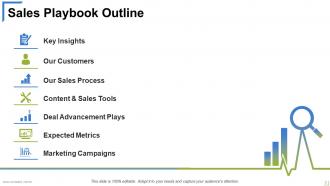
Slide 2: This slide showcases Sales Playbook Outline showing- Key Insights, Our Customers, Our Sales Process, Content & Sales Tools, Deal Advancement Plays, Expected Metrics, Marketing Campaigns.
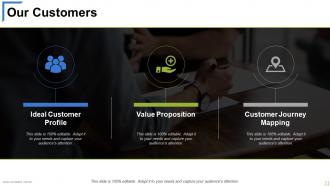
Slide 3: This slide displays Our Customers with the follwoing subheadings- Ideal Customer Profile, Value Proposition, Customer Journey Mapping.
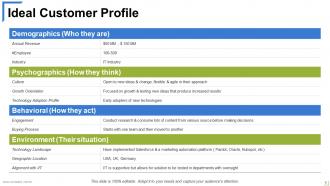
Slide 4: This slide shows Ideal Customer Profile in tabular form.
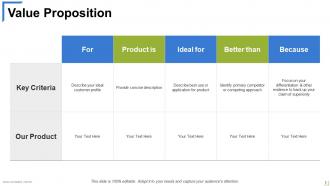
Slide 5: This slide presents Value Proposition in tabular form.
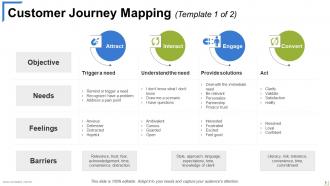
Slide 6: This slide shows Customer Journey Mapping with the following subheadings- Objective Needs Feelings Barriers with Attract, Interact, Engage and Convert.
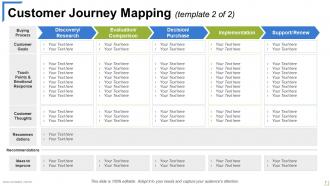
Slide 7: This slide displays Customer Journey Mapping with- Discovery/ Research, Evaluation/ Comparison, Decision/ Purchase, Implementation, Support/ Renew, Recommendations, Buying Process, Customer Goals, Touch Points & Emotional Response, Customer Thoughts, Recommendations, Ideas to Improve.
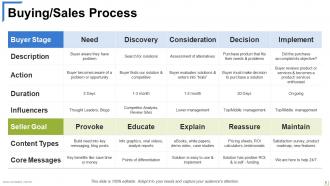
Slide 8: This slide showcases Buying/Sales Process in tabular form.
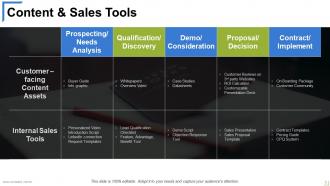
Slide 9: This slide presents Content & Sales Tools in tabular box form.
Slide 10: This is Sales Playbook Icon Slides. Use the icons as per need.
Slide 11: This slide is titled Additional slides for moving forward. You may change the content as per need.
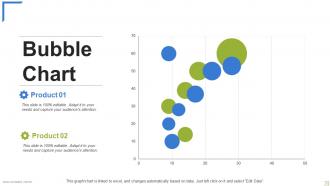
Slide 12: This slide presents a Bubble Chart for showcasing product/company growth etc.
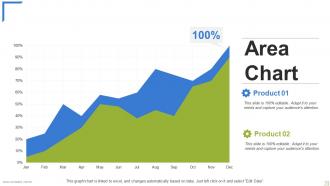
Slide 13: This slide presents an Area Chart for showcasing product/company growth etc.
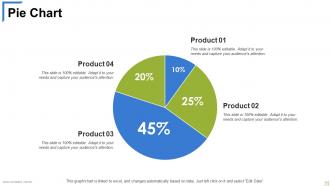
Slide 14: This is a Pie chart slide to show product/entity comparison etc.
Slide 15: This is a Bulb or Idea image slide to show information, innovation, specifications etc.
Slide 16: This is a Target image slide. State targets, goals etc. here.
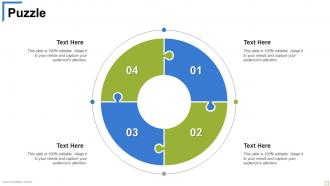
Slide 17: This is a Puzzle image slide to show information, specifications etc.
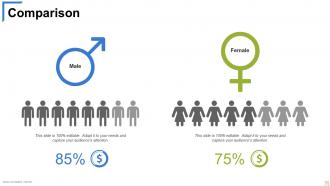
Slide 18: This is a Comparison slide to compare product/entities etc.
Slide 19: This is a Thank You slide with Address# street number, city, state, Contact Number, Email Address.
Sales playbook powerpoint presentation slides with all 19 slides:
Fight for the female cause with our Sales Playbook Powerpoint Presentation Slides. Bring her concerns to the forefront.

FAQs for Sales playbook
Your sales playbook should cover the essentials first - customer profiles, competitor info, objection responses, and your actual sales process with clear stages. Don't forget email templates and discovery questions either. Honestly, most playbooks I've seen just sit there looking pretty while reps wing it anyway. Skip the corporate jargon and write stuff your team will actually use. Real conversation starters work way better than scripted robot-speak. Pricing guidelines are crucial too. Start simple with what's causing your biggest headaches right now, then expand from there.
So basically, new hires get a clear roadmap instead of figuring everything out the hard way. Your training stays consistent - everyone learns the same objection handling tricks and qualifying questions that actually convert. Think of it as copying your best salesperson's playbook (way better than the random mentoring lottery most places do). Onboarding happens faster since people aren't starting from scratch or picking up weird habits. Oh, and start by recording your top performers' real calls - those become your practice templates. Honestly beats the "sink or swim" approach most companies still use.
Honestly, you can't build a decent sales playbook without data - otherwise you're just shooting in the dark. Look at your conversion rates first, see what messaging actually clicks with different customers. Your top performers probably have patterns you haven't noticed yet. Track the important stuff now so you've got real numbers to work with later. I'd focus on what's actually moving the needle instead of what feels right. Oh and conversion rates by stage are huge - that's where you'll spot the real bottlenecks. Build your playbook around what the data shows, not hunches.
Quarterly at minimum, but monthly tweaks work way better. Markets shift fast and your competitors aren't sitting still either. Customer feedback changes constantly too - what worked last quarter might sound totally off now. I've seen reps bomb calls because they're stuck using scripts from six months ago. Pretty brutal to watch honestly. Think of it more like updating your playlist than writing a manual once and calling it done. Just set a monthly reminder to check your win/loss numbers and ask the team what's actually working out there.
So basically you want to tweak your messaging and objection handling for each segment's pain points. Enterprise folks? They're all about ROI and how it'll integrate with their existing mess of systems. SMBs just want quick wins and something that won't make their head spin. Discovery questions should be different too - plus your case studies and follow-up timing. The conversation flow is honestly completely different between segments, which threw me off at first. I'd start with your top 2-3 segments and really dig into how they actually make buying decisions. Makes the whole process way smoother once you nail that part down.
Honestly? Don't overthink it and create some massive 50-page monster that nobody will touch. I've seen teams do this - they try covering every possible scenario and it just becomes overwhelming. Here's what actually works: start simple with your main processes and the objections you hear constantly. Build from there. Also, and this is huge - talk to your actual salespeople when you're writing it, not just the managers. They know what questions come up daily. Oh, and update the thing regularly! Your market shifts, so should your playbook. Keep it lean and useful.
Honestly, a sales playbook just makes sure everyone on your team doesn't sound like they're making stuff up as they go. Your prospects get the same solid experience whether they talk to Sarah or Mike. Document what your best salesperson actually says - their scripts, how they handle objections, follow-up timing, all that good stuff. Then teach it to everyone else. Customers get faster responses and smoother handoffs between team members. The cool part is you can map out exactly how you want prospects to move through your process, then train people to guide them there. Way better than everyone doing their own random thing!
Honestly, your CRM is probably sitting on a goldmine of feedback you're not using. Get your sales team talking - like, actually sharing what prospects say during calls, especially the objections that keep coming up. That's where the real insights are. Update your playbook every quarter with fresh talk tracks and objection scripts based on what's actually happening in conversations. Sometimes it's not even about what you're saying but the timing, you know? Don't forget to look at your whole process too. Won deals tell you what worked, but lost deals? That's where you learn what didn't land.
Dude, those PDF playbooks are basically digital paperweights at this point. Your CRM can actually pull up the right content automatically - like showing objection responses when you're stuck on a call. Mobile apps are clutch too, especially when you're scrambling in your car before a big meeting (we've all been there). Video clips and search bars make everything way easier to find than scrolling through endless docs. Oh, and real-time updates mean you're not using outdated pricing or whatever. Just don't go crazy with fancy tools - pick stuff that meshes with what you're already doing.
Track your conversion rates at each funnel stage - that's where the real money insights are. Sales cycle length and win rates matter too, obviously. But honestly? Time-to-first-meeting and follow-up response rates are super underrated metrics. Most people ignore them but they'll show you exactly where your process is broken. Activity stuff like calls and emails versus actual results - yeah, don't skip that either. Oh, and run a baseline for like a month before rolling out your playbook, then check quarterly. Otherwise you're just guessing if anything actually worked.
So basically, build up a collection of real customer stories - both wins and failures - that your sales team can actually use in conversations. Skip the boring feature lists. Instead of just rattling off benefits, they pull out relevant stories that hit prospects emotionally. Teams I know do this really well by matching specific stories to different buyer types. Each story needs that simple structure: problem, what you did, how it worked out. Honestly, if your reps can't memorize 3-5 solid stories and adapt them on the fly, they're missing huge opportunities. It's way more powerful than any pitch deck.
Make it super scannable - bullet points, checklists, headers that actually make sense. Short sections work best because who's gonna read paragraphs when they're trying to close a deal? Include real scripts and examples they can copy-paste, not just fluffy theory stuff. If it's digital, make sure it's searchable. Organize everything by sales stage or common situations they face. Here's the thing though - you gotta test it with your actual team first. Don't just assume it'll work. Ask them straight up: "Would you actually pull this out when you're panicking mid-call?" Their honest feedback is what'll make or break it.
Honestly, the companies crushing it right now all have solid sales playbooks. Your reps shouldn't be winging objection handling or prospect qualification - give them actual frameworks that work. Here's the thing though: most playbooks just collect dust somewhere. The good ones get updated constantly based on what's actually happening in real deals. Document what your top performers do differently first. That becomes your foundation. Then your whole team can hit those same numbers instead of just hoping they'll figure it out. It's basically bottling up all your best practices so they don't walk out the door with someone.
Honestly, it comes down to who's buying and how fast they decide. B2C is all about hitting emotions and getting people to buy NOW - think impulse purchases, social proof, that whole "limited time offer" thing. B2B? Totally different beast. You're dealing with committees who take forever to make decisions, multiple people who all have opinions, and way longer sales cycles. Your B2B playbook needs those nurturing sequences because you might be talking to someone for months before they even get budget approval. B2C moves fast, B2B moves slow but pays more. Make sense?
You definitely can't build a good sales playbook solo. Marketing has all the buyer personas and messaging angles. Product teams know the technical stuff and what's coming next. Customer success sees why people actually stick around (or don't), and support hears every complaint under the sun. Some of my best playbook ideas honestly came from grabbing coffee with random people from other departments - suddenly you understand why everyone asks the same weird question. Each team holds different pieces of the customer story that you'd totally miss otherwise. Before writing anything, just do quick 15-minute chats with each department head. Trust me on this one.
No Reviews