

Sales playbook template powerpoint presentation slides





Try Before you Buy Download Free Sample Product
 Impress Your
 Audience
 100%
100% Editable
 Save Hours
 of Time


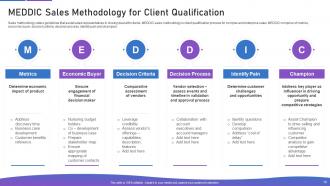
The sales playbook is considered an essential document that helps the sales team deploy best practices, tactics, and strategies along the various stages of the selling process. It ensures the consistent engagement of sales and marketing professionals. Here is an efficiently designed template on Sales Playbook that caters to details about the firms offerings and sales performance. It covers guidelines to progress through sales process journey including key activities across sales process, sales meeting plan, product positioning and messaging, ideal customer profile development, aligning buyers journey with the sales process, customer experience journey mapping, etc. The playbook covers details about different sales methodologies in MEDDIC, SNAP selling, gap selling for deal closure. It covers details about sales pitching through content with sales content management, content planning worksheet, prospects nurturing content program, potential buyer leads nurturing plan. Moreover, it caters to initiatives to manage sales team productivity through effective communication, sales enhancement checklist, productivity enhancement management system. Sales workforce is managed through developing sales team reporting structure, identifying key people involved, etc. Sales performances and activities are tracked through essential metrics and dashboards. Get access to this 100 percent editable template now.
People who downloaded this PowerPoint presentation also viewed the following :
Content of this Powerpoint Presentation
Slide 1: This slide introduces Sales Playbook Template. State Your Company Name and begin.
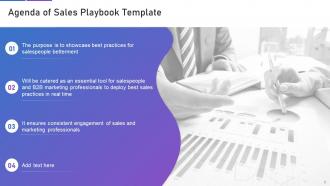
Slide 2: This slide shows Agenda of Sales Playbook Template.
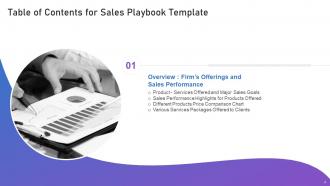
Slide 3: This slide presents Table of Contents for Sales Playbook Template.
Slide 4: This slide shows Table of Contents for Sales Playbook Template.
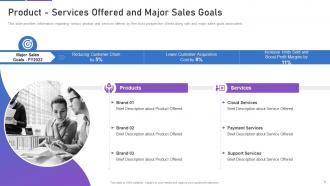
Slide 5: This slide displays various product and services offered by firm to its prospective clients.
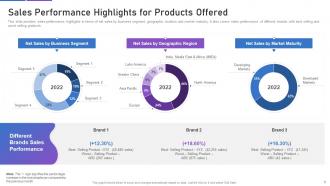
Slide 6: This slide represents sales performance highlights in terms of net sales by business segment, geographic location, etc.
Slide 7: This slide shows product price comparison chart that captures information about price per unit, change over list price, etc.
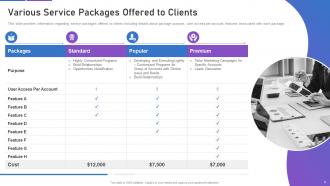
Slide 8: This slide presents Various Service Packages Offered to Clients.
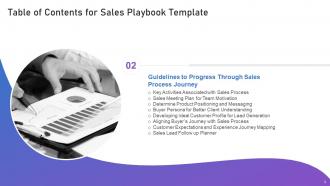
Slide 9: This slide shows Table of Contents for Sales Playbook Template.
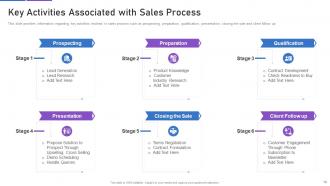
Slide 10: This slide displays key activities involved in sales process such as prospecting, preparation, qualification, etc.
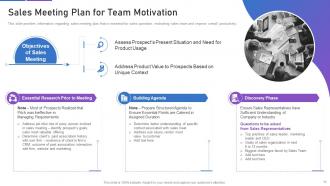
Slide 11: This slide represents sales meeting plan that is essential for sales operation, motivating sales team and improve overall productivity.
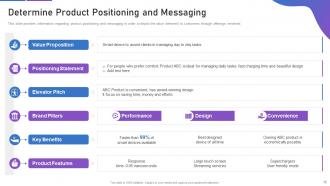
Slide 12: This slide shows product positioning and messaging in order to depict the value delivered to customers.
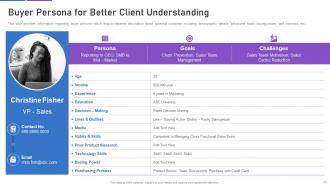
Slide 13: This slide presents buyer persona which depicts detailed description about potential customer.
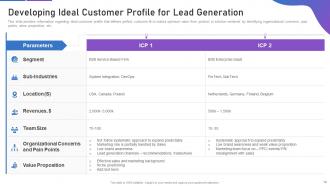
Slide 14: This slide shows Developing Ideal Customer Profile for Lead Generation.
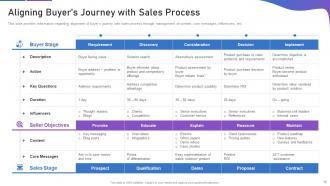
Slide 15: This slide displays alignment of buyer’s journey with sales process through management of content, core messages, influencers, etc.
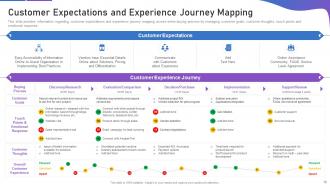
Slide 16: This slide represents Customer Expectations and Experience Journey Mapping.
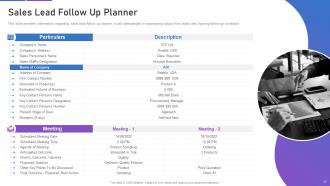
Slide 17: This slide shows sales lead follow up planner to aid salespeople in maximizing output from leads and tracking follow-up schedule.
Slide 18: This slide presents Table of Contents for Sales Playbook Template.
Slide 19: This slide shows guidelines that assist sales representatives in closing deal with clients.
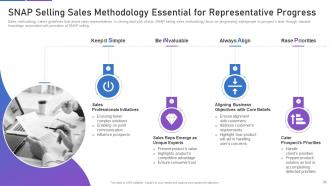
Slide 20: This slide displays SNAP Selling Sales Methodology Essential for Representative Progress.
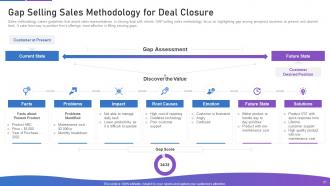
Slide 21: This slide represents Gap Selling Sales Methodology for Deal Closure.
Slide 22: This slide shows Table of Contents for Sales Playbook Template.
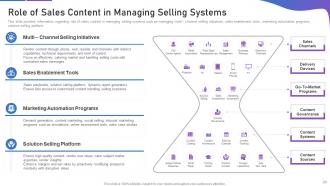
Slide 23: This slide presents Role of Sales Content in Managing Selling Systems.
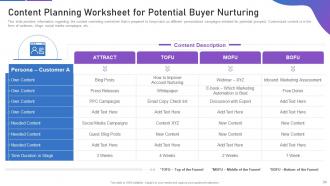
Slide 24: This slide shows content marketing worksheet that is prepared to keep track on different personalized campaigns.
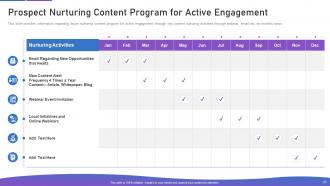
Slide 25: This slide displays Prospect Nurturing Content Program for Active Engagement.
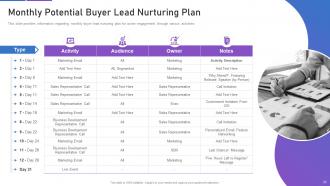
Slide 26: This slide represents regarding monthly buyer lead nurturing plan for active engagement through various activities.
Slide 27: This slide shows Table of Contents for Sales Playbook Template.
Slide 28: This slide presents effective communication among sales management team through weekly updates, monthly and quarterly review.
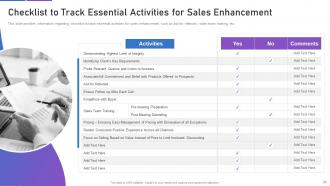
Slide 29: This slide shows Checklist to Track Essential Activities for Sales Enhancement.
Slide 30: This slide displays Sales Management Systems for Productivity Enhancement.
Slide 31: This slide represents Table of Contents for Sales Playbook Template.
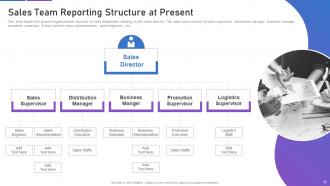
Slide 32: This slide depicts the present organizational structure of sales department heading by the sales director.
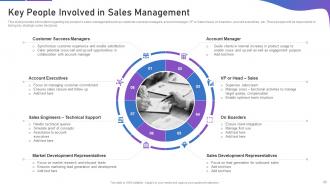
Slide 33: This slide presents key people in sales management such as customer success managers, account manager, etc.
Slide 34: This slide shows sales workforce and incentive plan to manage future staffing requirement, present workforce, etc.
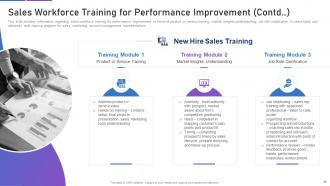
Slide 35: This slide displays Sales Workforce Training for Performance Improvement.
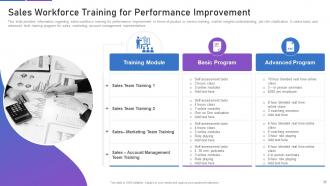
Slide 36: This slide represents sales workforce training for performance improvement in terms of product or service training.
Slide 37: This slide shows Table of Contents for Sales Playbook Template.
Slide 38: This slide presents Various Metrics to Track Sales Team Performance.
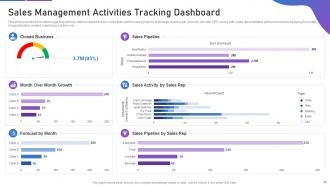
Slide 39: This slide shows various metrics catered to track sales team performance in terms of average revenue per account.
Slide 40: This slide displays Icons for Sales Playbook Template.
Slide 41: This slide is titled as Additional Slides for moving forward.
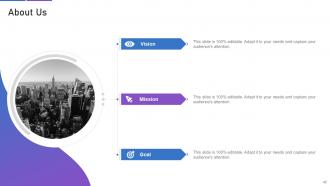
Slide 42: This is About Us slide to show company specifications etc.
Slide 43: This is a Financial slide. Show your finance related stuff here.
Slide 44: This slide shows Venn diagram with text boxes.
Slide 45: This slide displays Roadmap with additional textboxes.
Slide 46: This slide represents Puzzle with related icons and text.
Slide 47: This slide shows Post It Notes. Post your important notes here.
Slide 48: This is a Thank You slide with address, contact numbers and email address.
Sales playbook template powerpoint presentation slides with all 48 slides:
Use our Sales Playbook Template Powerpoint Presentation Slides to effectively help you save your valuable time. They are readymade to fit into any presentation structure.






FAQs for Sales playbook template
So for your sales playbook, start with ideal customer profiles and buyer personas - that's your foundation. Then add your value prop, competitive battle cards, and map out each stage of your sales process. Objection handling scripts are clutch (seriously, reps always need these). Include email templates, pricing guidelines, and pick a qualification framework like BANT or MEDDIC. Oh, and don't forget onboarding stuff for new people. Here's the thing though - if it's not searchable and you can't update it easily, nobody will use it. I'd build one section first, test with your team, then expand.
So basically, a sales playbook gets everyone doing things the same way - same messaging, same process for qualifying leads, same objection responses. No more random approaches or confusing prospects with different info. Your new hires won't be totally lost either since everything's written down somewhere. Honestly, I think the best move is looking at what your top salespeople already do well and just... copying that? Like, why reinvent the wheel when Sarah's closing rate is already crushing it. Document her techniques and make that your starting point.
Figure out each buyer's pain points and how they like to communicate first. Technical people need completely different scripts than finance folks - honestly, it's like speaking two languages. Build separate playbook sections for each persona with their own messaging and objection responses. I've watched sales teams literally switch their entire pitch mid-conversation based on who walks in the room. Test different email templates by persona to see what actually works. The meeting agendas should be different too. Start with A/B testing your emails - that's usually the easiest way to see which approach resonates.
Honestly, just bake the tracking right into your playbook template from the start. Add spots for conversion rates, deal sizes, time-to-close - the usual suspects. But here's what most people miss: create spaces where your reps can actually log what happened vs what the playbook said should happen. That's where the gold is. Hook it up to your CRM so data flows automatically instead of making everyone do manual entry (because let's be real, nobody wants that extra work). Pick maybe 3-4 metrics max to start - don't go crazy with it. The whole point is making analytics feel natural, not like homework.
Look, your playbook is useless if nobody actually follows it. New reps will just do whatever feels right instead of sticking to what works. You've gotta train them properly - walk through each section, do some role-playing so they don't freeze up on calls. Pair them with your best people too, that's huge. I always think the buddy system works way better than just handing someone a manual. Keep checking in afterward because honestly? Most people forget half of what they learned in training. Short sessions work better than cramming everything into one day.
Honestly, just start with Google Docs if you want something dead simple. Notion's pretty solid too - way better for keeping things organized and your team can actually collaborate without wanting to throw their laptop out the window. SharePoint and Confluence work but they're kinda clunky IMO. If you've got budget and want to get fancy, check out Seismic or Highspot. They'll track who's actually reading your playbook (spoiler: probably not as many as you'd hope) and hook up to your CRM. But seriously, don't overthink it at first. Whatever platform everyone already uses is gonna be your best bet.
Start by building a collection of go-to stories for different sales situations - customer wins, problem-solving moments, big transformations. I'd say aim for 2-3 solid stories per stage. Stories stick way better than boring feature lists anyway. Structure them simply: what problem they faced, your solution, actual results with numbers if you've got them. Each one should hit a pain point your prospects deal with too. Oh, and definitely practice saying them out loud - sounds obvious but you don't want to come off like you're reading a script.
Honestly, most people screw this up by going way too generic or making it crazy complicated. Like, if it's so broad that it could apply to any company, it's useless. And if it's a 50-page novel, nobody's reading that thing. Don't just steal what worked at some other company either - I've seen that fail so many times. Focus on your actual common scenarios first, not every weird edge case that might happen once a year. Oh, and definitely get your sales team involved from the start instead of building it solo. Keep it simple initially, then add stuff based on what actually works.
Honestly, I'd check it monthly if your market's moving fast - quarterly at bare minimum though. Big overhauls usually happen every 6 months or when something major shifts (new products, different markets, your win rates start tanking). Here's what I actually do: set a recurring reminder to audit just one section at a time. Way less overwhelming than tackling the whole thing. And definitely start by asking your top performers what's changed in the last few months - they'll tell you what's actually working versus what you think should work. Don't let that playbook go stale on you.
Your playbook can't just sit there collecting digital dust. Get people using it in daily meetings and practice sessions. Track what sections actually get clicked - most teams totally skip this part then act shocked when nobody uses it. Have your experienced reps mentor newbies with real playbook scenarios. When someone nails a deal following the playbook? Make noise about it. Update based on what your team tells you from the field. Honestly, half the battle is just making it feel alive instead of some boring manual nobody wants to touch.
Dude, you absolutely need competitive battle cards in there. Break down each major competitor - strengths, weaknesses, pricing, all that stuff. Basically cheat sheets for every sales convo. Map out the objections competitors throw at your product and give your team solid comebacks. I've watched teams get absolutely demolished going in blind against established players - it's not pretty. Win/loss stories are gold too. Shows exactly how other reps positioned against specific competitors and actually won deals. Oh, and don't try to do everything at once. Pick one competitor this week, build out their profile, test it with your team first.
Honestly, mix hands-on stuff with the formal training - that combo works best. Get your team doing role-plays with real scenarios from the playbook instead of just reading it (way more engaging). Throw in some short video modules they can watch whenever, plus regular team meetings to talk through actual wins and fails. Pair your newer people with someone who's already crushing it with the playbook. Don't make it a one-and-done thing though - that never sticks. Monthly check-ins help reinforce the important bits and let you tweak things based on what's actually happening out there.
Honestly, just talk to your sales team regularly - like actually talk to them. Monthly feedback sessions work great where they can dump all their wins, losses, and whatever's frustrating them about the current playbook. Numbers matter too though - track conversion rates and deal velocity because that stuff tells the real story. Set up a quick feedback form or maybe a Slack channel so people can share ideas whenever instead of waiting around for meetings. Makes it way easier for everyone. Then here's the thing most people screw up - actually update the playbook every quarter based on what you're hearing, otherwise your team will just stop bothering to give feedback.
Dude, case studies are like your secret weapon for sales calls. Real stories beat empty promises every time - prospects actually believe you when you show them how Company X boosted revenue 30% with your product. Way more powerful than just talking about features, you know? Stock your playbook with maybe 4-5 different examples covering various industries and problems. Sort them by pain points so your team can grab the perfect story mid-conversation. Nothing kills objections faster than "here's exactly how we solved this same problem for another client." Trust me on this one.
Your sales playbook needs to be flexible - same structure, different tactics. Inbound sections should focus on qualifying leads and nurturing (they're already interested, which is half the battle). Outbound is trickier - you need cold outreach scripts, prospecting methods, and way more objection handling since people hate being sold to. I'd build modular sections you can mix and match. The template stays the same but swap out messaging based on whether prospects found you or you're hunting them down. Oh, and label everything clearly so your team doesn't accidentally use cold scripts on warm leads.
-
Perfect template with attractive color combination.