


Timeline Representing Employee Engagement Process




Try Before you Buy Download Free Sample Product
 Impress Your
 Audience
 100%
100% Editable
 Save Hours
 of Time


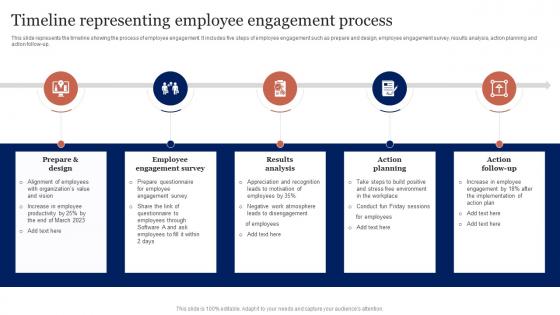
This slide represents the timeline showing the process of employee engagement. It includes five steps of employee engagement such as prepare and design, employee engagement survey, results analysis, action planning and action follow up.
People who downloaded this PowerPoint presentation also viewed the following :
Timeline Representing Employee Engagement Process with all 6 slides:
Use our Timeline Representing Employee Engagement Process to effectively help you save your valuable time. They are readymade to fit into any presentation structure.





FAQs for Timeline Representing
So employee engagement got serious in the '90s when companies finally started actually measuring it instead of just assuming happy workers = productive workers. Then the 2000s brought pulse surveys and feedback loops. Around 2010, we got all these fancy platforms and recognition tools - honestly some were pretty gimmicky. The pandemic changed everything though. Remote work, mental health, flexibility - all became must-haves overnight. Now it's all about personalizing approaches for each employee, which makes sense but also sounds exhausting to manage. My advice? Skip the annual survey thing and just listen to people regularly.
Don't use the same survey for everyone - that's a rookie mistake. New hires need quick check-ins about whether they actually understand their job and if anyone's helping them out. Those first 90 days are make-or-break territory. For your regular employees, quarterly surveys work better - ask about growth stuff, their manager (that's where drama lives), and if they're drowning in work. Exit interviews are honestly where you get the real tea about what went wrong. Map out when you're already talking to people and see where you're missing obvious chances to ask how things are going.
Honestly, your managers are make-or-break here. They set the whole vibe from day one when new people start. The onboarding part is huge - leaders need to actually connect and explain what you're all about. But here's where most places screw up: they don't keep it going. Regular check-ins matter way more than people think. Your middle managers especially, since they're who employees deal with every single day. Train them to coach, not just dump tasks on people. Oh, and audit how often they're doing real one-on-ones - most avoid them like the plague.
Interactive platforms work really well for onboarding - VR training actually makes boring compliance stuff tolerable. Pulse surveys catch problems before they blow up. Slack keeps remote people in the loop without feeling forced. Recognition platforms are solid for celebrating wins publicly. Learning systems and AI assessments show you're serious about helping people grow (which honestly makes a huge difference). Don't dump every tool at once though. Match what you use to where someone is in their journey. Way more effective than the spray-and-pray approach most companies try.
Honestly, the biggest pain is when companies launch all these engagement programs then just... abandon them. Employees get so burned out from that cycle. Leadership keeps switching priorities every few months too, which doesn't help. Measuring real progress is tough - surveys only tell you so much, you know? Different teams need totally different approaches. What clicks with sales will probably bomb with your engineering folks. My advice? Pick maybe 2-3 things max and actually stick with them for a full year. And please train your managers to have actual conversations, not just those weird scripted check-ins.
Honestly, those first few weeks totally set the vibe for someone's whole experience at your company. Get it right and people stick around way longer - mess it up and they're mentally checked out before they even settle in. I've watched this happen so many times, it's wild. The crazy rushed first days just create this lingering "meh" feeling that can last months. But when you actually structure things well - clear expectations, help them build relationships, real support - people feel like they matter from day one. Don't just dump paperwork on them either. Connect them to the actual purpose and culture.
Honestly? Just sit down with them one-on-one first. Half the time it's something totally fixable - like they don't know what you actually expect from them or feel passed over for good projects. Give them real ownership of something they'll care about, not random busywork. I've seen people check out simply because they're dying of boredom! Check if they're drowning in work or the opposite - completely under-challenged. Yeah, recognition matters too, but be specific about what they did well. Don't just treat the obvious stuff you see on the surface. Most people bounce back once you fix what's really bugging them.
Honestly, the numbers on this are pretty solid - engaged teams see about 23% higher profits and 18% better productivity. Makes sense though, right? People who actually give a damn show up more, stick around longer, and don't half-ass the customer service. You'll probably notice productivity improvements in like 3-6 months, but the real money impact takes closer to a year. Oh, and definitely measure where you're at now first - otherwise you won't know if anything's actually working. It's one of those things that seems obvious but tons of companies still ignore it.
Get feedback first, then build your timeline around what people actually care about. I learned this the hard way when a whole engagement plan flopped because we didn't ask anyone what they wanted. Your team will straight up tell you if you're rushing things or wasting time on pointless stuff. Set up regular check-ins - monthly surveys work great, or just grab coffee with different people quarterly. Don't make feedback an afterthought though. Bake it right into your schedule so you can switch gears when something's not working.
So here's what I've learned from dealing with this stuff - different generations want totally different things. Boomers love in-person recognition and those classic promotion ladders. Gen X? They just want you to leave them alone and respect their time outside work. Millennials need constant feedback and want to feel like their job actually matters (honestly they can be exhausting but they'll work their asses off if you nail it). Gen Z expects flexibility and mental health resources, plus they want to see progress fast. Best bet is actually asking each group what motivates them instead of guessing.
Honestly, just tell people what's going on - even if you don't have all the details figured out yet. People hate being kept in the dark way more than dealing with uncertainty. I've watched so many managers think they're helping by staying quiet, but it just makes everyone paranoid and creates wild rumors. Do frequent check-ins instead. Acknowledge that transitions suck. Give your team actual ways to help with the changes happening. Oh, and don't forget to celebrate the small stuff along the way! Weekly pulse surveys or quick huddles will help you spot problems before they blow up into bigger issues.
Yeah, remote work totally stretches out how long it takes people to feel connected - usually adds months to the whole process. You miss all those random coffee machine chats and quick desk drop-bys that actually build relationships. Honestly, it's kind of annoying how much extra work it creates for managers. But you've got to be super intentional about it now. Schedule regular one-on-ones, throw in some virtual coffee breaks, maybe even those cheesy team-building things (I know, I know). Point is, connection won't just happen anymore - you have to actively plan for it or people stay disconnected way longer than they should.
Honestly, the biggest red flags are pretty obvious once you know what to look for. Engagement scores tanking, people quitting left and right, productivity dropping. But also watch for the subtle stuff - more sick days, people skipping meetings or company happy hours. I swear you can just feel it in the air sometimes when morale sucks. HR complaints spike. Managers start hitting more resistance on projects. The trick is spotting this early before everything goes to hell. Monthly check-ins work way better than waiting for some annual survey, trust me.
Figure out what you actually want to achieve first - more revenue, keeping people around longer, whatever. Then build your engagement stuff around those specific goals. Like if turnover's killing you, focus on career development and making sure managers don't suck. Sales team underperforming? Recognition programs tied to hitting numbers work pretty well. Most companies just do random team-building nonsense that doesn't connect to anything real. That's why half this stuff fails spectacularly. Oh, and track both engagement scores AND the business results you're chasing. Otherwise you're flying blind.
Your workplace culture is basically the foundation - it controls how fast employees actually start caring. Toxic environments? You're talking months or years before you see real change, doesn't matter what programs you launch. I've watched companies blow tons of cash on engagement surveys while their managers are absolute nightmares. Makes no sense. But decent cultures that already have trust and communication going? Those can shift engagement in weeks instead of quarters. My advice - tackle the obvious culture issues first. Everything else builds from there, and you'll actually see your efforts pay off.
-
Huge collection of high-quality templates. Worth each penny.
-
I am glad to have come across Slideteam. I was searching for some unique presentations and templates for my business. There are a lot of alternatives available here.