


Employee Onboarding And Engagement Workflow Chart




Try Before you Buy Download Free Sample Product
 Impress Your
 Audience
 100%
100% Editable
 Save Hours
 of Time


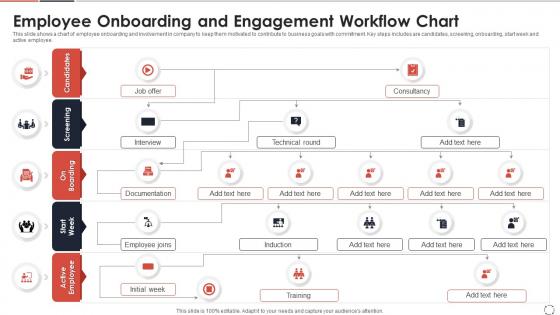
This slide shows a chart of employee onboarding and involvement in company to keep them motivated to contribute to business goals with commitment. Key steps includes are candidates, screening, onboarding, start week and active employee.
People who downloaded this PowerPoint presentation also viewed the following :
Employee Onboarding And Engagement Workflow Chart with all 6 slides:
Use our Employee Onboarding And Engagement Workflow Chart to effectively help you save your valuable time. They are readymade to fit into any presentation structure.





FAQs for Employee Onboarding And
Okay so the main thing is getting their tech and paperwork done BEFORE day one - nobody wants to spend their first morning filling out forms. Give them clear expectations about what they'll actually be doing, introduce them to the team properly, and don't just throw them in the deep end. Assign someone as their buddy (not their boss though, that gets weird). Schedule check-ins for the first few months and give them real work early on. Oh and honestly? Start planning all this before they even say yes to the job. People remember how you treat them in those first weeks.
Start with your company branding and photos of actual employees - way better than those weird stock photos everyone uses. Break content into role-specific paths so people aren't sitting through irrelevant stuff. Add interactive bits like polls or Q&A sections to keep them awake. Leave placeholders where managers can drop in team-specific info. Progress indicators help too since nobody likes wondering how much is left. The trick is staying consistent but still making it feel personal to their actual job. Audit what you've got now and spot where you can make it less generic.
Honestly, culture is everything for onboarding. You've gotta show new hires how your team actually works, not just hand them a task list. It's like - everyone else knows the unwritten rules, but they're completely lost. I've seen people struggle for months because nobody explained the real day-to-day dynamics. What works is letting them see your values in action. Have them sit in on meetings, watch how decisions get made, see how people interact. Don't just tell them about culture, make it obvious from their first week. Otherwise they'll feel like outsiders forever.
Honestly, digital onboarding platforms are a game changer - they handle all the boring stuff automatically. Document signing, IT requests, training assignments... new hires just move through it without waiting around for someone to manually push things along. Chatbots work surprisingly well for basic questions now (though they're still kinda awkward sometimes). Your managers will actually love the digital checklists since everything gets tracked for them. Start by mapping what you're doing now, then figure out which parts are just mindless busywork that tech can take over. Frees you up for the stuff that actually matters.
Honestly, you need feedback at multiple stages - week one, month one, and three months work well. Quick pulse surveys are your friend here. Exit interviews give you the brutal truth, though hopefully you won't have many of those! Set up anonymous suggestion boxes or simple online forms since people are way more honest when they can't be identified. Regular manager check-ins help too, but here's the thing - collecting feedback means nothing if you don't actually do anything with it. Look for patterns, fix the obvious problems, then tell people what you changed. Oh, and track both the feelings stuff and hard metrics like how long it takes people to actually be productive.
Mix up your presentation styles so everyone can actually follow along. Throw in some visual slides with charts for the visual people, add polls or breakout discussions for hands-on learners. Don't forget to explain things out loud too - some folks just need to hear it. I always do a quick demo because honestly, that's when people perk up the most. Give them handouts they can take home, and if you can record it, even better. Some people need to rewatch stuff later. The whole point is hitting the same info from different angles so nobody feels lost.
Track the obvious stuff first - time to productivity, 30/60/90 day retention, manager satisfaction scores. But completion rates for onboarding modules matter too, plus how long until someone makes their first real contribution. The qualitative bits are honestly just as valuable though. New hire confidence surveys, watching how quickly people jump into meetings - that stuff reveals a lot. Oh, and here's what I'd focus on most: straight up ask new hires if they'd recommend your onboarding to a friend. That question cuts through all the BS and shows you what's actually broken.
Don't dump all the formal stuff on them at once - that's brutal. Mix it throughout the first few weeks instead. Yeah, start with the must-haves like compliance and system access, but pair them with a buddy right away. Honestly? Those random coffee chats teach them more about your culture than any PowerPoint ever will. Break up training into smaller chunks so there's room for real conversations. Here's the thing though - you can't just hope the informal stuff happens. Be intentional about setting up those casual moments, even lunch introductions.
Honestly, the worst thing is info dumping everything on day one - total nightmare for new people. Break it up over a few weeks instead. Companies get so obsessed with paperwork they forget humans need, you know, actual human connection? Get them a buddy, introduce them around properly. I've watched places just abandon people after orientation which is wild to me. Short sentences work better than long explanations sometimes. Check in regularly during those first 90 days - don't assume they'll speak up if something's wrong. Oh and make a checklist so you don't forget the obvious stuff.
Dude, forget boring policy presentations - nobody remembers that stuff anyway. What actually works is sharing real stories from employees who've been there. Like, tell new hires about someone who struggled at first but then crushed it, or share a funny tradition that shows your culture. I saw one company talk about their founder's biggest failure and it was way more engaging than typical corporate stuff. Mix in maybe 2-3 short stories throughout instead of info-dumping everything. People remember stories because they can picture themselves in them. Even customer impact moments work great - anything that feels personal and real rather than... well, corporate.
Get their tech sorted BEFORE they start - trust me, nothing's worse than day one Zoom disasters. Set up daily check-ins initially, then back off as they settle in. Pair them with someone chill for random questions since they can't just tap you on the shoulder anymore. I'd create a dedicated Slack channel for onboarding stuff and maybe record quick team intros so they're not overwhelmed trying to remember everyone at once. Virtual coffee chats help too. Honestly, you'll probably over-communicate at first, but that's way better than leaving them hanging.
Oh, this is actually easier than you'd think! First thing - audit what you have now and ask if everyone would see themselves there. Probably not, right? Mix up your welcome videos so it's not just the same C-suite faces. Add pronunciation guides (seriously, people appreciate this way more than you'd expect), showcase different employee stories, and mention your resource groups upfront. Watch your language too - make everything sound inclusive without being preachy. Don't let it feel like corporate theater though. The whole point is making new people feel like they belong from day one.
Honestly, role-specific onboarding beats generic stuff every time. New hires actually learn what matters for their job instead of sitting through random company presentations (ugh, the worst). You want them using the right tools and meeting people they'll work with daily. Sure, they need the basics like benefits and company culture, but that doesn't help them do their actual work. I've seen people flounder for months because nobody showed them job-specific processes. Map out their first 30-60-90 days based on what they really need to succeed. Way better results.
Throw in some polls or Q&A breaks every 10-15 minutes – Mentimeter works great for this stuff. Trust me, nobody remembers anything from those marathon slide sessions where someone just talks at you for an hour. Quick icebreakers help too, or even simple "raise your hand if you've ever worked remote before" type moments. I'd also try small group discussions where people can actually share their backgrounds. Oh, and breakout rooms aren't terrible if you're doing virtual onboarding. The whole point is just stopping that endless info dump. Start small with maybe two interactive bits and see how it goes.
Honestly, good onboarding is everything. Your new people need clear expectations and decent training right off the bat - otherwise they're just floundering around confused. I've watched companies totally blow this and then wonder why everyone quits after two months. Social connections matter too, which sounds cheesy but whatever, it's true. People stay when they feel like they actually belong somewhere. Hit those first 90 days hard and you'll see them get productive way faster. Skip it and you're basically throwing money away on turnover.
-
“I really like the convenient operation and professionalism I saw on the SlideTeam website. I want to express my regards and appreciation to the team.”
-
Excellent design and quick turnaround.