


Tourism business proposal powerpoint presentation slides





Try Before you Buy Download Free Sample Product
 Impress Your
 Audience
 100%
100% Editable
 Save Hours
 of Time


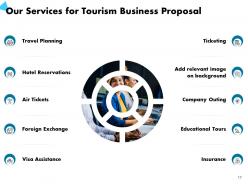
The travel and tourism industry is gaining more leads in the market. The travel companies are doing good in their business and growing expeditiously. Everyone loves to travel and wants to gain an amazing trip experience. That is why, people run towards the best tourism companies. Living in the hyper-competitive market, it is not easy for travel agencies to grab customers and lock the deals. Similarly, finding one travel agency and relying on that is not convenient for a customer too. But, there is a sure-shot solution that makes the work for both customers and travel companies a lot easier. And they are proposals. Introducing our professionally designed Tourism Business Proposal PowerPoint Presentation Slides which have been designed professionally by our experts. Take advantage of this travel company proposal PPT layout to give an overview of your tourism agency to the client. Share the details of your travel packages with the customer with the aid of our tourism business proposal PowerPoint template. In this, you can write about the travel experience that your previous clients had using your services. Keep your information on point that is easily understandable by the clients. Utilize this attention-grabbing travel company proposal PowerPoint slide and provide a clear snapshot of your proposed trip services to your potential customers. Incorporate this visual-appealing tourism company proposal PPT template to showcase the number of trips you have organized over the past years. Employ our travel enterprise proposal PowerPoint slide to highlight your discount travel offers that grab the client’s attention instantly. Using this travel business proposal PPT slide, you can talk about additional services like travel planning, hotel reservations, air tickets, foreign exchange, visa assistance, ticketing, etc. Therefore, you can also download our ready-to-use Business Proposal Ppt complete deck and design a strategy to launch your products at the right time.
People who downloaded this PowerPoint presentation also viewed the following :
Content of this Powerpoint Presentation
Travel and tourism industry is a major economic engine in the world. It fosters economic development, job creation, and social advancement. This industry supports millions of enterprises and employment, allowing individuals to visit and stay in many countries or regions throughout the world for leisure, business, and other purposes. The world’s largest travel and tourism businesses include China Tourism Group Duty Free Corp Ltd, Travel Leaders Group, Expedia Group Inc, The Walt Disney Company, TUI AG, and REWE Group.
Download our Travel and Tour Business Proposal PowerPoint to present deals and packages with agility and confidence as a travel agent or agency.
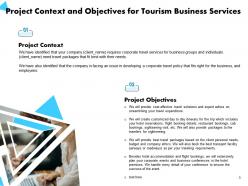
Tourism is a fantastic opportunity and one of the best businesses that you can start. This business is expected to reach a market size of $11.1 trillion by 2028. Advancements in transportation, communication, and technology have made this possible.
This blog discusses tourism business proposals for tour and travel agencies, internet travel businesses, travel websites, and others. It encourages travelers to visit locations and helps draw in a wider group of travelers. This PPT Deck offers a trip description, packages, and additional services to create an appealing tour package.
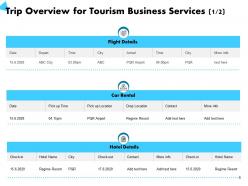
Template 1: Trip Overview for Tourism Business Services

This PowerPoint Template contains a breakdown of the trip overview. This smart placement of details engages the potential buyer. It covers information on flight, car rental, and hotel stay, and allows clients to compare hotel and transportation alternatives and select the most cost-effective option.
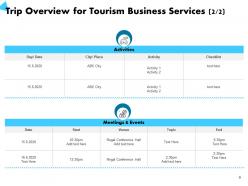
Template 2: Trip Overview for Tourism Business Services Contd.

A more detailed description of activities, meetings, and events aids in the creation of a well-planned trip itinerary. This PPT Slide helps you stick to your schedule. Use this presentation to reduce the possibility of last-minute charges.
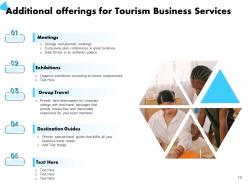
Template 3: Additional Offerings for Tourism Business Services

Today, travellers expect a more complete travel experience with the added benefits of convenience and savings. Use this PPT Preset to demonstrate additional features of your trip packages to attract clients. It includes add-ons like meetings, exhibitions, group travel, destination guides, and more. This helps clients examine multiple possibilities and boosts the value of the package.
Template 4: Package for Tourism Business Services

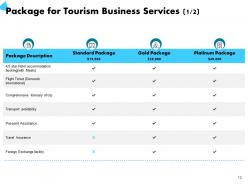
Use this PPT Layout to highlight tour packages that provide convenient, stress-free, and cost-effective trips. It provides a breakdown of the package description and tour packages (standard, gold, and platinum). This presentation covers transportation, accommodations, passport help, travel insurance, and other services. This slide is a set of aesthetically-designed persuasive reasons to choose a tour package.
Template 5: Package for Tourism Business Services Contd.

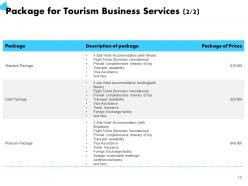
Grab another PPT design to give a review of tour packages. This will give clients the convenience of having everything planned. Use this download to give potential travelers a greater sense of security and peace of mind.
Template 6: Why Us for Tourism Business Services

This PPT Template highlights the advantages of using your travel agency. It emphasizes advantages, such as network presence, 24-hour devoted assistance, customized travel planning, etc. This keeps your company at the forefront of the sales conversation.
Template 7: About Us for Tourism Business Services

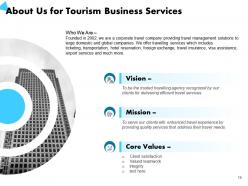
Use this PowerPoint Presentation to give a company overview. This will aid in displaying the company’s history, vision, mission, and more. Use this to inform potential clients about your organization.
Template 8: Client Testimonials for Tourism Business Services

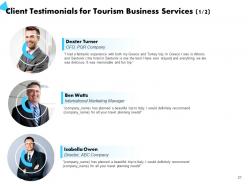
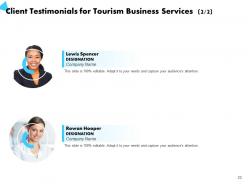
Customer testimonials help to improve services by sharing impressions and reviews. This PowerPoint Slide showcases your clients’ trip experiences and highlights their feedback about using your travel agency. Use this presentation to highlight the unique and superb elements of your trip package that set you apart from the competition.
Template 9: Statement of Work and Contract for Tourism Business Services

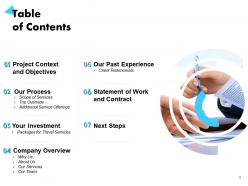
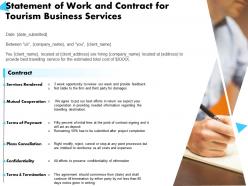
Use this PowerPoint Framework to discuss terms and conditions. This would help clients understand the service and will make the conditions of payment, services provided, and costs associated with cancellation and modification clearer.
Template 10: Next Steps for Tourism Business Services

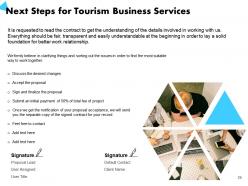
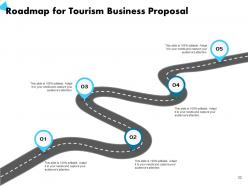
Ensures that everything in the proposal is agreed upon before signing the contract. This PowerPoint Slide summarizes details and depicts the processes required to complete the contract.
Open untapped tourism markets.
Tourism is a profitable industry. Use SlideTeam’s PPT Templates to make your tourism business idea a reality. This will help to write a strong proposal that will enable you to accomplish your objectives.
P.S. Grab our pre-designed PPT Template for a Tourism Business Proposal to get started.
Tourism business proposal powerpoint presentation slides with all 33 slides:
Use our Tourism Business Proposal Powerpoint Presentation Slides to effectively help you save your valuable time. They are readymade to fit into any presentation structure.











FAQs for Tourism business proposal
Look for what actually sets you apart - maybe it's those hidden spots only locals know about, or you're really good with solo female travelers who feel overlooked elsewhere. Honestly, everyone claims "authentic local experience" these days so that's kinda meaningless now. What specific problem are you solving that the big tour companies totally miss? Could be sustainable practices, accessibility focus, or you've got amazing connections with local artisans. Food tourism and adventure sports are solid niches too. I'd start by asking your ideal customers what frustrated them about other tours they've taken.
Look at your booking data first - who's already staying with you and what they're spending. Build personas around that: are they adventure types, beach loungers, culture nerds? Social media analytics are honestly a goldmine for this stuff. Survey your guests too, and peek at what competitors are doing. Here's the thing though - don't just guess. Test small campaigns with different segments and see who actually books. Some groups will surprise you with how much they spend over time. Put your marketing dollars where you're getting real results, not just likes and clicks.
Honestly, AR walking tours are where it's at right now - people eat that stuff up. Get some local influencers to tell real stories about your area, not the usual tourist BS. Launch a hashtag for visitors to post hidden spots they find. VR previews work great too since people want a sneak peek before booking anything. Oh, and try gamification - like digital scavenger hunts where winners get discounts at local shops. The goal is making your place feel like something people discover, not just another destination getting shoved in their faces. Pick one thing, test it for a month, then double down on whatever clicks with your crowd.
So you need to track both direct and indirect economic effects. Direct stuff is straightforward - local hires, wages, money spent with nearby suppliers. The indirect part though? That's where it gets interesting (and honestly more impactful). Think about your employees grabbing lunch downtown or tourists you attract shopping at local stores. I've seen cases where indirect impact is literally double the direct numbers. Start with basics: how many visitors you'll bring, what they'll spend, jobs you're creating. Then grab some economic multiplier tools to crunch the ripple effects. The math can be pretty eye-opening once you see the full picture.
Hotels are perfect for package deals, obviously. Restaurants work great too for dining stuff. I'd hit up bike rental places and tour companies - transportation partnerships are honestly where the money is. Shuttle services, those cheesy trolley tours tourists eat up, whatever. Museums and theaters can hook you up with exclusive access deals. Retail shops do discount programs pretty easily. Just avoid businesses that directly compete with you. Map out where your customers go and find spots where partnering makes sense. Then reach out with actual ideas, not just "let's work together" nonsense.
Honestly, mobile-first is where it's at right now. Get mobile check-ins working first - that alone fixes so much frustration. AR stuff is actually getting pretty solid too, like pointing your phone at buildings for instant info (tourists eat that up). Contactless payments are basically expected now, not optional. Real-time updates about wait times or delays make people way less cranky. Oh, and chatbots handle the repetitive questions so your staff doesn't lose their minds. I'd pick whatever fixes your biggest headache first, then add more features. QR menus are cheap to implement if you need a quick win.
Honestly, just pick a couple things you can actually stick with instead of going crazy trying to do everything. Solar panels or renewable energy is a solid start. Ditch single-use plastics where you can - guests notice that stuff. I'd probably focus on water conservation too since that saves money AND helps the environment. Low-flow fixtures are cheap wins. Some places I know do carbon offsets for guests, which sounds fancy but isn't that hard to set up. Oh, and local suppliers cut down on shipping emissions if you've got good options nearby. Composting's great if you have the space for it. What's your setup like?
Look, figure out what actually makes your place special - not just "pretty sunsets" but like, the real stuff. Your grandma's recipes that locals still use? That waterfall nobody talks about? Whatever it is, make it feel like you're letting someone in on a secret. People want authentic experiences, not another generic vacation. Tell your story like you're chatting with a friend over coffee. Honestly, if you can't get your own friends excited when you describe it, you need to dig deeper. Make it personal. The specifics matter way more than trying to appeal to everyone.
Okay so first thing - get your business registered and grab whatever tourism operator licenses your state requires. Liability insurance is huge here, like seriously don't skip this part since you're responsible for people's safety. Local zoning laws matter too, plus health/safety regs. Environmental permits might be needed depending what activities you're planning. Oh and if you hire anyone, employment law stuff applies obviously. Honestly? Find a hospitality lawyer early on. I know it's another expense but trust me, way better than dealing with legal issues later when you're trying to run the business.
Honestly, you've gotta nail the visuals first - gorgeous photos and videos of destinations plus happy travelers. Instagram's perfect for this, but don't sleep on TikTok either. Each platform's different though, so you can't just copy-paste everywhere. Behind-the-scenes stuff works great, and those "hidden gem" posts? Pure gold. I always end up saving those to my travel folder lol. Get your customers to share their pics too - that's basically free advertising. Oh, and actually respond to comments! Partner with some local influencers if your budget allows. Start with one platform until you've got it down, then branch out. Way easier than trying to juggle everything at once.
Honestly, start with the money stuff first - revenue per customer, booking conversion rates, and how your sales change with seasons. Customer satisfaction scores matter too, plus repeat bookings and online reviews (which can totally destroy you if they're bad, btw). Marketing cost per new customer is huge since you're probably spending on digital ads. Oh, and track where your website traffic comes from. I'd focus on maybe 5-6 of these core metrics initially rather than going crazy with spreadsheets everywhere. You can always add more once you figure out what actually moves the needle for your specific business.
Seasonal businesses are wild - your cash flow will be all over the place instead of steady. Peak season might dump like 60-70% of your yearly revenue into just a few months, then you're scraping by the rest of the year. I saw this wreck a client last year, honestly it was painful to watch. Use historical data from similar local businesses to build conservative projections. The trick is stashing away those peak profits for the lean times. Oh, and don't forget seasonal staffing costs hit different too. Maybe think about off-season income streams to level things out a bit.
Honestly, you've gotta treat local culture like something sacred, not a theme park. Research their customs first, then have real conversations with community leaders about what they're comfortable sharing with tourists. Get locals involved in the actual planning - they know what's authentic vs what feels exploitative. I've watched so many tourism businesses crash because they totally misread this. Train your guides properly so they're not spreading random myths or stereotypes. Oh, and make sure the community actually benefits financially from having tourists around. Some traditions or sacred sites just aren't meant for outsiders, and that's perfectly okay.
Look, safety protocols are everything for adventure travel - you can't mess around with this stuff. Do solid risk assessments for each destination first. Partner with local operators who actually know what they're doing (check their safety records, obviously). Brief your guests thoroughly - emergency contacts, cultural basics, the works. 24/7 communication is non-negotiable so they can reach you if things go sideways. Build travel insurance and evacuation procedures right into every booking. Oh, and create a simple checklist your team reviews with each guest before they leave. Honestly, it's better to be overprepared than deal with a nightmare scenario later.
Honestly, just pick a couple things and start there - don't overcomplicate it. Send those post-trip surveys within 48 hours while everything's still fresh in their minds. For longer tours, maybe throw in some quick SMS check-ins. Obviously you gotta monitor online reviews (respond to all of them, even the nasty ones - people notice when you actually engage). Stick a simple feedback form on your website too. I'd probably skip the focus groups initially unless you've got tons of repeat customers already. The main thing is making it ridiculously easy for people to tell you what they think. Start small and actually do something with the feedback you get.
-
Easy to edit slides with easy to understand instructions.
-
Understandable and informative presentation.
-
Really like the color and design of the presentation.
-
Easy to edit slides with easy to understand instructions.
-
Excellent template with unique design.