


Transition plan roles and responsibilities for transition project




Try Before you Buy Download Free Sample Product
 Impress Your
 Audience
 100%
100% Editable
 Save Hours
 of Time


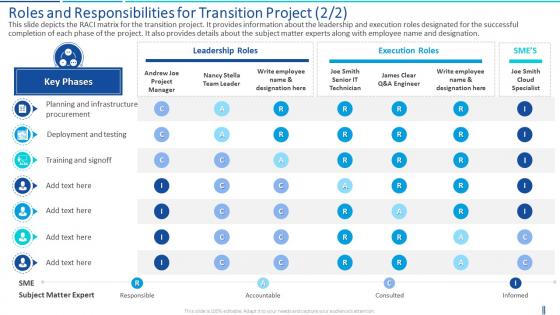
This slide depicts the RACI matrix for the transition project. It provides information about the leadership and execution roles designated for the successful completion of each phase of the project. It also provides details about the subject matter experts along with employee name and designation.
People who downloaded this PowerPoint presentation also viewed the following :
Transition plan roles and responsibilities for transition project with all 6 slides:
Use our Transition Plan Roles And Responsibilities For Transition Project to effectively help you save your valuable time. They are readymade to fit into any presentation structure.





FAQs for Transition plan roles and responsibilities
You need a solid timeline with milestones, plus really good documentation for knowledge transfer. Don't forget a communication plan for stakeholders and clear handoff responsibilities. Timeline stuff always drags on longer than you think - build in extra time for random problems that pop up. The documentation is honestly what saves your butt later when someone's panicking about how something works. Oh, and throw in some risk strategies and ways to measure if it's actually working. I'd start by figuring out who's doing what and when, then count backwards from your deadline. Makes the whole thing way less overwhelming.
Definitely build a RACI matrix - maps out who's Responsible, Accountable, Consulted, and Informed for each task. List all your major transition activities first. Then assign real people to each role, not just "the marketing team" or whatever. I've watched so many transitions crash because everyone thought someone else had it covered. One person accountable per task, period. Even if three people are doing the work, one person owns the outcome. Oh and get everyone to actually agree to their assignments - like explicitly say yes. Otherwise people will just nod along and then act confused later when stuff doesn't get done.
Honestly, weekly check-ins are a lifesaver - but make sure people actually share real updates, not just "yep, all good." Set up a RACI matrix upfront so nobody's confused about ownership (seriously saves you from so much drama). I'd also get some kind of shared tracker going where you can peek at progress without bugging everyone constantly. Oh, and build in those milestone reviews with actual deadlines. Nothing worse than finding out someone's behind schedule like two days before launch. Trust me on that one - learned it the hard way!
Make a list of everyone who's gonna be impacted - the person leaving, their boss, team members, people they work with regularly, anyone who relies on their knowledge. IT and HR too if there's access stuff to deal with. I usually just jot them down and mark who's high/medium/low priority, honestly it's easier than overthinking it. Cast a wide net first, then figure out who you actually need to focus on based on timing and what depends on what. Oh and definitely reach out early to get their take on deadlines and what needs to be handed off.
Honestly, kick things off with a meeting where everyone's clear on who does what - maybe even do one of those RACI charts if you're feeling fancy. Weekly check-ins are clutch at the start to catch problems before they snowball. Don't just send emails though, like half your team won't actually read them properly. Mix it up with Slack, quick calls, whatever works. Oh and definitely use shared docs so people can't claim they "forgot" their responsibilities later. You'll probably feel like you're repeating yourself constantly, but that's normal. Just make sure there's one go-to person for questions.
I'd check it every quarter minimum, but honestly whenever big stuff happens - new hires, people switching roles, whatever - just review it right then. Don't wait around. Monthly I do a quick scan of contact info because dead phone numbers are the absolute worst during actual transitions (learned that one the hard way). Responsibilities shift way more than you think they will, so keeping track of who actually does what is huge. Oh and set a calendar reminder now or you'll totally forget - I always think I'll remember these things but never do.
Honestly, you need both the numbers stuff and the softer feedback to really know what's happening. Budget tracking and timeline stuff are obvious ones. Survey your stakeholders too - their satisfaction scores tell you a lot. I'd also look at how fast people actually learn the new processes and when performance gets back to normal levels. Employee turnover during transitions is huge - if people are bailing, something's definitely wrong. Oh, and don't sleep on measuring how well you're handling risks that come up. My advice? Pick maybe 3 or 4 metrics that actually matter for your situation instead of drowning in data.
Look, you've gotta bake risk management into your whole transition plan right from the start. Don't just tack it on later. First thing - figure out what could go wrong during planning, then put actual people in charge of watching each risk. I can't tell you how many times I've seen transitions crash because everyone thought someone else had it covered. Set up regular team check-ins so people can flag new issues or sound the alarm on existing ones. Keep everything in a shared risk tracker - honestly, documentation saves your butt when things get messy. Oh, and make sure you know exactly who makes the call when stuff inevitably hits the fan.
Get your project managers trained on change management first - they'll be juggling a lot. IT people need those system migration protocols down cold. Communication leads? Stakeholder engagement skills are clutch. Documentation saves lives here, so transition playbooks and process maps need to be accessible to everyone. Oh, and contact lists - can't tell you how many times I've seen people scrambling for phone numbers mid-crisis. Set up knowledge transfer sessions between old and new team members. Map this stuff out now and work it into your timeline. Trust me, don't wing it.
Definitely set up some overlap time, even if it's just a few days where they're both there. Have the leaving person document the key stuff - projects, contacts, processes. But honestly? The real gold comes from sitting together and just talking through everything. Written handoffs miss so much context. Plan some check-ins for the first month too because random questions always pop up later. Oh, and give your outgoing person a heads up they might get the occasional random text for a while - that's just how it goes.
Look, your leadership team is gonna make or break this whole thing. They control the budget, approve timelines, and handle the big decisions when stuff inevitably goes sideways. Without them actively selling the "why" to everyone, you'll lose buy-in fast. The trick is getting them actually involved - not just nodding along in meetings. Set up weekly check-ins so you can flag problems early. I learned this the hard way on my last project. When leaders are disengaged, small issues snowball into timeline killers real quick.
Honestly, project management tools like Asana or Monday.com are game-changers for this stuff. You can assign tasks, set deadlines, and actually see what's happening in real-time instead of guessing. Those RACI matrices? Turn them into interactive dashboards - way better than Excel files nobody opens anyway. Slack or Teams work great too for creating dedicated channels by workstream. Keeps everyone in the loop without endless email chains (thank god). The trick is finding tools your team won't hate using, then setting up automatic reminders so nothing gets forgotten when everything's going crazy during the transition.
Ugh, the worst thing is when nobody knows who's actually doing what. You'll get people stepping on each other's toes, then when something breaks everyone points fingers. Been there! Write down the specific tasks - not just "Sarah handles marketing" but what exactly she owns. Decision-making stuff too, like who can approve what. I always forget about external partners until it's too late, so map out those boundaries early. RACI matrix sounds fancy but honestly? Even a basic spreadsheet works fine. Just get everyone to actually read it and agree before you start.
Company culture is gonna make or break your whole transition - I've seen this happen so many times. When departments don't talk to each other or people hate change, your plan falls apart fast. Trust is everything here. Teams that don't trust each other won't share info or follow new processes, which honestly drives me crazy because it's so preventable. But if you've got a collaborative vibe going? Things will go way smoother. Quick tip - figure out your culture situation first, then build your roles around that reality instead of fighting it.
Okay so first thing - start documenting your daily stuff now, even those random workarounds you probably do without thinking. You'll need solid role definitions and knowledge transfer sessions set up. Timeline with milestones is clutch, plus figure out which stakeholders need updates. Honestly, the overlap period where you're actually working with your replacement is everything - don't just ghost them with a pile of notes. Oh and backup plans because something always breaks. Training schedules, access transfers, all that boring but necessary stuff. Trust me, future you will thank present you for being thorough about this.
-
Easily Understandable slides.
-
Amazing product with appealing content and design.