


Travel insurance policy presentation




Try Before you Buy Download Free Sample Product
 Impress Your
 Audience
 100%
100% Editable
 Save Hours
 of Time


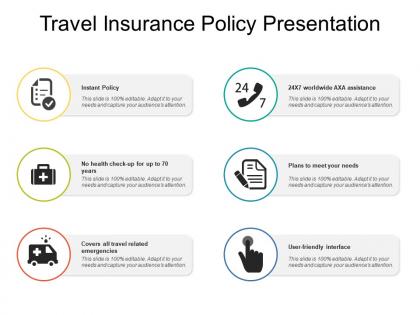
Incorporate this Travel Insurance Policy Presentation and discuss the cover plan for your risky trips. Mention the coverage plan which includes death, personal accident, repatriation, medical expense, loss of package, and passport loss. Highlight the types of travel insurance which are domestic, international, corporate, senior, multi-trip, single trip, etc. by utilizing this policy PPT layout. Showcase the coverages for international travel insurance such as coverage for medical expenses overseas, hijacks, baggage, and travel delays. Utilize this agreement PPT visual to showcase the coverages of senior citizen travel insurance which make their travel a pleasant experience by providing dental treatments and cashless hospitalization. Take the assistance of the insurance claim PowerPoint graphic to showcase the coverages of a single trip and multi-trip travel insurance policy. Showcase how you can buy travel insurance online. Determine the factors for the policy purchase by discussing cost calculation, journey departure, and return conditions, complimentary travel insurance. Thus, download this insurance policy PPT slide and create a meaningful presentation.
People who downloaded this PowerPoint presentation also viewed the following :
Travel insurance policy presentation with all 5 slides:
Create a feeling of balance with our Travel Insurance Policy Presentation. They encourage a level headed approach.
FAQs for Travel
Honestly, travel insurance is a lifesaver when stuff goes wrong overseas. Medical emergencies are insanely expensive abroad - like my buddy got food poisoning in Thailand and boom, $3000 hospital bill. It covers trip cancellations, lost bags, flight delays, all that annoying stuff. Medical coverage though? That's where it really matters. You're also good if you need emergency evacuation or have to bail early for family emergencies. Oh, and definitely check what your regular insurance covers internationally first - might save you some cash. Then just grab a decent policy to cover whatever gaps are left.
Okay so basically international coverage is way more expensive but covers way more stuff. Domestic is pretty bare bones - mostly just trip cancellations and filling gaps your regular insurance won't. The big difference? International plans cover emergency evacuations (we're talking $100K+ if you need airlifted from some remote place), foreign hospitals, embassy help. That stuff adds up fast. For domestic trips you're mainly protecting against cancelled flights or lost bags since your health insurance still works here. Honestly though, check what your current plan already covers first. You might not need as much as you think.
Look at what's covered first - medical stuff, trip cancellation, lost bags, that kind of thing. Your regular health insurance probably won't work overseas (mine definitely didn't when I was in Thailand). Coverage limits and deductibles matter way more than you'd think. If you're older or have health issues, some policies get picky about that. Emergency evacuation coverage is huge, especially somewhere remote. Don't just grab the cheapest one - I'd compare maybe 3 or 4 options. The exclusions section is boring but super important to actually read through.
Watch out for pre-existing conditions - that's the big one. They won't cover extreme sports, anything booze or drug related, or if you're heading somewhere with travel warnings (which is ironic since that's probably when you'd actually need it). Mental health stuff is usually out too. Oh, and don't expect them to pay for routine checkups or pregnancy things unless it's a real emergency. Honestly the exclusions are pretty brutal once you dig into the details. Changed your mind about the trip? Tough luck. Really worth reading that fine print before you buy.
So first, add up everything you've already paid - flights, hotels, tours, all that stuff. That's your cancellation coverage baseline. Medical coverage depends on where you're headed though. US trips? Go high, like $100k+ because their healthcare will bankrupt you. Europe's not as brutal since they actually have decent systems. Oh and if you're bringing pricey camera gear or whatever, factor that in too. I learned that one the hard way lol. Don't just grab the cheapest plan - actually do the math on what you'd lose if everything goes to hell.
Medical emergencies and trip cancellations are the big ones - they're like 70% of claims. Baggage problems happen constantly too (lost, delayed, damaged). Flight delays where you need a hotel, emergency evacuations, that stuff adds up. Medical bills can get insane, especially if you're somewhere expensive or need an airlift from the middle of nowhere. Most trip cancellations? Illness, family emergencies, work drama. Oh, and definitely read your policy super carefully because insurers have wildly different rules about what actually counts as a "covered reason" for bailing on your trip. Some are pretty stingy about it honestly.
Hey! So travel insurance is tricky with pre-existing stuff. You've gotta buy within like 14-21 days of your first trip payment - timing matters big time. Also need to be "medically stable" when you purchase, though honestly some insurers are way stricter about what that means than others. Declare everything upfront, even annoying minor things like high blood pressure. Buy early and don't lie on the application or you'll get screwed with huge bills if something happens abroad. Trust me on this one.
So travel insurance deductibles work exactly like car insurance - you pay a chunk upfront before they cover anything. Like if there's a $100 deductible and you have a $500 medical bill, you're on the hook for that first $100. They handle the rest. Higher deductibles = cheaper premiums, which sounds great until you're actually sick in Thailand and need to cough up $300. Different claim types might have different deductibles too, which is honestly annoying. Just double-check what you'd actually pay for medical vs baggage claims before buying.
Call your insurance company right away - seriously, don't wait on this. Most have apps or claim hotlines now which is nice. Gather all your receipts, cancellation proof, and whatever documentation backs up why you cancelled (medical stuff, death certificates, etc). The paperwork's honestly kind of a pain but just send them everything they want. Here's the thing though - double check your policy first because some reasons don't qualify at all. Keep copies of what you submit and bug them if they go quiet past their response deadline.
Dude, call your travel insurance RIGHT away - like before you even get treatment if you can swing it. Most have 24/7 lines for exactly this situation. They'll hook you up with decent hospitals, deal with the language stuff, and handle payments so you're not dropping your life savings upfront. Honestly, they're way better at navigating foreign healthcare systems than you'll be when you're freaking out. Just save every single receipt and document they give you. Oh and don't try being a hero - get them involved early because they can actually fix things fast.
Yeah, you'll definitely need special coverage for adventure sports. Regular travel insurance basically assumes you're gonna sit by the pool all day. World Nomads and IMG are solid options - they cover rock climbing, scuba diving, skiing, bungee jumping, all that crazy stuff. Just be upfront about what you're planning when you buy it. Don't try to be sneaky because they'll find any excuse to deny your claim later. Oh, and actually read what activities they cover because some companies are weirdly specific about it.
Dude, skip travel insurance and you're gambling with your bank account. Medical emergencies abroad cost insane money - like $50k+ in the US. Your regular insurance won't help internationally, and credit cards barely cover anything useful. Lost luggage, trip cancellations, emergency flights home? All on you. My cousin learned this the hard way in Thailand - ended up paying $8k for food poisoning treatment. I know it feels like another annoying expense, but get a quote. It's probably like $30 for peace of mind.
Honestly, start with 3-4 quotes from decent companies and make a basic spreadsheet to compare them. Look at coverage amounts, deductibles, and what's actually covered - medical stuff, trip cancellation, lost bags, whatever matters for your trip. Check if your health insurance or credit card already covers some of this first so you're not paying twice. The exclusions section is where they screw you over, so read that carefully. Don't just go with the cheapest option because cheap insurance is usually garbage when you actually need it. Match the policy to your specific risks and what you can afford.
Honestly, get cruise insurance - regular travel insurance won't cover the cruise-specific disasters. Ship breaks down or weather hits? You're stuck. Medical coverage is the big one though - those onboard doctors charge insane amounts and if something serious happens, helicopter evacuation costs are brutal. Don't rely on whatever basic coverage the cruise line offers, it's garbage. Third-party policies are way better. Missing your connection is another nightmare since cruises leave whether you're there or not, unlike flights. Book within 15 days of paying for your cruise to get pre-existing condition coverage. Trust me on this one.
Yeah, travel insurance will cover you if natural disasters or political stuff forces you to cancel or cut your trip short. Hurricane hits your beach destination? You'll get reimbursed for those non-refundable flights and hotels. Emergency evacuation coverage is huge too - that stuff gets ridiculously pricey. But here's the catch: the disaster has to be "unforeseeable" when you bought the policy. So you can't just buy it after seeing a hurricane forecast, which honestly makes sense. Definitely check what specific events your policy covers though, because they're all different.
-
Commendable slides with attractive designs. Extremely pleased with the fact that they are easy to modify. Great work!
-
Best way of representation of the topic.