


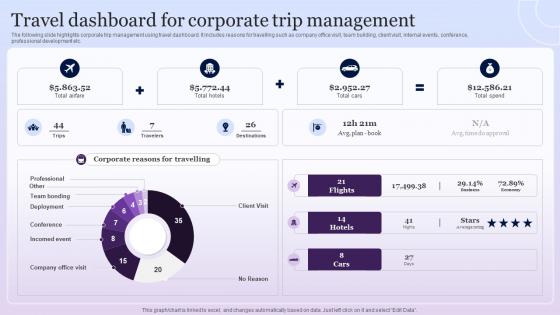
Travel Dashboard For Corporate Trip Management




Try Before you Buy Download Free Sample Product
 Impress Your
 Audience
 100%
100% Editable
 Save Hours
 of Time


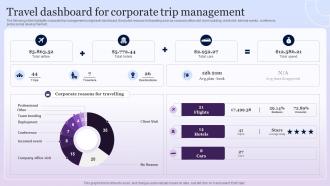
The following slide highlights corporate trip management using travel dashboard. It includes reasons for travelling such as company office visit, team building, client visit, internal events, conference, professional development etc.
People who downloaded this PowerPoint presentation also viewed the following :
Travel Dashboard For Corporate Trip Management with all 7 slides:
Use our Travel Dashboard For Corporate Trip Management to effectively help you save your valuable time. They are readymade to fit into any presentation structure.





FAQs for Travel Dashboard For
So you need four main things: booking rules, spending limits, approval process, and safety stuff. Define who books what and through which channels first - trust me, you don't want people using random travel agents and messing up your accounting. Set clear spending caps for flights, hotels, meals based on job level or trip type. Make sure there's an approval chain so managers aren't blindsided by budget hits. Oh, and don't forget the safety protocols like travel alerts and emergency contacts. Keep it detailed enough to avoid chaos but simple enough that people won't just ignore it completely.
Honestly, the difference is huge once you get a good system going. Most platforms now connect directly to your company's travel rules, so people can't book anything crazy expensive. The AI stuff actually works - it remembers if you always pick aisle seats or whatever. Everything flows into one place for expenses too, which your finance people will love you for. We started using TravelPerk last year and it cut booking time in half, maybe more. Concur's solid too if you want something bigger. Trust me, once you automate this stuff you'll wonder why you waited so long.
Honestly, you're bleeding money with all those scattered booking platforms. A centralized system lets you actually see where your travel budget's going and catch people booking crazy expensive flights. Your team will thank you too - nobody wants to remember passwords for five different travel sites. The reporting alone is worth it since you can finally reconcile expenses without wanting to pull your hair out. Oh, and you'll have real negotiating power with hotels and airlines when you bundle everything together. Start by looking at what you're currently paying across all platforms - bet you'll find some surprises.
So your TMC basically tracks everyone in real-time and has 24/7 support watching for issues. Weather alerts, political stuff, security threats - they'll ping you about anything sketchy happening where your people are. They keep detailed profiles too with emergency contacts and medical info, which honestly saves your butt when crisis hits. Most partner with security companies for on-ground help or even evacuations if things get really bad. The whole point is having one system that knows where everyone is and can reach them instantly. I'd definitely ask what specific safety tools yours offers - they vary quite a bit.
Definitely track cost per trip and what each department's spending. Hotel and flight rates too. Lead times are critical - last-minute bookings will destroy your budget, learned that the hard way. Policy compliance is another big one to watch. Oh, and those unused ticket fees add up fast if you're not careful. Expense report turnaround times matter for cash flow. ROI's trickier but worth tracking for major client stuff or big conferences. Start simple with these basics, then expand your dashboard. Most travel platforms can automate this reporting anyway.
Honestly, just set smart spending limits instead of saying "no" to everything. Like, economy plus for long flights? Makes sense. Decent hotels in pricey cities? Obviously. Most companies I know save way more money by booking early and sticking with preferred vendors anyway. Clear guidelines work better than micromanaging - people won't go crazy if they feel trusted. The trick is figuring out where to be flexible vs. where to stay strict. Your employees aren't idiots - they'll usually make reasonable choices when you're not breathing down their necks about every expense.
Look, data analytics shows you spending patterns you'd never notice otherwise. Which routes cost the most? When are your sales reps sneaking into those fancy hotels again? You'll actually catch policy violations instead of wondering where the budget went. The cool part is you can time your bookings better and negotiate way better corporate rates. Plus forecasting becomes real instead of just "eh, probably similar to last year." Honestly beats the old spreadsheet guessing game by a mile. Makes enforcing travel policies so much easier when you have actual numbers backing you up.
Honestly, the biggest thing is just questioning whether you actually need to travel in the first place. Set up some kind of approval process where people have to explain why they can't just do a video call instead - you'd be amazed how many trips are totally pointless when you really think about it. When you do have to fly, book direct flights and stay somewhere with decent green credentials. Oh, and trains are clutch for anything under like 4-5 hours. Try bunching multiple meetings into one trip too. Track your emissions first though so you know what you're working with.
Oh totally get a shared platform set up first - TripIt works great for this. Grab everyone's cell numbers since your remote folks could be anywhere when flights get messed up (which they will). Buffer time between connections is huge because they won't know those airports like locals do. I'm obsessive about sending updates twice - confirmations, gate changes, all of it. Remote workers need way more communication than you think. Set up a group chat for the actual travel days too. Trust me on the over-communicating thing!
Honestly, just put that travel policy where people will actually see it - company intranet or shoot out an email with the main points. Half these travel disasters happen because nobody knows the damn rules! Maybe do a quick team meeting to cover expense limits and how to book stuff. Oh, and definitely pick someone to be the travel question person - saves everyone from playing guessing games. I've seen too many people mess up reimbursements because they had no clue what was allowed. Quick Q&A session wouldn't hurt either.
Honestly, always book refundable tickets if you can swing it financially. Get travel insurance too - I learned that lesson the hard way last year. Research backup routes and hotels before you even leave, and definitely sign up for those airline alerts on your phone. Buffer time is huge, especially for work stuff. Oh, and keep some emergency cash separate from your regular travel money. Maybe make a quick list of important contacts and backup plans? Sounds nerdy but you'll thank yourself when you're stuck at some random airport at 2am trying to figure out your next move.
Yeah so consulting firms usually throw money at travel since they're all about those client relationships - gotta look good and get there quick. Manufacturing companies? Total opposite. They're super tight with budgets because travel doesn't make them money directly. Tech falls somewhere in the middle but loves their approval processes (ugh). Healthcare has crazy compliance rules around client stuff. Honestly, just peek at what competitors in your space are doing instead of random "best practices" from totally different industries. Way more useful.
So the big thing right now is AI booking platforms that actually remember what you like - no more clicking through the same preferences every time. Dynamic pricing is everywhere too, changing by the hour basically. Sustainability reporting is huge now, and honestly "bleisure" travel is finally catching on where people add vacation days to work trips. Smart move if you ask me. Most companies are going mobile-first since we're all booking from our phones anyway. Oh, and integrated expense platforms are becoming standard - booking to reimbursement all in one place. I'd start looking at your current setup soon though, because this stuff moves fast.
Honestly, good travel management is a game-changer for keeping employees happy. Your team will actually want to stay when they're not dealing with awful booking systems or waiting forever for expense reimbursements. I've seen people quit over travel headaches - sounds dramatic but it's true! Decent flight options and clear policies show you actually care about their time and comfort. Short trips become way less painful. Survey your people first though - find out what's driving them crazy and fix those things. Sometimes it's the weirdest stuff that bothers them most.
Visa and work permit stuff is huge - seriously, some countries like Australia will nail you for permits even on short trips. Tax residency rules kick in based on how many days your people spend somewhere, which gets messy fast. Oh, and you're on the hook for employee safety abroad, so insurance coverage matters. Each country has different regulations, especially if you're moving data or equipment across borders. Honestly, the rules are all over the place. Get your legal team to build country-specific checklists before anyone goes anywhere - it'll save you headaches later.
-
Much better than the original! Thanks for the quick turnaround.
-
Informative and engaging! I really like the design and quality of the slides.