

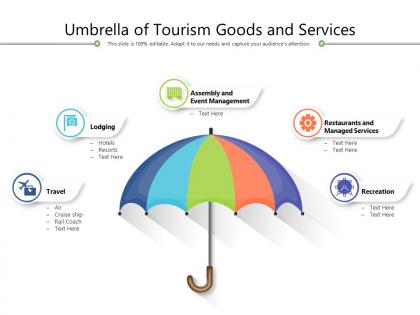
Umbrella of tourism goods and services




Try Before you Buy Download Free Sample Product
 Impress Your
 Audience
 100%
100% Editable
 Save Hours
 of Time


Analyse the details with our Umbrella Of Tourism Goods And Services. Detect flaws, if any, in the system.
People who downloaded this PowerPoint presentation also viewed the following :
Umbrella of tourism goods and services with all 2 slides:
Put the details of your logic on our Umbrella Of Tourism Goods And Services. String together your strong argument.
FAQs for Umbrella of tourism
Yo! Sustainable travel is huge right now - people actually give a shit about their carbon footprint, which honestly surprised me. Digital stuff is everywhere too: contactless everything, AR tours, the works. Remote work made "bleisure" trips (business + leisure) totally mainstream. Travelers want authentic local spots instead of tourist traps, and wellness tourism blew up after COVID. Oh, and if you're working in travel, definitely push your green credentials and tech features. That's literally what people filter by when they're booking now. The whole industry shifted way faster than I expected.
Honestly, eco-tourism can really help local communities when done right. People get jobs as guides or running guesthouses, plus they have actual incentive to protect their environment since that's what brings in money. But here's where it gets tricky – too many tourists and you're looking at damaged trails and freaked out animals. I've seen places that got completely overrun. The trick is balance, you know? Tourism dollars should fund conservation without destroying what people came to see in the first place. When you're booking, definitely look for certified operators who actually know what they're doing.
Dude, your phone is basically a magic travel wand now. GPS saves you from getting totally lost, Google Translate helps when you're trying to order food and have no clue what anything means. I download TripAdvisor and Yelp before every trip - honestly saved me from so many tourist traps. Mobile boarding passes and hotel apps make check-in way less stressful too. Oh and grab offline maps before you go! Learned that the hard way in Rome when the wifi was garbage. Contactless payments are clutch for quick purchases without fumbling for cash.
Most places now limit how many people can visit per day - Machu Picchu's super strict about this. They'll make you book timed slots and stick to specific walking routes so tourists don't trash the old structures. Smart move honestly, since they use that ticket money to fund restoration work. Some sites rotate which areas are open, giving other sections a break from foot traffic. Oh and tons of places offer virtual tours now too, which is kinda cool if you can't make the trip. Just heads up - you'll need to book major heritage sites way in advance these days. The restrictions are annoying but at least they're protecting stuff for future generations.
Hey! So tourism basically creates tons of jobs - hotels, restaurants, tour guides, you name it. Plus it brings in foreign money which is huge for these countries' economies. The ripple effect is crazy too - tourists buy stuff, that money goes to local farmers and artisans, etc. Costa Rica is like the perfect example, whole villages completely changed because of eco-tourism. Better infrastructure comes with it too. Roads, airports get upgraded and everyone benefits from that. Rwanda's another good case study if you're doing research on this - their numbers are pretty impressive actually.
Spread people out - that's your main goal here. Push lesser-known spots and create off-season deals to pull crowds away from peak times. Dynamic pricing works too, though tourists complain about it. Apps that track visitor flow can redistribute people in real-time, which is pretty cool actually. Some places just need reservation systems and visitor caps - I know it's annoying but it prevents total chaos. Better infrastructure helps handle the volume. Oh, and start this stuff early! Don't wait until you're drowning in crowds to figure it out.
Honestly, the best approach is making eco-friendly travel feel fun instead of preachy. Start with simple stuff - promote local places to stay, community tours, that kind of thing. What's worked really well for me is the gamification angle... like apps that track your carbon footprint or give you little badges for sustainable choices. People eat that up! Partner with local businesses too, since authentic experiences always beat the touristy traps anyway. Oh, and definitely create those quick checklists travelers can bookmark - nobody wants to dig through paragraphs when they're actually planning a trip.
Yeah so basically when shit hits the fan like with COVID, people get super paranoid about travel. They'll stay closer to home, obsess over cancellation policies, and research every little health detail before booking. Recovery's weird though - domestic stuff comes back first, then maybe regional trips, and international is always last. Oh and everyone wants private rentals now instead of hotels because crowds freak them out. If you're doing anything tourism-related, just be upfront about safety stuff and make bookings flexible. People are still pretty skittish honestly.
Honestly, social media has totally taken over trip planning. Like, who uses guidebooks anymore? You'll scroll through Instagram, see some gorgeous shot of Santorini, and suddenly that's where you're booking your next flight. TikTok's even worse - it sends hordes of people to these random hidden spots (kinda ruins them tbh). Destinations get this now. They're partnering with influencers and designing experiences specifically for the 'gram. The smart ones focus on creating those picture-perfect moments that practically beg people to post about them. User-generated content basically becomes free marketing when done right.
So basically focus on three big things: getting people there easily, keeping them connected, and not making them hate the experience lol. Airport/train links are huge, plus decent roads and public transit. High-speed internet everywhere tourists go is pretty much non-negotiable now. But honestly? Sometimes it's the small stuff that matters most - clean bathrooms, signs that actually make sense, parking that doesn't suck. I'd probably put myself in a tourist's shoes and figure out what would annoy me first. Information centers help too. Start with the biggest pain points and go from there.
Ugh, where do I even start? Legacy systems are the worst - they basically refuse to work with anything modern. Half the staff panic when you mention new tech, and owners get super stingy about spending money on upgrades. Data's everywhere too - booking platforms, social media, review sites - trying to connect it all is honestly insane. Seasonal businesses make it worse since cash flow's unpredictable. My advice? Don't go crazy trying to fix everything. Pick your booking system first - that's where you'll actually see money come back fast. Baby steps work better than big dramatic overhauls anyway.
Dude, remote work is completely changing how people travel. Workers aren't stuck with week-long trips anymore - they're doing month-long "workations" instead. Pretty sweet deal if you ask me. Now people pick destinations based on wifi speed over Instagram-worthy sunsets. Tourism places are scrambling to keep up with coworking spaces and decent internet. Plus you've got way more off-season travel since remote workers don't follow traditional vacation calendars. If you're in the tourism game, digital nomads are where the money's at these days. They're becoming massive.
Honestly, volunteer tourism can backfire if you pick the wrong program. A lot of them are more about making YOU feel good than actually helping anyone. Plus they sometimes take jobs away from locals who need the work. The whole "white savior" thing is real too - sounds brutal but it's true. Most short trips don't give you enough time to understand the culture or develop real skills anyway. If you're set on doing it, find orgs that are actually run by the community and want longer commitments. Also check where your money's really going - some places are super sketchy about that.
Dude, food is basically driving where people travel now. Like 30% of travelers pick destinations based on the food scene alone. Instagram has us all planning trips around single restaurants - it's honestly kind of ridiculous but I get it. There's something about eating local that beats regular touristy stuff. Markets, street food, whatever - it connects you to the culture in a way museums just don't. Those food memories stick around forever too. Oh, and if you're ever promoting a place? Lead with the food. That's what gets people booking flights these days.
Honestly, start with being super upfront about what you actually offer. Put all your accessibility info right on your website - wheelchair access, audio descriptions, whatever you've got. Don't bury it somewhere weird where people have to dig around. Your staff needs real training too, not just a pamphlet - how to help without being weird about it, basic disability etiquette stuff. Partner up with local disability groups for honest feedback. They'll tell you what's actually working. Oh, and pick one property to really nail first instead of half-assing everything at once.
No Reviews