

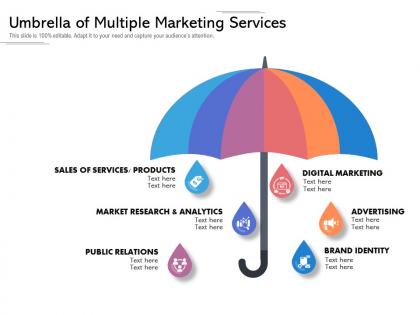
Umbrella of multiple marketing services




Try Before you Buy Download Free Sample Product
 Impress Your
 Audience
 100%
100% Editable
 Save Hours
 of Time


Highlight each andevery detail. Every point will shine through on our Umbrella Of Multiple Marketing Services.
People who downloaded this PowerPoint presentation also viewed the following :
Umbrella of multiple marketing services with all 2 slides:
Our Umbrella Of Multiple Marketing Services are a detailed lot. They cover a variety of topics.

FAQs for Umbrella of
So you want all your marketing stuff to actually work together instead of fighting each other, right? Social media, email, ads - they should feel like they're coming from the same brand. Same goes for your offline stuff too. Honestly, most companies are terrible at this because everyone's doing their own thing. Your messaging needs to match everywhere, which sounds obvious but... yeah. Data tracking is huge - you gotta know what's actually working. Oh, and timing matters way more than people think. I'd start by looking at what you're doing now and spotting where things feel totally disconnected.
Okay so first thing - you need a proper brand style guide. Logo rules, colors, fonts, how you talk, all that stuff. Honestly, most companies think they have this figured out but then their Instagram looks nothing like their emails lol. Get everyone using the same guide for social, website, ads, even how your customer service team talks to people. The hardest part isn't making the guide though, it's actually getting your team to stick to it. I'd start by looking at what you've got now and fixing the most obvious inconsistencies first.
Honestly, data analytics is a game-changer for marketing - it shows you what's actually working instead of just throwing money around and hoping. You can see how your email campaigns boost social engagement, or track how paid ads affect organic search. Super helpful for smart budget allocation too. The coolest part? Watching how different channels influence each other throughout the customer journey. I'd definitely start with cross-channel attribution tracking first - it gets a bit overwhelming otherwise. Once you see those connections, you'll get hooked on optimizing everything.
Honestly, the biggest game-changer is getting all your marketing stuff to actually work together instead of doing random things everywhere. Your social media should match what you're saying in emails, which should match your website - basically tell the same story across everything. Way less chaotic that way. I'd focus on maybe 3 or 4 channels max because trying to be everywhere just burns you out (learned that one the hard way). Start with your main message, then tweak it for each platform but keep that consistent vibe going. It's so much more effective than throwing spaghetti at the wall.
Ugh, the worst part is honestly just getting your teams to actually communicate - way harder than any technical stuff. Marketing uses one platform, sales has another, customer service is doing their own thing. Everything's disconnected so your data's a mess and messaging gets weird. Budget gets tricky when you're juggling multiple channels too. And don't get me started on measuring ROI when customers are hitting like five different touchpoints. My advice? Audit what tools you're currently using first. Figure out which teams absolutely need to work together. Then tackle the integration stuff department by department - trying to fix everything at once is a nightmare.
Honestly, customer segmentation is a game changer because you're not just throwing the same boring message at everyone. Figure out who your different groups are - their age, what they buy, what problems they have. Then write stuff that actually speaks to each group specifically. Way better than shouting random things and hoping something sticks, right? Your engagement goes up, more people convert, and you're not wasting money on ads that don't work. I'd start with maybe 3 or 4 main segments and go from there. Trust me, it's worth the extra effort upfront.
Honestly, presentation templates are lifesavers. You'll spend way less time messing around with fonts and colors, which means more time actually thinking about what you're saying. Plus your whole team stays consistent - I've watched too many solid pitches tank because the slides looked like a hot mess. Templates usually come with smart frameworks too, so your story flows better. Clients won't get distracted by wonky formatting when everything looks clean and professional. Oh, and you'll probably close deals faster too. Start with maybe 2-3 good ones and tweak them for different types of clients.
Here's the thing - social media shouldn't exist in its own little bubble. It works way better when you're using it to continue conversations from your emails, blog posts, or events. Too many companies (honestly, most of them) treat social like it's completely separate from everything else they're doing. Big mistake. Your social calendar should actually sync up with product drops, seasonal stuff, and where customers are in their journey with you. Keep your message consistent but tweak the format for each platform's vibe. I'd start by looking at what you're already doing and finding spots where things can naturally connect.
Honestly, individual channel metrics are kinda useless - you need to see how everything works together. Cross-channel attribution is where it's at because it shows the actual customer journey. Track unified conversion rates and brand awareness across all your touchpoints. Customer lifetime value is probably the most telling metric though. Skip the vanity stuff and focus on shared KPIs like overall ROI and lead quality scores. Oh, and funnel velocity matters too - how fast prospects move through each stage. I'd say pick 3-5 metrics max that actually tie to your business goals and stick with those consistently.
Think of storytelling as your brand's backbone - it connects everything you do. Same narrative on Instagram, emails, your website? People will actually remember you instead of scrolling past. I'd start by nailing down your "why" and tone, then look at where you're already posting. Honestly, most brands just throw random features at people and wonder why nothing sticks. Pick your core story elements and thread them through every single touchpoint. Stories beat boring product specs every time, and consistency makes you recognizable in all the noise out there.
So basically you want one core message that you tweak for each platform. Start with your main value prop, then adjust the vibe - LinkedIn gets the buttoned-up version, Insta gets more visual/story-driven, whatever. I've watched brands sound like totally different companies on each platform and it's so confusing for people. Same keywords and benefits everywhere, but let each platform do its thing. Short sentences work great sometimes. Your team should probably make a quick style guide so everyone's on the same page when they're posting. Honestly saves so much headache later.
Okay so basically you don't want your email campaigns fighting with your other marketing stuff. I'd start by using social media to hint at email-only content, then send targeted emails to people who actually engaged with those posts. Your website should grab emails through like free downloads or whatever, while emails push people back to specific landing pages. Oh and PPC works really well with email too - retarget your email list with ads and the other way around. Most people make this way more complicated than it needs to be though. Just keep your messaging consistent across everything and map out how one customer moves through your funnel. See where email makes sense at each step.
Honestly, AI and machine learning are totally changing the game right now. Your customer data gets way smarter at predicting what people will actually do. Marketing automation tools finally talk to each other (thank god), and attribution modeling can track someone's entire journey now. Headless CMS is having a moment too - you can push content anywhere without starting over. The best part? These tools actually integrate instead of creating more headaches. I'd look at what you're using now and see where you could cut out all that manual copying and pasting between platforms.
OK so first thing - figure out who you're actually talking to. Map out their demographics, where they spend time online, what problems bug them, that stuff. Then switch up your messaging for each group. Like your Gen Z people probably want TikTok videos and memes, but B2B clients are more into LinkedIn posts and email newsletters. Keep your main brand message the same but change how you package it. Oh and here's the thing - track what actually converts, not just likes and shares. That engagement stuff looks nice but doesn't always pay the bills. Test different approaches with each segment.
Nike's "Just Do It" stuff is probably the best example - they nail it across TV, social, stores, athlete collabs, everything. Dove did something similar with their "Real Beauty" thing, keeping the same vibe whether you saw it on a billboard or Instagram. Old Spice totally transformed their brand by connecting their TV ads with social media (honestly that campaign was genius). The key thing I've noticed? These brands don't just spam the same ad everywhere. They build one solid story, then tweak how they tell it for each platform. Map out where your audience hangs out first, get your team on the same page about the main message, then adapt from there.
No Reviews