

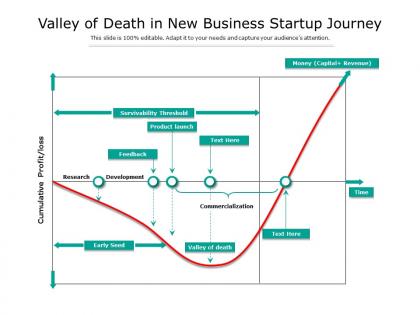
Valley of death in new business startup journey




Try Before you Buy Download Free Sample Product
 Impress Your
 Audience
 100%
100% Editable
 Save Hours
 of Time


Our Valley Of Death In New Business Startup Journey are explicit and effective. They combine clarity and concise expression.
People who downloaded this PowerPoint presentation also viewed the following :
Valley of death in new business startup journey with all 2 slides:
Give your audience a fulfilling experience. They will find our Valley Of Death In New Business Startup Journey elevating.

FAQs for Valley of death in new
Oh man, the Valley of Death - yeah that's when you've got a working product but you're still bleeding money. Basically you're past the "will this even work?" stage but nowhere near making real profit yet. Customers take forever to actually buy, scaling costs way more than you thought, and you're constantly hunting for more funding. Most startups actually die right here, which is pretty depressing but true. You'll know you're in it when your burn rate keeps climbing and sales cycles drag on forever. Honestly, the only real trick is planning for it upfront - like, assume everything will take twice as long.
Ugh, you're probably there when cash is getting tight but you're still not making enough to cover expenses. Look for red flags like missing those funding milestones, or when customer acquisition costs way more than you budgeted for. Sometimes you realize your product-market fit isn't actually there yet - which honestly sucks but happens to most of us. It's that brutal middle ground between having something that works and actually being profitable. Track your runway religiously though, and don't sugarcoat the numbers when things look sketchy.
Ok so three things that actually matter: bootstrap like crazy, get bridge funding before you're desperate, and pivot quick when shit isn't working. Most founders I know just bleed money during this phase - it's wild how fast cash disappears. Keep your burn super low while you're still figuring out if people actually want your product. Also, start talking to investors way earlier than you think because that process drags on forever. Don't get married to your original idea either. If the numbers are telling you it's not working, listen to them. Stay scrappy until you've got real revenue coming in.
Honestly, funding is what saves you from the dreaded Valley of Death - that brutal gap between having a cool idea and actually selling it. Start with grants or angel investors for your proof-of-concept stuff. Then you'll need VC money when it's time to scale up and manufacture. Here's the annoying part: regular investors think it's too risky, but government funding is usually pretty limited. I'd stack different funding sources and map out a solid commercialization plan so investors can see how their cash becomes real products. Oh, and don't wait until you're broke to network - build those relationships way ahead of time.
So basically there's this brutal funding gap called the Valley of Death that kills most promising tech. Academic grants cover early research, and mature products eventually get investors. But that middle phase? Total nightmare. Too risky for most VCs, way too expensive for university budgets. Honestly it's where breakthrough innovations just sit there dying slowly. Technologies can languish for years without money for development or testing. Your best shot is finding alternative funding early - government innovation programs, corporate partnerships, maybe specialized deep tech funds. Though finding those feels like hunting unicorns sometimes.
Look, you gotta watch your burn rate and runway - that's obviously crucial. But also track prototype milestones and where you stand with regulatory stuff. Customer feedback is honestly everything though, way more valuable than internal metrics sometimes. Monitor how fast you're filling skill gaps on your team too. Partnership interest and investor meetings are good indicators you're moving in the right direction. The goal is hitting tech milestones while your burn rate isn't spiraling out of control. I'd do monthly reviews of all this - gives you enough time to actually pivot if things start looking sketchy.
Dude, mentors are absolute game-changers when you're in that brutal gap between getting initial funding and actually making money. They'll stop you from making expensive stupid mistakes and help you fine-tune your business model. Other entrepreneurs who've been through the same hell? Gold mine of practical tips you can't Google. Warm intros through your network beat cold-emailing VCs every single time - like, it's not even close. Oh and start building these relationships way before you're desperate, because nobody wants to help someone who reeks of panic. Trust me on this one.
Biotech and clean energy get absolutely crushed in the Valley of Death. Medical devices and deep tech too. The problem? You burn through millions on R&D, finally get a working prototype, then realize you need even more cash to actually manufacture and prove people will buy it. Most innovations literally die here - it's brutal. Hardware companies have it way worse than software since you can't just quickly test new ideas or change direction without spending a fortune. Oh, and start schmoozing Series B investors super early. Like, embarrassingly early.
So it totally depends on what sector you're talking about. Healthcare is absolutely brutal - we're talking 10-15 years from discovery to actually hitting the market because of clinical trials and all that FDA stuff. Tech moves way faster though, maybe 2-3 years since you're mostly just figuring out user adoption and scaling. Manufacturing and clean energy sit somewhere in between. They've got technical stuff to work out plus building infrastructure. Really comes down to how much regulation you're dealing with and capital needs. Healthcare requires massive upfront cash with no guarantee it'll work out, but tech companies can iterate quickly without breaking the bank initially.
Dude, cash flow is everything - you'll go broke faster than you think if you're not obsessed with it. Get multiple funding sources lined up way before you actually need the money. Diversify your revenue streams early, and honestly? Don't be too proud to pivot when things aren't working. Look at Tesla - they almost died like three times but kept finding weird ways to bridge those funding gaps. Oh, and whatever timeline you're thinking, double it. Maybe triple the costs too. Always have a backup plan because this stuff takes forever and burns through cash like crazy.
Oh man, market timing is everything for that brutal Valley of Death phase. When it's a bull market, investors are throwing money around and actually want to fund risky startups - makes getting between rounds way easier. But bear markets? Forget about it. Suddenly everyone's paranoid, they take forever with due diligence, and your valuation gets crushed. Plus customers won't touch new tech when they're worried about the economy. Honestly, the smart move is raising extra cash during good times because markets flip fast. You don't want to be caught scrambling when everything goes sideways.
Look, you don't have to tackle that funding nightmare solo. Find partners who fill in your gaps - maybe you've got the cool tech but they have actual manufacturing contacts or market reach. Split those brutal development costs with established companies, research labs, or honestly even competitors sometimes. It's wild how much easier fundraising gets when investors see you're not just some lone founder betting everything on an unproven concept. The resource pooling alone saves your ass, but the real win? You get their expertise and network too. Just make sure they bring something you actually need to the table.
Dude, the Valley of Death messes with your head so badly. You're watching your bank account drain while desperately trying to prove your idea works. Rejection after rejection from investors starts making you feel like a total fraud. Cash flow anxiety becomes your constant companion - honestly, I lost so much sleep during those months. Imposter syndrome hits different when you're basically begging people to listen to your pitch. Find other founders who've survived this nightmare and talk to them regularly. Also, celebrate tiny wins along the way or you'll go insane. Trust me on that one.
Honestly, your business model can make or break everything. I've watched so many smart founders crash because they built cool tech but had zero clue how they'd actually make money. You don't need it perfect right away, but figure out one solid revenue stream first - like, really prove it works before you go chasing ten different income sources. Show people (investors, customers, whoever) that you get the money side of things. Unit economics matter way more than most people think. Without clear revenue and a realistic path to profit, you're just burning cash until someone pulls the plug.
Check out the SBA first - their funding gap guides are free and actually useful. SCORE's got mentors who've been through this mess before, which is pretty valuable. Also dig into TechStars and Y Combinator's blog content, there's some really good stuff buried in there. "Venture Deals" by Brad Feld is worth reading too, plus The Lean Startup approach for managing burn rates. I'd honestly start with SBA since it won't cost you anything, then move on to the accelerator blogs once you've got the basics figured out. Oh, and don't sleep on SCORE's mentorship - sometimes you just need someone who's survived the valley of death to tell you you're not crazy.
No Reviews