

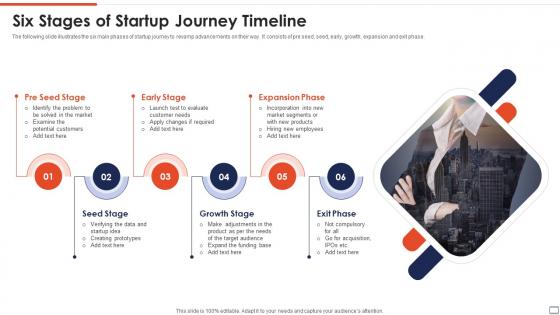
Six Stages Of Startup Journey Timeline




Try Before you Buy Download Free Sample Product
 Impress Your
 Audience
 100%
100% Editable
 Save Hours
 of Time


The following slide illustrates the six main phases of startup journey to revamp advancements on their way. It consists of pre seed, seed, early, growth, expansion and exit phase.
People who downloaded this PowerPoint presentation also viewed the following :
Six Stages Of Startup Journey Timeline with all 6 slides:
Use our Six Stages Of Startup Journey Timeline to effectively help you save your valuable time. They are readymade to fit into any presentation structure.





FAQs for Six Stages Of
So there are basically five stages startups go through: ideation (validating your idea), pre-seed (building MVP and team), seed (first real funding), growth (scaling everything), then exit/maturity. But here's the thing - it's way messier than it sounds. You'll bounce around between stages constantly. Early on you're just trying to prove people actually want what you're building, then later it becomes about growing without burning cash. Oh and founders always think they're further along than they really are, which is hilarious but also dangerous. Just focus super hard on whatever stage you're actually in right now.
Dude, talk to actual customers first - don't build anything yet! I made this mistake and wasted like 3 months on something nobody cared about lol. Do surveys, interviews, maybe throw up a quick landing page. Your friends will totally lie to you because they're being nice, so find strangers who'd actually buy this thing. Try getting people to pre-order or join a waitlist - that's when you know if they're serious. Can't get even 10-15 people genuinely pumped about it? Time to pivot before you burn more time building.
Think of market research as your startup's reality check. It shows you where customers actually hang out, not where you assume they do. You'll validate assumptions about pain points and pricing before wasting money on products nobody wants. Honestly, I've watched too many founders skip this and kick themselves later. Surveys and customer interviews - even basic ones - will save you from brutal mistakes. The data lets you pivot early when something's off. Plus you get real evidence to back up your strategy decisions instead of just going with gut feelings.
Stop chasing every investor - that's a rookie mistake. Look up who actually funds companies like yours at your stage. Their portfolio pages don't lie. Angels want proof customers actually want your product. VCs? They're hunting for something that can scale big. Pick 2-3 types max and really study what makes them tick. Your pitch needs real numbers, not just "we're gonna be huge" talk. Everyone says that. Custom tailor each outreach instead of copy-pasting the same deck everywhere. Show them you get what they care about and you'll have way better luck getting meetings.
Oh man, biggest mistakes I see? Don't hire like crazy just because you can. Scale only after you've actually figured out what people want - I learned this the hard way lol. You'll want to build every feature customers ask for, but honestly? Pick one thing and nail it. Watch your spending too because it gets messy fast during growth. Your first customers are gold - don't ignore them while hunting for new ones. And start measuring stuff now if you aren't already. Data beats gut feelings when you're deciding what actually works.
Look, early stage marketing is basically you doing whatever works - guerrilla stuff, cold DMs, maybe some social posts that randomly blow up (or totally bomb). But once you start growing, that chaos won't cut it anymore. You've gotta get more systematic with proven stuff like content and paid ads. Here's the thing though - don't ditch what's already working! Instead, figure out how to turn those scrappy wins into something you can actually repeat. Start tracking what's driving real growth right now, otherwise you'll just waste money chasing every new platform that pops up. Document everything before it becomes a "we think this worked" situation.
Culture makes or breaks startups, honestly. Good culture means faster decisions, better bounce-back from failures, and people actually want to work there. Toxic vibes? You'll lose your best talent fast. Product suffers, investors notice - it's a mess. I've watched companies with solid ideas completely crash because the team dynamic was garbage. Define your values early and actually stick to them (not just wall decor). Oh and hiring for culture fit matters way more than most founders think.
Honestly, focus on metrics that actually matter for where you're at right now. Early stage? User engagement and product-market fit beat vanity metrics every time. We made this mistake - got obsessed with downloads while our retention was trash lol. Real usage patterns and customer feedback scores will tell you way more than total signups ever will. Set up monthly check-ins where you're brutally honest about the trends. Three key indicators consistently going down despite your best efforts? Time to pivot. The hardest part is listening to what the data actually says, not what you're hoping it'll say.
Honestly, just pick one thing you want to solve and nail that first. Don't get sucked into adding a million features - I've watched so many people do this and it never ends well. Figure out what you're most unsure about with your users, then build the absolute bare minimum to test it. Yeah, it'll probably feel weirdly simple, but that's the point. Use whatever tools already exist instead of reinventing everything. The key is getting it to actual people fast, even if you cringe a little showing it off. Trust me, their reactions will tell you way more than sitting around guessing what they want.
Oh man, networking is HUGE for startups - probably top 3 most important things honestly. Your network becomes everything: co-founders, first customers, funding, mentors. But here's the thing - help people first before asking for stuff. Join startup groups, hit up events, be active on LinkedIn. Always follow up after meeting someone too. Some of my best breaks came from totally random coffee meetings that felt like nothing at the time (weird how that works). Build those relationships way before you actually need them - that's when the real magic happens. Can't stress this enough.
First thing - pick your business structure. LLC or corp makes a massive difference for taxes and who can come after you personally. Split that equity with co-founders now and get it on paper, trust me on this one. Also protect your IP if you're building something unique. Once you start hiring people, employment stuff gets tricky fast. The paperwork sucks but whatever. Find a good startup lawyer early and budget for it upfront. Way cheaper than cleaning up a mess later when you actually have money to lose.
Look, figure out what actually makes you different - not just the stuff that sounds impressive on paper. Most "saturated" markets? They've still got holes if you dig deep enough. Your edge comes from solving problems in ways competitors can't or won't touch. Don't try beating everyone at their own game. Double down on what you're genuinely good at instead. Stay ridiculously close to your customers, move faster than the other guys, and pivot when something better pops up. Honestly, speed and being able to adapt quickly will beat having tons of cash most of the time.
Honestly, treat your first customers like gold because they're basically betting on you when nobody else will. Respond super fast to their problems and actually listen to what they're saying - I can't stress this enough. Maybe throw in some early-bird perks or a simple loyalty thing. Personal touches are huge too, like remembering what they actually need or even handwritten notes (sounds cheesy but it works). You want them feeling like they discovered some hidden gem before it blows up. Oh, and start tracking how they use your stuff now so you'll catch red flags before they bail.
Dude, start with your origin story - like why you actually started this thing and what problem pissed you off enough to solve it. Put that everywhere: your About page, pitch decks, social posts. Customer success stories are honestly way more powerful than boring feature lists. Document the messy stuff too - product fails, team quirks, random setbacks you survived. Your marketing doesn't have to be all "benefits and features" either, it can actually tell a story. Oh and write this stuff down now while it's still fresh in your head, you'll need it for everything later.
Build stuff that can handle way more traffic than you have now, but don't go crazy with it right away. Automate the boring stuff first - onboarding new customers, basic support tickets, billing. That's honestly where you'll save your sanity. Tech stack matters but not as much as people think. Pick tools that won't completely fall apart when you grow. Oh, and document everything as you go (I know, I know, it's annoying but you'll thank yourself later). Start tracking metrics now so you can catch problems before they blow up.
-
Easy to use and customize templates. Helped me give a last minute presentation.
-
Informative presentations that are easily editable.