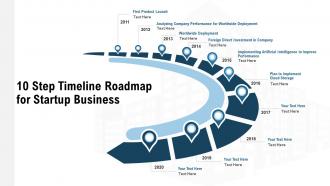
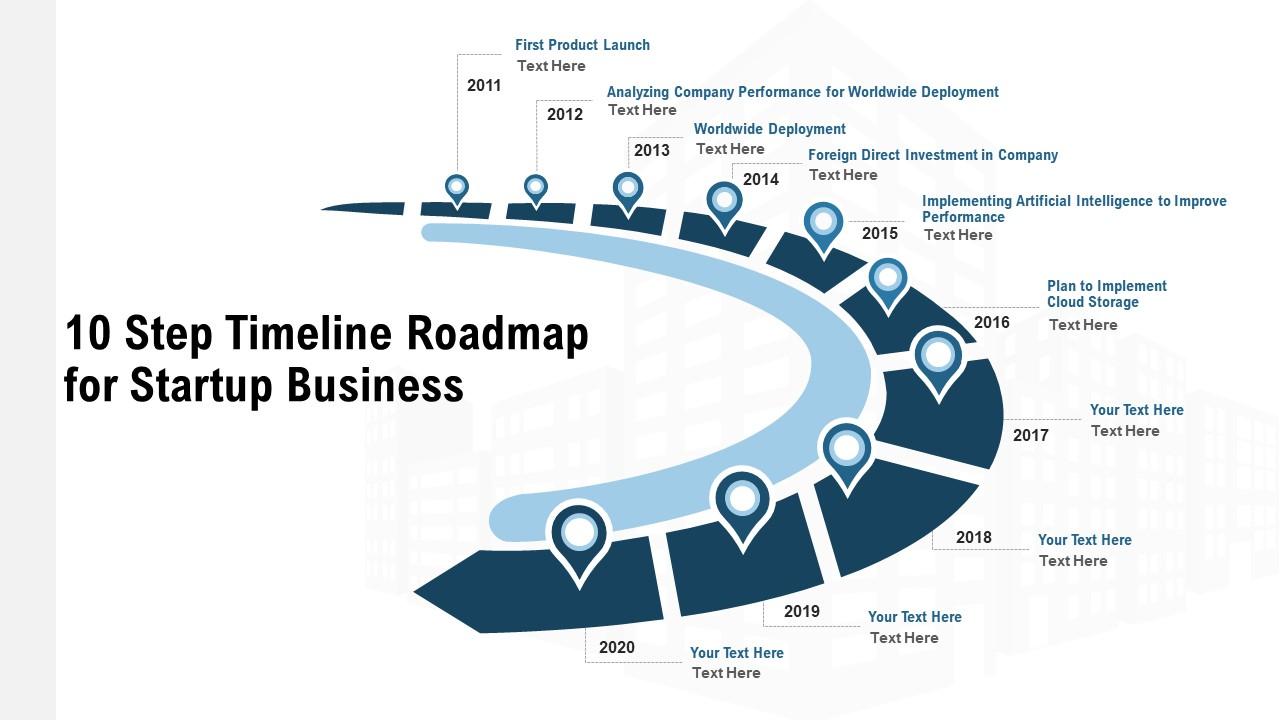
10 step timeline roadmap for startup business
Try Before you Buy Download Free Sample Product
Audience
Editable
of Time
Get folks aware of your jubilee celebrations with our 10 Step Timeline Roadmap For Startup Business. Exult about your achievement.
People who downloaded this PowerPoint presentation also viewed the following :
10 step timeline roadmap for startup business with all 2 slides:
Our 10 Step Timeline Roadmap For Startup Business ensure you don't judge in a hurry. Deliberate deeply about every issue.
FAQs for 10 step timeline roadmap
So there's basically five stages most startups go through. You start with ideation/validation - just testing if your idea actually fixes something people care about. Pre-seed comes next where you're building your MVP, maybe getting some cash from friends or angel investors. Seed stage is when you properly launch and start getting real customers (honestly this part's a mess but exciting). Once you've nailed product-market fit, Series A hits and you focus on scaling up. Growth stage is the final push - expanding into new markets, maybe going public eventually. Don't rush between these though, each one needs to be solid first.
Dude, just go talk to people. Like actual conversations, not those weird survey forms everyone ignores. Find their biggest problem that you can actually fix without burning through all your cash. Your MVP should be almost embarrassingly simple - just one core thing that works. I know it's tempting to add cool features, but resist that urge completely. Pick one assumption about your market and prove it. Build something you can ship in maybe 6 weeks tops. Get real users touching it, then fix what's broken based on their complaints.
Different stages need different metrics, honestly. Early on with your MVP? Just watch if people actually use the thing and what they're saying about it. Once you've got some traction, switch to the money stuff - how much it costs to get customers, monthly revenue, who's bailing out. That's when your spreadsheets start taking over your life, fair warning. Later you'll dive into unit economics and burn rates for investor pitches. Don't try tracking everything though - I made that mistake once and wanted to cry looking at all those dashboards. Pick maybe 3-5 things that actually matter right now and focus there.
Market timing changes everything tbh. Hot market with investor buzz? Rush that MVP out there - timing wins over polish every time. But if things are slow or getting crowded, take your time building something that actually stands out. I've watched so many startups crash by launching at the worst possible moment and just bleeding money. Keep tabs on what competitors are doing, funding announcements, how customers are feeling. Then actually adjust your timeline based on that instead of some random date you picked months ago. Way smarter than being stubborn about deadlines.
Dude, customer feedback should drive like 70% of your roadmap - no joke. Support tickets, user interviews, usage patterns... that's where the gold is. Don't fall into the trap of building what YOU think is cool (guilty of this myself tbh). I've watched so many startups crash because they got obsessed with their own vision instead of solving actual problems. Keep your roadmap flexible. When users keep asking for the same thing, listen up. Set up those feedback loops and prioritize stuff people are actually struggling with daily.
Honestly, ditch those big quarterly plans - they're basically useless. Break everything down into 2-4 week chunks instead. Focus on your most important stuff first, then only plan one sprint ahead in detail. Keep the rest loose because you'll change it anyway. Weekly check-ins are clutch for adjusting based on what you actually learn. I'd say plan maybe 60% of your current sprint and leave space to completely switch directions if needed. Sounds chaotic but it works way better than those perfect timelines that fall apart the second a customer gives feedback. Just make sure your next sprint is ready to roll.
Dude, the
No Reviews