


Startup six months roadmap with marketing example





Try Before you Buy Download Free Sample Product
 Impress Your
 Audience
 100%
100% Editable
 Save Hours
 of Time


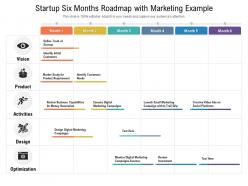
The success rate of business plans is hugely dependent on the plan of action, and this editable Startup Six Months Roadmap With Marketing Example rightly serves the purpose. Encapsulate all the information related to the project in a well structured manner to obtain maximum efficiency by incorporating our stunning PowerPoint theme. State the critical deliverable, steps involved, time frame, workforce allocation, and lots more in an easy to understand manner by utilizing this pre designed roadmap PowerPoint layout. You can also prioritize your tasks and discuss the problem areas with your colleagues by incorporating this tailor made PPT layout. Empower your work plan by employing this professionally designed PPT theme. Entrepreneurs can download Startup Six Months Roadmap With Marketing Example as a beneficial communication tool that facilitates in collaborating with different tasks and achieve targets.
People who downloaded this PowerPoint presentation also viewed the following :
Startup six months roadmap with marketing example with all 2 slides:
Use our Startup Six Months Roadmap With Marketing Example to effectively help you save your valuable time. They are readymade to fit into any presentation structure.
FAQs for Startup six months roadmap
Honestly, start with talking to real potential customers - not just your buddies who'll hype up anything you do. Market research comes next, then build your MVP. Testing with actual users is huge (so many people skip this step and wonder why they fail). Get their feedback, iterate like crazy, then work on your launch strategy. I'd break this into 2-4 week chunks so you don't lose steam. Set clear metrics for each phase - otherwise you'll just drift forever. Oh, and validate your idea first before building anything fancy. Sounds obvious but you'd be surprised how many skip straight to coding.
Look for goals that actually move the needle on revenue or getting new users - that's where you want to focus first. I'd suggest trying the ICE framework (Impact, Confidence, Ease) to score everything instead of just winging it. Tbh most startups I've seen bite off way more than they can chew. Stick to maybe 2-3 big goals per quarter, tops. Think about what resources you actually have and which goals depend on others happening first. Just throw it all in a spreadsheet and rank it - nothing fancy. Review monthly since things change fast.
Look, market research is basically your sanity check before you build anything. It shows you what customers actually want - not what you're hoping they want in your head. I'd start with maybe 10-15 customer interviews and some basic competitor analysis. Super simple stuff. This helps you figure out which features to prioritize first and avoid those brutal pivots later (trust me, I've watched friends waste months on the wrong direction). You can spot gaps in the market early and sequence your milestones based on real demand instead of guesswork.
Your roadmap isn't set in stone - it should change based on what users actually say. When you keep hearing the same complaints or requests from multiple people, that's when you know something needs attention. I learned this the hard way by ignoring obvious patterns for way too long. Focus on real pain points, not just random feature requests that sound cool. Those "nice to haves" can wait. Update things every few months, but don't pivot constantly or you'll never finish anything. It's honestly a balance between listening and not getting distracted by every single piece of feedback that comes in.
Honestly, I'd just go with Miro or Figma for visual stuff - they're solid. Notion works great if you want more data behind everything. ProductPlan's decent but kinda expensive for early stage tbh. You know what though? I've seen teams crush it with Canva or even PowerPoint. Sounds basic but whatever works, right? The tool doesn't really matter as much as making sure investors and your team can actually follow the story you're telling. Just pick something you already know how to use. Focus on nailing those milestones instead of getting stuck comparing features forever.
Look at your roadmap monthly but actually change things every quarter or so. Three months is honestly my sweet spot - any longer and you're probably ignoring what customers are telling you. Don't flip out over one bad review though, wait until you see real patterns emerging. I learned this the hard way when I kept second-guessing myself based on random feedback. The trick is staying flexible without losing focus on what you're actually trying to build. Oh and set a calendar reminder because I always forget otherwise.
Honestly, the worst thing you can do is overthink the planning phase. I've seen so many founders burn weeks on perfect roadmaps that fall apart immediately. Triple your time estimates - I'm not kidding, everything takes way longer than expected. Keep things loose beyond the next quarter. Customer feedback will completely change your priorities anyway. Monthly reviews work better than quarterly ones because startup life moves crazy fast. You need clear milestones but don't box yourself in. Reality has zero respect for detailed plans, so build in room to pivot when needed.
Look, your cash runway basically controls everything you can build. Got 18 months? You're gonna focus on revenue-generating features, not cool extras that don't move the needle. Think of it like planning a road trip when you're broke - hit the must-see spots first. Also helps you time fundraising rounds better. Need investor demos ready by certain dates? Work backwards from there. I learned this the hard way tbh - spent way too long on features that looked impressive but didn't actually matter for our next milestone. Map your priorities against your burn rate and you'll save yourself major headaches.
Honestly, I always work backwards from launch dates - way less confusing that way. Map out your big milestones first, then figure out what skills you need for each one. Everyone should know WHY their work matters, not just what they're doing. Like, your devs need to get how their sprint connects to getting users, and marketing can't promise features that don't exist yet (learned that the hard way). Do regular check-ins so people can speak up if timelines are unrealistic. Oh, and make a simple RACI chart - sounds corporate but it actually prevents so much drama about who's responsible for what.
Dude, you need both but for different reasons. Short-term stuff gives you and your team those dopamine hits when you actually ship something - like hitting user numbers or launching features quarterly. But honestly? I've watched so many startups just sprint endlessly without knowing where they're going. Long-term goals are your actual destination. Start with where you want to be in 3 years, then break it down. Your quarterly wins should connect to that bigger vision, otherwise you're just busy being busy. It's like... you can't just put out fires forever, right?
Dude, make your roadmap visual - nobody wants to read paragraphs of dense stuff. Timelines work great, plus clear metrics they can follow. Focus on the big wins: product launches, revenue goals, key hires, funding rounds. Don't get stuck listing every tiny feature (learned this the hard way). Send quick monthly updates showing what you hit vs what you promised. Be honest about delays - they'll respect that more than BS excuses. Oh and always connect it back to growth numbers. Brief emails with a simple dashboard attached usually do the trick.
Honestly, a solid roadmap is a game-changer for team morale. People get way more motivated when they can actually see how their random Tuesday tasks tie into something bigger. No more of that "what's the point" feeling we've all had at crappy jobs. Teams just work better when everyone gets the big picture - they prioritize smarter and make faster decisions. The energy shift is real. I'd start super simple though, maybe just a one-page visual thing? You'll be surprised how quickly people get aligned and actually excited about what they're doing.
Work backwards from launch day and run both timelines together - don't do product first then marketing. Map out your big product moments (MVP done, beta testing, final features) then build marketing around those beats. Like, start getting people excited during beta, not after you ship. Way too many founders think marketing = launch day only, which honestly drives me crazy. Also your marketing buzz should actually change what you build - if everyone's asking for Feature X while you're building hype, maybe prioritize that in dev. Both sides need to talk to each other constantly.
Focus on what actually moves the needle for where you're at right now - revenue, user growth, how many people stick around, and how fast you're burning cash. DAU/MAU and churn rates will show you if people genuinely care about what you're building. Here's the thing though: don't become a metrics zombie tracking everything under the sun. Pick maybe 4-5 that directly connect to your current goals and watch those like a hawk. I'd also keep tabs on whether you're hitting milestones on time. Review weekly with your team, and when the data says you're wrong, pivot the roadmap.
Honestly? Don't just hope networking happens naturally - you'll end up like me, realizing six months later you haven't talked to anyone outside your own team (yikes). Actually schedule mentor meetings monthly and industry events quarterly. Treat them like real deadlines. Map connections to what you're doing too - fundraising in Q3? Start building investor relationships in Q2. Add concrete stuff to your roadmap like "find technical advisor" or "hit up 2 meetups." Sounds obvious but most people skip this step. Being intentional about it changes everything.
No Reviews