

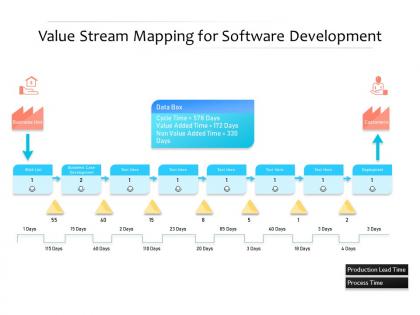
Value stream mapping for software development




Try Before you Buy Download Free Sample Product
 Impress Your
 Audience
 100%
100% Editable
 Save Hours
 of Time


Our Value Stream Mapping For Software Development are explicit and effective. They combine clarity and concise expression.
People who downloaded this PowerPoint presentation also viewed the following :
Value stream mapping for software development with all 2 slides:
Give your audience a fulfilling experience. They will find our Value Stream Mapping For Software Development elevating.
FAQs for Value stream mapping
Honestly, it's like getting x-ray vision for your workflow. Map out every single step from beginning to end - all the value-add stuff plus the annoying waits and do-overs. Sometimes you'll discover weird bottlenecks hiding in plain sight that nobody talks about. The whole point is spotting where time gets wasted so you can fix it. After that, sketch out how things should actually flow instead. I'd pick one process that's been bugging everyone and just start there - don't overthink it.
Honestly, value stream mapping is like turning on lights in a cluttered room - suddenly all the mess becomes obvious. You draw out your whole process from start to finish, tracking every step including the boring stuff like waiting and handoffs. The visual aspect is what makes it work so well. Bottlenecks just pop right out at you. I'd start with mapping what you're doing now first, then figure out what waste to attack. It sounds tedious but you'll be shocked how much junk you don't even realize is there slowing everything down.
So first, put customer demand on one side and your suppliers on the other. Map every single process step with cycle times, wait times, all that stuff. The information flows are super important too - those dotted lines showing how people actually communicate. That's where you'll find your worst bottlenecks, trust me. Add your lead times and quality metrics for each step. Oh, and put a timeline at the bottom comparing total lead time to actual value-added time. Once it's all laid out, the waste becomes pretty obvious.
Oh totally - value stream mapping isn't just for factories! Healthcare uses it to track patient flow, software teams map their code-to-deployment process, finance streamlines loan approvals. Service industries love it too. Here's the thing: figure out what your "product" actually is (a patient, software feature, insurance claim, whatever) then map every single step from start to finish. Bottlenecks jump out at you immediately. Honestly, just pick one process that's driving your team crazy and map it out first. The stuff you'll find hiding in there is wild - we discovered like three completely pointless approval steps last time I did this.
First thing - pick your product family and literally walk the entire process from when customers ask for something to when it gets delivered. Don't skip steps, you've gotta see it yourself. Time everything: how long each step takes, waiting periods, inventory sitting around. You'll be shocked at how much stuff just waits between steps, honestly. Figure out where you're actually adding value vs where things are just collecting dust. Do the math on lead time versus value-added time. Then sketch out your ideal future state by cutting waste and making flow smoother. Get your whole team walking with you - they'll spot things you miss.
Honestly, value stream mapping is a game changer because it gets your whole team looking at the exact same picture of your process. No more meetings where everyone's arguing about how things "actually work" - you've got one flowchart with real numbers showing wait times, handoffs, all that stuff. It stops those annoying conversations where people talk past each other since they only see their piece of the puzzle. Everyone can point to specific spots like "we're bleeding time here" or "this handoff is a mess." I swear, next time your team can't agree on what needs fixing, just get some sticky notes and map everything out together.
Honestly, you can't do value stream mapping without customer feedback - you'll just be shooting in the dark. Their input tells you what actually matters versus what's just internal busy work. I always start by digging through recent complaints and support tickets first (way more honest than surveys, tbh). Customer voices reveal those annoying delays and quality issues you miss when you're too close to the process. They define what "value" actually means, which becomes your measuring stick for everything else. Without that outside perspective, you're basically guessing what needs fixing.
Honestly, don't let your value stream maps become those pretty charts that just sit there while reality changes around them. I'd say review them quarterly - walk through each step and catch what's actually different now. Someone needs to own keeping them current, or they'll just rot. We always spot bottlenecks during regular work anyway, so just note those for your next review session. Major process changes? Update the map right away. The trick is making updates feel easy - if it's a pain, you won't bother doing it consistently.
Honestly, just go with Lucidchart or Visio - they're super popular for a reason and have decent VSM templates already built in. Draw.io is free and works just as well if budget's tight (I actually prefer it sometimes). Minitab's good for number crunching if you need deeper analysis, or there's specialized stuff like eVSM. But here's the thing - half the teams I know still use sticky notes on whiteboards because it's easier to move stuff around. Don't stress too much about the perfect tool. Pick whatever your team will actually stick with and focus on getting good data instead.
Yeah, VSM plays really nice with other lean tools! Most teams I know use it as their starting point, then figure out what else to throw at the problems. Your current state map shows you exactly where to focus - maybe you'll need kaizen events for the messy areas, or 5S to clean up workstations. SMED works great for those long changeover times you'll spot. Honestly, VSM without other tools is kind of pointless. It's like having a GPS but never actually driving anywhere. Once you see your waste patterns mapped out, you can layer on kanban systems or poka-yoke stuff where it makes sense.
Track the same stuff you mapped out initially - lead time, defects, waste, all that. Compare your future state vision against what actually happens after changes go live. Cycle time is where I'd start since improvements are super obvious and people get pumped seeing faster results. Customer satisfaction matters too, plus how your team feels about the new process. Monthly check-ins work well for reviewing numbers. Oh, and employee engagement usually goes up when things run smoother - it's kinda surprising how much that matters. If you're not hitting your targets, don't panic. Just figure out what's off and tweak accordingly.
Honestly, getting good data is the worst part - people always lowball their times or give you some fantasy version of how things work. Walk the floor yourself, trust me on this. Everyone wants to map their entire operation at once too, which is a nightmare. Pick one process and nail it first. Oh, and you'll need someone with actual pull to back the changes you find, otherwise you're just making pretty diagrams. The engagement thing is tricky since half the team thinks it's pointless busy work until they see results.
Honestly, value stream mapping is like taking a snapshot of all your processes - suddenly you can't unsee where everything's getting stuck or wasted. After you make changes, map it again to see if things actually got better (and trust me, new bottlenecks always pop up somewhere else). The whole team gets it because it's visual - no confusing spreadsheets or whatever. Everyone's literally looking at the same picture, so you're all working toward the same fixes. I'd say map every quarter or whenever you make big changes. Catches problems before they spiral.
Look for people who can spot where things get stuck or wasteful - analytical types are gold. Good observers matter too since they'll catch gaps between how things actually work vs how they're supposed to. Communication's critical but tricky - nobody should get defensive when someone points out problems (easier said than done, trust me). Pick your most curious people who really know the whole process. They need basic facilitation skills to keep meetings on track, plus comfort with collecting data and tracking simple metrics. Oh, and find folks who aren't scared to question why we do things the way we do.
Honestly, value stream mapping is pretty brilliant for cutting through all the noise. It shows you exactly where you're actually creating value versus where things just sit around doing nothing. Once you map everything out, it's crazy how obvious it becomes which steps actually help your big goals and which are just... there because they've always been there, I guess. Teams get on the same page way faster when they can see how their daily work connects to what leadership wants. You'll end up fixing the stuff that actually matters - customer happiness, cutting costs, whatever. Start by figuring out which company goals your process actually affects.
No Reviews