


World Motor Vehicle Production Industry Analysis Powerpoint Presentation Slides
The global automotive industry is made up of many different firms and organizations that are involved in the designing, development, manufacturing, marketing, and selling of automobiles. It is one of the worlds most profitable industries, with the largest R and D investment per business. Check out our efficiently designed presentation on World Motor Vehicle Production Industry Analysis. It gives a brief overview of the global automobile market, followed by significant industry segments. This PPT also includes a different section for industry analysis consisting of SWOT, PESTLE, and Porters five force model. Then comes the competitive landscape section, which covers the major players and a brief competitive analysis. Further, this template also includes a significant section of recent industry trends in the vehicle manufacturing market. The showcased trends include electric vehicle adoption, autonomous vehicles penetration, connected cars market, online car-buying market, and automotive parts market growth. The PPT slides of this deck also include the share of the global motor vehicle sector in production, sales, and international trade. The last segment of the presentation includes the impact of COVID on the global auto manufacturing industry. Get to know more by downloading our 100 percent editable and customizable template, which is also compatible with google slides.
The global automotive industry is made up of many different firms and organizations that are involved in the designing, dev..
























-

- Google Slides is a new FREE Presentation software from Google.
- All our content is 100% compatible with Google Slides.
- Just download our designs, and upload them to Google Slides and they will work automatically.
- Amaze your audience with SlideTeam and Google Slides.
-

Want Changes to This PPT Slide? Check out our Presentation Design Services
-

- WideScreen Aspect ratio is becoming a very popular format. When you download this product, the downloaded ZIP will contain this product in both standard and widescreen format.
-
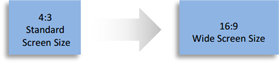
- Some older products that we have may only be in standard format, but they can easily be converted to widescreen.
- To do this, please open the SlideTeam product in Powerpoint, and go to
- Design ( On the top bar) -> Page Setup -> and select "On-screen Show (16:9)” in the drop down for "Slides Sized for".
- The slide or theme will change to widescreen, and all graphics will adjust automatically. You can similarly convert our content to any other desired screen aspect ratio.
Compatible With Google Slides

Get This In WideScreen
You must be logged in to download this presentation.


Do you want to remove this product from your favourites?
PowerPoint presentation slides
Enthrall your audience with this World Motor Vehicle Production Industry Analysis Powerpoint Presentation Slides. Increase your presentation threshold by deploying this well-crafted template. It acts as a great communication tool due to its well-researched content. It also contains stylized icons, graphics, visuals etc, which make it an immediate attention-grabber. Comprising fifty nine slides, this complete deck is all you need to get noticed. All the slides and their content can be altered to suit your unique business setting. Not only that, other components and graphics can also be modified to add personal touches to this prefabricated set.

People who downloaded this PowerPoint presentation also viewed the following :
Content of this Powerpoint Presentation
Slide 1: This slide introduces World Motor Vehicle Production Industry Analysis. State your company name and begin.
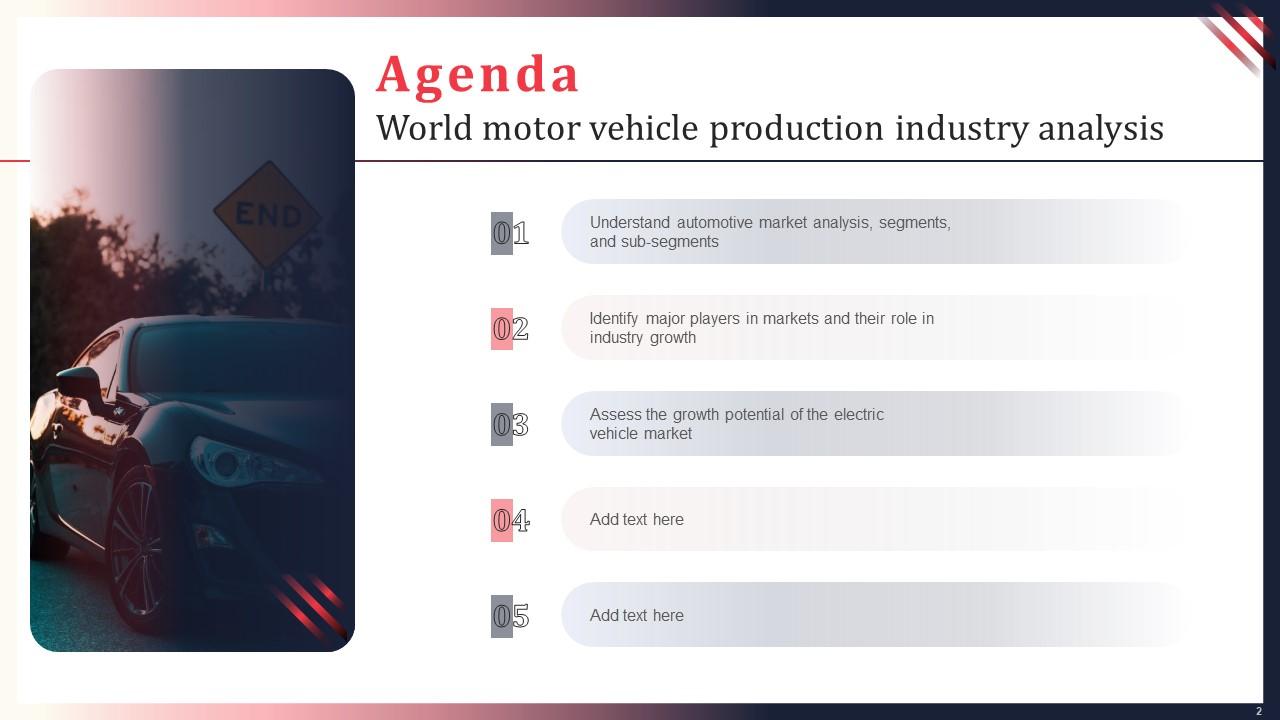
Slide 2: This slide states Agenda of the presentation.
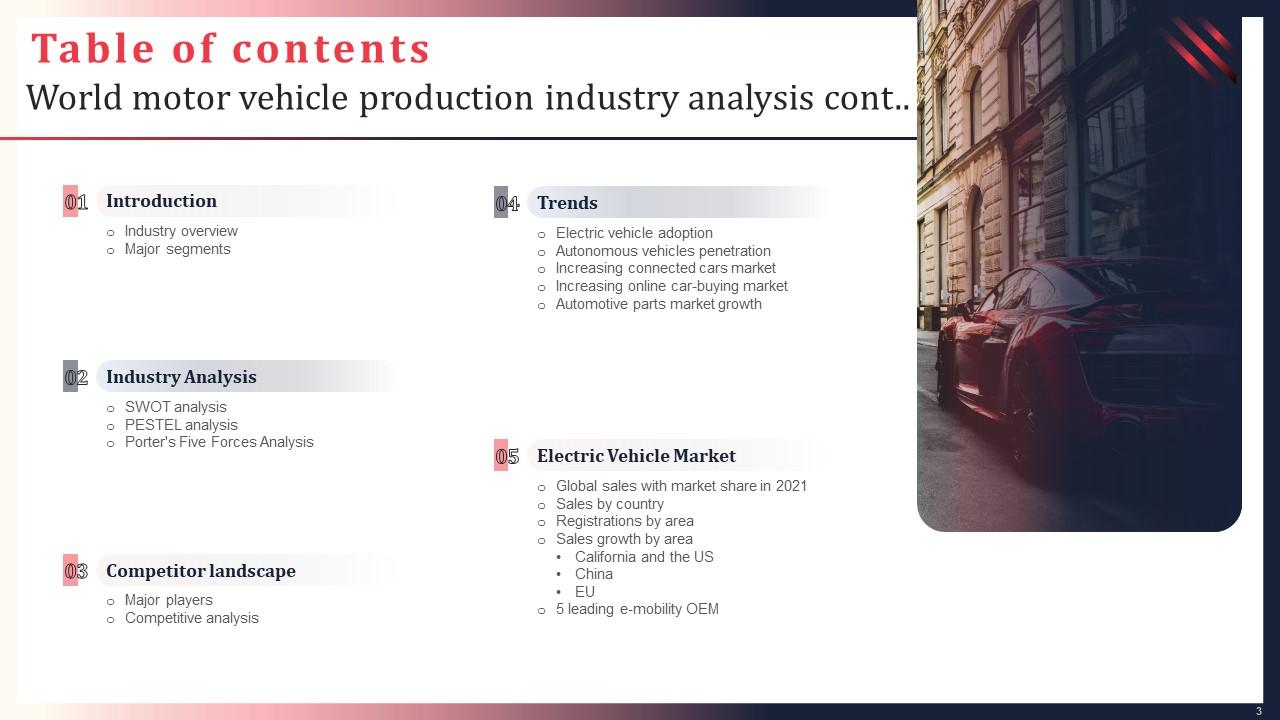
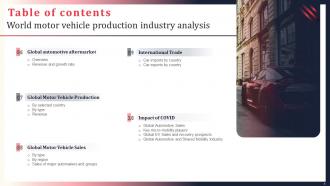
Slide 3: This slide shows Table of Content for the presentation.
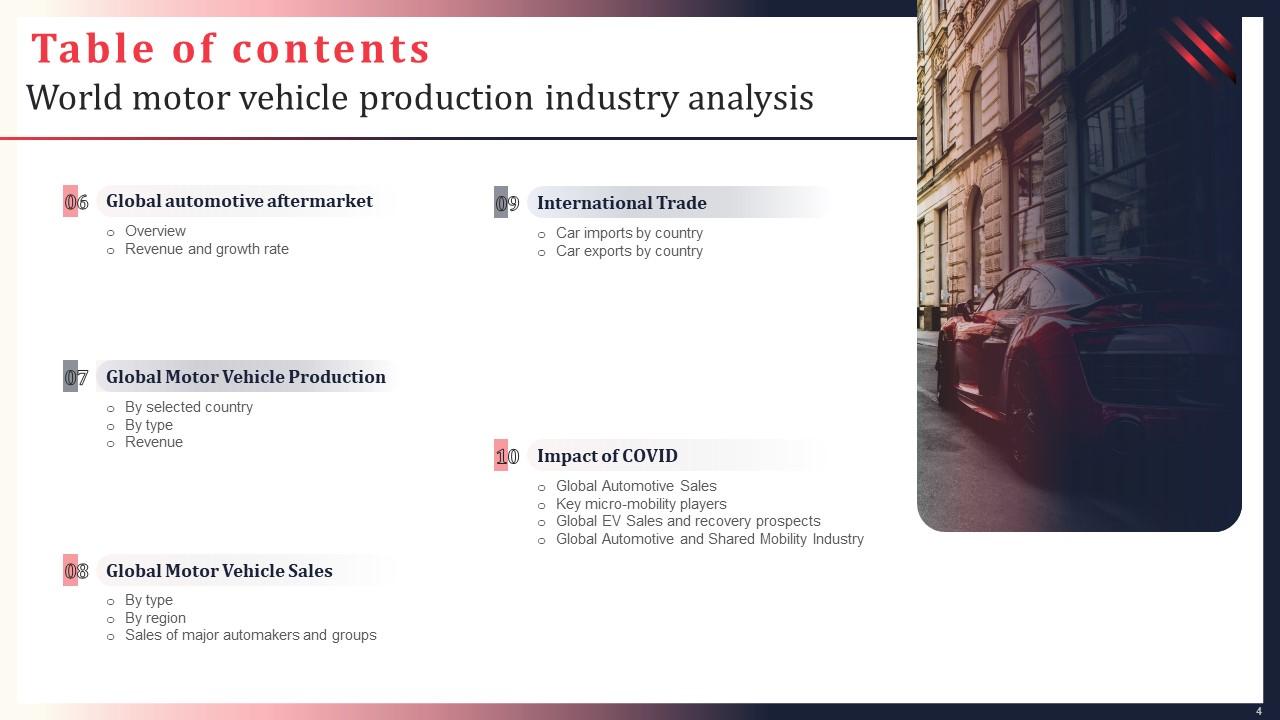
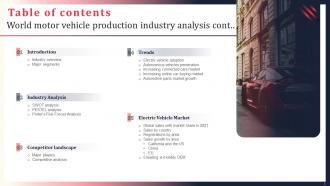
Slide 4: This is another slide continuing Table of Content for the presentation.
Slide 5: This slide highlights title for topics that are to be covered next in the template.
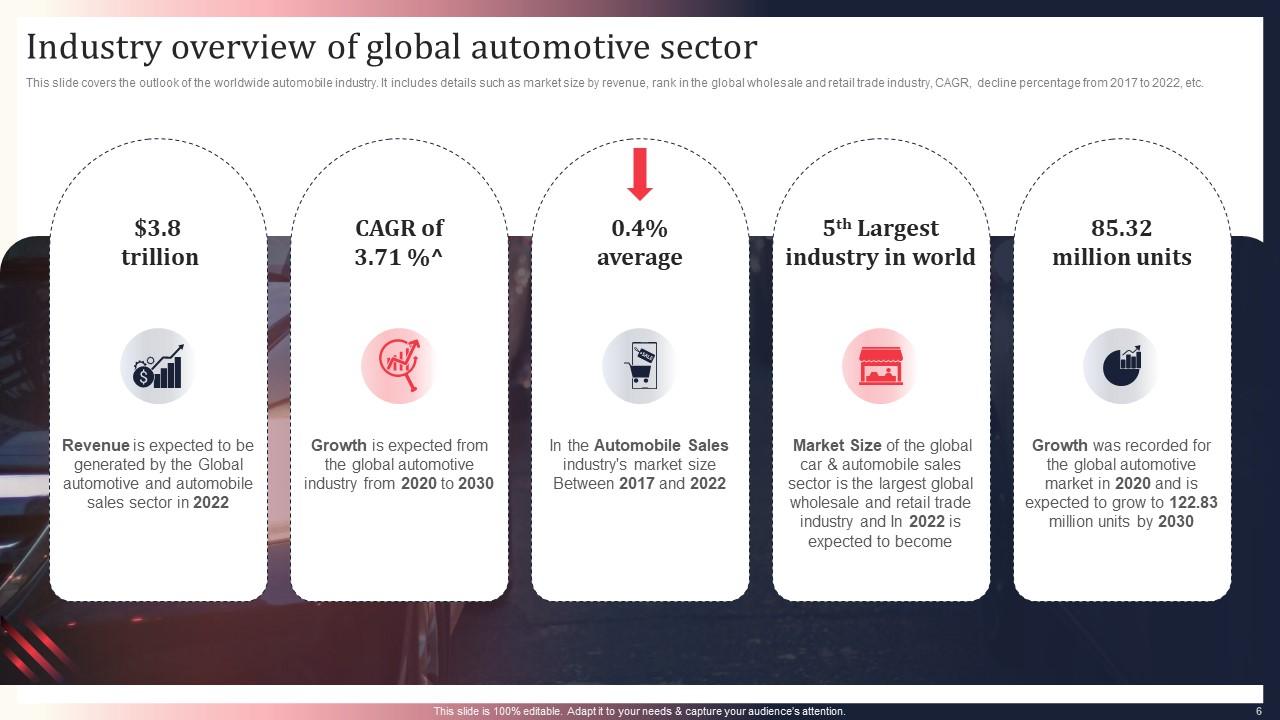
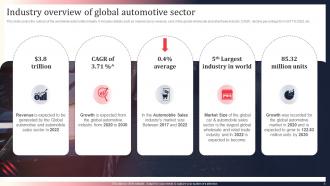
Slide 6: This slide displays Industry overview of global automotive sector.
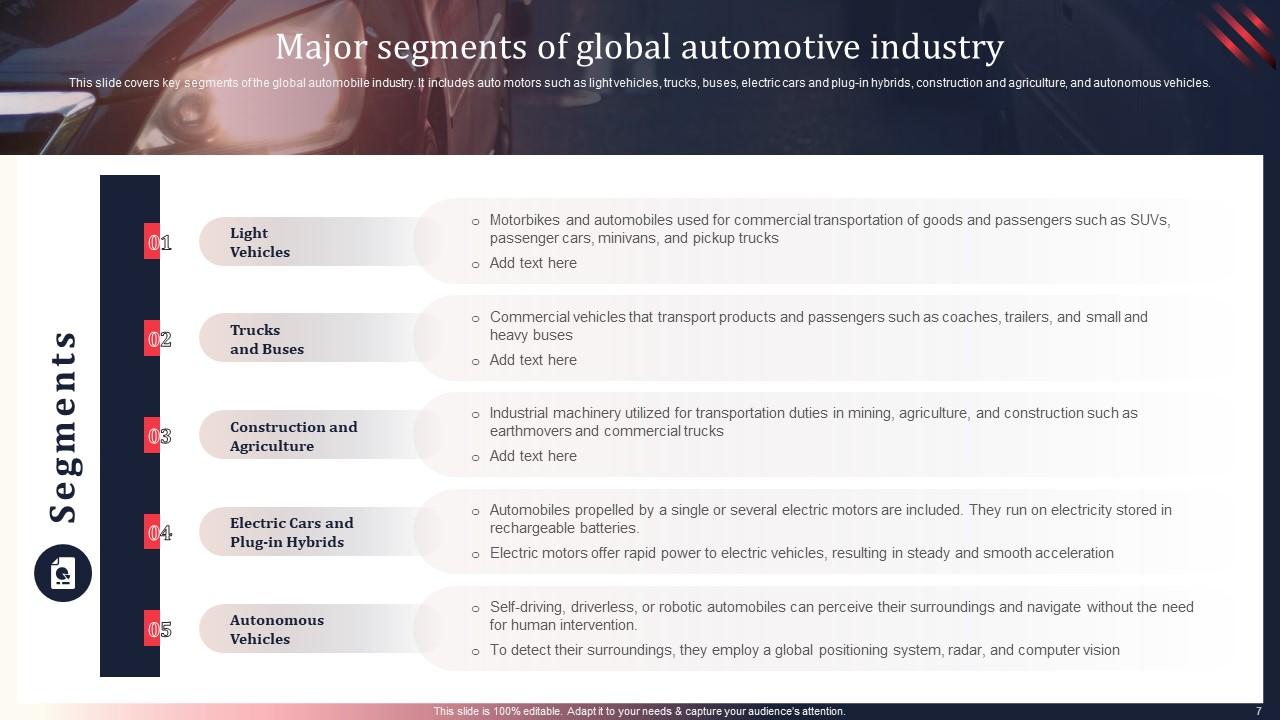
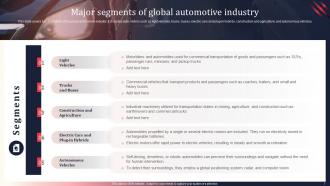
Slide 7: This slide represents Major segments of global automotive industry.
Slide 8: This slide highlights title for topics that are to be covered next in the template.
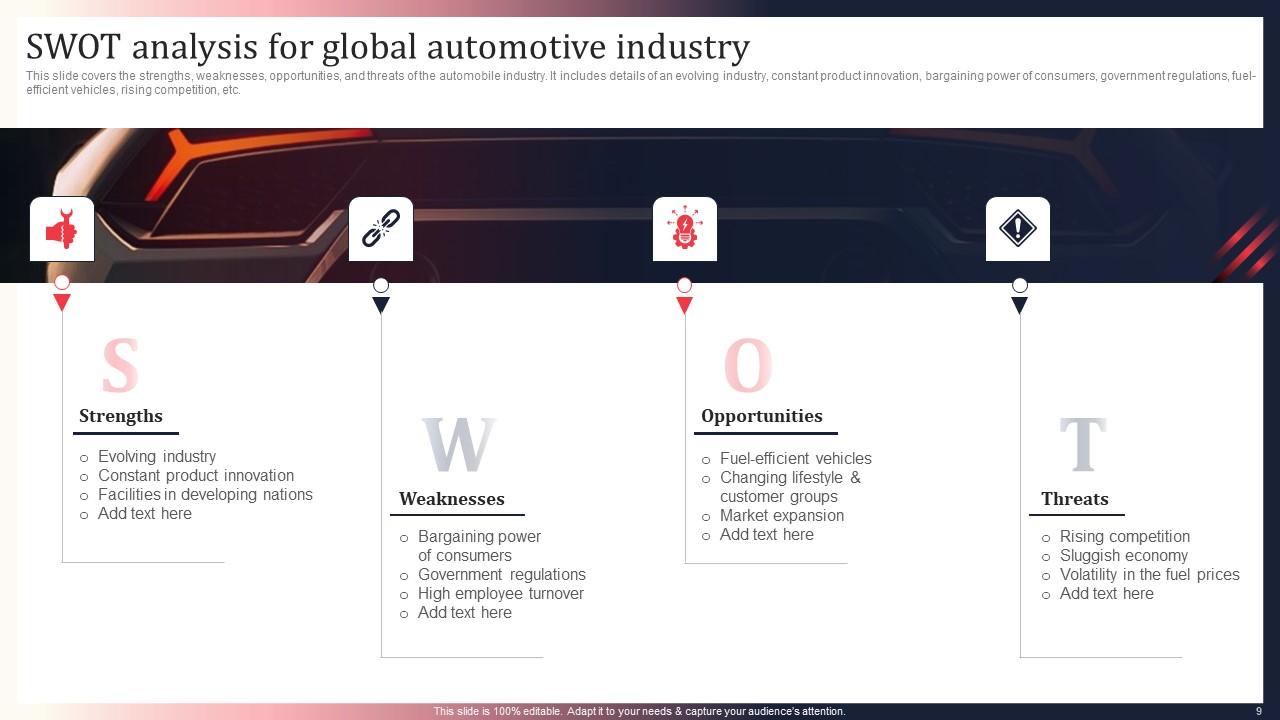
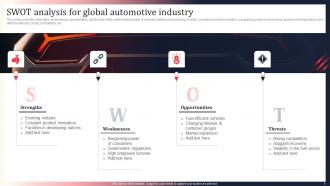
Slide 9: This slide showcases SWOT analysis for global automotive industry.
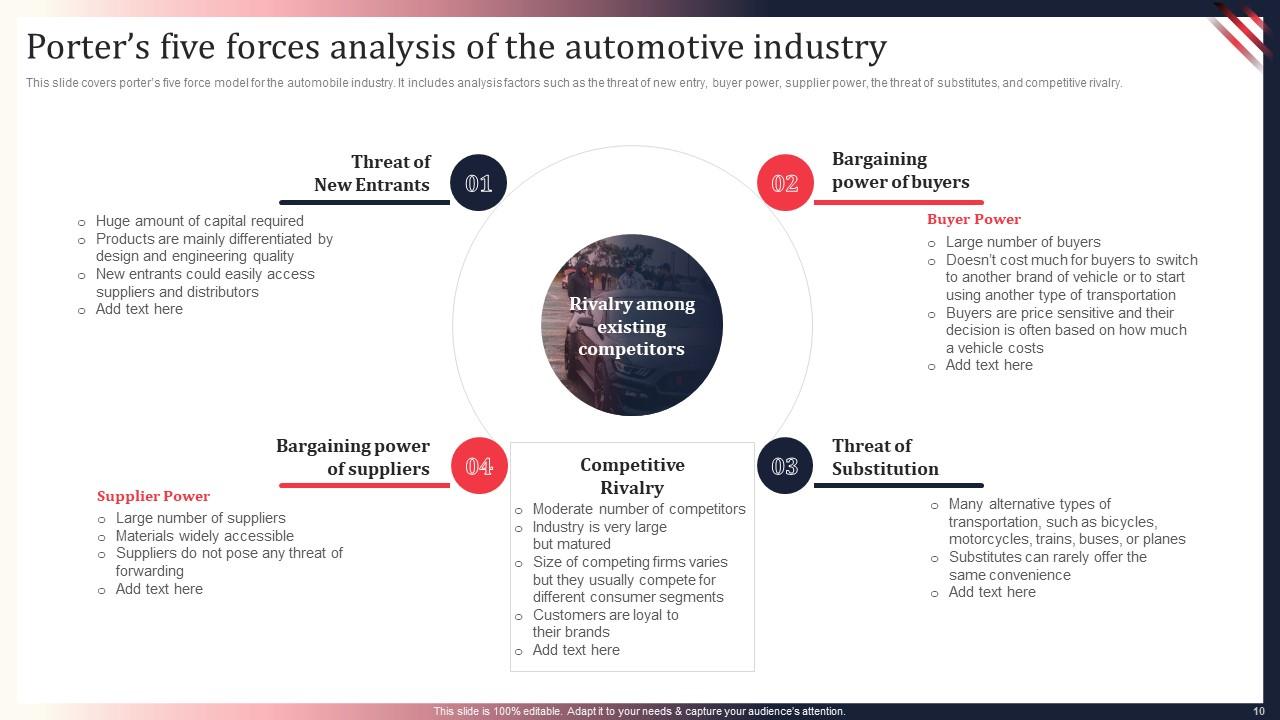
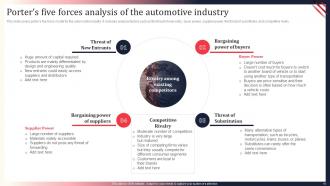
Slide 10: This slide shows Porter’s five forces analysis of the automotive industry.
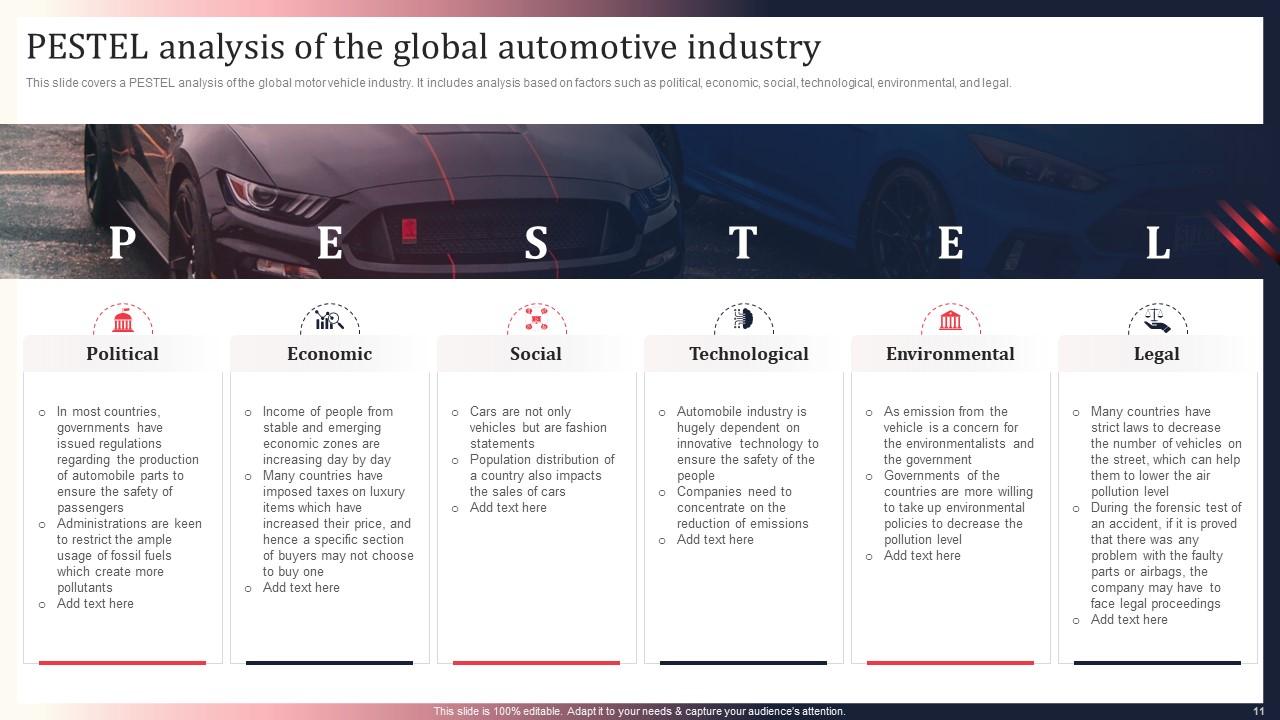
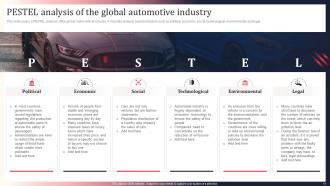
Slide 11: This slide presents PESTEL analysis of the global automotive industry.
Slide 12: This slide highlights title for topics that are to be covered next in the template.
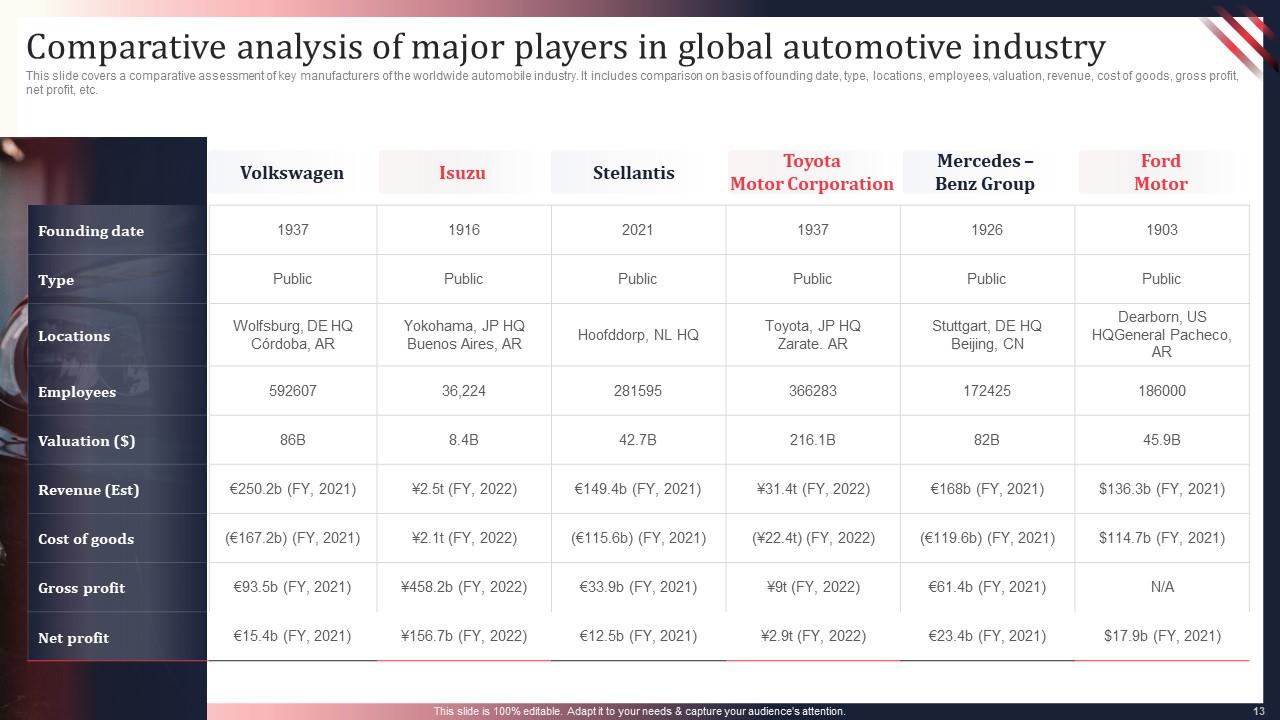
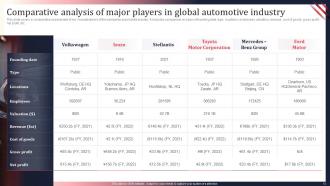
Slide 13: This slide displays Comparative analysis of major players in global automotive industry.
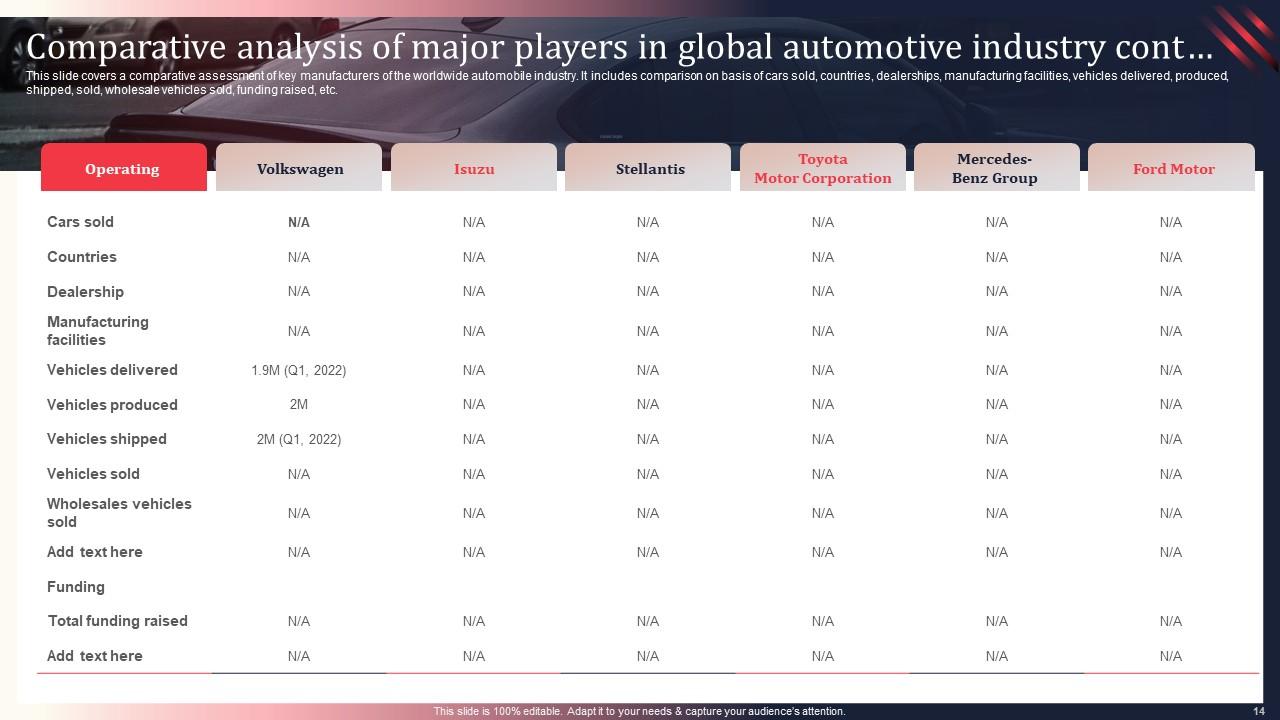
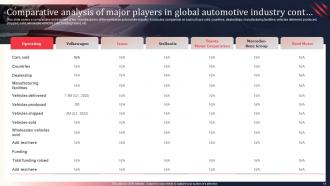
Slide 14: This slide represents Comparative analysis of major players in global automotive industry cont….
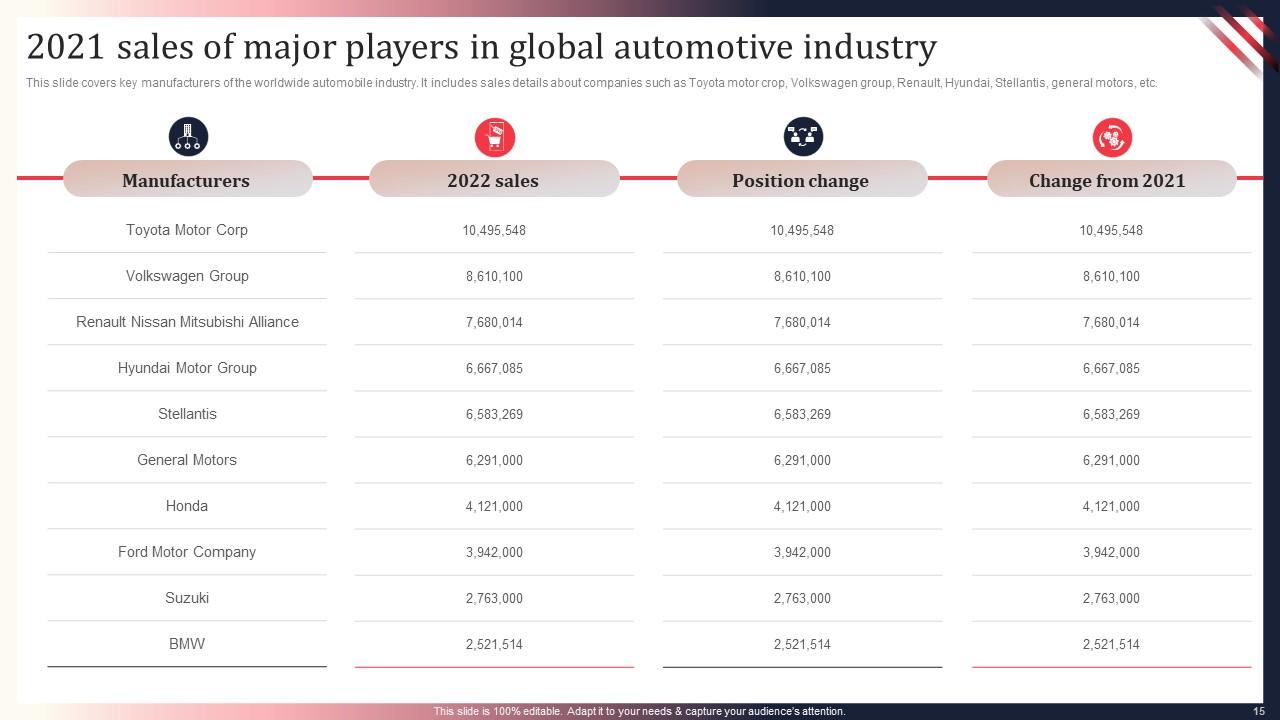
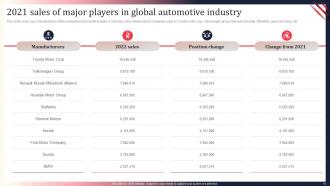
Slide 15: This slide showcases 2021 sales of major players in global automotive industry.
Slide 16: This slide highlights title for topics that are to be covered next in the template.
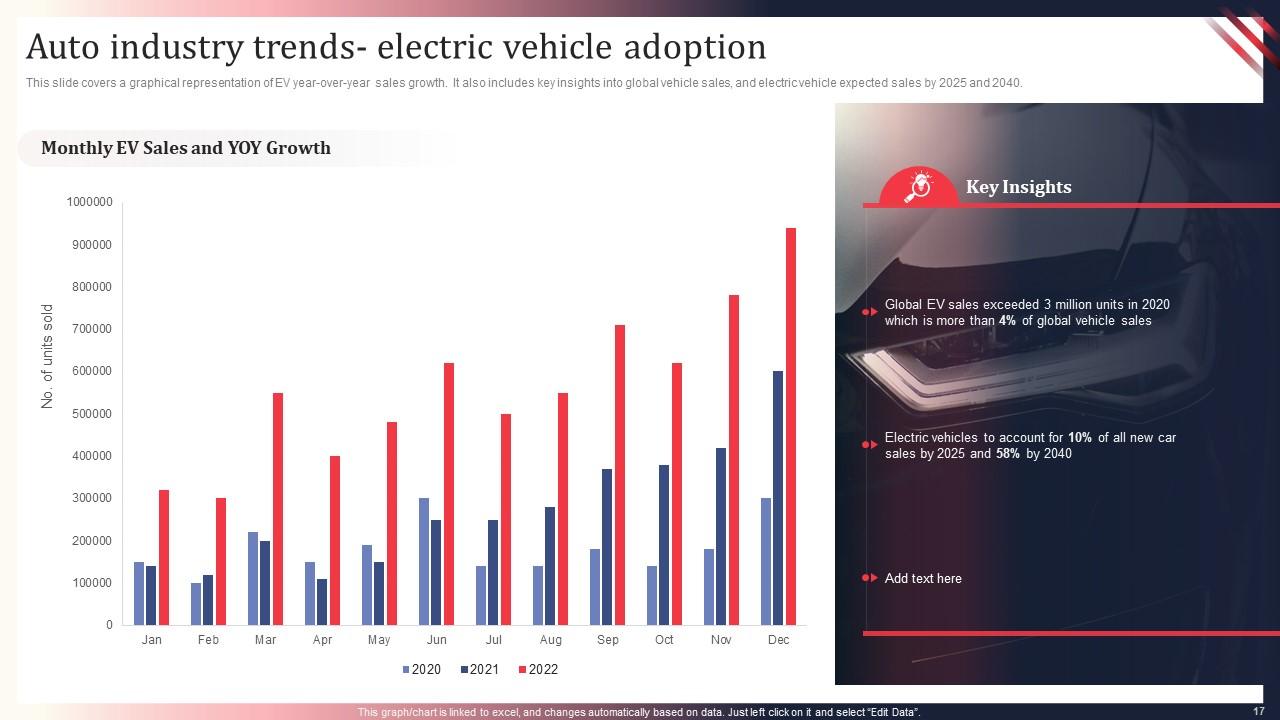
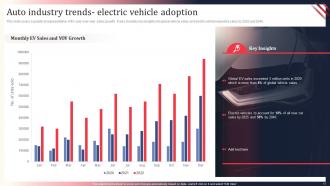
Slide 17: This slide shows Auto industry trends- electric vehicle adoption.
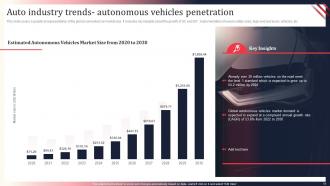
Slide 18: This slide presents Auto industry trends- autonomous vehicles penetration.
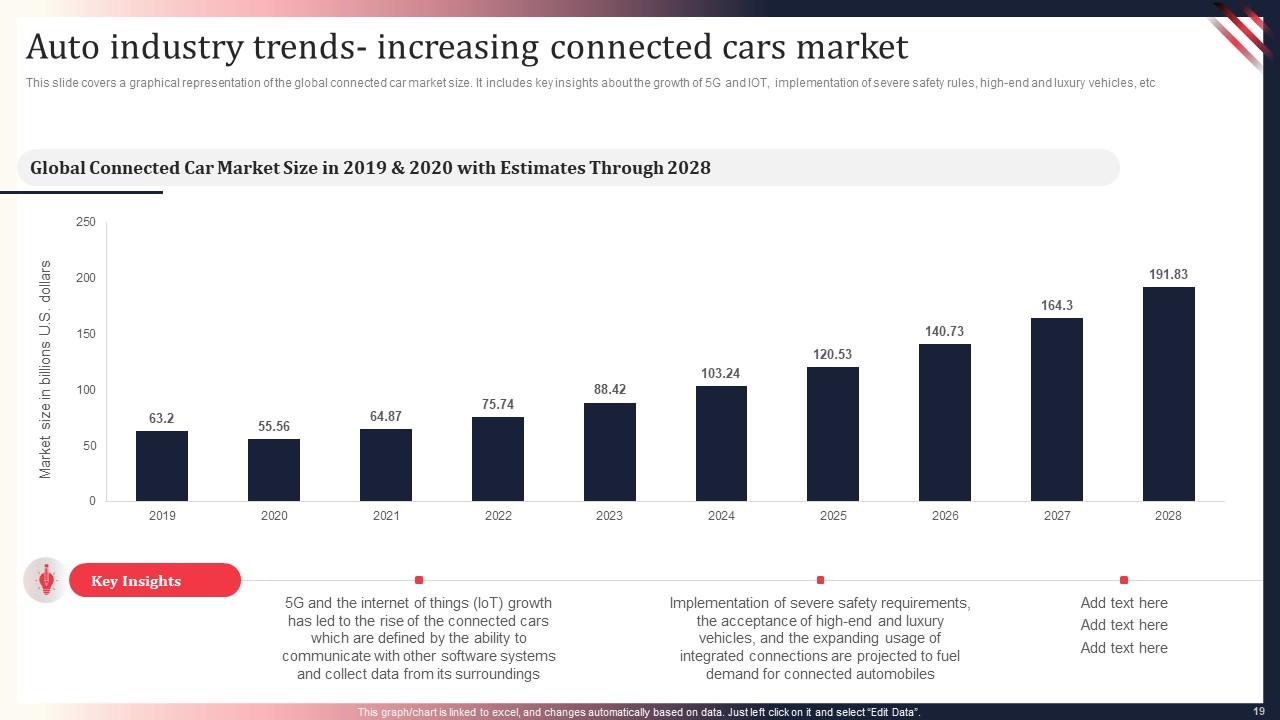
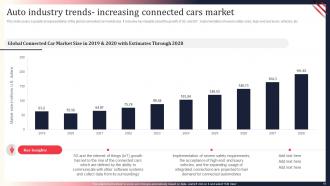
Slide 19: This slide displays Auto industry trends- increasing connected cars market.
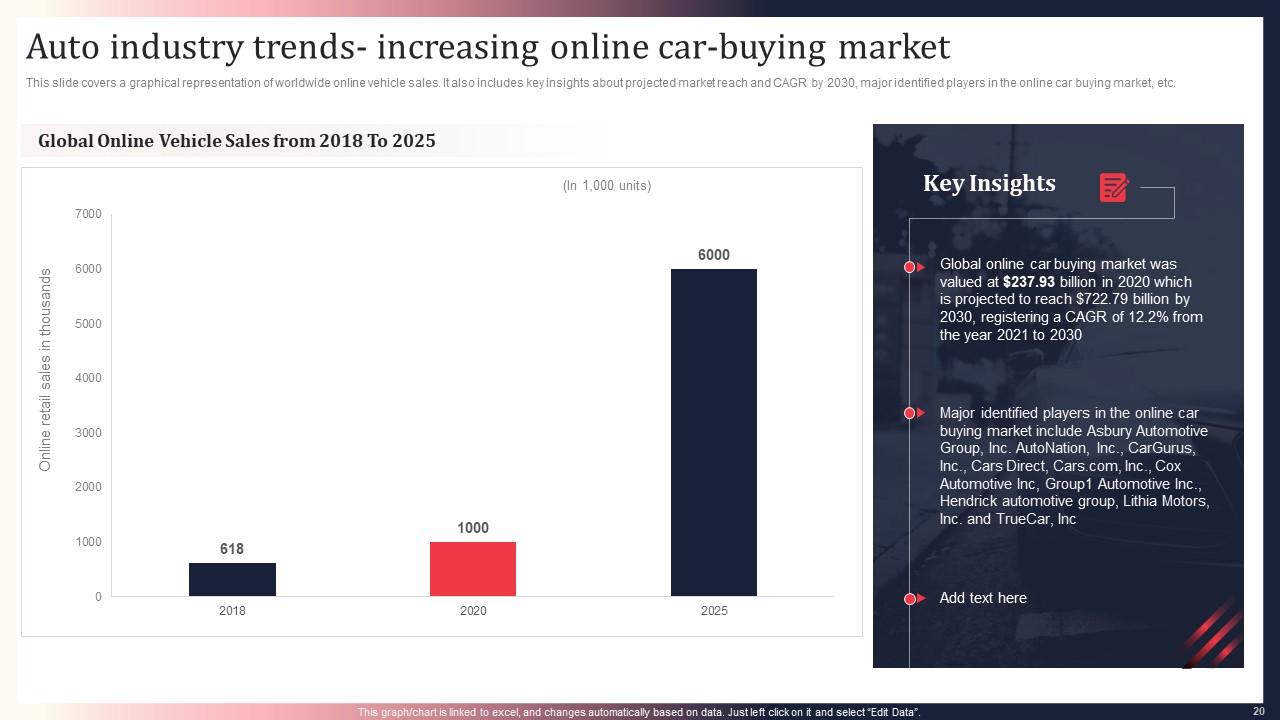
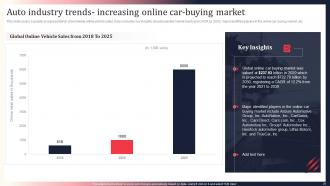
Slide 20: This slide represents Auto industry trends- increasing online car-buying market.
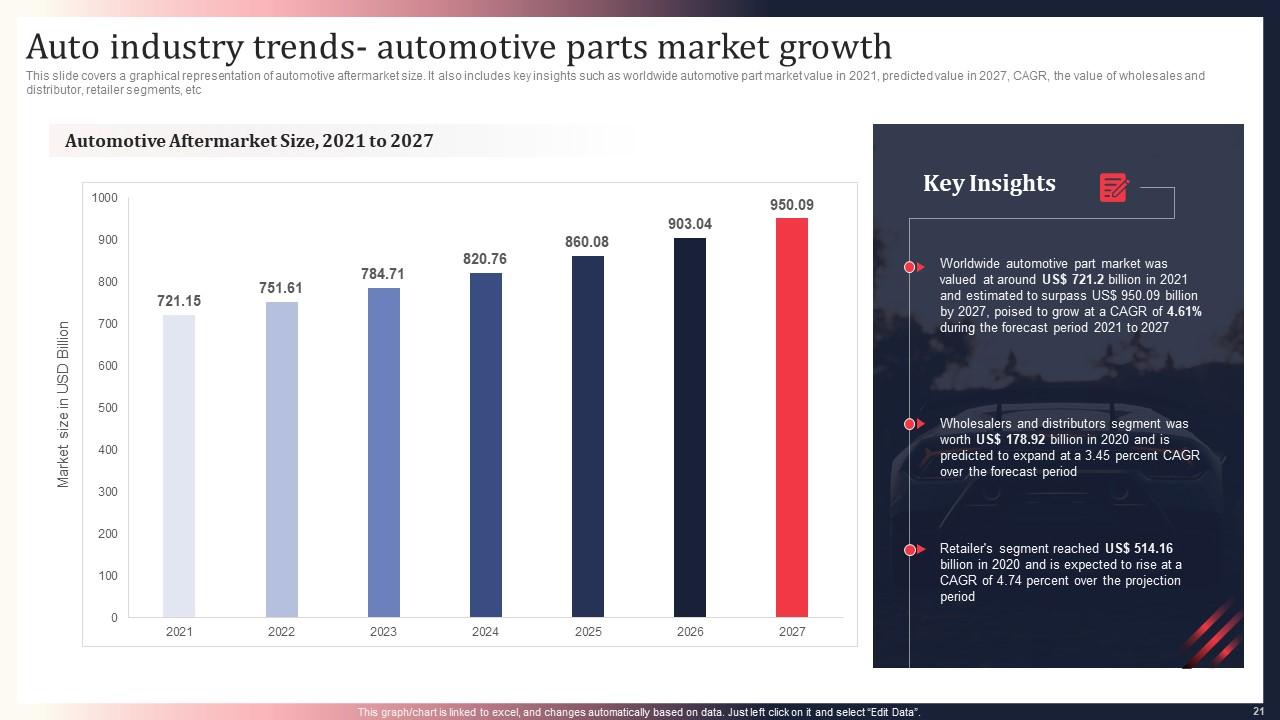
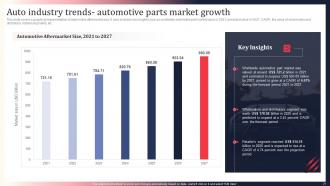
Slide 21: This slide showcases Auto industry trends- automotive parts market growth.
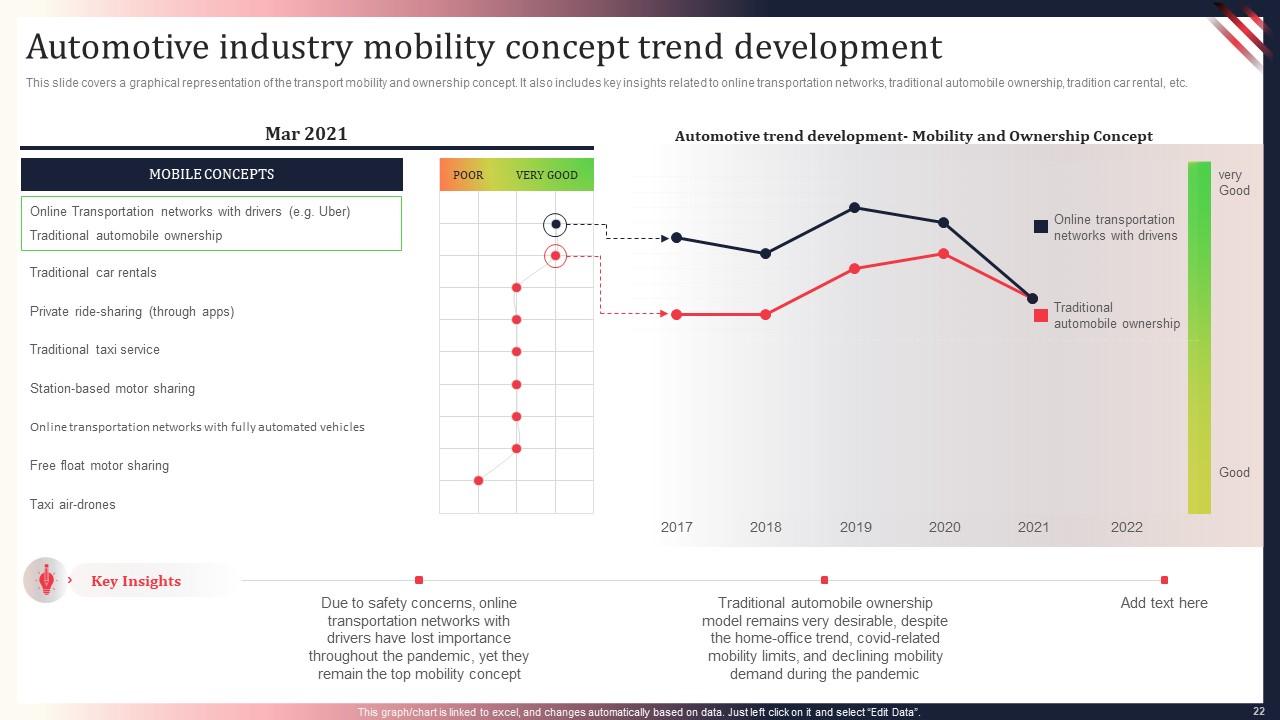
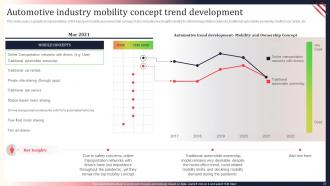
Slide 22: This slide shows Automotive industry mobility concept trend development.
Slide 23: This slide highlights title for topics that are to be covered next in the template.
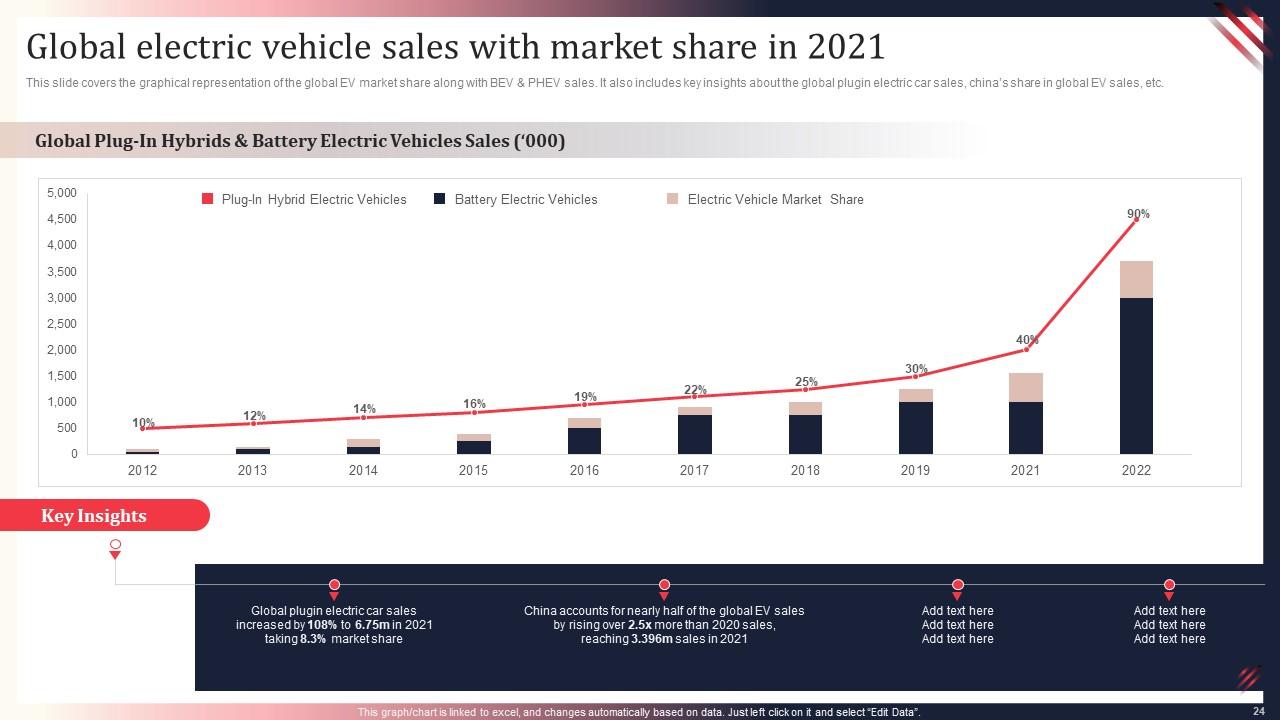
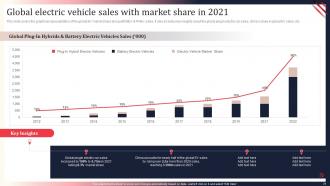
Slide 24: This slide presents Global electric vehicle sales with market share in 2021.
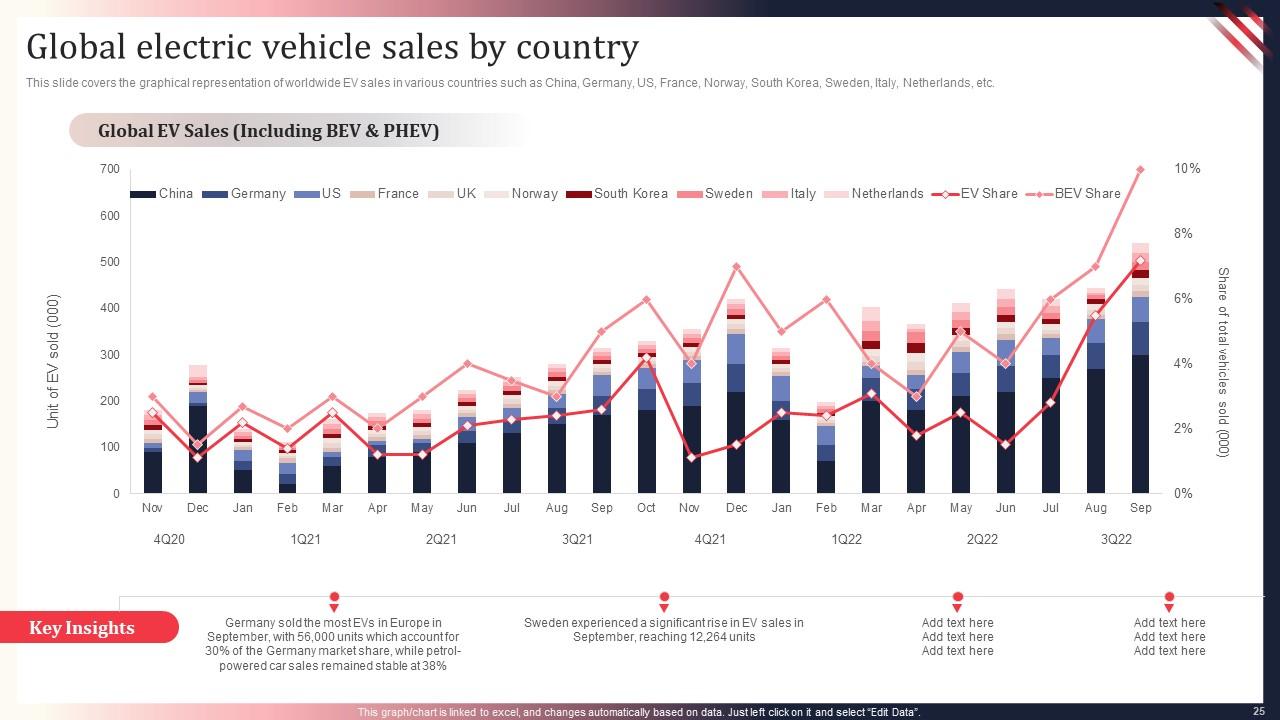
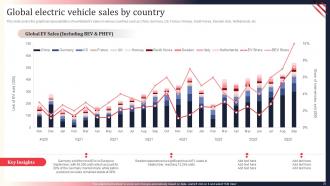
Slide 25: This slide displays Global electric vehicle sales by country.
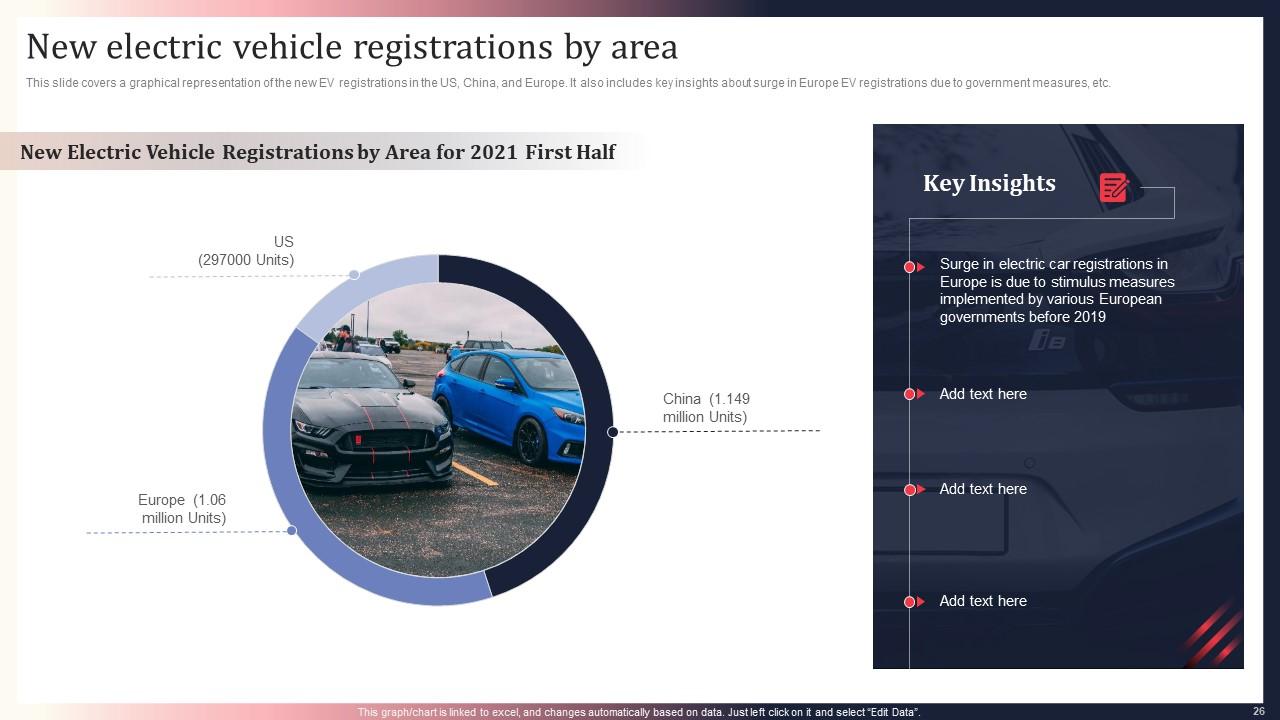
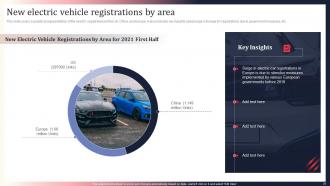
Slide 26: This slide represents New electric vehicle registrations by area.
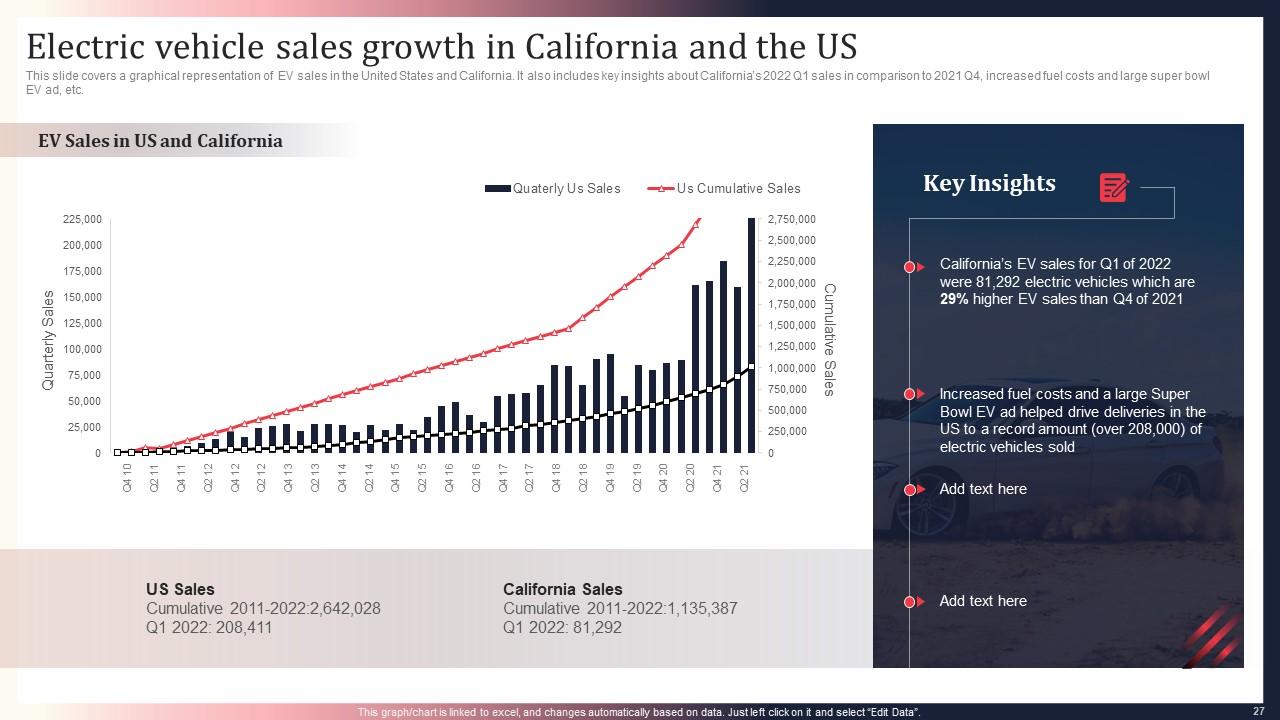
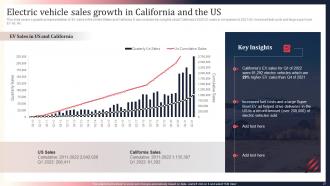
Slide 27: This slide showcases Electric vehicle sales growth in california and the US.
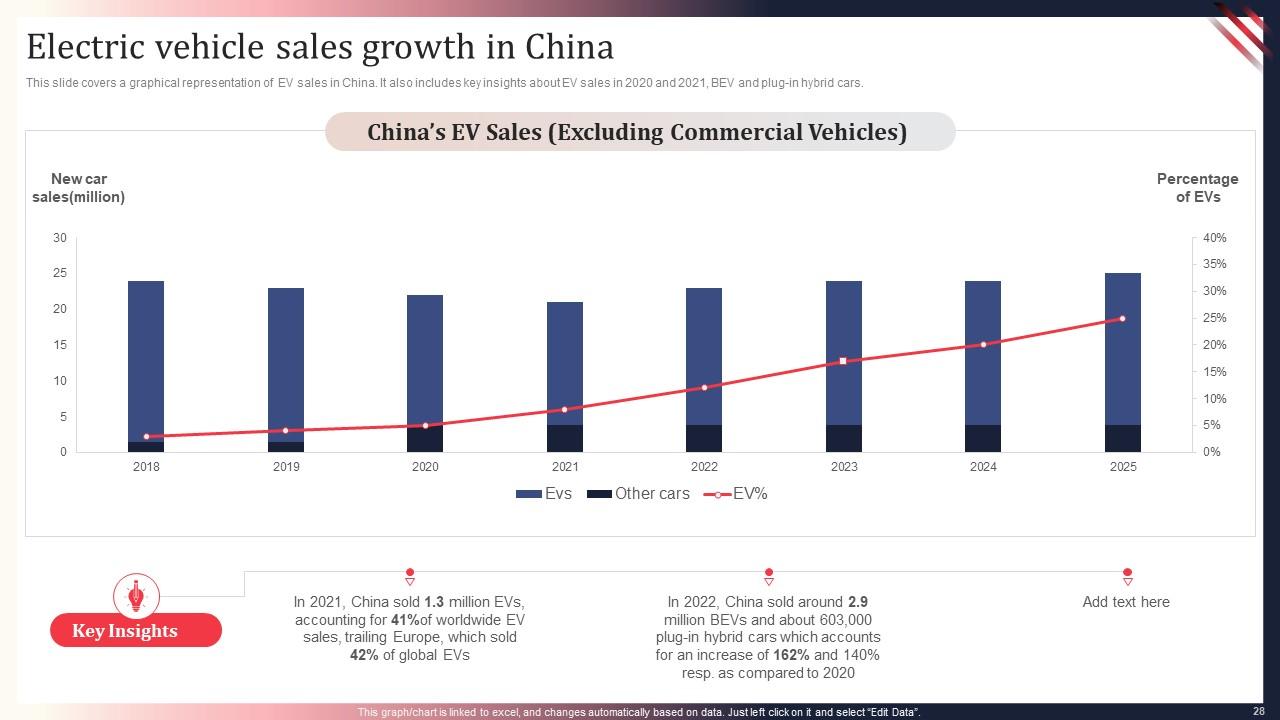
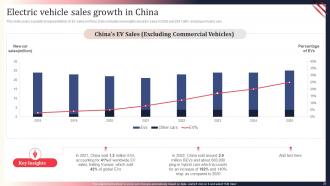
Slide 28: This slide shows Electric vehicle sales growth in china.
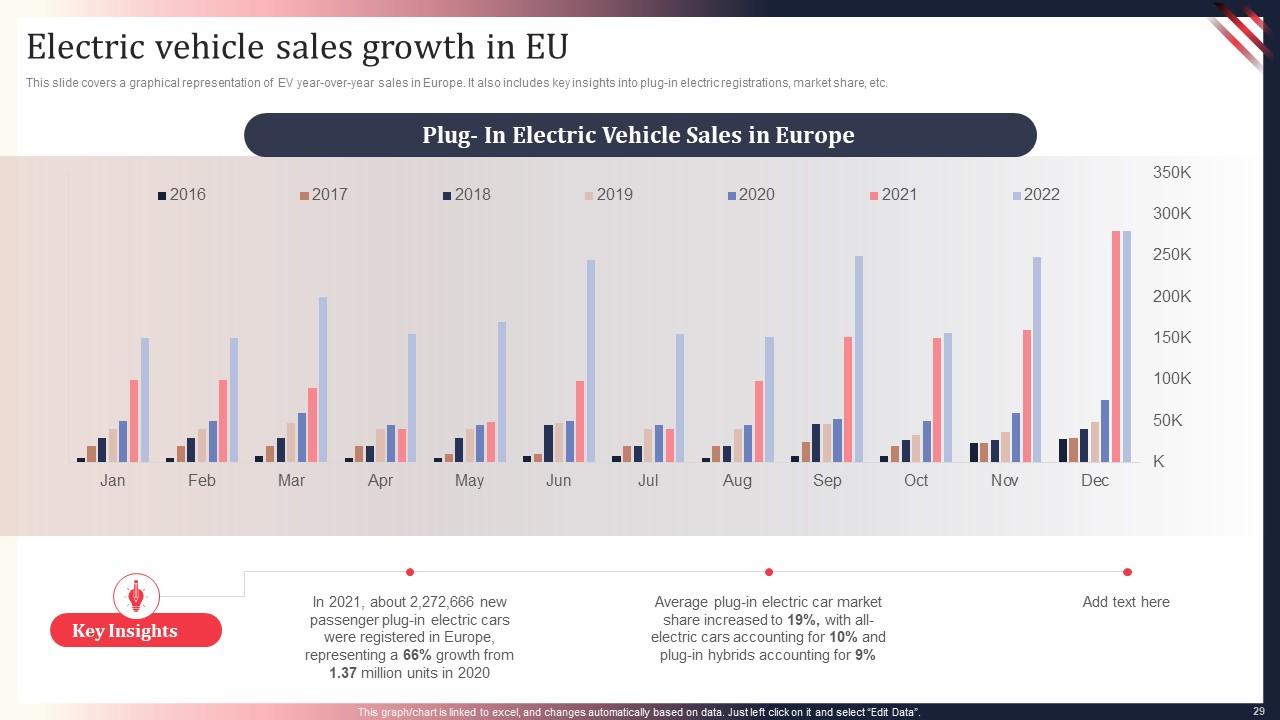
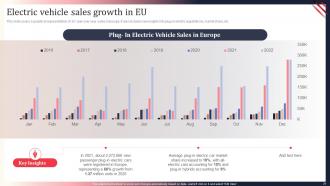
Slide 29: This slide presents Electric vehicle sales growth in EU.
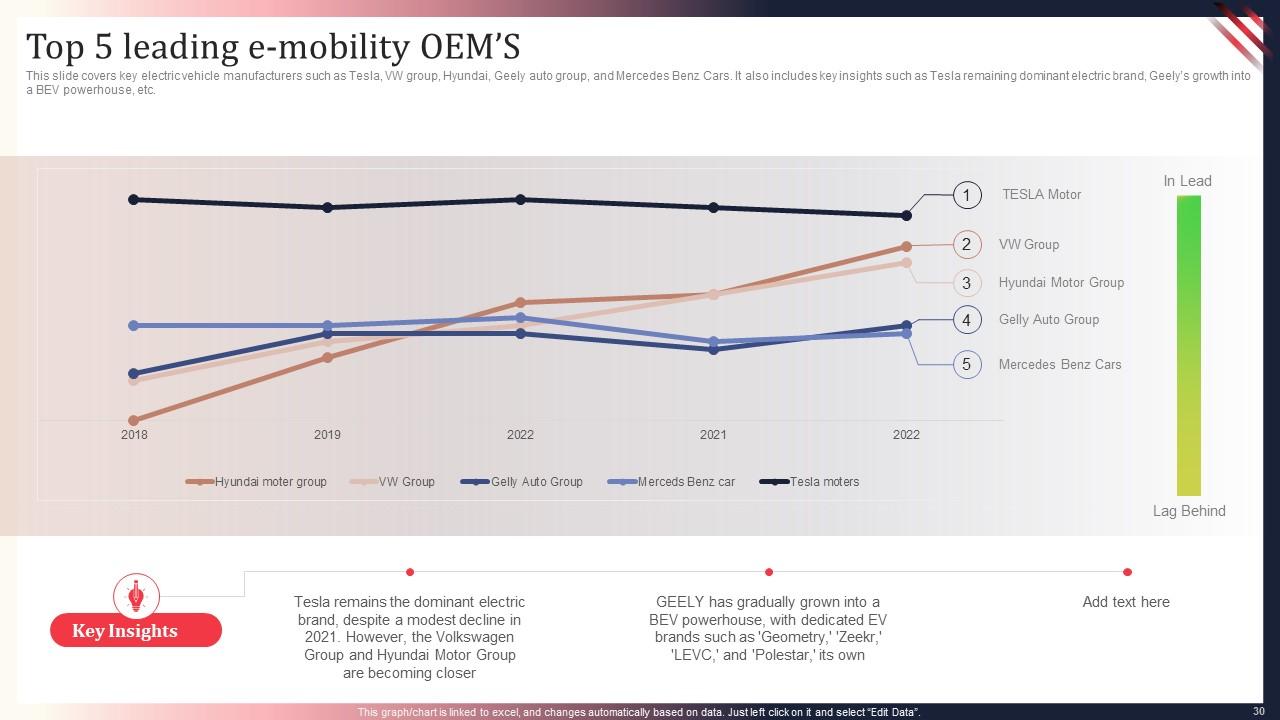
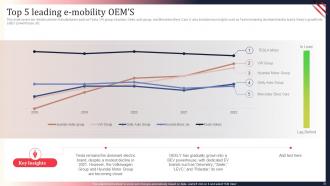
Slide 30: This slide covers key electric vehicle manufacturers such as Tesla, VW group, Hyundai, etc.
Slide 31: This slide highlights title for topics that are to be covered next in the template.
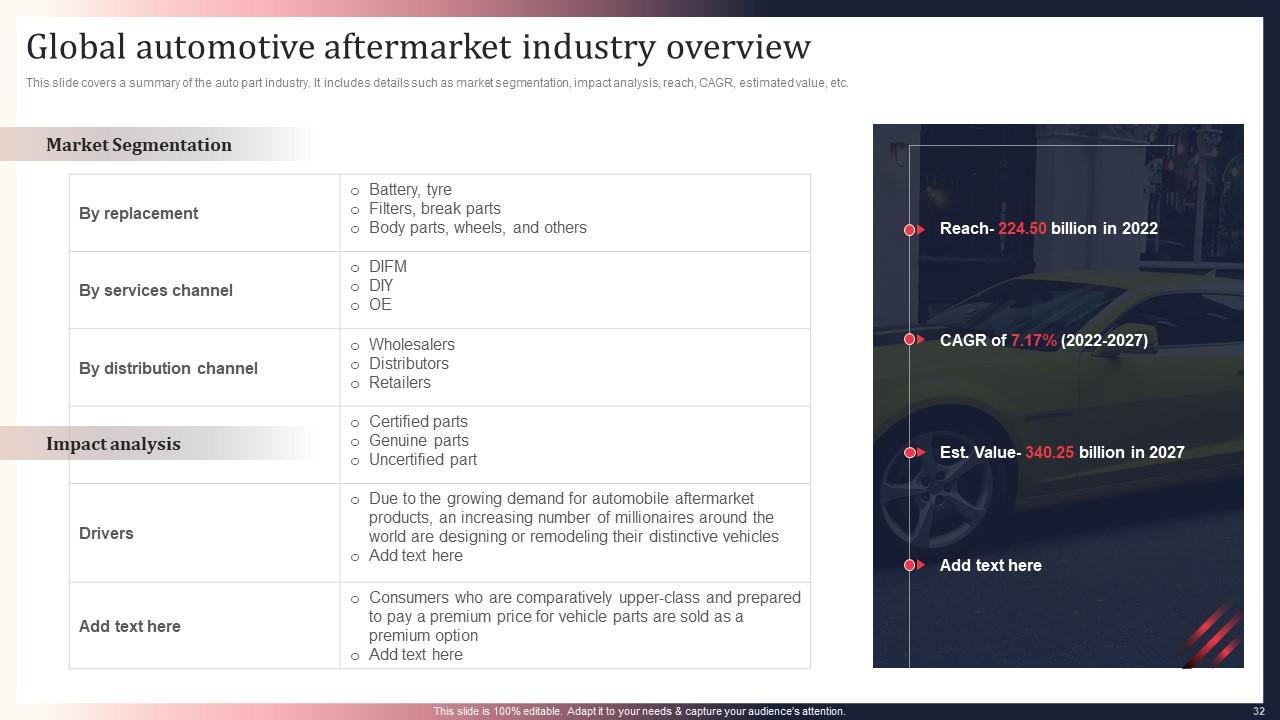
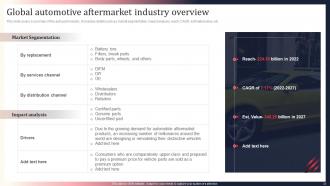
Slide 32: This slide displays Global automotive aftermarket industry overview.
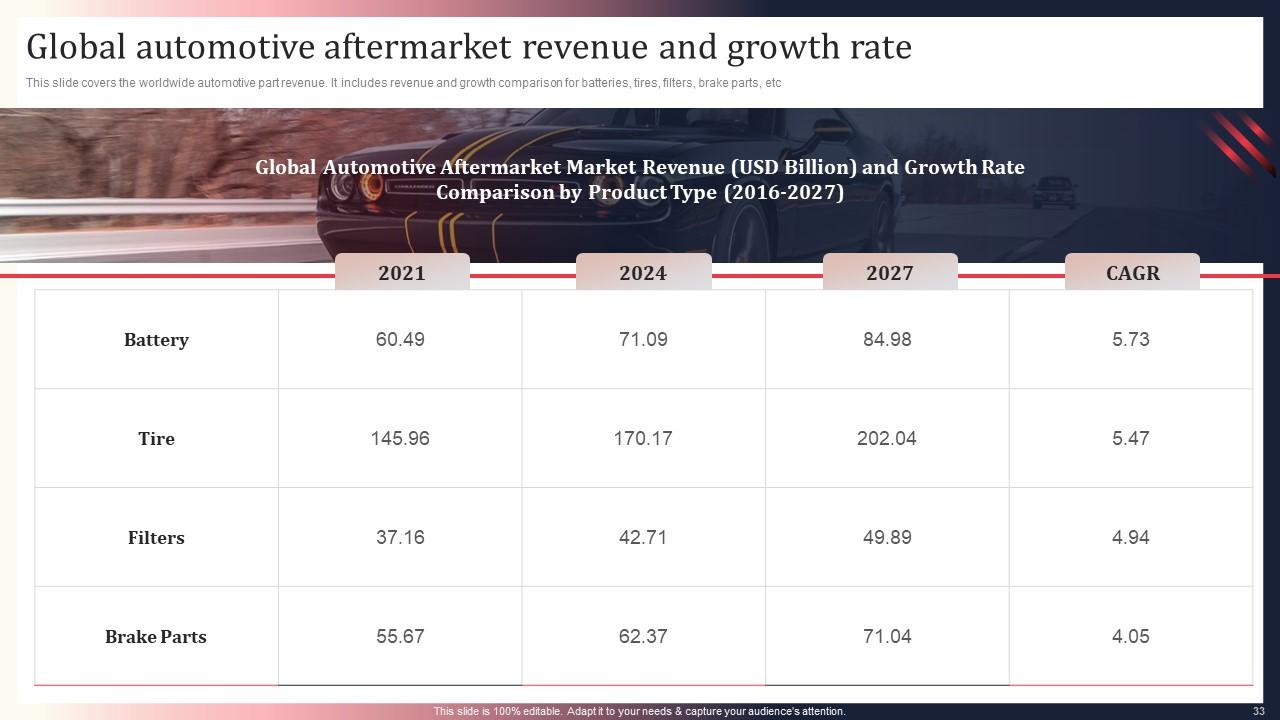
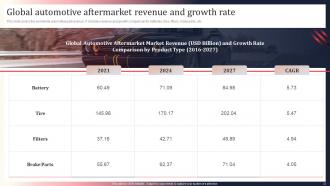
Slide 33: This slide represents Global automotive aftermarket revenue and growth rate.
Slide 34: This slide highlights title for topics that are to be covered next in the template.
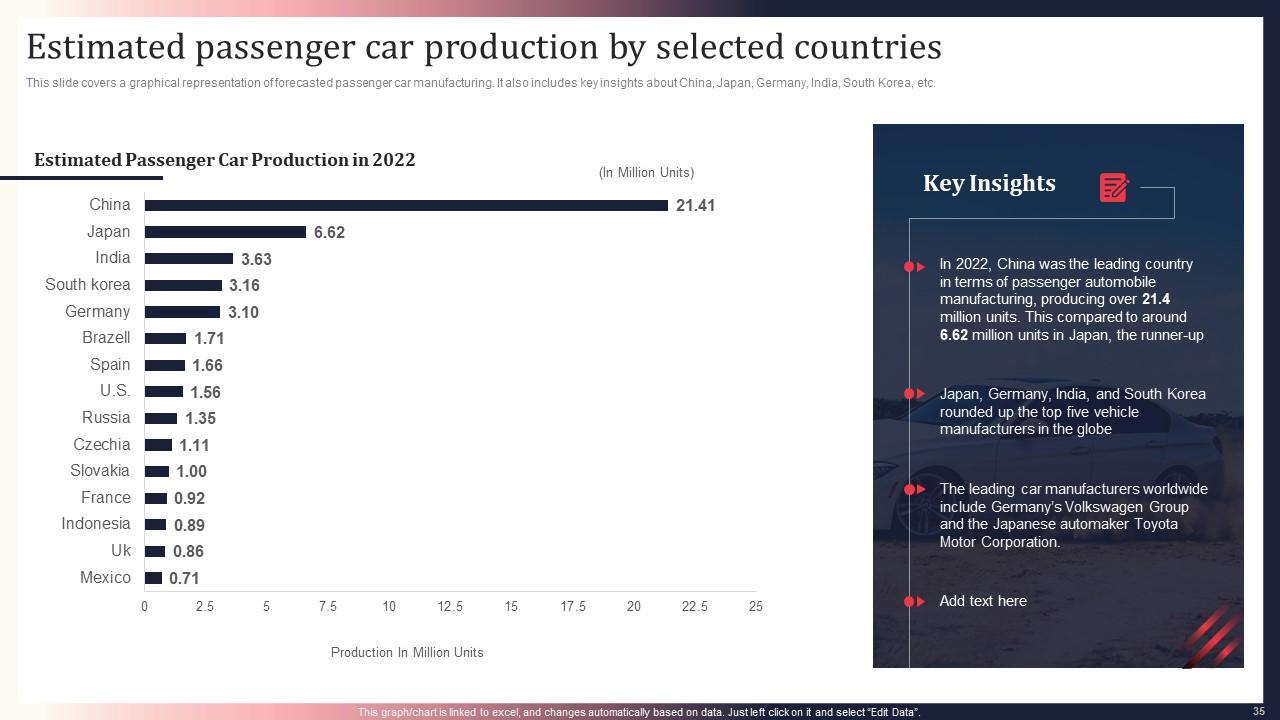
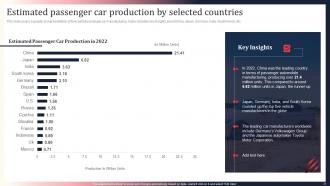
Slide 35: This slide showcases Estimated passenger car production by selected countries.
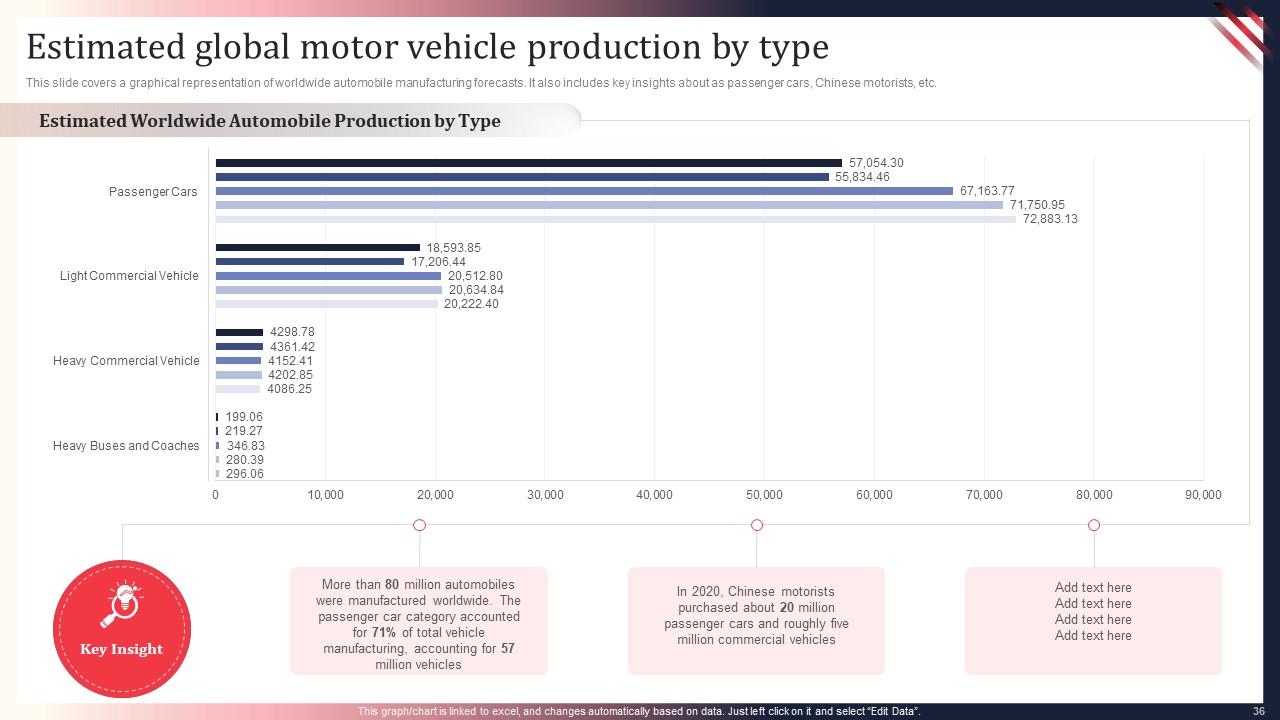
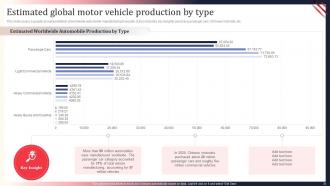
Slide 36: This slide shows Estimated global motor vehicle production by type.
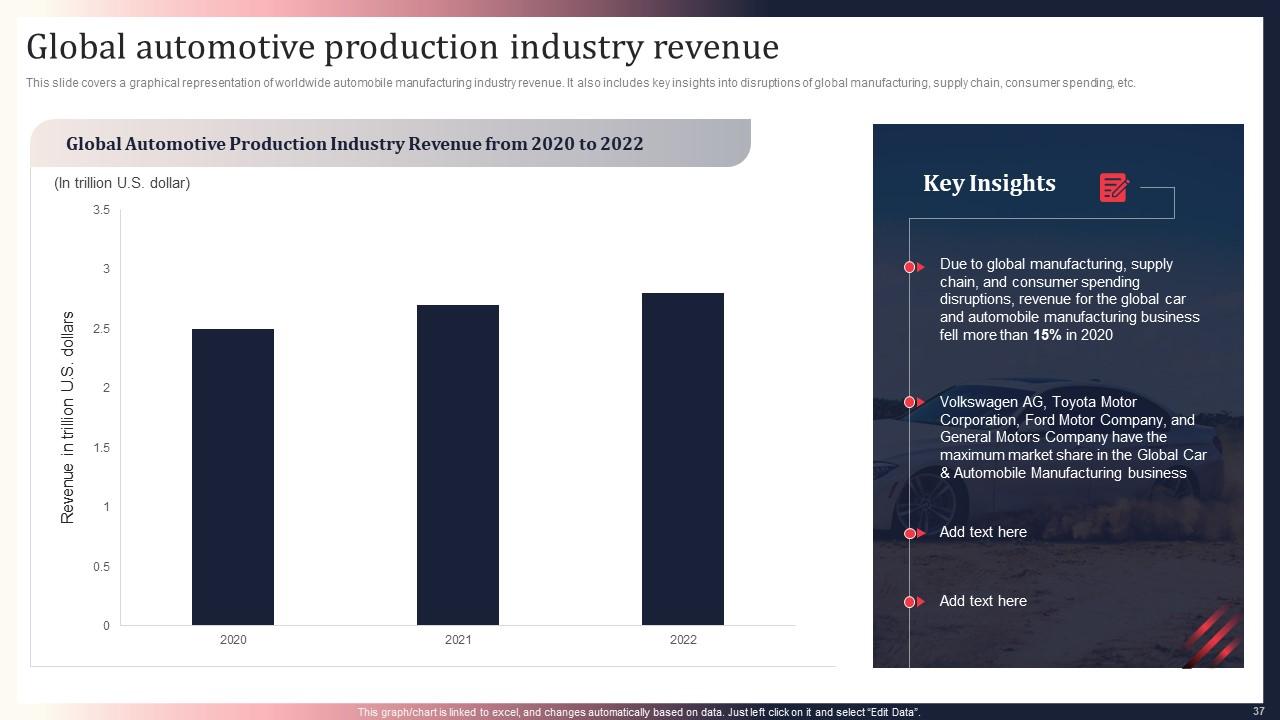
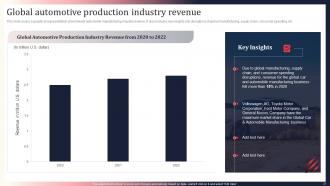
Slide 37: This slide presents Global automotive production industry revenue.
Slide 38: This slide highlights title for topics that are to be covered next in the template.
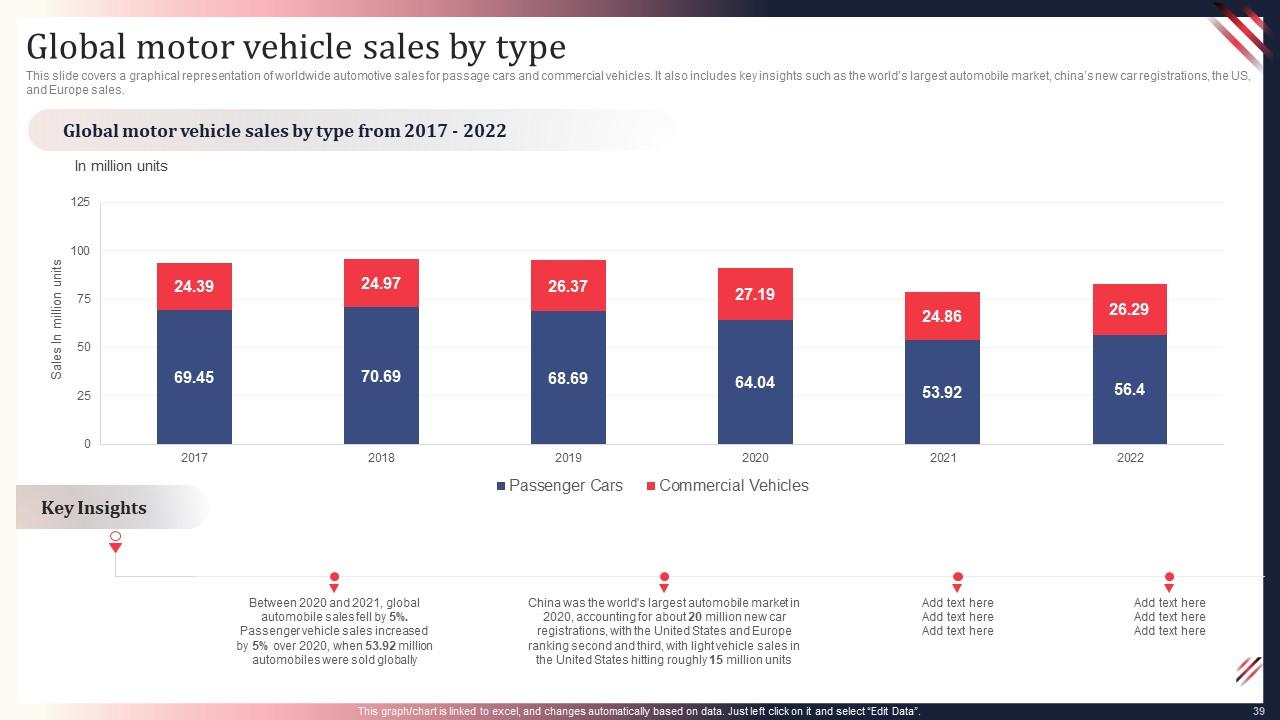
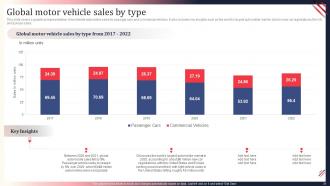
Slide 39: This slide displays Global motor vehicle sales by type.
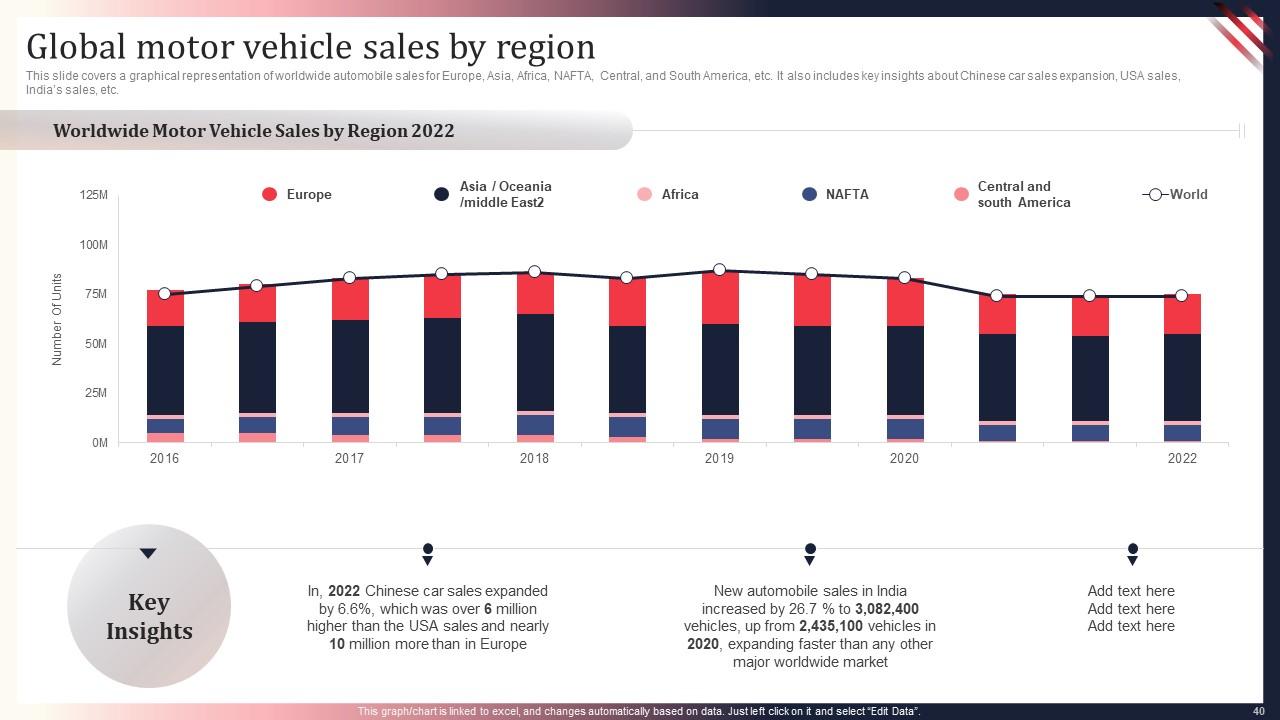
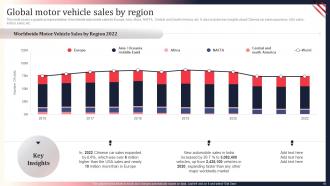
Slide 40: This slide represents Global motor vehicle sales by region.
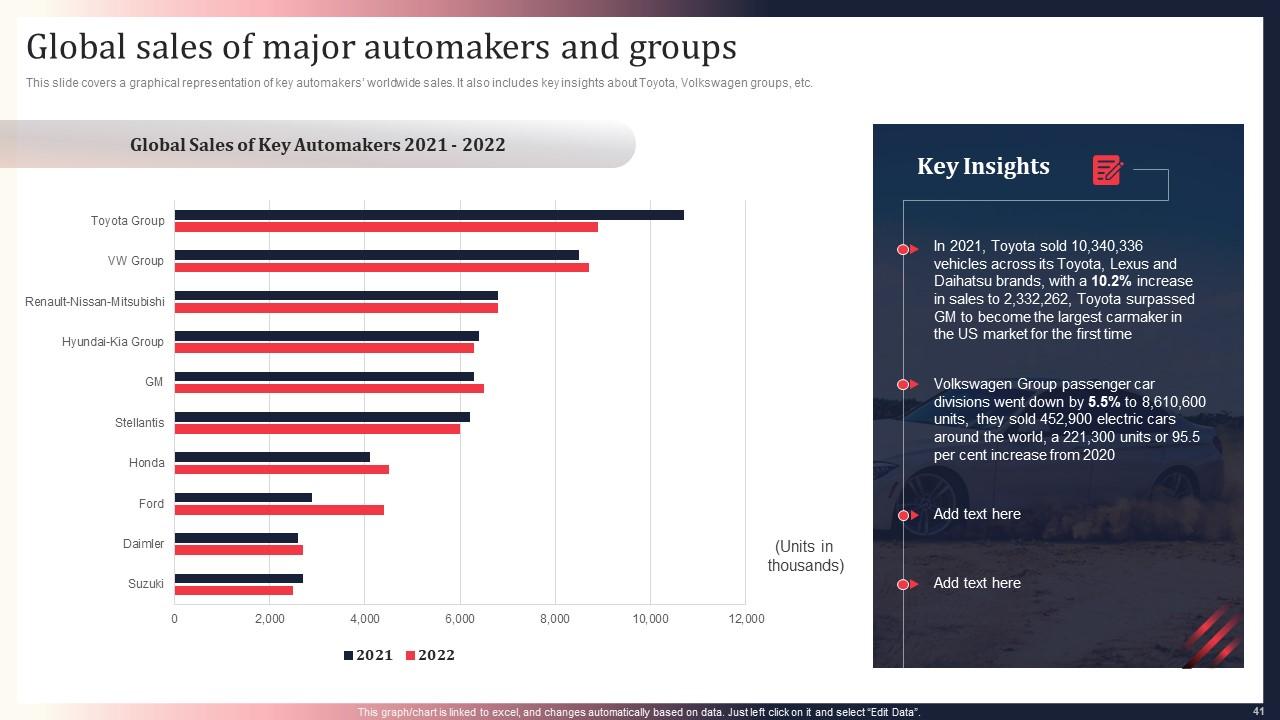
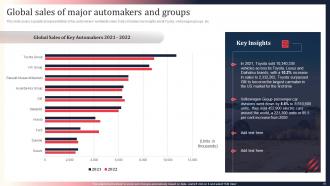
Slide 41: This slide showcases Global sales of major automakers and groups.
Slide 42: This slide highlights title for topics that are to be covered next in the template.
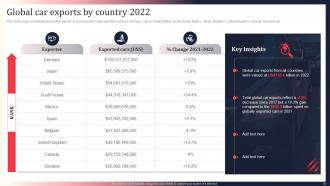
Slide 43: This slide covers worldwide automotive exports.
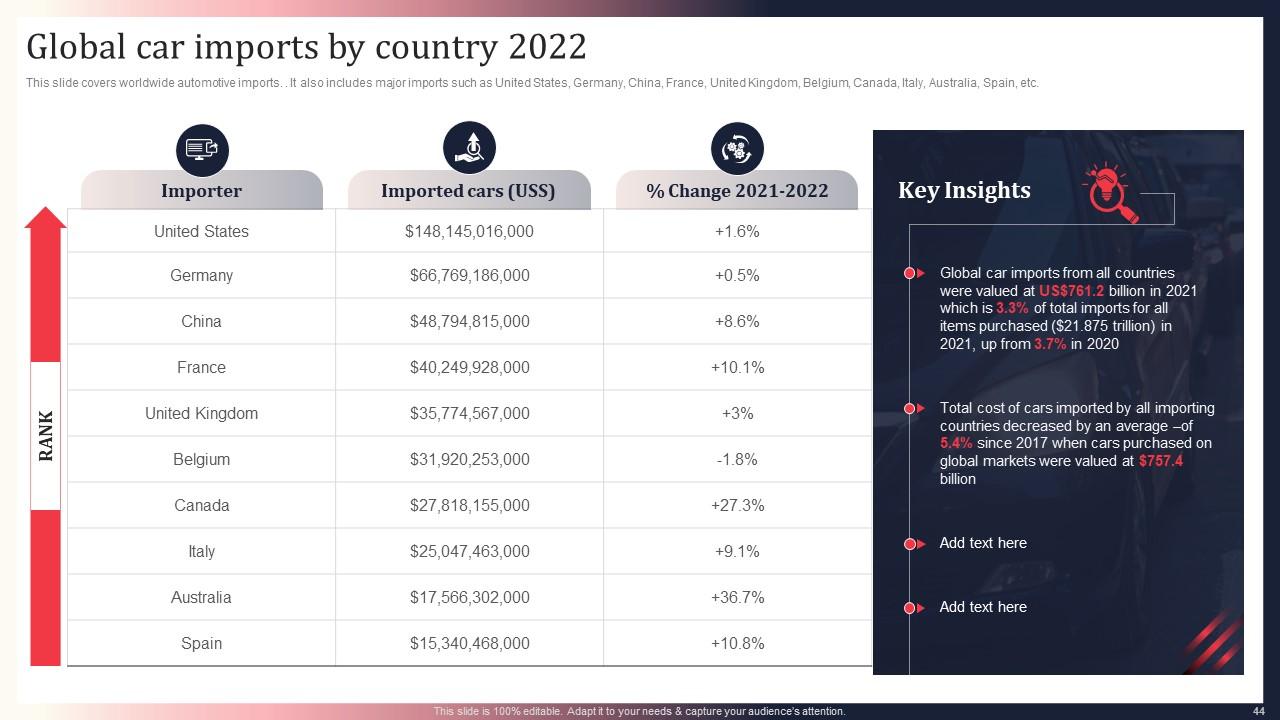
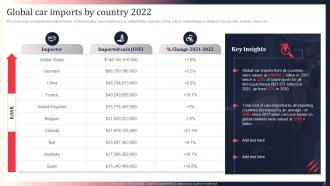
Slide 44: This slide shows Global car imports by country 2021.
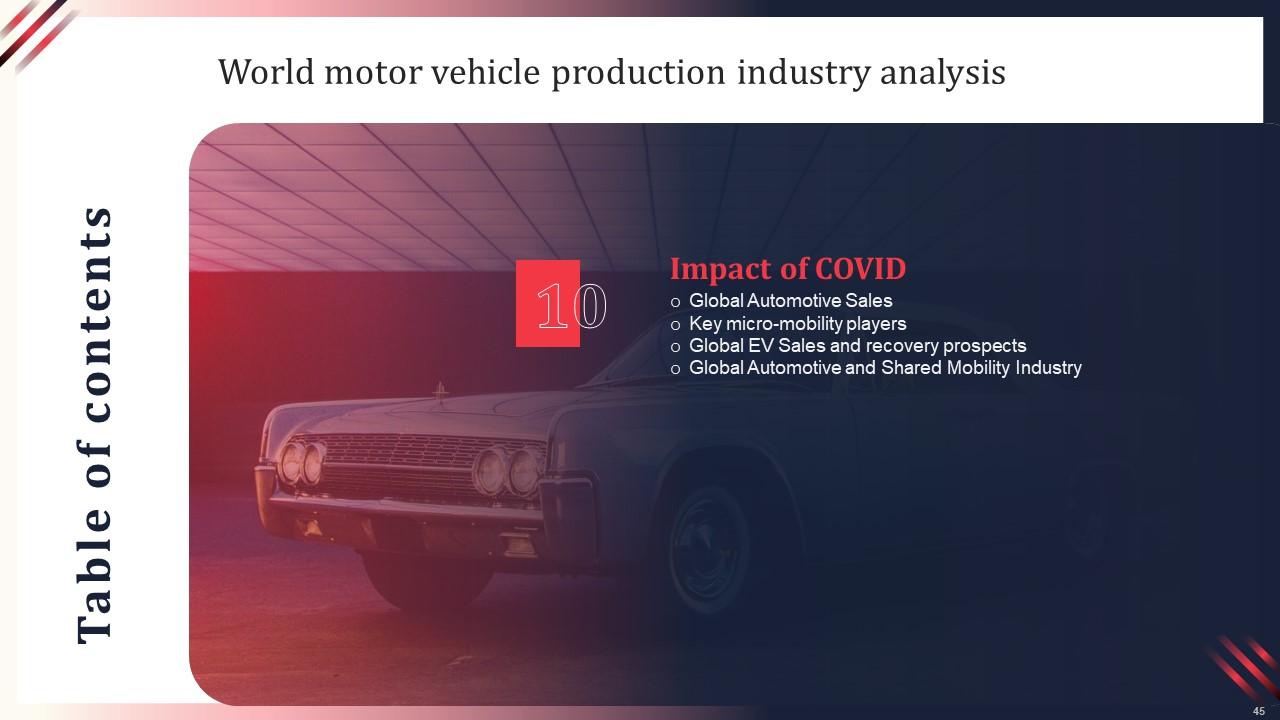
Slide 45: This slide highlights title for topics that are to be covered next in the template.
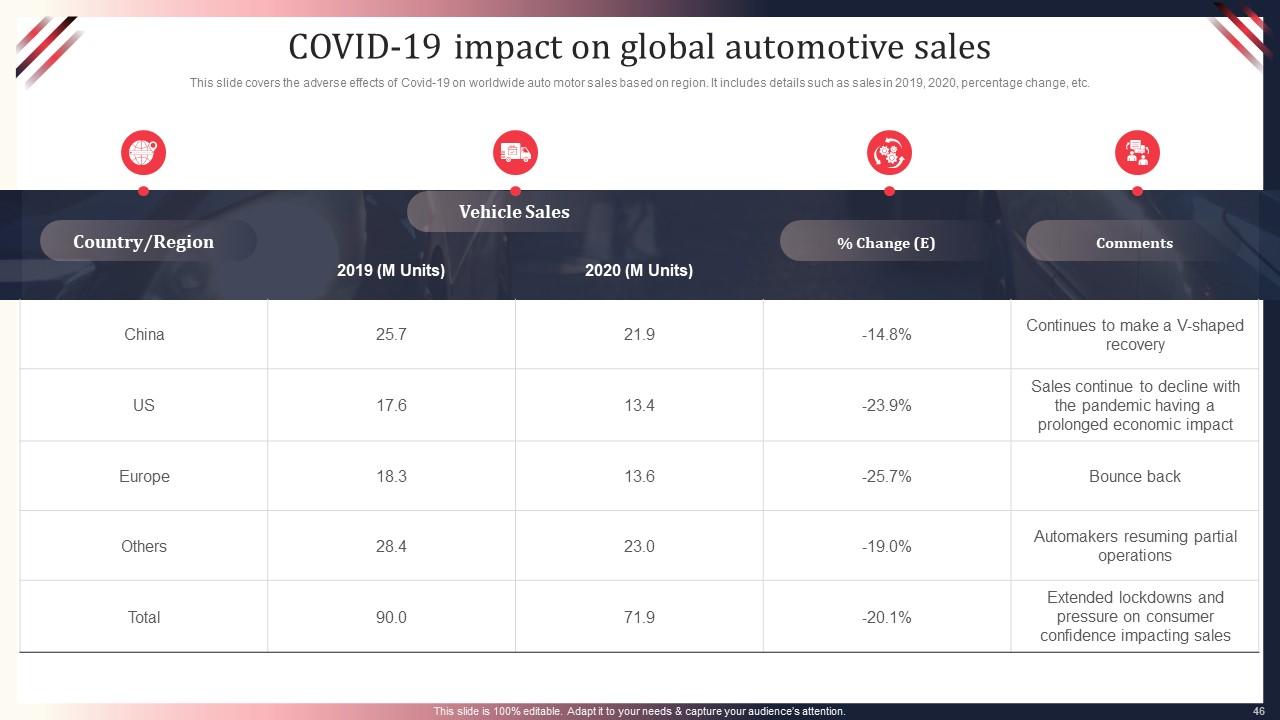
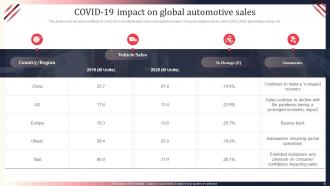
Slide 46: This slide presents COVID-19 impact on global automotive sales.
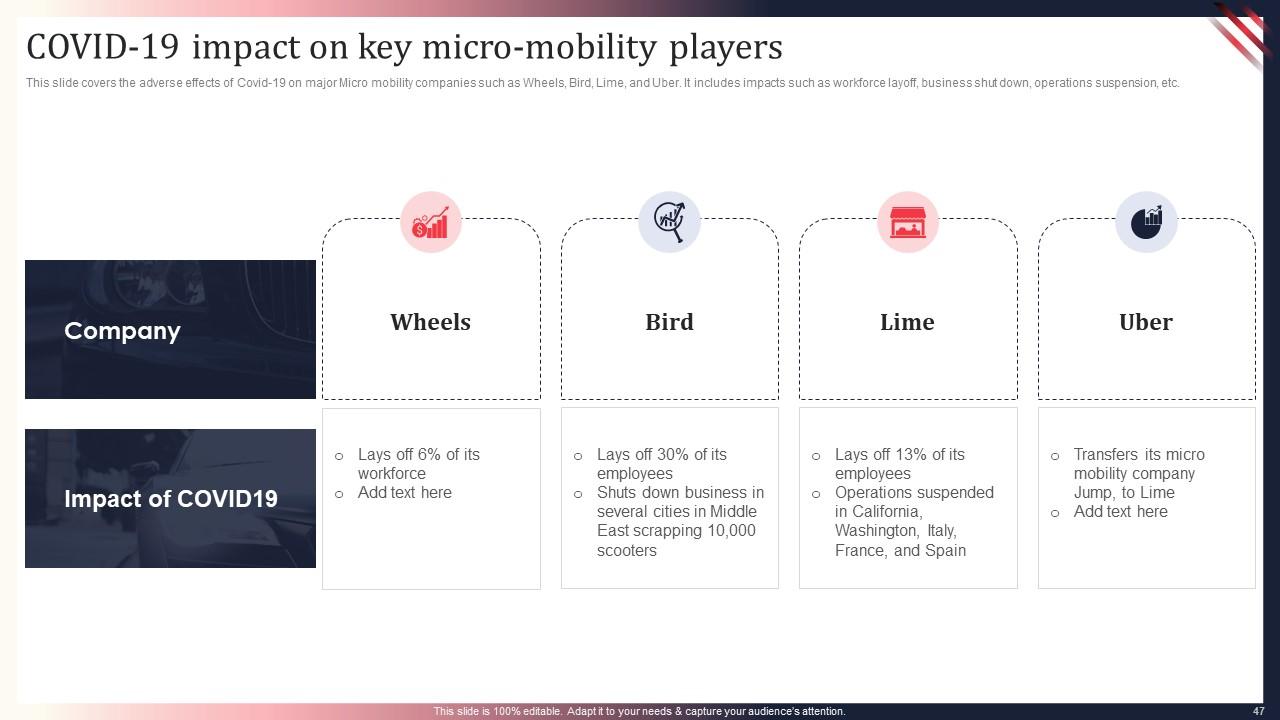
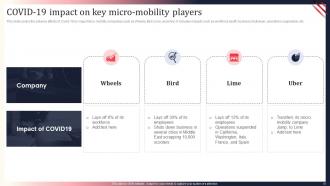
Slide 47: This slide displays COVID-19 impact on key micro-mobility players.
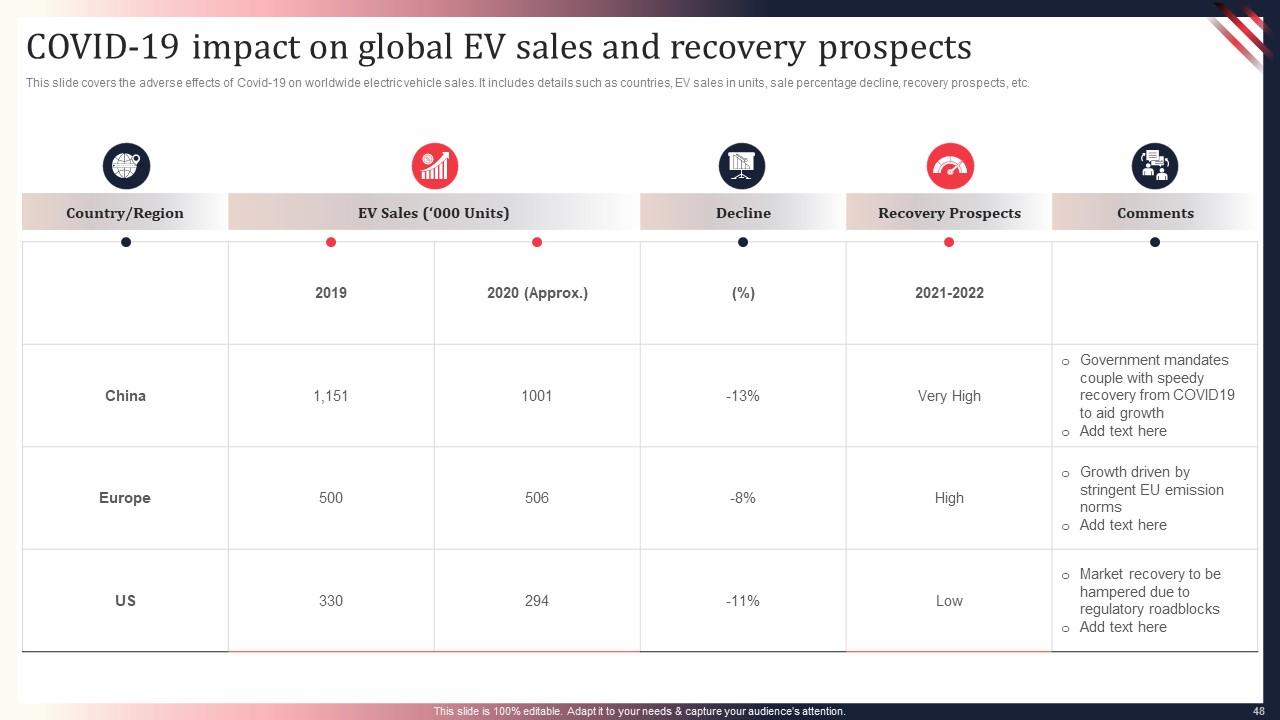
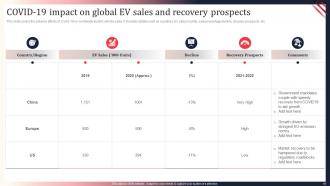
Slide 48: This slide represents COVID-19 impact on global EV sales and recovery prospects.
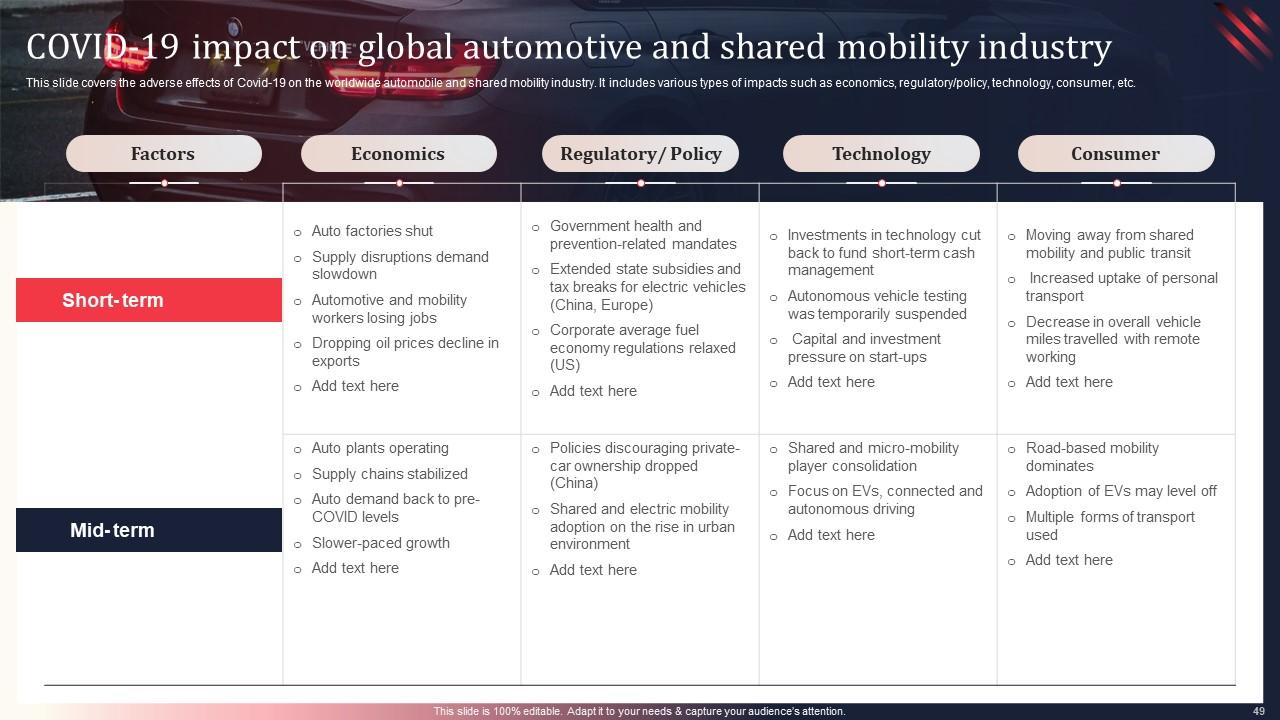
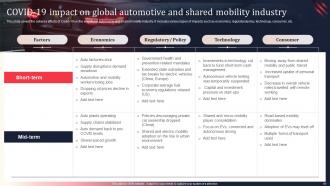
Slide 49: This slide showcases COVID-19 impact on global automotive and shared mobility industry.
Slide 50: This slide contains all the icons used in this presentation.
Slide 51: This slide is titled as Additional Slides for moving forward.
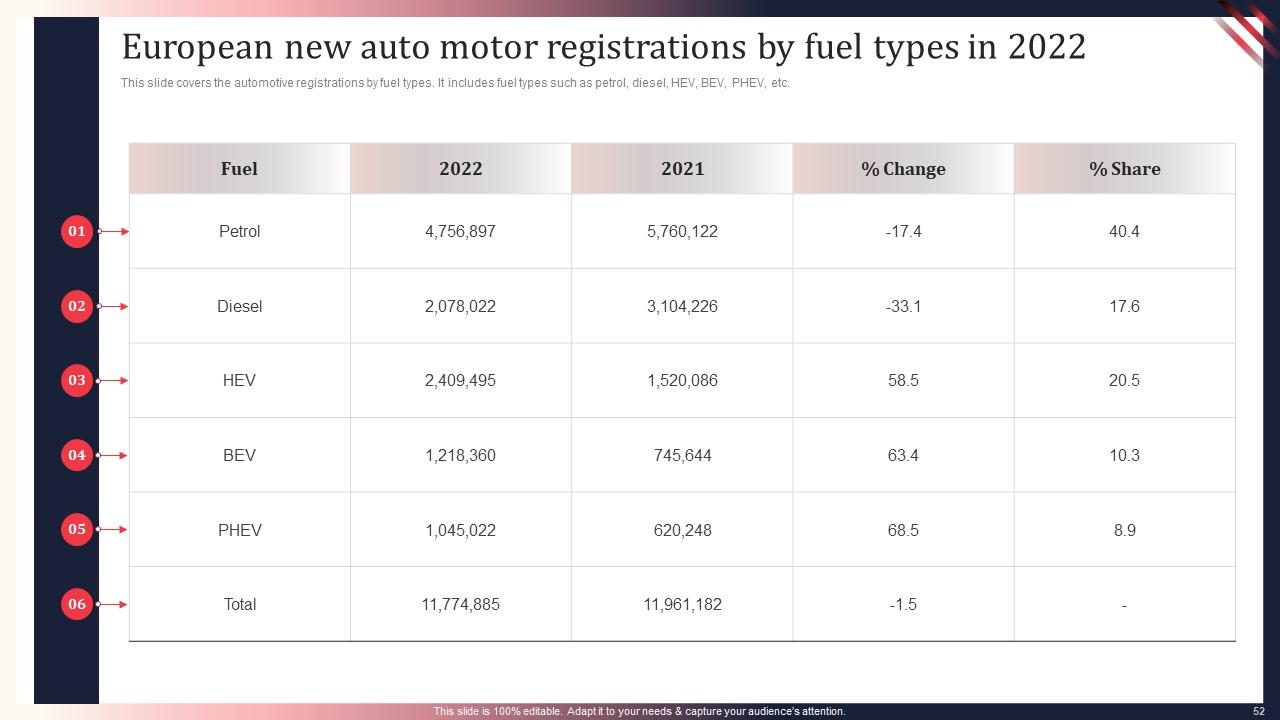
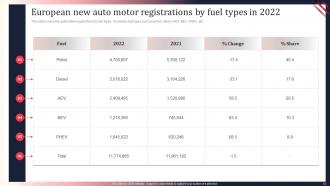
Slide 52: This slide shows European new auto motor registrations by fuel types in 2021.
Slide 53: This slide shows Post It Notes. Post your important notes here.
Slide 54: This is an Idea Generation slide to state a new idea or highlight information, specifications etc.
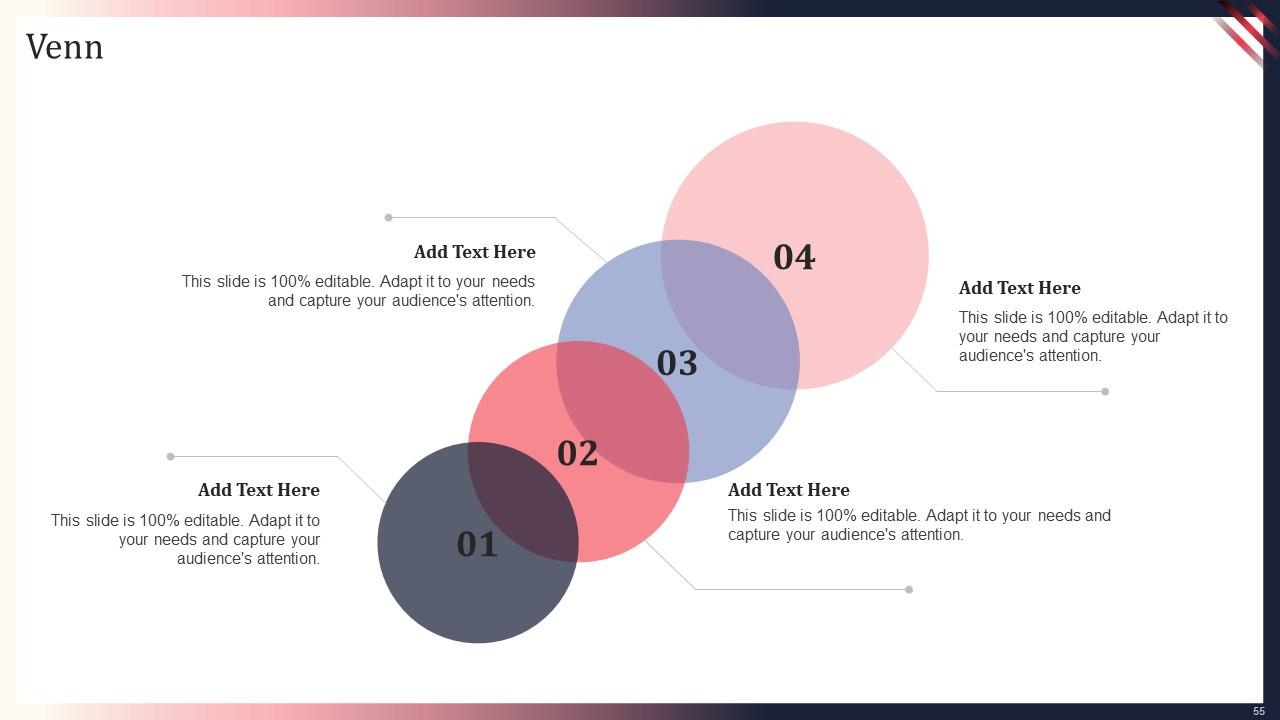
Slide 55: This slide depicts Venn diagram with text boxes.
Slide 56: This slide showcases Magnifying Glass to highlight information, specifications etc
Slide 57: This slide provides 30 60 90 Days Plan with text boxes.
Slide 58: This slide shows Roadmap for process flow.
Slide 59: This is a Thank You slide with address, contact numbers and email address.
World Motor Vehicle Production Industry Analysis Powerpoint Presentation Slides with all 64 slides:
Use our World Motor Vehicle Production Industry Analysis Powerpoint Presentation Slides to effectively help you save your valuable time. They are readymade to fit into any presentation structure.
-
SlideTeam, Please don’t stop sharing discount coupons! I love your occasional discounts and tend to buy your products around that corner.
-
Nothing beats the well-formatted and professionally designed templates offered. Kudos to SlideTeam for their amazing collection of PPT slides.
