

0115 sample diagram of virtual infrastructure with vms running on hardware ppt slide




Try Before you Buy Download Free Sample Product
 Impress Your
 Audience
 100%
100% Editable
 Save Hours
 of Time


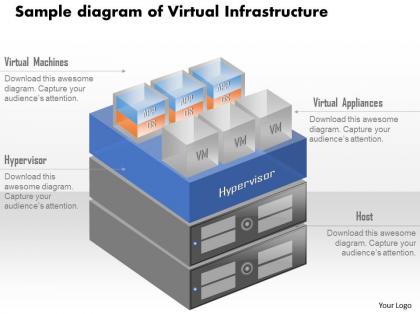
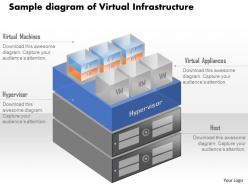
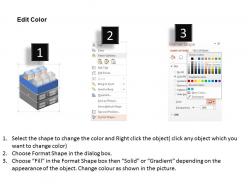
If you are looking for a highly exclusive looking and top notch quality PowerPoint slides to include in your presentations related to virtual infrastructure and vms, then look no further as our specialized team has come up with a never seen before sample diagram of virtual infrastructure with vms running on hardware Ppt slide with its incomparable benefits based on hardware and technology. This PPT template has been designed with graphic of virtual infrastructure which contains the VMS running on hardware. This PPT graphic can be used for computer technology related presentations. These PPT templates propose an important message to the audience about the various stages of technology-based applications and how they can be implemented like virtual machines, virtual appliances, hypervisor and host. Our PPT illustrations have a unique and clear manner to deliver its message clearly and precise to the viewer. Moreover, as they are pre-designed they can save a lot of time and effort in this competitive scenario where time is money, so without any wait simply download these layouts and be a self-proof of its advantages. Our 0115 Sample Diagram Of Virtual Infrastructure With Vms Running On Hardware Ppt Slide are not dyed in wool. You can change colours to fit your need.
People who downloaded this PowerPoint presentation also viewed the following :
0115 sample diagram of virtual infrastructure with vms running on hardware ppt slide with all 5 slides:
Counter any hassle with our 0115 Sample Diagram Of Virtual Infrastructure With Vms Running On Hardware Ppt Slide. Have it going all easy for you.

FAQs for 0115 sample diagram of virtual infrastructure with vms running on
You'll need hypervisors (VMware or Hyper-V work great), plus storage systems and solid networking. The hypervisor runs your VMs - it's basically the control center. Shared storage gives you flexibility to move things around. Honestly, management tools are a lifesaver because manually tracking everything gets messy fast. Don't skip backup solutions either - trust me on that one. My advice? Map your current workloads first, then build around what you actually need. Way better than buying fancy gear that just sits there looking expensive.
So basically virtual infrastructure is just software-based instead of needing actual physical servers and hardware. You can spin up whatever you need virtually rather than buying boxes. Way more flexible honestly - with traditional setups you're locked into whatever capacity you bought upfront. Virtual lets you scale resources instantly based on what you actually need. Multiple VMs can share the same physical server too, so you get way better utilization. I'd definitely try it locally first if you haven't - even just testing it will show you how much easier it makes everything.
Dude, virtualization is a total lifesaver for disaster recovery. You can spin up whole systems from snapshots in minutes instead of rebuilding physical servers (which honestly takes forever and sucks). The cool part? You're automatically replicating VMs to different locations, so when your main site crashes, you don't need to hunt for matching hardware. Testing your recovery plan becomes super easy too - just clone everything and mess around without breaking production. Oh, and definitely start mapping out which VMs you'd need to restore first. Trust me on that one.
Honestly, just run the numbers over like 3-5 years - hardware, licensing, power bills, cooling, all that stuff. The energy savings will probably shock you once you actually calculate it. Get quotes from the big vendors first, then throw together a basic spreadsheet comparing what you're spending now vs. going virtual. Don't forget the stuff that's harder to measure - way less downtime, faster deployments, better disaster recovery. Oh, and factor in productivity gains too. Map out your migration timeline so you know when you'll actually break even. Trust me, the math usually works out better than you'd expect.
Start with hardening your hypervisor - that's literally your foundation. Network segmentation is critical, especially microsegmentation between VMs so if one gets hit, attackers can't just hop around freely. VM sprawl is such a pain but you gotta tackle it. Those forgotten VMs sitting around? Total security disasters waiting to blow up. Get an inventory of what's actually running first - you'd be surprised how much junk accumulates. Encrypt everything at rest and in transit, plus strong access controls with MFA. Each VM is basically a potential entry point, so treat them that way. Work your way up the stack from there.
So hybrid cloud is perfect when compliance rules force you to keep sensitive stuff on-premises but you still want that public cloud scalability for other workloads. Sometimes your current infrastructure is just too pricey to migrate everything - been there. It's also clutch for unpredictable traffic that needs cloud bursting. Honestly, some legacy apps are stubborn and won't cooperate in the cloud no matter what you do. Great for disaster recovery too since you get off-site backups without committing fully to public cloud. Figure out what actually needs to stay local first.
So basically virtualization lets you cram multiple virtual machines onto one physical server instead of having a bunch of servers just sitting there doing nothing. Most servers only run at like 10-15% capacity which is honestly ridiculous when you think about it. With VMs you can easily hit 70-80% utilization. Way fewer physical servers means you're cutting power, cooling, and space costs big time. Plus you can move resources around when different systems need them. I'd start by checking what your current servers are actually doing - probably way less than you think!
Dude, containerization is huge right now - Docker and Kubernetes are everywhere. Edge computing's another big one, basically moving stuff closer to users so things load faster. Multi-cloud setups are standard now too. But honestly? Infrastructure-as-code is what blew my mind the most. You can automate your whole setup instead of clicking through those annoying management consoles all day. I swear the pace of change in this field gives me whiplash sometimes. If you're updating anything soon, I'd definitely start with containers since that's where everyone's headed anyway.
Honestly, virtual infrastructure follows the same compliance rules as physical stuff - just implemented differently. Map out what regulations you're dealing with first (GDPR, SOX, whatever). Then get your access controls, logging, and encryption sorted across VMs and containers. Here's the kicker though - virtual environments change constantly, so manual monitoring is basically useless. Automate your compliance scanning or you'll get wrecked during audits when you can't prove anything. I've watched teams scramble because they had zero documentation. Also, document everything as you go. Trust me on this one - future you will be grateful when audit season hits.
Honestly, the biggest pain points are gonna be performance issues and licensing costs - that stuff gets messy fast. Your old apps might throw a fit when you try virtualizing them, and yeah, upfront costs are rough even though you save later. Staff pushback is real too, nobody likes learning new systems. Oh, and plan for downtime during migrations (learned that one the hard way). Start small with non-critical stuff first. Get your team trained early or you'll regret it. Also budget way more time for troubleshooting than you think - seriously, like double whatever timeline you're imagining right now.
Honestly, virtual infrastructure is a game changer for performance and scaling. Your apps get way better resource allocation - CPU, memory, storage all adjust based on what you actually need instead of being locked into whatever physical box you bought. Scaling is where it gets really good though. New instances spin up in minutes vs waiting forever for hardware deliveries. Load balancing works so much smoother too. Oh, just watch out for VMs fighting over resources - that's usually where things slow down. I learned that one the hard way last year.
Honestly, if you're bleeding money on hardware costs, start with server virtualization - it's a total game changer for consolidation. Application virtualization is clutch when you need to roll out software fast or you're dealing with those annoying compatibility issues. For storage? That's your best bet when you've got tons of data to wrangle or need flexible allocation. I'd probably tackle server stuff first since that's where you'll see the biggest savings. Then you can add the other types later. Oh, and don't try to do everything at once - learned that the hard way at my last job.
Honestly, you really want these tools - they'll show you what's happening with your VMs in real time instead of waiting for angry users to call. CPU spikes, memory issues, storage getting full? You'll see it coming. The management side handles all that boring stuff automatically - spinning up new VMs, deploying patches, balancing loads. Saves me hours every week, no joke. Plus you get historical data so you can actually plan capacity instead of just guessing. I'd start simple though, just monitor your most important VMs first and build from there.
Honestly, containerization with VMs is pretty sweet - you get solid isolation like VMs but can cram way more apps on the same box. It's like having apartments instead of individual houses, if that makes sense. Containers boot up in seconds vs minutes for VMs, so deployments are way snappier. Resource usage is better too since they share the OS kernel. I'd start with your stateless apps first - they're usually the easiest to move over and you'll see gains right away.
So basically your virtual infrastructure gets way smarter when you add AI/ML to the mix. It can predict when you'll need more resources and scale automatically. Pretty cool stuff - your VMs get placed optimally across hosts without you doing anything. The system even spots hardware failures before they actually happen, which is honestly kind of mind-blowing. Traffic routing and storage optimization all happen on their own now. Instead of just reacting to problems, everything becomes predictive and self-managing. Oh, and definitely check out some AI monitoring tools for whatever you're running currently - good starting point.
-
Very well designed and informative templates.
-
Excellent products for quick understanding.