

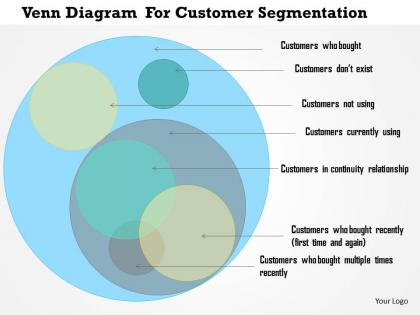
0115 venn diagram for customer segmentation powerpoint template




Try Before you Buy Download Free Sample Product
 Impress Your
 Audience
 100%
100% Editable
 Save Hours
 of Time


Create an awesome group with our 0115 Venn Diagram For Customer Segmentation Powerpoint Template. Everyone's brains will be bursting with ideas.
People who downloaded this PowerPoint presentation also viewed the following :
0115 venn diagram for customer segmentation powerpoint template with all 5 slides:
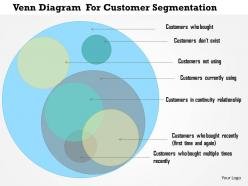
Our 0115 Venn Diagram For Customer Segmentation Powerpoint Template encourage free flow of ability. Exhibit your dexterity for all to see.
FAQs for 0115 venn diagram for customer
Honestly, segmentation is a game-changer for targeting - way better ROI than those generic campaigns that go nowhere. You'll actually connect with people instead of wasting money. Focus on your high-value customers first, that's where retention really pays off. Oh, and here's something cool - you'll spot product gaps you never noticed before. Some of our best ideas came from random segment insights. Don't overthink it though. Start with maybe 3 segments based on how people actually behave, then expand later. Trust me, even basic segmentation beats spray-and-pray marketing every time.
Honestly, demographics work great for some stuff but suck for others. Luxury goods? Life insurance? Yeah, age and income totally matter there. But streaming services? I've seen 25-year-olds and their parents binge the exact same shows - demographics tell you nothing. What actually works is mixing demographic basics with how people behave. Purchase patterns, engagement stuff, you know? I'd probably start with the obvious demographic splits first, then see how people actually use your product. That combo usually gives you segments worth targeting instead of just... random age buckets that don't mean anything.
Honestly, start with whatever data you already have - Google Analytics or even Excel can show you basic patterns. Survey tools like Typeform are clutch for getting the deeper stuff you can't see from clicks. Python's k-means clustering is cool if you're into that, but I've seen simple pivot tables work just as well sometimes. Customer interviews feel ancient but they're still the best way to figure out *why* people buy differently. RFM analysis is solid too if you've got purchase history. Don't overthink it though - test simple segments first, then get fancy once you know what actually matters.
Customer behavior data is where the real magic happens for segmentation. Look at purchase frequency, browsing habits, how people actually use your product. A monthly buyer vs someone who shops once a year? Completely different animals. Pull your transaction data first - seasonal trends and price sensitivity patterns will jump out. Channel preferences matter too (some people are mobile-only weirdos, others still love desktop). Track this stuff over time though, because one-off purchases don't tell you much. Honestly, it's way more useful than basic demographics for figuring out who your customers really are.
Honestly, data analytics is like having x-ray vision for your customers. You can dive into purchase history and behavior stuff to find segments hiding in plain sight. Some segments you thought were different? Turns out they're basically the same people. The cool part is watching how these groups shift over time - people change, you know? Start with clustering algorithms on whatever customer data you've got. I bet you'll find at least 2-3 segments you had no idea existed. Plus it shows if your targeting's actually working or just burning money.
After you figure out your customer segments, tailor everything differently for each group. Price-sensitive people? Hit them with discounts. Premium buyers want quality and exclusivity instead. Gen Z probably responds better to casual TikTok content, while your B2B folks need LinkedIn posts about ROI - honestly, the platforms matter way more than people think. Even your email subject lines should change based on who you're targeting. Map out each segment's problems and preferences, then create campaigns that actually speak to them. I'd start with just 2-3 segments and test what works.
Don't make your segments so tiny they're unprofitable - learned that one the hard way. Skip the demographics-only approach too, because honestly someone's buying behavior matters way more than their age. Use actual data instead of just guessing what customers want. Also make sure you can actually reach these people with your marketing budget. Keep segments genuinely different from each other. I'd start with maybe 3-4 segments max and test everything with real customer data before you blow money on campaigns that don't work.
Honestly, I'd check quarterly at minimum. Tech and fashion move crazy fast though - like every 2-3 months for those. More stable stuff? Twice yearly is probably fine. Watch for big product drops, market shifts, or when your segments just... stop making sense with actual customer behavior. I've watched companies completely miss the boat because they ignored this for years. Set a reminder and actually follow through - even a quick check beats pretending your 2019 segments still work. Trust me on that one.
Basically, when you split customers into groups, you can actually talk to them like real people instead of blasting everyone with the same boring stuff. Nobody wants those generic "Dear Valued Customer" emails - ugh. Each segment gets messaging that actually makes sense for them, plus offers they'd care about. Like, if you know someone's into fitness gear, don't send them kitchen gadgets, you know? When people feel like you get their specific needs and problems, they stick around way longer. It's wild how much difference it makes just showing customers you're paying attention to what they want.
Honestly, just start with what you've got - age, location, buying history. Look for patterns, even in a basic spreadsheet. Don't go crazy with segments though, maybe 3-4 max or you'll burn out. Survey customers about their actual problems and group similar answers together. Social media is weirdly helpful here since it shows what people actually care about. I'd pick your biggest customer group first and test some targeted messages on them. You'll figure out what works pretty fast. The whole "perfect system from day one" thing is overrated - better to start simple and improve as you go.
Okay so first thing - don't use protected characteristics like race or gender for pricing/targeting because that's literally illegal discrimination. Be transparent about data usage too, nobody likes feeling manipulated by algorithms they don't understand. Honestly, the creepy factor kicks in fast when you get too personal with segmentation. Stick to behavior patterns instead of demographic assumptions - way safer territory. Oh and definitely run this stuff by your legal team first. You'll want to audit regularly for bias because it sneaks in even when you think you're being fair.
Dude, segmentation is like having insider info on what your customers actually want. No more guessing games. You can spot the gaps in your product lineup and figure out which features each group cares about most. Makes prioritizing your roadmap way less painful - I swear it's a game changer. Test stuff with specific segments first before you go all-in too. Oh, and map your current products against segments to find the biggest opportunities. Honestly saved me so much time when I started doing this properly.
Honestly, culture changes everything about customer segmentation. People from different backgrounds have totally different values and buying habits. Your normal age-based segments? They'll probably fail hard in markets where family decisions matter more than individual choice - trust me on that one. You'll need different messaging, features, maybe even pricing that matches their cultural norms. Some cultures are way more risk-averse or care about different status symbols. Look up Hofstede's cultural dimensions first (sounds boring but it's actually helpful), then test with local focus groups before you commit to anything.
Think of it this way - you wouldn't talk to your grandma the same way you'd talk to your college roommate, right? Same logic applies here. Figure out who's actually buying from you and why. Your budget shoppers don't want to see $500 handbag ads. Meanwhile, your high-end customers probably aren't interested in discount codes. I'd start small though - pick maybe 3 different groups and test different approaches with each. Different product recs, different email styles, even different pricing. It's honestly one of those things that seems obvious once you start doing it, but most people just blast everyone with the same stuff.
Honestly, forget demographics - behavioral segmentation is where it's at. Track how people actually use your site, when they buy stuff, how they interact with emails. Way more useful than just knowing someone's age, you know? There are ML tools now that'll automatically create these tiny segments based on what users do. Oh, and the psychographic thing is pretty neat too - like segmenting by values using social media data. I'd just pick one behavior you can easily track first and go from there.
-
Excellent work done on template design and graphics.
-
Awesomely designed templates, Easy to understand.